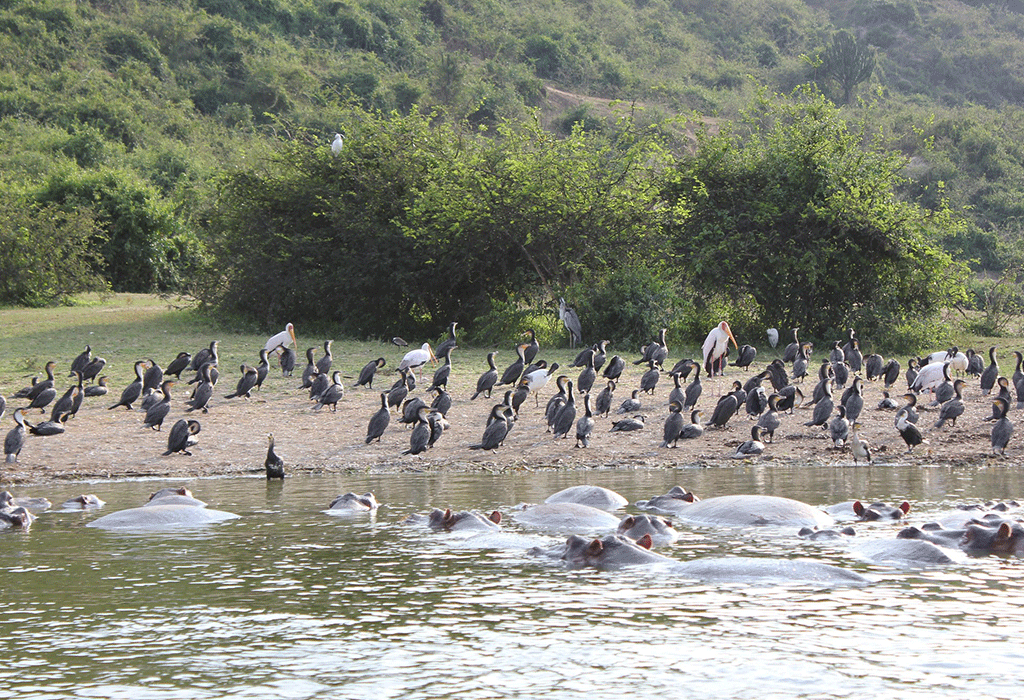
Semuliki National Park Attractions and Activities

Semuliki National Park activities focus on guided rainforest exploration rather than traditional vehicle-based safaris. The park, in Uganda’s Bundibugyo District near the Democratic Republic of Congo border, offers steaming geothermal springs, excellent forest birding, nature walks, primate sightings and cultural experiences. Its lowland forest is an eastern extension of the Congo Basin ecosystem, making the sights and sounds different from Uganda’s more familiar highland forests.
For a first visit, spend time at both Sempaya Hot Springs and take a ranger-guided forest walk. Dedicated birdwatchers should allow an additional day for the Kirumia Trail. To understand how Semuliki fits into a wider journey, see our Semuliki National Park travel guide.
Best Things to Do in Semuliki National Park


1. Visit the Sempaya Hot Springs
For an additional look at the walk and visitor experience, read our dedicated Sempaya Hot Springs guide.
If you would like further background before travelling, our hot springs of Uganda explains the geothermal attraction while Semuliki birding experience looks at the park from a birdwatcher’s perspective.
The Sempaya Hot Springs are the park’s signature attraction. At the female spring, known as Nyansimbi, boiling water bubbles and jets from the ground, sending columns of steam above the surrounding vegetation. Some visitors arrange an egg-boiling demonstration in the designated hot-water area with their guide. Never approach or touch boiling pools without instructions from park staff.
The male spring, Bintente, is a broad steaming pool in a swampy forest clearing. Reaching it involves a longer walk, including wetter terrain and boardwalk sections. Visiting both springs lets you experience the geothermal spectacle and the rainforest environment in a single outing. Your guide can also share the traditional stories associated with each spring, with respect for the communities from which those stories come.
The female spring is generally reached by a short walk from the Sempaya park office; the male spring takes substantially longer. Exact walking times depend on path conditions and the pace of the group. Plan for heat and humidity even on a short visit, and carry drinking water. The most informative experience is with an Uganda Wildlife Authority ranger who can explain both the geology and conservation context.
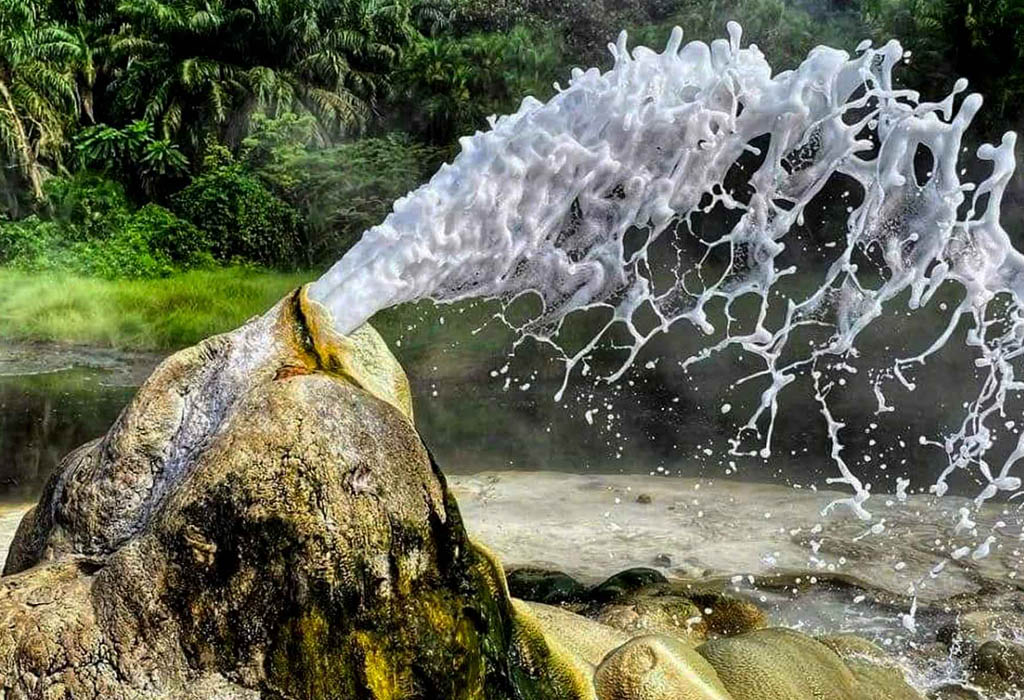


At Sempaya, visitors encounter two distinct geothermal areas. The better-known female spring, Nyansimbi, sends hot water and steam upward from a confined rocky area. The male spring, Bintente (also written Biteete), forms a broader, steaming pool and is reached on a separate forest walk. Never touch, enter or sample spring water; remain on established paths and follow ranger instructions around exposed hot ground. If a guide demonstrates boiling eggs, observe from the designated safe viewing place rather than handling the water yourself.
2. Go Birdwatching in the Lowland Forest
Visitors planning a multi-habitat birding itinerary can also compare forest birding around Bigodi with Bigodi wetland wildlife, both in the broader Kibale region.
Semuliki is particularly rewarding for birders interested in species associated with the Guinea–Congo forest biome. Uganda Wildlife Authority documents more than 400 bird species in the park, and its specialist list includes forest birds that are difficult to find elsewhere in Uganda. The experience is slow, deliberate and often based on identifying calls and movement in the upper canopy.
Look for birds such as the white-crested hornbill, piping hornbill, black-casqued hornbill and red-billed dwarf hornbill. Some rarer species require excellent conditions and patience; no individual sighting can be guaranteed. The forest edge between Sempaya and Ntandi can be productive because it provides occasional clear views into the canopy.
For an immersive day, take the Kirumia Trail with an experienced bird guide. Start early, walk quietly and bring binoculars, closed walking shoes and rain protection. Birding may proceed slowly through dense vegetation, and frequent listening stops can make a relatively short distance take much of the day. Our Semuliki attractions guide provides more context on the landscape and wildlife.
Birds can be difficult to locate in the canopy. A patient guide who recognises calls is often more valuable than covering a long distance. Early starts improve the experience, while overcast weather may keep bird activity going later in the morning. For comparison with other forest habitats, see our Kibale forest-walking guide and Kibale primate guide.
3. Explore the Kirumia, Red Monkey and Sempaya Trails
For inspiration when selecting a longer walk, look at our Semuliki safari itinerary alongside our overview of Semuliki forest highlights.
| Trail | Best for | Planning advice |
|---|---|---|
| Sempaya trails | Hot springs, introductory forest walks | Most convenient choice for a first-time visitor; walk duration varies by spring and route. |
| Kirumia Trail | Serious birdwatching and longer rainforest hikes | Full-day outing; commonly described as about 13–14 km. Check conditions and guiding arrangements. |
| Red Monkey Trail | Forest edge, primates and Semuliki River scenery | A longer guided option; ask rangers about the current route and accessibility. |
Trails can become muddy and slippery after rain, and sections close to wet ground may be difficult at certain times. Distances reported for some routes vary among visitor publications, so use current ranger advice rather than treating a printed distance as a fixed commitment. Walk only on approved routes with your assigned guide.
Trail distances and timings: Published visitor guides commonly describe the Sempaya Nature Trail as approximately 8 km (about 2–4 hours for the full nature walk), the Red Monkey Trail as approximately 11 km (allow much of a day), and the Kirumia Trail as approximately 13–14 km (commonly around 8 hours, longer when birding slowly). A shorter visit to the two Sempaya springs does not necessarily involve completing the entire 8 km nature trail. These are planning estimates, not fixed guarantees: ranger-approved routes, bridges, river levels and access points can change.
Which should you choose? Select the Sempaya visit for geothermal features and a gentler first impression. The Red Monkey route is a longer choice for primates and the river corridor, while Kirumia is best suited to keen birdwatchers who can spend a full day on foot. Book a ranger in advance, set off early and take enough drinking water for the route you choose.
4. Watch Primates and Other Forest Wildlife
To add a more predictable primate programme, compare chimpanzee walks and Bigodi and read about Kibale chimpanzee permits before setting your dates.
Forest walks may reveal black-and-white colobus monkeys, red-tailed monkeys, grey-cheeked mangabeys and other primates. Often you will hear moving branches or calls before you spot the animals. A patient guide can help you look into the canopy without disturbing wildlife. Larger forest mammals, including elephants and buffaloes, are recorded in the ecosystem but are elusive; visitors should not expect the easy, open-country viewing typical of a savannah game drive.
Bring binoculars even if you are not a dedicated birder. Keeping a respectful distance and remaining quiet increases your chances of observing natural behavior. If chimpanzees are the main goal of your Uganda holiday, it is more suitable to pair Semuliki with Kibale National Park. Our five-day Kibale and Semuliki safari combines complementary forest destinations, although the details of activities should be checked when requesting a current quotation.
Animal encounters depend on conditions and patience. Wildlife is not provisioned, and the park is not a guaranteed chimpanzee-tracking destination. Those seeking a permit-based chimpanzee experience should instead consider chimpanzee tracking in Uganda or a four-day chimpanzee safari with time at Kibale National Park.
5. Enjoy a Batwa Community Cultural Experience
Travellers interested in community experiences may also enjoy the Uganda cultural experiences near Kibale and the Queen Elizabeth cultural tours as part of a wider route.
Local cultural visits near Semuliki provide opportunities to learn about traditional forest knowledge, crafts, music and oral history. Such visits should be organized with the community’s participation and fair compensation for the hosts. Your guide can explain which experiences are available at the time of travel, where they take place and whether an additional community activity fee applies.
The most meaningful visits are conversational rather than staged photo stops. Ask questions respectfully, request permission before taking portraits and consider purchasing locally made crafts directly from artisans. This is a valuable way to connect the ecological importance of the forest with the people who live around it.


Cultural activities should be arranged with a recognised local host or community representative, with transparent pricing and consent for photographs. The region is home to several communities with distinct histories and traditions; avoid treating any one cultural demonstration as representing everyone in the Semuliki Valley. For examples of thoughtful visitor etiquette, read our Uganda cultural-tour guidance and Batwa filming and consent guidance.
6. Try Forest Photography and Nature Observation
Photography-focused visitors can add crater lake scenery near Kibale or consult the Kibale forest nature-walk guide for a contrasting rainforest.
Beyond wildlife checklists, Semuliki rewards photographers who enjoy details: towering palms, tree roots, tiny fungi, patterned butterflies, shifting light and steam drifting above the springs. The humid forest can be challenging for camera equipment, so keep lenses dry and use a rain cover. A moderate telephoto lens is useful for canopy birds, while a wide-angle lens works well for forest scenes.
Early and late daylight offers softer conditions, although the canopy can remain dark even at midday. At the springs, avoid setting equipment on unstable or hot ground. If you are travelling with younger children or prefer a relaxed pace, shorter ranger-led walks can provide satisfying photographic opportunities without committing to the longest trails.
Nearby Add-On: Toro–Semliki Wildlife Reserve (Not Inside the National Park)
A longer tour can incorporate a classic savannah experience; our Queen Elizabeth National Park guide explains the different wildlife activities available there.
For different savannah experiences, contrast Toro–Semliki reserve tours with our Lake Mburo and Queen Elizabeth safari.
It is important not to confuse Semuliki National Park, which protects lowland tropical rainforest, with the nearby Toro–Semliki Wildlife Reserve, which includes more open grassland and savannah habitats. Game drives, certain chimpanzee research or tracking experiences and Lake Albert shoebill excursions are associated with the reserve or its wider surroundings, not the usual Semuliki National Park activity programme.
Travelers who want both forest walking and a conventional game drive can discuss a route involving both protected areas. Availability for reserve-based chimpanzee activities or boat excursions should be confirmed in advance, rather than assumed. See our separate Toro–Semliki Wildlife Reserve guide for the distinction.
Additional regional option: consider Bigodi Wetland Sanctuary when combining Semuliki with other protected areas.
How Many Days Do You Need?
If you are building a broader national itinerary, our Uganda wildlife safari guide can help compare destination types.
Suggested combinations include the five-day Kibale and Semuliki tour or the six-day Uganda wildlife itinerary, depending on the balance of primates and wildlife you want.
One full day is useful for the Sempaya Hot Springs, a short nature walk and introductory birding. Two days are better for visitors who want a full Kirumia birding excursion without rushing the springs. Three days or longer makes sense if you want to add a community visit, the broader Semuliki Valley or onward travel to Kibale and Fort Portal.
Suggested Two-Day Semuliki Activity Plan
Day 1 — Springs and Forest
Travel from your nearby base to Sempaya. Meet your ranger, visit the hot springs and take a relaxed forest walk. Spend the afternoon observing birds and enjoying the scenery. Overnight in the Semuliki area or Fort Portal.
Day 2 — Deeper Birding
Start early for the Kirumia Trail or an alternative ranger-recommended birding route. Keep the day flexible for weather, terrain and bird activity, then return to your lodge or travel onward.
A longer western Uganda holiday can combine Semuliki with Kibale chimpanzee trekking and Queen Elizabeth National Park. Explore our six-day Kibale, Semliki and Queen Elizabeth itinerary as one example of a multi-ecosystem circuit.
Best Time to Enjoy Semuliki National Park Activities
For a broader seasonal itinerary, consider our Semuliki planning overview and Uganda safari journey example.
Semuliki is hot and humid throughout the year, with rain possible even during relatively drier periods. Many visitors prefer December to February and June to August for comparatively manageable trail conditions, but weather is variable and forest birding is possible across the year. Wetter months can bring slippery paths and temporary limitations on the longer walks.
For birdwatching, timing should also reflect your target species and your guide’s experience. Avoid promising a completely dry visit: Semuliki is a rainforest. Comfortable waterproof footwear and a lightweight rain jacket are useful in every season.
Getting There and Where to Stay
A convenient overnight base depends on whether you also plan to visit Fort Portal crater lakes or compare Kibale accommodation options.
Semuliki National Park lies in western Uganda, generally accessed via Fort Portal and the Bundibugyo road. Road conditions and journey duration vary with weather, traffic and your starting point. Many travelers choose Fort Portal as their overnight base because it offers a wider range of lodges and makes it easy to combine the park with Kibale or the crater lakes. Simpler accommodation and camping options exist nearer Semuliki, subject to current availability.
UWA has previously identified Bumaga Camp near Sempaya as a basic accommodation and camping option. Other properties in the region may be better suited to those seeking more comfort, but their location and road transfer times should be considered carefully. For this particular park, accommodation should be selected around your actual activity schedule, especially if you plan an early Kirumia walk.
Practical Road Access
From Fort Portal, allow roughly 1–1½ hours to Sempaya along the Bundibugyo road (often described as about 52–60 km, depending on the point measured). From Kampala, the common route is via Mubende and Fort Portal; set aside most of a travel day, roughly 6–8 hours or more including stops and traffic. From Entebbe, add time to clear the Kampala–Entebbe corridor; a first night in Fort Portal is generally more comfortable than planning a late-day forest activity after an international flight. Roads and traffic conditions can alter these estimates, so confirm the route with your driver-guide.
For alternative road-trip ideas, explore our four-day Semuliki safari or the western Uganda safari itinerary.
Where to Stay for Semuliki Activities
There are three useful accommodation strategies, but they are not interchangeable. Stay near Sempaya if your priority is an early start on the national park’s forest trails; use Fort Portal for a wider choice of restaurants and hotels; choose the separate wildlife reserve only when the itinerary also includes activities there. Confirm the precise road transfer to the park gate before paying for accommodation.


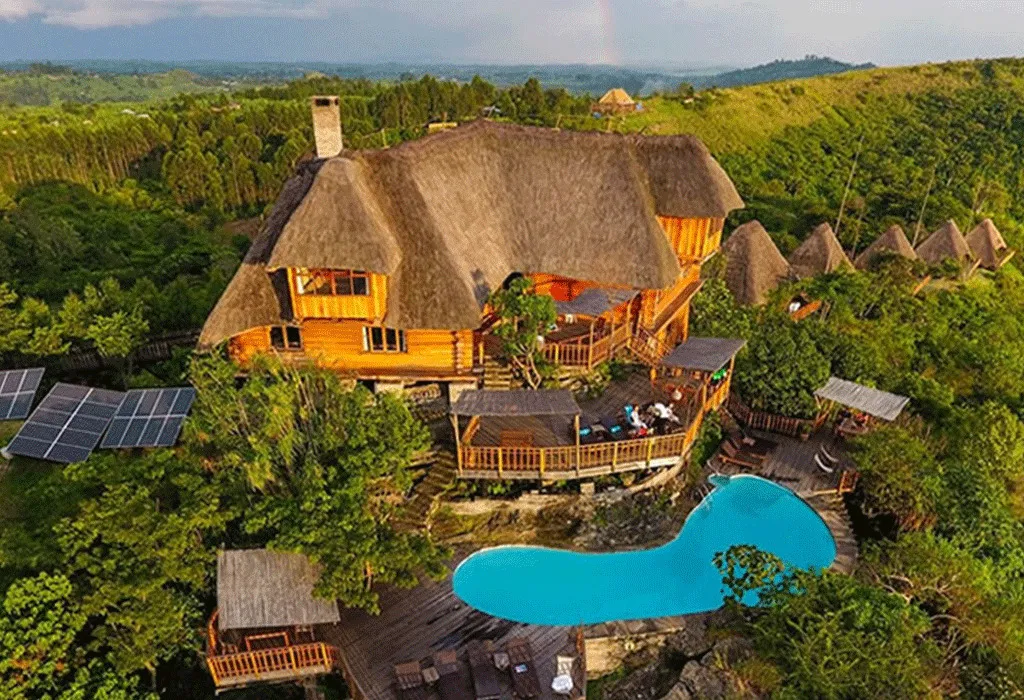
Separate location: Semliki Safari Lodge is inside Toro–Semliki Wildlife Reserve, not Semuliki National Park. It can suit a combined reserve-and-forest itinerary, but should not be presented as a lodge inside the national park. Compare other western Uganda options in our Kibale accommodation guide.
Semuliki National Park Entrance and Activity Fees
Park entry fees vary by visitor category and age, and guided activities may carry separate charges. The UWA tariff distinguishes foreign non-residents, foreign residents, eligible African visitors and East African Community citizens; proof of residency or citizenship may be required. Rates are revised periodically, so confirm the exact applicable rate and activity total before paying. The official UWA tariff linked below is the pricing reference, rather than an unverified all-inclusive price quoted on this page.
You can consult the latest official information through the Uganda Wildlife Authority conservation tariff. Our team can help coordinate guides, transport, park payments and nearby accommodation within a personalised itinerary.
What to Pack for Semuliki
For a longer forest safari, compare Uganda chimpanzee safari inclusions and guided forest trails in Kibale when deciding what to pack.
Bring lightweight, breathable clothing, closed shoes with good grip, a rain jacket, drinking water, insect repellent, sunscreen, a hat and binoculars. Long trousers are practical on forest trails. Photographers should protect equipment from humidity, and birders will benefit from a small field guide or a well-prepared local guide. Carry a little extra water on full-day routes, especially in the hot valley conditions.
Frequently Asked Questions
What is the most popular activity in Semuliki National Park?
Visiting the Sempaya Hot Springs is the most popular introductory activity, usually combined with a ranger-guided forest walk.
Can visitors go on game drives inside Semuliki National Park?
Semuliki National Park is a lowland rainforest destination, not a typical game-drive park. Game drives are associated with the separate Toro–Semliki Wildlife Reserve.
Is chimpanzee trekking available in Semuliki National Park?
Do not plan a standard chimpanzee trekking permit within Semuliki National Park. For reliable organised chimpanzee trekking, consider Kibale National Park; ask about any separate research-related experiences in Toro–Semliki Wildlife Reserve.
Which trail is best for birdwatching?
Kirumia is the classic choice for a longer forest birding outing. The Sempaya–Ntandi road and shorter Sempaya paths are useful alternatives.
Are the Sempaya Hot Springs safe to visit?
Yes, when you follow park ranger instructions and remain within designated viewing areas. The water is dangerously hot and must not be touched.
How long should I spend in Semuliki?
One day covers the key hot springs and a short forest walk; two days provide a better balance for serious birding and longer trails.
Can children visit Semuliki National Park?
Families can enjoy appropriate shorter guided activities. Choose walking routes based on each child’s age, stamina and park guidance, and supervise children closely around hot springs.
Is Semuliki the same as Toro–Semliki Wildlife Reserve?
No. They are separate protected areas with different landscapes and tourist activities, though they can be combined in one safari.
Do I need a guide for forest walks?
Guided walks with authorised park staff are the appropriate way to explore the forest and help visitors navigate safely and identify wildlife.
Where should I stay for Semuliki activities?
Fort Portal offers the widest choice of accommodation, while nearer options can reduce the early-morning transfer. Select a base after deciding which trails you plan to explore.
What time should I start a Semuliki birding walk?
An early morning departure is usually best. Confirm ranger reporting time and trail availability the day before.
Is the Kirumia Trail suitable for beginners?
It is a long forest route with humidity, muddy areas and possible water crossings. Beginners should choose a shorter route unless reasonably fit and properly equipped.
How long is the full Kirumia walk?
Allow approximately eight hours or more, depending on conditions and birding pace. Published route lengths differ slightly, so ask UWA for the approved walk.
Can I visit both Sempaya hot springs on one visit?
Often yes, when routes are open and time permits. The male and female springs involve distinct walks, so confirm access and walking demands at the visitor centre.
May I swim in the Sempaya Hot Springs?
No. Water and surrounding ground can be dangerously hot. Stay behind safety boundaries.
What shoes should I wear?
Closed hiking shoes or light boots with reliable grip are ideal; bring dry socks and a rain layer.
Can I independently walk the forest trails?
Arrange approved access and guidance through park staff. Ranger requirements and trail openings may vary.
Is Semuliki suitable for a day trip from Fort Portal?
Yes. A day trip can cover Sempaya and a short guided walk, though a dedicated long birding route deserves more time.
Is Semuliki suitable for a day trip from Kampala?
Not comfortably for most visitors. The round-trip road journey is long; plan an overnight stay.
Will I see gorillas in Semuliki?
No gorilla trekking is offered here. Plan a separate safari to Bwindi or Mgahinga for that experience.
Is a four-wheel-drive vehicle necessary?
A high-clearance vehicle can be useful in wet weather or on optional rural tracks; ask your operator about current road conditions.
Can I combine Semuliki with Kibale in one trip?
Yes. Fort Portal makes a logical link between Semuliki rainforest activities and chimpanzee trekking in Kibale.
Are there toilets and refreshments at the trail start?
Facilities can be limited. Ask your guide about current arrangements, bring water and use designated toilets when available.
Is camping available near Semuliki?
Basic UWA-managed camping options have been publicised near Sempaya. Reconfirm operating status and facilities before arrival.
Are park fees the same as guided activity fees?
Not necessarily. Conservation entry, guided activities and vehicle-related charges may be listed separately in UWA tariffs.
Plan Your Semuliki Forest Safari
Safari Vacations and Travel Services Ltd can arrange a private visit centered on your interests—hot springs, forest birding, cultural encounters or a broader western Uganda journey. We can also help you combine Semuliki with nearby destinations for a well-paced itinerary rather than a rushed stop. For additional background, see our Semuliki National Park activities and attractions article.
Discover Semuliki with a Local Safari Specialist
Tell us your dates and interests, and we will tailor the forest walks, accommodation, transport and nearby safari destinations to your trip.