Lion Tracking in Queen Elizabeth National Park

UGANDA WILDLIFE EXPERIENCES • QUEEN ELIZABETH NATIONAL PARK
Lion Tracking in Queen Elizabeth National Park, Uganda
Explore the Kasenyi Plains on a specialist lion-tracking experience, look for tree-climbing lions in Ishasha and discover how to plan a responsible wildlife safari in Queen Elizabeth National Park.

The first sign may be a patch of tawny fur in the grass, an alert Uganda kob, or a lioness lifting her head in the morning light. In Queen Elizabeth National Park, seeing lions is about much more than ticking a species off a wildlife list. The open plains, distant crater scenery and working conservation landscape give every encounter a sense of place.
This guide explains the difference between experiential lion tracking and a normal game drive, where each activity takes place, how to book, what it may cost and where to stay. If you are planning a wider visit, start with our Queen Elizabeth National Park guide.
What Is Lion Tracking in Uganda?
Lion tracking is a guided wildlife experience in which visitors join authorized conservation personnel to search for and observe wild lions. The specialist, research-oriented programme associated with the Kasenyi area uses the expertise of field researchers and monitoring information from collared animals where available. It is not a walking pursuit of lions and does not mean visitors can approach big cats on foot.
On a normal game drive, your driver-guide searches for wildlife along the permitted road network. During an authorized experiential session, trained personnel may explain how lions are identified, monitored and protected. Any departure from ordinary game-drive routes depends on current Uganda Wildlife Authority rules and the permission of the supervising team. Read more about experiential lion tracking.


Where Are Lions Found in Queen Elizabeth National Park?
Kasenyi Plains: the principal area for experiential lion tracking
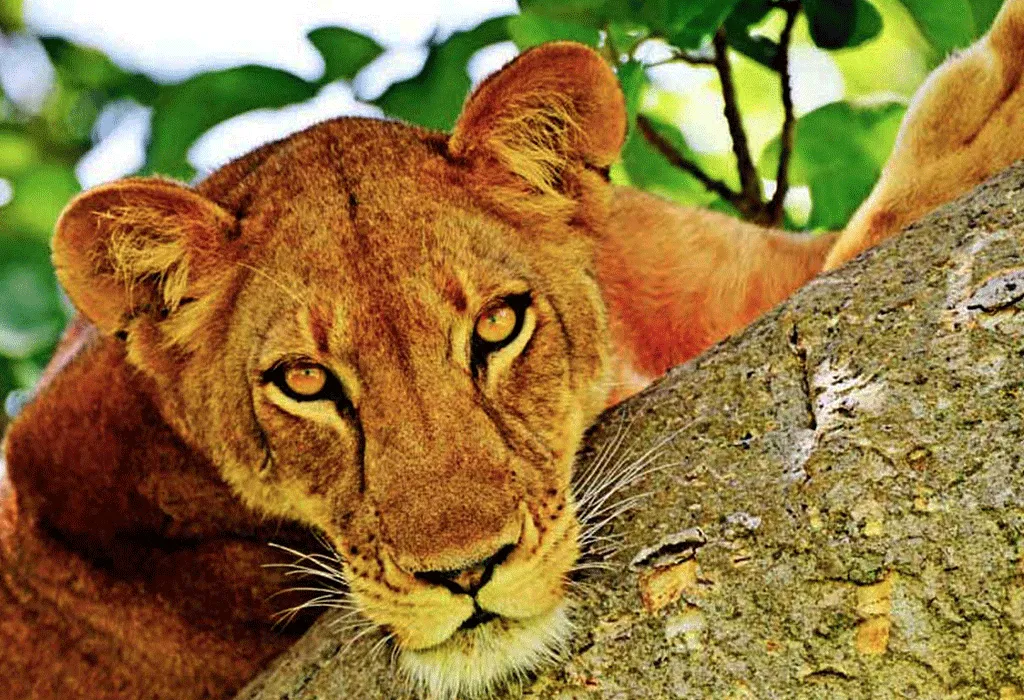
Kasenyi lies in the northern part of the park and is known for its open grassland and breeding grounds for Uganda kob. Large herds of antelope support the food web that makes this area interesting for predators. Morning drives can reveal lions at rest, moving through grass or watching prey; sightings depend on conditions and good fortune. The landscape also makes it easier to appreciate the lions’ surroundings.
For guests focused on research-led lion encounters, Kasenyi is the area to discuss when requesting a specialist booking. It is also a natural setting for a conventional lion tracking in Queen Elizabeth and other big-cat viewing.
Ishasha: Uganda’s famous tree-climbing lions
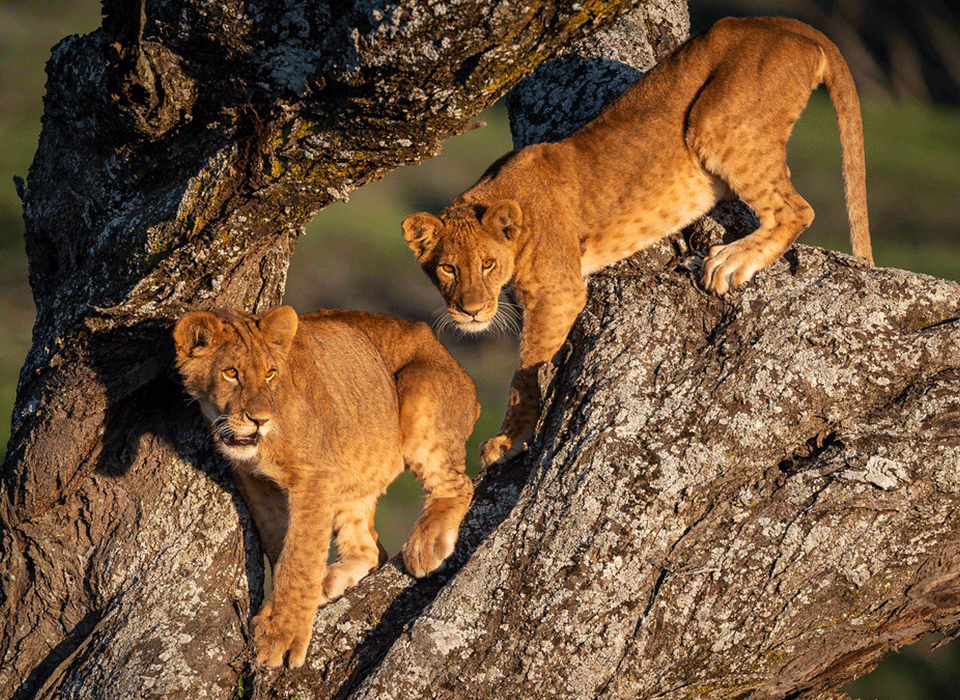
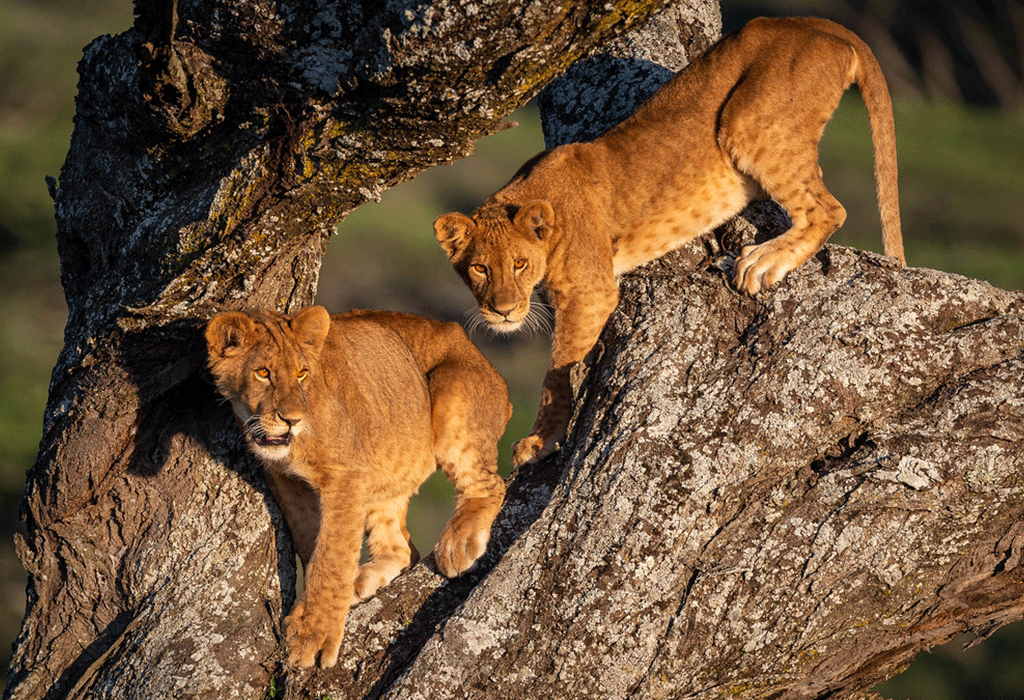
Ishasha is the park’s southern sector, an atmospheric region of grassland, riverine woodland and broad-limbed fig trees. Here, some lions climb trees to rest. Scientists and guides suggest several possible reasons, including cooler conditions or fewer biting insects, but no single explanation has been proved. The lions may be on the ground or out of sight on your visit.
Importantly, a visit to Ishasha for tree-climbing lions is normally a game drive, not the Kasenyi research-tracking activity. Allow enough time for this separate part of the park. Explore the tree-climbing lions of Ishasha or our feature on the Ishasha Sector guide.

How Does the Lion-Tracking Experience Work?
1. Reserve a specialist session
Your safari operator checks whether the authorized research-led experience is operating on your preferred date, how many spaces are available and which fees apply.
2. Meet the accompanying team
At the assigned meeting point, the guiding or research team explains the route, expected duration, vehicle arrangements and wildlife safety instructions.
3. Search the habitat
The team combines field knowledge, recent observations and relevant monitoring tools. Radio or satellite collars on selected lions may support conservation tracking, but not every lion is collared.
4. Observe and learn
When lions are located, you remain in the vehicle unless expressly instructed otherwise by authorized personnel. You can learn about pride structure, individual identification, movement, threats and conservation.
5. Return with a richer understanding
A good session offers perspective even when lions remain elusive. Weather, animal movement and research priorities can change the plan.
For travelers organizing several vehicles or traveling with friends, our Queen Elizabeth group safari guide provides ideas for arranging a shared wildlife itinerary.
Lion Tracking Versus an Ordinary Game Drive
| Feature | Experiential lion tracking | Standard game drive |
|---|---|---|
| Main aim | Predator monitoring and education | General wildlife sightseeing |
| Typical location | Kasenyi / northern sector | Kasenyi, Mweya and Ishasha |
| Who accompanies you | Authorized specialist or research personnel | Safari driver-guide; ranger where arranged |
| Wildlife focus | Lions and their ecology | Lions plus a wider range of wildlife |
| Availability | Limited; advance confirmation essential | More flexible, subject to park rules |
| Sightings | Never guaranteed | Never guaranteed |
If you want a rounded wildlife experience rather than only a big-cat encounter, our wildlife game drives in Uganda explains how lion country fits into wider safari planning.
For a fuller introduction to mammals, primates and birdlife beyond the big cats, see our Queen Elizabeth wildlife species.
The Best Time for Lion Tracking in Uganda
Queen Elizabeth can be visited throughout the year. June through September and December through February often bring relatively drier conditions, with easier driving and shorter grass in some areas. The wetter months can offer fresh green scenery and beautiful light, although rainfall may affect roads and viewing conditions. There is no month when wild lions are guaranteed.
Early morning and late afternoon are particularly appealing because temperatures are cooler and lions may be more active. The timing of any specialist session is determined by the operators and park authorities. For a first trip, consider combining the lion experience with a relaxed big-cat photography and filming.
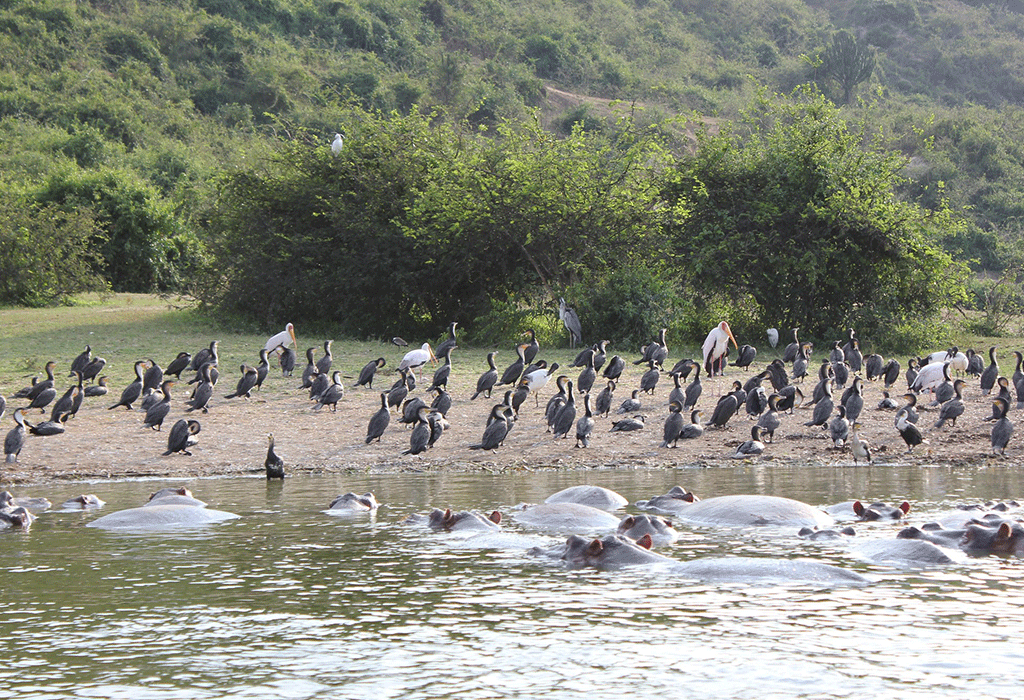
The nearby Kazinga Channel is an important wildlife corridor and a worthwhile afternoon activity after a morning on the plains.
How Much Does Lion Tracking Cost in Queen Elizabeth National Park?
Experiential lion tracking is charged separately from normal park entrance and other safari services. The last fully published UWA 2024–June 2026 tariff listed the activity at USD 200 for foreign non-residents, USD 150 for foreign residents and UGX 200,000 for East African Community citizens; it excluded a USD 10 community fee and vehicle charges. UWA has announced different rates effective 1 January 2027. Because the older printed tariff period has ended, request a confirmed written quote for travel in late 2026 rather than treating the earlier figure as guaranteed.
| Visitor category | Published 2024–June 2026 tariff | Announced from 1 Jan 2027 |
|---|---|---|
| Foreign non-resident | USD 200 | USD 500 |
| Foreign resident | USD 150 | USD 300 |
| EAC citizen | UGX 200,000 | UGX 250,000 |
Tariff reference: Uganda Wildlife Authority conservation tariffs. The 2027 figures are announced rates, not an all-inclusive tour price; check the final applicable tariff, community contribution, vehicle and park fees before confirmation.
The total quotation may also include park entrance fees, vehicle entry, 4×4 transport, fuel, guiding, accommodation and transfers. Always check what is included before paying. Visitors heading south can also read our guide to tree-climbing lions in Uganda.
Visitors interested in a different wildlife experience can also ask about night game drives; operation and authorized routes must be confirmed separately.
Other Wildlife Experiences to Combine with Lion Tracking


A Kazinga Channel boat cruise is a natural contrast to the grasslands. Guests who want a primate experience can consider a chimpanzee and wildlife safari, while those with more time can continue towards Bwindi for gorilla trekking. Birdwatchers can explore our Queen Elizabeth birding guide.
For a larger journey across contrasting habitats, explore our Uganda wildlife safari circuits.
What to Expect on a Lion-Tracking Safari
Your day begins with an agreed departure from your lodge and a briefing from the team responsible for the activity. The outing is vehicle-based, and the team uses field observations and, where available, monitoring information to search appropriate habitat. Lions may be resting in grass, moving between territories or completely hidden. Allow much of the morning or afternoon rather than planning a tightly timed stop.
An authorized research-focused session is different from a conventional game drive. A standard drive remains an excellent option for anyone who prefers flexible viewing of several species. Our guide to Uganda game drives explains how to prepare for a wider wildlife safari.
How to Get to the Kasenyi Plains
Kasenyi lies in the northern part of Queen Elizabeth National Park. Many safaris arrive by road from Kampala or Entebbe via western Uganda, or connect from Kasese, Kibale and nearby destinations. The precise approach depends on your hotel, park entrance and road conditions; a long journey from Kampala or Entebbe is best planned as a transfer day, not as a guaranteed afternoon lion-tracking session.
If you are flying into the region, confirm the available domestic flight, airstrip, onward road transfer and baggage allowance before reserving a lodge. Choose accommodation close to the activity you value most: the northern sector for Kasenyi, or the southern sector for an unhurried Ishasha game drive.
What to Pack for Lion Tracking
Take binoculars, a camera with a suitable zoom lens, drinking water, sunscreen, a hat and a light warm layer for an early start. Neutral, comfortable clothes work well on dusty savannah drives. A dry bag and a protective camera cover help when rain or dust changes unexpectedly. Our Uganda safari packing list covers the wider essentials.
Lion Tracking for Photographers and Families
Photography is often most rewarding when the vehicle stops quietly and guests allow animals to behave naturally. Pack a stable support for longer lenses and be ready to photograph the landscape as well as the lions. Our big-cat photography and filming guide offers more ideas.
Families should confirm the official participation age and current group arrangements before booking a specialist session. If a child cannot join the research-led outing, a conventional family game drive may be the better choice. Couples looking for a slower pace may prefer a lodge-based itinerary; see our Queen Elizabeth honeymoon ideas.
Where to Stay for Lion Tracking in Queen Elizabeth National Park
Your choice of lodge affects how early you can reach Kasenyi and how easily you can fit a boat cruise or Ishasha game drive into the same trip. Lodges around Mweya, the northern access routes and the crater area are practical for Kasenyi activities; Ishasha accommodation is better when tree-climbing lions are a primary goal.


These are examples, not confirmed room availability or fixed prices. We match lodge location and comfort level to your route and budget. See our mid-range Uganda safari guide for help comparing comfort levels, or read about booking your Uganda safari.
Travelers who want to search for lions in another park can also explore our Murchison Falls safari guide.
A Practical Three-Day Lion Safari Itinerary
Day 1 — Travel to Queen Elizabeth and enjoy the landscape
Arrive from Entebbe, Kampala or another western Uganda destination, then check in near the northern park. Depending on the time available, enjoy a gentle evening game drive or simply relax overlooking the savannah. We recommend allowing enough transfer time rather than trying to squeeze in a late specialist activity after a long journey.
Day 2 — Lion tracking and Kazinga Channel
Begin early for a pre-booked experiential lion-tracking session, if operating and available. Learn about predator conservation with the authorized team. After lunch, take a Kazinga Channel boat cruise to see hippos, crocodiles, elephants, buffaloes and waterbirds from the water. This variety makes the day rewarding even if the lions are hidden.
Day 3 — Ishasha extension or return journey
If continuing toward Bwindi, travel through Ishasha with time for a game drive in search of the famous tree-climbing lions. Otherwise, take a final northern-sector drive before returning to your next destination. For a more relaxed Ishasha experience, consider adding a night in the south instead of treating it as a quick roadside stop.
For longer itineraries, our Uganda safari planning questions and guided versus self-guided travel comparison can help you choose an appropriate route.
Our guide to the top Uganda safari animals helps visitors set realistic wildlife-viewing expectations.
Conservation, Safety and Responsible Lion Viewing
Lions face pressures including habitat loss, declining prey, and conflict where livestock and wildlife share a landscape. Conservation work includes monitoring individuals, supporting law enforcement and helping communities coexist with predators. Uganda Wildlife Authority’s 2026 reporting describes ongoing identification and monitoring of lions in the wider Queen Elizabeth Conservation Area. A responsible safari supports this work by respecting the rules set by park authorities.
Stay inside the vehicle around lions, never feed wildlife, avoid sudden noise and do not ask your guide to pursue or corner an animal. Authorized staff decide which routes and viewing distances are suitable. For broader park etiquette, read our Uganda safari dos and don’ts.
For an example of how the days can fit together, see the three-day experiential lion safari.
Frequently Asked Questions About Lion Tracking in Uganda
Is lion tracking the same as looking for lions in Ishasha?
No. Specialist experiential lion tracking is associated with research-led outings in the Kasenyi area. Ishasha is usually explored on conventional game drives to look for tree-climbing lions.
Can I walk close to lions during the activity?
No. Treat lion tracking as a vehicle-based wildlife experience. Do not leave the vehicle near lions unless authorized park personnel give explicit safety instructions.
Are lion sightings guaranteed?
No. Monitoring information may help researchers locate some lions, but the animals are wild and can move, hide or become inaccessible. Responsible operators should never promise a sighting.
How long should I allow?
Set aside a substantial part of a morning or afternoon. The exact session length depends on the approved programme, field conditions and travel time to the activity area.
Can children participate?
Age limits and participation conditions can depend on the current activity rules. Families should verify eligibility with the organizing team before making a booking.
Can I combine lion tracking with gorilla trekking?
Yes. Queen Elizabeth is a logical wildlife stop on many itineraries between Kibale and Bwindi. Build in transfer time and secure gorilla permits well in advance.
Do I need to book before arriving?
Advance booking is advisable because specialist sessions can have limited capacity. Ask for confirmation of availability, current prices and inclusions.
Do I need a private 4×4 vehicle?
A suitable safari vehicle is usually part of the travel arrangements. Confirm whether your quotation includes it, the driver-guide, fuel, park vehicle charges and the specialist team. Do not assume the lion-tracking activity fee covers transportation.
Can I see Kasenyi and Ishasha lions in one day?
It is usually better to allow more time because the two areas are separated by a significant drive. A separate Ishasha game drive, ideally with a southern overnight stay, gives you greater flexibility.
Is the lion-tracking fee the total safari price?
No. The activity charge is only one part of a safari quotation. Park entrance, community contributions, vehicle fees, transport, accommodation and optional experiences may be separate.
Is Queen Elizabeth worth visiting without a lion sighting?
Yes. The park offers elephants, buffaloes, antelopes, Kazinga Channel boat safaris, rich birdlife, remarkable scenery and a contrasting forest experience at Kyambura Gorge.
Explore our collections of lion-tracking articles, Queen Elizabeth guides and Ishasha stories to plan the parts of the park that interest you most.
For more planning ideas, read about game viewing in Uganda before deciding on your preferred safari style.
Why Plan Your Lion Safari With Safari Vacations & Travel Services?
A successful safari depends on more than choosing a park. We help coordinate authorized lion-tracking enquiries, a suitable private 4×4 vehicle, knowledgeable driver-guides, accommodation in the right sector and a realistic balance of wildlife activities and transfers. We can also arrange a combined itinerary that includes the Kazinga Channel, Ishasha, Kibale or Bwindi according to your travel dates and interests.
For ideas on a longer wildlife route, explore our seven-day Uganda safari or the five-day Queen Elizabeth wildlife and birding tour. If you prefer to focus on lions, our three-day lion-tracking safari is a useful starting point.
Book a Lion-Tracking Safari in Uganda
Tell Safari Vacations & Travel Services Ltd your travel dates, number of travelers, preferred comfort level and whether you want the Kasenyi research experience, Ishasha tree-climbing lions, or both. We will help arrange a realistic private itinerary, confirm available activities and include the right lodge and transfers.