7 Unmissable tree climbing lions of Ishasha Tips
The tree climbing lions of Ishasha: A Complete Safari Guide
Where to find the famous lions, how to plan your game drives, and why the quieter southern plains deserve time on your Uganda journey.
The tree climbing lions of Ishasha offer one of Uganda’s most unusual big-cat encounters. In the southern reaches of Queen Elizabeth National Park, a visitor may scan the grass for movement and discover a lioness lying across the broad branch of a fig tree. Below her, Uganda kob and topi graze across open savannah. The scene combines the drama of a predator sighting with the quiet rhythm of the African bush. It also rewards patience: tree climbing lions choose when and where to climb, and no guide can promise an encounter. Queen Elizabeth National Park protects diverse animals. Ishasha invites patient observation. Ishasha changes with seasons. Lions remain unpredictable.
This practical guide explains where to find Ishasha, what a typical drive involves, why tree climbing lions might spend time above ground, and how to plan a rewarding safari without building the entire holiday around one photograph. It covers seasons, accessibility, accommodation, conservation, photographic etiquette and sensible routes toward Bwindi. You will also discover the birds, antelope, elephants and other wildlife that make Ishasha worth visiting even when tree climbing lions of Ishasha remain hidden. Queen Elizabeth National Park protects diverse animals. Ishasha rewards careful planning. Tree climbing lions inspire curiosity.

Where to Find the tree climbing lions of Ishasha
Ishasha lies in southwestern Uganda, within the southern section of Queen Elizabeth National Park. It is not a separate national park, nor is it the same driving area as the busy Kasenyi plains or the Mweya Peninsula. Travelers heading south from Queen Elizabeth National Park toward the Buhoma side of Bwindi often pass through Ishasha. The Ishasha River runs along part of the border with the Democratic Republic of Congo, while broad grassland and scattered woodland define much of the viewing circuit. The tree climbing lions of Ishasha reward careful observation. Lions respond to habitat.
The open country gives an Ishasha safari a distinctive sense of space. Wide skies, isolated trees and grazing herds make it easier to understand how predators use the landscape. Roads between different sectors can be slow, especially after rain. For that reason, a night near Ishasha can be more valuable than a hurried excursion from a distant lodge. tree climbing lions are wild animals moving through a large ecosystem; arriving late and departing after a single short drive limits your chances of finding them. Lions remain unpredictable. Big cats deserve respect.
How the southern sector differs from northern Queen Elizabeth
Queen Elizabeth National Park is diverse rather than uniform. The northern circuit is associated with Kasenyi, crater scenery, the Kazinga Channel and boat-based wildlife viewing. Ishasha is typically calmer, with fewer vehicles across Ishasha plains. That atmosphere is part of the appeal. A guide might spend time studying tree branches, listening to alarm calls or watching kob behavior before deciding which track to follow. The journey often feels more exploratory than a fixed sightseeing loop. Lions may remain concealed.

Why the Ishasha lions climb into trees
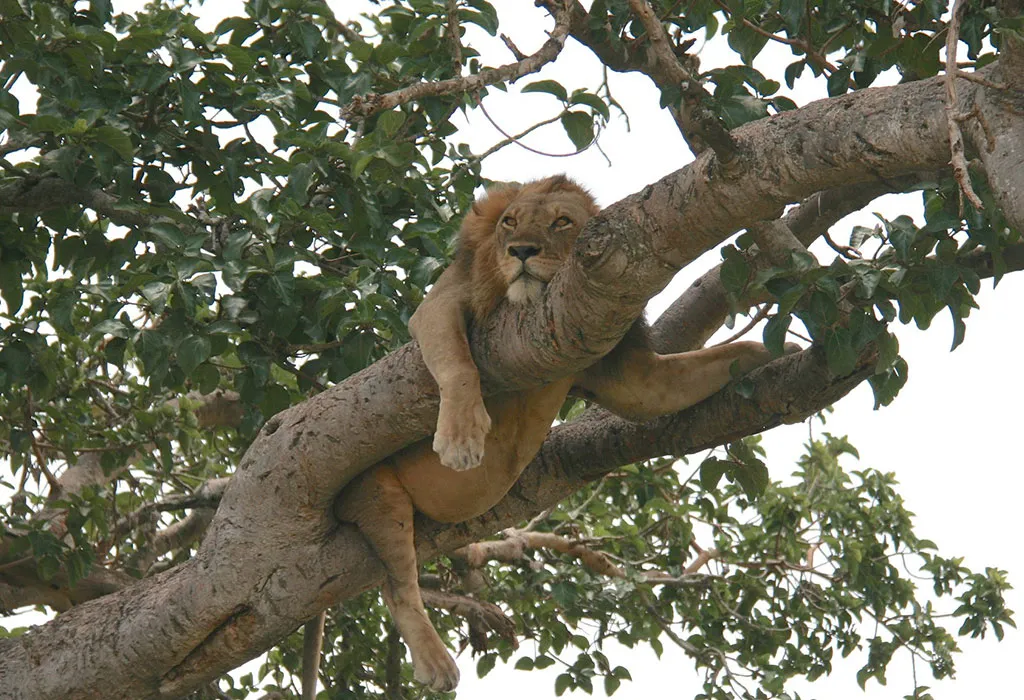
Scientists have not established one definitive explanation for the climbing behavior. Several ideas remain plausible: broad branches provide shade and a breeze above heated ground, and elevated resting places may reduce annoyance from some biting insects. A tree also offers a view over nearby grassland. These suggestions should be presented as hypotheses, not as proven reasons. Similar behavior has been documented in other parts of East Africa, but the regular use of trees by some Ishasha prides makes the sight especially celebrated. Ishasha changes with seasons. Lions follow natural rhythms. Lions deserve respect.
tree climbing lions favor structures that support their weight. A mature fig tree may have a horizontal branch strong enough for a large adult, whereas a narrow or unstable trunk offers little comfort. A lion may climb after feeding, rest for hours, change position as the sun moves and descend when conditions change. An Ishasha safari therefore involves looking carefully at the shape of a tree and its surrounding tracks, rather than assuming that every large canopy contains a resting cat. Queen Elizabeth National Park protects diverse animals. Ishasha preserves important habitat. Ishasha changes with seasons. Lions need undisturbed space. Lions may remain concealed.
What to watch for when a lion is already in a tree
A raised head, dangling forepaw, swishing tail or repositioned hind leg can reveal an individual partially concealed by leaves. Sometimes one lion is visible while others rest behind thick foliage. Responsible wildlife viewing means remaining inside the vehicle where required, allowing space below the branches and avoiding sounds intended to make a sleeping animal look at the camera. A peaceful encounter is more revealing than a forced reaction. tree climbing lions may do nothing for a long time; their resting behavior is still part of the story. Ishasha changes with seasons. Ishasha offers quiet savannah. Lions are never guaranteed.

Best time of year for an Ishasha safari
The Ishasha sector can be visited in any month, but weather affects road conditions, grass height and photographic visibility. Drier periods commonly fall around June to September and December to February. Vegetation may be shorter, and many tracks are easier to use. These are broad seasonal patterns, not a promise of sunshine or predator sightings. Rain can arrive outside the wetter months, and climatic variation influences where prey animals feed. The tree climbing lions of Ishasha remain wild and unscheduled. Queen Elizabeth National Park rewards patient visitors. Ishasha offers quiet savannah. Lions deserve respect. Lions follow natural rhythms.
The wetter periods, broadly March to May and parts of October and November, can produce fresh green views and dramatic cloud formations. They can also create muddy tracks, tall vegetation and slower transfers. A green-season safari is not necessarily a poor choice for an interested naturalist or photographer; it simply demands more flexibility. Ask about local road access before departure, particularly if the itinerary involves an onward transfer to Bwindi on the same day. Ishasha offers quiet savannah. Lions may remain concealed.
Morning, afternoon or midday viewing?
Early drives bring cool air, active antelope and attractive light. The middle of the day can also be useful because some lions rest on elevated branches during warm conditions. Late afternoon adds softer light and the possibility of animals becoming active. There is no magic hour. Where possible, schedule both an early and a later drive, leaving room for the guide to adjust the route according to recent sightings and safe park operating times. Lions respond to habitat.
Travelers should avoid treating a single reported sighting as a timetable. A pride seen in one tree yesterday may be elsewhere today. For tree climbing lions of Ishasha, time in the field is often more valuable than chasing an exact hour quoted online. Two relaxed viewing windows let you enjoy buffalo, kob, birds and changing landscapes while increasing the chance of encountering tree climbing lions of Ishasha naturally. Ishasha requires respectful travel. Lions need undisturbed space.
Give Ishasha more than a quick stop
Share your travel month and route so we can plan comfortable drives and a sensible overnight stay near the southern plains.
info@ugandarwanda-safaris.com
How to look for the tree climbing lions of Ishasha
A good game drive begins with a clear briefing. Your driver-guide should explain which tracks are permitted, what recent sightings suggest and why animals should never be approached too closely. On open plains, stop occasionally to scan large trees with binoculars. Search the strongest horizontal branches, especially those shaded by broad foliage. A shape that first looks like a knot of bark can turn into a resting lion when viewed from another safe angle. Ishasha preserves important habitat. Lions respond to habitat.
Experienced guides also look at animal behavior. Kob staring toward a thicket, alarm calls from birds, or vultures circling in the distance may indicate predator activity, although none proves a lion is nearby. This is where an Ishasha safari becomes more engaging than simply driving rapidly between known fig trees. Watching the full scene helps visitors recognize relationships among grazers, predators, weather and vegetation. Queen Elizabeth National Park rewards patient visitors. Ishasha offers broad horizons. Lions respond to habitat. Lions remain unpredictable.
Never ask a guide to drive off authorized tracks, surround the base of a tree or block an animal’s route down. Lions need an unobstructed path to move freely. Keeping engine noise and conversation low is considerate to other visitors as well. A powerful zoom lens often creates a better photograph than approaching too closely, while binoculars allow everyone in the vehicle to see details without disturbing tree climbing lions. The tree climbing lions of Ishasha sometimes rest above ground.
What to do if there is no lion sighting
Set expectations before entering Queen Elizabeth National Park. The first drive may bring a herd of topi, an eagle circling over grassland or elephants emerging from woodland. Those are substantial wildlife experiences in their own right. If tree climbing lions do not appear, ask the guide to interpret tracks, grazing patterns and the river habitat. A satisfying safari does not require a checklist to be completed, and wildlife never follows a booking schedule. Queen Elizabeth National Park has varied habitats. Lions may remain concealed.
Wildlife beyond the famous lions
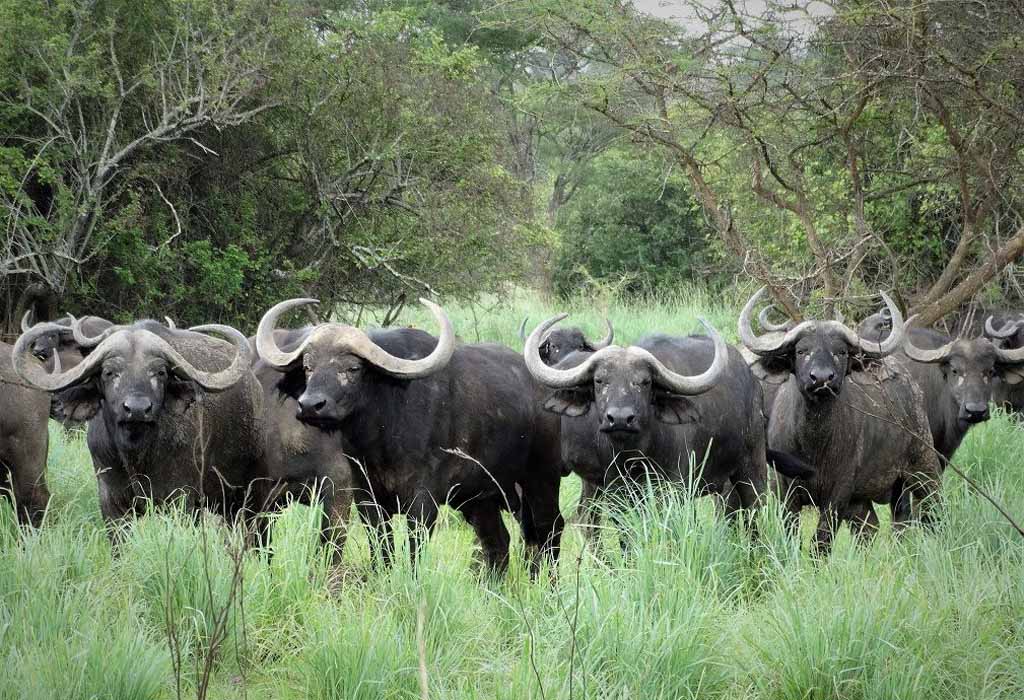
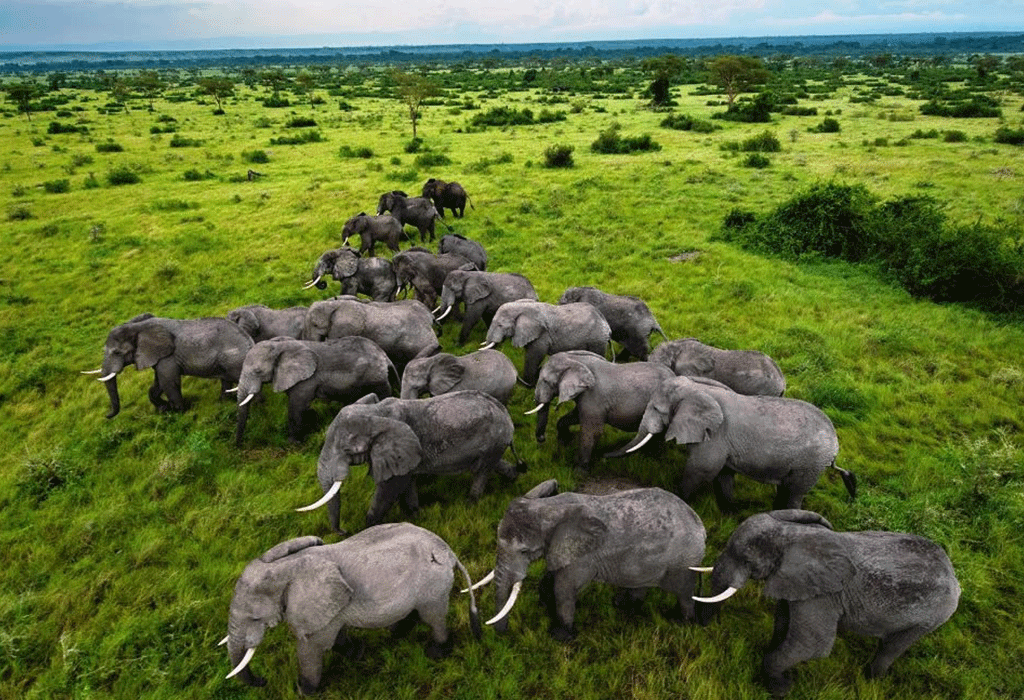
The open grasslands support Uganda kob, topi and other grazing mammals. Buffalo herds are often conspicuous, while elephants may move through wooded areas and along watercourses. Warthogs, waterbuck and other antelope enrich the drive, and lucky visitors may encounter additional predators. Every sighting depends on habitat, season, time and animal movement. No one should expect all species to appear on every outing. Ishasha preserves important habitat. Lions need undisturbed space.
Ishasha wildlife viewing is rewarding because it teaches observation. Topi may stand high on termite mounds, kob gather in open patches and buffalo choose areas with good forage. Birds add activity overhead and beside seasonal pools. A guide who explains these details turns what could be a narrow search for lions into a richer understanding of a functioning savannah ecosystem. Ishasha rewards careful planning. Ishasha preserves important habitat.
Birdwatching along grassland and woodland edges
Birders should bring binoculars even if their first interest is tree climbing lions of Ishasha. Raptors search Ishasha plains, while hornbills, bee-eaters, storks and other species may appear along tracks and riverine vegetation. Seasonal movement and water availability influence the mix. Ask for a bird-friendly pace if you want time to study field marks or photograph smaller species. A general game drive can cover many habitats, but careful birdwatching benefits from slower stops. Ishasha preserves important habitat. Lions deserve respect. Lions need undisturbed space.
The Ishasha River and nearby wooded corridors broaden the habitat contrast. They can attract animals seeking shade and water, though river banks must be approached only where authorized. Keep a respectful distance from hippos and any other potentially dangerous species. The most memorable wildlife moments often emerge from quietly waiting at a legal viewing position instead of trying to cover more kilometers. Lions are never guaranteed. Lions remain unpredictable.
How to reach Ishasha and continue toward Bwindi
Most international visitors enter Uganda through Entebbe and travel by road or domestic flight as part of a longer itinerary. Road travel from Kampala or Entebbe typically requires a substantial transfer day, with actual times depending on stops, weather, traffic and the chosen route. Many travelers divide the journey by visiting other western Uganda destinations. A 4×4 vehicle is particularly useful on rougher park tracks and during wetter conditions. The tree climbing lions of Ishasha inspire responsible photography. Queen Elizabeth National Park has varied habitats. Ishasha invites patient observation.
From the Mweya area or northern Queen Elizabeth National Park, Ishasha is reached by road through Queen Elizabeth National Park’s southern corridor. Do not assume a short distance means a quick drive. Wildlife pauses, damaged road sections and rain can alter the schedule. The nearest practical airstrip option commonly discussed for the southern circuit is Kihihi; scheduled services, charters and onward vehicle transfers need to be confirmed for your exact travel date. Ishasha requires respectful travel.
The popular onward connection is the Buhoma entrance area of Bwindi Impenetrable National Park. This allows a classic savannah-to-rainforest itinerary: look for lions among fig trees, then enter misty forest for mountain gorilla trekking. However, Bwindi has several trekking sectors. A lodge near Buhoma may be unsuitable for a permit assigned to a more distant sector, so check permit location before choosing accommodation. Tree climbing lions need protection. Lions are never guaranteed.
A practical routing principle
Plan the next morning before you plan the previous evening. If the following day begins with a gorilla trek, protect enough time to reach the correct briefing point and rest. An Ishasha safari is better enjoyed without a stressful race against a fixed permit time. On a transfer day, one unrushed drive may be more sensible than trying to squeeze two drives into the schedule. Lions deserve respect. Lions may remain concealed. Lions need undisturbed space.

Where to stay near the southern plains
Accommodation choices around Ishasha include wilderness-style camps and lodges in the surrounding area, with facilities and access times varying considerably. Decide first whether the location supports your intended game-drive schedule. A lodge close to the relevant park entrance may save precious early-morning travel time. A property farther away can still be an excellent choice if its service, budget and setting fit your priorities, but ask about the actual travel time to the viewing tracks. Ishasha requires respectful travel. Ishasha rewards careful planning. Lions need undisturbed space. Lions remain unpredictable. Lions respond to habitat.
Compare room types, meals, electricity, Wi-Fi, accessibility, family arrangements and whether the camp requires an escort after dark. Some guests prefer canvas accommodation that emphasizes the sounds of nature; others want permanent rooms and additional comforts. Neither option automatically delivers better wildlife sightings. Staff knowledge and reliable transfers may matter more than decorative luxury when the main goal is time in the field. Ishasha requires respectful travel.
Before booking, confirm whether entrance fees, guides and vehicles are included. Also ask how the lodge handles late arrival, early breakfast and packed meals. A simple logistical detail can make the difference between a relaxed sunrise drive and a day that begins rushed. An Ishasha safari is most enjoyable when the accommodation supports the pace of tree climbing lions rather than forcing the entire experience around check-in hours. The tree climbing lions of Ishasha depend on a healthy habitat. Ishasha offers broad horizons. Lions follow natural rhythms.
Choose a lodge that fits your game drives
We can connect your preferred room style with the right park entrance, transfer times and opportunities to look for lions.
info@ugandarwanda-safaris.com
Photography tips for tree climbing lions of Ishasha
Photographing a lion in a tree calls for a different approach from photographing one walking across open grass. Branches can obstruct the face, and bright sky behind leaves may confuse exposure. Start with a wider environmental composition that shows the lion’s height and the form of the tree. Then use a telephoto lens to isolate eyes, paws or the curve of a body resting on a branch. Include some habitat rather than making every frame a close-up. Queen Elizabeth National Park protects diverse animals. Ishasha offers quiet savannah. Lions need undisturbed space.
A beanbag or stable vehicle support can help when using longer lenses. Carry spare batteries, sufficient memory cards, a microfiber cloth for dust and binoculars for spotting. Avoid using flash on animals or asking others to create noise to produce eye contact. If several vehicles are present, wait your turn and position the camera without pressuring the guide to cut in front of another group. Ishasha invites patient observation. Lions follow natural rhythms.
The light changes rapidly across the Ishasha plains. High sun can create hard contrasts, but it may also illuminate the cat’s outline through foliage. Cloud cover softens highlights and brings out fur detail. Late afternoon may create warm colors, although the lion may have moved or descended by then. Wildlife photography is about adapting to real behavior, not reproducing an exact internet image. Tree climbing lions inspire curiosity. Lions are never guaranteed. Lions remain unpredictable.
Making captions truthful
A caption should describe what the picture actually shows: a lion resting along a branch, an elephant on the savannah or visitors on a boat. Avoid claiming a location, behavior, number of animals or special event that cannot be established from the picture and its source metadata. This article uses descriptive captions to connect the images with the surrounding information, while recognizing that a still photo cannot prove what happened immediately before or after the shutter was pressed. Queen Elizabeth National Park protects diverse animals. Ishasha changes with seasons. Ishasha rewards careful planning.
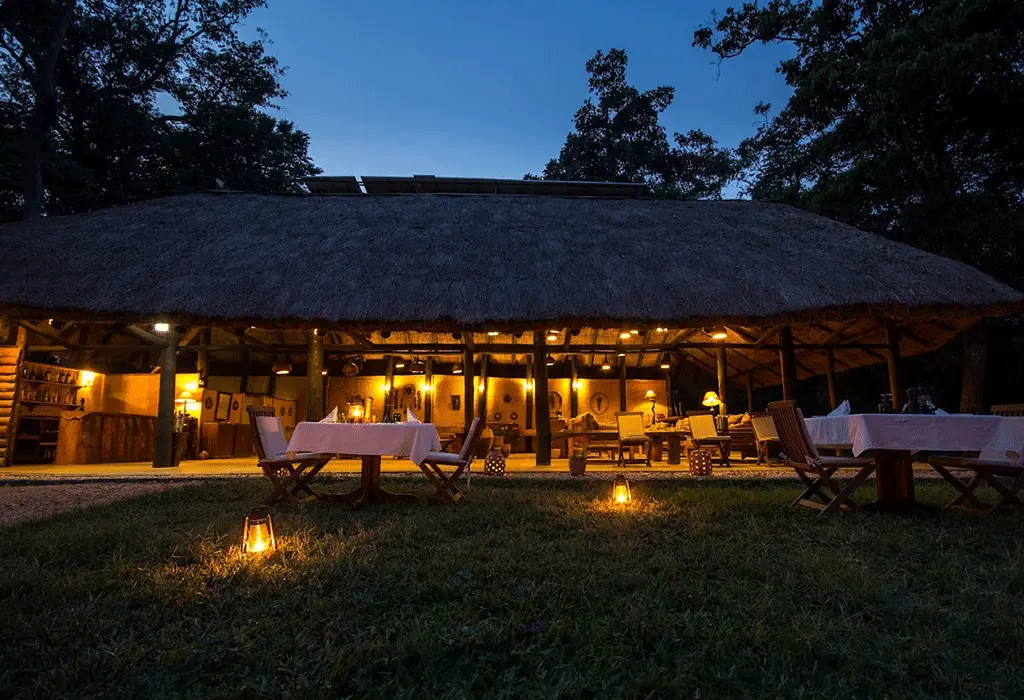
, showing one style of lodging near the southern park sector.
Combining Ishasha with other western Uganda experiences
The most natural pairing is a broader Queen Elizabeth National Park visit. The Kazinga Channel boat excursion offers a different perspective on the ecosystem, with waterbirds, hippos and animals visiting the shoreline. Kasenyi is known for open-plains game drives, while Kyambura Gorge provides a forested contrast and opportunities to track chimpanzees when permits and activity conditions allow. These experiences make a multi-night park visit more varied than focusing exclusively on Ishasha. Lions may remain concealed. Lions are never guaranteed.
To the south, Bwindi brings steep forest and mountain gorillas. Farther north, Kibale is associated with chimpanzee trekking, while crater lakes and local communities offer additional cultural and landscape stops. A well-designed Uganda safari connects habitats with enough time for each experience. Trying to fit Ishasha, gorillas, chimpanzees and several parks into too few nights can produce more driving than observing. The tree climbing lions of Ishasha deserve patient visitors. Ishasha requires respectful travel. Lions need undisturbed space. Lions are never guaranteed.
If your trip includes Rwanda or other East African destinations, treat border formalities and flight connections as planning constraints. Verify the latest immigration, health and airline requirements from official sources before travel. It is safer to keep a buffer around a scheduled flight than to assume that distant park transfers will run exactly to the minute. Lions respond to habitat.
Example of a comfortable three-day wildlife segment
On the first day, arrive in Queen Elizabeth National Park and enjoy an afternoon activity suited to your actual arrival time. On the second, travel south with appropriate stops and spend the afternoon exploring Ishasha. On the third, choose an early drive before proceeding toward Bwindi or another destination, provided the transfer fits your schedule. Add a second Ishasha night if photography and a more relaxed pace matter most. This is a flexible framework rather than a guaranteed timetable. Queen Elizabeth National Park rewards patient visitors. Ishasha rewards careful planning. Lions respond to habitat. Lions remain unpredictable.
Responsible encounters and lion conservation
Lions face pressures well beyond the limits of a single national park. Habitat fragmentation, conflict when predators attack livestock and changes in prey availability can threaten populations. Tourism can contribute to conservation financing and local employment, but only when visitors and operators behave responsibly. Ask how an operator supports authorized guiding, fair employment and community partnerships. Avoid any activity that requires baiting, disturbing or chasing a wild animal.
A respectful Ishasha safari leaves animals room to choose their own behavior. Never feed wildlife or approach cats on foot during a vehicle safari. Remain within authorized viewing areas, take litter away and follow ranger instructions. If a lion is descending from a tree, your vehicle should not block the route. If a pride is resting near a track, do not ask the driver to move so close that tree climbing lions become visibly uneasy. Tree climbing lions behave naturally. Lions remain unpredictable.
Conservation is also a community story. People living around protected landscapes need practical ways to protect livestock and benefit from nature-based tourism. Visitors can support reputable local businesses, pay legitimate park fees and choose operators that take conflicts seriously. A photo of tree climbing lions of Ishasha can inspire admiration, but the longer-term value comes from protecting healthy habitat and reducing harm to both people and predators. Queen Elizabeth National Park protects diverse animals. Queen Elizabeth National Park rewards patient visitors. Ishasha requires respectful travel. Ishasha invites patient observation. Lions follow natural rhythms. Lions are never guaranteed.
Safari safety and practical essentials
Bring sun protection, a brimmed hat, drinking water, closed shoes, a light rain layer and clothing suitable for changing temperatures. Insects can be present throughout the year, so pack repellent and discuss destination-specific health precautions with a travel-health professional. A small dry bag protects camera equipment and documents during sudden rain. If a domestic flight is involved, confirm baggage allowances because they can differ from international airline limits. The tree climbing lions of Ishasha attract curious travelers. Ishasha offers broad horizons. Lions are never guaranteed.
Keep arms and belongings inside the vehicle near predators and other dangerous animals, and leave the vehicle only where the guide explicitly permits. At unfenced accommodation, follow staff instructions after dark. Do not walk alone to investigate sounds outside a tent. For families, discuss children’s needs, vehicle seating, drive length and any lodge age policies before paying for the itinerary. Ishasha preserves important habitat. Ishasha offers quiet savannah. Lions deserve respect.
Park fees, activity rules, flights and road conditions may change. Request a current written quotation that specifies accommodation, park entry, game drives, guiding, transfers, meals and exclusions. Check the latest Uganda Wildlife Authority tariff rather than relying on an old article for exact prices. These steps help a safari budget remain realistic and reduce misunderstandings when plans change. Lions follow natural rhythms.
Build a flexible southern Uganda route
Tell us your group size, travel dates and must-see activities for a journey that leaves proper time for the Ishasha plains.
info@ugandarwanda-safaris.com
The behavior behind a good lion encounter
A lion’s day is not a continuous hunt. Much of its time is spent resting, conserving energy and responding to heat, hunger, other pride members and the presence of prey. When viewing lions in Ishasha, patience makes subtle interactions easier to notice. A cub may shift position beside an adult, a lioness may raise her head at an alarm call, or a resting animal may stretch before changing branches. These details reward quiet observation, even when nothing dramatic happens. Queen Elizabeth National Park has varied habitats. Ishasha offers broad horizons. Lions may remain concealed. Lions deserve respect.
tree climbing lions of Ishasha can also prompt useful questions about individual differences. Not every lion climbs with the same enthusiasm, and not every pride member will be visible at once. Age, strength, branch structure and local circumstances may affect what a visitor sees. Rather than describing the behavior as a universal rule, ask your guide what has recently been observed in that part of the sector. Good interpretation separates an established sighting from speculation. Lions deserve respect.
Planning for families and mixed-interest groups
A private vehicle can help a family manage snacks, rest stops and how long to linger at a sighting. A small group of photographers might prefer a slower drive and space to support long lenses. Birders may want to pause frequently, while first-time safari guests often appreciate a balanced range of species. Explain these preferences before departure so the guide can choose a pace everyone enjoys. Stay within park regulations regardless of group size. Ishasha offers broad horizons. Lions respond to habitat.
For children, a wildlife outing is often more memorable when adults explain animal tracks and simple ecological relationships rather than demanding silent attention for several hours. Allow room for questions and keep binoculars within reach. Parents should check lodge policies, safety procedures and recommended drive durations. In hot conditions, water and sun protection are essential for every age group, and a shaded break can be as valuable as another hour of driving. The tree climbing lions of Ishasha cannot be guaranteed. Queen Elizabeth National Park rewards patient visitors. Queen Elizabeth National Park has varied habitats. Ishasha requires respectful travel. Lions remain unpredictable. Lions may remain concealed.
Before leaving the lodge, agree on the return time and a backup plan if rain closes a track. Mobile connectivity may be inconsistent, so the group should have clear arrangements with the driver. If anyone has mobility needs, discuss vehicle access, step height and room location in advance. None of these details sounds as exciting as a lion in a tree, yet each can materially improve the day. Lions follow natural rhythms.
Frequently asked questions about the Ishasha lions
Are the tree climbing lions of Ishasha guaranteed?
No. They are free-ranging predators, not animals in an enclosure. They can rest high in trees, lie on the ground, hunt at night or move to places not visible from tourist tracks. A knowledgeable guide and more than one viewing window improve the quality of the search without guaranteeing a sighting. Enjoying other wildlife is part of a realistic safari mindset. Ishasha offers broad horizons. Ishasha invites patient observation. Ishasha rewards careful planning. Lions follow natural rhythms. Lions respond to habitat.
Are these lions a different species?
No. tree climbing lions are African lions exhibiting a notable local behavior. The tendency for some prides to climb frequently is unusual, but it does not make them a separate species. Research has not conclusively established why this behavior is common in certain populations. Their adaptability is part of what makes Ishasha fascinating. Ishasha changes with seasons.
Which trees do they climb?
Broad-branched fig trees are frequently associated with tree climbing lions of Ishashaings. Some accounts also describe lions using other sturdy trees. Strong, accessible branches are more important than the traveler’s expectation of one perfect tree. Look for the animal carefully, because foliage, shadows and the angle of observation can hide even a large cat. Tree climbing lions need protection.
How many nights should I stay?
One night gives a useful opportunity for an afternoon and a following morning drive, depending on transfers and park schedules. Two nights offer more flexibility for photography or unexpected weather. If you have only a brief stop, the drive can still be rewarding, but set expectations accordingly. A safari has many possible highlights beyond a single animal. Lions are never guaranteed. Lions follow natural rhythms.
Can I combine Ishasha with gorilla trekking?
Yes. Ishasha fits naturally into many routes to Buhoma and other Bwindi areas, but the exact trekking sector is important. Gorilla permits are date-specific and linked to particular briefing locations. Confirm the correct sector before selecting a lodge or scheduling a long transfer. The best itinerary protects the trek from avoidable delays. The tree climbing lions of Ishasha illustrate animal adaptability. Lions need undisturbed space.
Is Ishasha suitable for first-time safari travelers?
Yes, particularly for people who enjoy quieter landscapes and have a realistic attitude to wildlife viewing. The main challenge is distance and variable road conditions, not specialized physical fitness for ordinary vehicle drives. A driver-guide can handle navigation and explain what you are seeing. Travelers seeking a highly predictable schedule may prefer a less ambitious route with more overnight stops. Queen Elizabeth National Park has varied habitats. Ishasha changes with seasons. Ishasha invites patient observation. Lions may remain concealed.
Plan an Ishasha trip worth remembering
The tree climbing lions of Ishasha deserve their reputation, but Ishasha plains offer far more than one celebrated sight. Give yourself time to study the big fig trees, watch kob and topi graze, notice the changing birdlife and appreciate the stillness between sightings. This is a destination for curious observers, not a rushed photo checklist. The reward may be a lion draped over a branch—or a quieter moment that reveals how the savannah works. Lions deserve respect. Lions may remain concealed. Ishasha offers quiet savannah.
A thoughtful safari balances the best chances of seeing lions with comfortable travel, honest expectations and respect for conservation. Choose a guide who knows Ishasha, include enough nights to avoid unnecessary pressure, and connect Ishasha to the rest of western Uganda in a logical sequence. Above all, leave space for surprise. The most meaningful wildlife encounters rarely happen according to a rigid script. The tree climbing lions of Ishasha are not a separate species. The tree climbing lions of Ishasha remain the regional highlight.
Start planning your Ishasha experience
Share your dates, travel group and preferred comfort level for a personalized route through Queen Elizabeth National Park and beyond.
info@ugandarwanda-safaris.com