Birding in Queen Elizabeth National Park

Uganda Birdwatching Guide
Birding in Queen Elizabeth National Park
Explore wetlands, lakes, open savannah and forest in one of Uganda’s richest birding destinations.
Birding in Queen Elizabeth National Park is rewarding because every change in landscape brings a different group of birds. One morning may begin with fish eagles calling beside the Kazinga Channel, continue with lapwings on the Kasenyi Plains and finish with sunbirds feeding around the lodge. The next day, forest trails can introduce birds that rarely appear in the open country.
Located in western Uganda, Queen Elizabeth National Park has more than 600 recorded bird species. The total reflects its mix of grassland, wetland, crater lakes, woodland and tropical forest. It is an excellent choice for first-time birdwatchers, serious birders pursuing a longer species list, and safari travelers who want to notice more than the famous mammals. Start with our Queen Elizabeth National Park travel guide or compare Uganda’s best birdwatching parks before selecting your route.


Why Queen Elizabeth Is Excellent for Birdwatching
Birding here is not limited to one trail or one habitat. The Kazinga Channel supports waterbirds, grasslands attract raptors and ground-dwelling species, and Maramagambo Forest offers the quieter challenge of finding birds within dense vegetation. The park also lies within a wider western Uganda safari circuit, so birding can fit comfortably around game drives, forest walks and primate activities. For a sense of how the different landscapes compare, explore our guide to Uganda’s top national parks.
600+ recorded bird species
The park’s extensive bird list includes resident species and seasonal visitors; no single safari will encounter every species.
Many habitats in one destination
Lakes, papyrus, savannah, thicket, woodland and forest make each birding outing feel different.
Birding with other wildlife
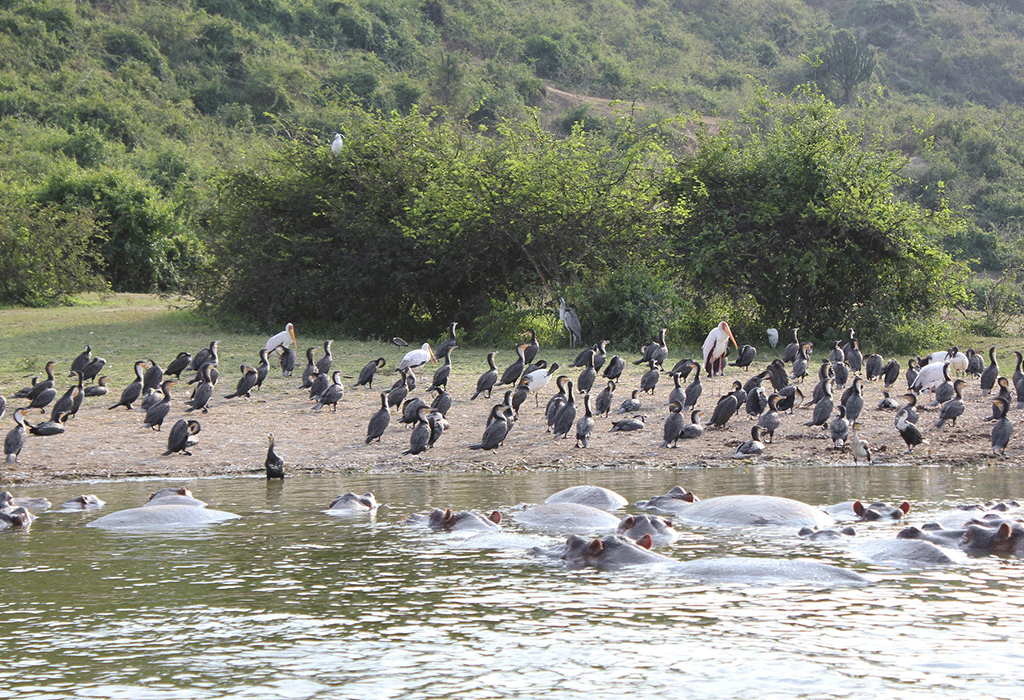
Waterbirds can be watched near hippos, while grassland birding often takes place alongside elephants, Uganda kob and other mammals.
Best Birding Spots in Queen Elizabeth National Park
1. Kazinga Channel — waterbirds and close photography
The Kazinga Channel connects Lakes Edward and George and is the park’s standout destination for waterbird watching. On a boat cruise, look for African fish eagles, pied kingfishers, great and long-tailed cormorants, herons, egrets, African jacanas, pelicans and storks. Birds may be fishing, feeding in shallow water or resting along the shore. This combination of open views and changing activity makes it especially enjoyable for photographers.
Boat birding is generally more relaxed than trying to identify small forest birds. However, boat schedules and routes are shared with other visitors, so very specialized birders may prefer to discuss available birding-focused options before booking. Read our Kazinga Channel boat cruise guide and the practical overview of boat safari experiences.
2. Mweya Peninsula — thicket birds, kingfishers and raptors
Mweya combines scrub, open patches and views toward the channel. Early mornings can be productive for little bee-eaters, sunbirds, grey-headed kingfishers, doves, weavers and other birds that use woodland edges. Scan taller trees and the sky for raptors. An experienced guide helps distinguish similar-looking species by call, size and behavior. Birding walks should take place only where permitted and with appropriate local guidance.
3. Kasenyi Plains — grassland species and birds of prey
Kasenyi’s open terrain is well suited to searching for grey crowned cranes, lapwings, larks, cisticolas, francolins, bustards and raptors. Keep binoculars ready during game drives and allow the driver-guide to stop safely when a bird appears. Some small birds are easily overlooked when everyone is watching for lions, so dedicated birding time makes a difference. Learn about the park’s wider wildlife in Queen Elizabeth National Park when building a combined wildlife itinerary.
4. Maramagambo Forest — birds of the canopy and understory
Maramagambo offers a change from the park’s sunny plains. Black bee-eaters, forest flycatchers, hornbills and other woodland or forest birds may be found along suitable trails. Finding birds here often requires listening, waiting and watching movement through branches rather than expecting unobstructed views. Book a guided walk and allow enough time for the slower pace. Our Maramagambo Forest safari guide explains the landscape and other experiences around the forest.
5. Ishasha — southern woodland and river-edge birding
Many visitors pass through Ishasha in search of tree-climbing lions, but the woodland, grassy areas and riverine habitat also deserve attention. Depending on conditions, watch for African fish eagles, vultures, bee-eaters, storks, bustards and mixed woodland birds. Birding here can be paired with a game drive, but a short stop between destinations is unlikely to do the sector justice. See our tree-climbing lions of Ishasha and Ishasha wildlife and birding tips for ways to explore the area responsibly.
6. Katwe, Lake Munyanyange and Lake Kikorongo — saline lakes and shorebirds
Shallow water and exposed lake margins can attract waders, egrets and other water-associated birds. Lesser and greater flamingos may appear seasonally at suitable saline lakes, especially around the Katwe–Munyanyange area, but their presence changes with water conditions and migration. These are opportunities rather than predictable daily sightings. A guide can check recent reports and advise which accessible viewpoints are worth visiting.


Bird Species to Look for
A useful checklist begins with birds that are relatively conspicuous, then adds more demanding targets by habitat. You may see different species each day, even when visiting the same part of the park. A birding guide can also help keep a daily checklist and identify unfamiliar calls.
Wetland & waterbirds
African fish eagle, pied kingfisher, malachite kingfisher, African jacana, pink-backed pelican, great cormorant, squacco heron and various egrets.
Savannah & woodland
Grey crowned crane, martial eagle, black-bellied bustard, little bee-eater, red-capped lark, African mourning dove and various lapwings.
Forest & thicket
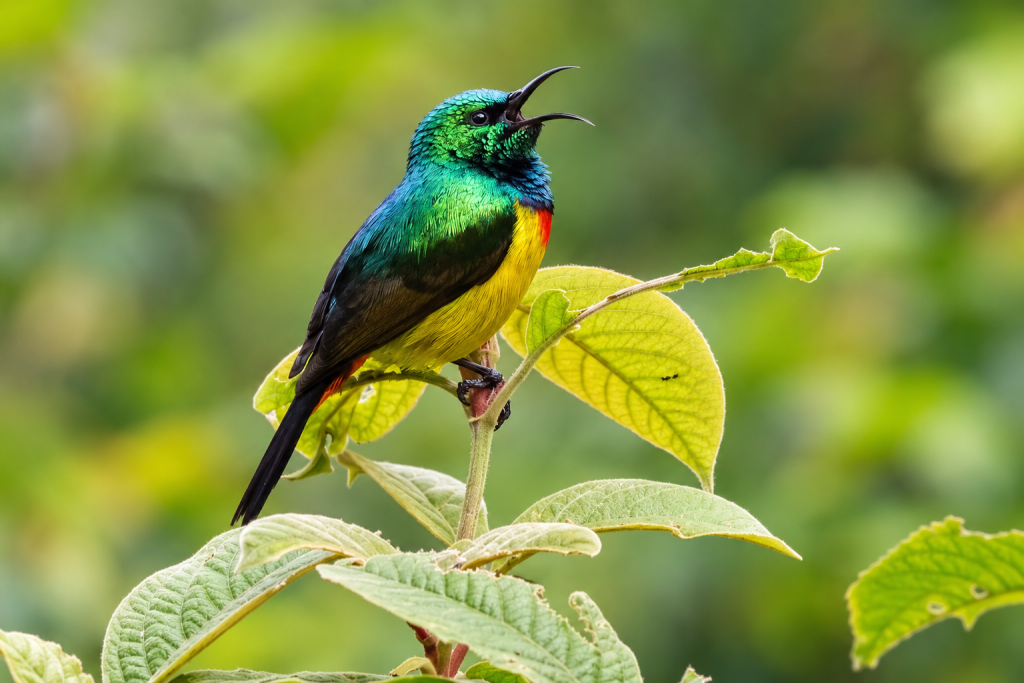
Black bee-eater, blue-breasted kingfisher, forest flycatchers, hornbills, sunbirds, weavers and other woodland specialists.
Special targets require realistic expectations. Shoebills are associated with suitable wetland habitat in the wider park landscape, but encounters here are irregular and should not be the central promise of a Queen Elizabeth safari. Flamingos are also variable visitors. Travelers whose main goal is a shoebill should consider adding a dedicated wetland trip near Entebbe. This is particularly useful for photographers planning a focused bird photography in Uganda itinerary.
Best Time for Birding in Queen Elizabeth National Park
Queen Elizabeth is a year-round birding destination. The choice of month influences weather, access, bird activity and which migrants are present rather than whether birding is possible at all.
December–February
Often relatively drier conditions and productive field time. Northern winter migrants can add variety to the bird list.
March–May
Greener landscapes and active birdlife, with showers that may affect trails, visibility and transfer times.
June–September
Often convenient for combining savannah birding with wildlife drives, although local conditions and occasional rain still vary.
October–November
Rainfall may increase and migrant arrivals can make wetland birding especially interesting. Flexible scheduling is useful.
Many Palearctic migrant species occur during the northern winter period, broadly from November to April. Weather patterns are not fixed calendars, so consult our best time for a Uganda birding safari and broader list of Uganda birding hotspots before choosing travel dates.
How Many Days Should You Spend Birding?
One day can combine the Kazinga Channel with part of Mweya or Kasenyi, making it suitable for general safari travelers. Two or three days allow a more satisfying mix of grassland, water and forest. Four to five days are better for dedicated birders planning to include Ishasha, forest outings and careful photography without rushing.
For inspiration, consider the five-day Queen Elizabeth birding safari and the five-day wildlife and birding itinerary. Both can be tailored according to your actual birding targets, available days and preferred standard of accommodation. Travelers exploring a shared departure can also read about Queen Elizabeth National Park group safaris.
Suggested Three-Day Queen Elizabeth Birding Itinerary
Day 1 · Arrival, Mweya & Kazinga
Arrive in the park, settle into your lodge and spend available daylight around accessible Mweya birding areas. Arrange a Kazinga Channel cruise for the scheduled departure that best fits your arrival and priorities.
Day 2 · Kasenyi & Maramagambo
Begin early on the Kasenyi Plains for larks, cranes and raptors. Later, transfer to Maramagambo Forest for a guided birding walk if travel time and local schedules allow.
Day 3 · Katwe wetlands & departure
Visit accessible lake-edge viewpoints in the Katwe area with your guide, checking for waders and seasonal flamingos before departing. Extend to Ishasha if you have an additional night.
The right order depends on the lodge location, boat departure availability, weather and driving time. A serious birding itinerary should allow flexibility for unusually good sightings. Travelers combining forest birding with a primate activity can consider Kyambura Gorge chimpanzee tracking separately, subject to permits and scheduling.
Where to Stay for a Queen Elizabeth Birding Safari
For most birdwatchers, location matters more than a long list of lodge facilities. Accommodation around Mweya or the northern park area makes it easier to reach the Kazinga Channel and Kasenyi. Staying farther south makes sense when Ishasha is a major priority. Ask us to confirm early-breakfast arrangements, transfer times and the best lodge location for your specific birding route.


For additional ideas, read our guides to Ishasha sector accommodation and luxury accommodation in Queen Elizabeth. Lodge availability, room categories and suitable travel times should be checked for your exact dates before confirming a safari.
Combining Queen Elizabeth Birding with Other Uganda Destinations
Queen Elizabeth fits naturally between Kibale and Bwindi on a western Uganda circuit. From Kibale, add tropical forest and wetland-edge birding before traveling south through the savannah. Read the Kibale travel guide for planning details. Travelers with more time can use the Bwindi, Queen Elizabeth, Kibale and Murchison route as a broader route reference.
Bwindi contributes a very different list of montane forest birds and the possibility of mountain gorilla trekking. The Uganda birding and gorilla safari brings these interests together. If your journey begins in Entebbe, consider a Mabamba bird-watching tour or read the Mabamba Bay wetland guide for a focused wetland excursion before traveling west.
Shorter trips can borrow ideas from a three-day Uganda birding safari, while longer routes can be built around custom Uganda safari packages or the practical Uganda wildlife safari planning guide. For travelers wondering whether a birding safari suits them, the wider article on why visit Uganda offers helpful context. A more extensive itinerary can follow our eleven-day Uganda safari program, or combine wildlife and primates with this five-day gorilla and Queen Elizabeth safari.
What Makes a Well-Planned Birding Safari Different?
A conventional safari usually centers on large mammals. The vehicle may spend much of its time searching for lions, elephants or leopards and move on quickly when a small bird is seen. A dedicated birding safari works differently. The route is built around different habitats, and the guide is ready to stop when a call comes from roadside thickets, when raptors gather over open grassland or when a shoreline reveals feeding waders.
Good planning begins with your interests. Someone photographing fish eagles and kingfishers may appreciate more time along the Kazinga Channel. A traveler building a life list may prefer an additional forest walk, while a couple taking their first safari may enjoy a relaxed combination of a morning game drive and an afternoon cruise. These are all valid ways of enjoying the park, but they should not be treated as identical itineraries.
It also helps to distinguish a bird checklist from a promise. A park bird list represents observations collected over many years, seasons and habitats. A single visitor cannot expect to encounter everything recorded. Sightings change with weather, vegetation, water levels, breeding cycles and bird movements. The most satisfying days are often those that allow time to appreciate behavior rather than rush toward a predetermined number.
For families and mixed-interest groups, we recommend alternating bird-focused activities with familiar safari highlights. For instance, a morning in Kasenyi can include both lapwings and large mammals. A boat outing can provide enjoyable views of pelicans, kingfishers, hippos and crocodiles. An additional day in the forest offers a quieter, slower kind of discovery that contrasts with open-water birding.
Travel Logistics and Responsible Birding
Queen Elizabeth National Park can be reached by road from Entebbe or Kampala, usually as part of a longer western Uganda circuit. Driving time depends on the starting point, selected route, traffic, road conditions and lodge location. Domestic flights to the region can reduce long road transfers, but the onward journey and the appropriate arrival airstrip must be planned for the specific accommodation.
Birders visiting several sites should avoid placing too many activities on the same day. A forest walk may take longer than expected, and a wildlife-rich game drive can be difficult to shorten. Allowing an extra night often improves the experience more than squeezing in another distant location. A little flexibility also gives the guide room to respond to recent bird observations or to wait until light conditions improve for photography.
Respect for local communities and wildlife habitats is essential. Use established viewing points, follow park guidance and avoid feeding birds. Keep a respectful distance from roosts and nesting areas, and discuss photography etiquette with your guide. These small choices help protect the very species that make Uganda such a compelling birdwatching destination.
Practical Birdwatching Tips
Choose a guide with birding experience. A good wildlife guide may recognize large, familiar species, but a specialist birder can help identify calls, subtle plumage differences and habitat preferences. Discuss your wish list in advance, especially if you are looking for raptors or wetland specialists.
Start early and give each habitat time. Bird activity and comfortable viewing conditions are often favorable in the morning. Instead of moving constantly, allow time to listen and scan. Forest birding especially benefits from a slower pace.
Carry the right equipment. Binoculars are essential; an identification guide or offline bird app is useful. For photographs, pack a suitable telephoto lens, extra batteries, memory cards and a rain cover. Light neutral clothing, sun protection, water and closed walking shoes are recommended.
Respect wildlife and park rules. Remain on permitted routes, follow ranger instructions and keep noise low. Avoid playback that disturbs nesting or territorial birds, do not approach nests and never ask a boat captain or driver to stress wildlife for a photograph.
Plan for realistic access. Some birding is done from a vehicle or boat, while forest walks may require a local guide and authorization. Activity fees, park entry, ranger arrangements and boat schedules can change; these should be confirmed during booking rather than assumed to be included.
Frequently Asked Questions
How many bird species are in Queen Elizabeth National Park?
More than 600 species have been recorded, reflecting the park’s exceptional mixture of savannah, forest, lakes and wetlands. The number recorded in the park is not the number a visitor should expect on one trip.
Where is the best place to watch birds?
The Kazinga Channel is particularly accessible for waterbirds. Kasenyi is rewarding for grassland birds and raptors, while Maramagambo Forest offers a different experience for forest specialists.
Can I see a shoebill in Queen Elizabeth National Park?
It is possible in suitable wetland areas, but sightings are uncommon and unpredictable. If the shoebill is your main priority, add a dedicated search at Mabamba Bay or another suitable wetland site with knowledgeable local guides.
Are flamingos present throughout the year?
No. Flamingo visits to the saline crater lakes vary seasonally and with local conditions. Ask your guide about recent sightings rather than planning the whole trip around them.
Is Queen Elizabeth suitable for first-time birdwatchers?
Yes. Many conspicuous species can be watched from boats and safari vehicles, and a birding guide can introduce identification techniques without requiring previous experience.
Can birding and a wildlife safari be combined?
Absolutely. A well-paced itinerary can include waterbirds along the Kazinga Channel, a Kasenyi game drive, forest birding and time in Ishasha. The key is avoiding a schedule that leaves too little time to observe birds.
Plan Your Queen Elizabeth Birding Safari
Tell us your preferred dates, target species, group size and accommodation style. We will build a realistic route with a suitable birding guide, lodge locations and the right balance of birding, boat time and wildlife viewing.
Safari planning note: bird species, lodge suitability, activity arrangements and sightings depend on local conditions and current availability. Contact Us to request a quote for a personalized itinerary and confirmed inclusions.