Why Gorilla Trekking Uganda Changed My Life: A Journey Through Garama Caves

Why gorilla trekking in Uganda changed my life: A journey through Garama Caves: There are moments in life that etch themselves into your soul, forever altering your perception of the world and your place within it. For me, one such moment was the decision to embark on a gorilla trekking adventure in Uganda. It wasn’t just a trip; it was a pilgrimage to the heart of Africa, a quest to connect with one of our closest relatives in their natural habitat.
As a traveler who has always sought experiences that go beyond the ordinary, the idea of coming face-to-face with a mountain gorilla in the dense, emerald embrace of Uganda’s Bwindi Impenetrable Forest National Park held an irresistible allure. This wasn’t about ticking off a bucket list item; it was about answering a profound call, a whisper from the wild that promised something truly transformative. And indeed, it delivered far more than I could have ever imagined.
My journey began with Safari Vacations and Travel Services, a name that quickly became synonymous with seamless planning and an unparalleled commitment to responsible tourism. From the moment I first inquired, their expertise shone through. They meticulously crafted an itinerary that not only included the much-anticipated gorilla trek but also an intriguing exploration of the Garama Caves, adding another layer of cultural and historical depth to the adventure. This thoughtful combination hinted at the holistic experience that awaited me, a journey that would engage not just my sense of adventure but also my mind and spirit.
Uganda, often referred to as the ‘Pearl of Africa,’ is a country of breathtaking beauty and remarkable biodiversity. Its landscapes are a tapestry of lush rainforests, sprawling savannas, and majestic mountains, each teeming with a vibrant array of wildlife. But it is the mountain gorillas that hold a special place in the heart of this nation. These gentle giants, once on the brink of extinction, have found a sanctuary in the misty slopes of the Virunga Mountains and the dense forests of Bwindi. The opportunity to witness them in their natural environment is a privilege that carries with it a profound sense of responsibility, a responsibility that Safari Vacations and Travel Services deeply understands and champions.
As I prepared for my journey, a mix of excitement and apprehension filled my days. I read everything I could about gorilla trekking, from the physical demands of the trek to the etiquette of being in the presence of these magnificent creatures. I learned about the intricate social structures of gorilla families, the powerful silverbacks who lead and protect them, and the playful antics of the young ones. Each piece of information fueled my anticipation, painting a vivid picture of the experience that lay ahead. Yet, no amount of reading could have prepared me for the sheer emotional weight of the encounter, the profound connection that would be forged in the heart of the forest.
This blog post is more than just a travelogue; it is a testament to the transformative power of nature and the importance of responsible tourism. It is a story of adventure, of discovery, and of a journey that changed my life in ways I am still beginning to understand. Join me as I recount my unforgettable gorilla trekking experience in Uganda and my exploration of the mystical Garama Caves, a journey that took me deep into the heart of the wild and left an indelible mark on my soul.
The Journey to Bwindi: A Tapestry of Sights and Sounds
The journey to Bwindi Impenetrable Forest National Park is an adventure in itself. As you leave the bustling city of Kampala behind, the landscape gradually transforms into a vibrant mosaic of rolling hills, terraced farms, and dense tropical forests. The air grows cooler and fresher, carrying with it the earthy scent of the wilderness. The roads, though sometimes challenging, offer a front-row seat to the daily life of rural Uganda. Children wave with infectious enthusiasm, their bright smiles a testament to the warmth and hospitality of the Ugandan people. Women in colorful traditional attire carry baskets of fresh produce on their heads, their graceful posture a symbol of strength and resilience. Men work in the fields, their rhythmic movements a dance with the land that has sustained their families for generations.
Safari Vacations and Travel Services had arranged for a comfortable and reliable 4×4 vehicle, a necessity for navigating the rugged terrain. My guide, a man named Jason, was a wealth of knowledge and a true ambassador for his country. He shared stories of his childhood, his love for wildlife, and his passion for conservation. Additionally, pointed out different species of birds, their vibrant plumage a flash of color against the green canopy. He explained the traditional uses of various plants, their medicinal properties, a testament to the deep connection between the Ugandan people and their natural environment. His insights and anecdotes brought the landscape to life, transforming the journey into a rich and immersive cultural experience.
As we drew closer to Bwindi, the forest began to reveal its true character. The trees grew taller and denser, their branches intertwined in a complex web of life. The air became thick with the sounds of the forest – the chorus of cicadas, the chatter of monkeys, and the distant call of a turaco. The name ‘Impenetrable Forest’ is no exaggeration. The dense undergrowth, the steep slopes, and the winding trails create a challenging yet rewarding environment for those who venture within. It is a place where nature reigns supreme, a sanctuary for some of the world’s most endangered species.
We arrived at our lodge, nestled on a hillside overlooking the forest, just as the sun was beginning to set. The view was breathtaking. The mist-covered peaks of the Virunga Mountains rose in the distance, their silhouettes a dramatic backdrop to the lush green valley below. The lodge itself was a haven of comfort and tranquility, its rustic charm a perfect complement to the natural beauty of its surroundings. The staff greeted us with warm smiles and refreshing drinks, their hospitality a welcome embrace after a long day of travel. As I sat on my private veranda, listening to the sounds of the forest and watching the stars begin to twinkle in the night sky, I felt a sense of peace and contentment wash over me. I was on the cusp of an extraordinary adventure, and I couldn’t wait to see what the morning would bring.
The Gorilla Trek: An Encounter with Majesty
The morning of the gorilla trek dawned with a sense of anticipation that was almost palpable. After a hearty breakfast, we made our way to the park headquarters for a briefing. The rangers, their faces etched with a deep respect for the animals they protect, explained the rules of the trek. We were to maintain a distance of at least seven meters from the gorillas, to avoid making direct eye contact with the silverback, and to speak in hushed tones. These rules, they explained, were not just for our safety but also for the well-being of the gorillas. They were a reminder that we were guests in their home, and that we had a responsibility to treat them with the utmost respect.
We were divided into small groups, each assigned to a specific gorilla family. Our group, led by a seasoned tracker named David, set off into the forest with a sense of purpose and excitement. The trek was challenging, just as I had expected. We navigated steep, muddy slopes, scrambled over fallen trees, and pushed our way through dense vegetation. The air was thick with humidity, and the sounds of the forest enveloped us in a symphony of life. David, with his intimate knowledge of the forest, led us with a quiet confidence, his keen eyes scanning the undergrowth for any signs of the gorillas.
After what felt like an eternity, but was in reality only a couple of hours, David stopped and motioned for us to be quiet. He had found them. My heart pounded in my chest as we crept forward, our senses on high alert. And then, I saw him. A magnificent silverback, his powerful presence radiating an aura of calm authority. He sat in a small clearing, munching on a branch of bamboo, his dark eyes observing us with a mixture of curiosity and indifference. He was so much bigger than I had imagined, his muscular frame a testament to his strength and power. Yet, there was a gentleness in his eyes, a wisdom that seemed to transcend the boundaries of species.
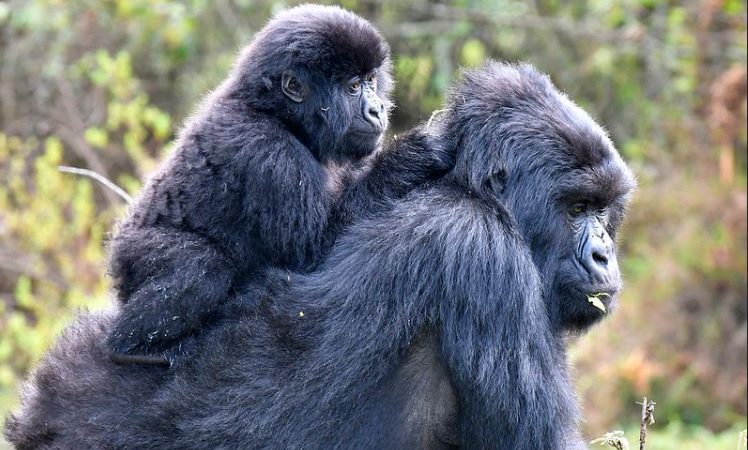
For the next hour, we sat in silence, mesmerized by the scene unfolding before us. We watched as the younger gorillas played, their playful antics a source of endless amusement. They tumbled and wrestled, their laughter-like vocalizations echoing through the forest. We watched as the mothers tenderly groomed their infants, their maternal instincts a universal language that needed no translation. We watched as the silverback, the patriarch of the family, kept a watchful eye over his domain, his quiet presence a reassuring symbol of protection and leadership.
It was in those moments that the true magic of the experience unfolded. As I looked into the eyes of the silverback, I felt a profound sense of connection, a recognition of a shared ancestry that stretched back millions of years. It was a moment of pure, unadulterated awe, a moment that stripped away the complexities of the modern world and brought me back to the very essence of what it means to be alive. It was a moment that changed me forever.
The Garama Caves: A Journey into the Past
After the emotional high of the gorilla trek, I was ready for a different kind of adventure, a journey into the cultural and historical heart of the region. Safari Vacations and Travel Services had arranged for a visit to the Garama Caves, a place of great significance for the Batwa people, the original inhabitants of the forest. The Batwa, a pygmy tribe, lived in these caves for centuries, their lives intricately woven into the fabric of the forest. They were hunter-gatherers, and their knowledge of the forest and its resources was passed down through generations. However, when the Bwindi Impenetrable Forest was declared a national park in 1991, the Batwa were evicted from their ancestral home, and their traditional way of life was forever altered.
The visit to the Garama Caves was a poignant and powerful experience. Our guide, a young Mutwa man named Alex, led us along a trail that wound its way through the forest, his stories and songs a living testament to the rich cultural heritage of his people. He showed us the plants they used for medicine, the trees they used for building their homes, and the traps they used for hunting. He sang traditional songs, their melodies a haunting reminder of a time when his people lived in harmony with the forest.
As we approached the entrance to the Garama Caves, a sense of reverence filled the air. The caves, which stretch for over 340 meters, were once the center of the Batwa community. They were a place of shelter, a place of ceremony, and a place of refuge. As we ventured into the darkness, our flashlights illuminating the ancient rock formations, Alex’s voice echoed through the chambers, his stories bringing the history of the caves to life. He told us of the Batwa kings who once ruled from these caves, of the battles they fought, and of the spirits that they believed inhabited the darkness.
At the end of the cave, we were treated to a performance of traditional Batwa music and dance. The women, their faces adorned with intricate patterns, sang songs of love and loss, their voices a powerful expression of their cultural identity. The men, their bodies painted with a mixture of clay and ash, performed a traditional war dance, their movements a display of strength and agility. It was a deeply moving experience, a celebration of a culture that has endured in the face of adversity.
The visit to the Garama Caves was a powerful reminder of the importance of preserving not just the natural world but also the cultural heritage of the people who call it home. It was a journey into the past, a glimpse into a way of life that is slowly disappearing. It was an experience that filled me with a deep sense of respect for the Batwa people, their resilience, and their enduring connection to the forest.
Conclusion: A Journey of Transformation
My journey to Uganda was more than just a vacation; it was a journey of transformation. It was a journey that took me deep into the heart of the wild, a journey that challenged me physically, emotionally, and spiritually. It was a journey that left me with a profound sense of awe and a deep appreciation for the beauty and fragility of our planet.
The gorilla trekking experience was, without a doubt, the highlight of my trip. To come face-to-face with these magnificent creatures in their natural habitat is an experience that defies description. It is a moment of pure, unadulterated magic, a moment that will stay with me for the rest of my life. But it was the combination of the gorilla trek and the visit to the Garama Caves that made this journey so truly special. It was a journey that allowed me to connect not just with the natural world but also with the rich cultural heritage of the Ugandan people.
I am immensely grateful to Safari Vacations and Travel Services for crafting an itinerary that was so thoughtfully and meticulously planned. Their commitment to responsible tourism, their deep respect for the local culture, and their passion for conservation shone through in every aspect of the trip. They are more than just a travel company; they are a team of dedicated professionals who are passionate about sharing the beauty and wonder of their country with the world.
If you are looking for an adventure that will challenge you, inspire you, and change you in ways you never thought possible, then I wholeheartedly recommend a gorilla trekking trip to Uganda with Safari Vacations and Travel Services. It is a journey that will take you to the very heart of what it means to be alive, a journey that will leave you with a lifetime of memories and a renewed sense of wonder for the world we live in.
The Unforgettable Encounter: A Moment of Pure Connection
The hour we spent with the gorilla family was a blur of emotions and observations. Every movement, every glance, every sound from these magnificent creatures was captivating. We watched a young gorilla, no more than a few years old, playfully swat at a butterfly, its innocence and curiosity a mirror of our own. Its mother, a watchful presence, gently guided it back when it ventured too far, demonstrating a maternal bond that transcended species. The silverback, occasionally shifting his massive frame, would let out a deep rumble, a sound that vibrated through the very ground beneath us, a powerful reminder of his dominance and protective nature. Yet, there was no aggression, only a quiet strength and an almost regal demeanor.
One particular moment stands out vividly in my memory. A juvenile gorilla, perhaps emboldened by our respectful stillness, slowly approached our group. It paused, its dark, intelligent eyes meeting mine. In that brief exchange, I felt an overwhelming sense of connection, a recognition of shared life, and a profound understanding that we are all part of the same intricate web of existence. It was a moment that transcended language and culture, a pure, unadulterated connection with another living being. This was also humbling, awe-inspiring, and deeply moving. It was in that moment that I truly understood the meaning of the phrase, “life-changing experience.” The world, as I knew it, shifted on its axis, and I felt a renewed sense of purpose and a deeper appreciation for the natural world.
Our guide, David, with his years of experience, knew exactly when to intervene and when to let nature take its course. He whispered fascinating facts about gorilla behavior, their diet, their social structures, and the challenges they face in a rapidly changing world. He spoke of the dedicated conservation efforts, the tireless work of rangers and researchers who are committed to protecting these endangered species. It was clear that for him, this was more than just a job; it was a calling, a sacred duty to safeguard these incredible creatures for future generations. His passion was infectious, and it deepened my commitment to supporting conservation initiatives.
As our allotted hour drew to a close, a sense of melancholy settled over me. It was difficult to tear myself away from the gorillas, to leave their peaceful presence and return to the human world. But I carried with me a treasure trove of memories, images etched into my mind, and a feeling of profound gratitude. The trek back to the park headquarters felt different. The physical exertion was still there, but my spirit felt lighter, my heart fuller. I had witnessed something truly extraordinary, something that had touched me on a deeply personal level. The dense forest, which had seemed so formidable just hours before, now felt like a sacred space, a sanctuary where magic still exists.
The Batwa Trail: Echoes of an Ancient Culture
The transition from the wild majesty of the gorillas to the ancient wisdom of the Batwa people was seamless, thanks to the thoughtful planning of Safari Vacations and Travel Services. The Batwa trail, a cultural experience designed to share the history and traditions of this indigenous community, offered a powerful counterpoint to the gorilla trek. It was a journey into the human story of the forest, a narrative of resilience, adaptation, and the enduring spirit of a people deeply connected to their land.
Our Batwa guide, Alex, was a charismatic storyteller, his voice rich with the history of his ancestors. He led us through the forest, demonstrating their traditional hunting techniques, their methods of gathering medicinal plants, and their ingenious ways of building shelters from natural materials. He showed us how they made fire without matches, how they crafted intricate traps for small game, and how they used the forest’s bounty to sustain their lives. It was a living history lesson, a testament to their profound knowledge of the ecosystem and their harmonious relationship with nature.
The highlight of the Batwa trail was undoubtedly the visit to the Garama Caves. As we approached the entrance, a cool, damp air enveloped us, a stark contrast to the warmth of the forest. The caves, dark and mysterious, felt like a portal to another time. Alex explained that these caves were not just shelters; they were sacred spaces, used for ceremonies, meetings, and as a refuge during times of conflict. He spoke of the Batwa warriors who once used the caves as a strategic base, their knowledge of the underground passages giving them an advantage over their enemies.
Inside the caves, the darkness was profound, broken only by the beams of our flashlights. The air was still, and the silence was broken only by the occasional drip of water and the echoes of Alex’s voice. He led us deeper into the cave, pointing out formations that resembled ancient altars and natural chambers that served as living quarters. He shared stories of the Batwa kings who once held court in these very chambers, their wisdom guiding their people through generations. It was easy to imagine the flickering firelight, the hushed conversations, and the vibrant life that once filled these subterranean halls.
The musical performance within the cave was an ethereal experience. The Batwa men and women, their voices resonating against the cave walls, sang traditional songs that spoke of their love for the forest, their reverence for their ancestors, and their hopes for the future. The haunting melodies, accompanied by rhythmic clapping and traditional instruments, filled the cavern with a spiritual energy that was deeply moving. It was a powerful expression of their cultural identity, a defiant declaration that despite the challenges they have faced, their spirit remains unbroken. It was a privilege to witness such raw, authentic artistry, a connection to a heritage that has survived against all odds.
Leaving the Garama Caves, I felt a profound sense of respect for the Batwa people. Their story is a powerful reminder of the importance of cultural preservation and the need to protect indigenous communities and their ancestral lands. Safari Vacations and Travel Services’ inclusion of this experience in their itinerary speaks volumes about their commitment to responsible tourism and their understanding that a true safari is not just about seeing wildlife, but also about connecting with the people and cultures of the region.
The Lasting Impact: A Renewed Perspective
Returning home from Uganda, I found myself changed in subtle yet profound ways. The images of the gorillas, their gentle eyes and powerful presence, were seared into my memory. The echoes of the Batwa songs, their melodies carrying the weight of centuries of history, resonated within me. The vibrant colors of the Ugandan landscape, the warmth of its people, and the raw beauty of its wilderness had left an indelible mark on my soul.
This journey was a powerful reminder of the interconnectedness of all life. It highlighted the urgent need for conservation, not just for the sake of the animals, but for the health of our planet and the future of humanity. It instilled in me a deeper appreciation for the delicate balance of ecosystems and the importance of protecting biodiversity. I realized that every choice we make, every action we take, has an impact on the world around us. And it reinforced my belief that responsible tourism can be a powerful force for good, providing economic opportunities for local communities and fostering a greater understanding and appreciation for the natural world.
Beyond the environmental lessons, the trip also offered personal insights. The physical challenge of the gorilla trek pushed me beyond my comfort zone, reminding me of my resilience and strength. The encounter with the gorillas, so raw and authentic, stripped away the superficial layers of modern life, bringing me back to a more fundamental understanding of existence. It was a journey of self-discovery, a reminder of the simple joys of being present in the moment and connecting with the natural world.
Safari Vacations and Travel Services played an instrumental role in making this journey such a transformative experience. Their meticulous planning, their knowledgeable guides, and their unwavering commitment to ethical and sustainable tourism practices ensured that every aspect of the trip was not only enjoyable but also meaningful. They are not just tour operators; they are custodians of a precious natural heritage, dedicated to sharing its wonders with the world in a way that benefits both travelers and local communities.
If you are seeking an adventure that will challenge your perceptions, stir your soul, and leave you with a renewed sense of wonder for the world, then a gorilla trekking and Garama Caves expedition with Safari Vacations and Travel Services is an absolute must. It is an investment not just in a trip, but in a life-altering experience. This is a journey that will stay with you long after you have returned home, a constant reminder of the incredible beauty and power of the natural world and the profound impact it can have on the human spirit. It changed my life, and I have no doubt it will change yours too.
The Symphony of the Forest: Sounds and Sights Beyond the Gorillas
While the gorillas were undoubtedly the main attraction, the Bwindi Impenetrable Forest itself was a living, breathing entity that captivated all my senses. Every step deeper into its embrace revealed a new layer of its intricate ecosystem. The air was thick with the scent of damp earth, decaying leaves, and the sweet, musky aroma of unseen blossoms. Sunlight dappled through the dense canopy, creating shifting patterns of light and shadow on the forest floor, illuminating vibrant ferns and moss-covered trees that seemed to whisper ancient secrets.
The sounds of the forest were a constant, mesmerizing symphony. The chirping of unseen insects, the rustle of leaves as unseen creatures moved through the undergrowth, the distant calls of exotic birds – each contributed to a rich auditory tapestry. I learned to distinguish the playful chatter of monkeys from the more urgent alarm calls of other forest dwellers. The sheer biodiversity was astounding. Our guide, Jason, with his encyclopedic knowledge, would often pause to point out a chameleon perfectly camouflaged against a branch, or a rare butterfly with wings like stained glass, fluttering through the sunbeams. He showed us the intricate nests of weaver birds, the delicate webs of spiders glistening with dew, and the vibrant fungi that sprouted from fallen logs, adding splashes of color to the verdant landscape.
One afternoon, after a particularly challenging section of the trek, we rested by a small, gurgling stream. The water was crystal clear, and tiny fish darted among the smooth stones. The sound of the flowing water was incredibly soothing, a natural balm to tired muscles and an overstimulated mind. It was a moment of pure tranquility, a chance to simply be in the heart of this ancient forest, to absorb its energy and its peace. These smaller, quieter moments, often overshadowed by the grandeur of the gorilla encounter, were equally vital to the overall transformative experience. They allowed for reflection, for a deeper connection with the environment, and for a profound sense of gratitude for the privilege of being there.
The forest also presented its challenges, reminding me of the raw power of nature. The occasional sudden downpour would transform the trails into slippery, muddy slides, testing our balance and determination. The dense vegetation, while beautiful, could be thorny and unforgiving, requiring careful navigation. Yet, these challenges only added to the sense of adventure and accomplishment. Each obstacle overcome, each muddy slope conquered, deepened my appreciation for the resilience of both the forest and myself. It was a reminder that true beauty often comes with a degree of wildness, and that embracing discomfort can lead to unexpected rewards.
The People of Uganda: Warmth and Resilience
Beyond the incredible wildlife and natural landscapes, what truly enriched my Ugandan journey was the warmth and resilience of its people. From the moment I arrived, I was struck by their genuine hospitality and infectious smiles. There’s a spirit of generosity and kindness that permeates daily life, making every interaction a memorable one. My guide, Jason, was not just a professional; he became a friend, sharing insights into his culture, his family, and his hopes for the future of Uganda. His pride in his country and its natural heritage was palpable and inspiring.
During our drives between locations, we passed through numerous villages, and I was always met with enthusiastic waves from children and adults alike. Their curiosity was genuine, and their willingness to engage, even with simple greetings, created a feeling of welcome. I remember stopping at a local market, a vibrant explosion of colors, sounds, and aromas. Women in brightly patterned dresses haggled playfully over fresh produce, while men skillfully crafted wooden carvings. The energy was infectious, and I found myself drawn into the rhythm of daily life, observing, learning, and appreciating the simple beauty of human connection.
Safari Vacations and Travel Services made a conscious effort to ensure that our trip benefited local communities. Our lodges employed local staff, and many of the goods and services we utilized were sourced from nearby villages. This commitment to responsible tourism was evident and deeply appreciated. It wasn’t just about seeing the gorillas; it was about contributing to the well-being of the people who live alongside them, ensuring that tourism serves as a force for positive change and sustainable development.
One evening, at a lodge near Bwindi, a group of local performers entertained us with traditional dances and songs. Their movements were fluid and energetic, their voices harmonious, and their stories, conveyed through performance, spoke of their history, their beliefs, and their connection to the land. It was a powerful cultural immersion, a reminder of the rich tapestry of human experience that exists alongside the natural wonders. These interactions with the Ugandan people added an invaluable dimension to my journey, transforming it from a mere sightseeing trip into a deeply human experience.
Their resilience, particularly that of the Batwa people, left a profound impression. Despite the challenges they have faced, including displacement from their ancestral lands, they maintain a strong sense of identity and a remarkable ability to adapt. Their willingness to share their stories and traditions with visitors, as they did at the Garama Caves, is a testament to their strength and their desire to preserve their heritage. It underscored the importance of cultural understanding and the need to support communities in their efforts to maintain their unique ways of life.
My journey through Uganda was a holistic experience, touching upon the natural, the cultural, and the personal. It was a testament to the fact that travel, when approached with an open heart and a responsible mindset, can be a powerful catalyst for personal growth and a deeper understanding of the world. The memories of the gorillas, the ancient caves, and the warm smiles of the Ugandan people will forever be etched in my mind, a constant source of inspiration and a reminder of the transformative power of adventure.
Preparing for the Trek: More Than Just Physical Fitness
Before embarking on any gorilla trekking adventure, proper preparation is key, and Safari Vacations and Travel Services provided invaluable guidance in this regard. While physical fitness is certainly important – the treks can be strenuous, involving steep climbs and navigating dense vegetation – it’s not the only factor. Mental preparedness and the right gear are equally crucial for a comfortable and successful experience.
Firstly, the gear. Sturdy, waterproof hiking boots are non-negotiable. The forest floor can be muddy and slippery, and good ankle support is essential. Long-sleeved shirts and trousers, preferably made of breathable, quick-drying material, are recommended to protect against scratches from thorns, insect bites, and the occasional stinging nettle. A good quality rain jacket is also a must, as the weather in the rainforest can change rapidly and unpredictably. Gloves, though seemingly minor, proved incredibly useful for gripping thorny branches and protecting hands during climbs. A small backpack to carry water, snacks, a camera, and any personal medications is also necessary. Safari Vacations and Travel Services provided a comprehensive packing list, which was incredibly helpful and ensured I didn’t overlook any essentials.
Beyond the physical aspects, mental preparation played a significant role. The trek can be long and challenging, and there’s no guarantee of how long it will take to find the gorillas. Patience is a virtue in the rainforest. There might be moments of doubt or fatigue, but the anticipation of the encounter and the knowledge that you are contributing to conservation efforts keep you going. Our guides were excellent at maintaining morale, sharing encouraging words and fascinating facts about the forest and its inhabitants, which helped to distract from the physical exertion.
Another aspect of preparation that Safari Vacations and Travel Services emphasized was the importance of understanding and respecting the rules of gorilla trekking. These rules are in place for the safety of both the trekkers and the gorillas. Maintaining a respectful distance, avoiding direct eye contact with the silverback, and refraining from making loud noises are not just guidelines; they are crucial for minimizing stress on the gorilla families and preventing the transmission of human diseases to these highly susceptible animals. This responsible approach to tourism is something I deeply admire about Safari Vacations and Travel Services, as it ensures the long-term sustainability of these incredible encounters.
Finally, the role of porters cannot be overstated. While not mandatory, hiring a porter is highly recommended. These local individuals, often from the Batwa community, carry your bags, assist you on difficult terrain, and provide invaluable support throughout the trek. More importantly, hiring a porter provides them with much-needed income, directly benefiting the local economy and fostering a sense of ownership and pride in the conservation efforts. It’s a small act that makes a big difference, and it adds another layer of meaningful interaction to the experience. My porter was a young man named Patrick, and his quiet strength and unwavering support were a constant source of encouragement throughout the challenging ascent.
The Conservation Story: A Hope for the Future
One of the most impactful takeaways from my gorilla trekking experience was a deeper understanding of the critical conservation efforts underway in Uganda. The mountain gorillas, once teetering on the brink of extinction, are a remarkable success story, a testament to what dedicated conservation can achieve. This success is largely due to the collaborative efforts of the Ugandan government, international conservation organizations, and local communities, a partnership that Safari Vacations and Travel Services actively supports and promotes.
Our guides and park rangers were passionate advocates for conservation, sharing stories of their daily work – tracking gorilla families, monitoring their health, and protecting them from poaching. They explained how tourism plays a vital role in this effort. The revenue generated from gorilla permits directly funds conservation initiatives, including anti-poaching patrols, habitat protection, and community development programs. This direct link between tourism and conservation creates a powerful incentive for local communities to protect the gorillas and their habitat, as their livelihoods are directly tied to the well-being of these magnificent creatures.
I learned about the habituation process, where gorilla families are gradually accustomed to human presence over several years, allowing for safe and respectful encounters. This process is carefully managed to minimize disturbance to the gorillas’ natural behavior. The limited number of permits issued each day and the strict one-hour viewing rule are all part of a comprehensive strategy to ensure that gorilla trekking remains sustainable and does not negatively impact the gorilla population.
The story of the mountain gorillas is a beacon of hope in a world facing numerous environmental challenges. It demonstrates that with concerted effort, political will, and community involvement, endangered species can be brought back from the brink. Witnessing these animals thriving in their natural habitat, knowing the immense effort that has gone into their protection, filled me with a sense of optimism and a renewed commitment to supporting conservation wherever I can. Safari Vacations and Travel Services, through their ethical practices and educational approach, are not just selling tours; they are fostering a deeper appreciation for wildlife and inspiring a new generation of conservationists.
This journey was a powerful reminder that our actions, both as individuals and as a global community, have a profound impact on the natural world. By choosing responsible tourism operators like Safari Vacations and Travel Services, we can contribute directly to the preservation of these incredible species and their habitats, ensuring that future generations will also have the opportunity to experience the life-changing magic of a gorilla encounter.
The Gastronomic Delights of Uganda: A Culinary Journey
Beyond the breathtaking landscapes and incredible wildlife encounters, my journey through Uganda with Safari Vacations and Travel Services also offered a delightful culinary exploration. Ugandan cuisine, while perhaps not as globally renowned as some others, is rich in flavor, fresh ingredients, and cultural significance. It’s a reflection of the country’s fertile lands and diverse agricultural practices.
Breakfasts at the lodges were always a hearty affair, preparing us for the day’s adventures. Fresh tropical fruits like pineapple, mango, and passion fruit, bursting with sweetness, were a staple. Locally sourced coffee, with its robust and aromatic profile, was a perfect start to each morning. Often, there would be a variety of eggs, sausages, and local breads, providing ample energy for the strenuous treks ahead.
Lunches were typically packed for our excursions, especially on trekking days. These often consisted of sandwiches, boiled eggs, and more fresh fruit, all conveniently prepared by the lodge staff. It was a simple yet satisfying meal enjoyed amidst the stunning natural beauty of the forest or by a scenic viewpoint, a perfect pause in our adventurous days.
Dinners were where the true flavors of Uganda shone through. Many lodges offered a buffet-style spread, showcasing a variety of local dishes alongside international options. I particularly enjoyed trying Matoke, a staple dish made from steamed and mashed green bananas, often served with a rich groundnut sauce or a flavorful stew. The stews, whether beef, chicken, or vegetarian, were always slow-cooked to perfection, infused with aromatic spices and tender vegetables. Posho, a thick porridge made from maize flour, was another common accompaniment, providing a comforting and filling base.
Fresh fish, especially Tilapia from the local lakes, was a frequent and delicious offering. Grilled or fried, it was always incredibly fresh and flaky. The local vegetables, such as leafy greens, sweet potatoes, and cassava, were always vibrant and full of flavor, often simply prepared to highlight their natural taste. And for those with a sweet tooth, there were often simple but satisfying desserts, often featuring more of the delicious tropical fruits.
What made the culinary experience even more special was the opportunity to interact with the lodge staff and learn about the dishes. They were always eager to explain the ingredients and preparation methods, sharing insights into Ugandan culinary traditions. It added another layer of cultural immersion to the trip, transforming meals from mere sustenance into an integral part of the overall travel experience. Safari Vacations and Travel Services ensured that the lodges selected for our stay not only provided comfort but also offered an authentic taste of Ugandan hospitality and cuisine, further enriching the journey.
The Sounds of the Night: A Lullaby from the Wild
As the sun dipped below the horizon each evening, painting the sky in hues of orange and purple, the Bwindi Impenetrable Forest transformed, and with it, the symphony of sounds. The daytime chorus of birds and monkeys gradually gave way to the nocturnal orchestra, a mesmerizing lullaby from the wild that accompanied my sleep.
The first sounds to emerge were often the chirps and clicks of various insects, a rhythmic hum that formed the base layer of the night’s music. Then came the distinct calls of nocturnal birds, their hoots and whistles echoing through the dense foliage. Sometimes, a distant hoot of an owl would pierce the air, a reminder of the predators that prowled under the cloak of darkness. The rustle of leaves and the snapping of twigs would occasionally signal the movement of unseen creatures – perhaps a bushbuck foraging, or a civet on its nightly hunt.
One night, I was awoken by the distinct, almost human-like cry of a tree hyrax, a small mammal with a surprisingly loud vocalization. It was a sound that was both startling and strangely comforting, a testament to the vibrant life that continued to thrive even as the human world slept. The air was cool and crisp, carrying the earthy scent of the forest, intensified by the night’s humidity.
Sleeping in a lodge nestled on the edge of the forest, with only a thin wall separating me from the wilderness, was an experience in itself. It was a constant, gentle reminder of where I was – deep in the heart of nature, surrounded by untamed beauty. There was a sense of vulnerability, yet also an overwhelming feeling of peace and connection. It was a stark contrast to the constant hum of city life, a true escape into the rhythm of the natural world.
These nocturnal soundscapes were not just background noise; they were an integral part of the immersive experience. They deepened my appreciation for the forest as a complete ecosystem, alive and active 24 hours a day. They fostered a sense of wonder and mystery, reminding me that even in darkness, life flourishes in myriad forms. It was a unique and unforgettable aspect of the trip, a natural lullaby that gently rocked me to sleep each night, filling my dreams with images of gorillas and the wild beauty of Uganda. Safari Vacations and Travel Services truly provided an experience that engaged all senses, from the visual spectacle of the gorillas to the auditory magic of the rainforest at night.
The Importance of Responsible Tourism: A Partnership for Preservation
My journey with Safari Vacations and Travel Services was not just a personal adventure; it was also a profound lesson in the importance of responsible tourism. From the outset, it was clear that this company operates with a deep commitment to ethical practices, ensuring that every aspect of the trip contributes positively to the local environment and communities. This ethos is crucial, especially when visiting fragile ecosystems and interacting with endangered species like the mountain gorillas.
Responsible tourism, as exemplified by Safari Vacations and Travel Services, goes beyond simply minimizing negative impacts. It actively seeks to create benefits. This was evident in several ways throughout my trip. Firstly, the emphasis on small group sizes for gorilla trekking ensures minimal disturbance to the gorilla families and their habitat. The strict adherence to rules, such as maintaining distance and limiting viewing time, is paramount for the gorillas’ well-being. Our guides were not just knowledgeable about the wildlife; they were also passionate conservationists, constantly reinforcing the importance of respectful interaction and explaining the ecological significance of every plant and animal we encountered.
Secondly, the economic benefits flowing directly to local communities were tangible. The fees paid for gorilla permits are channeled back into conservation efforts and community development projects, including schools, healthcare facilities, and infrastructure. This creates a direct incentive for local people to protect the wildlife and their habitat, as their livelihoods are intrinsically linked to the success of tourism. Furthermore, Safari Vacations and Travel Services actively encourages the hiring of local porters and guides, providing employment opportunities and empowering community members. As mentioned earlier, hiring a porter was not just a convenience; it was a direct contribution to a local family, fostering a sense of conservation partnership.
Thirdly, the cultural immersion experiences, such as the visit to the Garama Caves and the Batwa cultural trail, were conducted with immense respect for the indigenous people. It wasn’t a performance for tourists but an authentic sharing of culture, history, and traditions. The Batwa guides, compensated fairly for their time and knowledge, were able to tell their own stories, on their terms. This approach helps to preserve cultural heritage and provides a platform for indigenous voices to be heard, rather than being marginalized.
Safari Vacations and Travel Services also demonstrated a commitment to environmental sustainability in their choice of accommodations and transportation. The lodges we stayed in were often eco-friendly, designed to blend seamlessly with the natural environment and minimize their ecological footprint. Waste management, water conservation, and energy efficiency were priorities. The use of well-maintained 4×4 vehicles, while necessary for the terrain, was managed efficiently to reduce emissions and minimize disruption.
This holistic approach to tourism left a lasting impression on me. It transformed my understanding of travel from a mere leisure activity into a powerful tool for conservation and community empowerment. It reinforced the idea that as travelers, we have a responsibility to choose operators who align with our values and who are genuinely committed to making a positive difference. My experience with Safari Vacations and Travel Services was a testament to how responsible tourism can create a win-win situation, benefiting both the traveler and the destination, ensuring that the wonders of Uganda can be enjoyed by future generations.
Reflections on the Return: Carrying Uganda in My Heart
Returning home from Uganda was a bittersweet experience. On one hand, there was the comfort of familiar surroundings, the ease of routine, and the joy of reconnecting with loved ones. On the other hand, there was a profound sense of longing for the wild beauty of Bwindi, the ancient echoes of Garama Caves, and the warm smiles of the Ugandan people. The journey had ended, but its impact had only just begun to unfold within me.
The most immediate change I noticed was a heightened awareness of the natural world around me. The rustle of leaves in my backyard seemed more vibrant, the chirping of birds more melodious. I found myself paying closer attention to the intricate details of nature, a habit cultivated by days spent observing the subtle movements of gorillas and the delicate ecosystems of the rainforest. My senses felt more alive, more attuned to the rhythms of the earth.
Beyond the sensory, there was a deeper shift in my perspective. The encounter with the mountain gorillas had instilled in me a profound sense of humility and interconnectedness. Seeing these magnificent creatures, so similar yet so different, living in harmony with their environment, made me reflect on humanity’s place in the grand scheme of life. It reinforced the idea that we are not separate from nature, but an integral part of it, and that our well-being is inextricably linked to the health of the planet.
The stories of the Batwa people, their resilience in the face of adversity, and their enduring connection to their ancestral lands left an indelible mark. It broadened my understanding of cultural heritage and the importance of preserving diverse ways of life. It made me more conscious of the impact of human development on indigenous communities and the need for equitable solutions that respect both nature and culture.
I found myself becoming a more conscious consumer, seeking out products and services that align with sustainable and ethical practices. The lessons learned about responsible tourism in Uganda translated into a desire to support businesses that prioritize environmental conservation and community empowerment. It was a small but significant shift, a direct consequence of witnessing firsthand the positive impact of such practices.
Perhaps the most significant change was an internal one. The challenges of the trek, the moments of physical exertion and mental perseverance, had built a quiet confidence within me. I had pushed my boundaries, stepped outside my comfort zone, and emerged stronger and more resilient. The experience had taught me the value of patience, the beauty of simplicity, and the profound joy of being fully present in the moment.
My gorilla trekking adventure in Uganda with Safari Vacations and Travel Services was not just a trip; it was an education, an awakening, and a soul journey. It left me with a lifetime of cherished memories, a renewed sense of purpose, and a deeper appreciation for the incredible tapestry of life on Earth. Uganda, with its gorillas, its caves, and its people, will forever hold a special place in my heart, a constant reminder of a journey that truly changed my life