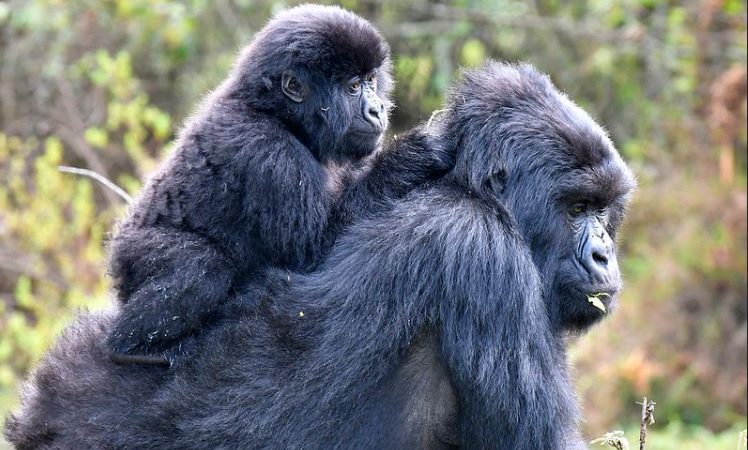
Why Gorilla Trekking is the Last Activity
Why Do Some Uganda Safaris End with Gorilla Trekking?
Gorilla trekking is often placed near the end of a Uganda safari because of travel geography, logical driving routes, the desire for a memorable final wildlife encounter and the opportunity to combine Bwindi with other southwestern Uganda destinations.
A common circuit begins in Entebbe, visits Kibale Forest for chimpanzees, continues through Queen Elizabeth National Park for wildlife viewing and finishes in Bwindi for mountain gorilla trekking.
But this is a travel-planning preference, not a Uganda Wildlife Authority rule. Some itineraries begin with gorillas, while others include a relaxing stay at Lake Bunyonyi or Lake Mburo after the trek.
Understanding the Order of Activities on a Uganda Safari
When travellers start planning a holiday in Uganda, they often notice something interesting. Many safari itineraries begin with chimpanzee trekking and classic wildlife viewing, then continue south toward Bwindi Impenetrable National Park for gorilla trekking.
This raises an understandable question: why is gorilla trekking frequently arranged as the last major activity?
For some visitors, meeting mountain gorillas is the primary reason for travelling to Uganda. They naturally expect this experience to come first. Others prefer to save the most anticipated activity until the end of their holiday.
Both approaches can work.
The decision is largely influenced by where travellers arrive, which national parks they intend to visit, the date of their gorilla permit and where they will depart after the safari.
Gorilla trekking takes place in Bwindi Impenetrable National Park and Mgahinga Gorilla National Park in southwestern Uganda.
These destinations can be incorporated into a broader journey through Kibale, Queen Elizabeth National Park, Lake Bunyonyi and other attractions.
At Safari Vacations and Travel Services, we believe that the best Uganda safari is not simply the one that places gorillas last. It is the one that combines confirmed permits, sensible travel distances and enough time to enjoy each experience without unnecessary pressure.
Here are the main reasons gorilla trekking often appears toward the end of a Uganda itinerary.
01 / SAFARI ROUTE PLANNING
1. Bwindi Is Naturally Located Near the End of Many Western Uganda Safari Routes
Uganda’s main wildlife destinations are spread across different parts of the country. Travellers arriving at Entebbe International Airport often begin their journey in central Uganda before heading west.
One popular route runs from Entebbe to Kibale National Park, then south through Queen Elizabeth National Park to Bwindi Impenetrable National Park.
This creates a logical geographical progression.
Kibale is well known for chimpanzee trekking, while Queen Elizabeth National Park offers game drives, boat cruises along the Kazinga Channel and opportunities to observe elephants, buffaloes, antelopes and predators.
Farther south, the Ishasha sector of Queen Elizabeth is famous for its tree-climbing lions. Its location makes it a useful stop when travelling toward Bwindi.
After exploring these destinations, visitors continue into the mountainous southwestern region for gorilla trekking.
Consequently, Bwindi often becomes the final major national park on a western Uganda wildlife circuit.
This arrangement can reduce unnecessary backtracking, although the exact route depends on the chosen gorilla trekking sector.
Discover the different options in our guide to choosing the best gorilla trekking sector.
2. Gorilla Trekking Creates a Memorable Safari Finale
For many visitors, spending time with mountain gorillas is the experience they have anticipated most.
Watching a silverback calmly feed, observing young gorillas playing or seeing a family interact in its natural habitat can be deeply moving.
Some travellers enjoy building toward this encounter over several days.
They begin with open savannah landscapes, continue to chimpanzee habitats and finally enter Bwindi’s dense rainforest.
This sequence introduces them to different aspects of Uganda’s natural heritage before reaching the gorilla encounter.
However, the emotional significance of the experience is personal. For a dedicated birdwatcher or photographer, another activity might be equally important.
Our Bwindi gorilla trekking experience guide explains what visitors can expect in the forest.
3. The Journey Offers a Gradual Change in Landscapes
Uganda is especially appealing because of the variety of landscapes visitors can experience within one safari.
One morning you may be walking beneath the tall trees of Kibale Forest. Another day you may be watching elephants move across the plains of Queen Elizabeth National Park.
As you travel farther southwest, the scenery gradually shifts to green hills, terraced farmland, and highland forests.
By the time you reach Bwindi, the setting feels very different from the earlier parts of the journey.
This progression adds variety to the safari and creates opportunities for photography, cultural visits and scenic stops along the way.
Explore how chimpanzee trekking in Kibale can form part of a longer Uganda itinerary.
THREE SIGNATURE UGANDA SAFARI EXPERIENCES
Build Your Safari Toward an Unforgettable Gorilla Encounter
A well-planned Uganda itinerary can introduce you to three distinct wildlife experiences before the journey ends.


02 / WHY THE ORDER MATTERS
4. Gorilla Trekking Can Be Physically Demanding
Mountain gorilla trekking is not a typical game drive. Visitors leave the vehicle and follow trained guides through forest terrain that may include steep slopes, thick vegetation and muddy paths.
The trek may be relatively short or require several hours of walking. The duration depends largely on the location of the allocated gorilla family and the conditions on the day.
Some travellers enjoy keeping this physically demanding activity as their final major adventure before resting or returning home.
However, this is not necessarily the best strategy for everyone.
If you expect to be tired after several days of hiking, long drives or other demanding activities, trekking earlier—when you feel fresher—may be preferable.
The key is to maintain a comfortable pace throughout the holiday.
Visitors can also discuss porter assistance and mobility concerns before trekking. For an understanding of how the day unfolds, see our gorilla trekking start and finish times guide.
5. Bwindi Can Be Convenient for Travellers Finishing in Kigali
For visitors travelling through both Uganda and Rwanda, a gorilla trek in southern Bwindi can fit conveniently near the end of the itinerary.
After visiting Uganda’s western national parks, the safari may finish in Rushaga or Nkuringo before continuing across the border to Kigali.
These sectors are often considered for cross-border itineraries because of their location in southwestern Uganda.
Nevertheless, driving times depend on the precise lodge, border route, road conditions and immigration procedures.
A trip finishing at Kigali International Airport can sometimes involve less backtracking than returning all the way to Entebbe by road.
This arrangement is particularly useful for travellers who want to combine Uganda’s chimpanzees, wildlife and mountain gorillas in one journey.
Explore our Rushaga gorilla trekking guide for more information about the southern part of Bwindi.
6. Gorilla Trekking Is a Special Way to Complete a Wildlife Circuit
A traditional Uganda safari may involve game drives, boat cruises, nature walks and chimpanzee tracking.
Each activity offers something different.
Game drives provide opportunities to observe large mammals across open landscapes, while boat excursions offer a closer view of animals and birds around rivers and lakes.
Gorilla trekking introduces a more intimate forest experience, where visitors quietly observe a habituated family under the supervision of trained rangers.
The contrast between these environments makes an itinerary especially memorable.
For visitors whose main interest is mountain gorillas, saving the encounter until near the end can create a natural highlight.
But travellers should never feel pressured to place gorillas last solely for dramatic effect. Safety, permits and comfortable travel are more important than storytelling.
7. The Gorilla Permit Date Helps Determine the Safari Schedule
Gorilla permits are issued for particular dates and trekking locations. Their availability is limited, which makes the permit one of the most important parts of the itinerary.
This means safari planning should often begin by confirming the desired gorilla trekking date, then arranging the other destinations around it.
If the only suitable permits are available near the beginning of your holiday, it may be sensible to trek first.
Likewise, if the confirmed permit falls toward the end and the travel route works well, a gorilla finale may be ideal.
Moving a booked trekking date is subject to Uganda Wildlife Authority rules and availability. Travellers should not assume that their permits can simply be shifted if a flight or earlier activity is delayed.
For anyone planning two gorilla encounters, our double gorilla trekking safari demonstrates how multiple permit dates must be coordinated.
Should You Do Gorilla Trekking First or Last?
There is no universal answer. The table below illustrates how the two approaches compare.
| Consideration | Gorilla trekking first | Gorilla trekking last |
|---|---|---|
| Best suited to | Gorilla-focused trips and suitable arrival routes | Longer western Uganda wildlife circuits |
| Main advantage | Complete the priority experience early | Finish with a memorable wildlife highlight |
| Physical comfort | May benefit visitors with fresher legs | Can follow quieter activities if paced well |
| Permit disruption risk | Arrival delays must be considered | Earlier safari delays must be considered |
| After the trek | Continue game drives or relaxation | Allow sufficient time before departure |
| Main planning rule | Arrive near the park the day before | Avoid tight departure connections |
Planning advice: Confirm your gorilla permit before finalizing the rest of the safari. Make sure you are staying close enough to the correct trekking briefing point the previous night.
When Gorilla Trekking Should Not Be Your Last Activity
When You Have a Tight International Flight Schedule
It is risky to assume that you can complete a gorilla trek in the morning and comfortably catch an international flight later that day. The walking time cannot be guaranteed, and road journeys from Bwindi can be long.
Travellers should normally plan at least an overnight stop after their trek when connecting to an important flight, with additional flexibility where necessary.
When You Want to Relax After Trekking
Some visitors prefer to spend a day or two resting after their forest adventure. Lake Bunyonyi offers a wonderful option for this kind of itinerary.
 Its quiet waters, green hills and lakeside lodges provide a peaceful setting after the physical demands of gorilla trekking.
Visitors can consider canoeing, birdwatching, scenic boat trips or simply relaxing at their accommodation.
Learn more about visiting Lake Bunyonyi after gorilla trekking.
When Your Journey Starts in Kigali
For a short safari beginning in Kigali, gorilla trekking in southern Bwindi may take place near the beginning or middle of the itinerary.
This can be more logical than travelling across Uganda simply to return to Bwindi for the final activity.
The best option depends on the border crossing, available nights and whether the visitor plans to continue to Queen Elizabeth or Kibale.
When You Are Concerned About Physical Fatigue
Gorilla trekking can involve strenuous hiking. Visitors who are planning several demanding activities may prefer to complete the trek earlier and enjoy easier activities afterwards.
Older guests and travellers with mobility concerns should discuss their needs in advance.
Porters and certain specialist assistance arrangements may be available, but suitability and logistics must be confirmed before booking.
When Permit Availability Requires a Different Schedule
Sometimes the best available gorilla trekking permit date falls outside the traveller’s original preferred schedule.
Rather than insisting on a final-day trek, it may make more sense to adjust the safari route and place other activities after Bwindi.
Our Bwindi sector comparison helps visitors understand why the selected trekking sector also matters.
SAMPLE SAFARI ROUTE
Example: 8-Day Uganda Safari Ending with Gorilla Trekking
This illustrative itinerary shows how gorilla trekking can naturally become the final major wildlife activity without being rushed. Actual routing and accommodation will depend on available permits, road conditions and flight details.
Day 1: Arrival in Entebbe
Arrive at Entebbe International Airport, meet your driver-guide and transfer to your hotel. Relax after your flight and prepare for the safari.
Day 2: Drive to Kibale Forest
Travel west toward Fort Portal and Kibale National Park. Enjoy scenic countryside views before checking in at your lodge.
Day 3: Chimpanzee Trekking
Join an authorized chimpanzee trekking session in Kibale. Depending on your arrangements, enjoy an optional afternoon visit to the Bigodi Wetland area.
Day 4: Transfer to Queen Elizabeth National Park
Continue south into Queen Elizabeth National Park. Depending on arrival time, enjoy an afternoon activity or relax at the lodge.
Day 5: Game Drive and Boat Cruise
Explore the savannah on a morning game drive, then enjoy an arranged boat excursion along the Kazinga Channel, where elephants, hippos and birds may be encountered.
Day 6: Ishasha and Transfer to Bwindi
Travel through the Ishasha sector, with opportunities to search for tree-climbing lions, then continue to accommodation near your confirmed Bwindi trekking sector.
Day 7: Mountain Gorilla Trekking
Attend the early briefing before entering the forest with authorized rangers. Search for your assigned gorilla family and enjoy the permitted viewing time once it is located. Return to the lodge to relax.
Day 8: Transfer to Kigali or Continue Your Journey
After breakfast, transfer to Kigali if the chosen trekking sector, border arrangements and flight time make that practical. Travellers departing from Entebbe should normally allow a different route or additional time.
Important: Day 8 is not a guaranteed airport connection. Border formalities and road travel can be unpredictable. Confirm a sufficiently late departure or arrange an additional overnight stay.
Important Things to Consider Before Scheduling Gorilla Trekking
Confirm Your Gorilla Permit First
A gorilla permit is required for each visitor and scheduled trekking date. Permits are limited, particularly during popular travel periods.
Booking your permit before arranging non-refundable accommodation helps ensure that the rest of the safari is organized around an available trekking date.
Stay Near Your Correct Trekking Sector
Bwindi has four major trekking sectors: Buhoma, Ruhija, Rushaga and Nkuringo.
Accommodation should be selected according to the confirmed briefing location. A lodge in a different sector may involve a difficult early-morning transfer.
Read our guide to the four Bwindi sectors.
Avoid Trekking on Your Arrival Day
Gorilla trekking begins with an early park briefing. Visitors should normally arrive near their trekking sector the previous afternoon or evening.
Trying to reach Bwindi from a distant airport on the morning of the activity creates unnecessary risk.
Do Not Rush to the Airport After Trekking
The duration of gorilla trekking varies because gorillas move through the forest.
Visitors should not assume that the trek will end at a fixed time. When planning flights, include a realistic transfer window and, ideally, a comfortable overnight buffer.
Allow Enough Time for Rest
After trekking, you may feel tired from walking through steep or wet terrain.
Enjoying the afternoon at the lodge, spending a night in Bwindi or continuing to Lake Bunyonyi the following day can make the itinerary more relaxed.
Consider Trekking Twice
For travellers with additional time, two gorilla treks can offer two separate opportunities to observe habituated gorilla families.
Each trekking day requires a separate permit, and the arrangement must be confirmed in advance.
See our four-day double gorilla safari for an example.
Frequently Asked Questions About Why Gorilla Trekking Is the Last Activity
1. Why is gorilla trekking often the last activity on a Uganda safari?
It often fits naturally after visits to Kibale and Queen Elizabeth National Park because Bwindi lies farther southwest. Many travellers also enjoy saving their gorilla encounter as the final major wildlife highlight.
2. Must gorilla trekking always be the last activity?
No. Gorilla trekking can take place at the beginning, middle or end of a safari, depending on the travel route and available permits.
3. Is gorilla trekking better at the beginning or end of a safari?
Both arrangements can work. Choose the order that provides the most sensible route, a confirmed permit date and sufficient time for travel and rest.
4. Can I trek gorillas immediately after arriving in Uganda?
It is generally better to stay near the assigned trekking sector the night before, because official briefings start early in the morning.
5. Can I fly home immediately after gorilla trekking?
This is not recommended without a carefully checked schedule. Trek duration varies, and road transfers can be long. An overnight buffer is usually more comfortable.
6. Which national park normally comes before Bwindi?
Queen Elizabeth National Park commonly comes before Bwindi on western Uganda road circuits, sometimes with a route through Ishasha.
7. Can I combine Kibale chimpanzee trekking with Bwindi gorillas?
Yes. These are two popular primate experiences on longer Uganda safaris and can be combined with Queen Elizabeth National Park.
8. How many hours does gorilla trekking take?
The overall activity can take several hours, depending on the location of the gorilla family and trail conditions. Once located, standard viewing is normally limited to one hour.
9. Is gorilla trekking physically demanding?
It can be. Some treks involve steep, muddy slopes and extended hiking. Travellers should discuss their fitness and mobility needs before booking.
10. Can older travellers do gorilla trekking?
Yes, when the activity is suitable for their physical abilities. Porter assistance and some specialist mobility arrangements may be available by advance request.
11. Should I visit Lake Bunyonyi before or after gorilla trekking?
Either works. Many visitors prefer Lake Bunyonyi afterwards because it provides a peaceful place to rest following the forest trek.
12. Can a Uganda safari finish in Kigali after gorilla trekking?
Yes. A cross-border itinerary may finish in Kigali after a trek in southern Bwindi, provided border arrangements and departure times allow sufficient travel time.
13. Can I do gorilla trekking first when arriving through Kigali?
Yes. For some short itineraries, trekking near the beginning can be the more efficient choice.
14. Does the gorilla permit determine my safari itinerary?
The permit date and sector are major planning factors. The rest of the safari should be arranged around the confirmed reservation and travel logistics.
15. Can I do two gorilla treks at the end of my safari?
Yes, if two separate permits are available. Each trekking date needs its own booking.
16. Which Bwindi sector is best for a safari ending in Kigali?
Rushaga and Nkuringo are commonly considered for southern Bwindi itineraries, but the best choice depends on permit availability, accommodation and the planned border crossing.
17. Is gorilla trekking available throughout the year?
Yes. Gorilla trekking operates year-round in Uganda, subject to normal park operations, weather conditions and permit availability.
18. Can Safari Vacations help choose the best activity order?
Yes. Safari Vacations and Travel Services can design a personalized itinerary based on your flights, gorilla permit availability, preferred destinations and travel pace.
Conclusion: Is It Better to Save Gorilla Trekking for the End?
Gorilla trekking is often scheduled near the end of a Uganda safari because Bwindi fits naturally into the southern portion of a western wildlife circuit.
For visitors travelling from Entebbe through Kibale and Queen Elizabeth National Park, this arrangement can create a logical journey that culminates in an extraordinary encounter with mountain gorillas.
However, saving gorillas for last is not a requirement, and it is not always the most practical choice.
The best itinerary considers your flight schedule, the location of your accommodation, the confirmed gorilla permit date, your fitness and the time required for transfers.
Some visitors will enjoy gorilla trekking early in their safari. Others may prefer to finish with gorillas and then spend a peaceful night in Bwindi or Lake Bunyonyi before departure.
At Safari Vacations and Travel Services, we help travellers create balanced journeys that combine Uganda’s outstanding wildlife destinations without unnecessary rushing.
Whether you want a short gorilla safari from Kigali or a longer Uganda adventure including chimpanzees, game drives, boat cruises and mountain gorillas, the right activity order makes the journey more enjoyable.
PLAN YOUR PERFECT UGANDA SAFARI
Let Us Design the Best Gorilla Trekking Itinerary for You
Safari Vacations and Travel Services can help you plan a comfortable Uganda safari with confirmed gorilla permits, private 4×4 transportation, experienced driver-guides, suitable accommodation and unforgettable wildlife experiences.
Safari Vacations and Travel Services Ltd
WhatsApp: +256 776 423286
www.ugandarwanda-safaris.com