
What to Expect on the Actual Day of Gorilla Trekking


The actual day of gorilla trekking begins well before you see your first gorilla. You wake early, travel to the correct park briefing point, meet your ranger-guide and enter a mountain forest whose conditions change with the weather and the movements of wild animals. For many travellers, the anticipation is almost as memorable as the encounter itself.
Whether you are visiting Uganda or Rwanda for gorilla trekking, the essential experience is similar: a supervised group hike to a habituated gorilla family, followed by a carefully controlled viewing period of up to one hour. This guide follows the day chronologically and explains fitness, clothing, photography, forest safety, porters and the return journey.

1. The Night Before: Prepare for an Early Start
The most comfortable gorilla trekking mornings actually begin the previous evening. Your safari guide confirms the exact meeting location, departure time and the sector shown on your permit. In Uganda, Bwindi has separate trekking entry points at Buhoma, Ruhija, Rushaga and Nkuringo. Mgahinga uses the Ntebeko area. A permit for one entry point should not be treated as permission to begin from another.
Lay out your boots, socks, long trousers, long-sleeved shirt, rain jacket and small backpack. Put your passport or required identification, medication, drinking water, packed lunch and camera in an easy-to-find place. Charge camera batteries and confirm breakfast arrangements with your lodge. A relaxed evening and enough sleep make the following day much more enjoyable.
2. Early Morning Breakfast and Transfer to Headquarters
Expect a very early wake-up. Depending on your accommodation and trekking sector, breakfast may be served before sunrise or provided as a packed meal. A proper breakfast is useful because the return time is unpredictable. Choose something satisfying rather than rushing out with only coffee.
Your driver-guide takes you to the correct park headquarters or registration point. In Rwanda, visitors report to the Volcanoes National Park offices in Kinigi at 7:00 a.m. In Uganda, Bwindi programmes typically assemble in the early morning for registration and the ranger briefing, with the forest hike following afterwards. Your confirmed instructions take priority over any general timetable.
3. Registration, Health Check and Ranger Briefing
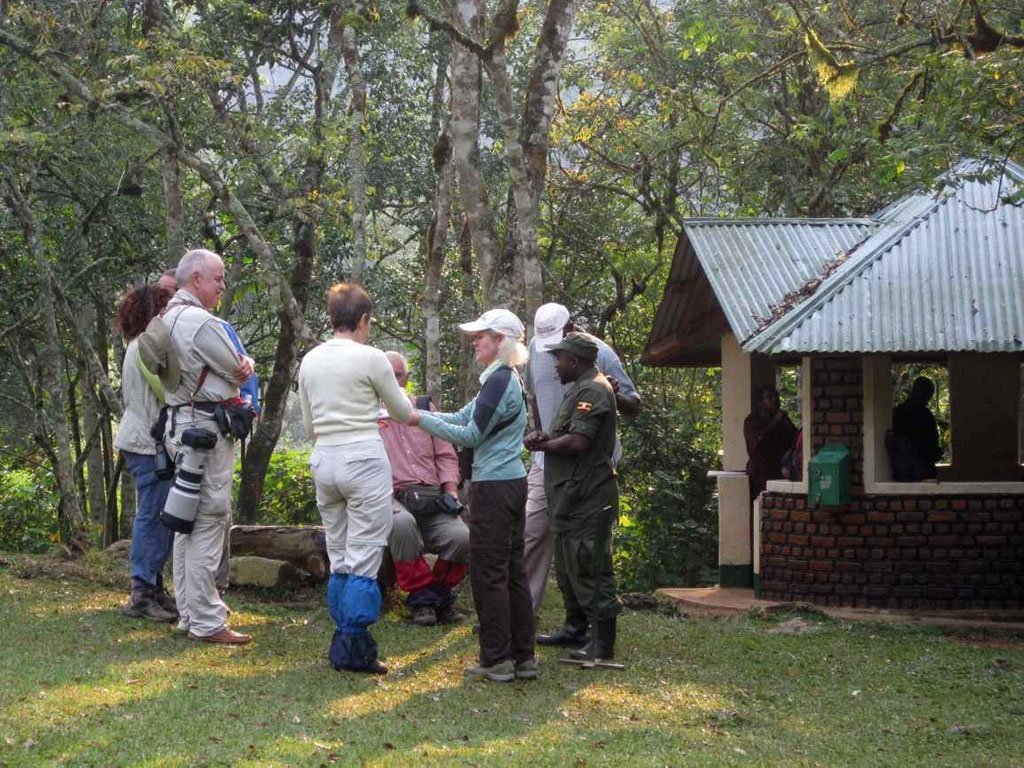
At registration, officials verify your trekking permit and may check identification. Rangers then explain where the group will walk, how long the terrain might take and how to act near a gorilla family. A normal gorilla trekking group has no more than eight visitors with its assigned habituated family. Group composition and allocation are determined by park staff.
Be truthful about your fitness, previous injuries or difficulty walking uphill. Rangers may consider visitor ability when allocating groups, but an easy trek is never guaranteed. You can ask about available porter assistance before setting off. The briefing is also the right time to explain concerns about heights, mud or the pace of the hike.
Importantly, do not trek when you have a cold, flu or another contagious illness. Mountain gorillas are susceptible to human diseases. Park personnel may deny access to protect them. Uganda’s currently published conservation tariff requires a 10-metre separation from gorillas, while Rwanda’s official tourism booking guidance states at least 7 metres; follow the rule and any stricter instruction given by your ranger on the day.
4. Meeting Your Group, Trackers and Porter

Once your family is allocated, you meet the people who will help make the trek possible. The ranger-guide leads visitors and explains the forest ecosystem, while specialist trackers search ahead for signs of the gorillas. They communicate information about the animals’ location and movements, helping the main group choose a practical route.
A local porter is a highly worthwhile addition, particularly if you are carrying water, camera equipment or a packed lunch. Porters can carry a daypack and assist with footing on slippery slopes. Their services are arranged separately unless expressly included in your package, and hiring one also provides useful local employment.
5. Entering the Rainforest: What the Walk Feels Like
The first part of the trek often feels like an ordinary guided nature walk, but the route may become steeper and less defined. In Bwindi, expect tangled roots, dense vegetation, damp soil, narrow trails and occasionally exposed slopes. In Volcanoes National Park, bamboo, mountain vegetation and volcanic terrain can feature prominently. Every route has its own character.
The weather is one of the biggest variables. A dry morning can turn wet in minutes, and previous rainfall may leave the ground slippery even under clear skies. A walking stick and well-fitted waterproof boots make a noticeable difference. Move at a steady pace, avoid rushing downhill and accept assistance when offered.
6. How Long Does It Take to Find the Gorillas?
There is no fixed walking time. One group may reach the gorillas after a comparatively short hike, while another may spend several hours ascending, descending and following changing trails. Wild gorillas travel through their forest territories, so even experienced trackers cannot promise an exact meeting time beforehand.
Your day should therefore remain flexible. Avoid scheduling a flight or tightly timed long-distance transfer immediately after the expected one-hour viewing period. That hour is not the total length of the trekking activity: it begins only after the family has been found and the ranger authorises the encounter.
7. The First Signs That Gorillas Are Nearby
As trackers close in on the family, the mood often changes. Conversations become quieter, the ranger slows the group and you may notice freshly disturbed vegetation or other signs of recent gorilla activity. The ranger might ask you to stop for a moment while the trackers confirm the animals’ position.
Just before the encounter, you may be instructed to leave your backpack, food and walking stick at a safe distance with a porter or designated team member. You approach with only what your ranger permits, often your camera or phone. This preparation reduces clutter and helps visitors remain calm and attentive.
8. Your One Hour With the Mountain Gorillas
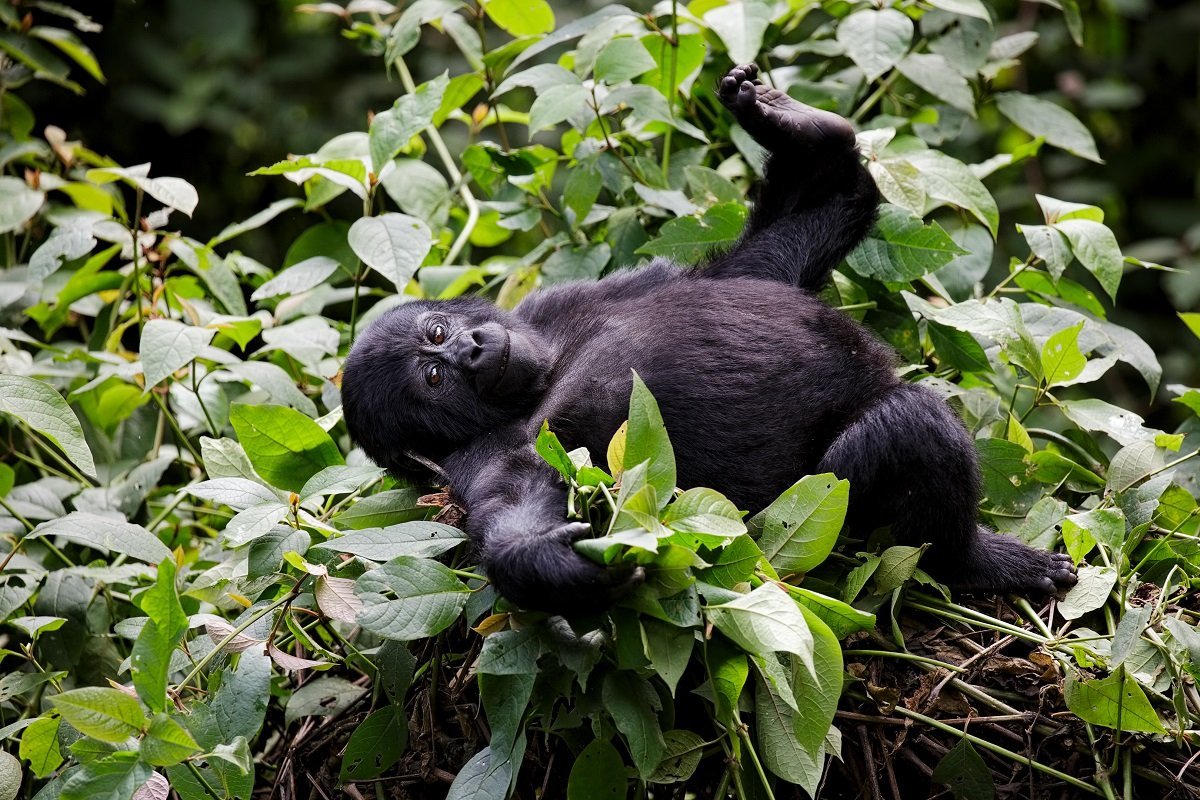
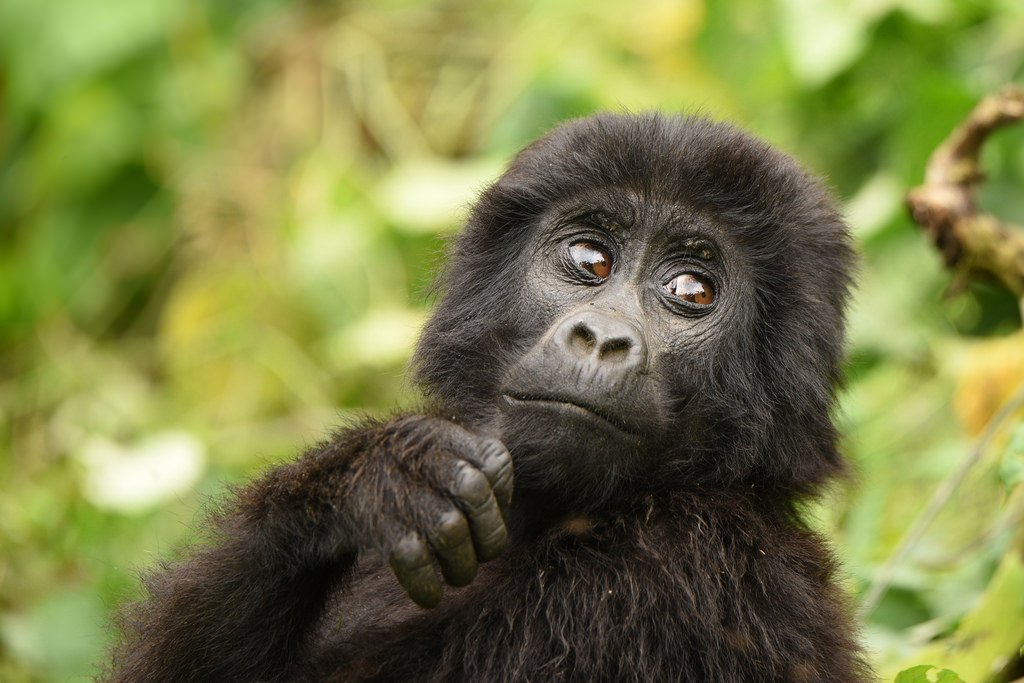
This is the moment most visitors have been imagining. Once the family has been located and the ranger signals the start, you have up to one hour to observe their everyday behaviour. An adult may feed on vegetation while juveniles wrestle or climb. A mother might cradle an infant, and a silverback may watch over the group with remarkable composure.
The important point is that nothing is staged. Sometimes the gorillas rest for long stretches; at other times family members move through the vegetation. Your guide may shift your viewing position safely, but the gorillas always determine their own actions. Listen to quiet explanations from your ranger and give other trekkers space to see.
9. The Rules You Must Follow Near Gorillas
Keep your voice low, stay with your group and never attempt to touch, feed or follow a gorilla independently. Flash photography is prohibited. Eating, drinking and smoking are not allowed when observing the gorillas. Never leave litter behind, and do not make sudden movements to attract an animal’s attention.
In Uganda, UWA’s published conservation rules specify 10 metres from gorillas. Rwanda’s official RDB guidance specifies 7 metres. These requirements can be updated, and your ranger may ask you to stand farther away. If a gorilla unexpectedly moves toward you, remain calm, do not reach out or run and obey your ranger immediately.
If you need to cough or sneeze, turn away and cover your mouth as directed. Do not assume habituated gorillas are domestic animals. They are powerful wild primates, and the rules exist to reduce disturbance and protect everyone. The minimum trekking age is 15 years in both countries.
10. Taking Good Photos Without Disturbing the Family
Rainforest photography is challenging because the light can be uneven and the gorillas may remain partly in shade. Before meeting the family, switch off your flash and prepare your camera for low light. If using a phone, steady your hands and avoid moving too close in pursuit of a better angle.
Choose respectful compositions that include the surrounding forest as well as close views when available. A mother with an infant, a silverback beside ferns or the whole family feeding can tell a more meaningful story than a single tight portrait. Always let the ranger decide where visitors may stand.
11. Walking Back, Lunch and the End of the Trek
When the official viewing time ends, the ranger signals that the group must withdraw. You then begin the return hike, which may be shorter or longer than the approach depending on where the family was found. The route may use different trails, and downhill slopes can be surprisingly tiring on wet ground.
Your packed lunch is normally eaten at an appropriate location away from the gorillas, either during a permitted break or after the main hike. Keep food sealed and carry all waste back out. Once you reach the briefing point, your safari guide will help organise the onward transfer, and a trekking certificate may be available depending on local procedures.
This is a good moment to rest, change damp socks and enjoy the achievement. Do not underestimate how much energy the day can require. If possible, plan a relaxed evening rather than a complicated transfer with no allowance for delays.
12. What to Wear and Carry on Trekking Day
 Pack for comfort, changing weather and the possibility of a longer walk. Clothing should protect your skin from plants and insects without making you overheat. Dark green, brown, grey and other understated colours work well; the quality of your footwear matters more than matching a particular safari look.
A small daypack is usually easier to manage than a large hiking bag. Carry enough drinking water for the conditions and your own needs, but remember that no eating or drinking is allowed during the actual gorilla viewing period. Keep essential medicine readily accessible and discuss any mobility concerns with your safari organiser in advance.
Practical trekking-day packing checklist
- Waterproof hiking boots with dependable grip
- Long trousers, long sleeves and comfortable socks
- Lightweight waterproof jacket and optional warm layer
- Gardening gloves, walking stick and small daypack
- Drinking water and a packed lunch
- Passport or required identification and permit confirmation
- Camera or smartphone, charged batteries and waterproof cover
- Personal medication and insect repellent
13. How Difficult Is Gorilla Trekking Really?
Gorilla trekking is an active adventure, not a game drive. Some routes are manageable for travellers who walk regularly, while others involve strenuous hills, slippery stretches and dense vegetation. The altitude, especially in Rwanda’s volcanic landscape, may add to the effort. The unknown location of the gorillas makes it impossible to guarantee a gentle route.
You do not need to be an elite athlete, but a little preparation helps enormously. In the weeks before your safari, practise walking on hills or uneven ground and break in your boots. During the trek, communicate openly with the ranger about your pace. Travellers who need additional support should discuss available assistance before booking rather than assuming it can always be arranged on arrival.
If you are worried about the difficulty, ask Safari Vacations and Travel Services to help choose a practical trekking sector and accommodation location. Our team can also explain how private transport and extra nights around the park make the experience more comfortable.
14. Uganda and Rwanda: What Changes on the Actual Day?
The broad format is similar: early registration, briefing, ranger-led forest walking and a one-hour gorilla encounter. The landscape and logistics are different. Uganda offers treks in Bwindi Impenetrable National Park and Mgahinga Gorilla National Park, while Rwanda’s classic gorilla trekking takes place in Volcanoes National Park.
Bwindi’s dense rainforest and separate entry sectors make correct accommodation planning particularly important. Mgahinga and Volcanoes bring dramatic volcanic scenery, but weather, slopes and altitude remain important considerations. In Rwanda, travellers normally register at Kinigi; in Uganda, the starting point depends on the permit location.
If Kigali is your arrival city, a cross-border Uganda itinerary may be an option, but it involves immigration formalities and travel time. Explore our one-day gorilla tour from Kigali or Uganda and Rwanda trekking overview when comparing the styles of journey.
15. Common Mistakes to Avoid on Trekking Day
The biggest avoidable mistakes are arriving at the wrong entry point, wearing brand-new shoes, bringing too little water, ignoring a weather forecast and assuming the gorilla encounter starts at a fixed hour. It is equally important not to hide illness or underestimate how physically demanding forest walking can become.
Another mistake is treating the viewing rules as optional. Do not approach closer for a photograph, encourage a child to come along below the minimum age or assume you can spend extra time near the animals because the trek took longer than expected. Conservation rules keep the experience sustainable.
Choose a Gorilla Trekking Experience
Safari Vacations and Travel Services can arrange a private itinerary around your preferred park, travel dates and comfort level. These starting points help you decide which kind of trekking day suits your schedule.


Frequently Asked Questions About Gorilla Trekking Day
These answers cover the practical questions travellers most often ask before their first gorilla trekking day.
What time does gorilla trekking begin?
Most treks begin with early-morning registration and a ranger briefing. Rwanda requires reporting at Kinigi at 7:00 a.m.; Uganda meeting instructions depend on the designated park and entry point.
Will I definitely see gorillas?
Trackers work hard to locate habituated families and sightings are common, but these are wild animals. No operator can responsibly promise a particular viewing location or photographic result.
How long is the actual forest hike?
It varies widely. You may walk relatively briefly or spend several hours reaching the gorillas, then must complete the return journey. Plan your whole day flexibly.
Do visitors really get only one hour?
Yes. Standard gorilla trekking limits the viewing encounter to a maximum of one hour after the family has been reached. Walking and briefing time are additional.
Can I touch a mountain gorilla?
No. Never touch a gorilla, even when one approaches. Stay calm and follow your ranger’s instructions.
Are there toilets in the forest?
Facilities are generally available at headquarters rather than throughout the trek. Tell your ranger if you need a toilet break in the forest so waste can be managed responsibly.
Can I take my phone and camera?
Yes, subject to ranger instructions. Turn off the flash, protect electronics from rain and avoid moving closer than allowed.
Can I hire a porter?
Porters are usually available locally for an additional fee. Arrange assistance at the start and check the terms with your organiser.
Is gorilla trekking suitable for older travellers?
Age alone does not necessarily prevent trekking, but the terrain can be demanding. Discuss fitness, mobility and any locally available support in advance.
What is the minimum age for gorilla trekking?
Both Uganda and Rwanda generally require gorilla trekkers to be at least 15 years old.
Should I trek if I have a cold?
No. Inform your organiser or park officials if you have a contagious illness. The rules protect gorillas from human infections.
What happens if a gorilla approaches me?
Stay calm, do not touch or run, and immediately obey the ranger. The animal must be allowed to move freely.
What if it rains during trekking?
Rain is possible in every season. Wear proper boots and carry a rain jacket. Ranger guides assess trail conditions and safety.
Where should I stay before trekking?
Stay close to the exact sector or visitor centre printed on your permit, particularly in Bwindi where trailheads are widely separated.
Can I fly away immediately after trekking?
Avoid tight onward flight connections. The trek and return walk may run much longer than expected, so an extra night is often sensible.
Why Book with Safari Vacations and Travel Services?

Safari vehicle at Rushaga Sector entrance in Bwindi Impenetrable National Park Uganda
Safari Vacations and Travel Services helps travellers turn a potentially complicated trekking morning into a well-organised safari experience. We coordinate the requested itinerary, suitable accommodation near the designated trailhead, private transfers and practical pre-trek guidance so you know what to expect before arriving at the park.
Our team can discuss the differences between Uganda and Rwanda, identify realistic travel times and advise you on the essentials to bring. We also help plan longer holidays that combine gorilla trekking with lakes, primates, scenic countryside and traditional wildlife safaris.
Whether you are travelling as a couple, with friends or on your own, we aim to build an itinerary that allows you to enjoy the forest instead of worrying about logistics. Contact our team with your travel month, group size and preferred starting city for a personalised quotation.





