
Top Places to Film Primates in Uganda

Uganda Wildlife Filming Guide
Top Places to Film Primates in Uganda
Discover the best forests, mountain habitats and protected areas for filming mountain gorillas, chimpanzees, golden monkeys and other remarkable primates in Uganda.
Discover Uganda’s Extraordinary Primate Filming Destinations
Uganda is one of Africa’s most rewarding destinations for wildlife filmmakers, documentary producers and professional photographers. Its tropical forests protect mountain gorillas, chimpanzees, golden monkeys and numerous smaller primates. Each species offers different stories, behaviours and filming challenges.
The Uganda primate safari experience takes visitors through contrasting environments. In Kibale, chimpanzees call from the treetops and move rapidly through the forest. In Bwindi, mountain gorillas feed, groom and interact on mist-covered slopes. In Mgahinga, golden monkeys leap through bamboo against the background of the Virunga volcanoes.
These experiences can produce extraordinary footage. However, success depends on selecting appropriate locations, allowing enough filming time and obtaining the correct permissions. Wildlife encounters are never guaranteed, and commercial filming must be arranged separately from ordinary tourism activities.
At Safari Vacations & Travel Services, we help filmmakers plan practical travel arrangements, accommodation, local transport and filming itineraries. Our Uganda primates tour guide also explains how different primate experiences can be combined into one journey.

Mountain Gorillas
Film family relationships, silverback behaviour and young gorillas in the forests of Bwindi and Mgahinga.

Chimpanzees
Capture grooming, feeding, vocal communication and movement through Uganda’s tropical rainforests.

Golden Monkeys
Record energetic forest movement and striking golden-orange fur in Mgahinga’s bamboo habitat.
Best Primate Filming Locations at a Glance
| Destination | Main Primates | Filming Advantage |
|---|---|---|
| Kibale National Park | Chimpanzees and forest monkeys | Rich behavioural stories |
| Bwindi | Mountain gorillas | Intimate family interactions |
| Mgahinga | Gorillas and golden monkeys | Bamboo forests and volcanoes |
| Budongo Forest | Chimpanzees | Mahogany forest scenery |
| Kalinzu Forest | Chimpanzees and monkeys | Mixed forest habitats |
| Kyambura Gorge | Chimpanzees | Dramatic forest gorge |
| Bigodi Wetland | Colobus and other monkeys | Community conservation stories |
| Ngamba Island | Rescued chimpanzees | Sanctuary and rehabilitation stories |
1. Kibale National Park – Best for Chimpanzee Filming
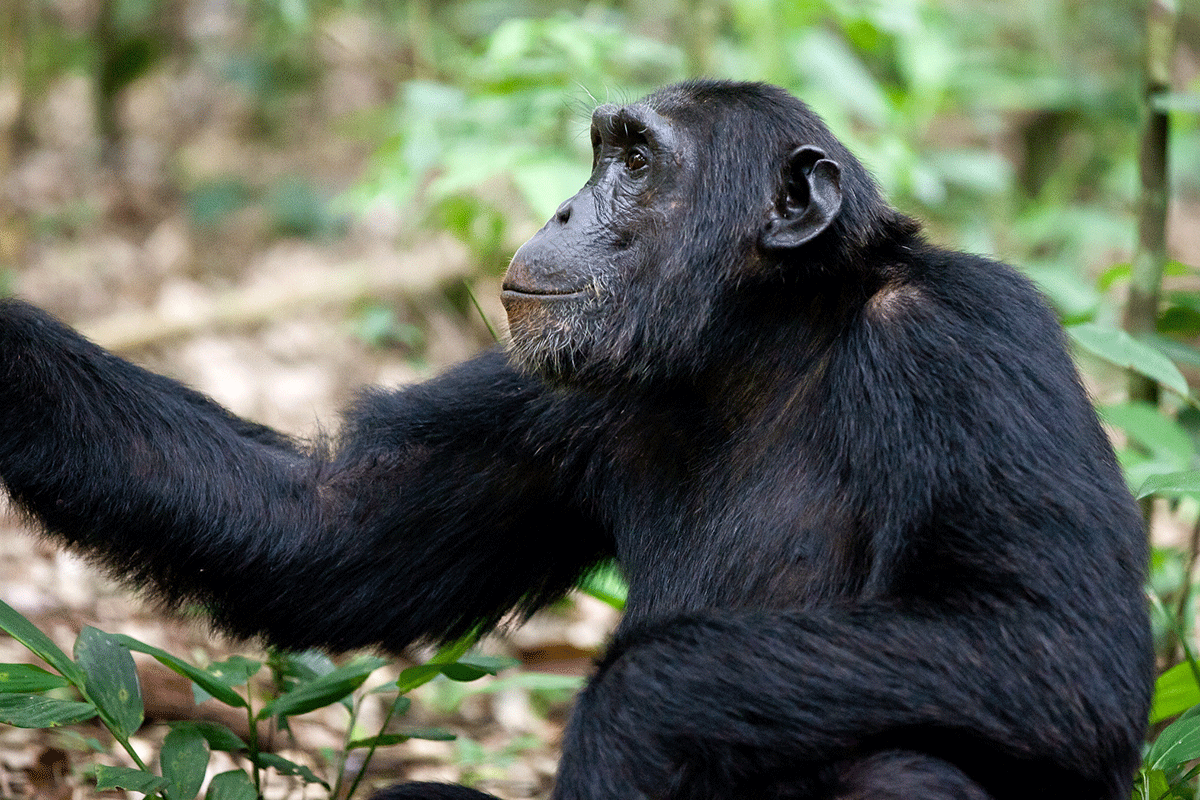
Kibale National Park is one of Uganda’s finest locations for documenting chimpanzees in the wild. The forest supports a large chimpanzee population alongside red colobus monkeys, black-and-white colobus, L’Hoest’s monkeys, red-tailed monkeys, blue monkeys and grey-cheeked mangabeys.
Chimpanzees make particularly engaging subjects because they are social, intelligent and highly expressive. A filming session may reveal grooming partnerships, mothers carrying infants, feeding behaviour or the loud calls used to communicate across forest territories.
Most regular visitors begin chimpanzee tracking from Kanyanchu. Experienced ranger guides lead groups through the forest while listening for calls and checking signs of chimpanzee activity. The time needed to locate chimpanzees varies daily.
Why Kibale Works Well for Filmmakers
Kibale combines established tracking routes with excellent primate diversity. A production can focus on chimpanzees while also recording forest landscapes, birds, smaller monkeys and conservation activities.
The chimpanzee habituation experience is especially interesting for those studying longer behavioural sequences. It provides a more extended forest experience than standard tracking, although commercial filming still requires separate authorization.
Those interested in exploring both great apes should read our guide to combining chimpanzee habituation with gorilla trekking.
2. Bwindi Impenetrable National Park – Best for Mountain Gorilla Filming

Bwindi Impenetrable National Park is an outstanding destination for filmmakers whose primary interest is mountain gorillas. Its thick rainforest, steep valleys and mist-covered ridges provide dramatic settings for wildlife documentaries.
Mountain gorillas are generally less continuously active than chimpanzees. This can create opportunities to record detailed behaviour, including feeding, maternal care, grooming and play among younger family members.
However, the forest’s steep terrain presents practical challenges. Equipment may need to be carried along muddy trails, and camera operators should prepare for uneven footing and changing weather.
The Four Gorilla Trekking Sectors in Bwindi
Buhoma
A well-established northern trekking sector with forest trails and a long history of gorilla tourism.
Ruhija
An elevated forest environment with beautiful scenery and a range of gorilla tracking routes.
Rushaga
A southern sector offering gorilla tracking and the specialized gorilla habituation experience.
Nkuringo
Known for steep terrain, dramatic ridges and exceptional mountain forest scenery.
The appropriate sector depends on permit availability, approved filming arrangements, accessibility and the kind of footage a production hopes to capture. No particular gorilla family or behaviour can be guaranteed.
Filmmakers interested in understanding longer gorilla encounters can consult our guide to primate habituation in Uganda. The standard gorilla encounter is limited to one hour, while the authorized habituation experience follows a different structure.
For broader trip planning, discover the activities available in Bwindi’s forest environment.
3. Mgahinga Gorilla National Park – Best for Golden Monkeys and Volcanic Landscapes

Mgahinga Gorilla National Park lies in southwestern Uganda along the Virunga Mountains. It protects mountain gorillas and golden monkeys within a remarkable landscape of bamboo forest, mountain vegetation and volcanic slopes.
For filmmakers seeking visual variety, Mgahinga offers an appealing combination. Mountain gorillas provide relatively calm and intimate social scenes, while golden monkeys introduce energy, movement and striking colour.
Filming Golden Monkeys
Golden monkeys are particularly attractive subjects because of their golden-orange coats and active behaviour. They move quickly through bamboo stems, feeding and interacting in groups.
Their movements are sometimes difficult to follow with a camera. A fast shutter speed, continuous autofocus and longer lens can improve footage quality, especially when they remain above eye level.
Mgahinga is Uganda’s most reliable destination for guided golden monkey tracking. It also provides opportunities to explore the volcanic setting surrounding the Nyakagezi gorilla group.
For a wider understanding of Uganda’s primate experiences, see our complete primate safari guide.
Other Excellent Places to Film Primates in Uganda
Beyond Uganda’s best-known national parks, several forests and conservation areas offer additional filming opportunities. These locations can help productions develop more diverse stories about habitats, wildlife behaviour and conservation.

4. Budongo Forest Reserve
Budongo is known for its mature tropical forest and chimpanzee populations. Its towering trees offer an impressive setting for recording primate vocalizations, canopy movement and forest conservation stories.
The forest lies within the wider Murchison Falls Conservation Area. This makes it an interesting addition to a northern Uganda wildlife production.
Filming access and current chimpanzee tracking arrangements must be confirmed with the responsible authorities before travel.
5. Kalinzu Forest Reserve
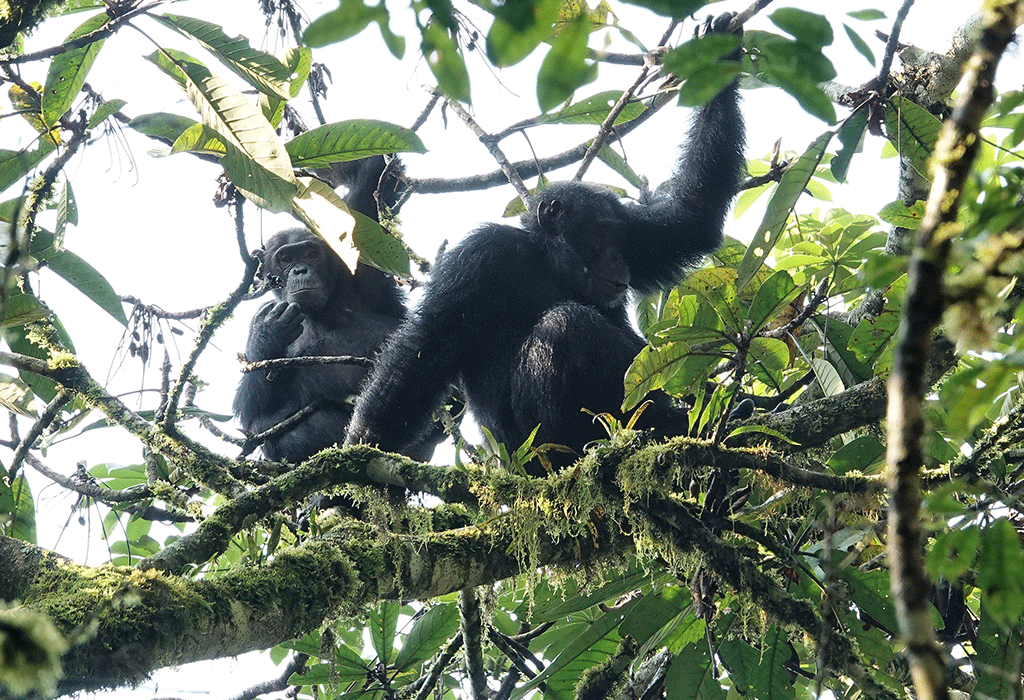
Kalinzu Forest is located close to Queen Elizabeth National Park. Its chimpanzees, forest monkeys, rich vegetation and quieter trails make it an attractive destination for nature-oriented filming.
The reserve is particularly convenient for crews travelling between Queen Elizabeth National Park and Bwindi.
Chimpanzee encounters depend on daily movements. Commercial filming permissions should be confirmed with the forest management authority.

6. Kyambura Gorge
Kyambura Gorge is one of Uganda’s most visually unusual chimpanzee habitats. A forested valley cuts through the surrounding savannah of Queen Elizabeth National Park.
Filmmakers can capture striking transitions between open grassland and dense riverine forest.
The steep descent requires physical preparation. Chimpanzee sightings are not guaranteed, and crews must follow the directions of authorized guides.
7. Bigodi Wetland Sanctuary
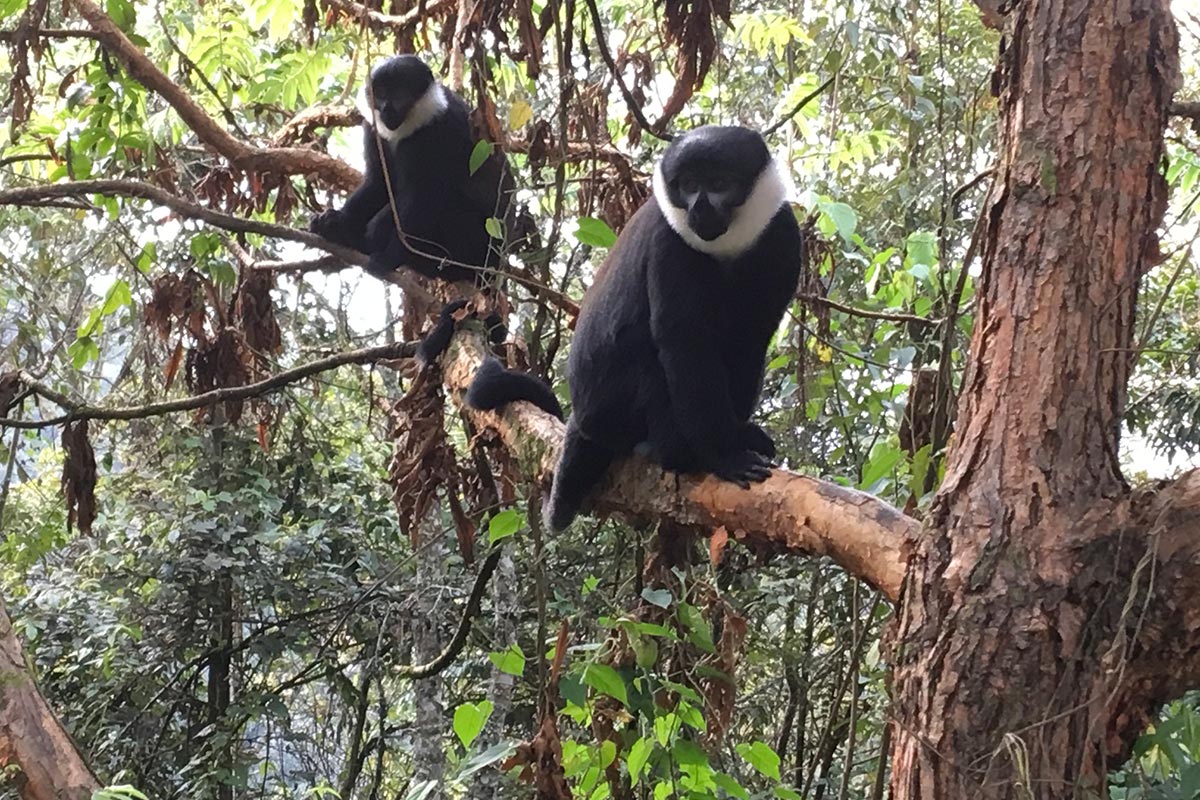
Bigodi is a community-managed wetland and forest-edge destination near Kibale National Park. It is an excellent choice for productions interested in smaller primates, birds and community conservation.
Black-and-white colobus monkeys, red-tailed monkeys and other forest species may be seen during guided walks.
Filmmakers can also explore how tourism supports local conservation and livelihoods, subject to the appropriate permissions and participant consent.

8. Ngamba Island Chimpanzee Sanctuary
Ngamba Island is located on Lake Victoria near Entebbe. Unlike Kibale and Budongo, the island is a sanctuary for rescued chimpanzees rather than a wild chimpanzee tracking destination.
It is suitable for documentaries about animal welfare, rescue, rehabilitation and conservation education.
Professional filming must be arranged directly with the sanctuary. Access to chimpanzees and specific activities is subject to its welfare and operational rules.
Specialized Chimpanzee Research Filming in Kibale
Beyond regular tourist tracking areas, Kibale is internationally important for long-term chimpanzee research. Two particularly interesting research areas are Ngogo and Kanyawara.
Ngogo
Ngogo is associated with extensive research into chimpanzee community structure, territorial behaviour, social relationships and hunting. Documentary producers exploring advanced primate science may find it especially relevant.
Kanyawara
Kanyawara has a long history of scientific observation. It provides valuable context for documentaries about individual chimpanzees, ecological change and primate behaviour.
Important: These are research locations, not ordinary public chimpanzee tracking products. Filming access requires specific authorization from the appropriate park authorities and research teams. Standard visitor permits do not provide automatic access.
Permits and Permissions for Filming Primates in Uganda
One of the most important stages in planning a professional primate film production is confirming the correct legal permissions.
Ordinary tourists may take personal photographs and videos during authorized wildlife activities, provided they follow park regulations. Commercial documentary filming, advertising shoots, television productions and other professional projects can involve additional approvals and charges.
Uganda Wildlife Authority
UWA manages national parks such as Bwindi, Mgahinga and Kibale. Productions must confirm filming permissions, relevant wildlife activity permits and applicable filming fees.
Forest and Sanctuary Management
Forest reserves and sanctuaries have separate management arrangements. Budongo, Kalinzu and Ngamba Island may require additional location-specific authorization.
Media and Equipment Clearance
International crews should check Uganda’s applicable filming accreditation, equipment import procedures and requirements for professional production activities.
What About Commercial Filming Fees?
Uganda Wildlife Authority’s 2026–2028 conservation tariff sets out commercial filming charges linked to park activities and entrance fees. However, the full amount depends on the production type, activity and approved arrangements.
Do not assume that buying a gorilla or chimpanzee trekking permit automatically authorizes commercial filming. Obtain a written quotation and written approval before the production begins.
Drone use is separately regulated and should never be assumed to be permitted around primates. Drones are not permitted during ordinary gorilla trekking encounters.
Crews planning to combine different primate experiences can explore our gorilla and chimpanzee safari guide for geographical planning.
Practical Camera Tips for Filming Primates in Uganda
Uganda’s forests are beautiful but technically demanding. Low light, sudden rain, changing distances and rapid animal movement can all affect the final footage.
Choose Flexible Lenses
A medium telephoto zoom is useful when primates remain distant, while a wider lens helps record forest environments and landscape sequences.
Prepare for Low Light
Rainforest canopies reduce available light. Fast lenses, good high-ISO performance and stabilization help maintain usable footage.
Protect Your Equipment
Use suitable waterproof covers, dry bags and protected battery storage. Allow equipment to adjust gradually to changing temperatures.
Record Natural Sound
Forest calls, footsteps, rustling leaves and chimpanzee vocalizations can add depth to a documentary. Record without disturbing wildlife.
Keep equipment manageable. Heavy tripods, complicated rigs and numerous accessories can become difficult to transport through steep or muddy forests. Discuss equipment plans with the park authorities before travel, especially where equipment could interfere with normal tracking activities.
Responsible and Ethical Primate Filming
Wildlife welfare always comes before the perfect shot. Primates are vulnerable to human disturbance and disease transmission, so every professional production must follow the instructions of its authorized guides.
- Maintain the minimum distance required for each primate activity.
- Never use flash photography during gorilla or chimpanzee encounters.
- Do not imitate primate calls, feed animals or attempt to attract their attention.
- Avoid visiting gorillas and chimpanzees when unwell.
- Remain with your ranger guide and follow all time restrictions.
- Never clear vegetation or disturb animals to improve a camera angle.
- Obtain informed consent when recording local residents or community activities.
Ethical filming helps protect the animals, supports conservation and produces more authentic wildlife stories.
Best Time to Film Primates in Uganda
Primate filming is possible throughout the year. However, different seasons create different visual and logistical conditions.
Drier Months
Generally December–February and June–August.
Forest trails are often easier to navigate, and camera equipment is somewhat easier to protect. These months are useful for crews carrying substantial equipment.
Wetter Months
Generally March–May and September–November.
Rainfall can create lush vegetation, mist and beautiful atmospheric scenes. However, slippery trails and moisture require careful preparation.
Weather remains variable in tropical forests, even during traditionally drier periods. Build flexibility into the filming schedule and avoid relying on a single encounter for essential footage.
Filmmakers combining multiple destinations may also consult our guide to Uganda’s national parks.
Suggested 10-Day Uganda Primate Filming Itinerary
This sample route combines varied habitats and primate subjects. It is a planning framework rather than a promise of specific wildlife encounters or filming access.
Day 1 – Arrival in Entebbe
Arrive at Entebbe International Airport, meet your local team, inspect equipment and review the production schedule.
Day 2 – Transfer to Kibale
Travel through western Uganda to the Kibale forest area. Prepare cameras and review authorized filming arrangements.
Day 3 – Chimpanzee Filming in Kibale
Undertake the approved chimpanzee activity, focusing on natural behaviour and forest sequences.
Day 4 – Kibale and Bigodi
Film smaller primates, wetland scenery and community conservation activities, subject to the required permissions.
Day 5 – Queen Elizabeth National Park
Travel towards Queen Elizabeth National Park. Capture landscapes and other wildlife where authorized.
Day 6 – Kyambura Gorge or Kalinzu
Explore a second chimpanzee habitat. Select the location according to current access, filming approval and production priorities.
Day 7 – Transfer to Bwindi
Travel to the allocated gorilla trekking sector. Prepare for mountainous terrain and review equipment requirements.
Day 8 – Mountain Gorilla Filming
Join the approved gorilla activity, following all ranger instructions and applicable filming conditions.
Day 9 – Mgahinga Golden Monkeys
Travel to Mgahinga for an authorized golden monkey experience and additional volcanic landscape footage.
Day 10 – Departure Arrangements
Return by suitable road or air connections. Finalize equipment handling and departure logistics.
For productions needing additional filming days, consider a longer itinerary with backup dates. Our Uganda wildlife tracking guide provides further ideas.
FAQs About Top places to film primates in Uganda
What is the best place to film chimpanzees in Uganda?
Kibale National Park is generally the strongest choice because of its established chimpanzee tracking activities, substantial chimpanzee population and diverse forest habitat. Commercial productions require separate authorization.
Where can filmmakers record mountain gorillas in Uganda?
Bwindi Impenetrable National Park and Mgahinga Gorilla National Park are Uganda’s two mountain gorilla destinations. Bwindi offers four trekking sectors, while Mgahinga combines gorillas with the Virunga volcanic landscape.
Do professional filmmakers need special permits?
Yes. Commercial filming normally requires additional permission beyond standard tourism permits. The required approvals depend on the protected area, activity and production type.
Can I use a drone to film gorillas?
Drones are not permitted during ordinary gorilla trekking. Other proposed drone operations must receive all applicable aviation, security and protected-area permissions in advance.
Can I spend more than one hour filming gorillas?
Standard gorilla trekking permits provide one hour with a located group. The authorized gorilla habituation experience provides a different, longer encounter. Neither activity automatically authorizes commercial production or unrestricted filming.
Where can I film golden monkeys in Uganda?
Mgahinga Gorilla National Park is the established destination for guided golden monkey tracking in Uganda. Its bamboo forests are particularly attractive for filming these fast-moving primates.
Is Kibale or Bwindi better for wildlife filming?
Choose Kibale for chimpanzee communication, complex social behaviour and different monkey species. Choose Bwindi for mountain gorilla family interactions and dramatic montane forest scenery. A combined trip provides greater diversity.
How many days should a primate filming trip take?
A focused production may concentrate on one species for several days. A multi-location documentary generally benefits from 10–14 days or longer, especially when allowing for weather, travel, approvals and unpredictable animal movements.
Plan Your Uganda Primate Filming Experience
From the gorilla forests of Bwindi to the chimpanzee communities of Kibale and the golden monkeys of Mgahinga, Uganda offers remarkable opportunities for wildlife storytelling. Let Safari Vacations & Travel Services help you organize a practical, responsible filming journey.
Safari Vacations & Travel Services Ltd | Uganda & Rwanda Safari Specialists





