
Top Most Animals to See on a Uganda Safari

Discover Uganda’s natural treasures
Uganda: One of Africa’s Most Rewarding Wildlife Safari Destinations
Uganda is one of East Africa’s most diverse wildlife destinations, offering travellers an opportunity to encounter an extraordinary range of animals across savannah plains, tropical rainforests, wetlands, rivers, lakes and mountainous landscapes.
Known as the Pearl of Africa, Uganda is particularly attractive because it combines traditional African game drives with exceptional primate experiences. Visitors can observe elephants, lions, leopards, buffaloes and giraffes in the savannah, then travel to ancient forests to encounter mountain gorillas and chimpanzees.
The country’s protected areas also support numerous antelope species, monkeys, hippos, crocodiles, hyenas, forest mammals and hundreds of bird species. Each national park has its own wildlife attractions, making it possible to design a safari around particular animals and interests.
Whether you are planning your first African holiday, a photographic expedition, a family wildlife adventure or a specialised primate safari, Uganda offers remarkable opportunities to experience nature.
Explore our Uganda safari holidays to discover different ways of exploring the country.
Top Wildlife Animals to Discover in Uganda
Mountain Gorillas
Encounter endangered great apes in Bwindi and Mgahinga.
Chimpanzees
Explore tropical forests and observe our fascinating primate relatives.
African Elephants
Watch large herds moving through savannah and woodland habitats.
Lions
Search for Africa’s iconic predators on guided game drives.
Leopards
Look for elusive big cats resting in trees and dense vegetation.
Shoebill Storks
Discover one of Africa’s most remarkable wetland birds.
The Top Animals to See on a Uganda Safari
Uganda’s wildlife diversity makes it possible to encounter many fascinating species in different protected areas. The following are some of the most sought-after animals and birds to include in your safari itinerary.
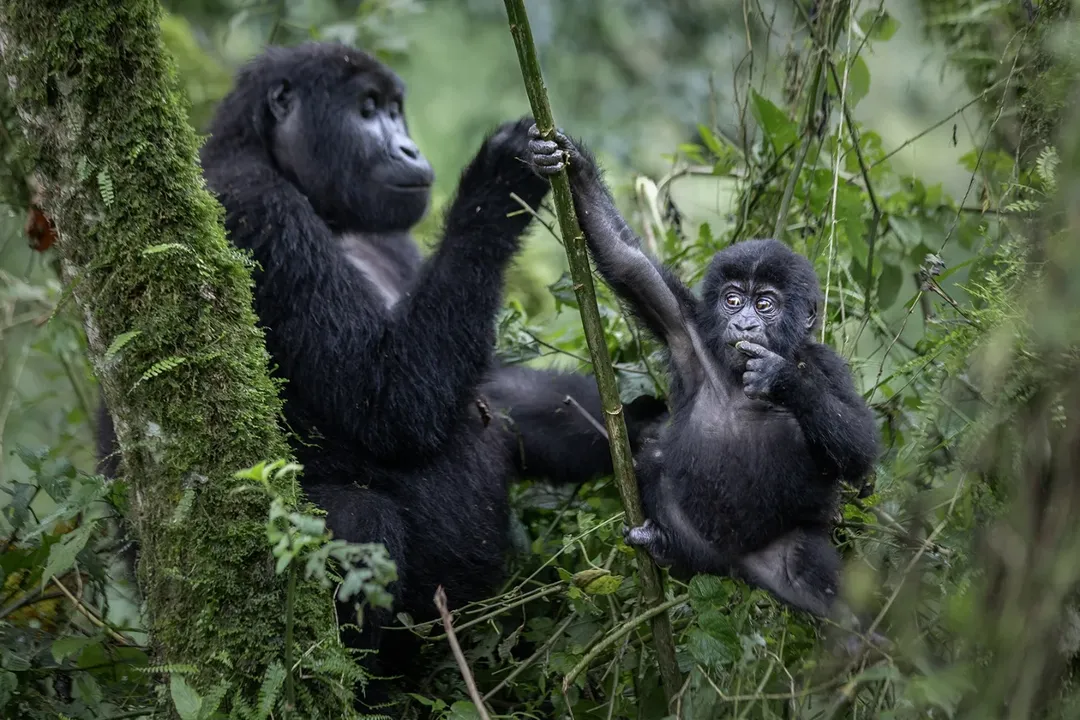
01 · THE GREAT APES
1. Mountain Gorillas
Mountain gorillas are among the most extraordinary animals to encounter in Uganda. These endangered great apes live in the forested mountains of southwestern Uganda, where they are protected in Bwindi Impenetrable National Park and Mgahinga Gorilla National Park.
Observing a gorilla family in its natural habitat is one of Africa’s most memorable wildlife experiences. Visitors can watch silverbacks, adult females and young gorillas feeding, grooming, resting and interacting with one another.
Gorilla trekking involves walking through dense rainforest accompanied by experienced park rangers and trackers. Once the assigned habituated family is located, visitors are allowed a maximum of one hour to observe the gorillas during a standard trek.
Where to see them: Bwindi Impenetrable National Park and Mgahinga Gorilla National Park.
Best experience: Mountain gorilla trekking and the Gorilla Habituation Experience in Bwindi.
02 · INTELLIGENT PRIMATES
2. Chimpanzees
Chimpanzees are among the most fascinating primates to observe on a Uganda safari. They are intelligent, social animals that live in communities and communicate through vocalisations, gestures, facial expressions and physical interactions.
Uganda is an excellent destination for chimpanzee tracking, especially in Kibale Forest National Park, which is renowned for its rich primate diversity.
During a guided chimpanzee trek, visitors follow experienced trackers through the forest in search of habituated chimpanzee communities. You may see them feeding in trees, grooming one another, moving between branches or calling to other members of their group.
Other chimpanzee viewing opportunities are available in Budongo Forest, Kyambura Gorge in Queen Elizabeth National Park and Kalinzu Forest Reserve, subject to the relevant tracking arrangements.
Where to see them: Kibale Forest, Budongo Forest, Kyambura Gorge and Kalinzu Forest.
Best experience: Chimpanzee tracking and guided forest walks.

03 · AFRICA’S LARGEST LAND ANIMAL
3. African Elephants
African elephants are among the most impressive animals to see on a Uganda wildlife safari. Their enormous size, long trunks, large ears and complex social behaviour make them fascinating subjects for wildlife observation and photography.
Uganda supports both savannah and forest elephant populations. Savannah elephants are more likely to be encountered during conventional game drives, while forest elephants inhabit dense forest environments and are generally much harder to see.
Large herds can be encountered in Murchison Falls National Park and Queen Elizabeth National Park. Visitors may see elephants feeding on vegetation, walking across open plains or gathering near water sources.
Boat excursions along the Nile in Murchison Falls and the Kazinga Channel in Queen Elizabeth offer additional opportunities to observe elephants near riverbanks.
Where to see them: Murchison Falls, Queen Elizabeth and Kidepo Valley National Parks.
Best experience: Game drives and river or channel boat cruises.
04 · AFRICA’S ICONIC PREDATOR
 4. Lions
Lions are among the most exciting predators to look for during a Uganda safari. These powerful carnivores live in social groups known as prides and are often found resting in shaded areas during the hotter hours of the day.
Queen Elizabeth National Park is one of Uganda’s most popular destinations for lion viewing. The Ishasha sector is particularly famous for its tree-climbing lions, which are occasionally seen resting in large fig trees.
Lions are also present in Murchison Falls National Park and Kidepo Valley National Park, where guided game drives provide opportunities to search for them in their natural habitats.
Although sightings can be rewarding, lions are wild animals and their movements cannot be guaranteed.
Where to see them: Queen Elizabeth, Murchison Falls and Kidepo Valley National Parks.
Best experience: Early morning and late afternoon game drives, particularly in Ishasha.

05 · THE ELUSIVE BIG CAT
5. Leopards
Leopards are beautiful and elusive members of Uganda’s wildlife community. Recognised by their spotted coats, powerful bodies and impressive climbing abilities, these solitary predators are among the most sought-after animals during game drives.
Leopards are usually difficult to locate because they are secretive and often active during the night or early morning. They may rest on tree branches, move through woodland or hunt in areas with thick vegetation.
Queen Elizabeth National Park, Murchison Falls National Park, Lake Mburo National Park and other protected areas provide habitat for leopards.
Visitors may occasionally encounter a leopard resting in a tree or moving quietly through the grassland.
Where to see them: Queen Elizabeth, Murchison Falls and Lake Mburo National Parks.
Best experience: Guided game drives, particularly during early morning and evening hours.
6. African Buffaloes
African buffaloes are among the most frequently encountered large mammals in several of Uganda’s savannah national parks. They are recognisable by their muscular bodies, dark coats and distinctive curved horns.
Buffaloes often move in large herds, although older males may be seen alone or in smaller groups. They graze in open grasslands and frequently gather around water sources.
They are important members of the African savannah ecosystem and can be encountered during game drives and boat cruises.
Where to see them: Queen Elizabeth, Murchison Falls, Kidepo Valley and Lake Mburo National Parks.
Best experience: Game drives and wildlife viewing around rivers and wetlands.
07 · THE TALL LAND MAMMAL
7. Rothschild’s Giraffes
Rothschild’s giraffes are among the most recognisable animals on a Uganda safari. Their long necks, distinctive coat patterns and graceful movements make them especially attractive to wildlife photographers.
Uganda is one of the important conservation areas for Rothschild’s giraffes. They are particularly associated with Murchison Falls National Park, where visitors can observe them feeding on acacia leaves and moving through the savannah.
Giraffes can also be encountered in other protected areas where populations have been established through conservation and translocation programmes.
Where to see them: Murchison Falls National Park and Lake Mburo National Park.
Best experience: Savannah game drives and wildlife photography.

08 · RIVER AND WETLAND WILDLIFE
8. Hippopotamuses
Hippopotamuses are among the most fascinating large mammals to observe in Uganda’s rivers and lakes. During the day, they spend much of their time submerged in water to keep cool, often gathering in groups known as pods.
Visitors can see hippos during boat cruises on the Nile in Murchison Falls National Park, along the Kazinga Channel in Queen Elizabeth National Park and in other suitable wetland habitats.
Although they may appear calm while resting in water, hippos are powerful wild animals and can be dangerous. Visitors should always maintain a safe distance and follow their guide’s instructions.
Where to see them: Murchison Falls, Queen Elizabeth and other suitable aquatic habitats.
Best experience: Guided boat safaris.
09 · AFRICA’S LARGE REPTILE
9. Nile Crocodiles
Nile crocodiles are among the largest reptiles in Africa. They inhabit rivers, lakes and wetlands throughout suitable parts of Uganda.
During boat excursions, visitors may see crocodiles resting along riverbanks, floating near the surface or lying on exposed sandbanks.
The Nile River in Murchison Falls National Park and the Kazinga Channel in Queen Elizabeth National Park are particularly interesting locations for observing these reptiles.
Where to see them: Murchison Falls and Queen Elizabeth National Parks.
Best experience: Boat cruises and guided wildlife viewing along watercourses.
10 · THE STRIPED GRAZER
10. Plains Zebras
Plains zebras are among the most attractive grazing animals to see on a Uganda safari. Their distinctive black-and-white stripes make them easy to recognise and photograph.
Unlike many of Uganda’s forest wildlife species, zebras are generally associated with open grasslands and savannah environments.
Lake Mburo National Park is one of Uganda’s best destinations for zebra viewing. They are also found in Kidepo Valley National Park.
Where to see them: Lake Mburo and Kidepo Valley National Parks.
Best experience: Game drives, nature walks in permitted areas and wildlife photography.
11 · UGANDA’S NATIONAL ANIMAL
11. Uganda Kob
The Uganda kob is one of the country’s most recognisable antelope species and is featured on the national coat of arms.
These attractive antelopes are usually found in open grasslands, where they graze in groups. Males have curved horns and may establish territorial breeding areas known as leks.
Queen Elizabeth National Park is an excellent destination for Uganda kob viewing. They can also be seen in Murchison Falls and other suitable savannah habitats.
The presence of Uganda kob is also important to the predator-prey relationships in these ecosystems, as they form part of the natural diet of lions and other carnivores.
Where to see them: Queen Elizabeth and Murchison Falls National Parks.
Best experience: Savannah game drives and antelope photography.
12. Spotted Hyenas
Spotted hyenas are intelligent and highly adaptable carnivores that play an important role in Uganda’s savannah ecosystems.
They are known for their powerful jaws, spotted coats and distinctive vocalisations. Although commonly associated with scavenging, they are also skilled hunters that can capture prey themselves.
They inhabit several savannah protected areas and may be encountered during early morning or evening game drives.
Where to see them: Queen Elizabeth, Murchison Falls, Kidepo Valley and other suitable protected areas.
Best experience: Guided game drives, especially around dawn and dusk.
13. Golden Monkeys
Golden monkeys are attractive and energetic primates known for their distinctive golden-orange fur and playful behaviour.
In Uganda, they are associated with the bamboo forests of Mgahinga Gorilla National Park, part of the Virunga Conservation Area.
Golden monkey tracking allows visitors to walk through bamboo vegetation accompanied by park guides in search of habituated troops. Once located, visitors can observe the monkeys feeding, jumping between bamboo stems and interacting with one another.
Golden monkey tracking is an excellent activity to combine with mountain gorilla trekking in southwestern Uganda.
Where to see them: Mgahinga Gorilla National Park.
Best experience: Guided golden monkey tracking.

14. Shoebill Storks
The shoebill stork is one of the most unusual and sought-after birds to see on a Uganda safari. Its enormous shoe-shaped bill, tall body and prehistoric appearance make it a favourite among birdwatchers and wildlife photographers.
Shoebills inhabit freshwater wetlands and papyrus swamps, where they hunt fish and other aquatic animals. They are often associated with quiet, marshy environments and can remain remarkably still while waiting for prey.
Mabamba Bay Wetland, near Lake Victoria, is one of Uganda’s best-known destinations for shoebill excursions. The wetlands around Murchison Falls and other suitable areas also support shoebills.
Where to see them: Mabamba Bay Wetland, Murchison Falls wetlands and other suitable papyrus habitats.
Best experience: Guided canoe or motorboat birdwatching excursions.
15. Black-and-White Colobus Monkeys
Black-and-white colobus monkeys are beautiful forest primates recognised by their contrasting black coats and long white hair, especially around their shoulders and tails.
They spend much of their time in trees, feeding on leaves and moving through forest canopies. Their long tails help them maintain balance as they leap between branches.
They can be encountered in several Ugandan forest habitats, including Kibale, Bwindi and other forested protected areas.
Where to see them: Kibale Forest, Bwindi and other suitable forest reserves.
Best experience: Guided forest walks and primate viewing.
16. Olive Baboons
Olive baboons are widespread and adaptable primates found in a variety of Ugandan habitats, including savannah woodland and forest edges.
They live in social groups with complex relationships and spend time foraging for fruits, seeds, insects and other foods.
Visitors may encounter baboons along park roads, in woodland habitats and near forest entrances. Their expressive faces and social behaviour make them interesting to observe.
Where to see them: Queen Elizabeth, Murchison Falls, Lake Mburo and several other protected areas.
Best experience: Game drives and guided nature walks.
17 · THE GRACEFUL ANTELOPE
17. Impalas
Impalas are graceful antelopes known for their impressive jumping abilities and reddish-brown coats. They are social animals that often gather in herds in open woodland and grassland environments.
In Uganda, Lake Mburo National Park is particularly well known for impalas and offers visitors a good opportunity to observe them during game drives and nature activities.
Where to see them: Lake Mburo National Park.
Best experience: Game drives and guided nature walks.

18 · THE WATER-LOVING ANTELOPE
18. Defassa Waterbucks
Defassa waterbucks are large antelopes commonly associated with grasslands near rivers, lakes and other water sources. Their shaggy coats and prominent white markings make them distinctive.
They are among the interesting grazers that visitors may encounter while exploring Uganda’s savannah parks.
Where to see them: Queen Elizabeth, Murchison Falls and other suitable protected areas.
Best experience: Game drives and wildlife viewing near wetlands.
19. Warthogs
Warthogs are easily recognised by their large heads, curved tusks and facial protrusions. They often move across open grasslands with their tails raised and may be seen kneeling on their front legs while feeding.
They are adaptable animals that feed on grasses, roots and other plant material. Their burrows provide shelter, particularly during periods of danger or extreme temperatures.
Where to see them: Queen Elizabeth, Murchison Falls, Lake Mburo and Kidepo Valley National Parks.
Best experience: Savannah game drives.
Best National Parks for Wildlife Viewing in Uganda
Choosing the right national park is essential when planning a wildlife safari. Different parks offer different habitats and animal encounters.
A birdwatcher’s paradise
Birds to See on a Uganda Safari
Uganda is also an exceptional destination for birdwatching. Its combination of tropical forests, savannah grasslands, wetlands and lakes supports an impressive diversity of bird species.
In addition to the shoebill, birdwatchers can look for:
- Grey crowned cranes.
- African fish eagles.
- Great blue turacos.
- African jacanas.
- Malachite kingfishers.
- Goliath herons.
- Marabou storks.
- Various hornbills and sunbirds.
Mabamba Bay, Murchison Falls, Queen Elizabeth, Bwindi and Kibale are among the interesting birdwatching destinations.
Can You See the Big Five on a Uganda Safari?
Yes. Uganda offers opportunities to see the African Big Five: lion, leopard, elephant, buffalo and rhinoceros. However, the five animals are not all encountered in the same way or in the same location.
| Big Five Animal | Where to See It |
|---|---|
| Lion | Queen Elizabeth, Murchison Falls and Kidepo |
| Leopard | Queen Elizabeth, Murchison Falls and other suitable parks |
| African elephant | Murchison Falls, Queen Elizabeth and Kidepo |
| African buffalo | Queen Elizabeth, Murchison Falls and Kidepo |
| Rhinoceros | Ziwa Rhino Sanctuary |
Rhinoceros tracking is available at Ziwa Rhino Sanctuary, a protected conservation area where visitors can participate in guided rhino tracking on foot. Rhinos are not currently free-ranging in Uganda’s national parks in the same way as the other Big Five species.
A safari combining Ziwa Rhino Sanctuary with Murchison Falls and other savannah destinations can provide a rewarding Big Five experience.
Best Safari Activities for Seeing Wildlife in Uganda
Game Drives
Explore savannah landscapes in a 4×4 safari vehicle while searching for lions, elephants, buffaloes, giraffes, antelopes and other wildlife.
Boat Safaris
Observe hippos, crocodiles, elephants and waterbirds during boat cruises along the Nile and Kazinga Channel.
Primate Tracking
Walk through rainforests in search of mountain gorillas, chimpanzees, golden monkeys and other primates.
Birdwatching
Visit wetlands, forests and savannah habitats to observe Uganda’s diverse birdlife.
Guided Nature Walks
Explore selected park trails with knowledgeable guides and discover smaller mammals, plants, insects and birds.
Horseback Safaris
Experience wildlife and scenic landscapes on horseback in suitable locations such as Lake Mburo.
Best Time to See Animals on a Uganda Safari
Uganda is a year-round wildlife destination. However, some periods are particularly popular for game drives, primate tracking and outdoor activities.
June to August
A popular dry-season period for savannah wildlife viewing and primate tracking. Wildlife may be easier to spot around water sources in some areas.
December to February
Another generally favourable dry-season period for game drives, wildlife photography and outdoor activities.
March to May
The longer rainy season creates lush scenery and can offer rewarding birdwatching, although some roads and trails become muddy.
September to November
The shorter rainy season brings green landscapes and can be rewarding for nature enthusiasts and photographers.
Weather and wildlife movements differ between parks. Animal sightings are never guaranteed, even during the dry season.
How to Plan a Wildlife Safari in Uganda
1. Choose Your Preferred Wildlife
Decide whether you are most interested in gorillas, chimpanzees, the Big Five, birds or a combination of wildlife experiences.
2. Select Suitable National Parks
Choose parks according to your wildlife interests, travel duration and preferred activities. A primate safari requires different destinations from a conventional savannah game-drive holiday.
3. Decide on Your Safari Duration
A short safari may focus on one or two destinations, while a longer holiday allows you to combine several national parks.
4. Book Special Activities in Advance
Gorilla trekking, chimpanzee tracking and other limited-capacity activities should be checked and booked before travelling.
5. Choose Appropriate Accommodation
Select lodges according to your preferred comfort level and proximity to the park entrance or activity briefing point.
6. Travel With an Experienced Guide
A knowledgeable safari guide helps you understand animal behaviour, identify wildlife and explore protected areas responsibly.
Suggested Uganda Wildlife Safari Itineraries
These safari ideas combine different habitats and wildlife experiences to help visitors discover Uganda’s remarkable animal diversity.
3-Day Murchison Falls Safari
Discover elephants, giraffes, buffaloes, hippos, crocodiles and other savannah wildlife.
3-Day Gorilla Trekking Safari
Enjoy an unforgettable mountain gorilla encounter in Bwindi.
5-Day Wildlife Safari
Combine savannah game drives, boat cruises and scenic wildlife destinations.
7-Day Primate Safari
Explore gorilla trekking, chimpanzee tracking and other primate experiences.
10-Day Uganda Wildlife Safari
Discover several national parks and experience a broad range of Uganda’s wildlife.
Responsible Wildlife Tourism and Conservation in Uganda
Uganda’s wildlife heritage is an important part of the country’s natural and cultural identity. Protecting animals and their habitats requires cooperation between conservation authorities, local communities, tourism operators and visitors.
Responsible tourism helps support conservation through park fees, employment opportunities, community projects and awareness of the importance of protecting biodiversity.
As a wildlife visitor, you can contribute by following park rules, maintaining safe distances from animals, avoiding littering, respecting local communities and choosing responsible tourism providers.
During primate tracking, visitors should follow health guidelines and avoid participating when experiencing infectious symptoms that could threaten wildlife.
Learn more about Uganda’s protected areas through the Uganda Wildlife Authority.
Explore More Uganda Wildlife and Safari Guides
Continue planning your holiday with these related guides from UgandaRwanda Safaris.
2. Uganda Safari Holidays
3. Gorilla Trekking in Uganda
4. Chimpanzee Tracking in Uganda
5. Golden Monkey Trekking
6. Murchison Falls National Park
7. Queen Elizabeth National Park
8. Bwindi Impenetrable National Park
9. Kibale Forest National Park
10. Lake Mburo National Park
11. Kidepo Valley National Park
12. Mgahinga Gorilla National Park
13. Semuliki National Park
14. Elephant Safaris in Uganda
15. Tree-Climbing Lions in Uganda
16. Shoebill Stork in Uganda
17. Birdwatching in East Africa
18. Big Five Safari in Uganda
19. Gorilla Habituation in Uganda
20. Uganda Primate Safaris
21. 3-Day Murchison Falls Safari
22. 3-Day Gorilla Trekking Safari
23. 5-Day Uganda Wildlife Safari
24. 7-Day Uganda Primate Safari
25. 10-Day Uganda Safari
Frequently Asked Questions About Animals to See on a Uganda Safari
1. What are the most popular animals to see in Uganda?
Some of Uganda’s most popular wildlife species include mountain gorillas, chimpanzees, elephants, lions, leopards, buffaloes, giraffes, hippos, crocodiles, zebras and Uganda kob.
2. Can I see the Big Five in Uganda?
Yes. Uganda offers opportunities to see lions, leopards, elephants and buffaloes in its national parks. White rhinoceroses can be tracked at Ziwa Rhino Sanctuary.
3. Which national park has the most wildlife in Uganda?
Queen Elizabeth and Murchison Falls National Parks are among the leading destinations for savannah wildlife viewing. Each park has different habitats and animal populations.
4. Where can I see mountain gorillas in Uganda?
Mountain gorillas can be tracked in Bwindi Impenetrable National Park and Mgahinga Gorilla National Park.
5. Where can I see chimpanzees in Uganda?
Kibale Forest National Park is the leading chimpanzee tracking destination. Other opportunities are available in Budongo Forest, Kyambura Gorge and Kalinzu Forest.
6. Where can I see tree-climbing lions?
The Ishasha sector of Queen Elizabeth National Park is particularly famous for tree-climbing lions.
7. Where can I see giraffes in Uganda?
Murchison Falls National Park is one of the best places to see Rothschild’s giraffes. They can also be found in Lake Mburo and other suitable protected areas.
8. Where can I see zebras in Uganda?
Lake Mburo National Park and Kidepo Valley National Park are popular destinations for zebra viewing.
9. Where can I see the shoebill stork?
Mabamba Bay Wetland is one of the best-known locations for shoebill excursions. Murchison Falls and other suitable wetlands also support the species.
10. Can I combine gorilla trekking with wildlife game drives?
Yes. You can combine Bwindi gorilla trekking with game drives in Queen Elizabeth National Park, Lake Mburo or other protected areas.
11. What is the best time for wildlife viewing in Uganda?
The generally drier periods, especially June to August and December to February, are popular for wildlife viewing. Uganda remains a year-round destination.
12. How many days do I need for a Uganda wildlife safari?
A three-to-five-day safari can cover one or two destinations, while seven to twelve days allow visitors to explore a wider selection of national parks and wildlife experiences.
13. Are animal sightings guaranteed?
No. Wildlife is free-ranging and sightings depend on animal movements, weather, habitat and time of day. Experienced guides help improve your chances.
14. Is Uganda suitable for wildlife photography?
Yes. Uganda offers excellent opportunities for photographing large mammals, primates, birds and beautiful natural landscapes.
15. Can I see all these animals on one safari?
Not necessarily. The animals are distributed across different habitats and national parks. A longer, carefully planned itinerary gives you the opportunity to encounter a wider variety of species.
Discover the Pearl of Africa
Ready to Discover Uganda’s Amazing Wildlife?
From mountain gorillas and chimpanzees to elephants, lions, giraffes and the remarkable shoebill stork, Uganda offers unforgettable wildlife encounters. Let UgandaRwanda Safaris help you plan a safari that brings you closer to the country’s extraordinary natural heritage.
UgandaRwanda Safaris · Wildlife · Nature · Adventure





