
The Future of Gorilla Trekking in Uganda and Rwanda
How Is Gorilla Trekking Changing?
The future of gorilla trekking in Uganda and Rwanda is not about replacing traditional forest walks with a new attraction. It is about protecting the experience that already exists. Park managers are improving wildlife monitoring, conservation organisations are working across borders, and communities around gorilla habitat are gaining a stronger place in the tourism story.
Visitors will still travel into the forest with trained rangers, search for wild gorilla families and follow strict viewing rules. What is developing around that experience is a more informed approach to conservation, trip planning and local benefit. The biggest changes are easier to understand when we separate what has already happened from what is planned and what may develop later.
This guide focuses on gorilla trekking in Uganda and Rwanda, especially Bwindi and Mgahinga in Uganda and Volcanoes National Park in Rwanda. It also explains what the developments mean for visitors comparing Uganda and Rwanda gorilla tours in 2027 and beyond.


Quick Answer: What Will the Next Gorilla Trekking Experience Look Like?
The most likely future is carefully managed, conservation-led gorilla tourism. Visitors should expect established small-group trekking rules to remain important, a greater emphasis on protecting gorillas from human illness, more information from genetic monitoring, and stronger connections between tourism income and surrounding communities.
There is no verified announcement that all trekking will become digital, that viewing time will be extended, or that any trek will be guaranteed easy. These claims would be misleading. For the practical side of the experience, see our guide to planning a Bwindi gorilla safari.
1. A More Scientific Approach to Gorilla Conservation
Good conservation decisions depend on reliable data, not only on the number of gorillas photographed by visitors. Uganda Wildlife Authority reported on 23 September 2026 that the last published Bwindi–Sarambwe census identified 459 mountain gorillas in 2018. Its newer 2025–2026 genetic analysis was still awaiting release. A combined historical estimate of 1,063 for the two mountain gorilla populations used the 2015 Virunga and 2018 Bwindi census results; it should not be described as a freshly counted 2026 population.
The newer survey matters because researchers use genetic sampling to distinguish individuals and identify population trends more accurately. They also monitor habitat and animal health. Better information can guide how parks protect sensitive forest areas, evaluate threats, and decide where tourism activity is appropriate.
This is a real, measurable development, but it does not automatically mean more gorilla groups will be available to tourists. Habituation and visitor access involve separate decisions by park authorities. If you want to understand how groups may become available for tourism, our article about new gorilla families opened to visitors in Bwindi provides a previous example.
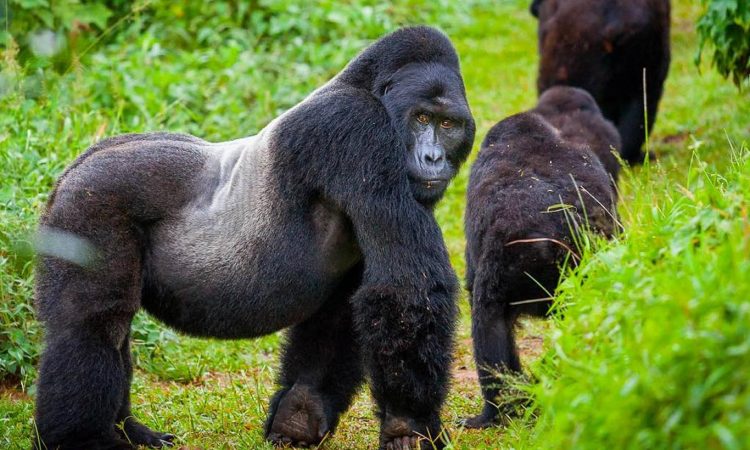
What is confirmed as of November 2026?
The 2018 Bwindi–Sarambwe figure remains the latest published census benchmark cited by UWA in September 2026.
The result of the newer genetic analysis should not be invented or presented as confirmed before its release.
The wider work is described in UWA’s September 2026 conservation update. For visitors choosing a location, the four Bwindi trekking sectors offer distinct logistics, but the search for gorillas remains a wildlife activity, not a staged encounter.
2. Gorilla Health and Small-Group Rules Will Still Matter
Mountain gorillas can contract infections from people, so protecting their health is central to responsible tourism. Uganda Wildlife Authority’s published trekking rules include a maximum of eight visitors per gorilla group, a one-hour standard viewing period, a minimum trekking age of 15, and a required separation of 10 metres from gorillas. Visitors must also avoid trekking while suffering from a contagious illness.
These are established safeguards rather than speculative new features. Rangers may direct visitors to move back, remain quiet, avoid close contact, and change position if a gorilla approaches. The correct response is to follow the guide’s instructions rather than trying to obtain a closer photograph.
What visitors should expect in practice?
Ranger briefings before the trek, controlled group size, restrictions around illness, and the need to keep a respectful distance are not likely to disappear simply because more tourists want to visit.
Good preparation therefore matters as much as a quality camera or comfortable lodge. Travelers concerned about mobility can read our overview of more accessible trekking sectors and guide to walking distances on a gorilla trek without assuming a specific family will be close to the trailhead.

The main point is simple: the future should protect the gorillas before it increases convenience. Families travelling together should check gorilla trekking age and family requirements well before securing permits.
3. Tourism Income Is Supporting More Local Community Projects
Gorilla conservation is not limited to the forest boundary. People living beside protected areas bear costs associated with wildlife, including crop damage, restricted land use and conflicts with animals. A durable future depends partly on whether local communities benefit from tourism and have reasons to participate in conservation.
In Uganda, UWA says 20% of relevant park-entry fee revenue is shared through a community revenue-sharing programme. Its published information also identifies an additional contribution associated with Bwindi gorilla trekking permits. This funding supports locally identified projects related to livelihoods and reducing human–wildlife conflict, including water infrastructure, schools and community enterprises.
In Rwanda, the Rwanda Development Board reported in September 2026 that 10% of national park tourism revenue is reinvested through its Tourism Revenue Sharing Programme. It reported more than RWF 23 billion in support for nearly 1,300 community projects, including schools, health facilities and water systems.
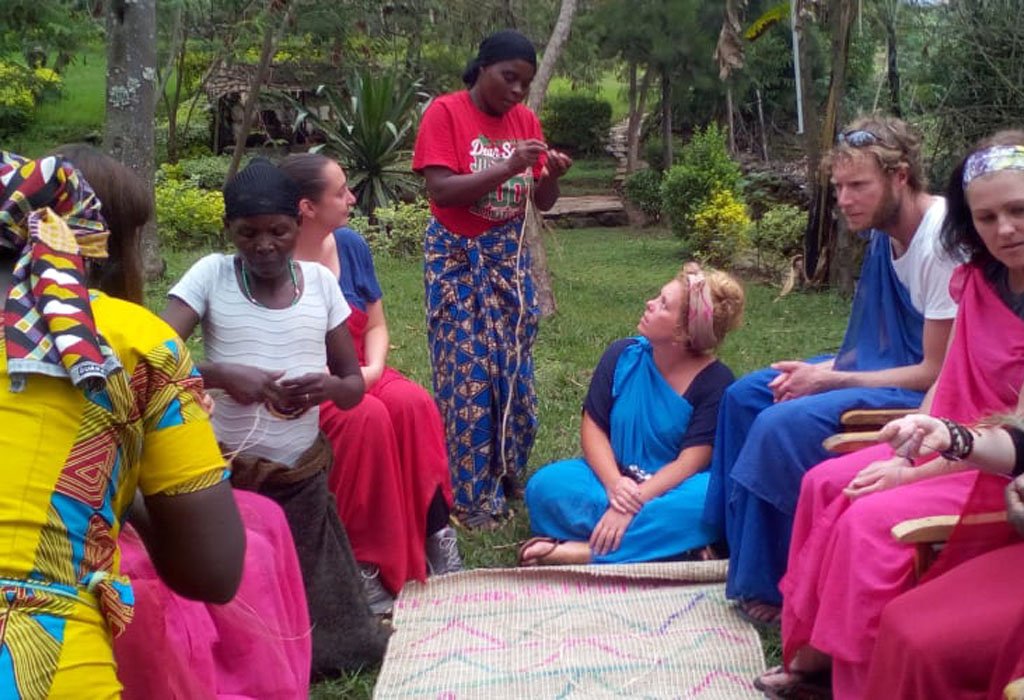
Why this matters to visitors
Hiring local porters, choosing responsibly run lodges and participating in genuine community-hosted activities can spread the economic benefits beyond a permit purchase.
Not every activity marketed as a community visit has the same local benefit. Ask who runs it, how participants are paid and whether participation is voluntary.
You can explore Uganda’s revenue-sharing programme and the Rwanda Development Board’s 2026 report. Travelers who wish to include other wildlife activities can combine gorilla trekking with chimpanzee tracking in Kibale, supporting multiple destinations rather than concentrating their trip in one park.
4. Rwanda Has Announced a Long-Term Volcanoes Landscape Plan
One of the most significant future-facing announcements concerns the landscape surrounding Volcanoes National Park. During its 2026 Kwita Izina celebrations, Rwanda described a long-term vision involving the expansion of the park by approximately 3,740 hectares and approximately 6,620 hectares of buffer zones. The broader programme is intended to combine ecosystem restoration with community resilience and improved livelihoods.
The announcement also highlighted the groundbreaking of the Smart Green Village in Kinigi. This is a community-development initiative connected to the wider Volcanoes Community Resilience Project. It is an example of conservation planning extending beyond tourism attractions and into the everyday needs of nearby residents.
It would be incorrect to say that the proposed park expansion is already complete, or that a particular gorilla trekking route has already changed because of it. The scale, timing and effects on visitors depend on future implementation and official park decisions.


This development also reminds travelers that mountain gorillas share a larger regional landscape. For context on destinations, see our guide to Africa’s mountain gorilla destinations and Uganda and Rwanda gorilla safari planning guide.
5. Uganda and Rwanda Will Remain Different Trekking Choices
Better conservation does not mean the visitor experiences will become identical. Uganda and Rwanda differ in road access, trekking landscapes, safari combinations, and permit costs. A good future-facing guide should help travelers make that distinction rather than declare one country universally better.
| Travel consideration | Uganda | Rwanda |
|---|---|---|
| Gorilla trekking parks | Bwindi and Mgahinga | Volcanoes National Park |
| Main airport approach | Entebbe or Kigali with Uganda border crossing | Kigali International Airport |
| Safari pace | Often suits longer circuits with other Uganda parks | Convenient for shorter focused trips from Kigali |
| Forest and terrain | Multiple Bwindi sectors; volcanic slopes at Mgahinga | Virunga slopes, bamboo zones and montane forest |
| Standard international permit | US$800 regular foreign non-resident rate in UWA 2027 tariff | US$1,500 published international rate |
| Extended gorilla habituation | Offered with a separate permit in southern Bwindi | No public four-hour gorilla habituation product listed |
| Other popular experiences | Kibale chimpanzees, Queen Elizabeth, Lake Bunyonyi | Golden monkeys, Kigali, Nyungwe and Lake Kivu |
Permit prices shown are published standard rates, not quotations or promises. Uganda’s January 2027–June 2028 tariff lists US$800 for foreign non-resident gorilla tracking; Rwanda’s official visitor site lists US$1,500 for international trekkers. Rates and eligibility rules may change, and eligible categories or promotions can differ. Always confirm the price for your nationality and trekking date.
The best Ugandan trekking location depends on your sector, travel route and confirmed permit. Compare Bwindi’s sector advantages, Mgahinga permits and availability, and the accessibility of different Bwindi sectors before choosing a lodge. The gorillas’ actual location determines the walk on the day; neither a country nor a sector guarantees an easy trek.
6. The Extended Gorilla Habituation Experience Offers a Different Choice
For visitors who want more time observing gorilla behaviour, Uganda already offers a distinct experience rather than a hypothetical future product: the four-hour Gorilla Habituation Experience in southern Bwindi. It is not the same as the standard one-hour trek. Visitors join a supervised encounter involving a group that is still undergoing habituation, and access to the area is more restricted.
This longer visit can be of particular interest to primate enthusiasts and photographers, but it is not automatically easier or better. The day may require a demanding forest walk, and the animals remain wild. Rwanda currently does not advertise an equivalent visitor habituation experience. See whether habituation is offered in Volcanoes National Park.
Uganda’s published tariff for January 2027–June 2028 lists US$1,800 for a foreign non-resident gorilla habituation permit in Bwindi. Different eligibility categories are priced differently. For details, see the Gorilla Habituation Experience in Bwindi, which Bwindi sectors are associated with habituation permits, and the difference between trekking and a habituation permit.
Travellers considering this activity should read what a gorilla habituation experience involves and our habituation packing guide before booking.
7. Digital Planning Can Improve the Journey — Without Changing the Wildlife
Online booking information, digital confirmations and better access to trip guidance are making it easier to coordinate safari logistics. Uganda Wildlife Authority maintains a booking system for regulated park activities, while Rwanda directs visitors to its official tourism booking services. These tools can help with administration, but they do not replace the need for genuine, confirmed permits and correct travel documents.
Good operators can now explain terrain, compare sectors, coordinate transfers, and help travelers prepare before arriving. For example, arranging a Bwindi lodge only after confirming the trekking sector reduces the risk of a long early-morning drive to the wrong entry point.
Further innovations in conservation technology may emerge, but no reliable source confirms that artificial intelligence, drones, or virtual reality will replace the guided in-person gorilla trek. Such possibilities should be presented as ideas, not guaranteed new products. Travelers can already make practical choices using our Uganda permit booking guide, guide to buying a gorilla permit, and information about gorilla group allocation.
The most valuable planning technology is the kind that reduces confusion and improves preparation. Even a detailed gorilla trekking packing list can prevent avoidable discomfort during a rainforest walk.
8. The Best Safaris Will Be Better Matched to the Traveler
One of the most useful developments in safari planning is a stronger focus on the individual traveler. A visitor who wants a three-day gorilla trip may prefer Kigali and Volcanoes National Park. Someone interested in chimpanzees, traditional game drives and lakeside relaxation may be better served by a longer Uganda circuit. Neither itinerary is automatically superior.
In Bwindi, Buhoma, Ruhija, Rushaga and Nkuringo differ in their surroundings, lodge options and road connections. However, trekking difficulty changes with weather, elevation and gorilla movement. No operator should promise an effortless trek based on a sector name alone. See common advice about manageable Bwindi sectors alongside the more detailed planning guidance.
For visitors combining travel with a slower day, Lake Bunyonyi after gorilla trekking can make a welcome change from the forest. For travelers entering from Rwanda, short gorilla trekking routes from Kigali may reduce the time available for a broader safari, so the route must be built around border formalities and practical travel hours.
The future of responsible safari service is less about adding expensive extras for everyone and more about giving visitors clear options. Lodges should be selected for their actual location and operating standards. Porters can be recommended where useful, while guiding and park rules remain firmly under the authority of the park teams.

Useful choices to personalize
Length of stay before and after the trek
Appropriate trekking sector and lodge
Porter support and realistic physical preparation
Chimpanzees, golden monkeys or game drives
Community-hosted experiences with fair local participation
Before selecting a package, compare the components of a gorilla safari budget and the practical Bwindi trekking experience. This is often more useful than choosing based on a single advertised starting price.
9. What Has Not Changed — and Should Not Be Promised
Gorilla trekking remains a wildlife encounter in challenging natural landscapes. Even experienced trackers cannot predict exactly how far a gorilla family will travel, which direction it will choose or whether fog and rain will affect photography. Sightings are typically very successful at established trekking parks, but they cannot responsibly be guaranteed as a particular pose, location or duration beyond official rules.
Neither country has announced that the standard encounter is becoming unrestricted. Statements that all treks will be shorter, cheaper, or easier in coming years are not backed by the official evidence used for this guide.
10. Practical Planning Checklist for 2027 and Beyond
The conservation story is interesting, but the next action for a traveler is straightforward: build a safari that respects park rules, suits the budget, and gives enough time for the experience. These steps apply whether your trip is in the coming season or several years away.
STEP 01Choose the destination
Compare Uganda and Rwanda by travel time, permit budget, and preferred additional experiences.
STEP 02Confirm the activity
A standard one-hour trek and an extended habituation experience need different permits.
STEP 03Check your trekking date
Do not assume a permit is available until it is confirmed and paid for under the current rules.
STEP 04Match the lodge to the sector
Avoid planning a long morning drive to a distant briefing location.
STEP 05Prepare for rainforest terrain
Bring waterproof clothing, sturdy shoes, and adequate drinking water.
STEP 06Follow updated official rules
Recheck immigration, health, permit, and park instructions shortly before departure.
People choosing travel dates can read the best time to see mountain gorillas. If you are booking multiple treks or visiting both countries, ask for a written itinerary showing exactly which permit and location apply to each activity.
Suggested Gorilla Safari Approaches
These are three ways to build a safari around your priorities. These are itinerary concepts, not confirmed departures or statements of live availability.


Frequently Asked Questions About the Future of Gorilla Trekking
Will gorilla trekking change completely in the future?
No such change has been officially announced. Conservation monitoring, community investment, and trip preparation are evolving, while the central guided wildlife encounter remains regulated.
What is the latest confirmed mountain gorilla population?
The widely cited combined estimate of 1,063 is based on the 2015 Virunga and 2018 Bwindi–Sarambwe censuses. Uganda Wildlife Authority said in September 2026 that newer Bwindi genetic results were still pending; the figure must not be represented as a new 2026 count.
Will Rwanda expand Volcanoes National Park?
Rwanda announced a long-term vision involving approximately 3,740 hectares of park expansion and approximately 6,620 hectares of buffer zones. It is a plan, not a completed expansion.
How much does a standard gorilla trekking permit cost?
Published standard international rates are US$800 for an eligible foreign non-resident in Uganda under UWA’s January 2027–June 2028 tariff and US$1,500 for international trekkers in Rwanda. Confirm current categories, promotions, and dates before booking.
Will future visitors get longer than one hour with gorillas?
No approved general extension has been established. Standard treks allow up to one hour once gorillas are found. Uganda has a distinct four-hour habituation product requiring its own permit.
Does Rwanda offer four-hour gorilla habituation?
Rwanda does not currently list a public four-hour gorilla habituation experience equivalent to the Uganda activity in southern Bwindi.
Are gorilla treks getting easier because of technology?
Technology can help with booking, communication, and preparation, but gorilla movement, weather, and terrain still determine the physical trek. No operator can guarantee an easy walk.
What minimum age applies to gorilla trekking?
The published minimum trekking age in Uganda and Rwanda is 15 years. Check the park authority rules when planning family travel.
Why do small group limits matter?
They help reduce disturbance and the risk of disease transmission. Uganda publishes a maximum of eight visitors per habituated gorilla family for standard tracking.
How does gorilla trekking support local people?
Tourism can support jobs, local services, and official revenue-sharing programmes. Uganda allocates a portion of eligible park-entry revenue to surrounding communities, and Rwanda reports a 10% tourism revenue-sharing programme.
Should I book Uganda or Rwanda for a short safari?
Rwanda is generally convenient for a short trip beginning in Kigali. Uganda can also work from Kigali, but permits, border procedures and road transfers must be planned carefully.
How can I make my gorilla safari more responsible?
Follow ranger rules, stay home from trekking if ill, avoid unnecessary close contact, consider local porter support, and choose genuinely community-benefiting experiences.
Official Sources and Editorial Notes
The following sources support the factual developments discussed in this guide. Plans and tourism trends are identified as plans or reasonable possibilities, not outcomes already achieved.
Editorial update: 14 November 2026. Trekking regulations, tariffs, travel authorizations, and conservation project schedules can change. Verify current official information before publication and before booking travel.


