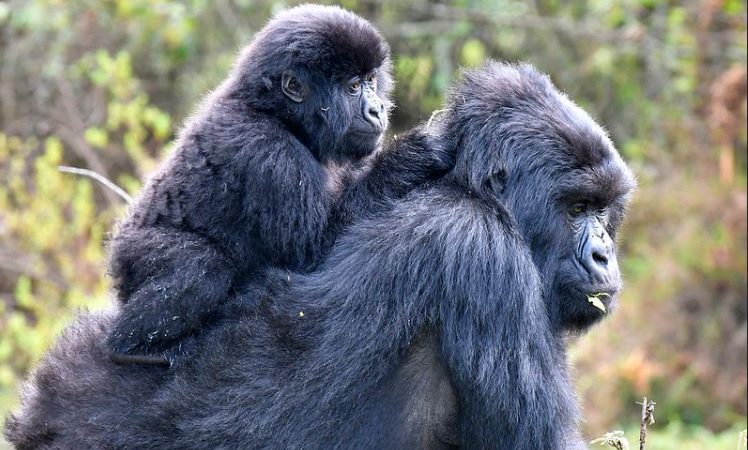
Why rainy trekking offers peak photography?
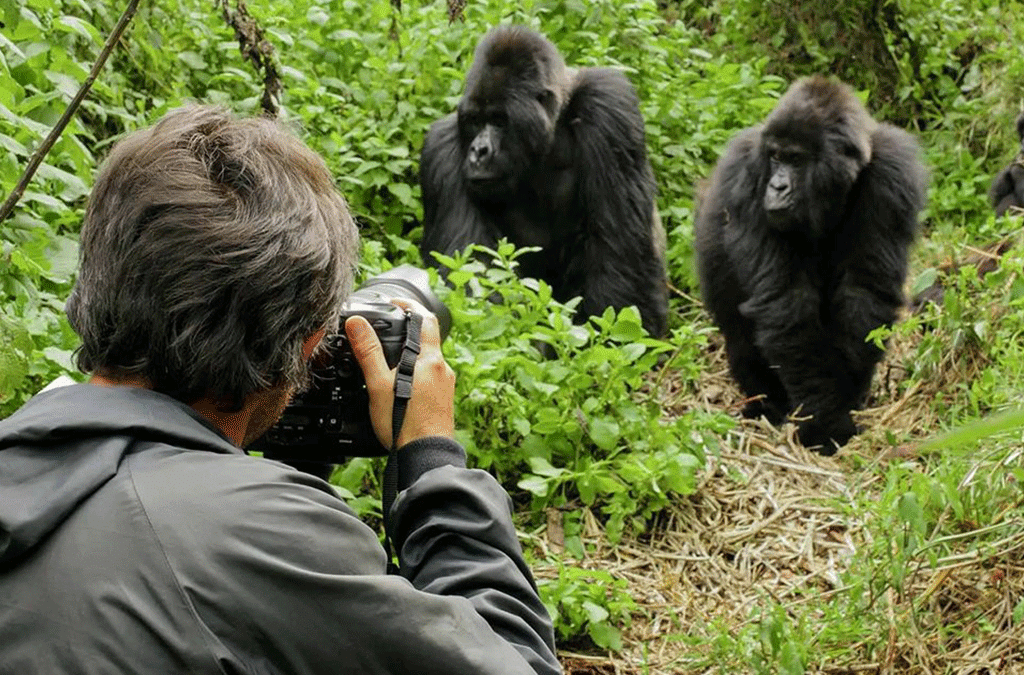
Many travellers planning gorilla trekking in Uganda and Rwanda naturally hope for sunshine. Dry trails are easier to walk, camera equipment is simpler to manage and there is less chance of getting soaked. Yet from a photographic perspective, the most convenient weather is not necessarily the most visually interesting weather.
Rain changes a tropical forest. Leaves become intensely green, dust disappears, water collects on foliage, distant hills can disappear behind drifting mist and harsh overhead sunlight is replaced by softer illumination. Against this environment, the dark fur, expressive faces and enormous physical presence of mountain gorillas can become exceptionally striking photographic subjects.
This does not mean every rainy trek produces better photographs. Heavy rain can reduce visibility, challenge autofocus, lower available light and make handling equipment difficult. The real advantage is that photographers who prepare properly can use conditions that other travellers consider inconvenient to create atmospheric images that communicate the true character of a mountain rainforest.
Rainy trekking can trade easier walking conditions for softer light, deeper colour, atmospheric mist, wet textures and a stronger visual sense of being inside a living tropical rainforest.
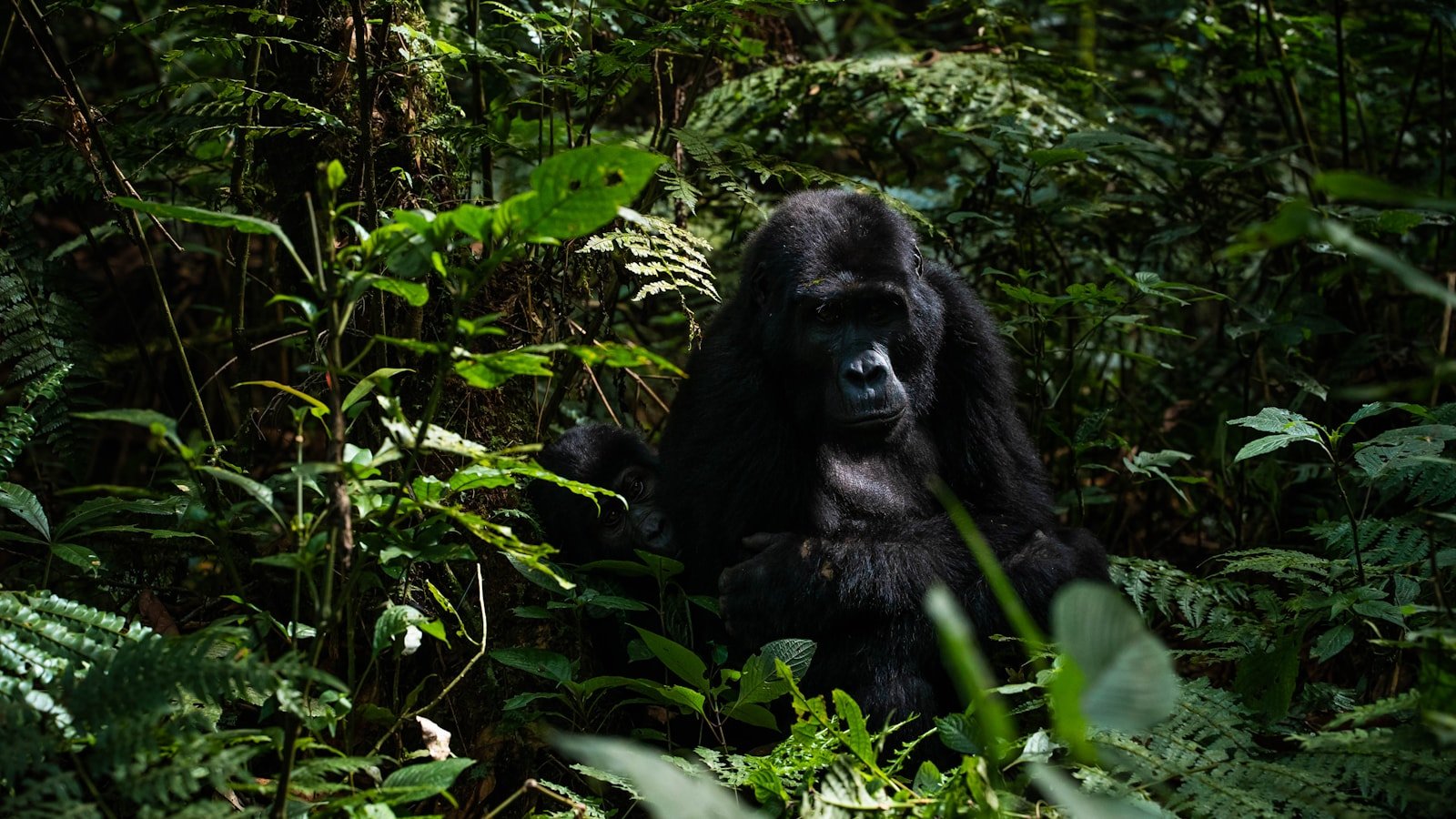
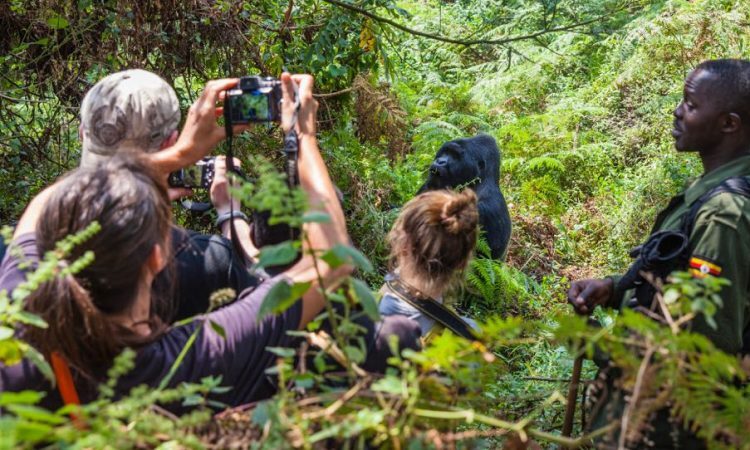
Wet-season vegetation can create a richly coloured natural frame around mountain gorillas in the rainforest.
Through the lens
What Rain Changes in Gorilla Photography
The photographic appeal is not simply the rain itself. It is the collection of changes that rain creates in light, colour, texture and atmosphere.
Softer Forest Light
Cloud cover acts like a giant natural diffuser. Instead of intense patches of sunlight and deep shadows, photographers can sometimes work with more even illumination across a gorilla’s face and fur.
Richer Green Colour
Wet leaves often appear deeper and more saturated. The surrounding vegetation can therefore become a powerful natural backdrop rather than merely visual clutter.
Mist & Atmosphere
Mist hanging between forested hills creates depth and mood. Wider images can communicate the mysterious highland environment in which mountain gorillas live.
Texture & Detail
Droplets on leaves and moisture on gorilla fur add texture. Close portraits can feel more connected to the environment because the weather becomes part of the story.
01 • Light
Overcast Skies Can Become a Natural Softbox
One of the greatest difficulties when photographing wildlife in a forest is contrast. Bright sunlight may penetrate gaps in the canopy while surrounding vegetation remains dark. A gorilla can consequently have a bright patch across one shoulder while its face disappears into shadow.
Cloudier conditions can reduce those extremes. The resulting light may be flatter, but it can also reveal subtle details in dark fur and facial features that would otherwise compete with harsh highlights. For portraits, this can be extremely useful.
The challenge is that softer light usually means less light. Photographers should therefore be prepared to increase ISO and maintain a sufficiently fast shutter speed rather than sacrificing sharpness. Modern cameras often handle higher ISO settings surprisingly well, and a slightly grainy but sharp image is usually more useful than a perfectly clean photograph blurred by subject movement.
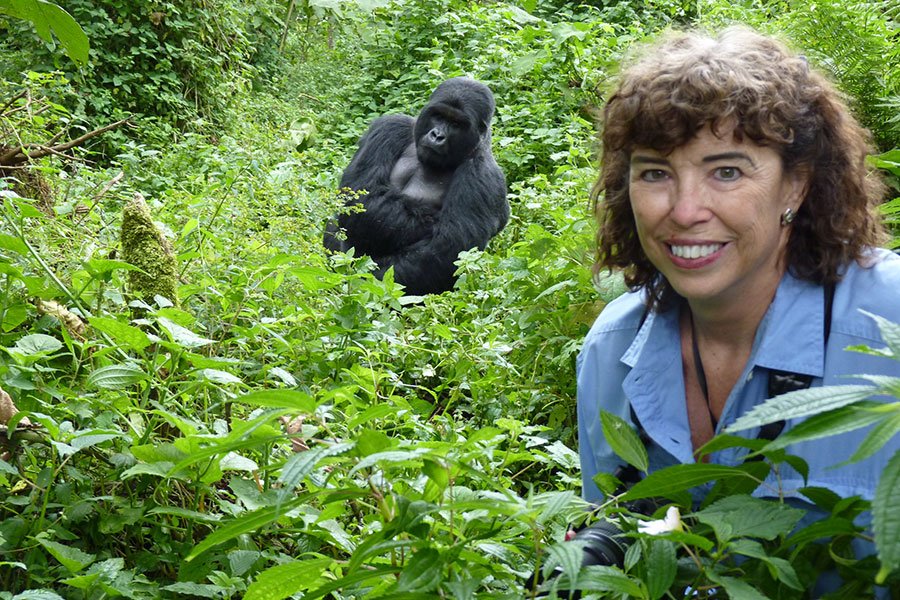
02 • Colour
The Rainforest Looks Alive After Rain
Bwindi is beautiful throughout the year, but moisture can intensify its visual character. Wet bark darkens, ferns appear brighter, leaves become reflective and layers of vegetation take on different shades of green.
That contrast matters when photographing mountain gorillas. Their predominantly dark fur can stand apart beautifully against luminous foliage. Instead of treating the vegetation as something to eliminate from the frame, photographers can use leaves, vines and branches to show exactly where the encounter is happening.
This is especially effective when a gorilla is positioned inside a small opening in the vegetation. A telephoto lens can compress foreground leaves into soft areas of colour while maintaining attention on the eyes and face. The resulting image feels intimate without losing the sense of wilderness.
Rainy vs Dry-Season Gorilla Photography
Neither season guarantees superior photographs. The better choice depends on whether you value easier physical conditions or atmospheric rainforest imagery.
| Photography Factor | Wetter Conditions | Drier Conditions |
|---|---|---|
| Forest colour | Very lush, saturated greens | Green but potentially less saturated |
| Light | Often soft and diffused | Potentially brighter with stronger contrast |
| Atmosphere | Mist, droplets and dramatic forest mood | Clearer views and brighter conditions |
| Trail difficulty | Usually muddier and more slippery | Generally firmer and easier |
| Camera management | Requires better moisture protection | Usually simpler |
| Best suited to | Atmosphere-focused photographers | Travellers prioritising easier trekking |
For a broader seasonal overview, read our guide to the best time to see mountain gorillas in Uganda and Rwanda.
Photography opportunities
Three Stories Worth Photographing

03 • Location
Why Bwindi Is So Photogenic in Wet Weather
Bwindi Impenetrable National Park is not an open landscape where photographers control their position easily. It is dense, mountainous forest. Vines, branches, undergrowth and changing elevations are part of the experience.
Rain amplifies that environment. Low clouds can settle over the hills, leaves glisten after showers and narrow forest openings become natural frames. The same conditions that make the trek physically challenging can make the photographs feel more authentic.
Bwindi has several trekking sectors, including Buhoma, Ruhija, Rushaga and Nkuringo. The exact terrain and gorilla family allocated to visitors influence each trek, and no particular photographic position can be guaranteed. Wildlife photography here rewards flexibility rather than rigid shot lists.
For photographers wanting considerably more observation time, the Gorilla Habituation Experience can be particularly interesting because additional time can create more opportunities to respond to changing behaviour, vegetation and light.
Camera preparation
Practical Camera Strategy for a Dark, Wet Forest
There is no single perfect setting because light, distance and gorilla movement constantly change. Preparation is more valuable than memorising one exposure.
Gorillas may appear calm and then move suddenly. Avoid allowing low forest light to push the shutter speed so low that small movements create blur.
Increasing ISO is often preferable to missing the photograph through motion blur. Noise can be managed later; lost sharpness is harder to recover.
Wet leaves can reflect bright patches of sky. Check exposure so reflective vegetation does not become distracting while the gorilla remains too dark.
When foliage surrounds the subject, autofocus can grab a branch or leaf. Confirm that focus remains on the gorilla’s face, especially the nearest visible eye.

Protecting Camera Equipment From Rain
A weather-sealed camera is helpful, but weather sealing should never be treated as permission to expose equipment unnecessarily to prolonged heavy rain. Carry a proper camera rain cover or a practical waterproof alternative that can be deployed quickly.
Keep a clean microfiber cloth accessible for the front element of your lens, but avoid constantly rubbing a lens with a cloth that has become dirty or gritty. A lens hood is useful even when there is no sun because it can help keep droplets away from the front element.
A waterproof inner bag or dry bag inside your backpack provides another layer of protection. Carry spare batteries and memory cards in sealed compartments. Before entering the forest, organise your equipment so that you do not need to unpack the entire bag when rain starts.
Rainy Trek Photography Kit
A practical advantage
Photographers Have an Extra Reason to Hire a Porter
Carrying camera equipment through wet, uneven forest can quickly become tiring. A porter can carry your daypack, leaving you freer to concentrate on footing, balance and the camera you want immediately accessible.
This becomes especially valuable on steep or slippery sections where having both hands available can improve stability. It also means you are less exhausted when you finally reach the gorilla family and need to concentrate on photography.
Porter employment also creates direct local economic benefits around gorilla trekking areas. Read more in our guide explaining why hiring porters supports conservation and communities.


Beyond gorillas
Rainforest Photography Continues in Kibale
Photographers planning a longer Uganda primate safari can combine Bwindi with chimpanzee tracking in Kibale National Park. The photographic challenge changes significantly.
Chimpanzees can move rapidly, climb, disappear behind vegetation and interact energetically. That often places greater emphasis on quick autofocus decisions and shutter speed. Wet forest conditions can again provide saturated backgrounds and beautiful diffused light, but photographers need to respond much faster than during many gorilla encounters.
Combining gorillas and chimpanzees therefore creates two very different photographic exercises within one Uganda safari.
04 • Atmosphere
Do Not Photograph Only the Gorilla
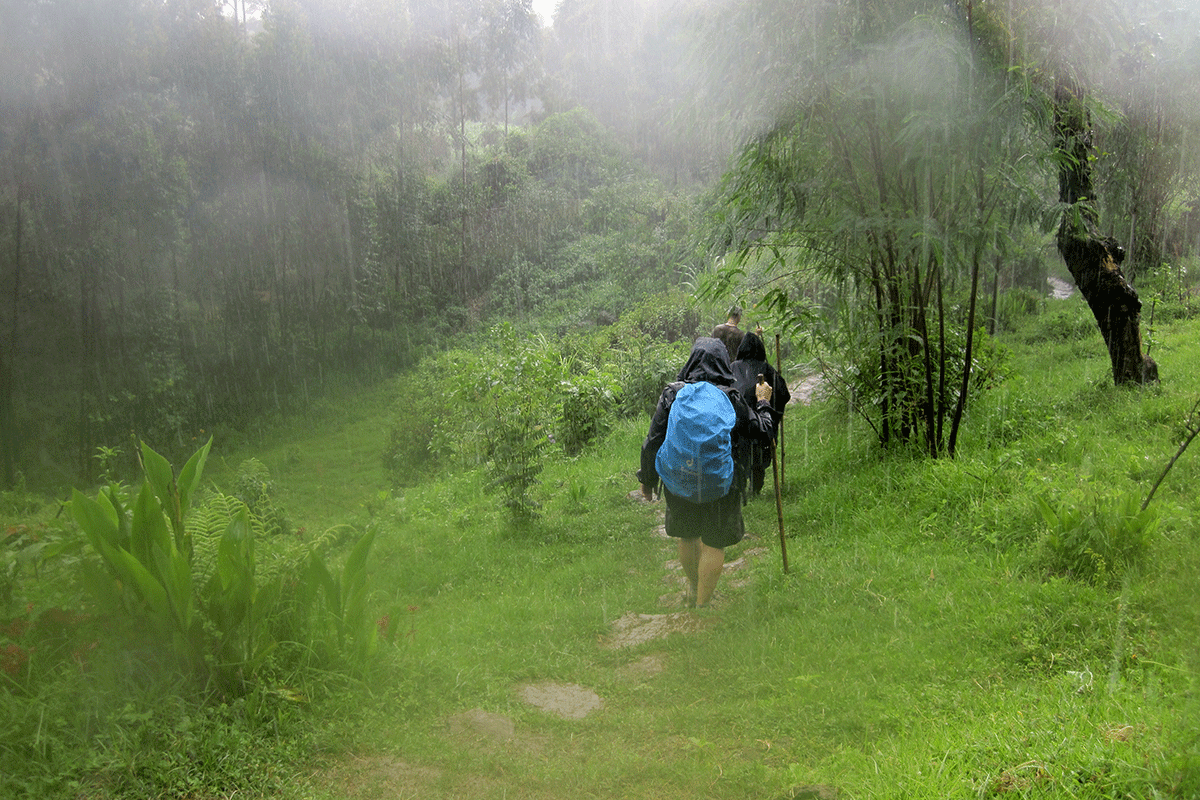
A memorable gorilla safari photograph does not always need to be a tightly framed portrait. Some of the strongest images explain where the gorilla lives. A silverback partly concealed by vegetation, a trekker disappearing into wet forest or clouds drifting through Bwindi’s hills can communicate a sense of place that a close-up alone cannot provide.
Rainy weather gives photographers additional storytelling elements. Water droplets can become foreground highlights. Mist can separate layers of forest. A rain jacket or muddy boot can show the effort involved in reaching the gorillas. The goal is not merely to document an animal; it is to document an experience.
Photography Mistakes to Avoid in Wet Conditions
Changing lenses unnecessarily
Opening the camera repeatedly in damp conditions increases the chance of moisture reaching sensitive areas. Decide on a practical lens before the encounter whenever possible.
Using a shutter speed that is too slow
The forest may look darker than expected. Watch your exposure continuously and compensate before movement turns a special moment into a blurred frame.
Ignoring the background
Bright leaves, branches and other trekkers can distract from the gorilla. Move only when your guide allows and refine your composition from your permitted position.
Depending on flash
Prepare to photograph using available light and follow all ranger instructions. Your settings and technique should be ready for naturally illuminated forest photography.
Carrying too much equipment
More gear does not automatically produce better photographs. Every additional kilogram must travel through the forest with you.
Watching only through the viewfinder
Take photographs, but remember to lower the camera occasionally. The encounter itself is more important than returning with thousands of nearly identical frames.
The Reality: Rain Also Makes Trekking Harder
Photography benefits should not be confused with easier trekking. Rain can turn steep forest paths into slippery mud. Vegetation can become wet enough to soak trousers, visibility may temporarily decrease and a downpour can make operating a camera impractical.
Waterproof hiking boots with good grip are particularly important. A walking stick can help with balance, and long trousers, gloves and a lightweight waterproof layer improve comfort. Travellers should also expect weather to change quickly rather than assuming that a forecast guarantees the conditions they will experience in the forest.
If physical comfort is your overriding priority, the generally drier periods may suit you better. If you are comfortable accepting mud and unpredictable weather in exchange for greener, moodier rainforest conditions, wetter periods can be photographically rewarding.
This is why there is no universal answer to the best time to go gorilla trekking. The right timing depends on what you want from the experience.
Who Should Consider Rainy-Season Gorilla Trekking?
Travellers who value mood, texture and environmental portraits.
Those looking for dramatic forest imagery and visual storytelling.
Visitors interested in experiencing East Africa beyond classic dry-season conditions.
Travellers comfortable adapting to mud, rain and changing conditions.
Rainy Trekking & Photography FAQs
Is rainy season good for gorilla photography?
It can be excellent for photographers who appreciate soft light, wet textures, saturated vegetation and atmospheric forest conditions. However, rain also reduces available light and requires better protection for camera equipment.
Can you trek mountain gorillas when it rains?
Gorilla trekking operates throughout the year in Uganda and Rwanda. Rain generally affects trail conditions and visitor comfort rather than eliminating the trekking experience.
What lens should I take for gorilla photography?
A flexible zoom is practical because the distance and visibility of the gorillas can change. Avoid building your entire plan around an extremely long lens because dense vegetation and relatively close encounters can sometimes make wider framing useful.
How should I protect my camera from rain?
Carry a camera rain cover, lens hood, clean microfiber cloths and waterproof protection inside your backpack. Organise equipment before trekking so that you can protect it quickly when weather changes.
Does rain make gorilla trekking more difficult?
It can. Wet forest paths may become muddy and slippery, particularly on steeper terrain. Good hiking footwear, suitable clothing and porter assistance can make the trek more manageable.
Should photographers hire a porter?
It is often a very practical choice. A porter can carry your backpack and other supplies, allowing you to conserve energy and keep your hands available for balance and photography.
Is gorilla habituation better for photographers?
Photographers may appreciate the longer observation period offered by Uganda’s Gorilla Habituation Experience because additional time creates more opportunities for changing behaviour, light and composition. Standard trekking can still produce outstanding photographs.
Can rain be guaranteed during the rainy season?
No. Tropical mountain weather is variable. Wetter seasons increase the likelihood of rainfall, but conditions can change quickly, and rain is also possible during periods commonly described as dry.
So, Does Rain Really Offer Peak Photography?
For the right photographer, it can. Rain does not automatically create great wildlife photographs, and difficult weather should never be romanticised. It demands preparation, patience and the willingness to work with less light, slippery trails and moisture.
Yet those challenges can produce visual rewards. The forest becomes intensely green. Cloud cover softens light. Droplets reveal texture. Mist creates depth. A mountain gorilla surrounded by wet vegetation can look entirely at home in its environment—which is exactly the story many wildlife photographers want their images to tell.
The strongest approach is therefore not to travel expecting rain or fearing it. Travel prepared for it. If clouds gather above Bwindi and the first drops begin falling through the canopy, protect your equipment, listen to your ranger and look carefully at what the weather is doing to the forest.
You may discover that the conditions you originally hoped to avoid are the conditions that produce your favourite photographs.
Safari Vacations & Travel Services
Plan a Photography-Friendly Gorilla Safari
We can arrange your gorilla permits, trekking sector, accommodation, private safari transport, airport transfers and wider Uganda itinerary around your preferred travel dates and photography interests.