
Primate Safari in Kibira National Park

A primate safari in Kibira National Park is an opportunity to explore one of Burundi’s most important rainforest ecosystems. Located in the north-western part of the country, Kibira protects an extensive area of montane forest along the Congo-Nile Divide. Its thick vegetation, cool highland climate, forest streams and rich biodiversity make it a rewarding destination for nature lovers.
Unlike the open savannah parks where wildlife is commonly observed from a safari vehicle, Kibira is best explored through guided forest walks. Visitors may look for chimpanzees, black-and-white colobus monkeys, baboons and other forest primates while learning about the trees, birds and ecological importance of the rainforest.
The park is also an important destination for birdwatching, nature photography and responsible nature-based tourism. Its location near Rwanda’s Nyungwe Forest makes it especially interesting for travellers planning a wider Albertine Rift and East African primate holiday.
For visitors who want to experience something different from the familiar savannah safari, Kibira offers a quieter, more forest-focused adventure.
Chimpanzees
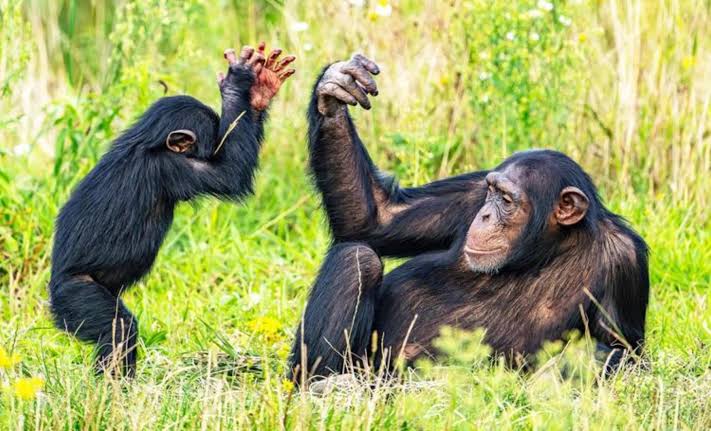 Explore forest habitats where wild chimpanzees live.
Forest Monkeys

Look for colobus monkeys, baboons and other primates.
Birdwatching

Discover the rich birdlife of the Albertine Rift.
Primate Safari in Kibira National Park
 Kibira National Park lies along the Congo-Nile Divide in north-western Burundi. It protects approximately 40,000 hectares of montane rainforest, with elevations reaching around 2,660 metres above sea level.
The forest is an important natural habitat for numerous mammals, primates and birds. It also protects water catchment areas that feed rivers flowing towards the Congo and Nile basins. This makes Kibira important not only for wildlife conservation but also for the surrounding communities and the wider environment.
The park’s forest landscape connects ecologically with the wider protected montane forest system that extends into Rwanda’s Nyungwe Forest. Together, these habitats form an important part of the Albertine Rift, a region known for its distinctive biodiversity.
Visitors can enjoy guided forest excursions, birdwatching and opportunities to learn about the area’s natural and cultural heritage. The Burundi tourism authority describes Kibira as home to numerous primates, including chimpanzees, baboons and black colobus monkeys, as well as approximately 200 bird species.
1. Chimpanzee Tracking in Kibira National Park
 Chimpanzee tracking is one of the most interesting primate experiences associated with Kibira National Park. The forest provides habitat for wild chimpanzees, and visitors may have the opportunity to explore their environment with knowledgeable local trackers and authorised guides.
Unlike a conventional game drive, chimpanzee tracking takes place on foot. Guides use their knowledge of the forest, animal calls, feeding signs and movement patterns to help locate the chimpanzees. The experience can involve walking through thick vegetation and across uneven or steep terrain.
Chimpanzees are intelligent and social animals. When encountered, visitors may observe them feeding, grooming, communicating, moving through the canopy or resting in the forest. However, sightings are not guaranteed, and some excursions may involve hearing chimpanzees without seeing them clearly.
What to expect during a chimpanzee tracking excursion
- Meet the authorised local guide or tracker.
- Receive instructions about forest safety and responsible wildlife observation.
- Walk through the forest while looking for signs of chimpanzee activity.
- Listen for calls and movement in the canopy.
- Observe chimpanzees only when they are located and according to the applicable park rules.
- Return from the forest with your guide after the excursion.
Before travelling, confirm whether chimpanzee tracking is currently operating, the availability of trackers, the applicable permits and the authorised visitor arrangements. Do not assume that a tracking excursion can be arranged simply by arriving at the park entrance.
Visitors interested in other regional primate adventures can also explore gorilla trekking in Uganda and combining gorilla trekking with chimpanzee habituation.
2. Discover Other Primate Species in Kibira Forest
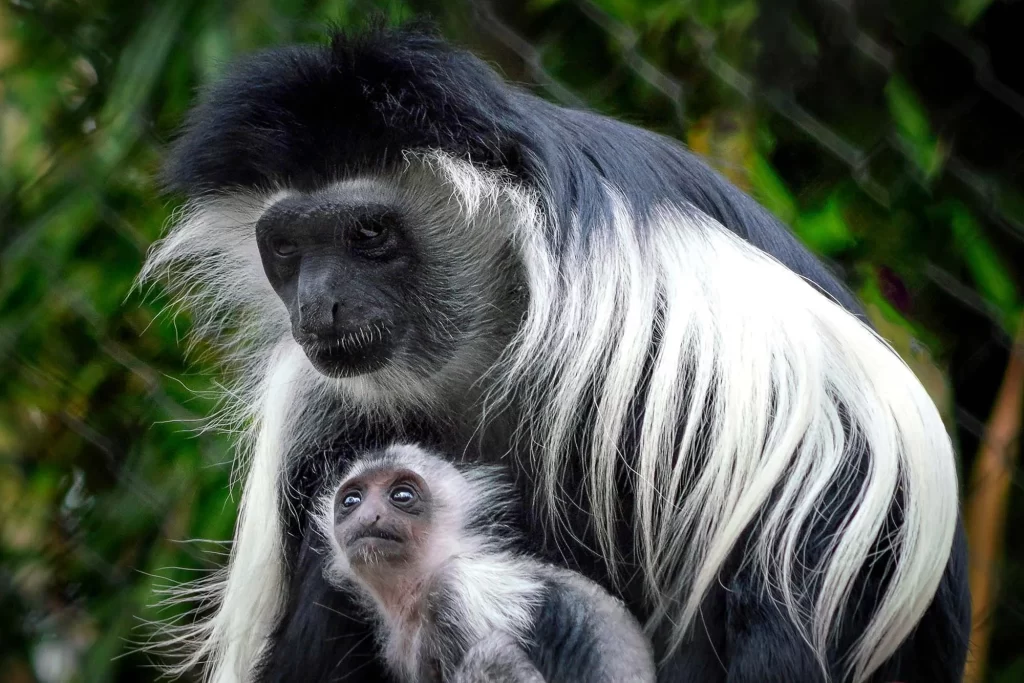 Chimpanzees are not the only primates that make Kibira special. The forest is home to several monkey species that contribute to the ecological diversity of the park. Some spend much of their time in the canopy, while others can be observed moving through lower vegetation or foraging near the forest floor.
Black-and-white colobus monkeys
Black-and-white colobus monkeys are among the notable primates associated with Kibira. Their contrasting black and white coats and long tails make them distinctive forest animals. They are adapted to life in the trees and feed mainly on leaves, although their diet can include other plant materials.
Blue monkeys
Blue monkeys are forest-dwelling primates found in parts of the Albertine Rift. They move through the vegetation in search of fruit, leaves and other food. Their quiet behaviour and preference for forest cover can make them challenging to observe.
Olive baboons
Baboons are more terrestrial than many forest monkeys. They can travel on the ground while searching for food and may also use trees and rocky areas for resting. Their social behaviour makes them interesting animals to observe from a respectful distance.
Other forest monkeys
Other monkey species are also recorded in the wider forest ecosystem. Sightings depend on the location, time of day, vegetation and the animals’ natural movements. A local guide can help visitors identify species and understand their behaviour.
For a wider regional primate holiday, explore our Uganda gorilla and chimpanzee safari and the Kibale National Park primate travel guides.
3. Enjoy Guided Nature Walks Through the Rainforest
 A guided nature walk is one of the best ways to experience Kibira’s montane rainforest. The forest has a different atmosphere from open savannah environments. Visitors walk beneath tall trees, surrounded by ferns, mosses, vines and thick vegetation.
Walking through the forest allows travellers to appreciate smaller details that are easily missed from a vehicle. Guides can explain the importance of native trees, medicinal plants, forest regeneration and the relationships between different wildlife species.
Depending on the approved route and current conditions, visitors may encounter forest streams, scenic viewpoints and interesting plant communities. The sounds of birds and monkeys often accompany the walk.
What makes a Kibira forest walk special?
- Exploring a protected montane rainforest.
- Learning about native forest plants and trees.
- Listening to bird calls and primate vocalisations.
- Observing insects, butterflies and other small forest wildlife.
- Enjoying the cool atmosphere of Burundi’s highland environment.
- Learning about forest conservation and the importance of water catchment areas.
Walking routes should be selected according to your fitness, available time, weather and the guidance of park staff. For another forest-based adventure in the region, see our Uganda walking safari experiences.
4. Go Birdwatching in Kibira National Park
Kibira is an excellent destination for visitors interested in forest birdwatching. The park supports approximately 200 recorded bird species, including birds associated with the Albertine Rift. Its montane forest, clearings, streams and surrounding highland habitats provide different opportunities for bird observation.
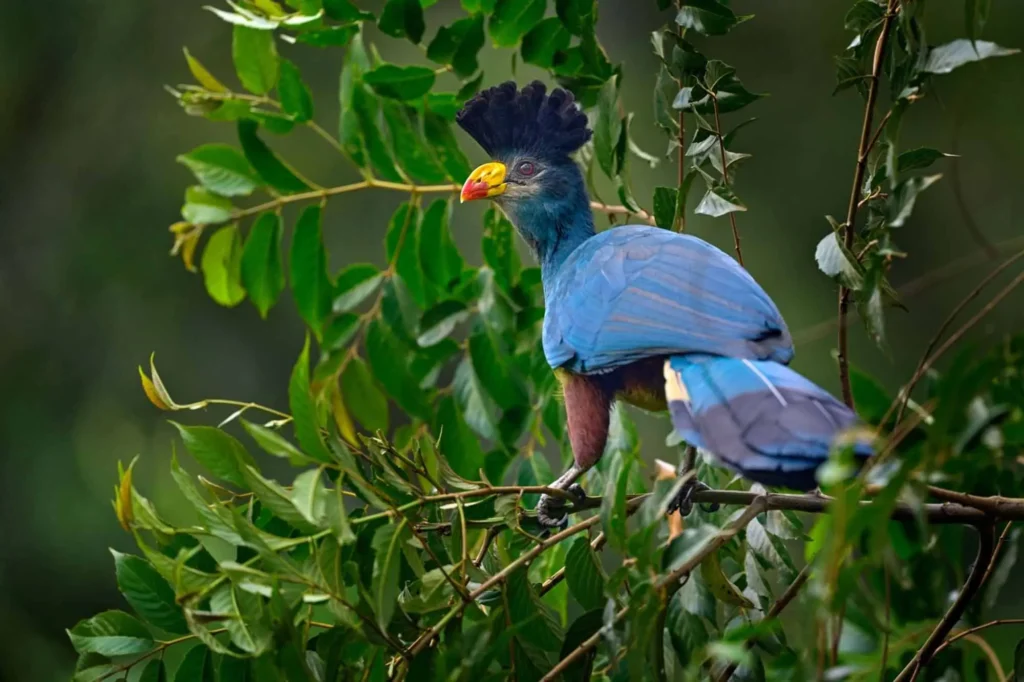
Birdwatchers may look for colourful turacos, sunbirds, flycatchers, forest warblers and other species adapted to highland forest environments. The great blue turaco is among the striking birds associated with the region.
Birdwatching tips
- Begin early when forest birds are often more active.
- Carry binoculars and a suitable bird identification guide.
- Wear comfortable clothing suitable for cool and wet conditions.
- Move quietly and avoid disturbing nesting or feeding birds.
- Use a local birding guide who understands the forest habitats.
Birdwatching can be combined with a primate-focused excursion or arranged as a separate activity for specialist bird enthusiasts. Travellers interested in birding across the region can explore our Uganda birdwatching guide, Uganda birding safaris and five-day birding safari itinerary.
5. Visit the Teza Tea Plantations
The highlands surrounding Kibira National Park are known for their tea-growing landscapes. The Teza area is particularly interesting for visitors who want to appreciate the relationship between the forest, agriculture and local livelihoods.
Tea plantations create a striking contrast with the dense green rainforest. Their carefully maintained rows of tea bushes follow the contours of the highland landscape, creating beautiful scenery for photography and relaxed sightseeing.
A visit to the surrounding tea-growing areas can complement a Kibira forest excursion. Visitors can learn about tea cultivation, local farming activities and the importance of the highland environment to agricultural production.
Any plantation visit or tea-related activity should be arranged with the relevant local property or operator. Do not assume that every plantation is open for public tours.
6. Explore the Rwegura Area and Scenic Highland Landscapes
The Rwegura area provides another interesting experience around Kibira National Park. Its highland scenery, forest surroundings and water infrastructure make it a worthwhile addition to a nature-focused Burundi itinerary.
The Rwegura hydroelectric dam is identified by Burundi’s tourism authority as one of the attractions associated with access to the park. The surrounding scenery offers opportunities to appreciate the landscape and understand the importance of water resources in the region.
Depending on local access arrangements, visitors can include scenic stops around Rwegura in their forest excursion. These experiences are particularly appealing to travellers interested in photography and landscapes rather than wildlife alone.
7. Enjoy Nature and Wildlife Photography
Kibira provides a rewarding setting for photographers who enjoy forest environments. The combination of mist-covered hills, tall trees, green vegetation, streams and wildlife creates many opportunities for nature photography.
Primate photography requires patience because many animals move quickly through the canopy or remain partly hidden by vegetation. A guide can help identify suitable observation points and explain where visitors should position themselves without disturbing the animals.
Bird photography is another rewarding activity. A camera with a suitable telephoto lens can help capture birds in the forest canopy, while a wide-angle lens is useful for landscapes and forest scenery.
Photography equipment to carry
- Camera with a suitable wildlife or telephoto lens.
- Extra batteries and memory cards.
- Waterproof camera protection or a dry bag.
- Binoculars for locating distant birds and primates.
- Lens-cleaning cloth for moisture and condensation.
- Comfortable clothing for walking in wet forest conditions.
Photographers planning a wider East African trip can also explore our Uganda safari experiences for photographers.
8. Learn About Rainforest Conservation in Kibira
Kibira is important for more than its primates and birds. The forest plays a major role in protecting Burundi’s water resources, supporting biodiversity and maintaining ecological balance across the Congo-Nile watershed.
Its trees and vegetation help regulate water flow, reduce soil erosion and provide habitats for wildlife. The forest also supports ecological processes that benefit communities living around the protected area.
However, montane forests face pressures from activities such as illegal resource extraction, forest degradation, agricultural expansion and habitat disturbance. Conservation work therefore remains essential for protecting the park’s wildlife and ecological functions.
How visitors can support conservation
- Use authorised guides and follow park regulations.
- Do not litter or leave waste in the forest.
- Never feed or attempt to touch wild animals.
- Respect restrictions on photography and wildlife observation.
- Support responsible local tourism services.
- Stay on approved trails and avoid damaging vegetation.
Responsible tourism can help create economic opportunities while encouraging long-term protection of the forest and its wildlife.
Best Time to Visit Kibira National Park
Kibira can be visited at different times of the year, but rainfall and trail conditions are important considerations. Because it is a montane rainforest, the park can experience rain even during periods that are generally considered drier.
June to September
These months are generally among the drier periods in Burundi. Trails may be firmer and walking conditions more comfortable, although visitors should still carry rain protection.
December to February
This period can also offer useful opportunities for forest excursions, depending on rainfall and local conditions. It is advisable to confirm trail accessibility before travel.
March to May and October to November
These periods can experience heavier rainfall. The forest may be particularly lush, but slippery trails and wet conditions can make trekking more challenging.
For visitors whose main interest is chimpanzee tracking, the most important consideration is not simply the calendar month. Confirm tracker availability, current access arrangements, weather and recent wildlife information before choosing travel dates.
For more regional seasonal planning, see our guide to the best wildlife viewing seasons in Uganda.
How to Get to Kibira National Park
Kibira National Park is located in north-western Burundi along the Congo-Nile Divide. Most international visitors begin their journey in Bujumbura before travelling by road towards the park’s authorised access areas.
The road journey involves highland terrain and winding roads. Travel time depends on the starting point, selected park entrance, road conditions and any stops along the way. It is best to arrange private transport or an organised excursion rather than relying on an improvised visit.
Common access areas
- Teza area: An important highland area near the forest and tea-growing landscapes.
- Rwegura area: Associated with the forest’s northern highland scenery and the hydroelectric dam.
- Busekera: An access area identified by the Burundi tourism authority.
Before travelling, confirm the correct entrance, ranger arrangements, local permissions and road conditions with the relevant park authority or a reputable local operator.
For a wider holiday, Kibira can be considered alongside other Burundi attractions and, where border arrangements and current conditions allow, destinations in neighbouring Rwanda and Uganda.
Important Travel and Safety Considerations
Kibira is close to Burundi’s western border region. Travel advice can change, and some roads and areas near the park may be subject to security restrictions. Before confirming a safari, check your government’s latest Burundi travel advisory and obtain local guidance on the specific route and park entrance.
Do not travel through restricted areas or assume that every access road is suitable. Arrange the visit with a reputable operator who can verify current conditions, authorised access and guide availability before departure.
Official destination information: Burundi tourism authority – Parks and Reserves.
Suggested 3-Day Kibira Primate and Rainforest Safari
 A three-day visit allows travellers to enjoy the forest at a comfortable pace, subject to confirmed access and available guiding arrangements. The programme below is a suggested outline, not a guarantee that every activity is currently operating.
Day 1 – Arrival in Burundi
Arrive in Bujumbura, meet your local representative and transfer to your accommodation. Review the next day’s route, access arrangements and forest activities.
Day 2 – Kibira Forest Experience
Travel to the authorised park entrance. Depending on confirmed arrangements, enjoy a guided forest walk or chimpanzee tracking excursion. Spend time learning about the rainforest and its primates.
Day 3 – Birdwatching and Highland Scenery
Enjoy a birdwatching excursion or a scenic visit around the Teza or Rwegura area, depending on access. Return towards Bujumbura for your onward journey.
Travellers with more time can extend their East African journey to include Uganda’s primate destinations. Explore our 7-day Uganda safari, 8-day Uganda safari or 10-day Uganda safari.
What to Pack for a Kibira Primate Safari
Because Kibira is a cool, wet montane rainforest, visitors should prepare for changing weather and slippery trails. Comfortable walking equipment is essential, particularly for longer forest excursions.
- Waterproof hiking boots with good grip.
- Lightweight rain jacket or waterproof poncho.
- Long-sleeved shirts and long trousers.
- Warm layer for cool highland mornings.
- Small backpack for personal items.
- Drinking water and packed food for longer walks.
- Binoculars for birdwatching and primate observation.
- Camera with waterproof protection.
- Insect repellent and personal medication.
- Sun protection for open areas and scenic stops.
Keep your equipment light enough to carry comfortably. Ask your guide about any additional requirements before the excursion.
Combine Kibira with Other East African Primate Destinations
Kibira can be part of a wider East African nature holiday for travellers interested in exploring different rainforest ecosystems and primate habitats. The region offers several destinations with distinct experiences.
Kibira and Nyungwe Forest in Rwanda
Kibira and Rwanda’s Nyungwe Forest belong to the wider montane rainforest landscape of the Albertine Rift. Both destinations are interesting for forest biodiversity, birdwatching and primate conservation. Any cross-border itinerary must account for border requirements and the current security situation.
Kibira and Kibale Forest in Uganda
Uganda’s Kibale Forest is a well-known destination for chimpanzee tracking and other primate experiences. It offers a more established visitor experience for travellers whose main objective is a structured chimpanzee-tracking activity.
Kibira and Bwindi Impenetrable National Park
Travellers can consider extending a regional itinerary to Bwindi for mountain gorilla trekking. Gorilla trekking is a different experience from chimpanzee tracking and requires its own permits and advance planning.
For more regional ideas, explore our East Africa safari guide, best safari experiences in East Africa and Uganda safari holidays.
Plan Your East African Primate Safari with Us
Safari Vacations and Travel Services helps travellers plan nature and wildlife experiences across East Africa. Whether you are interested in Burundi’s rainforest, Uganda’s chimpanzees, Rwanda’s mountain forests or gorilla trekking, we can help you explore possible routes and build a practical itinerary.
A Kibira visit requires careful preparation because access, guiding and security conditions must be confirmed before travel. We encourage travellers to arrange local support, verify current conditions and choose activities that are genuinely available during their intended travel dates.
Tell us your preferred dates, group size and main interests so that we can help you plan a suitable East African nature holiday.
WhatsApp: +256 776 423 286
Frequently Asked Questions About Kibira Primate Safaris
1. Where is Kibira National Park located?
Kibira National Park is in north-western Burundi along the Congo-Nile Divide. It protects a large area of montane rainforest close to the Rwandan border.
2. What primates live in Kibira National Park?
The park is associated with chimpanzees, black-and-white colobus monkeys, baboons and other forest monkeys. The species visitors encounter depend on the area visited and wildlife activity on the day.
3. Can visitors see chimpanzees in Kibira?
Chimpanzees live in Kibira’s rainforest. Tracking opportunities may be available through authorised local arrangements, but sightings are not guaranteed. Confirm current tracking operations and guide availability before booking.
4. Is chimpanzee tracking guaranteed?
No. Chimpanzees are wild animals that move through dense forest. Even experienced trackers may not locate them on every excursion.
5. How many days should I spend in Kibira National Park?
One full day is a useful minimum for a planned forest excursion, while two or three days allow more time for primate tracking, birdwatching and nature walks, depending on confirmed activities and accommodation arrangements.
6. What is the best time to visit Kibira?
June to September is generally a drier period and can provide more comfortable walking conditions. December to February may also be suitable. Rain can occur at any time in the montane rainforest.
7. Is Kibira suitable for birdwatching?
Yes. Kibira supports around 200 bird species, including species associated with the Albertine Rift. Visitors should bring binoculars and consider hiring a knowledgeable local birding guide.
8. Is Kibira a traditional game-drive park?
No. Kibira is primarily a montane rainforest destination. Its main wildlife experiences are guided walks, primate observation and birdwatching rather than conventional savannah game drives.
9. What should I wear for a Kibira forest walk?
Wear sturdy waterproof hiking boots, long trousers, long sleeves and a rain jacket. The trails can be slippery, and the highland weather can change quickly.
10. Can I combine Kibira with Uganda or Rwanda?
Yes, a multi-country East African itinerary may be possible. However, travellers should confirm border requirements, transport arrangements and current security advice before planning the route.
11. Is Kibira National Park safe to visit?
Travel conditions can change, particularly in border regions. Check your government’s latest travel advice and confirm the safety of the specific route and park access arrangements with a reputable local operator before departure.
12. Do I need a guide to visit Kibira?
Visitors should arrange access through authorised park personnel or experienced local guides. Guided excursions are important for navigation, wildlife interpretation and safety in the forest.
Discover the Rainforest and Primates of Kibira
Experience Burundi’s montane rainforest through guided nature walks, primate observation and birdwatching. Plan carefully, confirm current access and enjoy a distinctive forest adventure in the Albertine Rift.





