Can You Wear Black for Gorilla Trekking?
Can You Wear Black for Gorilla Trekking in Uganda?
Yes, you can generally wear black for gorilla trekking in Uganda, but neutral colours are a better choice. Black clothing is not specifically identified as a prohibited colour in the guidance reviewed. However, black and dark blue are often discouraged because they can attract tsetse flies and other biting insects in some safari environments.
Olive green, khaki, brown, tan and muted grey are more practical colours for forest trekking. They blend naturally with the surroundings and are easy to combine with protective outdoor clothing.
If the only suitable long-sleeved shirt you own is black, you do not necessarily need to buy an entirely new wardrobe. Focus first on comfortable fabric, long trousers, dependable hiking boots and a waterproof jacket.
Does Clothing Colour Matter During Gorilla Trekking?
Preparing for a mountain gorilla encounter is exciting. You may have already booked your trekking permit, chosen a lodge near Bwindi Impenetrable National Park and started packing for your journey. Then a surprisingly common question comes up: can you wear black for gorilla trekking?
Many travellers already own black hiking trousers, leggings, jackets or waterproof clothing. They may wonder whether these items are suitable for a day in the rainforest or whether they must purchase traditional khaki safari clothes.
The short answer is that black clothing is not automatically unsuitable. However, choosing colours carefully can improve comfort and help you dress appropriately for a wildlife experience.
Gorilla trekking takes place in natural forests where you may walk through damp vegetation, steep slopes, muddy trails and areas with insects. Your clothing therefore needs to protect your skin, allow movement and perform well in changing weather.
At Safari Vacations and Travel Services, we encourage visitors to pack for practical comfort rather than simply for appearance. A well-fitting pair of hiking trousers and reliable boots matter much more than owning an expensive safari outfit.
If this is your first visit, our gorilla trekking guide for first-time visitors explains what to expect during the experience.
In this article, we explain why black is often discouraged, which colours are recommended, what clothing is most useful and how to prepare for your trek in Uganda.
01 / BLACK CLOTHING EXPLAINED
Why Is Black Clothing Not Recommended for Gorilla Trekking?
1. Black Can Attract Tsetse Flies
One of the main reasons safari guides discourage black clothing is the attraction certain biting insects have to darker colours.
Tsetse flies are particularly associated with visual attraction to dark and blue-coloured surfaces. This is why many safari packing guides recommend avoiding black and dark blue where practical.
However, this advice needs some context. Tsetse-fly exposure differs between destinations and habitats. A gorilla trek in the cool mountain forests of Bwindi is not identical to a game drive in Uganda’s lower-altitude savannah parks.
Wearing black does not mean insects will automatically swarm around you. Nevertheless, a khaki or olive shirt is a sensible alternative when you have a choice.
Even when wearing neutral colours, bring an appropriate insect repellent and follow your guide’s advice.
2. Dark Clothing May Feel Warmer
Black materials absorb more sunlight than many lighter fabrics. This can make dark clothing feel warmer during exposed sections of a hike.
Gorilla trekking often begins in cool highland conditions, but you may become warm as you climb slopes or pass through open areas.
Breathable fabric helps you manage temperature changes. A lightweight black hiking shirt will usually be more comfortable than a heavy, poorly ventilated shirt, even if the heavy one is khaki.
This is why fabric quality matters alongside colour.
3. Neutral Colours Suit Forest Trekking
Khaki, muted green and brown are traditionally associated with safari clothing because they work well in natural environments.
These colours are understated, look appropriate in the forest and conceal many everyday marks from mud and vegetation.
It is sometimes claimed that wearing black will frighten gorillas or make them aggressive. There is no sound basis for treating a black shirt alone as a predictable trigger for gorilla aggression.
When visiting habituated mountain gorillas, your behaviour is far more important. Follow the rangers, avoid sudden movements, maintain the required viewing distance and never attempt to touch the animals.
Our 20 things to know about mountain gorilla trekking offers additional preparation advice.
4. Heavy Black Clothing Can Be Impractical
Some travellers choose thick black jeans or heavy fashion trousers for their trek. The main problem is not the colour but the material.
Denim absorbs moisture and can become uncomfortable when wet. Thick clothing may also restrict movement during steep climbs.
Choose lightweight, durable, quick-drying hiking trousers instead. Their colour should be a secondary consideration after protection, fit and comfort.
Best Clothing Colours for Gorilla Trekking
This simple comparison can help you choose an appropriate safari outfit without purchasing unnecessary clothing.
| Colour | Recommendation | Why? |
|---|---|---|
| Olive green | Excellent choice | Muted and practical for forest conditions |
| Khaki | Excellent choice | Versatile and comfortable for safari clothing |
| Brown or tan | Excellent choice | Natural earth tones that hide some dirt |
| Muted grey | Good choice | Subtle and easy to combine with other clothing |
| Black | Usable but less preferred | May attract some biting insects and absorb sunlight |
| Dark blue | Better avoided | Can attract tsetse flies in affected areas |
| White | Not very practical | Shows mud and dirt quickly |
| Neon or very bright colours | Not recommended | Unnecessarily conspicuous in a wildlife environment |
| Military-style camouflage | Avoid | May be restricted for civilian use |
Important: These are practical clothing recommendations, not a claim that every non-preferred colour is prohibited by Uganda Wildlife Authority. Follow the current instructions of park rangers.
ESSENTIAL GORILLA TREKKING CLOTHING
Three Clothing Essentials for a Comfortable Gorilla Trek
When preparing for Bwindi or Mgahinga, concentrate on clothing that protects you from vegetation, rain and uneven forest trails. These three essentials make a bigger difference than the exact colour of your outfit.


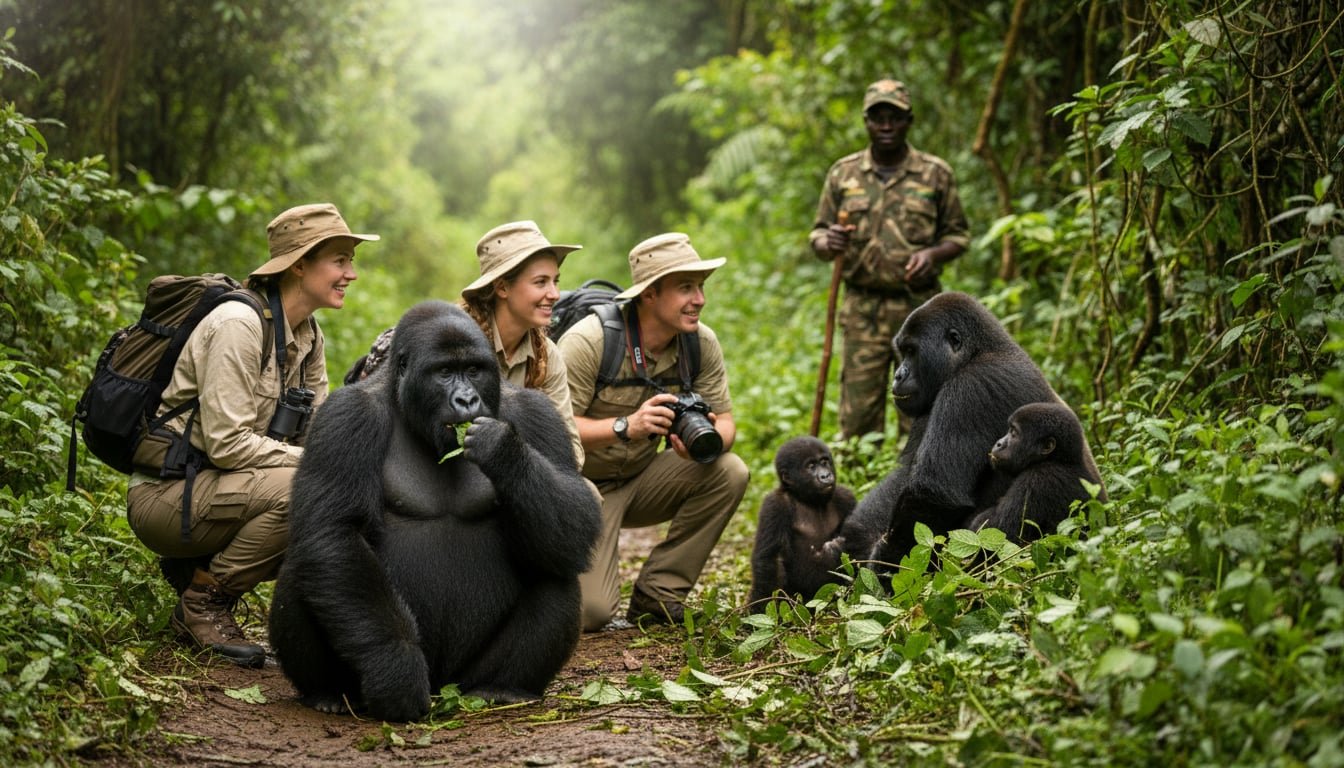
02 / WHAT TO WEAR
What Should You Wear Instead of Black for Gorilla Trekking?
Olive Green Hiking Clothing
Olive green is one of the easiest colours to recommend for gorilla trekking. It suits the rainforest environment and combines well with khaki trousers, brown boots and neutral jackets.
There is no need for every item to match. A muted green shirt with grey hiking trousers works perfectly well.
Khaki Safari Clothing
Khaki is a popular option because it is understated and widely available in practical outdoor styles.
A khaki long-sleeved shirt or hiking trousers can also be useful on other safari activities, including game drives and nature walks.
Remember that ordinary plain khaki is different from military-style camouflage clothing.
Brown and Earth-Toned Outfits
Brown, tan and other earth tones are excellent for travellers who prefer simple, versatile clothing.
These colours are easy to wear in different outdoor environments and can help conceal light soil marks that accumulate during hiking.
Muted Grey
Grey is a practical alternative if you do not own green or khaki clothes. Choose a muted shade and a durable fabric designed for hiking.
There is no need to purchase a complete safari wardrobe when your existing hiking clothes are comfortable and functional.
03 / PACKING FOR THE RAINFOREST
What to Wear for Gorilla Trekking in Bwindi and Mgahinga
Long-Sleeved Shirt
Wear a light but protective shirt with long sleeves. The fabric should be breathable and comfortable against your skin.
Long sleeves help protect against irritating plants, insects and small scratches from branches.
Long Hiking Trousers
Choose trousers that stretch or allow unrestricted movement. The trails can involve climbing, descending and stepping over roots.
Avoid excessively loose trousers that may catch on vegetation. Thick jeans are not ideal because they become heavy when wet.
Waterproof Hiking Boots
Gorilla trekking may involve slippery slopes, mud and uneven forest paths. Well-fitting boots with reliable grip make the experience more comfortable.
Wear your boots on practice walks before the safari. This reduces the risk of blisters and helps you become accustomed to their support.
Long Socks and Gaiters
Long socks can help protect the ankles and lower legs. Many trekkers tuck their trousers into their socks to reduce the chance of ants and forest debris entering their clothing.
Gaiters provide additional protection from mud, water and vegetation.
Rain Jacket or Poncho
Bwindi and Mgahinga are mountain forest environments where rain can arrive unexpectedly, even during relatively dry months.
A lightweight waterproof jacket is more useful than a thick fashion coat. Keep it accessible in your daypack rather than at the bottom of your luggage.
To understand seasonal conditions, explore our month-by-month gorilla trekking guide.
Gardening or Hiking Gloves
Gloves protect your hands when holding branches or steadying yourself on difficult sections of a forest trail.
Simple gardening gloves are often sufficient. Choose a pair that fits comfortably and gives you a secure grip.
A Small Daypack
Carry a compact backpack for water, snacks, rain protection, personal medication and camera equipment.
Keep your belongings protected from moisture and avoid carrying unnecessary weight. Hiring a porter can make the trek more comfortable while supporting livelihoods around the park.
For additional guidance, read our gorilla safari preparation guide.
Simple Gorilla Trekking Clothing Checklist
You can find a more extensive equipment guide in our Uganda and Rwanda gorilla trekking clothing guide.
04 / COMMON CLOTHING QUESTIONS
What If You Already Own Black Hiking Clothes?
You do not need to replace every item in your wardrobe before travelling to Uganda.
Suppose you own black hiking trousers that fit perfectly, dry quickly and provide excellent protection. Those trousers may be more practical than buying uncomfortable khaki trousers simply to match a traditional safari colour.
The same applies to a well-fitting black rain jacket. If the jacket is waterproof, lightweight and reliable, its practical value remains important.
Where you have the option, choose neutral colours. But when deciding between colour and suitability, prioritize clothing that will keep you protected and comfortable on the trail.
Can You Wear Black Leggings?
Black leggings are not automatically unsuitable because of their colour, but thin fashion leggings may offer limited protection from thorns and stinging plants.
If you prefer leggings, choose durable hiking-specific leggings or wear them beneath protective outer trousers when appropriate.
Can You Wear Black Jeans?
Black jeans are not recommended for forest trekking. Heavy denim tends to absorb water, becomes uncomfortable when wet and usually dries slowly.
Quick-drying hiking trousers are a better choice.
Can You Wear a Black Rain Jacket?
Yes. A functional black waterproof jacket can be used if it is your most suitable rainwear.
However, if you are purchasing a new jacket specifically for a safari, a muted green, brown or grey option may be more versatile.
Can You Wear Black Hiking Boots?
Yes. The colour of your hiking boots is much less important than traction, comfort and suitability for rough terrain.
A comfortable pair of black hiking boots is preferable to poorly fitting boots chosen only because they are brown or khaki.
Can You Wear Bright Colours?
Bright neon colours are generally discouraged for wildlife viewing. Muted clothing is a more suitable and understated choice.
You can still enjoy colourful clothing at your safari lodge or during ordinary sightseeing activities outside the forest.
Should You Wear Military Camouflage?
Avoid military-style camouflage clothing during your Uganda safari. Civilian use of military-looking uniforms and patterns can be restricted and may create unnecessary problems.
Plain olive green or plain khaki provides a practical alternative without resembling military attire.
05 / UGANDA’S GORILLA TREKKING DESTINATIONS
Where Will You Wear Your Gorilla Trekking Clothes in Uganda?
Bwindi Impenetrable National Park
Bwindi is Uganda’s best-known mountain gorilla trekking destination. Its dense rainforest, highland terrain and rich biodiversity create a remarkable setting for an encounter with habituated gorilla families.
Gorilla trekking takes place in four main sectors: Buhoma, Ruhija, Rushaga and Nkuringo.
Although each sector has different landscapes and trail conditions, the clothing recommendations are broadly similar. Long trousers, long sleeves, reliable hiking boots and rain protection are useful throughout the park.
Learn more about the experience in our Bwindi gorilla trekking guide.
Buhoma Sector
Buhoma lies in the northern part of Bwindi and is one of the park’s long-established trekking areas.
Visitors should prepare for forest walking, wet vegetation and potentially muddy trails. The difficulty of a particular trek depends on where the assigned gorilla family is located.
Ruhija Sector
Ruhija is a high-altitude trekking area known for beautiful forest scenery and cooler conditions.
A warm layer can be useful during early morning briefing and before you begin walking. Once the trek becomes physically demanding, breathable clothing is especially important.
Rushaga Sector
Rushaga is located in southern Bwindi and is a popular choice for visitors arriving from Kigali or travelling through southwestern Uganda.
Its forested slopes can become slippery after rainfall, so dependable footwear and protective trousers are essential.
Our Rushaga gorilla trekking guide provides more useful details.
Nkuringo Sector
Nkuringo is known for beautiful mountainous scenery and potentially demanding forest trekking routes.
Visitors should consider comfortable boots, supportive hiking clothing and a porter if they would appreciate assistance on the slopes.
Explore our Nkuringo trekking information.
Mgahinga Gorilla National Park
Mgahinga offers another opportunity for mountain gorilla trekking in Uganda. Its volcanic setting provides a different landscape from Bwindi’s expansive rainforest.
Visitors should still prepare for cool mountain weather, changing conditions and uneven paths.
Read our guide on accessing Uganda’s gorilla trekking national parks.
Does the Best Clothing Change Between the Dry and Rainy Seasons?
Uganda’s mountain gorilla parks can be visited throughout the year. However, rainfall influences trail conditions and the amount of waterproof protection you may need.
June to September
This is generally one of the drier trekking periods. Trails may be firmer than during the wetter months, although rain can still occur.
Wear breathable hiking clothes, carry a waterproof jacket and choose boots suitable for potentially slippery terrain.
December to February
This is another relatively dry period and a popular season for gorilla trekking.
Lightweight layers work well because early mornings can be cool while walking uphill can make you warm.
March to May
These months tend to bring more rainfall. Trails may become muddy, and vegetation can be wet even when it is not raining during the trek.
Prioritize waterproof footwear, quick-drying trousers and a dependable rain jacket. Gaiters can also be especially useful.
October to November
These months often bring another wetter period. Forest scenery can be particularly lush, but conditions may require greater attention to mud and rain protection.
Whatever month you travel, the clothing colours remain broadly the same: neutral tones are recommended, while black and dark blue are less preferred.
See our best time to see mountain gorillas article for seasonal planning.
Planning Your First Gorilla Trek in Uganda?
Safari Vacations and Travel Services can help you plan your gorilla safari, confirm suitable trekking dates, arrange official permits and choose comfortable accommodation near your assigned trekking sector.
Other Important Gorilla Trekking Rules to Remember
Clothing is only one part of preparing for a successful gorilla trek. Visitors must also respect the park’s conservation and safety guidelines.
Gorilla trekking in Uganda requires an official permit and has a minimum participant age of 15 years. During the activity, visitors join authorized ranger-led groups rather than independently entering gorilla habitats.
Once a habituated gorilla family has been located, standard visitors are normally allowed up to one hour observing the animals. The exact walking time required to find the gorillas varies.
Do not touch or feed gorillas, and follow all ranger instructions about movement, photography and maintaining the appropriate distance.
Visitors who are experiencing a contagious illness may not be allowed to trek because gorillas are vulnerable to diseases transmitted by humans.
For more background, see our gorilla permit booking guide and Uganda gorilla trekking availability guide.
Travellers interested in spending longer observing gorillas may also consider the separately permitted gorilla habituation experience.
Frequently Asked Questions About Clothing for Gorilla Trekking
1. Can you wear black for gorilla trekking in Uganda?
Yes. Black clothing is not automatically prohibited, but neutral colours such as olive green, khaki and brown are generally better choices because dark clothing can attract some biting insects.
2. Why is black discouraged for gorilla trekking?
Black can attract tsetse flies in affected environments, and it may absorb more heat during sunny sections of a trek. Practical neutral-coloured clothing is preferred.
3. Will gorillas attack someone wearing black?
There is no reliable basis for claiming that black clothing by itself causes gorilla attacks. Visitors should follow ranger instructions and behave calmly and respectfully around gorillas.
4. What is the best colour for gorilla trekking?
Olive green, khaki, brown, tan and muted grey are excellent practical choices.
5. Can I wear a black rain jacket?
Yes. A comfortable waterproof black jacket can be used, although a neutral colour is preferable when choosing new equipment.
6. Are black hiking boots acceptable?
Yes. Boot comfort, grip and protection are much more important than boot colour.
7. Can I wear black jeans for gorilla trekking?
Black jeans are not recommended because denim becomes heavy when wet and dries slowly. Quick-drying hiking trousers are more comfortable.
8. Can women wear black leggings for gorilla trekking?
Yes, but thin leggings may not provide sufficient protection from thorns and stinging vegetation. Durable hiking leggings or protective trousers are better.
9. Can I wear white clothes for gorilla trekking?
White clothing is not especially practical because rainforest mud and vegetation can stain it quickly. Muted earth tones are preferable.
10. Can I wear blue clothes during gorilla trekking?
Dark blue is often discouraged because it can attract tsetse flies in affected areas. Khaki, brown and olive are better general safari choices.
11. Is camouflage clothing suitable for Uganda safaris?
Avoid military-style camouflage clothing because its civilian use may be restricted. Plain olive green or khaki clothing is a safer alternative.
12. Should I wear shorts for gorilla trekking?
Long trousers are strongly recommended because they protect your legs from branches, insects, stinging plants and other forest hazards.
13. Do I need hiking boots for gorilla trekking?
Sturdy hiking footwear with good traction is strongly recommended. Waterproof boots with comfortable support are particularly useful on slippery forest trails.
14. Do I need gloves during a gorilla trek?
Gloves are recommended because they help protect your hands when holding branches or moving through dense vegetation.
15. Is a rain jacket necessary in the dry season?
Yes. Bwindi and Mgahinga can experience rainfall even during relatively dry months, so carrying a lightweight waterproof jacket is sensible.
16. Do I need expensive safari clothing?
No. Comfortable, durable outdoor clothing is sufficient. Prioritize protective trousers, a suitable shirt, proper footwear and rain protection.
17. What clothes should I wear for gorilla habituation?
Choose the same protective clothing recommended for regular gorilla trekking, with particular attention to comfort because habituation can involve a longer forest experience.
18. Can Safari Vacations help me prepare for gorilla trekking?
Yes. Safari Vacations and Travel Services can help you plan your itinerary, arrange permits and accommodation, and understand the clothing and equipment needed for your trek.
Final Verdict: Should You Wear Black for Gorilla Trekking?
Black clothing can generally be worn for gorilla trekking in Uganda, but it is not the ideal choice when you have suitable alternatives.
Neutral colours such as olive green, khaki, brown and muted grey are preferable because they suit natural environments and avoid some of the disadvantages associated with darker clothing.
However, clothing colour should never become more important than comfort and protection. A suitable pair of black hiking trousers or a functional black rain jacket may be more useful than poorly fitting equipment chosen only for its colour.
When preparing for Bwindi or Mgahinga, prioritize long sleeves, long trousers, reliable hiking boots, waterproof protection and comfortable layers.
Most importantly, follow the park rangers’ guidance throughout the trek. Your respectful behaviour, preparation and attention to conservation rules contribute far more to a successful gorilla encounter than the shade of your hiking shirt.
Safari Vacations and Travel Services is ready to help you plan a memorable gorilla safari in Uganda and Rwanda, with carefully arranged travel experiences suited to your interests and schedule.
YOUR GORILLA ADVENTURE STARTS HERE
Ready to Experience Gorilla Trekking in Uganda?
Let Safari Vacations and Travel Services help you plan a rewarding gorilla trekking safari in Bwindi or Mgahinga. We can assist with permits, accommodation, comfortable 4×4 transportation and practical preparation guidance.
Safari Vacations and Travel Services Ltd
WhatsApp: +256 776 423286
www.ugandarwanda-safaris.com