Amazing Gorilla Facts

What Makes Gorillas So Fascinating?
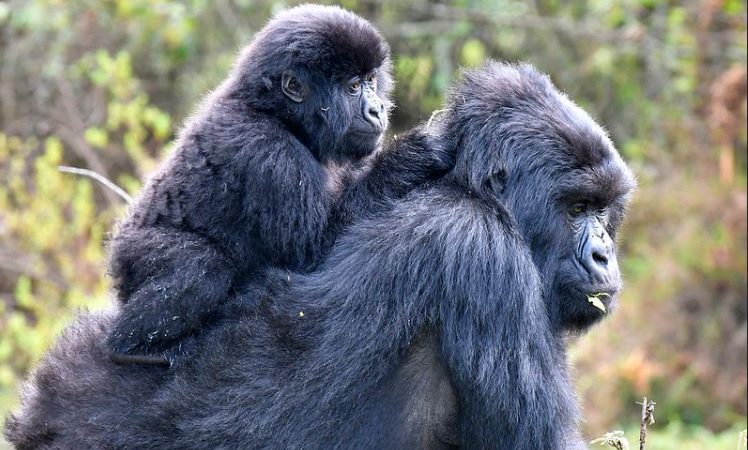
There is something unforgettable about watching a mountain gorilla in its natural habitat. A powerful silverback rests quietly among the vegetation. A mother gently cares for her baby. Nearby, young gorillas chase one another, climb fallen branches, and explore the forest with curiosity.
These moments reveal an animal that is much more complex than its impressive physical appearance might suggest.
Gorillas are intelligent, highly social great apes. They communicate through sounds, gestures, facial expressions, and body movements. They form lasting relationships, care for their young, and play an important role in maintaining healthy forests.
For travellers visiting Uganda, learning these amazing gorilla facts can make a mountain gorilla trekking experience even more meaningful.
Here are 20 fascinating facts that explain why gorillas deserve our admiration and protection.


Amazing Gorilla Facts About Their Intelligence and Behaviour
1. Gorillas Share Approximately 98% of Their DNA with Humans
Gorillas are among our closest living relatives. Humans and gorillas share approximately 98.3% of their DNA.
This genetic connection helps explain some similarities in behaviour, anatomy, and social interaction. Like humans, gorillas can display affection, curiosity, fear, excitement, and signs of distress.
However, this close relationship also makes gorillas vulnerable to certain human diseases. That is one reason responsible gorilla tourism requires careful health precautions.
2. Gorillas Communicate in Many Different Ways
Although gorillas cannot speak human languages, they have an impressive communication system.
They use grunts, hoots, barks, screams, gestures, and facial expressions to communicate with one another. Researchers have identified numerous distinct vocalisations in mountain gorillas.
Soft sounds often help family members maintain contact while feeding. Louder calls may communicate excitement, warning, or distress.
Visitors may hear gorillas making low, rumbling sounds during a guided gorilla tracking experience in Uganda.
3. Gorillas Can Recognise Individuals
Gorillas are capable of recognising familiar members of their groups. They develop social relationships and respond differently to individuals depending on past experiences.
Researchers also distinguish individual mountain gorillas by their unique nose patterns, often called noseprints.
These natural markings are useful when monitoring gorilla populations and following particular individuals over time.
4. Gorillas Use Gestures to Express Themselves
A gorilla may extend an arm, touch another gorilla, move its body, or change its facial expression to communicate.
Young gorillas frequently use playful gestures to invite interaction. Adults may use more subtle signals during social encounters.
Observing these movements can reveal the complex relationships within a gorilla family.
5. Gorillas Are Generally Peaceful Animals
Despite their enormous strength, gorillas usually avoid unnecessary conflict.
Most of their time is spent eating, resting, travelling, and interacting with family members. A silverback may perform a dramatic display if he senses a threat, but this does not automatically mean he intends to attack.
During trekking, visitors must follow ranger instructions and avoid actions that could disturb the gorillas.

Interesting Facts About Gorilla Families
6. Gorilla Families Are Usually Led by a Silverback
Many mountain gorilla families are led by a mature male called a silverback. He earns this name from the silver-grey hair that develops across his back as he matures.
The silverback helps coordinate group movements, responds to potential danger, and maintains relationships within the family.
Some gorilla groups contain more than one silverback, so their social structures can vary considerably.
7. Gorilla Mothers Are Extremely Protective
A mother gorilla forms a close relationship with her infant from birth. She carries, feeds, grooms, and protects her baby while it gradually learns about its surroundings.
During its early life, a baby spends much of its time clinging to its mother. As it becomes more independent, it begins exploring, playing, and interacting with other gorillas.
Watching this relationship is one of the most memorable experiences during a gorilla safari.
8. Baby Gorillas Usually Arrive One at a Time
Female gorillas normally give birth to one infant after a pregnancy of approximately eight and a half months.
Twins are possible but uncommon. A mother usually waits several years before having another baby, largely because raising an infant requires substantial care.
This slow reproductive rate makes the conservation of each gorilla especially important.
9. Young Gorillas Love to Play
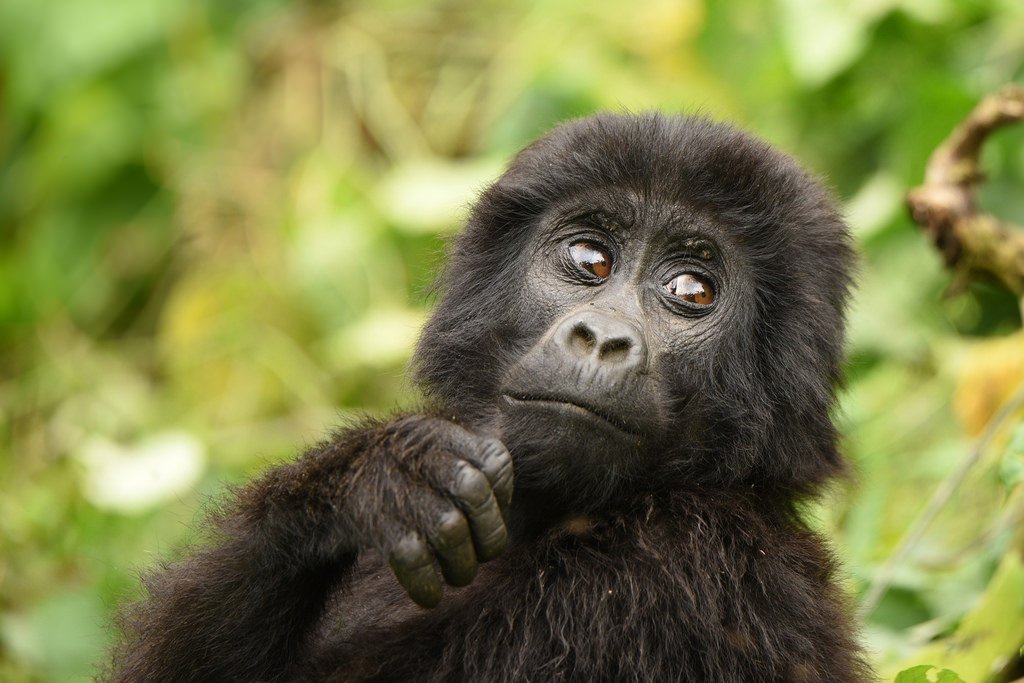
Young gorillas spend considerable time chasing, tumbling, wrestling, and climbing.
Play helps them develop coordination, confidence, physical abilities, and social skills. It also allows young animals to form relationships with siblings and other group members.
On a lucky trekking day, visitors may observe youngsters playing while older members of the family rest nearby.
10. Gorillas Build New Sleeping Nests
Each evening, gorillas usually construct sleeping nests using leaves, branches, and surrounding vegetation.
Mountain gorillas often nest on the ground, although they may also build nests in trees. Infants normally sleep close to or with their mothers.
Researchers can examine old nests to gain valuable information about group movements, population numbers, and habitat use.
Surprising Facts About Gorilla Strength, Diet and Lifestyle
11. Gorillas Are the Largest Living Primates
Gorillas are the largest living members of the primate order. Adult males are considerably heavier and more muscular than females.
A mature male mountain gorilla can weigh around 180 kilograms, although individual weights vary.
Their broad chests, strong arms, and muscular shoulders make them powerful animals well adapted to life in dense forests.
12. Mountain Gorillas Are Mostly Plant Eaters
It may seem surprising that such powerful animals survive primarily on vegetation.
Mountain gorillas eat leaves, stems, shoots, roots, bark, and other plant material. They may also consume small invertebrates.
Because much of their food is relatively low in energy, they spend significant portions of the day feeding.
Their diet changes according to the vegetation available in their habitat.
13. Gorillas Mostly Walk on Their Knuckles
Gorillas generally move on all four limbs using a movement known as knuckle-walking.
This allows them to support their heavy bodies while travelling through the forest. They can also stand upright and walk short distances on two legs.
Young gorillas are often particularly active climbers, while large silverbacks spend more time on the ground.
14. Gorilla Chest-Beating Is a Form of Communication
One of the most recognisable gorilla behaviours is chest-beating.
Gorillas strike their chests using their cupped hands, producing a distinctive drumming sound.
This behaviour may communicate information about size, strength, or social position. It can also occur during playful or excited interactions.
Chest-beating is not always a sign of aggression.
15. Gorillas Can Live for More Than 40 Years
Gorillas can live into their forties in the wild, although lifespans differ among individuals.
Over their lives, gorillas experience several developmental stages, from dependent infancy through adolescence and adulthood.
Mature males often develop the silver saddle that gives silverbacks their distinctive appearance.
Amazing Mountain Gorilla Facts About Uganda and Conservation
16. Mountain Gorillas Live in Only Two Wild Population Areas
Wild mountain gorillas survive in two main population areas in East-Central Africa.
One population lives in the Virunga Massif, which stretches across parts of Uganda, Rwanda, and the Democratic Republic of Congo.
The other lives in the Bwindi–Sarambwe landscape, centred on Uganda’s Bwindi Impenetrable National Park.
In Uganda, travellers can look for mountain gorillas in Bwindi and Mgahinga Gorilla National Parks.
17. Mountain Gorillas Have Longer Hair Than Many Other Gorillas
Mountain gorillas live in cooler, high-altitude forests. Their thick, relatively long fur helps protect them from low temperatures and damp conditions.
This is one important physical adaptation that distinguishes them from gorillas living in warmer lowland forests.
18. Gorillas Help Maintain Healthy Forests
Gorillas play an important ecological role by feeding on vegetation and dispersing seeds.
As gorillas move through the forest, their feeding activities can influence plant growth and vegetation structure.
Protecting gorilla habitats also protects many birds, mammals, insects, and plants that share these environments.
19. Mountain Gorillas Remain Endangered
Mountain gorilla conservation is one of Africa’s important wildlife recovery stories.
Protection, veterinary support, scientific research, and carefully managed tourism have contributed to their recovery over past decades.
Nevertheless, mountain gorillas remain endangered. Habitat pressures, human disease transmission, snares, and their restricted geographic range continue to threaten their survival.
Explore our article about the mountain gorilla population in Uganda for more information.
20. Responsible Tourism Can Support Gorilla Conservation
Gorilla tourism provides an important economic reason to protect mountain gorillas and their forest habitats.
Permit revenue can contribute to conservation management and park operations, while tourism creates employment for guides, porters, accommodation providers, and surrounding communities.
However, tourism must be carefully managed to minimise disturbance and disease risks.
Visitors can contribute by respecting park regulations, keeping the required distance, and following ranger guidance at all times.
Where Can You See Mountain Gorillas in Uganda?
Uganda offers two extraordinary destinations for seeing wild mountain gorillas.


Gorilla Trekking vs Gorilla Habituation: What Is the Difference?
For travellers who want to observe the fascinating behaviours described above, Uganda offers two different experiences.
Standard Gorilla Trekking
After locating a habituated gorilla family, visitors are generally allowed up to one hour of observation.
Groups typically include no more than eight visitors per gorilla family.
This experience is ideal for travellers seeking a memorable first encounter with mountain gorillas.
Gorilla Habituation Experience
Gorilla habituation allows eligible visitors to accompany authorised conservation teams and spend up to four hours observing a designated gorilla group.
The visitor group is smaller, normally limited to four people.
It is particularly attractive to wildlife photographers and travellers interested in gorilla behaviour.
Permits, conditions, and applicable rates should always be confirmed before booking. Read more about what a gorilla habituation experience involves.
How to Observe Gorillas Responsibly
Gorillas are wild animals, and their welfare must always come first. During a gorilla trek, visitors should maintain the distance required by park authorities, avoid touching the animals, and never feed them.
Follow your ranger’s instructions, avoid flash photography, and remain calm if a gorilla approaches or makes a display.
People with potentially infectious illnesses should not participate in gorilla viewing. Applicable health rules, including any mask requirements, should be followed carefully.
Responsible tourism protects both travellers and gorillas while helping ensure these extraordinary animals remain wild.
Frequently Asked Questions About Gorillas
Are gorillas dangerous to humans?
Gorillas are generally peaceful when they are not threatened. However, they are powerful wild animals. Visitors must follow their guides’ instructions and respect the rules of gorilla trekking.
What is the difference between a gorilla and a silverback?
A silverback is a mature male gorilla that has developed distinctive silver-grey hair across its back. Not all gorillas are silverbacks; groups also include females, infants, juveniles, and younger males.
How intelligent are gorillas?
Gorillas have sophisticated social relationships and communication systems. They can learn, recognise individuals, solve problems, and adapt their behaviour to different situations.
Do gorillas eat meat?
Gorillas are primarily plant eaters. Their diet can also include insects and other small invertebrates, depending on the species and habitat.
Where is the best place to see gorillas in Uganda?
Bwindi Impenetrable National Park is Uganda’s main gorilla trekking destination, while Mgahinga Gorilla National Park offers another excellent opportunity to observe mountain gorillas.
How much time can visitors spend with mountain gorillas?
Standard gorilla trekking generally permits up to one hour with a habituated gorilla family. Uganda’s special Gorilla Habituation Experience permits up to four hours with a designated group under authorised supervision.
Why These Amazing Gorilla Facts Matter
The more we learn about gorillas, the easier it becomes to appreciate just how extraordinary they are.
Behind their powerful appearance are intelligent, social animals that form close family relationships, communicate in complex ways, and depend on healthy forest ecosystems.
For many visitors to Uganda, seeing a gorilla family in the wild becomes much more than a wildlife sighting. It is an opportunity to understand the importance of conservation and experience one of Africa’s most remarkable natural environments.
Whether you are planning your first gorilla trek or considering a longer gorilla habituation experience, knowing more about these animals makes the journey even more rewarding.
Explore Uganda with Safari Vacations
Ready to Meet Mountain Gorillas in the Wild?
Safari Vacations and Travel Services Ltd organises tailor-made Uganda and Rwanda gorilla trekking safaris, including permits, accommodation, transport, and experienced local guides.
Tell us your travel dates, group size, and preferred comfort level. We will help you plan a personalised gorilla adventure.