Maiko National Park: 7 Essential, Inspiring Facts

6 Days Congo and Rwanda safari
Maiko National Park: 7 Essential, Inspiring Facts — Congo Conservation & Visitor Reality
Maiko National Park is a remarkable protected forest in the Democratic Republic of the Congo, but it is not a conventional bookable safari destination. This guide explores its elusive animals, geography and conservation value while giving honest, safety-first guidance for readers interested in the region.
What makes Maiko National Park exceptional?
the park is one of the Democratic Republic of the Congo’s largest protected landscapes, preserving a tremendous block of tropical forest in the eastern Congo Basin. Unlike famous safari reserves filled with vehicles and established lodges, this is a place whose primary significance lies in ecological continuity. Its rivers, dense vegetation and difficult terrain shelter animals that seldom appear in conventional travel photographs. A serious visitor guide therefore begins with conservation and honest accessibility information, not promises of easy sightseeing. The remote Congo rainforest deserves appreciation even from people who will never enter its interior.
This enormous protected area was established in 1970 and stretches across the modern provinces of Tshopo, Maniema and North Kivu. Different publications give slightly different measurements for its area; the international protected-area database reports roughly 10,886 square kilometres. That variation reflects differing geographic datasets rather than a reason to doubt the forest’s immense scale. Understanding the park helps travelers appreciate why the survival of forest corridors matters across borders, river basins and provincial boundaries. Congo wildlife protection here requires coordination far beyond one entrance gate or a single visitor season.
Where is Maiko National Park located?
On a map, the park occupies a remote part of eastern Democratic Republic of the Congo, between inhabited settlements, forest catchments and a wider network of protected landscapes. It is not in the Republic of the Congo, the separate country whose capital is Brazzaville. Visitors should verify that their reference maps name the Democratic Republic of the Congo, usually abbreviated DRC. The landscape cannot be understood simply by looking for a road from the nearest major airport: rivers, unstable bridges, extensive forest and local security conditions can interrupt seemingly direct lines.
The park’s sectors are often described in relation to Lubutu, Loya and Etaito, but those names should not be mistaken for officially accessible tourism entrances. Towns and working routes change in importance with local conditions. A map showing a straight line through the forest does not establish a usable journey. the park location searches are useful for geographic understanding, whereas actual authorization and movement require direct confirmation from responsible authorities. The remote Congo rainforest is not a setting for improvised independent road trips.
Why the Congo Basin ecosystem matters
The Congo Basin is among Earth’s major tropical forest regions and supplies habitat for countless plants, insects, birds and mammals. A continuous forest can support movements and ecological processes that a small isolated reserve cannot. Fruit-bearing trees feed primates and birds; browsing mammals shape vegetation; and rivers supply wet corridors through otherwise demanding terrain. In the park, biological diversity is both a global asset and a local concern. Protecting Congo forest biodiversity also means protecting ecological relationships that may be poorly documented in the available scientific literature.
Dense canopy does not mean that all forest areas are alike. Elevation, drainage, soil, light gaps and previous disturbance create different habitat patches. Seasonal flowering and fruiting influence where animals travel. Fallen timber shelters smaller organisms while waterlogged ground encourages distinctive vegetation. The phrase okapi forest habitat refers to these complex conditions, not a fenced enclosure in which okapi are guaranteed to appear. the park offers a powerful example of how little visitors can infer about species abundance from a beautiful green photograph.
Wildlife of Maiko National Park
the park is particularly associated with Grauer’s gorillas, okapi and Congo peafowl, three remarkable animals linked to the forests of the DRC. Conservation assessments also identify forest elephants, eastern chimpanzees and several less familiar mammals in the landscape. These species do not stand conveniently beside a road waiting for a vehicle. Many are scarce, shy or difficult to observe beneath thick vegetation. Any account of Congo wildlife protection should distinguish a scientifically documented occurrence from a sighting that an ordinary traveler can realistically expect.
Wildlife observations depend upon patient field methods: indirect signs, camera traps, nest counts and careful surveys conducted by trained teams. A gorilla population estimate from one year is not a promise of the same number today. Likewise, the presence of okapi does not mean a tourist can book an okapi encounter. the park wildlife information is most valuable when it explains both the extraordinary species and the uncertainty surrounding their current numbers. This is the right context for discussing Grauer’s gorilla conservation and okapi forest habitat.
Ask about regulated gorilla experiences outside Maiko
We can discuss established safari destinations and help you check whether a proposed nature experience has appropriate permits, safety advice and realistic logistics. We do not offer Maiko park bookings.
Grauer’s gorillas: an extraordinary eastern ape
Why Maiko National Park matters for great apes
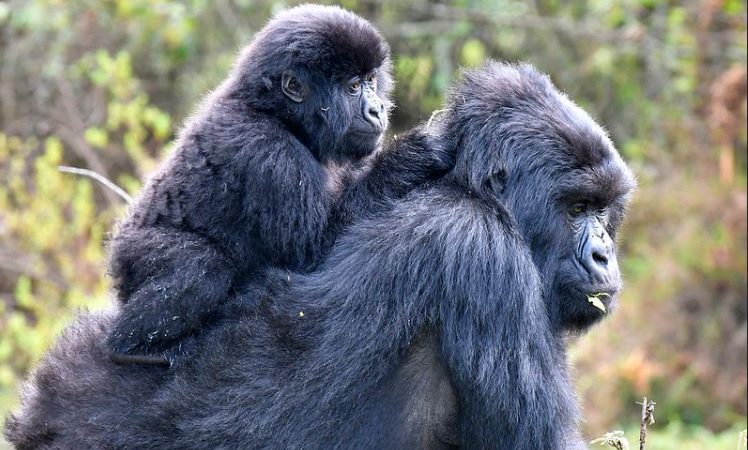
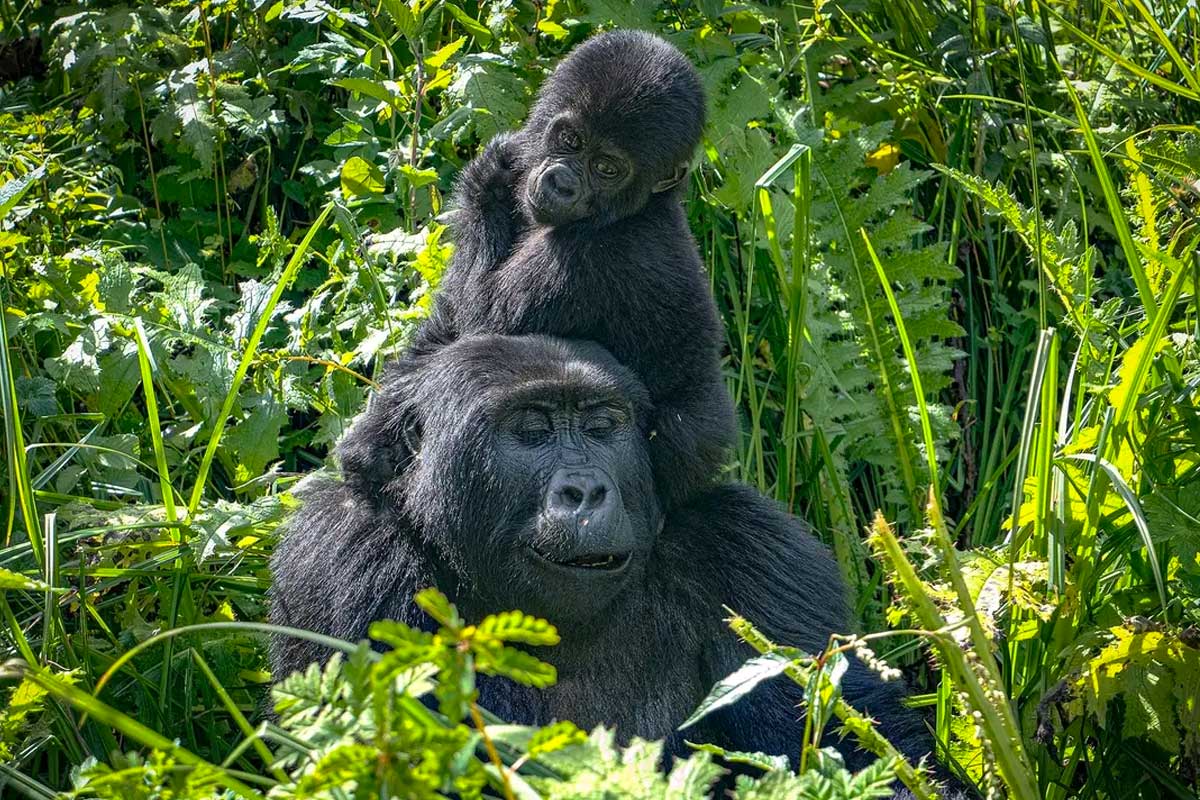
Grauer’s gorilla, also called the eastern lowland gorilla, is a subspecies of eastern gorilla found only in the Democratic Republic of the Congo. It differs from the mountain gorillas encountered on regulated treks in Uganda and Rwanda. Conservation researchers have documented populations in the park, but habitat isolation, hunting and insecurity make protection challenging. Grauer’s gorilla conservation means safeguarding breeding groups and the surrounding forest, not increasing unregulated human contact. These animals are vulnerable to disturbance and to diseases transmitted by people.
Travelers sometimes confuse gorilla presence with a commercial gorilla permit. At the park there is no dependable mainstream tourism operation comparable to established gorilla trekking in Bwindi or Volcanoes National Park. Independent conservation information explicitly describes gorilla tourism at Maiko as unavailable. Even if someone advertises a private forest excursion, that advertisement is not evidence of authorization, security or wildlife management. Grauer’s gorilla conservation must take priority over an adventurous itinerary, and tourist expectations should reflect this important distinction.
Okapi: the secretive forest relative of giraffes
An okapi has a striking silhouette: a dark body, large ears and striped hindquarters that help distinguish it from other forest mammals. Despite its zebra-like markings, it is related to the giraffe. Its preferred environments include tropical forests where foliage, cover and suitable feeding plants occur together. This makes okapi forest habitat an important conservation subject across eastern DRC. the park is among protected landscapes associated with the species, although actual field sightings are rare and should never be promised to travelers.
Okapi are difficult to study because they live in dense forest and usually avoid people. Scientists often rely on indirect evidence as well as structured field observations. Threats to suitable habitat can include hunting pressure, settlement expansion, mining activity and loss of ecological connectivity. Effective Congo wildlife protection must support both species-focused monitoring and the broader functioning forest. A destination article about Maiko National Park should celebrate the okapi without inventing visitor platforms, walking routes or guaranteed encounters that do not exist.

Congo peafowl and extraordinary birdlife
The Congo peafowl is an endemic forest bird, quite unlike the familiar ornamental peacock of open gardens. It spends much of its time under cover, which helps explain why photographs and sightings are uncommon. The species is among the major conservation reasons Maiko National Park attracts international scientific attention. Birds also play roles in seed dispersal, food webs and ecological monitoring. The remote Congo rainforest may appear still to a casual observer, yet its soundscape can reveal layers of wildlife activity invisible from a trail.
A dedicated birdwatcher might be drawn to the idea of rare endemic species, but reliable birding tours in this park should not be assumed. Forest visibility, access restrictions and safety concerns change what is practical. Seek established birding destinations with trained local guides and a verified operating framework instead of treating a species checklist as a travel booking platform. Congo wildlife protection benefits when enthusiasts respect limits and support research. The okapi forest habitat and the understory used by secretive birds are parts of the same complex living system.
Forest elephants and other mammals
African forest elephants are smaller-bodied than many savannah elephants, but their ecological influence is enormous. They transport seeds, open pathways and modify vegetation through repeated movements. Their presence in Maiko National Park represents more than an exciting potential photograph: it indicates the significance of large connected habitat. Chimpanzees, smaller primates and elusive carnivores also contribute to the forest’s biological richness. The challenges of monitoring these species illustrate why a remote Congo rainforest cannot be assessed using the vehicle-based techniques typical of classic grassland safaris.
Evidence of wildlife may include tracks, feeding marks, calls or nests rather than direct encounters. Even professional teams cannot promise a sighting on demand. Hunting, disturbance and lost habitat can affect different species in different ways, making broad claims about animal abundance misleading. Congo wildlife protection requires long-term records rather than promotional lists. In the wider Maiko National Park landscape, threats to elephants and great apes may also disrupt seed dispersal and other ecosystem functions. That creates consequences far beyond individual endangered animals.
Landscape, rivers and forest habitats
There is no single postcard view that adequately represents Maiko National Park. The landscape includes dense tropical vegetation, streams, river valleys and areas of rolling or higher ground. Water shapes the forest through seasonal flooding, erosion and the movement of nutrients. In such country, even a short distance may demand a great deal of effort. The remote Congo rainforest is a physically complex environment where trails may be temporary and river crossings cannot be assumed safe. Visitors researching the terrain should resist turning map contours into a walking itinerary.
The ecology changes from waterlogged ground to better-drained forest, from closed canopy to gaps created by fallen trees. Animal feeding patterns respond to this mosaic. Describing okapi forest habitat accurately means acknowledging these local variations rather than presenting the forest as an unchanging wall of trees. Maiko National Park provides habitat at a scale that helps maintain diverse ecological processes. Conservation work therefore encompasses waterways, plant communities, wildlife movements and relationships with communities outside the park boundary.
Plan a realistic rainforest safari
We can discuss established safari destinations and help you check whether a proposed nature experience has appropriate permits, safety advice and realistic logistics. We do not offer Maiko park bookings.
History and the designation of the park
The national park was formally designated in 1970. Its history since then includes scientific expeditions, wildlife surveys, conservation initiatives and difficult periods affected by insecurity. Protected status on paper is not the same thing as complete control of every remote forest sector. Maiko National Park has therefore become an important case for understanding the practical difficulties of tropical forest conservation. Local knowledge, research partnerships and responsible government management remain essential alongside the legal boundary of the reserve.
It is tempting to tell a dramatic story about a wilderness that nobody has visited, but people have long lived in and around these forests. Their histories and livelihoods deserve respect. Modern conservation must take account of legitimate community interests, land use and local economic realities. Congo wildlife protection will be stronger when it does not portray residents as invisible. Discussions about Grauer’s gorilla conservation also need to recognize that lasting progress depends on community relationships as well as patrols and scientific monitoring.

Conservation pressures and difficult trade-offs
The park faces a mixture of pressures that can include illegal hunting, artisanal mining, armed-group activity and barriers to consistent management. These challenges are documented by specialist conservation organizations, but their intensity can change by sector and year. It is inaccurate to describe Maiko National Park as either completely untouched or permanently beyond recovery. Grauer’s gorilla conservation requires trustworthy monitoring so that efforts respond to actual evidence instead of old headlines. Safety for conservation workers and nearby communities is part of environmental protection.
Protected forests can also be affected indirectly by economic demand beyond their borders. Markets for minerals, wild meat and land may create incentives that no single ranger team can solve. For Congo wildlife protection to endure, legal institutions, livelihoods and conservation partnerships must reinforce one another. The remote Congo rainforest offers no easy shortcut: effective action is often slow, costly and dependent on local consent. Readers should evaluate conservation claims by asking who produced the evidence, when surveys occurred and which geographic sectors were studied.
How research teams study wildlife
Researchers may use standardized transects, camera traps, acoustic observations, patrol records and biological signs to understand forest wildlife. Each method has limitations. Nest counts can suggest where great apes live, but conversions from nests to individuals require assumptions; cameras capture only animals moving through particular locations. Maiko National Park has been the subject of surveys across different sectors, though gaps in access complicate continuous comparison. Grauer’s gorilla conservation depends upon carefully distinguishing measurable trends from uncertainty, especially where security prevents fieldwork.
Remote sensing provides another perspective by showing changes in tree cover, land use and roads. Satellite images cannot by themselves confirm an okapi population or prove that poaching has ceased. They become more informative when combined with local field evidence. Okapi forest habitat is affected by both fine-scale food plants and larger landscape connectivity. Congo wildlife protection benefits from several independent methods rather than a single headline statistic. Readers interested in research can explore peer-reviewed studies and qualified conservation partners instead of relying solely on tourism advertising.
Can tourists visit Maiko National Park?
A practical response is that Maiko National Park should not presently be treated as a bookable conventional safari. Specialist conservation sources state that gorilla tourism is not possible, while official travel advisories warn of serious dangers in the DRC. There is no basis for promising routine visitor permits, maintained trails, lodges or guided primate treks inside the park. Maiko park access information found in old articles can easily be mistaken for a working modern tourism service. A responsible travel guide should make this limitation unmistakable.
An organized research or conservation activity is not the same as a tourist holiday. Permissions, risk assessments, transport plans and local coordination for professional missions cannot simply be copied by visitors. Never interpret a map marker or a published description as confirmation that a route is open. Maiko National Park access should be verified directly with competent park authorities and, when relevant, the visitor’s embassy and insurers. The remote Congo rainforest deserves curiosity, but curiosity must not become encouragement to enter an unsafe area.
Current security and travel advisories
As of November 2026, several governments advise against travel to the Democratic Republic of the Congo because of conflict, kidnapping, crime, health concerns and serious disruption risks. Conditions in eastern provinces can deteriorate rapidly and are not reliably summarized by an old tour advertisement. Before considering any DRC journey, read the specific regional wording of your government’s current advisory, rather than looking only at a national headline. Maiko National Park lies in a region where casual travel planning would be irresponsible.
The absence of visible fighting on a particular road is not proof that it is safe tomorrow. Roads, air routes, communications and formal border procedures may change with little warning. Transport or medical evacuation options can be extremely limited in isolated areas. No blog article can provide real-time security clearance for Maiko National Park. Tourists should not attempt self-guided approaches, unofficial gorilla treks or spontaneous park entries. Congo wildlife protection also requires avoiding activities that would place local guides, rangers or residents at unnecessary risk.

Transport and realistic geography
It is common to see cities such as Kisangani or Kindu mentioned when describing the wider region, but geographic proximity is not a usable transportation plan. A drive may involve long distances over uncertain roads, local authorizations and potentially unsafe transit zones. Maiko National Park has no widely documented, dependable commercial visitor-transfer network. Maiko park access should never be presented as a predictable drive of a few hours without dated and authoritative confirmation. The same caution applies to hypothetical charter flights and river crossings.
People studying the park from abroad can still explore reputable geographic databases and conservation maps. These tools are valuable for learning how its sectors relate to rivers, settlements and neighboring ecosystems. They are not navigation instructions for a real expedition. The remote Congo rainforest is not comparable to parks where a visitor can book a lodge online, pick up a rental car and follow marked roads. If safe travel arrangements become possible in the future, they will require up-to-date official information rather than recycled itineraries.
Check current travel options before planning
We can discuss established safari destinations and help you check whether a proposed nature experience has appropriate permits, safety advice and realistic logistics. We do not offer Maiko park bookings.
Permits, entry rules and authorizations
Entry requirements for the DRC depend on nationality and can change. A passport or visa does not confer permission to enter a protected area, conduct research, bring a drone or approach wildlife. No current Maiko National Park tourist permit price or booking system should be assumed without confirmation. Even where institutions authorize specialist access, those conditions may be restricted to specific personnel and tasks. Treat online price tables that lack a named issuing authority and a clear date with skepticism.
A reputable travel professional should distinguish government entry documentation from park authorization and from wildlife-viewing permission. These are separate matters and may involve different officials. Maiko park access and travel insurance must also be evaluated together: insurance often excludes trips taken contrary to government travel advice. Do not make non-refundable arrangements based on unverified permits. For Maiko National Park, a conservation-focused article is more truthful than an invented list of booking steps or an artificial price estimate.
Best time of year: climate versus accessibility
In equatorial forests, rainfall and humidity are significant considerations throughout the year, although local patterns vary. Rain can make paths slippery, change river levels and disrupt road surfaces. A simple dry-season label cannot remove the forest’s logistical challenges. Maiko National Park is not a destination where a particular calendar month reliably turns inaccessible wilderness into an organized safari. The remote Congo rainforest has its own ecological rhythms, but safety and operating permissions matter more than choosing an appealing month.
For nature enthusiasts, seasonality is still meaningful as a biological subject. Rain affects vegetation, fruit availability, wildlife movements and field research conditions. Species may use different areas at different times, while dense foliage continues to make observations difficult. Okapi forest habitat includes these changing food and moisture conditions, and Grauer’s gorilla conservation studies must account for survey timing. The appropriate conclusion for travelers is not to book a supposedly perfect month, but to distinguish ecological interest from actual tourism feasibility.
Accommodation, guiding and costs
Conventional safari destinations usually have published Accommodation choices, activity prices and licensed guiding networks. Reliable equivalents should not be presumed inside Maiko National Park. An online photograph of a forest lodge somewhere in the DRC is not evidence that it serves the park. A quoted expedition price may omit security, special permits, emergency evacuation and changing transport arrangements. Maiko park access is too uncertain for a responsible article to present fixed holiday packages or a standard nightly budget.
Travelers wanting a rainforest experience with established tourism infrastructure should first compare destinations where current operations can be independently verified. Uganda and Rwanda, for example, offer regulated primate experiences in designated parks, although these have their own health, fitness and permit rules. This is not a substitute for the distinct ecology of Maiko National Park, but it is a more realistic travel-planning comparison. Grauer’s gorilla conservation in Congo should not be used to imply that every great ape habitat welcomes visitors.
How Maiko differs from established gorilla trekking
The phrase gorilla trekking describes a carefully managed tourist activity in certain protected forests, usually involving advance permits, trained staff and specific viewing rules. It should not be applied indiscriminately to all places where gorillas occur. At Maiko National Park, the conservation significance of Grauer’s gorillas does not establish a tourist trekking product. Grauer’s gorilla conservation is the relevant subject, whereas permitted mountain gorilla encounters in Uganda or Rwanda follow different institutional arrangements and occur in different habitats.
For someone whose main goal is seeing gorillas responsibly, the practical choice is to compare operating destinations, confirm official permits and check health and travel advisories before paying. Trekking time, terrain and accommodation can vary substantially even in established parks. A strong itinerary includes buffer time and respects wildlife viewing limits. Maiko National Park belongs in a broader conversation about African great ape conservation, but not in a current itinerary that promises a specific face-to-face encounter. This distinction protects both travelers and wildlife.
Comparing Maiko with other DRC protected areas
The Democratic Republic of the Congo has several globally important protected landscapes, but their visitor situations and security contexts are not interchangeable. Virunga is associated with volcanic scenery and mountain gorilla habitat, while Kahuzi-Biega is associated with Grauer’s gorillas and mountain forests. Maiko National Park has a different geography and a vast lowland forest character. Readers should not transfer permit procedures, lodge names or wildlife probabilities from one reserve to another. Each area requires separate official and current verification.
These landscapes also contribute differently to conservation networks. Maintaining connectivity between forest blocks may help wildlife persistence, genetic exchange and ecological resilience. Congo wildlife protection depends on the integrity of more than one legally designated park. Grauer’s gorilla conservation is particularly sensitive to the survival of suitable habitat across a wider landscape rather than isolated tourism hotspots. Comparing destinations is useful for understanding biodiversity; it does not establish that any particular DRC route is safe for tourists today.
Community partnerships and local livelihoods
Conservation decisions are inseparable from the lives of people living around protected areas. Forest resources, farms, roads, markets and cultural relationships all shape local priorities. Effective programs need respectful dialogue, transparent governance and meaningful benefits for communities rather than assuming that restrictions alone will solve every problem. Around Maiko National Park, insecurity and isolation make this especially difficult. Congo wildlife protection is most durable when people can participate in decisions and when conservation organizations recognize local expertise.
External visitors can help by supporting accountable conservation institutions and avoiding exploitative media narratives. A remote Congo rainforest is not an empty stage for adventure photography. Places often described as unexplored have histories, identities and people whose rights deserve acknowledgment. When discussing okapi forest habitat or rare gorillas, ask how proposed conservation measures affect residents and how benefits are shared. Maiko National Park should be presented as a living social and ecological landscape, never as a trophy destination.
Discuss ethical primate travel
We can discuss established safari destinations and help you check whether a proposed nature experience has appropriate permits, safety advice and realistic logistics. We do not offer Maiko park bookings.
Ethical wildlife photography and storytelling
Wildlife images from other Congo Basin locations should not be mislabeled as photographs taken inside Maiko National Park. A gorilla portrait from Uganda, for example, cannot honestly document Grauer’s gorillas in this park. For an educational article, illustrative images can be used when captions clearly identify them as representative rather than site-specific. Ethical photography also avoids revealing sensitive nest sites or encouraging unregulated wildlife approach. Grauer’s gorilla conservation benefits from accurate information and respectful representation more than sensational imagery.
The same principle applies to stories. Avoid suggesting that a rare animal is readily encountered because scientists have documented its presence. Avoid treating a camera-trap record as a tourist sighting. Congo wildlife protection depends upon precise language, and the public deserves to know when information is uncertain or old. A remote Congo rainforest can be compelling without exaggerated superlatives. Maiko National Park is extraordinary because it protects a complex ecosystem, not because every traveler can personally experience its most elusive residents.
Planning a responsible Congo Basin learning journey
There are meaningful ways to learn about Maiko National Park without attempting travel into restricted or unsafe areas. Study conservation reports, protected-area maps, peer-reviewed ecology and carefully sourced wildlife photography. Compare what different researchers have been able to document across decades. This reveals how knowledge grows despite access barriers. The subject of okapi forest habitat opens wider questions about animal diets, vegetation and the evolution of forest ecosystems, while Congo wildlife protection raises questions about governance and community partnerships.
Those planning an actual African nature holiday can choose operating protected areas based on verified activities, official advice and a realistic route. For those interested in great apes, compare regulated gorilla or chimpanzee trekking experiences in countries and parks that currently welcome visitors. The remote Congo rainforest can remain an intellectual and conservation interest rather than a travel objective. Grauer’s gorilla conservation is valuable in its own right; it does not need a tourist excursion to justify the effort.
How to assess online claims about Maiko
A credible Maiko National Park guide should identify whether its information concerns biodiversity, historic research or present-day tourism. Look for a date, a named institution and a clear distinction between confirmed evidence and general possibility. Pages that list luxury camps, guaranteed okapi sightings or short driving times without sources deserve skepticism. Maiko park access claims should be especially carefully checked because security, administration and transport conditions can change faster than a travel article can be updated.
Another useful test is whether the page explains limitations. Does it mention official travel advisories, the lack of conventional gorilla tourism and the importance of current authorization? Does it avoid pretending that habitat records are individual sightings? A responsible account of Congo wildlife protection includes uncertainty where relevant. For Maiko National Park, the most useful information often tells visitors what cannot currently be promised. That transparency makes conservation education more trustworthy and prevents avoidable harm.
Frequently asked questions about Maiko
Is Maiko National Park in Congo-Brazzaville? No. It is in the Democratic Republic of the Congo, a different sovereign country. Does the park have mountain gorillas? It is primarily noted for Grauer’s gorillas, not the mountain gorilla trekking populations familiar from Uganda and Rwanda. Can visitors see okapi there? The species is associated with the protected forest, but sightings cannot be guaranteed and there is no established routine tourist program. The phrase okapi forest habitat describes ecological importance rather than a visitor attraction.
Is the park suitable for first-time African safari travelers? No conventional safari infrastructure or reliable tourism access has been established for ordinary visitors. Can someone book a Grauer’s gorilla trek? Specialist sources say gorilla tourism at Maiko is not possible. Does a dry season make it safe? Weather cannot resolve conflict and access issues. Why should anyone care about Maiko National Park? Its protection contributes to the survival of rare species, the integrity of large forests and long-term Congo wildlife protection. These reasons remain important regardless of tourism.
A final perspective on Maiko and conservation
Maiko National Park challenges a common assumption that every important natural place must be converted into a consumer travel experience. The forest’s value comes from the species, communities and ecological processes it sustains. Grauer’s gorilla conservation, okapi forest habitat and the future of connected tropical forests all matter even when access is restricted. For now, readers can support credible conservation efforts, learn from carefully documented research and respect the advice of authorities and field specialists.
As conditions evolve, official park management and current security advice should guide any future assessment of Maiko park access. Until there is reliable evidence of safe, authorized and operational tourism, avoid promises of packaged visits. The remote Congo rainforest is best approached with informed curiosity and humility rather than expectations borrowed from savannah safari marketing. Congo wildlife protection is the central story, and preserving the forest’s future is a far more valuable goal than claiming to have ticked another destination off a list.

Research basis: protected-area records from UNEP-WCMC / Protected Planet, the Congo biodiversity information portal, conservation reporting from Berggorilla & Regenwald Direkthilfe and the IUCN APES Atlas, together with current UK, Australian and Canadian travel advisories. Facts about access and security should be rechecked before any travel decision.