Where Are Cheetahs Found in Uganda?

Where Are Cheetahs Found in Uganda?
Discover the remote savannahs of Kidepo Valley and Pian Upe, where one of Africa’s rarest big-cat encounters in Uganda is still possible.
Uganda is famous for mountain gorillas, chimpanzees, tree-climbing lions and immense herds of buffalo. Yet there is another animal that makes wildlife enthusiasts look twice at a distant patch of grass: the cheetah. Slender, watchful and built for speed, this spotted cat is among Uganda’s most elusive large predators.
Where are cheetahs found in Uganda? The principal documented areas are Kidepo Valley National Park and Pian Upe Wildlife Reserve in the country’s northeastern savannah landscape. Kidepo is the better-established destination for a conventional national-park safari, while Pian Upe attracts adventurous visitors interested in a less-travelled wildlife reserve. Sightings in either place are uncommon, and no responsible operator can promise them.
The journey offers beautiful savannahs, diverse wildlife and local cultural encounters, with a cheetah sighting as an extraordinary bonus. This guide explains where to look, what scientists know, how to plan your route, and why the protection of Uganda’s remaining cheetahs matters.

1. Kidepo Valley National Park: Uganda’s best-known cheetah destination
For a deeper look at the park, explore our Kidepo Valley National Park guide, practical Kidepo safari planning guide, explanation of what makes Kidepo famous, and advice on the best time to visit Kidepo.
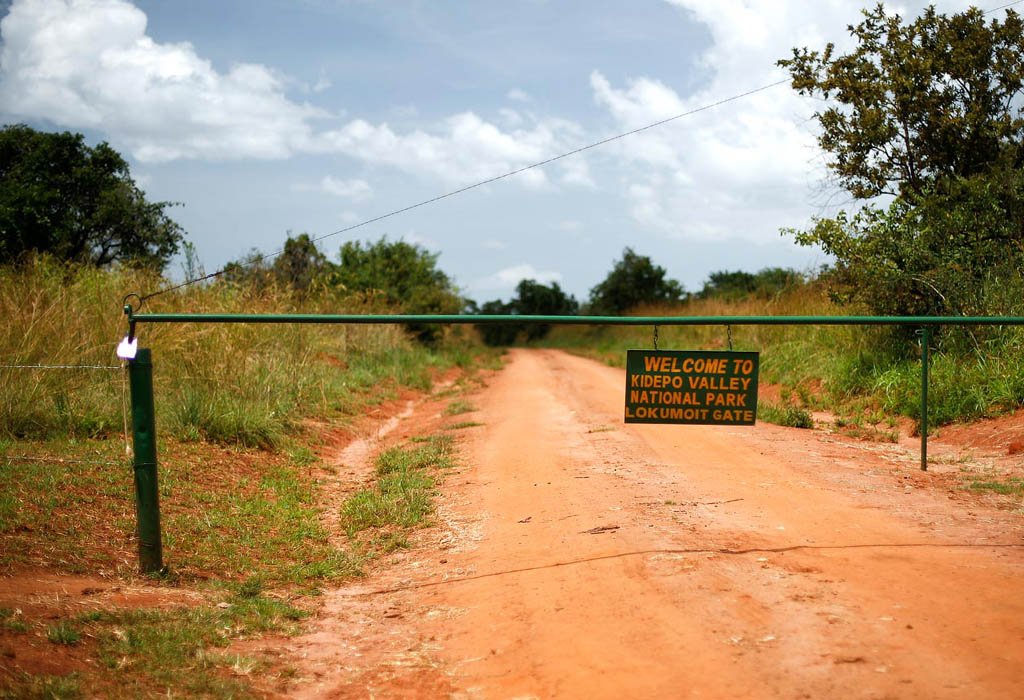
Far from the busier safari circuits in western Uganda, Kidepo Valley National Park occupies an extraordinary corner of the country near the borders with South Sudan and Kenya. Broad valleys stretch between mountain ranges, rocky outcrops rise above the plains, and seasonal changes transform the color of the landscape.
This is the place we would normally recommend first to travellers asking specifically about Uganda’s cheetahs. Uganda Wildlife Authority conservation publications document cheetah observations in the park, particularly in the Narus Valley. Sightings have involved individual animals and small male groups; however, they are infrequent, and past observations should not be mistaken for a reliable daily viewing opportunity.
Narus Valley is often a productive area for wildlife drives because it supports grazing animals and, in drier conditions, more concentrated wildlife activity around available water. Your guide may search likely open habitats and watch for subtle movement along the plains. Even without a cheetah, the valley can deliver outstanding views of buffalo, elephants, Jackson’s hartebeest, giraffes and lions.
The Kidepo Valley itself, farther east, offers sweeping scenery and a different perspective on the park. Some itineraries include both valleys so guests can appreciate their contrasting landscapes. Travellers interested in the longer journey can consult our Murchison Falls and Kidepo safari or read the Kidepo seasonal travel guide.
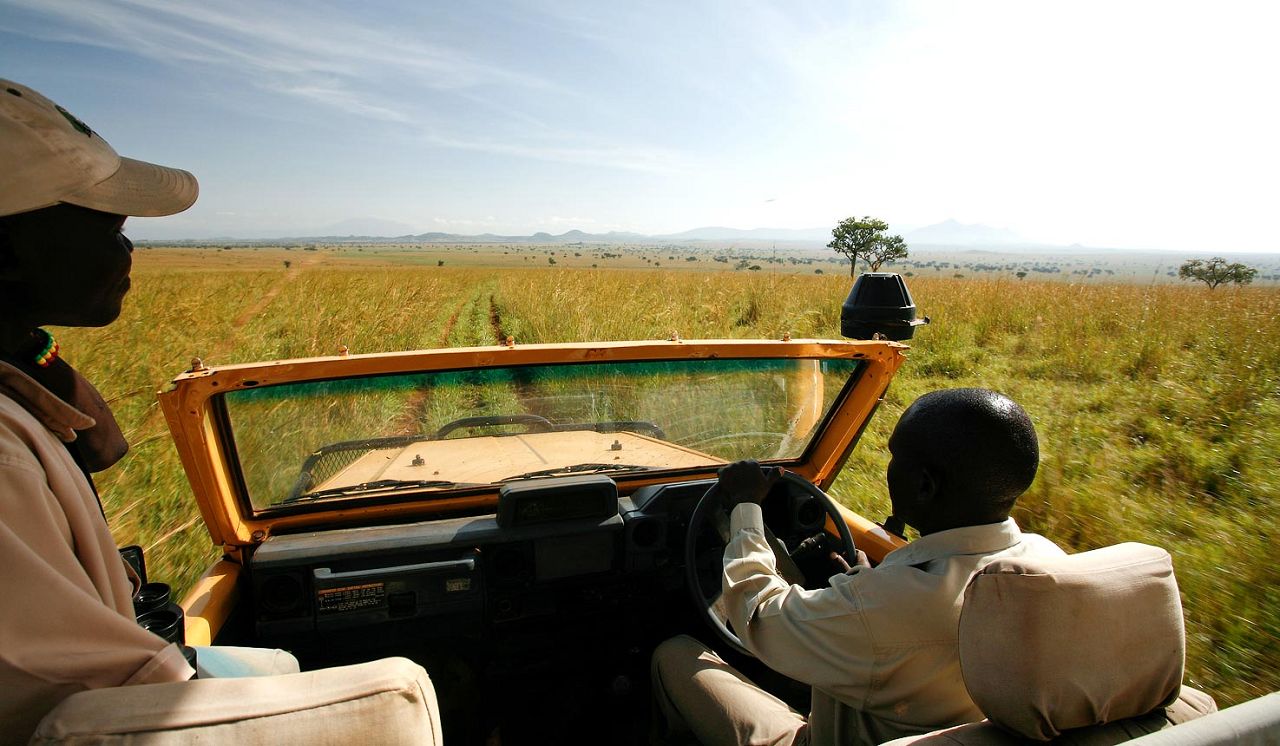
Kidepo’s expansive grasslands make it a memorable safari destination, regardless of whether a rare cheetah is encountered.
How to search for cheetahs in Kidepo
Start with a knowledgeable local safari guide, allow at least two full days for wildlife exploration if your schedule permits, and approach each drive as an opportunity to explore rather than a chase for one species. Morning excursions are comfortable and often rewarding for general wildlife; a cheetah may be active in daylight at other times too.
Stay on authorised tracks, follow ranger instructions and use binoculars for distant animals. A guide should never drive off-road without permission or pressure an animal into moving just to create a photograph. Wildlife encounters are best when the animal carries on naturally.
2. Pian Upe Wildlife Reserve: a quieter cheetah landscape
Understand the wider northeastern landscape through our Pian Upe Wildlife Reserve guide, Karamoja regional guide, Matheniko Game Reserve, Bokora Corridor Wildlife Reserve, and the guide to Bokora wildlife attractions. These neighboring areas are part of the conservation story, not promises of cheetah sightings.
Pian Upe Wildlife Reserve lies in eastern and northeastern Uganda, north of Mount Elgon and linked ecologically with the broader Karamoja conservation landscape. Its vast grasslands, scrub and open horizons make it particularly interesting for visitors who love remote places.
For many years, travellers knew Pian Upe mainly for its dramatic scenery, ostriches, antelopes and comparatively low visitor numbers. More recent conservation monitoring has drawn attention to its cheetahs. The reserve’s conservation programme reports approximately 17 identified cheetahs through its monitoring work. That figure describes identified individuals in that landscape; it should not be presented as a complete or fixed national census.
Monitoring methods such as camera trapping help conservation teams understand where individual cats travel and how they use the landscape. For safari visitors, the implication is simple: cheetahs are present, but it remains difficult to predict whether you will see one during a short visit.
Pian Upe offers other reasons to visit. Depending on season and recent movements, guests may look for eland, Jackson’s hartebeest, roan antelope and buffalo. Birdwatchers can seek interesting grassland species, while the nearby Lake Opeta wetlands add another dimension to the region’s biodiversity. The Pian Upe travel articles cover additional experiences.
Is Pian Upe better than Kidepo for cheetahs?
Neither place can be ranked confidently by a published, comparable tourist sighting rate. For a conventional safari with more established park-based activities, Kidepo is generally the easier recommendation. Pian Upe is attractive to travellers who value solitude, unusual wildlife and emerging conservation tourism. A combination of both provides a fuller understanding of the habitat cheetahs need in northeastern Uganda.
Because travel conditions and reserve activities can change, arrange routes and permitted excursions locally before departure. A well-planned visit should respect wildlife management restrictions and avoid presenting wildlife research locations as public viewing guarantees.
3. Do cheetahs live elsewhere in Uganda?
For broader context, read about Uganda wildlife reserves and the country’s Uganda wildlife safari guide; our guide to leopard-viewing parks in Uganda also explains why a leopard should not be mistaken for a cheetah.
The answer requires an important distinction between a confirmed core landscape and an occasional or historical report. Research on Uganda’s cheetahs describes a wider possible range through northeastern grasslands, including the areas linking Pian Upe with Bokora and Matheniko. Animals can move across large territories, and political park boundaries do not define the limits of their ecological needs.
That does not mean a visitor should expect cheetahs in every reserve along this corridor. Presence in one area, or a report made years ago, cannot establish a regularly observable resident population today. Research and reporting systems continue to improve our understanding of movements across the region.
Uganda Wildlife Authority has also mentioned occasional cheetah reports from northern Murchison Falls. These are not grounds for marketing the park as a dependable cheetah destination. Likewise, Queen Elizabeth National Park, Lake Mburo and Bwindi are not places we would recommend to travellers primarily hoping to see wild cheetahs.
4. Why are cheetahs so difficult to see in Uganda?
Compared with many of East Africa’s celebrated cheetah-viewing areas, Uganda supports a very small and poorly encountered cheetah population. Much of the relevant habitat is remote, and individual animals can roam over extensive areas. A cat that was photographed on one section of grassland last month might be many kilometres away during your visit.
Cheetahs also behave differently from lions. They often avoid direct competition with stronger predators, choosing opportunities that allow them to hunt and retreat without unnecessary conflict. Their spotted coats blend remarkably well with dry grass, making even a standing animal surprisingly hard to detect from a vehicle.
There is another practical reason: many visitors devote only one or two nights to remote regions, and the majority of wildlife excursions are not scientific cheetah surveys. A tourist drive may produce magnificent wildlife moments without ever crossing a cheetah’s path. It is more helpful to discuss reasonable expectations beforehand than to quote an unsupported percentage chance of success.
5. Best time to visit Uganda for a cheetah safari
Travel planning is easier with our advice on Uganda wildlife viewing seasons, an overview of birdwatching parks in Uganda, and a list of Uganda’s best birding spots.
There is no season when Uganda’s cheetahs become guaranteed sightings. Nevertheless, the drier periods in northeastern Uganda are attractive for general game viewing because access may be easier, grass can be shorter in places, and wildlife movements around water and feeding areas may be easier to observe.
For Kidepo, December to February is often a good starting point for planning a dry-season safari. Other months may also be rewarding, depending on local rainfall. These conditions vary from year to year, so guides should base advice on recent observations rather than a rigid calendar.
The wetter months offer their own rewards. Fresh vegetation turns the plains greener, scenery is striking, and birdwatching can be excellent. Some tracks may become muddy or difficult, however, especially in more remote sections of Pian Upe. A capable 4×4 vehicle and flexible itinerary are particularly important.
6. What does a cheetah look like, and how is it different from a leopard?
For advice on finding wildlife responsibly, see our guide to game drives in Uganda.
First-time safari guests sometimes confuse cheetahs and leopards. Both are spotted cats, both may be seen in savannah habitats, and both can remain almost invisible until they move. Yet their body shapes and markings are quite different.
Cheetah
 Look for a slim body, relatively small head, long legs, a deep chest and solid dark spots. The easiest facial clue is a pair of black “tear marks” running from the inner corners of the eyes toward the mouth. Cheetahs are specially adapted to accelerate quickly and pursue prey across open ground.
Leopard
 A leopard tends to be stockier, with a broader head, muscular shoulders and dark rosette-shaped markings rather than simple solid spots across much of the coat. Leopards are powerful climbers, and their ability to live in bush, woodland and rocky habitats makes them more widely distributed in Uganda.
Cheetahs are often called the fastest land mammals, capable of very high speeds over short bursts. They cannot maintain a full sprint for long and must approach prey carefully before committing to a chase. Most sightings, however, involve a cat resting, scanning its surroundings or moving slowly through grass—not a dramatic hunt.

7. How to reach Kidepo Valley and Pian Upe
Travelling independently or with others? Compare solo travel in Uganda with our small-group Uganda safaris.
Most international travellers begin their Uganda safari at Entebbe International Airport. From there, a journey to the northeast can be arranged by road, with a domestic air connection where current flight schedules and charter options allow.
To Kidepo by road: the drive from Kampala or Entebbe is long and generally best broken up with an overnight stop. Actual travel time depends on the chosen route, roadworks, stops and seasonal conditions. Visitors who dislike long drives may enquire about flight options to the Kidepo area, subject to operating schedules.
To Pian Upe by road: the reserve is commonly reached via eastern Uganda, with routes passing the Mbale area toward the reserve. This makes it convenient to pair with Sipi Falls and a longer journey through Karamoja. Consult our Karamoja cultural and wildlife safari for inspiration.
8. Suggested safari itineraries for cheetah enthusiasts
For route ideas, compare the Kidepo and Murchison Falls itinerary, a Karamoja culture and wildlife safari, the northern Uganda wildlife itinerary, a Murchison Falls and chimpanzee safari, a six-day Ziwa, Murchison and Bwindi journey, and our broader custom Uganda safari packages.
Rather than spend every day searching for one elusive predator, build a varied safari around the landscapes where cheetahs live. Our suggestions below can be adjusted to your dates, travel pace, budget and preferred accommodation level.

Longer safari holidays can also add a separate western Uganda extension for chimpanzees and gorillas. Those primate experiences involve different ecosystems and should not be confused with cheetah-viewing locations. An itinerary that combines them needs additional days and careful routing.
9. Accommodation options near Uganda’s cheetah habitats
If avoiding crowds matters to you, see our guide to less-crowded Uganda national parks.
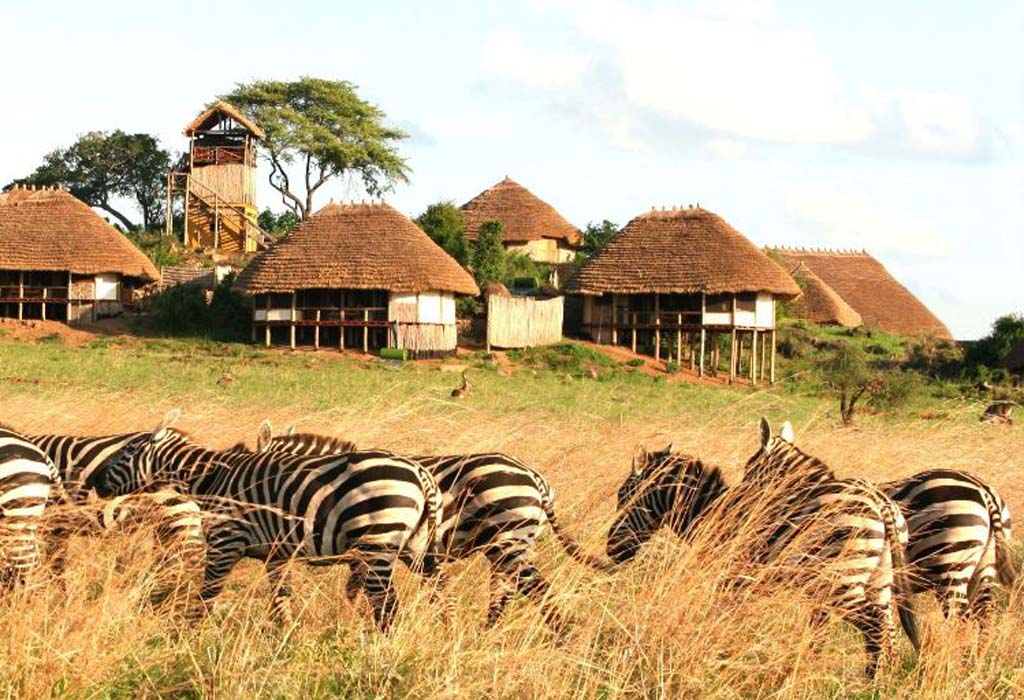
Accommodation is one of the biggest planning differences between a well-known safari circuit and a remote northeastern adventure. Kidepo has a range of lodging styles, although the number of places is much smaller than in western Uganda. Depending on your budget and availability, you may consider established safari lodges, tented accommodation and simpler park-area options.
We recommend choosing accommodation based on its access to your planned game-drive area, comfort level and the practical time needed to reach the park gates or ranger meeting points. For example, a lodge with beautiful views can be wonderful, but driving distance should still fit the activities you want to do. Read our Kidepo destination resources for further guidance.
Pian Upe offers fewer mainstream accommodation choices. Basic guest facilities, camping and selected stays outside the reserve may be considered, subject to current availability and management rules. It is best to confirm the exact arrangements before travel rather than assume that every type of lodge is available close to a desired viewing area.
10. Wildlife and cultural experiences beyond cheetahs
Other experiences can enrich a northern circuit: explore Sipi Falls experiences, the Murchison Falls National Park guide, the Ziwa Rhino Sanctuary guide, other experiences at Ziwa, and our Uganda safari bucket list.
A safari to northeastern Uganda becomes much richer when you appreciate everything around you. In Kidepo, broad valleys, herds of buffalo and giraffes against distant mountains are memorable enough to justify the journey. Lions and leopards may also be present, while bird enthusiasts can spend hours watching raptors, grassland birds and other species.
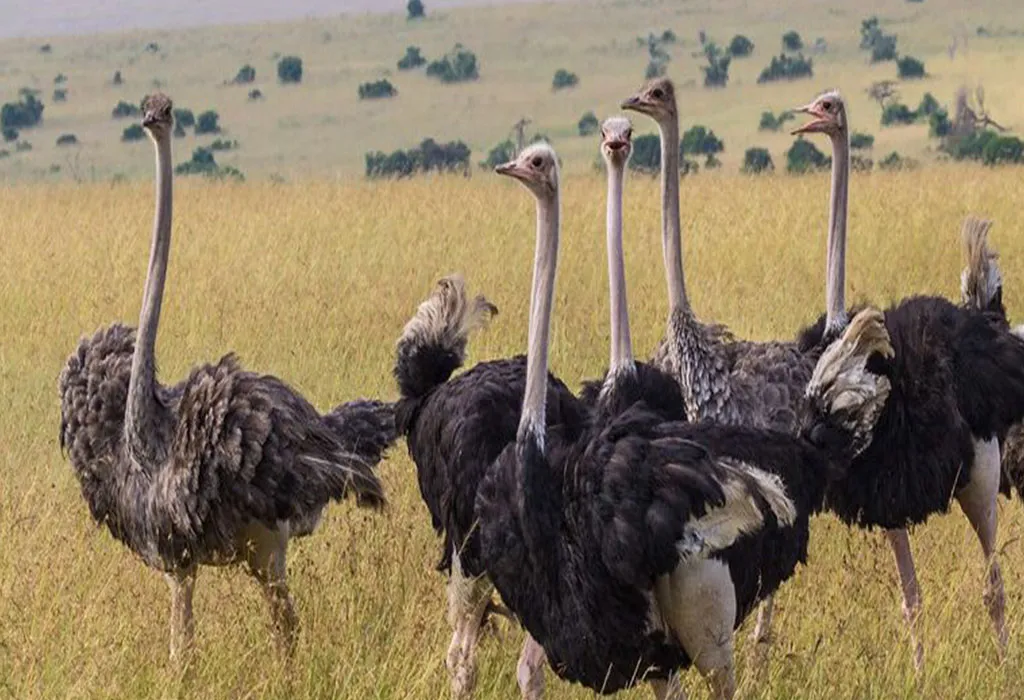
Pian Upe’s open country supports a distinct community of savannah animals. Its grasslands and wetlands are also important to conservation, particularly as monitoring and habitat recovery work continues. Seeing a rare antelope or an ostrich moving across the plain can be just as exciting as searching for a predator.
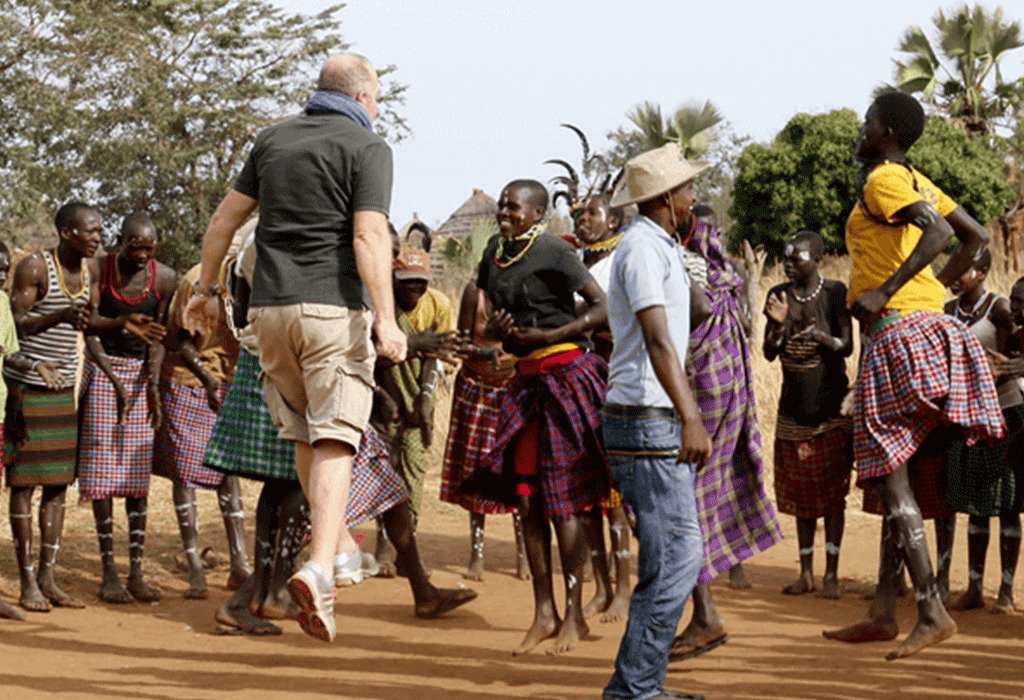
The Karamoja region has a rich human story. With respectful arrangements and local hosts, visitors can learn about pastoral traditions, crafts and daily life. Cultural experiences should be organised with consent, appropriate community benefits and sensitivity to local customs. Our Karamoja travel guide introduces this aspect of the journey.
11. Why Uganda’s cheetahs need conservation
Cheetahs require more than a protected patch of grass. They need sufficient prey, space to move, secure breeding habitat and ways to travel between suitable landscapes. In regions shared by wildlife and pastoral communities, conflict can arise when predators are suspected of taking livestock. Habitat changes, poaching and the loss of movement corridors can add further pressure.
Uganda’s remaining cheetahs are especially important because their numbers are small and knowledge of their distribution remains incomplete. Scientists and conservation groups are therefore working to improve sightings records, camera-trap monitoring, community awareness and landscape protection. These activities help reveal which areas are being used and where practical conservation interventions may be needed.
As a visitor, you can contribute by travelling with responsible operators, respecting park rules, paying official conservation fees, supporting community-led experiences and sharing credible wildlife observations through the appropriate ranger or research channels. Never disclose a sensitive denning location publicly or encourage guides to approach cubs closely.
12. Practical tips before planning your cheetah safari
Carry binoculars, a camera with a suitable zoom lens, sun protection, a light layer for early starts and enough personal essentials for longer road transfers. Neutral clothing is practical for game drives, while sturdy shoes are helpful for approved walks and cultural visits. Bring a reusable water bottle and follow your guide’s advice on hydration and heat.
Discuss your priorities honestly with your safari consultant. If seeing a cheetah is your single non-negotiable goal, Uganda’s rare and unpredictable sightings may not be the most suitable choice. If you want a beautiful, uncrowded safari where a cheetah sighting would be an exceptional bonus, northeastern Uganda can be deeply rewarding.
Before booking, ask about the number of full game drives, your vehicle type, park or reserve entry arrangements, accommodation location and the latest road conditions. Also allow enough time to travel comfortably between destinations rather than counting an entire transfer day as wildlife-viewing time.
Frequently asked questions about Where Are Cheetahs Found in Uganda
Where are cheetahs mainly found in Uganda?
Uganda’s two principal documented cheetah landscapes are Kidepo Valley National Park and Pian Upe Wildlife Reserve in the northeast. They are rare in both areas.
Can tourists see cheetahs in Kidepo Valley National Park?
Yes, sightings have been documented, particularly in Narus Valley. However, cheetahs are uncommon and sightings are never guaranteed during a game drive.
Are there cheetahs in Pian Upe Wildlife Reserve?
Yes. Conservation monitoring confirms cheetah presence in Pian Upe, including identified individual animals. Seeing one on a short tourist visit remains difficult.
Are there cheetahs in Murchison Falls National Park?
Occasional reports have been mentioned historically, especially from the northern part of the park, but Murchison Falls should not be marketed as a dependable cheetah-viewing destination.
Can I see cheetahs in Queen Elizabeth National Park?
Queen Elizabeth is famous for other wildlife, including lions in the Ishasha area, but it is not an established cheetah-viewing destination. For cheetahs, focus on northeastern Uganda.
What is the best month for cheetah viewing in Uganda?
No single month guarantees sightings. Drier periods, often including December to February in Kidepo, can offer favourable general wildlife-viewing conditions and easier access.
How many cheetahs remain in Uganda?
A definitive current national number is not established by a reliable, comprehensive census. Local monitoring provides useful information, but older estimates and figures from different study areas should not be combined casually.
How many days should I spend in Kidepo?
Two or three nights can provide worthwhile game-drive time, while longer stays allow a more relaxed pace. Travel from Entebbe or Kampala may require extra days depending on your route.
Can I combine Kidepo with Pian Upe and Sipi Falls?
Yes. This is an appealing northeastern Uganda route, especially for travellers who enjoy open landscapes, local cultures and less crowded wildlife destinations.
Is a cheetah safari in Uganda suitable for families?
Yes, with realistic expectations and suitable driving distances. Families should plan comfortable accommodation, rest stops and age-appropriate activities. Long transfers can be tiring for younger children.
Plan a meaningful safari to Uganda’s cheetah country
Explore Kidepo Valley, Pian Upe and the wider Karamoja landscape with Safari Vacations & Travel Services. Tell us your dates, number of travellers and preferred accommodation standard. We will design a realistic safari that celebrates the entire region, with rare cheetah sightings as a welcome possibility—not a promise.
Safari Vacations & Travel Services Ltd • Uganda & Rwanda tailor-made safaris