
Small Group Uganda Safaris – The Complete Guide to Exploring Uganda in a Small Group

Small Group Uganda Safaris offer a more personal way to explore Uganda’s wildlife, national parks and beautiful landscapes.
Small Group Uganda Safaris offer travellers an exciting way to discover Uganda while enjoying the personal attention, flexibility and relaxed atmosphere that can be difficult to achieve on a large organised tour. Instead of travelling in a large bus with dozens of visitors, a small group safari normally brings together a limited number of travellers who share a professional safari vehicle and explore Uganda with an experienced local safari guide.
This style of travel is particularly suitable for couples, friends, solo travellers, families and small private groups who want to experience Uganda’s wildlife, primates, landscapes and cultures without feeling part of a crowded tour. Safari Vacations and Travel Services Ltd can organise Small Group Uganda Safaris around different travel interests, budgets and available days, making it possible to combine several of Uganda’s outstanding national parks within one carefully planned journey. Travellers visiting the country for the first time can also read our guide on planning a Uganda national park safari before deciding which destinations should be included.
What Are Small Group Uganda Safaris?
Small Group Uganda Safaris are organised Uganda tours designed around a relatively small number of travellers rather than large coach-style groups. The smaller setting creates a more intimate safari experience because travellers can communicate easily with their guide, ask questions, stop for photographs and spend more time observing interesting wildlife without coordinating a very large group. A typical journey can combine mountain gorilla trekking, chimpanzee trekking, savannah game drives, boat cruises, nature walks, birdwatching, cultural encounters and scenic road transfers. Travellers interested in combining primates and classic African wildlife can look at our Uganda gorilla trekking and wildlife safari for an example of how several experiences can fit into one route.
The exact size of a small safari group can depend on the safari vehicle, accommodation arrangements and travel style. What matters most is keeping the group manageable enough for comfortable transport and personalised guiding. Small Group Uganda Safaris work especially well when travellers share similar interests because the safari can maintain a natural rhythm rather than constantly adjusting to the needs of a very large travelling party. This is particularly valuable during game viewing in Uganda, where patience, good positioning and the ability to spend extra time at an interesting wildlife sighting can greatly improve the overall safari experience.
Why Uganda Is Ideal for Small Group Safari Travel

Small safari groups enjoy excellent wildlife viewing and easier photography during Uganda game drives.
Uganda is exceptionally well suited to small group safari travel because its major attractions are spread across forests, savannah parks, wetlands, lakes, mountain regions and community areas. A well-planned route can take travellers from Entebbe through western Uganda to several national parks while combining different ecosystems and activities. Visitors may begin with rhino tracking, continue to the Nile and wildlife areas of Murchison Falls, travel south toward Kibale for chimpanzees, explore Queen Elizabeth National Park, trek mountain gorillas in Bwindi and complete the journey with the landscapes of Lake Bunyonyi or Lake Mburo. Visitors who enjoy exploring beyond the vehicle can include walking safaris in Uganda as part of a more varied Small Group Uganda Safari itinerary.
Another advantage is the diversity of activities available. Gorilla trekking may be the headline experience for many visitors, but Uganda provides much more than one major attraction. Chimpanzee trekking, boat safaris, birdwatching, cultural visits, hiking, rhino tracking, community walks and traditional game drives can all be incorporated into Small Group Uganda Safaris. Travellers wanting to understand the wider range of experiences can explore our guide covering things to do apart from gorilla trekking. Those who want to extend a primate-focused trip into another East African country can also read about combining Uganda gorilla trekking with Tanzania.
What Can You Experience on a Small Group Uganda Safari?
The strength of Small Group Uganda Safaris is their ability to combine several completely different experiences within a single holiday. One morning can be spent tracking chimpanzees through tropical forest, another may involve watching elephants from a safari vehicle, while another day can take travellers deep into Bwindi Impenetrable Forest in search of mountain gorillas. Scenic drives between destinations reveal tea plantations, crater lakes, rolling highlands, rural communities and extensive farmland, meaning that the journey between parks becomes part of the experience rather than simply a transfer. Travellers interested in responsible and nature-based journeys can also explore our detailed guide to Uganda eco tourism experiences.
| Safari Experience | Popular Uganda Area | Why It Suits Small Groups | Ideal Traveller |
|---|---|---|---|
| Gorilla Trekking | Bwindi & Mgahinga | Personal, immersive forest experience with easy coordination between travellers. | Wildlife and primate enthusiasts |
| Chimpanzee Trekking | Kibale Forest | Allows travellers to enjoy an active forest experience together. | Primate lovers and photographers |
| Game Drives | Queen Elizabeth, Murchison Falls, Lake Mburo & Kidepo | Fewer travellers can enjoy better viewing positions and easier photography. | First-time safari travellers |
| Boat Safaris | Kazinga Channel & River Nile | Relaxed wildlife viewing with excellent photographic opportunities. | Couples, families and photographers |
| Nature & Community Experiences | Across Uganda | Smaller groups allow more meaningful interaction and easier interpretation. | Cultural and responsible travellers |
Longer Small Group Uganda Safaris make it possible to explore an even wider selection of parks without rushing from one destination to another. Travellers who have enough time can use our 19 Days Best of Uganda Safari as inspiration for a more comprehensive route. Northern Uganda can also be incorporated for travellers seeking remote wilderness and less frequently visited landscapes, with our guide to safari destinations in Northern Uganda providing additional ideas.
Small Group Gorilla Trekking in Uganda
Mountain gorilla trekking is one of the strongest reasons travellers choose Small Group Uganda Safaris. Bwindi Impenetrable National Park and Mgahinga Gorilla National Park provide opportunities to enter the mountain forests with trained guides and trackers in search of habituated gorilla families. The experience fits naturally into a small-group itinerary because the forest activity itself is carefully managed and travellers need to coordinate permits, accommodation and the correct trekking location. Visitors researching the experience can learn more about why travellers choose gorilla trekking in Bwindi and what to expect during a gorilla trekking day in Uganda.
Gorilla trekking can also be combined with classic wildlife viewing to create a more complete Uganda journey. For travellers who want to see primates as well as iconic African wildlife, our guide to gorilla trekking and Big Five safari experiences explains how these attractions can complement each other. A Small Group Uganda Safari can therefore appeal equally to travellers primarily interested in gorillas and those seeking a broader combination of forests, savannah wildlife and scenic landscapes.
Who Should Choose Small Group Uganda Safaris?
Small Group Uganda Safaris are suitable for travellers who appreciate companionship but still want personal space and flexibility. Solo travellers may enjoy meeting other visitors with similar interests, while couples can share safari costs without joining a large tour. Friends travelling together can reserve a vehicle for their own small party, and families can request routes designed around their preferred pace and accommodation requirements. Photographers often benefit from smaller groups because there is less competition for viewing positions and it is easier to communicate with the driver-guide when a particular sighting deserves extra time.
Small-group travel can also offer a practical balance between a completely private safari and a larger scheduled tour. Sharing selected safari expenses may make longer journeys more achievable while still maintaining a comfortable travel environment. The most suitable option depends on the number of travellers, destinations, accommodation level, travel dates and activities included. Visitors looking for a shorter combination of gorillas, chimpanzees and wildlife can examine our 7 Days Uganda Gorillas and Wildlife Safari as one example of how several major experiences can be connected.
Planning Small Group Uganda Safaris With Safari Vacations and Travel Services Ltd
Planning successful Small Group Uganda Safaris requires more than choosing several national parks on a map. The route should consider driving distances, available safari days, gorilla and chimpanzee activities, accommodation location, traveller interests and the natural flow between destinations.
Safari Vacations and Travel Services Ltd can help travellers develop a journey that balances major wildlife experiences with enough time to enjoy each destination. Instead of rushing through Uganda simply to include as many parks as possible, a carefully designed small group safari gives travellers time to appreciate the landscapes, wildlife encounters and local experiences that make Uganda such a rewarding African safari destination.
Why Choose Small Group Uganda Safaris Instead of Large Group Tours?
Choosing between Small Group Uganda Safaris and large organised group tours can significantly influence the quality of your Uganda holiday. While both travel styles can introduce visitors to Uganda’s national parks, wildlife and primates, a smaller group generally creates a more personal safari atmosphere. Travellers spend many hours together in safari vehicles, at lodges, on game drives and during road transfers, so travelling with fewer people can make the entire journey feel more relaxed and manageable.
Small Group Uganda Safaris are particularly attractive to travellers who want professional organisation without losing the flexibility and personal attention normally associated with a private safari. Visitors researching their first journey can also read our guide on planning your first Uganda national park safari before deciding which travel style suits them best.
A smaller safari group also creates a better environment for interaction with the driver-guide. Instead of competing with many passengers for explanations, travellers can ask questions about wildlife, landscapes, local communities and Uganda’s conservation areas throughout the journey. This becomes particularly valuable during game drives in Uganda, where an experienced guide may notice tracks, animal behaviour, bird calls or distant movement that would otherwise be easy to miss. Small Group Uganda Safaris therefore offer much more than simply travelling in a smaller vehicle; they can create a stronger connection between travellers, guides and the places being explored.
More Personal Attention From Your Uganda Safari Guide
One of the strongest advantages of Small Group Uganda Safaris is the level of personal attention available from the safari guide. A guide is not simply responsible for driving between destinations. A knowledgeable guide helps interpret wildlife behaviour, explains landscapes, assists with lodge arrangements, coordinates safari activities and helps travellers understand how different destinations fit into the wider Uganda safari experience. When the group is small, communication becomes easier because travellers can discuss their interests directly with the guide and ask questions as they arise.
This becomes especially important during wildlife viewing. On a safari drive, one traveller may be interested in lions while another enjoys birds, elephants or photography. With fewer guests inside the vehicle, the guide can often balance these interests more effectively. Visitors who want to understand how guided wildlife viewing operates can read about planning a guided game drive in Uganda. Small Group Uganda Safaris make these guided experiences more conversational and can help travellers understand what they are seeing rather than simply driving from one wildlife sighting to another.
Better Wildlife Viewing and Photography Opportunities

Smaller safari groups make it easier for travellers to enjoy clear wildlife views and photograph animals from comfortable positions.
Wildlife viewing is another major reason to choose Small Group Uganda Safaris. Safari vehicles are most enjoyable when travellers have enough room to look through windows, use cameras and change viewing positions without disturbing other passengers. When an elephant herd, lion, leopard, giraffe or other exciting animal appears, a smaller travelling party can usually settle into viewing positions more comfortably than a heavily occupied group vehicle.
Photography can especially benefit from this arrangement. Wildlife photographers often need space for cameras and lenses, while casual travellers may simply want an unobstructed view for photographs and videos. Fewer people inside a safari vehicle can make it easier to position equipment and communicate with the guide about the best viewing angle. Travellers who are unfamiliar with African game drives can explore our guide explaining what to expect on a Uganda game drive. These viewing advantages can become particularly noticeable when Small Group Uganda Safaris include several days of wildlife observation.
Small Group Uganda Safaris vs Large Group Tours
The best safari style depends on the traveller, budget and desired level of independence. Large group tours can suit visitors who prioritise a fixed schedule and travelling with many people, while Small Group Uganda Safaris tend to appeal to travellers who value comfortable vehicle space, easier communication and a more intimate atmosphere. The comparison below highlights some of the practical differences travellers may consider when planning their Uganda safari.
| Safari Feature | Small Group Uganda Safaris | Large Group Tours |
|---|---|---|
| Guide Interaction | More direct communication and easier opportunities to ask questions. | Guide attention is shared between a larger number of travellers. |
| Safari Vehicle Experience | More comfortable access to viewing positions and photography opportunities. | More travellers may need to share the available viewing space. |
| Safari Pace | Easier coordination between travellers with similar interests. | Schedules may need to accommodate many individual preferences. |
| Wildlife Photography | Generally easier to position cameras and obtain clear viewing angles. | Photographers may have less room depending on group and vehicle size. |
| Social Experience | More intimate atmosphere where travellers can easily get to know one another. | Offers a larger social environment with more participants. |
| Lodge Coordination | Check-ins, meals and departures can be easier to coordinate. | Managing a larger number of rooms and travellers can require more coordination. |
| Overall Atmosphere | Personal, relaxed and suitable for travellers seeking a closer safari experience. | More structured and suitable for travellers who enjoy travelling with many people. |
More Flexibility During Game Drives and Safari Activities
Wild animals do not follow a tourism timetable, which is why flexibility is valuable on safari. A lion may suddenly appear beside a track, elephants may approach a water source or a leopard may remain visible for only a short period. Small Group Uganda Safaris can make communication easier when travellers want to spend additional time observing an interesting sighting. Visitors can gain a deeper understanding of the country’s wildlife opportunities through our detailed information about wildlife viewing and boat safaris.
This flexibility also extends beyond game drives. A small travelling party is easier to coordinate when checking into a lodge, stopping for photographs, enjoying a scenic viewpoint or preparing for an activity. It does not mean that national park schedules, permits or booked activities can simply be changed at any moment, but fewer travellers generally make day-to-day safari organisation smoother. Small Group Uganda Safaris therefore provide a useful balance between the structure of a professionally organised holiday and the personal feeling many independent travellers want.
Excellent for Gorilla and Chimpanzee Safari Experiences
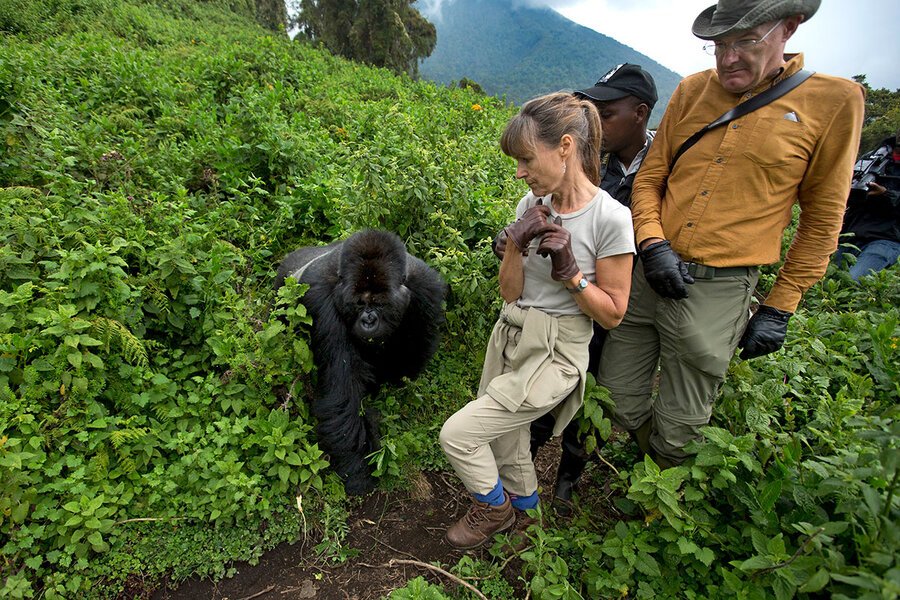
A small trekking group enjoys a close mountain gorilla encounter in lush forest vegetation, highlighting the personal and immersive nature of guided gorilla trekking.
Uganda’s primate experiences fit naturally into Small Group Uganda Safaris. Mountain gorilla trekking takes travellers into forest environments where the experience is closely regulated, while chimpanzee trekking introduces visitors to another very different primate encounter. Combining the two creates a particularly rewarding itinerary because travellers experience different forests, wildlife behaviour and landscapes during one journey. Our comprehensive guide to a gorilla and chimpanzee safari in Uganda provides additional planning information for travellers who want both primate experiences.
The intimate nature of gorilla trekking also demonstrates why smaller-group travel appeals to many visitors. Gorilla encounters are deliberately managed rather than designed as mass-tourism experiences. Travellers interested in understanding the small-group nature of gorilla trekking can also read Anthill Safaris’ explanation of gorilla trekking in Uganda. Small Group Uganda Safaris can build around these regulated forest activities while adding wildlife drives, boat cruises and scenic journeys before or after the trek.
A Strong Choice for Solo Travellers, Couples and Friends
Small Group Uganda Safaris can work particularly well for solo travellers who would like companionship without joining a very large tour. Sharing a safari journey with a limited number of other travellers creates opportunities to meet people while retaining a more personal atmosphere. Couples can enjoy the social element of group travel while still spending much of their lodge time privately, and friends travelling together can use a small-group format to enjoy an organised safari designed around shared interests.
The approach can also help travellers manage some of the transport expenses associated with travelling across several national parks because vehicle and guide costs may be shared among participants. Budget-conscious travellers interested mainly in gorilla trekking may find Anthill Safaris’ information about budget gorilla trekking in Uganda useful when comparing different travel styles. The objective should not simply be to choose the cheapest tour, but to find the group size, accommodation level, route and activities that create good value without reducing the quality of the safari experience.
More Meaningful Shared Safari Experiences
Small Group Uganda Safaris also create opportunities for travellers to share memorable moments with people they gradually get to know during the journey. A group that has spent several days together may celebrate a first gorilla sighting, watch elephants beside a river, photograph a spectacular sunset or exchange stories during dinner at the lodge. These shared experiences can become an important part of the safari itself.
A varied itinerary helps keep the experience interesting because travellers are not limited to only one type of wildlife activity. For example, an 8-Day Primates and Wildlife Safari can connect forest primates with Uganda’s savannah wildlife, giving a small group several completely different experiences to share. Longer Small Group Uganda Safaris can continue through additional parks and landscapes depending on the travellers’ available time.
Easier Access to Different Uganda Safari Experiences
One of Uganda’s greatest advantages is the variety of safari activities available within one country. Travellers can combine traditional game drives with gorilla trekking, chimpanzee tracking, boat cruises, nature experiences and scenic road journeys. Small groups can transition comfortably between these activities because the same journey can be organised around several different interests. Travellers wanting an example of a combined route can explore the 7-Day Uganda Gorilla Safari, which provides inspiration for combining major Uganda attractions within a manageable safari duration.
Boat safaris can provide a particularly relaxing contrast to forest trekking and road-based game viewing. Uganda has several parks where waterways form an important part of the wildlife experience. Travellers interested in these encounters can read about the best Uganda national parks for hippo boat cruises. A carefully planned Small Group Uganda Safari can therefore move between active trekking days and slower wildlife experiences, creating a more balanced itinerary.
Small Group Safaris Can Make Complex Uganda Itineraries Easier
Uganda safari routes often involve several national parks separated by significant driving distances. Coordinating accommodation, park activities, permits and road transfers for a very large group can require considerable logistical planning. Small Group Uganda Safaris are generally easier to coordinate because fewer travellers need to move between lodges and activity starting points. This can be particularly helpful on itineraries that combine Bwindi, Kibale and the savannah parks.
Travellers considering a safari that combines several ecosystems can also explore our Uganda wildlife safari and Bwindi gorilla trekking guide. Those arriving from long-distance international markets may also find Anthill Safaris’ detailed example of planning an international journey to Uganda for a gorilla safari useful when considering how transport, accommodation and trekking arrangements fit together.
Are Small Group Uganda Safaris Worth Choosing?
For travellers who want organised safari logistics without the atmosphere of a large coach tour, Small Group Uganda Safaris can provide an excellent middle ground. They combine professional guiding and pre-arranged transport with a smaller travelling party, more comfortable interaction and easier wildlife viewing. The experience can work for first-time African safari travellers as well as returning visitors who want a more focused Uganda journey.
The best option ultimately depends on what travellers expect from their holiday. Visitors who prioritise direct guide interaction, wildlife photography, comfortable safari vehicle space, primate trekking and a relaxed social atmosphere are likely to appreciate the advantages of a smaller travelling party. Safari Vacations and Travel Services Ltd can design Small Group Uganda Safaris around the number of travellers, available days, accommodation preferences and desired activities rather than forcing every group into exactly the same itinerary.
Best Destinations for Small Group Uganda Safaris
Choosing the right destinations is one of the most important parts of planning Small Group Uganda Safaris. Uganda offers an unusually diverse combination of tropical forests, open savannahs, lakes, rivers, wetlands and mountain landscapes, allowing a small group to experience several completely different environments during one journey.
The best route depends on the number of safari days, preferred activities and the type of wildlife travellers hope to see. A well-designed Uganda small group safari can combine mountain gorillas in Bwindi Impenetrable National Park, chimpanzees in Kibale, classic wildlife in Queen Elizabeth or Murchison Falls and relaxing scenery around Lake Bunyonyi without making the itinerary feel unnecessarily rushed.
Small groups are particularly suited to multi-destination Uganda safaris because moving fewer travellers between lodges, national parks and activity starting points makes daily coordination easier. Safari Vacations and Travel Services Ltd can arrange routes that concentrate on southwestern Uganda or extend north toward Murchison Falls and Kidepo Valley for travellers with more time. Visitors still deciding which areas deserve priority can also explore Anthill Safaris’ guide to the best safari destinations in Uganda for another overview of the country’s major safari regions.
Bwindi Impenetrable National Park for Small Group Gorilla Safaris
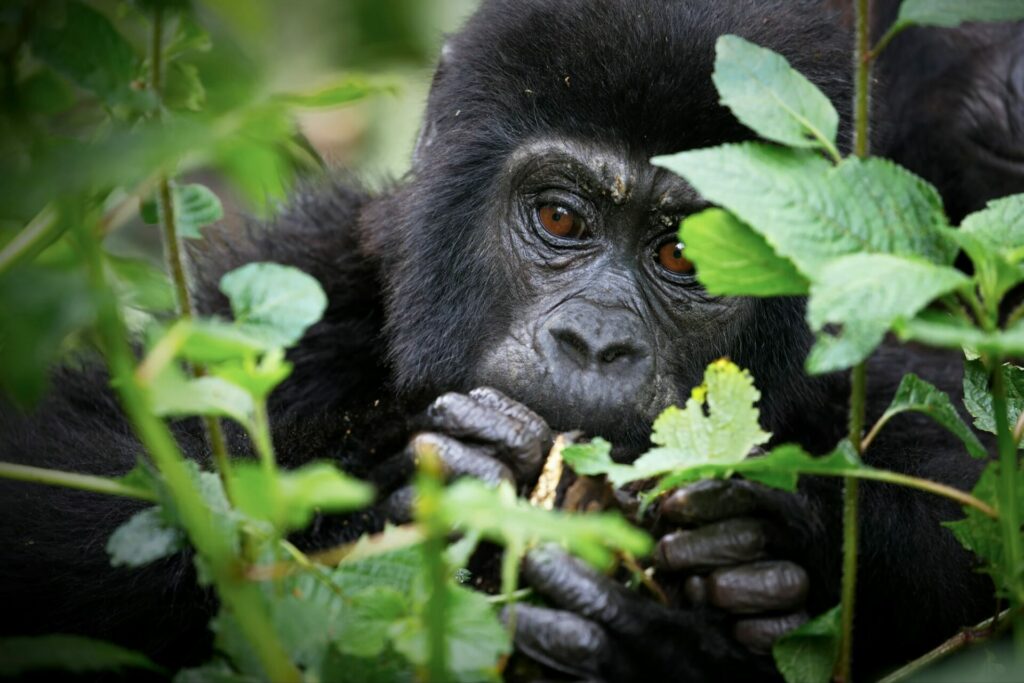
Bwindi Impenetrable National Park is a major highlight of Small Group Uganda Safaris, offering unforgettable mountain gorilla trekking experiences.
Bwindi Impenetrable National Park is one of the most important destinations for Small Group Uganda Safaris because it provides the opportunity to search for mountain gorillas in their natural forest habitat. Located in southwestern Uganda, Bwindi works particularly well within a small group itinerary because travellers can combine the forest experience with Queen Elizabeth National Park, Lake Bunyonyi, Mgahinga Gorilla National Park or journeys beginning and ending in Kigali. Gorilla trekking is normally the central activity, but the wider Bwindi region can also provide birding, forest walks, community experiences and scenic highland views.
A small travelling party makes the logistical side of a Bwindi safari easier because accommodation, trekking sectors, permits and vehicle movements must be coordinated carefully. Travellers may stay around Buhoma, Ruhija, Rushaga or Nkuringo depending on the trekking arrangements. Small Group Uganda Safaris that include Bwindi should therefore be organised around the confirmed trekking location rather than choosing accommodation purely because it appears close on a general map.
Queen Elizabeth National Park for Wildlife and Boat Safaris
Queen Elizabeth National Park is an excellent destination for travellers who want Small Group Uganda Safaris combining classic wildlife viewing with beautiful scenery and water-based activities. Its location in western Uganda makes it particularly convenient when travelling between Kibale National Park and Bwindi. Safari days can include game drives through savannah areas, wildlife observation around the Kazinga Channel and scenic drives through the wider Queen Elizabeth landscape.
The park works especially well for small groups because several different activities can be experienced without repeatedly changing accommodation. A small group can enjoy an early wildlife drive, relax at the lodge and later continue toward the Kazinga Channel for a boat experience. Travellers who want a deeper overview of the destination can also read Anthill Safaris’ Queen Elizabeth safari guide. Combining Queen Elizabeth with Bwindi is particularly attractive because it brings savannah wildlife and mountain gorillas together within one Small Group Uganda Safari.
Kibale National Park for Small Group Chimpanzee Trekking
Travellers interested in primates should consider Kibale National Park. The forest is widely associated with chimpanzee trekking and fits naturally into western Uganda itineraries that later continue toward Queen Elizabeth National Park and Bwindi. For small groups, Kibale provides a useful change of environment after road-based wildlife viewing because travellers leave the safari vehicle and enter a tropical forest on foot with specialist guides.
Kibale can also be paired with nearby nature and community experiences, allowing Small Group Uganda Safaris to spend more than a single activity in the area. This helps create a balanced itinerary rather than treating chimpanzee trekking as a quick stop between other national parks. Travellers comparing Uganda’s different chimpanzee areas can read more about the best chimpanzee trekking in Uganda.
Murchison Falls National Park for Wildlife and Nile Experiences

A traveler captures the dramatic power of Murchison Falls, one of the most memorable highlights of a small group safari in Uganda.
Murchison Falls National Park is a strong choice for Small Group Uganda Safaris that want to combine savannah wildlife with the River Nile and dramatic landscapes. The park is especially useful on longer Uganda itineraries because travellers can enjoy game drives, river-based wildlife viewing and the scenery associated with Murchison Falls within the same safari region.
Small groups benefit from having enough time to explore the park rather than simply entering for one rushed drive. Wildlife viewing from both the vehicle and the water gives travellers different perspectives, while the northern route also combines naturally with Ziwa Rhino Sanctuary. Murchison Falls can therefore form the northern wildlife section of a longer Small Group Uganda Safari before travellers continue toward Kibale, Queen Elizabeth and Bwindi.
Ziwa Rhino Sanctuary for Rhino Tracking

Rhino tracking at Ziwa adds another distinctive wildlife experience to Small Group Uganda Safaris travelling toward Murchison Falls.
Ziwa Rhino Sanctuary can be incorporated into Small Group Uganda Safaris travelling between central Uganda and Murchison Falls. The sanctuary provides a very different wildlife experience because visitors can participate in guided rhino tracking rather than viewing all wildlife exclusively from a safari vehicle. Travellers planning this experience can explore the Ziwa Rhino Sanctuary tour for an example of how the destination can be incorporated into a Uganda journey.
For a small group, Ziwa can work well as an en-route safari activity because it adds another important wildlife experience without requiring a major diversion from a Murchison Falls itinerary. It also brings variety to the safari by combining walking, guided interpretation and wildlife observation at ground level.
Lake Mburo National Park for Short and Relaxed Small Group Safaris
Lake Mburo National Park can be an excellent addition to Small Group Uganda Safaris travelling through western Uganda. Its location makes it useful as a first safari stop after leaving Kampala or Entebbe, or as a final wildlife destination when returning from Bwindi and the southwestern highlands.
The park can provide game drives, nature-based activities and opportunities to experience Uganda’s savannah environment without the longer distances required to reach some of the country’s larger wildlife areas. Small groups that enjoy active safari experiences may also consider horseback safaris in Lake Mburo, depending on the interests of the travellers and the final safari arrangements.
Lake Bunyonyi for Scenic Relaxation After Gorilla Trekking

Lake Bunyonyi offers beautiful scenery and a relaxing change of pace during Small Group Uganda Safaris through southwestern Uganda.
Not every day of Small Group Uganda Safaris needs to involve intensive wildlife activities. Lake Bunyonyi provides a scenic setting where travellers can slow the pace after gorilla trekking in southwestern Uganda. The lake is surrounded by steep cultivated hills and numerous islands, making it suitable for scenic views, relaxed lodge stays and gentle activities between more demanding safari days.
Its proximity to the wider Bwindi region makes it particularly useful after a gorilla trek. Travellers can learn more about how to explore Lake Bunyonyi after gorilla trekking. Adding Lake Bunyonyi can improve the rhythm of a small group itinerary because travellers have an opportunity to rest, enjoy the landscape and share the experience before continuing to another park or beginning their journey home.
Mgahinga Gorilla National Park for Gorillas and Mountain Landscapes
Mgahinga Gorilla National Park provides another interesting option for Small Group Uganda Safaris in the far southwest of the country. The park forms part of the Virunga mountain landscape and can appeal to travellers interested in mountain gorillas, golden monkeys, hiking and dramatic volcanic scenery. Visitors considering this alternative to Bwindi can read our detailed guide to gorilla trekking in Mgahinga.
Mgahinga is particularly attractive for small private groups or repeat visitors who want to explore beyond Uganda’s most frequently requested safari routes. It can also fit well into journeys involving Kisoro, Lake Bunyonyi, Bwindi and Rwanda, depending on border arrangements and the wider safari plan.
Kidepo Valley National Park for Remote Small Group Wildlife Safaris
Travellers with more time can extend Small Group Uganda Safaris to Kidepo Valley National Park in northeastern Uganda. Kidepo offers a very different atmosphere from the busier western safari circuit, with broad landscapes and a strong sense of wilderness. Because the park is remote, it is usually better suited to longer itineraries or travellers deliberately seeking a less conventional Uganda safari route.
Including Kidepo requires thoughtful planning because the journey affects the number of days required for the entire safari. Small groups with sufficient time can combine it with Murchison Falls and other northern experiences before continuing toward western Uganda or returning to Entebbe. This makes Kidepo especially attractive for repeat African safari travellers who want Small Group Uganda Safaris that extend beyond the standard gorilla and western wildlife circuit.
Which Uganda Safari Destinations Should Your Small Group Choose?
The best destinations depend on the group’s main safari interests. Travellers primarily interested in primates may concentrate on Bwindi, Mgahinga and Kibale, while wildlife-focused groups may give more time to Queen Elizabeth, Murchison Falls, Lake Mburo and Kidepo. Groups seeking a balanced first Uganda safari can combine forests, savannah wildlife and one scenic relaxation destination. Boat-based wildlife viewing can also be included through destinations such as Queen Elizabeth and Murchison Falls; travellers can explore more about wildlife viewing and boat safaris.
| Destination | Main Experience | Best For | Good Safari Combination |
|---|---|---|---|
| Bwindi Impenetrable National Park | Mountain gorilla trekking | Primate lovers and first-time Uganda visitors | Queen Elizabeth and Lake Bunyonyi |
| Queen Elizabeth National Park | Game drives and boat safaris | Wildlife viewing and photography | Kibale and Bwindi |
| Kibale National Park | Chimpanzee trekking | Primate enthusiasts | Queen Elizabeth and Bwindi |
| Murchison Falls National Park | Game drives, Nile wildlife and landscapes | Classic Uganda wildlife safaris | Ziwa Rhino Sanctuary and Kibale |
| Lake Mburo National Park | Game viewing and active safari experiences | Short safaris and relaxed journeys | Bwindi and Lake Bunyonyi |
| Ziwa Rhino Sanctuary | Guided rhino tracking | Wildlife-focused small groups | Murchison Falls |
| Lake Bunyonyi | Scenery and relaxation | Post-gorilla relaxation | Bwindi and Mgahinga |
| Mgahinga Gorilla National Park | Gorillas, primates and mountain scenery | Adventure and primate travellers | Bwindi and Lake Bunyonyi |
| Kidepo Valley National Park | Remote savannah wildlife | Longer and less conventional safaris | Murchison Falls and northern Uganda |
No single route is perfect for every traveller. A short Small Group Uganda Safari may concentrate on two or three destinations, while a longer itinerary can connect northern and western Uganda. The important consideration is allowing enough time in each destination rather than including too many parks simply to create a longer list. Safari Vacations and Travel Services Ltd can match the route to the group’s available days, interests and preferred travel pace so that road transfers and safari activities remain practical and enjoyable.
Small Group Gorilla Trekking Safaris in Uganda
Small Group Gorilla Trekking Safaris in Uganda combine one of Africa’s most remarkable wildlife encounters with the comfort and personal atmosphere of travelling with fewer people. Uganda offers mountain gorilla trekking in Bwindi Impenetrable National Park and Mgahinga Gorilla National Park, both located in the country’s spectacular southwestern region. These forest destinations can form the main highlight of Small Group Uganda Safaris or become part of a longer journey combining primates, wildlife, lakes and savannah national parks. Travellers planning a wider itinerary can explore our Uganda wildlife safari and Bwindi gorilla trekking guide to understand how gorilla trekking can fit naturally into a complete Uganda holiday.
Small group gorilla safaris are particularly attractive because gorilla trekking itself is a carefully managed forest experience rather than a mass-tourism activity. Travellers report to the appropriate park headquarters, receive a briefing and enter the forest with professional ranger guides and trackers. The exact duration of the walk depends on the location of the gorillas and forest conditions, which means travellers should approach the day with patience and adequate physical preparation. Visitors wondering about scheduling can read whether gorilla trekking takes place every day in Bwindi.
Why Gorilla Trekking Works So Well for Small Groups
Gorilla trekking fits naturally into Small Group Uganda Safaris because the experience is designed around limited visitor numbers and controlled access to habituated gorilla families. Instead of entering the forest with a large tour party, trekkers participate in organised groups managed by park authorities. This creates a quieter and more focused wildlife encounter while helping reduce unnecessary pressure on the gorillas and their habitat.
Travelling with a small safari party can also simplify arrangements before and after the trek. The travellers can stay in the same general area, travel together to the correct briefing point and coordinate their permits and accommodation more easily. Because permits are limited and tied to specific travel arrangements, early planning is important. Our guide explaining how far in advance to book gorilla trekking provides useful information for groups choosing their travel dates. Anthill Safaris also explains how early to book a Uganda gorilla safari when permit availability is an important consideration.
Bwindi Impenetrable National Park for Small Group Gorilla Trekking

Mgahinga Gorilla National Park provides a beautiful alternative for small group gorilla trekking in Uganda’s Virunga mountain region.
Bwindi is the main destination considered by many travellers planning small group gorilla trekking in Uganda. The forest is divided into different trekking areas, including Buhoma, Ruhija, Rushaga and Nkuringo, which means accommodation and transport should be organised around the sector connected to the confirmed trekking arrangements. Travellers should not simply book any lodge labelled as being near Bwindi because travelling between sectors may involve considerable time on mountain roads.
Each area offers a different approach to the forest and surrounding highlands. The best choice depends on permit availability, the wider safari route, accommodation preferences and the group’s physical expectations. Travellers choosing between Uganda’s two gorilla parks can read our detailed comparison of Bwindi and Mgahinga gorilla trekking. This can help a small group decide whether Bwindi’s broader range of trekking locations or Mgahinga’s distinctive Virunga setting better suits the intended safari.
Mgahinga Gorilla National Park for a Different Gorilla Experience
Mgahinga Gorilla National Park provides another compelling option for Small Group Uganda Safaris. Located near Kisoro in the Virunga mountain region, the park combines mountain forest with dramatic volcanic landscapes. It is particularly interesting for travellers who want to combine gorilla trekking with other southwestern Uganda activities, such as golden monkey tracking, Lake Mutanda, Lake Bunyonyi or journeys connecting Uganda and Rwanda.
For a small group seeking a quieter mountain environment, Mgahinga can provide an appealing alternative or addition to Bwindi. However, availability and travel logistics should always be confirmed before building the entire itinerary around a particular trekking destination. Travellers considering this option can read Anthill Safaris’ detailed guide to gorilla trekking in Mgahinga.
Bwindi and Mgahinga Small Group Gorilla Safari Comparison
Both destinations can deliver memorable mountain gorilla encounters, but they suit slightly different safari routes and traveller preferences. The following comparison gives visitors a simple starting point when deciding where to include gorilla trekking within Small Group Uganda Safaris.
| Gorilla Safari Feature | Bwindi Impenetrable National Park | Mgahinga Gorilla National Park |
|---|---|---|
| Safari Setting | Dense ancient rainforest and mountainous southwestern Uganda scenery. | Virunga mountain environment with forested volcanic landscapes. |
| Trekking Areas | Several trekking sectors provide different accommodation and route options. | More concentrated trekking arrangements around the Mgahinga area. |
| Best For | First-time gorilla travellers, varied lodge choices and longer western Uganda routes. | Travellers interested in gorillas, volcanic scenery and other Virunga experiences. |
| Good Safari Combination | Queen Elizabeth National Park, Lake Bunyonyi and Kibale. | Lake Mutanda, Lake Bunyonyi, golden monkeys and Rwanda routes. |
| Small Group Appeal | Excellent for groups seeking several route and accommodation possibilities. | Excellent for groups wanting an intimate mountain and primate-focused experience. |
How Difficult Is Gorilla Trekking for a Small Group?
Gorilla trekking is an active forest experience, and the difficulty can vary considerably from one day to another. Mountain gorillas move through their habitat, so no operator can guarantee that every trek will involve the same walking distance or terrain. Rain can also make forest trails muddy and slippery, while elevation and vegetation can increase the physical challenge. A reasonable level of fitness and suitable trekking clothing can make the experience more comfortable.
Small groups should discuss fitness considerations before choosing their safari arrangements, particularly when travelling with people of different ages or physical abilities. The objective is not to race through the forest but to complete the experience safely and comfortably. Visitors concerned about the physical demands can read our guide explaining Bwindi gorilla trekking difficulty. Understanding the likely conditions before travelling helps the entire group prepare realistically.
Gorilla Permits and Small Group Safari Planning
A valid gorilla trekking permit is an essential part of planning the experience, and availability should normally be checked before travellers make non-flexible arrangements around a particular trekking date. Safari Vacations and Travel Services Ltd can coordinate permit arrangements with the wider itinerary so accommodation and transport match the confirmed trekking area. Permit fees and regulations can change, so travellers should rely on the current Uganda Wildlife Authority tariff and confirmed booking information rather than outdated prices copied from older travel articles.
Families and groups should also understand the participation requirements before making payments. Age, health, documentation and park regulations can affect who is able to trek. Anthill Safaris provides additional information about Uganda gorilla trekking requirements, while Safari Vacations and Travel Services Ltd can advise travellers about the practical arrangements connected to their intended safari.
Gorilla Trekking or Gorilla Habituation Experience?
Travellers planning Small Group Uganda Safaris may also encounter the option of a gorilla habituation experience in addition to standard gorilla trekking. These are different experiences with different permit arrangements, availability and time spent around the gorillas. The habituation experience is particularly interesting to travellers who want a more specialised primate-focused journey rather than a conventional first gorilla trek.
Because availability and arrangements differ, groups should decide which experience they want before finalising accommodation and transport. Our guide comparing gorilla habituation and regular gorilla trekking explains the main differences and can help travellers decide which option better matches their interests and safari budget.
Best Time for Small Group Gorilla Trekking in Uganda

Travelers enjoy a close encounter with mountain gorillas in lush forest, highlighting the intimate experience of small group gorilla trekking in Uganda.
Gorilla trekking can be incorporated into Uganda itineraries at different times of the year, but seasonal conditions can affect forest trails, road conditions and the overall character of the trek. Some travellers prioritise generally drier trekking conditions, while others prefer travelling outside the busiest tourism periods. Permit availability, lodge space and the wider safari route should therefore be considered together rather than choosing dates based on weather alone.
Groups deciding when to travel can use our guide on when to visit Bwindi Impenetrable National Park. Booking earlier can become especially important when several people need permits for the same date, because a small group requires multiple available trekking spaces rather than only one permit.
Starting a Small Group Gorilla Safari From Kigali
Kigali can be a practical arrival point for Small Group Uganda Safaris concentrated on southwestern Uganda. Travellers can arrive in Rwanda, cross into Uganda and continue toward the Bwindi or Kisoro region depending on the confirmed itinerary and border arrangements. This approach can be useful for groups with limited safari time or those combining Uganda and Rwanda in one journey.
Short safari examples include our 2 Days Uganda Gorilla Trekking from Kigali and the more relaxed 3 Day Uganda Gorilla Safari from Kigali. For a broader Small Group Uganda Safari, additional days can be added for Lake Bunyonyi, Queen Elizabeth National Park, Kibale or other western Uganda destinations.
Combining Gorilla Trekking With Uganda Wildlife Safaris
Gorilla trekking does not need to be the only major experience on a Small Group Uganda Safari. One of Uganda’s strengths is the possibility of combining forest primates with savannah wildlife during the same journey. After trekking in Bwindi, a group can continue toward Queen Elizabeth National Park for game drives and boat-based wildlife viewing, while longer routes can include Kibale for chimpanzees, Murchison Falls for Nile experiences and Ziwa for rhino tracking.
Travellers interested in this wider approach can explore our guide to gorilla trekking and Big Five safari experiences in Uganda. This combination is particularly suitable for first-time visitors who want mountain gorillas to be a major highlight without missing Uganda’s other wildlife and landscapes.
Planning Your Small Group Gorilla Trekking Safari
The best Small Group Gorilla Trekking Safaris in Uganda begin with the permit and build the rest of the itinerary around the confirmed trekking location. Safari Vacations and Travel Services Ltd can coordinate transport, accommodation, permits and additional Uganda safari destinations based on the group’s number of travellers, available days, preferred comfort level and arrival point. Planning the route carefully prevents unnecessary long transfers and ensures that travellers stay in the right area before their gorilla trek.
Whether the journey concentrates entirely on Bwindi, includes Mgahinga or combines mountain gorillas with Uganda’s major wildlife parks, small group travel provides a comfortable way to share the experience while maintaining a personal safari atmosphere. The result can be a well-balanced Uganda journey combining forest adventure, wildlife observation, scenic landscapes and meaningful time together as a small travelling group.
Best Small Group Uganda Safari Packages and Itineraries
Choosing the right duration is one of the most important decisions when planning Small Group Uganda Safaris. Uganda offers enough wildlife, primates, landscapes and cultural experiences to fill several weeks, but travellers do not need an extremely long holiday to enjoy a rewarding safari.
A short itinerary may concentrate on one major experience such as mountain gorilla trekking, while a longer Small Group Uganda Safari can combine Bwindi, Kibale, Queen Elizabeth National Park, Murchison Falls, Lake Mburo, Ziwa Rhino Sanctuary and scenic destinations such as Lake Bunyonyi. Travellers with limited time can begin by exploring a 3-Day Gorilla Trekking Uganda safari, which concentrates the journey around the mountain gorilla experience in Bwindi.
The ideal itinerary should not simply include the greatest possible number of national parks. Driving distances, activity schedules, accommodation locations and the group’s preferred pace must all be considered. Small Group Uganda Safaris are usually more enjoyable when travellers have enough time to appreciate each destination rather than spending most of the holiday transferring between parks. Visitors who are uncertain about the right duration can read our guide explaining how many days are needed for a Uganda gorilla safari before deciding how much additional wildlife and sightseeing to include.
3-Day Small Group Uganda Gorilla Safari
A three-day itinerary is one of the shortest practical options for travellers whose main objective is mountain gorilla trekking. It works particularly well for visitors who are already in Uganda or Rwanda and want to add a focused gorilla experience to a wider African holiday. The itinerary normally needs to concentrate on Bwindi or Mgahinga rather than trying to combine several distant national parks.
For Small Group Uganda Safaris of this length, efficient transport and correct lodge selection are extremely important because there is little time available for unnecessary detours. The group should have its gorilla permits, accommodation and trekking sector coordinated before travel. Three days are best regarded as a focused primate safari rather than a complete Uganda wildlife circuit.
5-Day Small Group Gorilla and Wildlife Safari
Five days give a small group considerably more flexibility. Travellers can combine mountain gorilla trekking with another major safari experience instead of spending the entire journey around one forest destination. A common approach is to combine Bwindi with Queen Elizabeth National Park, allowing travellers to experience both rainforest primates and traditional savannah wildlife within one compact itinerary.
This safari length appeals to visitors who want more than a quick gorilla trek but cannot spend a full week or longer travelling through Uganda. An example of this combination can be seen in Anthill Safaris’ 5-Day Uganda Gorilla and Wildlife Safari. The exact itinerary can be adjusted depending on arrival point, available permits and the interests of the group.
7-Day Small Group Uganda Gorilla and Wildlife Safari
Seven days provide an excellent balance for travellers wanting primates and classic wildlife without committing to a long expedition. A carefully planned week can combine Kibale National Park, Queen Elizabeth National Park and Bwindi Impenetrable National Park, giving travellers opportunities for chimpanzee trekking, game drives, boat-based wildlife viewing and mountain gorilla trekking.
Our detailed 7-Day Uganda Gorilla Safari demonstrates how these western Uganda destinations can be connected within a logical route. Travellers arriving through Rwanda can also consider the 7 Days Uganda Gorillas and Wildlife Safari, depending on their international travel arrangements and preferred arrival point.
8-Day Small Group Uganda Primates and Wildlife Safari
An eight-day Small Group Uganda Safari gives travellers additional time to expand the primate component of the journey. The itinerary can combine mountain gorillas in Bwindi, chimpanzees in Kibale, golden monkeys in the Mgahinga region and wildlife viewing in Queen Elizabeth National Park. This makes the duration particularly suitable for travellers whose strongest interest is primates but who still want traditional African game viewing.
Our 8-Day Uganda Primates and Wildlife Safari provides a useful example of how several primate experiences can be incorporated without removing the savannah wildlife component of the trip.
9 to 10-Day Small Group Uganda Safari
Travellers with approximately nine or ten days can begin exploring a broader part of Uganda. In addition to Bwindi, Kibale and Queen Elizabeth National Park, the itinerary can extend north toward Murchison Falls or incorporate Lake Mburo depending on the route. This length provides more opportunity for game drives, boat cruises, primate trekking and nature experiences while reducing the pressure to move immediately after every major activity.
The 10 Days Uganda Safari is a strong example for travellers who want to connect several major parks within one journey. Travellers comparing different itinerary styles may also look at Anthill Safaris’ 9-Day Uganda Safari to understand what can be included when approximately a week and a half is available.
12-Day Best of Uganda Small Group Safari
Twelve days are ideal for travellers who want Small Group Uganda Safaris to feel comprehensive without becoming excessively long. A journey of this length can connect several of Uganda’s strongest attractions while allowing more realistic time for road transfers and activities. Depending on the final route, travellers can experience Lake Mburo, Mgahinga, Bwindi, Queen Elizabeth National Park, Kibale and Murchison Falls.
The 12 Days Best of Uganda Safari provides an example of a longer itinerary combining gorillas, golden monkeys, chimpanzees, savannah wildlife and Nile experiences. Another useful comparison is Anthill Safaris’ 12 Day Best of Uganda Safari, which also illustrates how a longer itinerary can connect Uganda’s different ecosystems.
14-Day Small Group Uganda Safari for a Deeper Experience
Two weeks provide enough time to experience Uganda at a more comfortable pace. Instead of treating every destination as a quick stop, travellers can spend additional time around forests, wildlife parks and scenic locations. This is particularly valuable for international visitors who want their Small Group Uganda Safari to include gorillas, chimpanzees, wildlife, lakes, landscapes and cultural encounters rather than focusing entirely on one type of activity.
The 14 Days Uganda Gorilla Wildlife and Culture Safari combines several elements of the country within one longer journey. Travellers wanting an even stronger primate and wildlife emphasis can also examine the 14 Days Uganda Gorilla Tracking Safari.
Small Group Uganda Safari Duration Comparison
The table below provides a simple guide to choosing the most suitable duration. It should be used as a planning reference rather than a fixed itinerary because Small Group Uganda Safaris can be adjusted according to permit availability, accommodation preferences, arrival airport and the interests of the travellers.
| Safari Duration | Best For | Possible Experiences | Recommended Travel Style |
|---|---|---|---|
| 3 Days | Travellers mainly interested in gorilla trekking | Bwindi or Mgahinga gorilla trekking and scenic transfers | Short, focused primate safari |
| 5 Days | Gorillas plus one major wildlife destination | Gorilla trekking, game drives and boat safari possibilities | Compact gorilla and wildlife safari |
| 7 Days | First-time Uganda safari travellers | Gorillas, chimpanzees, game drives and boat safari | Balanced primate and wildlife safari |
| 8 Days | Travellers strongly interested in primates | Gorillas, chimpanzees, golden monkeys and wildlife | Primate-focused safari with wildlife |
| 9–10 Days | Travellers wanting several national parks | Gorillas, chimps, rhinos, game drives, boat cruises and nature experiences | Extended Uganda wildlife circuit |
| 12 Days | Travellers seeking a comprehensive Uganda safari | Multiple primate destinations, savannah parks, lakes and Nile experiences | Best-of-Uganda small group safari |
| 14 Days | Travellers wanting a slower and deeper Uganda journey | Gorillas, chimpanzees, wildlife, culture, lakes and several national parks | Comprehensive Uganda safari experience |
Should You Choose a Short or Long Small Group Uganda Safari?
A shorter safari is suitable when travellers have one priority, such as gorilla trekking, and limited available time. Longer Small Group Uganda Safaris become more worthwhile when the group wants to combine primates with traditional wildlife viewing because Uganda’s major parks are spread across different parts of the country. Adding days creates more opportunities to experience the destination rather than simply increasing the number of nights.
Travellers should therefore choose a safari duration based on experiences rather than selecting a number of days first and trying to force too many attractions into it. Our guide on how to plan a perfect wildlife safari in Uganda provides additional ideas for matching destinations, wildlife interests and travel seasons.
Can Small Group Uganda Safari Packages Be Customized?
Small Group Uganda Safari packages do not need to follow one rigid itinerary. A group may want additional gorilla trekking, more time for photography, a slower road-travel pace, a particular lodge standard or fewer national parks with longer stays in each destination. Some travellers may prioritise primates, while others want elephants, lions, rhinos, birds, boat safaris or cultural experiences to receive equal attention.
Safari Vacations and Travel Services Ltd can use existing itineraries as a starting point and adjust the journey around the group’s interests, travel dates and number of participants. The strongest itinerary is therefore not always the longest one. It is the itinerary that gives the group enough time to experience its priority destinations comfortably while keeping transfers practical.
Choosing the Right Small Group Uganda Safari Package
When comparing Small Group Uganda Safaris, travellers should look beyond the number of days and examine what the package actually includes. The route, national parks, trekking activities, transport arrangements, accommodation category and amount of time spent in each destination can make two safaris of the same length very different experiences. A seven-day itinerary covering three logically connected destinations can sometimes provide a better holiday than another seven-day itinerary attempting to include five distant areas.
The best approach is to identify the experiences that matter most to the group and then create a route around them. Mountain gorilla permits or other limited activities can form the foundation of the itinerary, while wildlife parks, lakes and additional experiences are added in a logical geographical order. This approach keeps Small Group Uganda Safaris enjoyable, practical and focused on genuine travel experiences instead of simply producing an unnecessarily long destination list.
Cost of Small Group Uganda Safaris – Prices, Inclusions and Budget Planning
The cost of Small Group Uganda Safaris depends on much more than the number of days spent in Uganda. Group size, accommodation category, safari vehicle, gorilla and chimpanzee permits, national park activities, travel season, route and additional experiences all influence the final quotation. This is why two Uganda safaris of the same duration can have very different prices.
A carefully designed small group safari should balance cost with comfort, wildlife experiences and realistic travel distances rather than simply selecting the lowest advertised price. Travellers who want an itinerary built around their preferred budget can explore our custom Uganda safari packages before requesting a personalised quotation.
Small Group Uganda Safaris can provide particularly good value because some safari expenses are shared between travellers. A safari vehicle, professional driver-guide and fuel are required whether a vehicle carries two travellers or a comfortable small group, so increasing the number of travellers can reduce certain shared costs per person. However, individual expenses such as gorilla permits, chimpanzee permits, accommodation, meals and some park activities remain charged per traveller. Understanding this difference helps visitors compare quotations accurately instead of assuming that every safari cost reduces when more people join the group.
What Determines the Price of Small Group Uganda Safaris?
The first major factor is safari duration. A three-day gorilla safari requires fewer hotel nights, meals and travel days than a ten or fourteen-day Uganda circuit. Longer Small Group Uganda Safaris also normally visit additional national parks, increasing fuel, accommodation, park entry and activity costs. Travellers deciding when to confirm their trip can read more about how far in advance to book a Uganda safari, particularly when several travellers need accommodation and permits for the same dates.
The second major factor is the number of people sharing the safari. A couple travelling alone generally carries the full cost of the vehicle and driver-guide between two people. A group of four or six can divide many of these transport expenses across more travellers. This does not mean that the largest possible group always offers the best safari experience. Safari Vacations and Travel Services Ltd aims to maintain a group size that provides good value while preserving comfortable seating, window access, photography space and personal interaction with the guide.
How Group Size Can Affect Safari Cost
| Cost Component | Usually Shared | Usually Per Person | Effect on Small Group Cost |
|---|---|---|---|
| Safari Vehicle | Yes | No | Sharing a suitable vehicle can reduce the transport cost per traveller. |
| Driver-Guide | Yes | No | The guide cost is distributed across the travelling group. |
| Fuel & Road Transfers | Mostly | No | A logical route and more travellers sharing transport can improve overall value. |
| Accommodation | Sometimes by room | Often | Twin or double sharing can differ from single-room arrangements. |
| Gorilla Permit | No | Yes | Every participating trekker requires the appropriate individual permit. |
| Chimpanzee Permit | No | Yes | Each participant pays for the relevant trekking activity. |
| Meals | No | Yes | Meal costs depend on the lodge and package arrangement. |
Gorilla Permits and Their Effect on Small Group Uganda Safari Costs
Gorilla trekking is one of the largest individual expenses on many Small Group Uganda Safaris. Every traveller participating in the trek needs the appropriate permit, meaning this part of the safari cannot simply be divided between group members. Visitors should therefore separate the cost of the gorilla permit from shared expenses such as the vehicle and driver-guide when calculating their total safari budget. Our guide explaining why a gorilla trekking permit is required provides more information about this essential part of a Uganda gorilla safari.
Permit rates can change and different visitor categories may pay different amounts, so current rates should always be confirmed when making a booking. Anthill Safaris also provides additional information about gorilla trekking permits. For Small Group Uganda Safaris, early confirmation becomes especially useful because several permits may be required for the same trekking date.
Uganda Gorilla Permit Rates for 2026/2027 Planning
The Uganda Wildlife Authority announced special low-season gorilla tracking rates for April, May and November and published a revised tariff structure taking effect from January 2027. Because official fees can be revised, the figures below should be reconfirmed at the time of booking rather than treated as permanent safari prices.
| Permit Category | Foreign Non-Resident | Foreign Resident | Rest of Africa | East African Citizen |
|---|---|---|---|---|
| Low-Season Gorilla Tracking – April, May & November | USD 600 | USD 500 | Confirm current applicable rate | Confirm current applicable rate |
| Standard Gorilla Tracking – From 1 January 2027 | USD 800 | USD 700 | USD 500 | UGX 300,000 |
| Gorilla Habituation – From 1 January 2027 | USD 1,800 | USD 1,600 | USD 1,000 | UGX 750,000 |
Permit figures are planning references based on the Uganda Wildlife Authority tariff announcement. Always reconfirm the applicable rate and availability before payment.
Budget, Mid-Range and Luxury Small Group Uganda Safaris
Accommodation is another major influence on the total safari price. Budget Small Group Uganda Safaris normally concentrate on clean, practical accommodation and spending more of the travel budget on wildlife experiences. Mid-range safaris provide a higher level of comfort while maintaining reasonable overall costs, while luxury Small Group Uganda Safaris may include premium lodges, spacious rooms, exceptional locations, upgraded vehicles and additional services. Travellers looking specifically for lower-cost primate experiences can read about budget gorilla trekking options in Uganda.
| Safari Style | Accommodation | Transport | Best For |
|---|---|---|---|
| Budget Small Group Safari | Simple but comfortable lodges and camps | Road-based 4×4 safari vehicle | Travellers prioritising experiences over luxury accommodation |
| Mid-Range Small Group Safari | Comfortable lodges with good locations and facilities | Comfortable customised 4×4 vehicle | Travellers wanting a balance of comfort and value |
| Luxury Small Group Safari | High-end lodges, premium camps and exclusive locations | Premium road transport or selected fly-in connections | Travellers prioritising comfort, service and premium safari experiences |
Families and friends should also consider room configuration when calculating their budget. Twin rooms, double rooms, family cottages and single rooms can affect the final quotation differently. A solo traveller requesting a private room may face a different accommodation cost from two travellers sharing. Visitors arranging a family group can explore our family gorilla trekking in Uganda guide for additional information about accommodation and safari planning.
Does Travel Season Affect Small Group Uganda Safari Prices?
Travel dates can influence the cost and availability of accommodation, permits and other safari services. Popular travel periods may have stronger demand for well-located lodges, while selected quieter months can provide opportunities for better-value arrangements. The important point is not simply to search for a discount but to compare exactly what the safari includes. Safari Vacations and Travel Services Ltd provides additional guidance through its Uganda safari discounts and deals guide.
Travellers interested in reducing the cost of gorilla trekking should also consider whether their dates are flexible, which accommodation category they actually need and whether an efficient road itinerary can avoid unnecessary transfers. Anthill Safaris provides further ideas on reducing gorilla trekking safari costs. A lower safari price should, however, never come from removing essential permits, appropriate transport or necessary park arrangements.
Road Safaris vs Fly-In Small Group Uganda Safaris
Transport has a significant effect on Small Group Uganda Safari prices. Road safaris are often the most practical option for groups because several travellers can share the same safari vehicle while enjoying Uganda’s landscapes between destinations. A well-designed road route can connect parks geographically and reduce unnecessary backtracking. Domestic flights can reduce long driving periods and may appeal to luxury travellers or visitors with limited time, but they usually add another major cost to the itinerary.
The best choice depends on the length of the safari, destinations and group’s travel preferences. A road-based itinerary such as our 10 Days Uganda Safari demonstrates how Murchison Falls, Kibale, Queen Elizabeth, Bwindi and Lake Mburo can be linked within one wider circuit.
What Should Be Included in a Small Group Uganda Safari Quote?
A professional safari quotation should clearly explain what the traveller is paying for. Depending on the itinerary, this may include airport transfers, safari vehicle and fuel, professional guide services, accommodation, meals, park entry fees, gorilla or chimpanzee permits, boat cruises and other scheduled activities. International flights, visas, insurance, tips, personal purchases, drinks or optional activities may be excluded unless specifically stated. Travellers can review our guide on how to book a safari holiday in Uganda before making a final payment.
When comparing two Small Group Uganda Safaris, compare equivalent services rather than simply comparing the final total. One quotation may include permits, park activities and meals while another may advertise a lower headline figure but require several additional payments later. Anthill Safaris’ explanation of what an all-inclusive Uganda gorilla safari covers can help travellers understand why inclusions should be checked carefully.
How to Get Better Value From Small Group Uganda Safaris
Good value does not necessarily mean choosing the cheapest lodge or shortest itinerary. A logically arranged route can save unnecessary fuel and transfer time, while accommodation close to activity starting points can make the safari more comfortable. Travelling with several people can reduce shared transport costs, and prioritising the activities that matter most prevents the group from paying for experiences it does not particularly want.
First-time visitors should also avoid creating an itinerary with too many distant national parks simply to make the safari appear comprehensive. A smaller number of well-connected destinations can provide more actual wildlife time and fewer exhausting transfers. Travellers choosing their first itinerary can explore our recommended Uganda safari packages for first-time travellers when deciding which experiences deserve priority.
Why a Personalised Small Group Safari Quote Is Better Than One Fixed Price
There is no single accurate price that applies to every Small Group Uganda Safari. A five-day trip for six travellers using comfortable mid-range accommodation will have a completely different cost structure from a fourteen-day luxury safari for four travellers that includes gorilla trekking, chimpanzee trekking, premium lodges and domestic flights. Even two groups travelling for the same number of days can receive different quotations because their room requirements, activities and travel dates differ.
Travellers interested in adding Queen Elizabeth National Park, for example, can compare different route possibilities through our Queen Elizabeth National Park safari packages. Once the destinations, number of travellers and accommodation level are known, Safari Vacations and Travel Services Ltd can calculate a much more useful price than a generic online estimate.
Booking and Paying for Your Small Group Uganda Safari
Before making payment, travellers should receive a clear itinerary and quotation showing the agreed services. Gorilla permits and other limited activities may require early confirmation, particularly when the group needs several spaces on the same date. Accommodation availability can also influence the final arrangements. Visitors can read more about the process on our Uganda safari booking guide.
The most useful approach is to provide the tour company with the number of travellers, intended travel dates, preferred safari length, accommodation level and priority activities from the beginning. This allows Safari Vacations and Travel Services Ltd to prepare a Small Group Uganda Safari quotation based on real requirements rather than a broad estimate that may not reflect what the group actually wants.
Best Time to Book Small Group Uganda Safaris
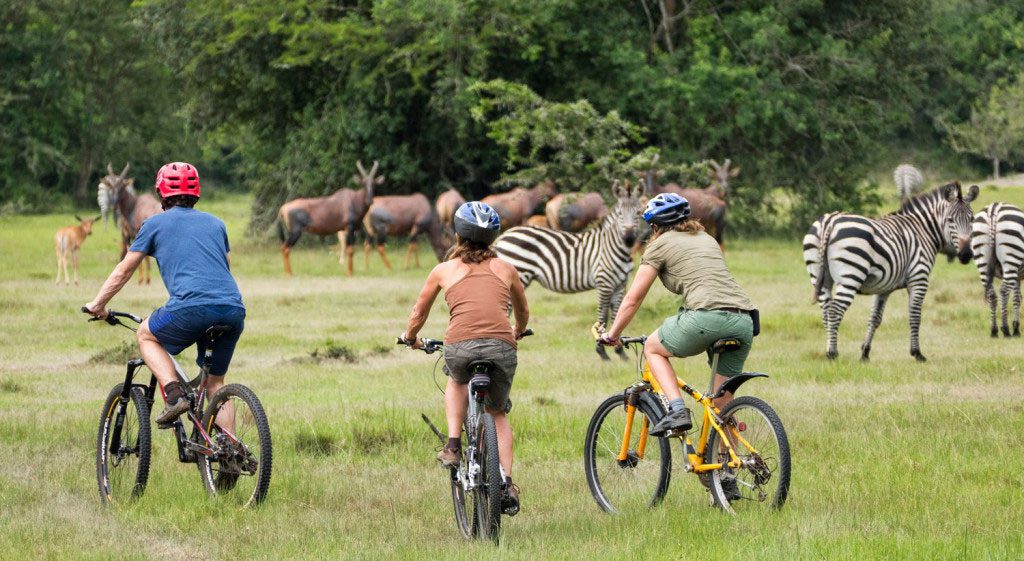
Travelers enjoy a guided cycling safari among zebras and other wildlife, highlighting the active and intimate experiences available on small group Uganda safaris.
The best time to book Small Group Uganda Safaris depends on the experiences your group wants, preferred weather conditions, budget and how flexible your travel dates are. Uganda can be visited throughout the year, but different months create different safari conditions. Travellers who want relatively drier trekking trails and convenient game-drive conditions often choose June through September or December through February, while visitors who prefer greener landscapes, fewer travellers and potentially greater accommodation flexibility may consider wetter or shoulder-season months. Before selecting dates, travellers can read our detailed guide explaining which month is best to visit Uganda.
Timing becomes particularly important for Small Group Uganda Safaris because several travellers may need accommodation, gorilla permits, chimpanzee permits and vehicle space for exactly the same dates. Finding one available room or trekking permit close to departure may sometimes be possible, but finding several spaces together can be more difficult. Groups travelling during popular months should therefore begin planning early enough to secure the activities and lodges that matter most instead of designing the entire itinerary around whatever remains available.
June to September – Popular Months for Small Group Uganda Safaris
June through September is one of the most popular periods for Small Group Uganda Safaris. Many travellers choose these months because rainfall is generally lower in several major safari regions, road conditions can be easier and forest trails may be less muddy than during wetter periods. These conditions are particularly useful when an itinerary combines gorilla trekking, chimpanzee trekking and long road transfers between national parks.
Wildlife-focused groups can also benefit from this period because drier savannah conditions can improve visibility in parks such as Queen Elizabeth National Park and Murchison Falls National Park. Animals may concentrate around reliable water sources as surrounding areas become drier, creating rewarding game-drive opportunities. Travellers whose main priority is wildlife can read our detailed guide to the best wildlife viewing seasons in Uganda.
The main consideration is demand. June, July and August in particular can be popular with international safari travellers, so Small Group Uganda Safaris requiring several rooms and trekking permits should normally be planned well in advance. Anthill Safaris also provides useful information about the best months for game viewing in Uganda.
December to February – Excellent for Gorillas and Wildlife
December through February provides another attractive period for Small Group Uganda Safaris. These months often provide relatively dry conditions in many of Uganda’s main safari regions and can work well for travellers combining mountain gorillas with savannah wildlife. The period is particularly attractive for visitors travelling during Christmas holidays, New Year travel periods or winter holidays in Europe and North America.
Because December and the beginning of January can experience strong holiday demand, groups should avoid assuming that attractive lodges and gorilla permits will remain available close to departure. The best approach is to establish the preferred dates first and secure priority activities before building the rest of the safari. Travellers interested in combining mountain gorillas with savannah wildlife can explore our guide to gorilla trekking and Big Five safari experiences.
Best Time for Small Group Gorilla Trekking in Uganda
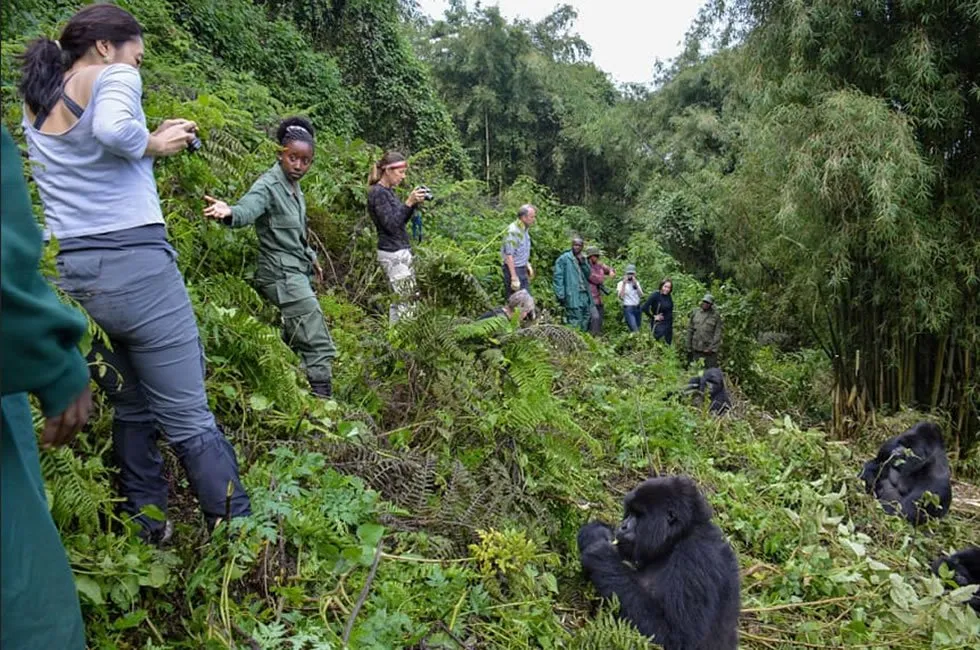
Travelers enjoy a close mountain gorilla encounter in Uganda’s lush forest, highlighting the intimate experience of small group gorilla trekking.
Mountain gorilla trekking is possible throughout the year, but weather conditions can influence the physical character of the trek. During relatively dry months, forest trails may contain less mud and can be easier to navigate. During wetter months, travellers should expect more moisture, slippery sections and potentially more challenging walking conditions. Rainforest weather remains unpredictable, so appropriate boots, rain protection and suitable clothing should be carried regardless of the month.
Groups deciding when to trek can read our seasonal tips for gorilla trekking and the detailed guide explaining when to visit Bwindi Impenetrable National Park. Travellers considering Mgahinga can also review the best visiting season for Mgahinga Gorilla National Park.
March to May – Green Season Small Group Uganda Safaris
March through May generally brings wetter conditions to many parts of Uganda, but this does not mean safari activities stop. Gorilla trekking, chimpanzee tracking, game drives and boat safaris can continue, although travellers should prepare for rain, muddy trails and changing road conditions. For some groups, the advantage is a quieter safari atmosphere and beautifully green landscapes.
The wetter months can appeal to flexible travellers who are less concerned about perfectly dry trekking trails and more interested in scenery, photography and a slower safari atmosphere. Lodges may sometimes have greater room availability than during the busiest months. Our guide to Uganda safaris in the rainy season explains the advantages and practical challenges in more detail.
October and November – Quieter Safari Travel
October and November can bring wetter conditions to many safari regions, although rainfall patterns vary considerably between destinations and from year to year. Small Group Uganda Safaris during this period can still include gorilla trekking, wildlife drives and other activities, but travellers should be comfortable with changing weather and carry appropriate clothing and footwear.
One advantage can be reduced tourism pressure compared with the busiest travel months. Groups may experience quieter lodges and less competition for certain accommodation options. Visitors interested in value-focused travel can also explore current Uganda safari discounts and seasonal deals. Anthill Safaris also discusses the benefits of a Uganda gorilla safari during the shoulder season.
Uganda Small Group Safari Seasons at a Glance
The table below provides a simple planning overview. Uganda’s weather is influenced by altitude, lakes, forests and regional geography, so these periods should be treated as general safari guidance rather than guaranteed weather forecasts.
| Travel Period | General Conditions | Best Suited To | Planning Consideration |
|---|---|---|---|
| December – February | Generally one of the drier safari periods in many regions. | Gorilla trekking, game drives, photography and mixed wildlife safaris. | Book early around Christmas, New Year and other popular travel dates. |
| March – May | Generally wetter with greener landscapes and more variable road conditions. | Flexible travellers, photographers, birders and visitors seeking quieter periods. | Carry rain gear and expect muddy forest trails. |
| June – August | Popular relatively dry safari period. | Gorilla trekking, chimpanzee trekking, wildlife viewing and family safaris. | High demand means permits and preferred lodges should be reserved early. |
| September | Often a transition period with conditions varying by region. | Wildlife, gorilla trekking and travellers seeking an alternative to July and August. | Prepare for possible rainfall as seasonal patterns begin changing. |
| October – November | Generally wetter in many regions with lush vegetation. | Birding, photography, quieter safaris and flexible-budget travel. | Allow flexibility for road and trekking conditions. |
Best Time for Wildlife Viewing on Small Group Uganda Safaris
Small Group Uganda Safaris focused on lions, elephants, buffalo, giraffes, hippos and other savannah wildlife often favour relatively drier months. Vegetation can become less dense in some areas, while animals may spend more time around reliable water sources. This can improve viewing opportunities in destinations such as Queen Elizabeth National Park, Murchison Falls National Park and Lake Mburo National Park.
However, wildlife viewing remains possible throughout the year. Wetter landscapes can be extremely attractive for photography, and experienced guides understand how animal behaviour changes between seasons. Travellers who want both gorillas and traditional wildlife should therefore choose dates based on the whole itinerary rather than assuming that only one month provides a worthwhile safari.
Best Time for Birding During Small Group Uganda Safaris
Birdwatching can be incorporated into Small Group Uganda Safaris throughout the year because Uganda has resident bird species across forests, wetlands, savannahs and lakes. Seasonal movements and migratory species can make particular months especially interesting to serious birders, while general safari travellers can enjoy birdlife during virtually every national park visit.
Groups whose primary interest is birdwatching should consider the specific bird species and destinations they want to visit rather than choosing dates using only general safari weather. Our detailed guide explains when to plan a birding safari in Uganda and can help travellers add birding to a wider primate and wildlife itinerary.
How Early Should a Small Group Uganda Safari Be Booked?
Small groups should generally begin planning earlier than individual travellers because several services need availability at the same time. If six travellers want to trek gorillas together, for example, six suitable permit spaces must be available for the intended date, and the preferred lodge needs enough rooms for everyone. Safari vehicles and experienced guides also become more heavily booked during popular periods.
For peak travel months, planning several months ahead provides a stronger choice of accommodation and activities. Groups travelling during quieter periods may have greater flexibility, but last-minute availability should never be assumed when gorilla trekking is an essential part of the trip. Visitors comparing trekking dates can also consult our month-by-month gorilla trekking guide.
Choosing the Best Season for Your Small Group Uganda Safari
There is no single best month for every Small Group Uganda Safari. Travellers prioritising comfortable trekking conditions may prefer the drier travel periods, while photographers may appreciate Uganda’s lush landscapes after rainfall. Birders may choose dates around particular species and migration patterns, while budget-conscious groups may consider quieter months when accommodation availability can be stronger.
The best approach is to match the season to the group’s priority experiences. Anthill Safaris’ guide to the best time to travel to Uganda provides another seasonal perspective. Safari Vacations and Travel Services Ltd can then structure the route around the selected travel period, allowing enough time for gorilla trekking, wildlife viewing, chimpanzees, birding or scenic experiences according to the group’s interests.
Accommodation, Safari Vehicles and Transport for Small Group Uganda Safaris
Accommodation and transport can strongly influence the comfort and overall quality of Small Group Uganda Safaris. Uganda’s major safari destinations are spread across different regions, so travellers may spend several hours travelling between national parks, forest areas and lodges. Choosing a comfortable safari vehicle, keeping the group size appropriate and selecting accommodation close to planned activities can therefore make an enormous difference.
Safari Vacations and Travel Services Ltd can arrange accommodation and transportation according to the group’s budget, safari duration and preferred level of comfort through custom Uganda safari packages designed around individual travel requirements.
Small Group Uganda Safaris may use budget, mid-range or luxury accommodation and can be operated entirely by road or with selected domestic flights. The best option depends on the number of travellers, destinations, time available and overall safari budget. Rather than selecting the most expensive vehicle or lodge automatically, the goal should be to choose arrangements that improve the safari experience and reduce unnecessary travel inconvenience.
Choosing the Right Accommodation for Small Group Uganda Safaris
Uganda offers safari accommodation ranging from simple guesthouses and comfortable tented camps to high-end wilderness lodges. Small groups should consider more than room price when choosing where to stay. Location can be particularly important because a lodge positioned close to the following day’s activity can reduce unnecessary early-morning driving and make the overall itinerary more comfortable.
This is especially important in Bwindi Impenetrable National Park, where travellers need accommodation that works with their confirmed gorilla trekking location. Visitors can explore our guide to where to stay for gorilla trekking in Bwindi before selecting a lodge. Travellers seeking premium accommodation can also compare some of the luxury gorilla lodges in Bwindi.
Budget, Mid-Range and Luxury Safari Lodges
Budget accommodation can work well for travellers who prefer to spend more of their safari budget on permits and wildlife activities. Mid-range lodges provide a strong balance between comfort and overall trip cost, while luxury properties may offer enhanced rooms, premium locations, personalised service and additional facilities. The accommodation category should remain consistent with the group’s expectations rather than being selected only because of a marketing label.
Small Group Uganda Safaris visiting northern Uganda can also choose from several accommodation levels around Murchison Falls. Our guide to accommodation in Murchison Falls National Park gives travellers an idea of the lodging possibilities available around one of Uganda’s major wildlife destinations. Visitors considering a more premium journey may also find Anthill Safaris’ luxury Uganda gorilla safari guide useful when comparing accommodation and transfer styles.
Accommodation and Transport Comparison for Small Groups
| Safari Style | Accommodation | Transport | Best Suited To |
|---|---|---|---|
| Budget Small Group Safari | Simple lodges, guesthouses and comfortable safari camps. | Road-based 4×4 safari vehicle. | Travellers prioritising wildlife and activities over premium accommodation. |
| Mid-Range Small Group Safari | Comfortable safari lodges and tented camps in practical locations. | Customised 4×4 safari vehicle with professional driver-guide. | Travellers wanting a balance between comfort, price and safari experience. |
| Luxury Small Group Safari | Premium wilderness lodges and exclusive safari properties. | Premium road transfers, domestic flights or a combination of both. | Travellers prioritising time, comfort, location and personalised service. |
| Fly-In Small Group Safari | Usually mid-range or luxury lodges positioned near destination airstrips. | Domestic flight followed by local 4×4 lodge or safari transfers. | Groups with limited time or travellers wishing to reduce long road journeys. |
4×4 Safari Vehicles for Small Group Uganda Safaris

A small group of travelers gathers around a 4×4 safari vehicle, highlighting the flexibility, comfort and shared adventure of small group Uganda safaris.
A suitable safari vehicle is one of the most important parts of Small Group Uganda Safaris because it functions as both transport between destinations and a wildlife-viewing platform during many game drives. Customised 4×4 safari vehicles are commonly preferred for routes involving national parks, rural roads and areas where changing weather conditions can affect road surfaces. Travellers interested in understanding Uganda’s road conditions can read our comprehensive Uganda driving guide.
Group size should be matched carefully to vehicle capacity. Filling every possible seat may reduce the headline cost per traveller, but an overcrowded vehicle can make wildlife photography, long road transfers and luggage storage uncomfortable. A well-designed Small Group Uganda Safari should leave sufficient space for passengers to sit comfortably and access good viewing positions during game drives.
Why Vehicle Space Matters for Wildlife Viewing
During a game drive, travellers may spend several hours observing animals from the safari vehicle. Good seating arrangements allow group members to photograph wildlife without repeatedly moving around the cabin or blocking one another’s views. This is one reason a carefully managed small group can provide a stronger game-viewing experience than a vehicle carrying the maximum possible number of passengers.
Vehicle space also matters during longer road transfers. Travellers may carry cameras, daypacks, binoculars, water bottles and other personal items inside the vehicle. Allowing reasonable space for these belongings makes the safari more comfortable, particularly on itineraries connecting several Uganda national parks.
Luggage Planning for Small Group Uganda Safaris
Travellers should pack with the safari vehicle and transport arrangements in mind. Large hard-shell suitcases can occupy substantial luggage space, especially when several people share one vehicle. Soft-sided bags can often be easier to arrange inside safari vehicles and may also be more practical when a journey includes domestic flights with specific baggage conditions.
Small groups should communicate their luggage requirements before arrival, particularly when carrying professional camera equipment, trekking equipment or additional bags. Travellers using domestic flights should always confirm the baggage conditions associated with the actual airline and ticket because flight arrangements and luggage allowances can vary.
Family and Friends Accommodation Arrangements
Small Group Uganda Safaris often include families, friends or several couples travelling together. Room configuration can therefore be just as important as lodge quality. Some groups may prefer twin rooms, while families may request family cottages, adjoining rooms or suitable arrangements that allow parents and children to stay close together. Travellers planning with younger family members can explore our guide to a Uganda safari with children.
The group should confirm room requirements before the accommodation is booked rather than assuming that every safari lodge has identical room configurations. This becomes particularly important when several rooms are needed at smaller properties. A lodge may be perfectly suited to couples but have limited family accommodation, while another may offer cottages or interconnecting arrangements that work better for a family group.
Road Transfers Between Uganda Safari Destinations
Many Small Group Uganda Safaris are completed primarily by road. Road travel allows visitors to see rural landscapes, towns, farms, tea-growing areas, highlands and changing vegetation between national parks. It can also provide better value for small groups because several travellers share one vehicle and guide throughout the journey.
International visitors normally begin through Entebbe before connecting with their safari route. Our Uganda Airport Guide explains the main transport possibilities after arrival, including road and domestic air connections. For travellers purchasing a packaged safari, it is also important to establish whether airport transfers, inter-park transfers and lodge transfers are already included. Anthill Safaris explains these arrangements further in its guide to all-inclusive Uganda gorilla safari services.
Domestic Flights for Small Group Uganda Safaris
Domestic flights can be useful when travellers want to reduce long road transfers or concentrate more of their available time around safari activities. A flying safari may connect Entebbe with an airstrip serving a major safari region, followed by a road transfer to the lodge or national park. Visitors considering this travel style can explore our comprehensive Uganda fly-in safari guide.
Domestic flights are particularly attractive to small groups with limited holiday time, senior travellers who prefer to reduce extended driving, and premium safari travellers. However, flights do not completely remove the need for road transport because travellers normally require a safari vehicle after arriving near the destination. The vehicle remains essential for lodge transfers, game drives and other land-based activities.
Booking Domestic Flights as Part of a Uganda Safari
Flights should be coordinated with the entire itinerary rather than booked separately without considering lodge transfers and activity times. Travellers can read our guide explaining how to book a domestic flight in Uganda. Safari Vacations and Travel Services Ltd can incorporate flights into the wider journey so that airport transfers, airstrip pickups, accommodation and safari activities work together.
A practical example is the 4-Day Uganda Gorilla Flying Safari, which demonstrates how air and road transport can be combined around a short gorilla-focused journey. Travellers arriving through Kigali may also consider a mixed road-and-air routing; Anthill Safaris provides an example of travelling from Kigali to Bwindi and flying onward to Entebbe.
Road Safari or Fly-In Safari – Which Is Better for a Small Group?
Neither option is automatically better. Road-based Small Group Uganda Safaris generally provide a deeper sense of the country and can offer stronger value when vehicle expenses are shared among several travellers. Fly-in safaris can reduce some long-distance transfers and are particularly useful when holiday time is limited. Some travellers therefore choose a combination, travelling by road through several logically connected parks and using a domestic flight where it provides a meaningful time advantage.
The final decision should consider group size, safari length, destinations, budget and how comfortable the travellers are with longer road journeys. A seven or ten-day group exploring several western Uganda parks may benefit greatly from continuous road transport, while a short luxury gorilla safari may make better use of domestic flights.
Why Location Matters More Than Lodge Name
A beautiful safari lodge in the wrong location can create unnecessary travel. This is especially important in gorilla trekking regions where the group needs to report to the correct trekking area. Safari Vacations and Travel Services Ltd therefore considers the day’s activities and road connections when recommending accommodation rather than choosing properties solely because they are well known.
This approach is equally useful in wildlife parks. Accommodation located strategically for the intended game-drive area or next day’s route can reduce transfer time and allow travellers to spend more of the safari enjoying wildlife and scenery. Small Group Uganda Safaris should therefore treat accommodation, vehicles and routing as connected parts of one itinerary rather than three separate booking decisions.
Planning Comfortable Transport and Accommodation With Safari Vacations and Travel Services Ltd
Successful Small Group Uganda Safaris depend on practical coordination. The vehicle should suit the number of travellers, the accommodation should match the group’s room requirements and activities, and transport should connect destinations in a logical order. When domestic flights are included, airstrip transfers and safari vehicles should also be arranged as part of the same itinerary.
Safari Vacations and Travel Services Ltd can organise these arrangements according to the group’s preferred safari style. Whether travellers choose a road-based mid-range journey, a comfortable family safari or a premium fly-in experience, the aim is to create a smooth journey where accommodation and transport support the wildlife experience rather than becoming logistical problems.
Planning Small Group Uganda Safaris – Permits, Packing, Safety and Travel Tips
Good preparation can make Small Group Uganda Safaris considerably easier and more enjoyable. Uganda safaris can combine long road transfers, tropical forests, savannah game drives, boat cruises, mountain gorilla trekking and different accommodation environments within the same journey, so travellers should prepare for more than a conventional holiday. Important considerations include passports and visas, trekking permits, suitable clothing, travel insurance, health preparation, money, luggage, cameras and communication. First-time visitors can begin with our detailed Uganda travel tips before finalising their Small Group Uganda Safari.
Preparation is particularly important when several people are travelling together. One traveller forgetting an important document or arriving without suitable trekking equipment can affect the wider group schedule. Safari Vacations and Travel Services Ltd therefore recommends preparing essential documents and safari equipment before departure instead of trying to organise everything after arriving in Uganda.
Passports, Visas and Entry Documents for Uganda

Valid passports, visas and supporting travel documents are important requirements for travelers preparing to enter Uganda for a safari or holiday.
International travellers should confirm Uganda’s current immigration requirements well before their departure date. Visa requirements can depend on nationality, and travellers who require a tourist visa should use the official Uganda immigration process rather than relying solely on information from old travel articles. Passport-validity requirements, supporting documents and immigration procedures should also be reconfirmed before travel. Our guide explaining how to obtain a Uganda visa provides a useful starting point, but official immigration information should remain the final reference.
Small groups should keep both physical and secure digital copies of important travel documents where practical. These may include passport details, visa approval documents where applicable, travel insurance information, flight bookings, safari confirmations and emergency contacts. It is also sensible for travellers to keep important documents protected from rain during forest activities.
Gorilla and Chimpanzee Permits for Small Group Uganda Safaris
Small Group Uganda Safaris that include gorilla trekking or chimpanzee tracking require careful permit planning because each participating traveller needs the appropriate permit. A single available permit is not sufficient when several people want to undertake the activity together. This is why small groups should normally secure priority permits before finalising non-flexible accommodation arrangements.
Gorilla permits are particularly important because availability can become limited around popular travel dates. The group should provide correct traveller details during the booking process and make sure the trekking date matches the safari itinerary. Anthill Safaris provides additional information about gorilla permits in Uganda. Safari Vacations and Travel Services Ltd can coordinate the permit date with accommodation and transportation so the group stays in the appropriate gorilla trekking area.
What to Pack for Small Group Uganda Safaris
A Uganda safari packing list should work for several environments rather than only one activity. Lightweight safari clothing is useful during game drives, while forest trekking requires stronger footwear, long trousers, long-sleeved clothing and protection against rain and vegetation. Early mornings and higher-altitude destinations can also feel cooler than travellers expect. Our complete guide on what to pack for a Uganda safari and trekking adventure explains how to prepare for both savannah and forest activities.
For gorilla trekking, waterproof hiking boots with reliable grip are particularly useful because forest trails can become steep, uneven and muddy. A lightweight rain jacket, small daypack, long socks, gardening or trekking gloves and refillable water bottle can also improve comfort. Travellers who want a dedicated checklist can consult our gorilla trekking packing list as well as Anthill Safaris’ guide explaining what to pack for Uganda gorilla trekking.
Small Group Uganda Safari Packing Guide
| Item | Why It Is Useful | Best Used For |
|---|---|---|
| Waterproof Hiking Boots | Provide grip and ankle support on uneven or muddy trails. | Gorilla and chimpanzee trekking. |
| Long Trousers and Long-Sleeved Shirts | Help protect against vegetation, insects and sun exposure. | Forest trekking and general safari travel. |
| Rain Jacket or Poncho | Provides protection when weather changes suddenly. | Bwindi, Mgahinga, Kibale and rainy-season travel. |
| Light Fleece or Sweater | Useful during cool mornings, evenings and higher-altitude stays. | Early game drives and southwestern Uganda. |
| Small Daypack | Carries water, camera equipment, rain protection and personal essentials. | Trekking and day activities. |
| Binoculars | Improves viewing of birds and wildlife at a distance. | Game drives, boat safaris and birding. |
| Camera and Spare Power | Allows travellers to photograph wildlife where charging opportunities may be limited during activities. | Wildlife and primate photography. |
| Document Copies | Provides backup access to important travel information. | International travel and border crossings. |
What to Wear for Gorilla Trekking
Travellers should dress for protection and mobility rather than fashion during gorilla trekking. Forest vegetation can be thick, and conditions can change quickly after rainfall. Neutral-coloured, lightweight long trousers and long-sleeved shirts are practical, while waterproof hiking footwear provides better protection on muddy trails. Our detailed guide on what to wear for gorilla trekking provides more information about suitable trekking clothing.
Travellers who are new to forest trekking should also prepare physically before their journey. Regular walking and moderate hill training can help improve endurance. Anthill Safaris’ guide on how to prepare for gorilla trekking explains some of the practical preparation considerations before entering Bwindi or Mgahinga.
Health Preparation and Travel Insurance
Health requirements and recommendations can change, so international travellers should obtain current professional travel-health advice before departure. Travellers should confirm vaccination and entry-health requirements applicable to their itinerary and discuss mosquito-borne disease prevention and personal medical needs with a qualified healthcare professional. Current travel-health guidance should take priority over older safari articles when requirements differ.
Comprehensive travel insurance is also strongly recommended for Small Group Uganda Safaris. Travellers should understand whether their policy covers medical treatment, evacuation, trip interruption and activities such as gorilla trekking or other adventure experiences. Our Uganda Safety Guide discusses health preparation, road travel, wildlife behaviour and practical safety considerations in more detail.
Money and Personal Safari Expenses
Most organised Small Group Uganda Safaris include major services stated in the quotation, but travellers should still carry a personal budget for drinks, souvenirs, tips, optional activities and other expenses not included in the package. Access to card payments and cash machines can be easier in major towns than in remote safari areas, so travellers should avoid depending on one payment method for the entire trip.
It is useful to ask Safari Vacations and Travel Services Ltd which services have already been prepaid before departure. This prevents travellers from carrying unnecessary amounts of cash while also ensuring they have enough available for personal expenses during remote parts of the itinerary.
Tipping During Small Group Uganda Safaris
Tipping is appreciated for good service but should remain voluntary. Travellers may choose to recognise driver-guides, lodge staff, porters, trackers or ranger guides according to the quality of service received and their personal preference. Small groups can sometimes agree on a combined gratuity rather than every traveller handling tips independently. Our guide to tipping on a Uganda gorilla safari provides additional guidance without treating gratuities as compulsory charges.
Photography on Small Group Uganda Safaris
Photography is one of the areas where small-group travel has a clear advantage. Fewer travellers inside the vehicle can make it easier to position cameras, use longer lenses and photograph wildlife without constantly changing seats. Photographers should bring sufficient memory cards, spare batteries and suitable protection against dust and rain. Those particularly interested in primates can read our guide to mountain gorilla photography in Uganda.
Photography should never take priority over ranger instructions or animal welfare. Travellers should remain in designated positions, avoid sudden movements and follow instructions regarding distance and appropriate behaviour around wildlife. A good photograph should come from patience and responsible positioning rather than disturbing an animal to obtain a particular angle.
Staying Connected During a Uganda Safari
Mobile communication and internet access are available in many Ugandan towns and safari lodges, but travellers should expect weaker or intermittent connectivity in some remote national parks and forest regions. Groups should therefore download essential information before leaving major towns and keep important contact details available offline. A Small Group Uganda Safari is also an opportunity to spend more time concentrating on wildlife and landscapes rather than expecting continuous connectivity throughout every part of the journey.
Wildlife Safety and Responsible Safari Behaviour
Wild animals should always be treated with respect. Travellers should follow instructions from their driver-guide, ranger or tracker and should not attempt to approach, feed or attract wildlife. During game drives, passengers should remain inside the vehicle whenever instructed, while walking activities should remain under the supervision of authorised guides. Our gorilla trekking tips for first-time visitors explain additional behaviour that can help travellers prepare for their forest experience.
Responsible Small Group Uganda Safaris should also minimise unnecessary environmental impact. Travellers should avoid littering, respect communities, follow national park regulations and listen carefully to local guides. Small groups are well positioned for responsible travel because fewer people can move quietly through sensitive environments and interact with local communities in a more manageable way.
Final Preparation Before Your Small Group Uganda Safari
Before departing, every traveller should reconfirm their passport and entry requirements, travel insurance, required permits, accommodation arrangements, airport transfer and personal packing. The group should also know the main itinerary and understand which expenses are included. First-time safari travellers can use our guide on planning your first Uganda national park safari as a final preparation resource.
Successful Small Group Uganda Safaris are easier when practical arrangements are completed before arrival. Safari Vacations and Travel Services Ltd can coordinate permits, safari transport, accommodation and planned activities so travellers can concentrate on the experiences that brought them to Uganda: mountain gorillas, chimpanzees, wildlife, landscapes, communities and the shared adventure of exploring the country together.
Why Book Small Group Uganda Safaris With Safari Vacations and Travel Services Ltd?

Travelers meet their Safari Vacations and Travel Services Ltd representative beside a private safari vehicle, highlighting personalized service and reliable safari support.
Choosing the right safari company is an important part of planning Small Group Uganda Safaris. A good Uganda safari involves much more than reserving accommodation and providing a vehicle. Gorilla permits, chimpanzee activities, national park routes, accommodation locations, road transfers and the interests of individual travellers all need to work together. Safari Vacations and Travel Services Ltd plans Uganda safaris around these practical details while maintaining the personal atmosphere that makes small group travel attractive. Travellers who want to understand more about the company can visit our Safari Vacations and Travel Services information page before beginning their safari arrangements.
Small Group Uganda Safaris should not feel like a fixed journey designed for everyone in exactly the same way. A group interested mainly in mountain gorillas may need a completely different route from travellers interested in chimpanzees, lions, elephants, birding or photography. Our custom Uganda safari packages allow the itinerary to be developed around available days, travel style, budget and priority destinations rather than forcing travellers into an unnecessarily complicated route.
Local Uganda Safari Planning Knowledge
One of the advantages of booking Small Group Uganda Safaris through a locally focused safari company is understanding how Uganda’s destinations connect on the ground. Distances that appear short on a map can involve several hours of road travel, while accommodation advertised around a national park may not always be conveniently positioned for the next day’s activity. Careful route planning therefore helps reduce unnecessary transfers and gives travellers more useful time inside Uganda’s national parks.
Safari Vacations and Travel Services Ltd can arrange journeys covering short gorilla safaris, primate-focused tours and longer wildlife circuits. First-time visitors can explore our recommended Uganda safari packages for first-time travellers to understand how different experiences can be combined.
Tailor-Made Small Group Uganda Safari Itineraries
Not every group wants the same safari pace. Some travellers prefer longer game drives and wildlife photography, while others want additional time for gorilla trekking, chimpanzees, cultural experiences or relaxation. Small Group Uganda Safaris can therefore be adjusted according to the interests of the people actually travelling.
A personalised itinerary also prevents the common mistake of trying to include too many distant parks in too few days. Our guide on Uganda safari and adventure trips provides examples of the different experiences that can be incorporated into a tailor-made journey.
Comfortable 4×4 Safari Transport for Small Groups
The safari vehicle plays an important role in Small Group Uganda Safaris because travellers may use it for both inter-park transfers and wildlife viewing. The number of travellers should therefore be matched to an appropriate vehicle rather than simply filling every available seat. Comfortable seating, access to wildlife views, luggage space and photography positions all contribute to the quality of the journey.
Smaller travelling groups can benefit from easier communication with the driver-guide and better movement inside the vehicle during wildlife sightings. Travellers comparing transport arrangements can also use our Uganda driving and road safari guide to better understand travelling between the country’s major destinations.
Gorilla Permit and Safari Activity Coordination
Small group gorilla trekking requires careful planning because every participating traveller needs the correct permit for the intended date. Accommodation and road transfers must then be coordinated with the confirmed trekking location. This is particularly important in Bwindi, where different trekking sectors influence where the group should stay before the activity.
Permit availability can become limited during popular travel periods, which is why groups should avoid leaving important activities until the final stages of planning. Anthill Safaris provides additional information about booking gorilla permits through a tour company. Travellers can also read our guide explaining how far in advance to book Uganda gorilla trekking.
Small Group Safaris for Different Types of Travellers
Small Group Uganda Safaris can work for couples, friends, families, solo travellers joining compatible groups and travellers celebrating special occasions. The accommodation, activities and overall pace should be selected according to who is travelling rather than assuming one safari structure works for everyone.
Families can begin with our guide to planning a Uganda safari with children, while couples looking for a more private or premium journey can explore ideas within our Uganda honeymoon safari guide. The same planning principle applies to groups of friends, photographers and travellers interested primarily in primates.
What Safari Vacations Can Help Coordinate
| Safari Component | Planning Consideration | Benefit for Small Groups |
|---|---|---|
| Safari Itinerary | Destinations are arranged according to available days and geographical flow. | Reduces unnecessary road transfers and rushed safari days. |
| Gorilla & Primate Permits | Activities are coordinated with the group’s intended travel dates. | Helps keep group members on compatible trekking arrangements. |
| Safari Vehicle | Vehicle size is matched to the travelling group and route. | Improves comfort, wildlife viewing and photography space. |
| Accommodation | Lodges are selected according to budget, location and planned activities. | Makes morning activities and inter-park transfers more practical. |
| Airport & Road Transfers | Arrival and departure arrangements are connected with the wider itinerary. | Creates a smoother beginning and end to the safari. |
| Safari Activities | Game drives, boat cruises, trekking and other experiences are scheduled logically. | Allows the group to enjoy several experiences without an overloaded itinerary. |
Clear Safari Planning Before You Travel
Travellers should understand the proposed route, accommodation, activities and important inclusions before confirming a Small Group Uganda Safari. Asking questions before payment can prevent misunderstandings later and gives the tour company an opportunity to adjust the itinerary while changes are still practical.
Our step-by-step Uganda safari booking guide explains the main stages from selecting destinations and dates to reviewing the final itinerary. Travellers planning for busy months can also read Anthill Safaris’ information on booking Uganda safaris during peak season.
Small Group Uganda Safaris Can Offer Better Value
Travelling with a small group can make some safari expenses easier to share while maintaining a more personal atmosphere than a large tour. Vehicle, fuel and guide costs can be distributed across several travellers, while the group can still retain enough space for comfortable wildlife viewing. Good value should come from sensible route planning and appropriate accommodation rather than removing important safari experiences.
Travellers interested in controlling their budget can explore current ideas within our Uganda safari discounts and value-planning guide. The best quotation should clearly show what is included so that travellers can compare complete safari arrangements rather than only the initial headline price.
Combine Uganda With Other East African Safari Destinations
Small Group Uganda Safaris can also form part of a wider East African journey. Travellers may combine Uganda’s gorillas and chimpanzees with wildlife experiences elsewhere in the region when sufficient travel days are available. Such journeys require careful routing because border crossings, flights and additional accommodation need to connect logically.
Visitors interested in combining Uganda with Kenya can explore our combined Kenya and Uganda safari tours. A regional itinerary can be particularly attractive for international travellers wanting mountain gorillas and classic East African savannah wildlife within one holiday.
Book Small Group Uganda Safaris Early When Possible
Early planning gives a small group a stronger selection of permits, accommodation and safari arrangements. This becomes particularly important because a group may need several rooms and multiple gorilla permits for the same dates. Leaving these arrangements until close to departure can reduce the available choices.
Anthill Safaris’ guide on how far in advance to plan a Uganda safari provides additional booking guidance. Groups do not necessarily need to choose every small detail immediately, but confirming the important dates and limited activities early can make the rest of the itinerary easier to organise.
Plan Your Small Group Uganda Safari With Safari Vacations and Travel Services Ltd
Small Group Uganda Safaris provide an excellent way to explore Uganda without the crowded feeling of a large organised tour. Travellers can experience mountain gorillas, chimpanzees, savannah wildlife, boat safaris, birding, scenic lakes and cultural encounters while travelling with a manageable number of people. With a carefully planned route, a comfortable safari vehicle and accommodation selected around the actual activities, the journey can remain personal while still benefiting from professional organisation.
Safari Vacations and Travel Services Ltd can help develop the safari around the number of people travelling, available days, preferred accommodation level and priority experiences. Whether the group wants a short gorilla safari, a one-week primate and wildlife journey or a longer Uganda circuit, the starting point is understanding what the travellers want to experience and then creating a practical route around those priorities.