Best Uganda Parks for Leopard Sighting
Best Uganda Parks for Leopard Sighting
Discover the best Uganda parks for leopard sighting, from the wildlife-rich savannahs of Murchison Falls and Queen Elizabeth National Park to the remote wilderness of Kidepo Valley and the nocturnal safari experiences of Lake Mburo National Park.
Murchison Falls
Queen Elizabeth
Kidepo Valley
Lake Mburo
Where Can You See Leopards in Uganda?
The best Uganda parks for leopard sighting include Murchison Falls National Park, Queen Elizabeth National Park, Kidepo Valley National Park and Lake Mburo National Park.
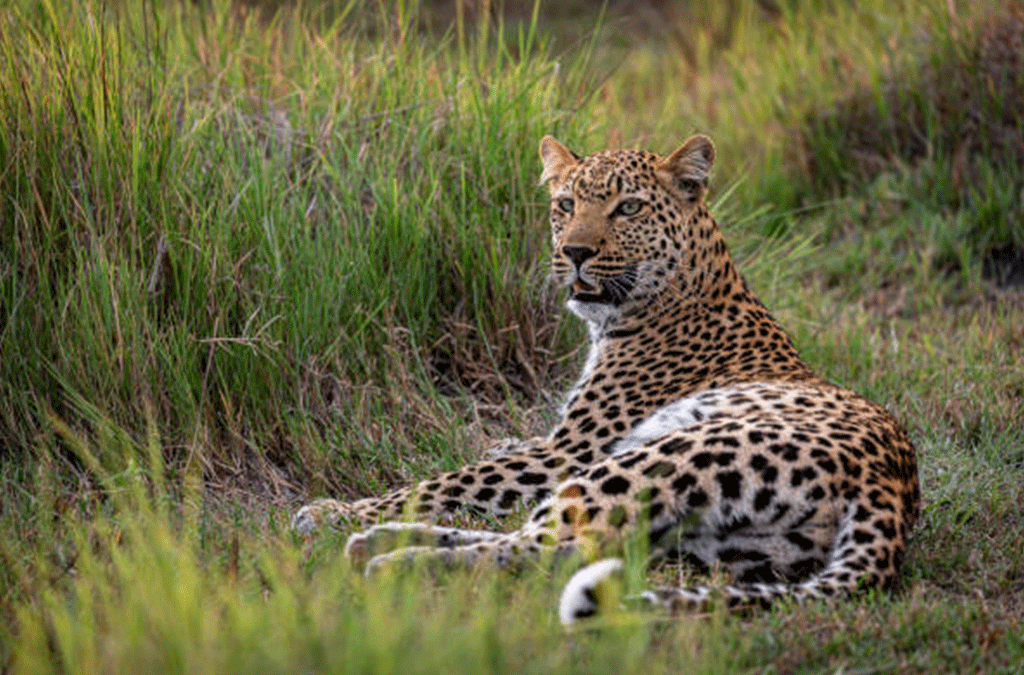
Leopards are among the most exciting animals to encounter on a Uganda safari, but they are also among the most difficult large predators to find. Unlike lions, which can remain visible in open grasslands for long periods, leopards are solitary, secretive and often most active during the evening, night and early morning.
Their spotted coats provide exceptional camouflage in grass, woodland, rocky terrain and thickets. A leopard can therefore be relatively close to a safari vehicle without being noticed immediately.
Successful sightings often depend on patient game driving, an experienced driver-guide, listening for alarm calls, checking large tree branches and spending enough time in productive wildlife habitat.
For that reason, a leopard safari in Uganda is best planned around the overall quality of the wildlife experience rather than around a promise of one particular sighting. Travellers who allow enough time for repeated game drives are able to explore different habitats, return to productive areas and enjoy the wider ecosystem while their guide continues watching for signs of leopard activity.
The four parks on this page offer different advantages. Murchison Falls and Queen Elizabeth suit travellers who want a broad classic safari with many large mammals, Kidepo rewards those who value remoteness and dramatic landscapes, while Lake Mburo adds a compact and distinctive experience that can include nocturnal wildlife viewing where authorised.
Uganda’s Main Leopard Safari Parks
| National Park | Why Visit | Best Approach | Other Wildlife | Safari Style |
|---|---|---|---|---|
| Murchison Falls | Large savannah ecosystem with excellent predator habitat. | Early morning and late-afternoon game drives. | Lions, elephants, giraffes, buffaloes and hartebeest. | Big Game |
| Queen Elizabeth | Savannah, woodland and excellent predator country. | Kasenyi plains and productive wildlife tracks. | Lions, elephants, buffaloes, kob and hippos. | Classic Safari |
| Kidepo Valley | Remote wilderness and dramatic open landscapes. | Narus Valley and wildlife-rich areas near water. | Lions, buffaloes, elephants and giraffes. | Remote Wilderness |
| Lake Mburo | Compact woodland and savannah with nocturnal wildlife opportunities. | Day drives plus authorised night drives where available. | Zebras, impalas, elands, giraffes and buffaloes. | Nocturnal Safari |

Murchison Falls National Park
Murchison Falls National Park is one of Uganda’s leading wildlife destinations and an excellent park for travellers interested in predators.
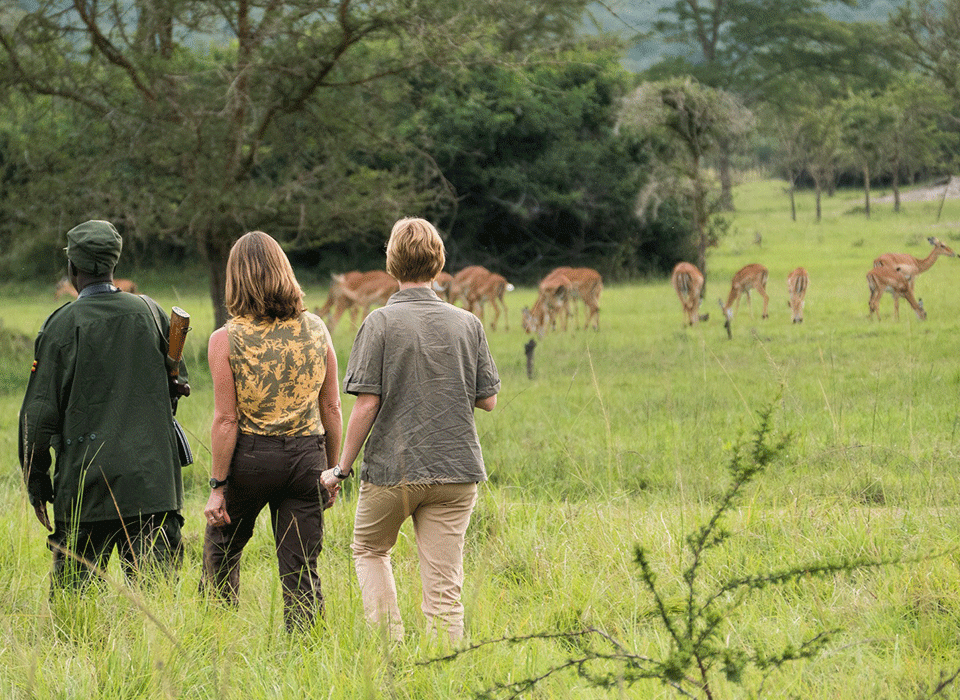
The northern sector contains open grasslands, palms, woodland, thickets and riverine vegetation. These varied habitats support large prey populations and provide excellent cover for leopards.
Early-morning game drives allow visitors to explore the park during cooler hours, when predators may still be active after the night.
A leopard-focused game drive can be combined with sightings of lions, elephants, giraffes, buffaloes, Uganda kob, hartebeest and many other species.
Murchison also rewards travellers who spend more than one night in the park. A single game drive can produce excellent wildlife, but two or more outings give the guide time to explore different tracks and return to areas where predator activity has recently been observed. This extra time is particularly valuable with leopards because their movements are less predictable than those of many grazing animals.
The park’s appeal goes well beyond leopard searching. The Nile adds a completely different dimension to the safari, and many itineraries combine road-based game viewing with a boat trip. This variety means that even if a leopard remains hidden, the overall experience still offers a strong mixture of scenery, mammals, birds and river wildlife.
Queen Elizabeth National Park
Queen Elizabeth National Park is one of the most practical places to include in a leopard-focused Uganda itinerary.
Leopards occur throughout the wider conservation landscape, although their solitary behaviour allows them to disappear easily into woodland, thickets and tall grass.
Game drives through areas such as the Kasenyi plains offer opportunities to search for predators while viewing Uganda kob, buffaloes, elephants and other wildlife.
The park also combines naturally with the Kazinga Channel boat cruise, Ishasha and Bwindi gorilla trekking.
This combination is one of the reasons Queen Elizabeth works so well within a longer western Uganda itinerary. Travellers can enjoy classic savannah wildlife before continuing toward the forested landscapes of Bwindi, creating a safari that contrasts open plains and large mammals with close-up primate experiences.
For leopard searching specifically, flexibility is useful. A guide may choose to spend additional time around productive tracks, woodland edges or places where prey is active rather than following a rigid route. The goal is to remain observant while still enjoying the full range of wildlife that makes Queen Elizabeth such a varied safari destination.


Kidepo Valley National Park
Kidepo Valley National Park appeals to travellers looking for a wilder and more remote Uganda safari.
Its wide plains, rocky outcrops and mountain backdrops provide dramatic landscapes and varied predator habitat.
Areas around Narus Valley are particularly valuable for wildlife viewing because permanent water attracts large concentrations of herbivores.
Kidepo also offers excellent opportunities to see buffaloes, lions, elephants, giraffes and numerous antelope species.
Kidepo is especially appealing to travellers who enjoy the feeling of being in a large, open wilderness where the scenery is as important as any single wildlife sighting. The park’s remoteness encourages a slower style of safari, with time to scan plains, rocky features and vegetation rather than simply moving quickly from one known wildlife point to another.
Because travelling to Kidepo requires more commitment than visiting parks along the western circuit, it makes sense to allow enough nights to appreciate the destination properly. A longer stay gives more chances to revisit wildlife-rich areas and makes the journey worthwhile even if a leopard remains elusive during the first game drive.
Lake Mburo National Park
Lake Mburo National Park is smaller than Uganda’s major savannah parks, but its woodland and bush habitat provide excellent cover for secretive predators.
Leopards are present in the park but are naturally elusive. They may remain hidden in dense vegetation during daylight hours.
Where authorised and available, night game drives add another dimension to the experience by allowing visitors to search for nocturnal wildlife after sunset.
Lake Mburo is also conveniently positioned between Kampala or Entebbe and Uganda’s southwestern safari circuit.
Its location means Lake Mburo can be used as more than a short transit stop. Travellers who stay overnight can experience the park at quieter times of day, when wildlife activity and light conditions are often more rewarding than during a rushed midday visit.
The park is also a useful contrast to Uganda’s larger savannah reserves. Its more intimate scale, mix of woodland and open areas, and strong populations of species such as zebra and impala create a different visual character. For travellers hoping to see a leopard, the value lies in combining ordinary game viewing with patient observation and, where permitted, after-dark exploration.

What a Leopard Safari in Uganda Really Looks Like
Leopard viewing is most rewarding when treated as part of a broader wildlife safari rather than a single-species search.
A typical day may involve scanning open ground for movement, checking trees and shaded areas, watching how prey species behave and remaining alert when other animals give alarm calls. Sometimes the most memorable sightings happen unexpectedly while the guide is moving between different wildlife areas. This is why a flexible itinerary and a willingness to spend time observing the landscape are important parts of the experience.


Best Time for Leopard Sightings in Uganda
Leopards occur in Uganda throughout the year, so there is no single month when sightings are guaranteed.
Uganda’s relatively drier months, generally from June to September and December to February, can make wildlife viewing easier because vegetation may be shorter and game-drive tracks easier to navigate.
The wetter months should not automatically be avoided. Landscapes become greener, visitor numbers may be lower and photography can be excellent.
Season alone should therefore not determine whether a traveller books a leopard-focused safari. Early starts, time spent in the field, the experience of the guide and the number of game drives often matter more than selecting one particular month. Wildlife can also move differently as water and prey distribution change, so flexibility remains valuable throughout the year.
Travellers who enjoy photography may appreciate both seasons for different reasons. Dry conditions can produce clearer views across open landscapes, while greener months can provide dramatic backgrounds, softer vegetation colours and attractive skies. The most suitable period depends on the wider safari you want to combine with your leopard search.
How to Increase Your Chances of Seeing a Leopard
Start Early
Dawn game drives provide opportunities to encounter predators before the day becomes hot.
Stay Several Nights
Multiple game drives naturally provide better opportunities than a single quick visit.
Watch the Trees
Leopards may rest on large branches where they can easily blend into the surrounding vegetation.
Listen for Alarm Calls
Monkeys and antelopes may react when a predator moves through nearby habitat.
Use an Experienced Guide
Local knowledge can make a major difference when searching productive wildlife areas.
Consider a Night Drive
Where authorised, a night drive can reveal a completely different range of wildlife.
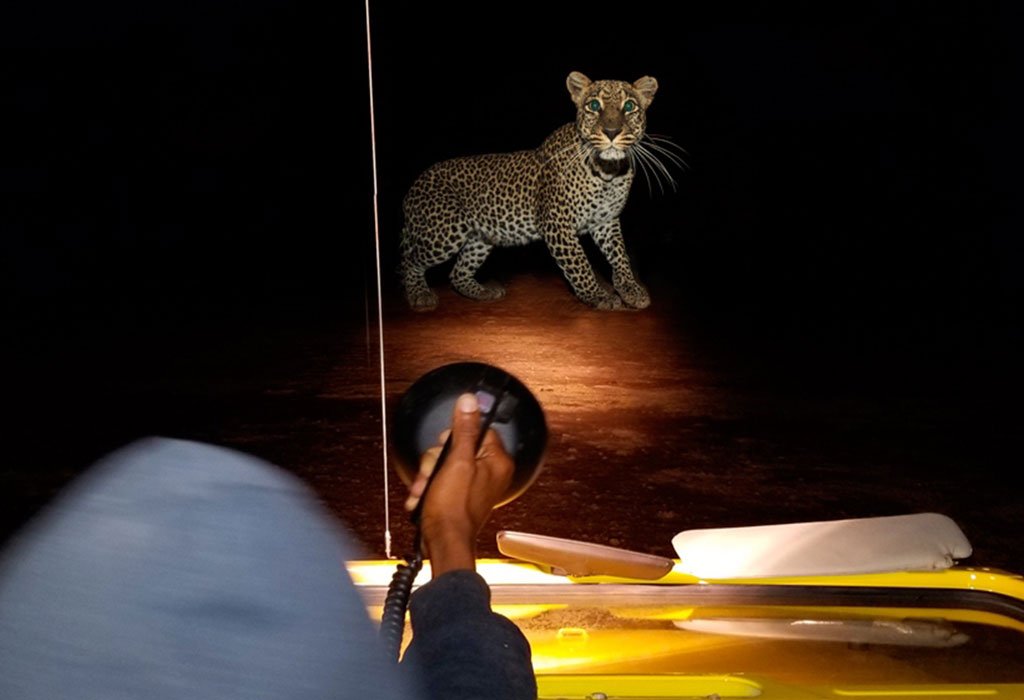
Are Night Game Drives Better for Leopards?
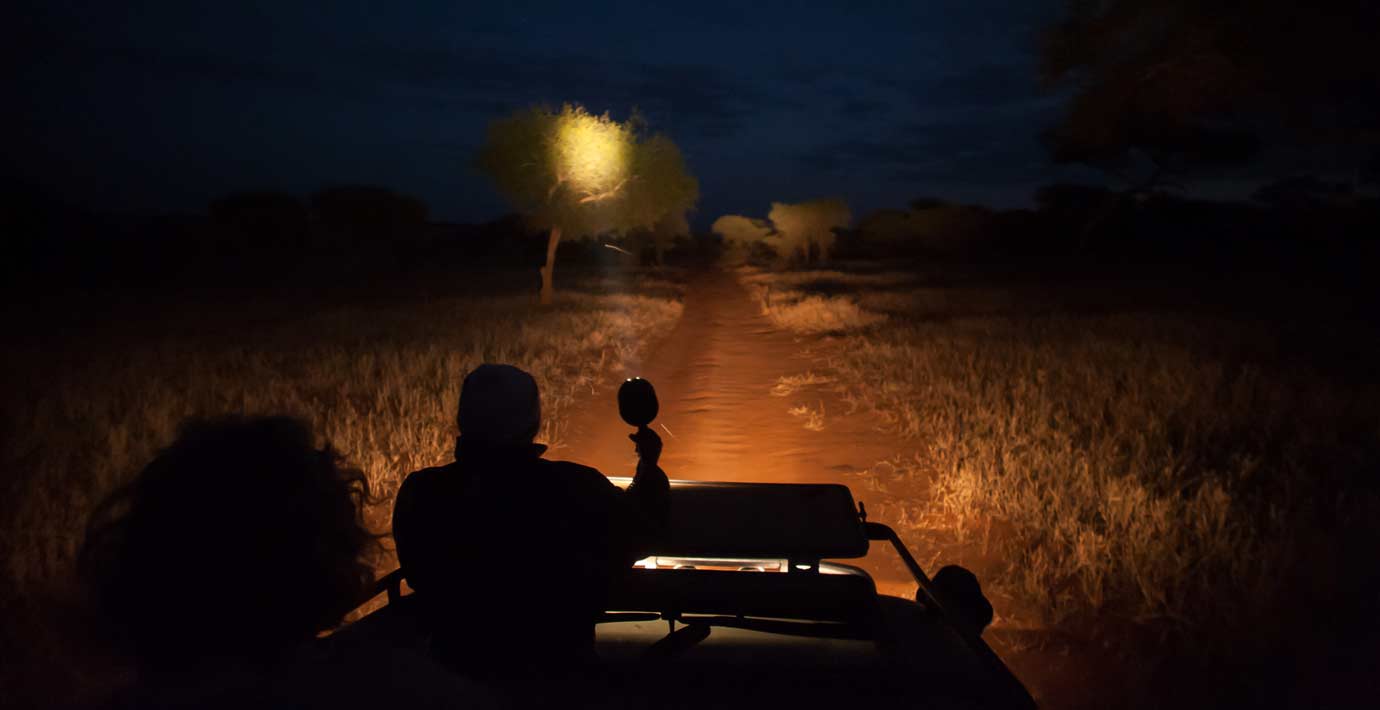
Night drives can create additional opportunities because leopards and many other animals may become more active during low-light hours.
They still do not guarantee a sighting, but the experience reveals another side of Uganda’s wildlife.
A well-planned night drive is different from simply driving after sunset. It should be organised in accordance with the rules of the protected area and conducted in a way that avoids unnecessary disturbance. For travellers, the appeal is not only the possibility of a leopard but also the chance to see the landscape and animal behaviour under very different conditions.
Night drives should always be conducted according to park regulations and through authorised safari arrangements.
Sample Uganda Leopard & Wildlife Safari Route
Combine several wildlife areas to maximise variety rather than relying on only one national park.
This type of route works particularly well for travellers who want a complete Uganda experience rather than a safari built around one animal alone. Murchison Falls introduces the northern savannah and Nile, Queen Elizabeth adds western Uganda’s classic plains and channels, Bwindi brings the forest and mountain gorillas, and Lake Mburo provides a convenient final wildlife stop before returning toward Kampala or Entebbe.
Murchison Falls
Big-game drives, predators, Nile cruise and the falls.
Queen Elizabeth
Savannah drives, Kazinga Channel and Ishasha.
Bwindi
Add mountain gorilla trekking to the wildlife safari.
Lake Mburo
Zebras, antelopes and nocturnal wildlife.
Where to Stay During a Leopard Safari in Uganda
Staying close to productive game-drive areas helps reduce transfer time and gives you more time inside the park when wildlife is most active.
Accommodation choice can therefore influence the rhythm of the safari. A lodge that allows an easier early departure can be especially useful when the goal is to maximise time in the field. At the same time, the best option still depends on budget, preferred comfort level, route and availability, so the examples below should be treated as useful choices rather than fixed requirements.
Recommended Murchison Falls Lodges


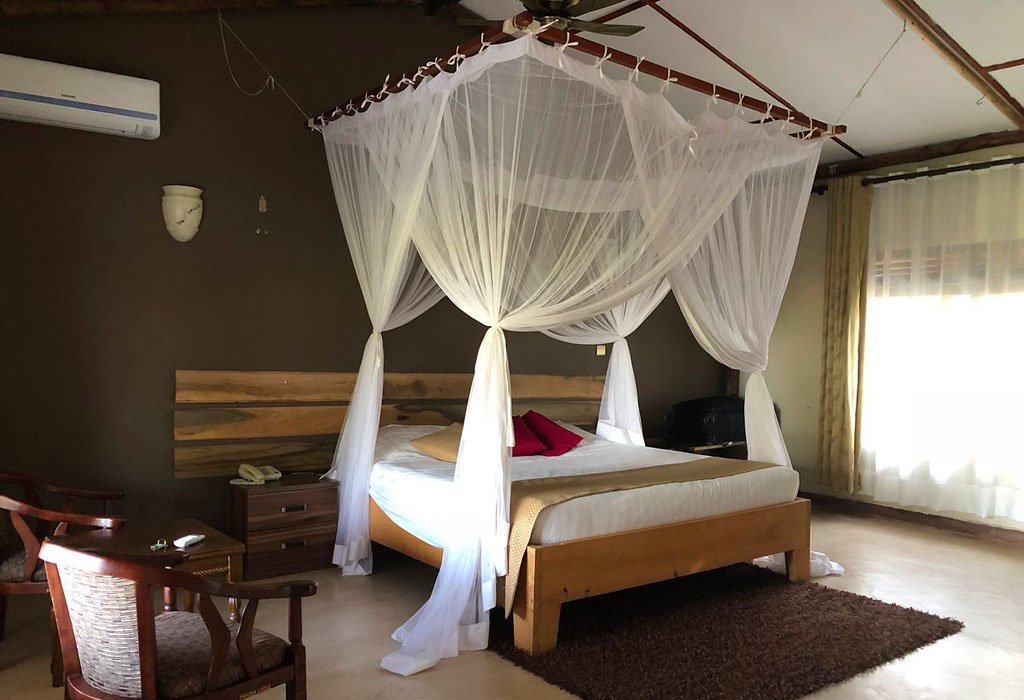
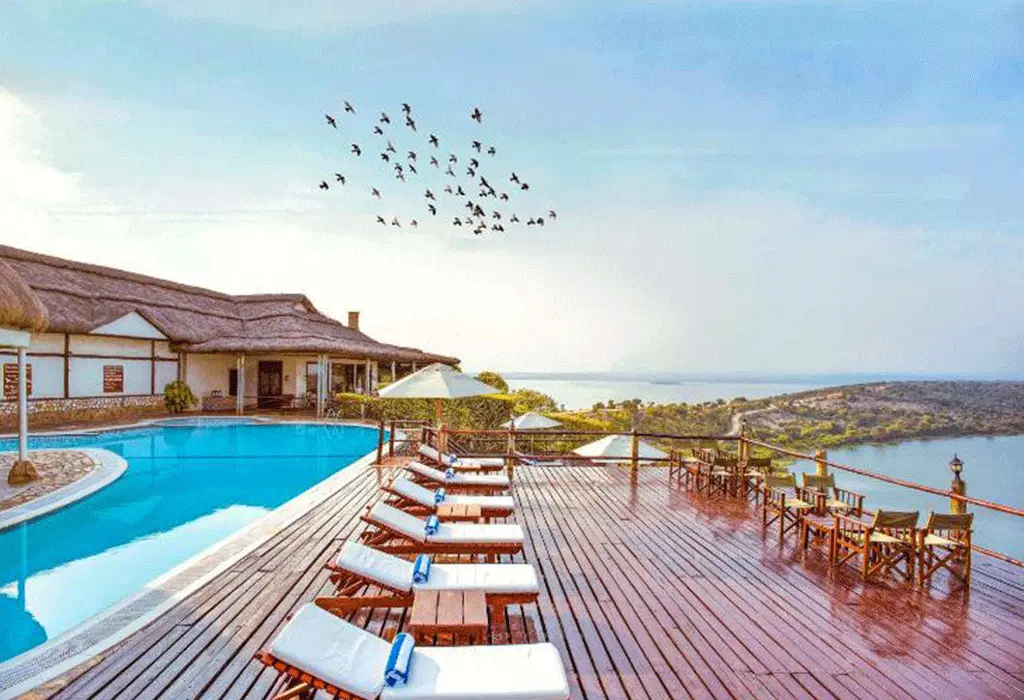


We Can Match Lodges to Your Safari Budget
These are sample options. Your final accommodation can be selected according to your preferred budget, room type, itinerary and availability.
Responsible Leopard Viewing Matters
Leopards should never be surrounded by vehicles, chased unnecessarily or pressured into moving simply to produce a better photograph.
Responsible guides maintain appropriate viewing distances and follow park regulations.
Quiet behaviour also makes wildlife encounters more natural and enjoyable for both visitors and animals.
The best sightings are often the calmest ones. Allowing the animal space may provide a better opportunity to observe natural behaviour such as resting, moving through vegetation or watching prey. Responsible viewing is therefore not separate from a high-quality safari experience; it is part of what makes that experience meaningful.
Safari principle:
A successful leopard encounter is one where visitors enjoy natural behaviour without altering it. Good photography should come from patience and respect.
Uganda Leopard Safari FAQs
Which national park is best for seeing leopards in Uganda?
Murchison Falls, Queen Elizabeth, Kidepo Valley and Lake Mburo are all important leopard safari destinations. Sightings remain unpredictable.
Can you see leopards in Queen Elizabeth National Park?
Yes. Leopards occur within Queen Elizabeth National Park, although they can be difficult to find because they are solitary and secretive.
Are there leopards in Lake Mburo?
Yes. Leopards occur in Lake Mburo National Park, where woodland, rocky terrain and dense vegetation provide suitable cover.
Can I see leopards during the day?
Yes. Daytime sightings occur, particularly during cooler morning hours. Leopards may also be seen resting in trees or shaded vegetation.
Can leopard sightings be guaranteed?
No. Leopards are free-ranging wild animals and a responsible safari operator should never guarantee a sighting.
Can leopard viewing be combined with gorilla trekking?
Yes. Queen Elizabeth combines naturally with Bwindi, while Lake Mburo can be included toward the beginning or end of the safari.
How many nights should I spend in a leopard safari park?
Two or three nights normally provide more game-drive opportunities than rushing through a park in a single afternoon. The ideal stay depends on the wider itinerary, but allowing several drives gives more flexibility if weather, animal movements or road conditions affect one particular outing.
Plan a Uganda Safari With More Time in the Best Leopard Habitats
Safari Vacations & Travel Services can create a private Uganda itinerary combining leopard country with lions, elephants, chimpanzees, mountain gorillas and Uganda’s finest savannah landscapes.
Your route can be adjusted around the number of days available, preferred accommodation level and whether leopard viewing is your main priority or one part of a wider primate and wildlife safari.