
How Fit Do You Need to Be for Uganda Gorilla Trekking?
Do You Have to Be Very Fit for Gorilla Trekking in Uganda?
No. Most visitors do not need exceptional fitness, but a moderate level of physical fitness is recommended. You should be reasonably comfortable walking on uneven ground, managing uphill and downhill sections, and spending several hours outdoors.
Uganda Wildlife Authority describes gorilla trekking as a moderately demanding activity that may last approximately 2–7 hours. However, the actual duration varies depending on the gorilla family’s location, the terrain and the weather.
If you can comfortably enjoy regular walks, climb hills or stairs, and manage a few hours of outdoor activity with breaks, you may already have a useful fitness foundation.
Older visitors and people with limited mobility may still have options, including local porter assistance and specially arranged carrying services, subject to their circumstances and park arrangements.
Understanding the Physical Demands of Gorilla Trekking
For many travellers, coming face to face with mountain gorillas is a lifelong dream. The experience is extraordinary, but preparing for it often raises a practical question: how physically fit do you need to be?
Some visitors worry that they must be experienced hikers. Others are concerned about their age, weight, knee problems or the possibility of walking for several hours through a rainforest.
The reassuring news is that gorilla trekking is not reserved for athletes or mountaineers. Many ordinary travellers participate successfully with sensible preparation and appropriate support.
However, it is important to understand that the activity takes place in natural mountain forests rather than on smooth walking paths.
Uganda’s mountain gorillas inhabit Bwindi Impenetrable National Park and Mgahinga Gorilla National Park in southwestern Uganda.
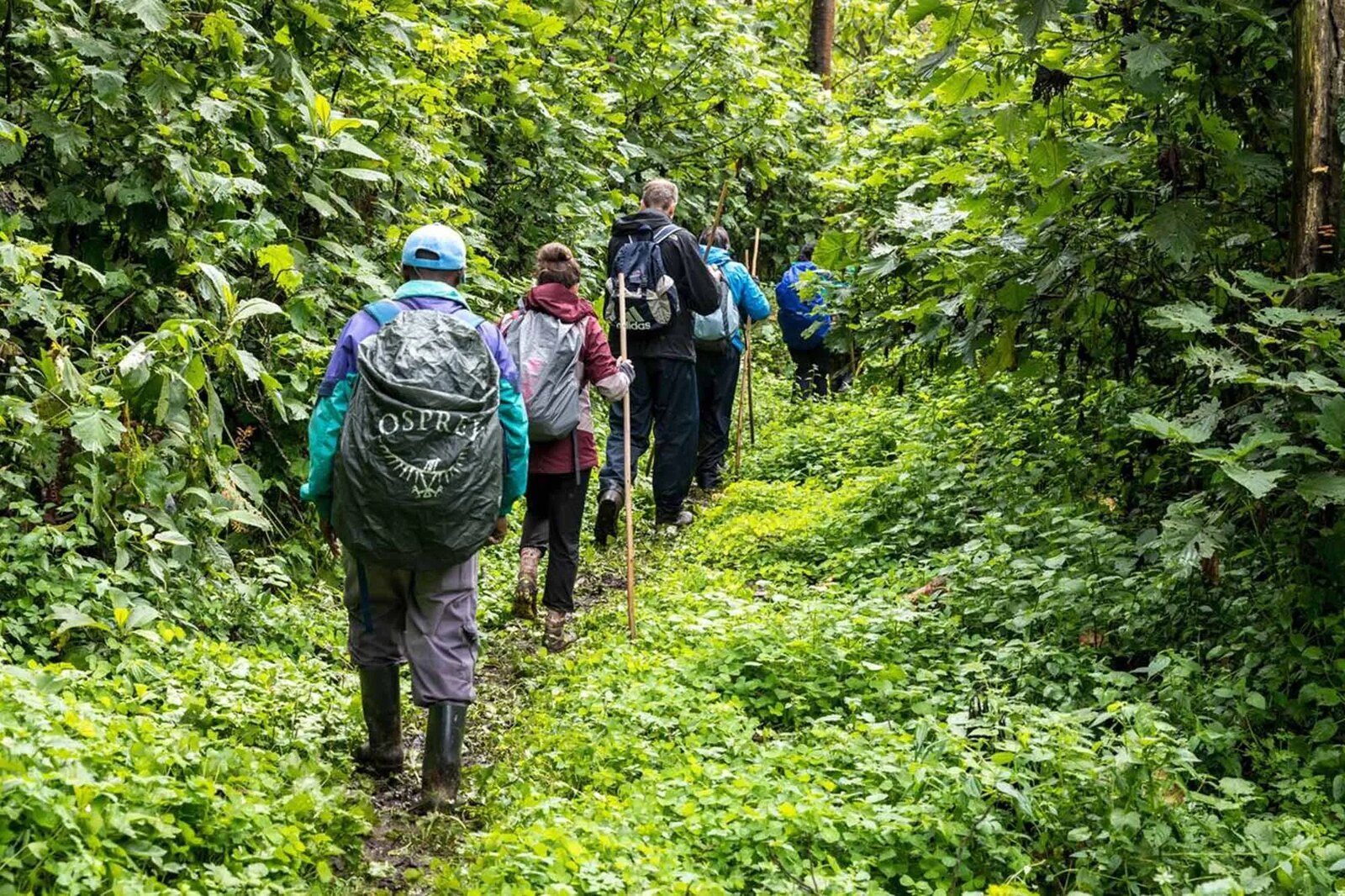
Both parks offer spectacular mountain landscapes, but their trails may include steep slopes, narrow paths, thick vegetation, tree roots, mud and changing weather conditions.
The gorillas move freely within their protected habitats, so the exact distance visitors must walk cannot be guaranteed before the trek.
At Safari Vacations and Travel Services, we encourage guests to assess their fitness realistically and prepare gradually. With suitable planning, visitors can focus more on enjoying the wildlife encounter and less on worrying about the hike.
This guide explains the fitness requirements, how to prepare, what assistance may be available and how to plan a gorilla trek that suits your abilities.
01 / TREKKING DIFFICULTY
What Makes Uganda Gorilla Trekking Physically Demanding?
1. Steep Mountain Slopes
Bwindi is a mountainous rainforest with numerous ridges and valleys. Some gorilla groups are found on relatively accessible slopes, while others may be located much farther away.
Walking uphill requires endurance, while descending steep ground can be challenging for your knees and balance.
Unlike hiking a fixed route, you cannot reliably predict how much climbing you will do before meeting the gorillas.
Therefore, preparing your legs for both uphill and downhill walking is especially useful.
2. Uneven Forest Terrain
Gorilla trekking trails are not always smooth or clearly maintained hiking paths.
You may need to step over exposed tree roots, walk around rocks, cross muddy sections or follow a narrow trail through forest vegetation.
These obstacles require balance and concentration, even when the walking pace is relatively slow.
Visitors who regularly walk on natural paths may find this more familiar than those accustomed only to flat roads or pavements.
3. Mud and Rainfall
Rain can fall in Bwindi and Mgahinga at different times of the year.
Wet conditions make slopes slippery, increase the effort required to walk and may slow the group’s progress.
Good hiking boots, appropriate rain protection and trekking poles can make a noticeable difference.
Our best time to see mountain gorillas guide explains the seasonal differences.
4. Unpredictable Trekking Duration
Mountain gorillas move around their habitat as they feed and rest. Their location changes from day to day.
One visitor may locate the assigned family relatively quickly, while another group may spend several hours searching.
Uganda Wildlife Authority gives a general trekking duration of approximately 2–7 hours. Some individual treks may fall outside this range.
This is one reason visitors should prepare for a longer walk rather than assuming they will have an easy, short encounter.
5. Mountain Altitude
Uganda’s gorilla habitats lie in mountainous environments, where the elevation can make uphill walking feel more demanding than at lower altitudes.
Visitors arriving from low-lying countries may notice that they become breathless more quickly on steep climbs.
This does not mean every visitor will experience altitude illness. However, pacing yourself, drinking enough water and avoiding unnecessary rushing are sensible precautions.
6. Walking Back After the Gorilla Encounter
One detail that visitors sometimes overlook is the return journey.
After the gorilla family has been located, standard trekking permits allow up to one hour of observation under ranger supervision.
You must then walk back to the designated exit point or where the vehicles can meet the group.
Save enough energy for this return section, particularly when you have climbed or descended steep slopes earlier in the day.
Learn more about the daily schedule in our gorilla trekking start and finish times guide.
THREE ESSENTIAL PARTS OF YOUR GORILLA TREK
What to Expect During Your Uganda Gorilla Trekking Experience
Understanding the different stages of the trek helps you prepare for the physical effort involved.


02 / ASSESSING YOUR FITNESS
How Can You Tell Whether You Are Fit Enough?
You do not need to complete an official fitness examination for a normal gorilla trekking permit. However, assessing your own walking ability helps you prepare responsibly.
Think about the types of physical activity you can manage comfortably in everyday life.
Can you walk on hilly ground for an extended period? Can you climb stairs without excessive difficulty? Are you comfortable balancing on uneven surfaces?
These practical abilities are more relevant than your running speed or how much weight you can lift in a gym.
A Practical Fitness Self-Check
| Physical activity | Useful preparation target | Why it matters |
|---|---|---|
| Regular walking | Comfortably walk 60–90 minutes | Builds endurance |
| Hill walking | Practice both climbing and descending | Prepares your legs for slopes |
| Longer outings | Build toward a 2–3-hour hike with breaks | Improves stamina |
| Uneven surfaces | Practice walking on safe natural trails | Improves balance |
| Stairs or step-ups | Climb comfortably at a sustainable pace | Strengthens legs |
| Daypack walking | Try a light pack on practice walks | Prepares for water and rainwear |
Note: These are informal preparation goals, not medical tests or official pass/fail requirements. A longer or steeper gorilla trek may be more demanding. If you have medical conditions or significant mobility limitations, seek individualized professional advice.
Does Being Overweight Prevent Gorilla Trekking?
No. Body weight by itself does not determine eligibility for gorilla trekking.
What matters is your overall physical ability, health, stamina and capacity to manage uneven terrain safely.
Visitors of different body sizes participate in gorilla trekking. Some find the activity relatively manageable, while others need additional support or preparation.
If you are concerned about endurance or joint comfort, begin regular walks in advance, discuss your needs with your safari operator and consider hiring a porter.
What If You Rarely Exercise?
If you spend most of your day sitting and rarely walk long distances, you should consider building your fitness before travelling.
Even a few weeks of consistent walking can make a useful difference to your comfort and confidence.
Start with manageable distances and increase gradually rather than attempting an exhausting hike immediately.
For more on the physical challenges, read our gorilla trek difficulty guide.
03 / GETTING READY FOR YOUR SAFARI
A Simple 6-Week Fitness Preparation Plan
For a generally healthy adult, preparing several weeks before travelling can improve comfort on the trail. The example below is a flexible training framework rather than a medical prescription.
WEEKS 1–2
Build Your Walking Habit
Walk regularly at a comfortable pace, starting with approximately 20–40 minutes if suitable for your current ability.
Gradually introduce gentle slopes or stairs. Wear comfortable walking shoes and focus on consistency.
WEEKS 3–4
Strengthen Your Legs
Increase suitable walking sessions toward 45–75 minutes and add longer walks on safe, hilly terrain.
Include gentle step-ups, supported squats or other leg-strengthening activities appropriate for your health and fitness level.
WEEKS 5–6
Practice Longer Hikes
If comfortable and medically appropriate, build toward an occasional 2–3-hour walk on varied terrain, allowing breaks.
Practice wearing your hiking boots and carrying a small daypack. Reduce intense activity shortly before departure.
Why Hill Walking Is Especially Useful
Walking uphill strengthens your legs and cardiovascular endurance. Descending improves control and helps prepare the muscles used to stabilize your knees.
Both movements are relevant because gorilla trekking involves natural mountain terrain rather than a level walking circuit.
If you live somewhere without hills, stairs, a safe treadmill incline or gentle step-up exercises can provide alternatives.
Should You Go to the Gym?
A gym is not essential for gorilla trekking preparation.
Cycling, swimming, walking and basic strength exercises can all contribute to general fitness. However, outdoor walking remains particularly useful because it resembles the movement required on trekking day.
Those with existing medical conditions, balance problems or previous injuries should discuss an appropriate exercise plan with a qualified health professional.
04 / ASSISTANCE DURING TREKKING
How Porters Make Gorilla Trekking Easier
Hiring a local porter is one of the most practical ways to reduce the physical effort of a gorilla trek.
A porter can carry your backpack, drinking water, rain jacket and other approved personal belongings, allowing you to concentrate on your footing and the experience.
Porters may also provide helpful support when navigating muddy or steep sections, although they cannot remove every physical challenge.
Even reasonably fit visitors often appreciate having a porter, particularly on longer treks.
What Does a Porter Do?
Porters generally assist with carrying personal equipment and helping visitors negotiate challenging parts of the trail.
They do not replace the authorized ranger guides, who remain responsible for managing the gorilla trekking activity and enforcing safety instructions.
Porter fees are normally paid separately from the gorilla permit and should be confirmed before your trek.
Why Hiring a Porter Supports Local Communities
Porter services also create employment opportunities for people living around the national parks.
Choosing to hire a porter can provide direct income to members of nearby communities while making the experience more comfortable.
This is an example of how responsible tourism can help communities benefit from wildlife conservation.
Can Rangers Arrange a Shorter Trek?
Visitors with limited stamina can discuss their concerns before the morning briefing.
Park staff may consider fitness and mobility needs when allocating visitors to different trekking groups, subject to available gorilla families and operational circumstances.
However, no operator can guarantee a short or easy trek in advance because gorilla locations change.
For families and older travellers, our family gorilla trekking guide provides further planning advice.
05 / OLDER AND LESS MOBILE TRAVELLERS
Can Older Visitors and People with Limited Mobility Trek Gorillas?
Yes, gorilla trekking may be possible for older travellers and visitors with some mobility limitations, depending on their circumstances and the assistance available.
Uganda’s standard minimum age for gorilla trekking is 15 years. There is no general published maximum age.
However, age and fitness are not the same thing. A physically active person in their seventies may be more comfortable on a forest hike than a much younger person who rarely exercises.
It is important to discuss health, balance, walking ability and mobility needs before paying for permits or confirming travel arrangements.
Gorilla Trekking for Visitors in Their 60s and 70s
Many older travellers enjoy gorilla trekking successfully, especially when they prepare in advance and arrange practical assistance.
Walking regularly, using appropriate footwear, hiring a porter and allowing enough time to rest before the trek can improve the experience.
Visitors should communicate any concerns about knees, hips, breathing or balance to the safari operator ahead of time.
Gorilla Trekking for Visitors in Their 80s
Some travellers in their eighties may also be able to visit mountain gorillas, but planning must be highly individualized.
The ability to participate depends on overall health, mobility, medical advice, available carrying assistance and the park authorities’ assessment of what can be undertaken safely.
No particular age guarantees participation, and no operator should promise that every visitor can complete a forest trek.
Sedan Chairs and Specialist Carrying Services
For travellers who cannot reasonably manage the forest walk, some gorilla trekking locations may offer specialist carrying arrangements, sometimes called sedan chairs or stretcher services.
These services use a team of trained local helpers to carry the visitor through suitable sections of terrain.
They require advance coordination and separate payment. Availability, suitability, capacity and pricing must be confirmed with the relevant service providers and park authorities.
Such services are not appropriate for every medical or mobility condition, so visitors should obtain suitable medical guidance before committing.
What If You Have Knee or Joint Problems?
Steep descents may be particularly challenging for visitors with knee pain or reduced joint mobility.
Appropriate walking aids, hiking poles or porter support may help some people, but they are not substitutes for professional medical advice when significant symptoms are present.
Discuss your concerns early so the safari can be planned realistically rather than relying on last-minute arrangements.
Which Gorilla Trekking Sector Is Best for Your Fitness Level?
Bwindi Impenetrable National Park has four principal gorilla trekking sectors: Buhoma, Ruhija, Rushaga and Nkuringo. Mgahinga provides another gorilla trekking location in Uganda.
Each area has different terrain, but the difficulty of an individual trek is determined mainly by the gorillas’ current location, route conditions and weather.
| Trekking area | General terrain | Fitness considerations |
|---|---|---|
| Buhoma | Rainforest slopes and valleys | Some treks may be less demanding, but difficult routes are possible |
| Ruhija | Higher-altitude forest terrain | Cool conditions, hills and potentially strenuous walking |
| Rushaga | Forested slopes and valleys | Difficulty varies significantly between gorilla families |
| Nkuringo | Mountainous ridges and steep slopes | Can involve demanding climbing and descending |
| Mgahinga | Volcanic mountain and bamboo vegetation | Elevation and changing slopes may make trekking strenuous |
Important: No gorilla trekking sector guarantees an easy walk. The park staff determine trekking arrangements based on the gorilla families’ locations and operational conditions.
For more detail, read our Bwindi gorilla trekking sectors guide and Mgahinga gorilla trekking information.
What Should You Pack to Make Gorilla Trekking Easier?
Having suitable equipment can improve comfort and reduce the effort involved in moving through the rainforest.
Choose equipment that feels comfortable rather than buying unnecessary expensive gear. Most importantly, break in your hiking boots before travelling.
For additional advice, explore 20 important gorilla trekking tips and our trekking and habituation comparison.
06 / MAKING YOUR TREK MORE COMFORTABLE
Practical Tips for a More Comfortable Gorilla Trek
Arrive at Your Lodge the Day Before
Staying near your confirmed trekking sector the previous night allows you to attend the morning briefing without a long road journey beforehand.
Arriving early also gives you time to relax, prepare your clothing and arrange porter services if required.
Get Enough Rest
Try to have a restful evening before your trek. Avoid planning demanding activities immediately beforehand if you are concerned about your stamina.
On trekking day, eat a suitable breakfast and carry enough water for the expected forest activity.

Walk at a Comfortable Pace
Do not treat gorilla trekking as a competition.
Follow the pace set by the ranger guides and communicate when you need assistance or a rest.
Although groups are managed with visitor needs in mind, everyone must comply with the safety instructions and operational decisions of park staff.
Do Not Ignore Health Concerns
If you have a heart or lung condition, significant joint problems, recent surgery or other health concerns that could affect hiking, obtain personalized medical advice before travel.
Visitors experiencing contagious illnesses may not be allowed to trek because mountain gorillas are susceptible to human infections.
Disclose important mobility and accessibility requirements before booking so arrangements can be explored responsibly.
Choose the Season That Suits Your Preferences
June to September and December to February are generally considered relatively drier trekking periods.
The wetter months can bring muddier trails and more challenging walking conditions, although gorilla trekking remains possible throughout the year.
Weather is never completely predictable in a mountainous rainforest.
Our gorilla trekking seasonal guide can help with planning.
Plan a Relaxing Activity After Your Trek
Some travellers appreciate having a quiet afternoon or a relaxed following day after gorilla trekking.
A stay near Bwindi, Lake Bunyonyi or Lake Mutanda can provide a pleasant opportunity to rest and enjoy the scenery.
Avoid arranging tight flight connections immediately after the trek because its duration cannot be guaranteed.
Concerned About Your Gorilla Trekking Fitness?
Safari Vacations and Travel Services can help you understand the different trekking destinations, discuss your mobility needs, arrange suitable accommodation and explore porter or specialist assistance options where available.
Frequently Asked Questions About Uganda Gorilla Trekking Fitness
1. How fit do you need to be for Uganda gorilla trekking?
A moderate level of fitness is recommended. Visitors should be prepared for several hours of walking on uneven and sometimes steep forest terrain.
2. Do I need to be an experienced hiker?
No. You do not need professional hiking experience, but regular walking and some hill preparation can make the trek considerably more comfortable.
3. How many hours does gorilla trekking take?
Uganda Wildlife Authority gives an approximate range of 2–7 hours. Actual trekking time varies depending on the gorillas’ location, terrain and weather.
4. Can an unfit person trek gorillas in Uganda?
Possibly, but it depends on the person’s actual walking ability and health. Preparing in advance, hiring a porter and discussing mobility needs are important. Some visitors may require specialist assistance.
5. Is gorilla trekking harder than an ordinary nature walk?
It can be. Gorilla trekking may involve steep slopes, thick vegetation, mud and uneven paths, making it more physically demanding than walking on a smooth, established trail.
6. Can overweight travellers go gorilla trekking?
Yes. Weight alone does not determine participation. General health, endurance, mobility and the ability to manage forest terrain are more relevant considerations.
7. Can people in their seventies trek gorillas?
Yes, many older visitors can participate. Fitness, health and mobility matter more than age alone. Advance preparation and porter assistance may be useful.
8. Can an 80-year-old do gorilla trekking?
It may be possible, depending on health, physical ability, medical advice and available assistance. Specialist carrying arrangements should be discussed well before booking.
9. Is there a maximum age for gorilla trekking?
There is no general published upper-age limit. The minimum age is 15, and participation must be appropriate for the visitor’s circumstances.
10. Can visitors with knee problems trek gorillas?
Some can, but steep descents and slippery ground may be challenging. Seek medical advice, discuss mobility requirements in advance and consider appropriate assistance.
11. Can I hire a porter during gorilla trekking?
Yes. Local porters are commonly available to carry daypacks and help visitors on difficult sections. Their services are normally charged separately.
12. Are sedan chairs available for gorilla trekking?
Specialist carrying arrangements may be available in some areas. They require advance organization and an assessment of suitability, availability and cost.
13. Can I request an easier gorilla trek?
You can explain your fitness concerns to the ranger team. Staff may consider these needs when organizing groups, but a short or easy trek cannot be guaranteed.
14. Which Bwindi sector is easiest for gorilla trekking?
No sector is always the easiest. Conditions change depending on the gorilla families’ locations. Some treks in Buhoma or Rushaga may be manageable, but difficult routes are possible in every sector.
15. How should I train before gorilla trekking?
Build up regular walking, introduce hills or stairs, practise longer outdoor walks, and strengthen your legs at a level appropriate for your health.
16. Is gorilla trekking more difficult during the rainy season?
It can be. Wet weather may make trails muddy and slippery, increasing the physical effort required.
17. What happens if I become exhausted during the trek?
Inform the rangers immediately. They will assess the situation and available assistance. Visitors should not rely on guaranteed evacuation or carrying services without prior arrangements.
18. Can Safari Vacations plan a trek for someone with limited mobility?
Yes. Safari Vacations and Travel Services can discuss your circumstances, explore suitable trekking arrangements and help coordinate available porter or specialist assistance, subject to confirmation and suitability.
Final Verdict: Are You Fit Enough for Gorilla Trekking in Uganda?
Most visitors do not need exceptional physical fitness to enjoy gorilla trekking in Uganda. However, they should approach the experience with realistic expectations.
A moderate level of fitness, comfortable walking ability and some preparation for hills and uneven terrain can make the trek more enjoyable.
The forest environment is unpredictable. Some gorilla families may be located after a relatively manageable walk, while others may require a more demanding journey through steep or muddy terrain.
For this reason, it is better to prepare for a challenging trek and enjoy an easier one than to assume the experience will involve only a short walk.
Age, weight and previous hiking experience do not automatically determine whether someone can participate. What matters is the person’s general health, mobility, realistic preparation and any support required.
Hiring a local porter, bringing reliable hiking equipment and communicating your needs before trekking can all improve the experience.
At Safari Vacations and Travel Services, we help travellers plan gorilla safaris that consider more than permits and accommodation. We also pay attention to travel pace, trekking destinations, individual preferences and the practical arrangements that make a safari comfortable.
Whether you are an experienced hiker, a first-time visitor or someone concerned about the physical demands of the forest, careful preparation is the best place to begin.
YOUR UGANDA GORILLA ADVENTURE STARTS HERE
Let Us Help You Plan a Comfortable Gorilla Trekking Safari
Safari Vacations and Travel Services can help you arrange official gorilla trekking permits, comfortable safari accommodation, private 4×4 transportation, experienced driver-guides and practical trekking assistance based on your needs.
Safari Vacations and Travel Services Ltd
WhatsApp: +256 776 423286
www.ugandarwanda-safaris.com


