Primate species viewable on guided walks
Uganda and Rwanda Primate Safaris
Primate Species to See on Guided Walks in Uganda and Rwanda
Discover mountain gorillas, chimpanzees, golden monkeys, colobus monkeys and other fascinating primates while exploring the tropical rainforests and bamboo forests of East Africa with experienced guides.
Discover East Africa’s Incredible Primate Diversity
Uganda and Rwanda are among Africa’s most rewarding destinations for travellers interested in observing primates in their natural habitats. Their protected rainforests, bamboo forests, montane woodlands and forest edges support an extraordinary variety of species.
Guided forest walks provide opportunities to discover much more than mountain gorillas and chimpanzees. Depending on the destination and the day’s wildlife movements, visitors may encounter golden monkeys, black-and-white colobus monkeys, red-tailed monkeys, blue monkeys, L’Hoest’s monkeys, grey-cheeked mangabeys, vervet monkeys and olive baboons.
Some encounters happen during dedicated primate tracking activities, while others take place along nature trails, birdwatching excursions and guided forest walks. Experienced guides help visitors identify animals through their appearance, movements, feeding habits and vocalisations.
For a broader introduction, explore our Uganda primates safari and discover the different wildlife experiences available across the region.
Primate Encounters You Can Experience (Primate Species to See on Guided Walks)
Great Apes
Mountain gorillas and chimpanzees in their natural forest environments.
Forest Monkeys
Colobus, blue monkeys, red-tailed monkeys and mangabeys.
Volcanic Forest Primates
Golden monkeys living among the bamboo forests of the Virunga Mountains.
Nocturnal Primates
Bushbabies and pottos that may be encountered during suitable guided night walks.
Primate Species Viewable on Guided Walks
Below are some of the remarkable primates that visitors may encounter while exploring Uganda and Rwanda’s protected forests and natural habitats.
1. Mountain Gorillas
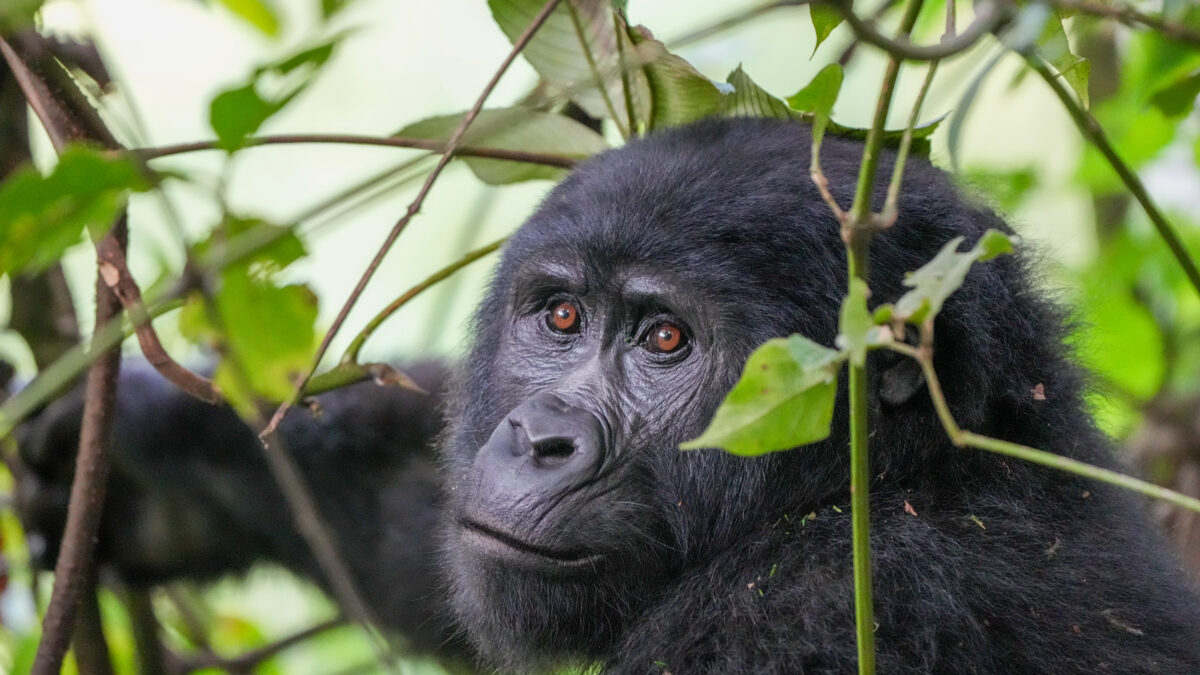
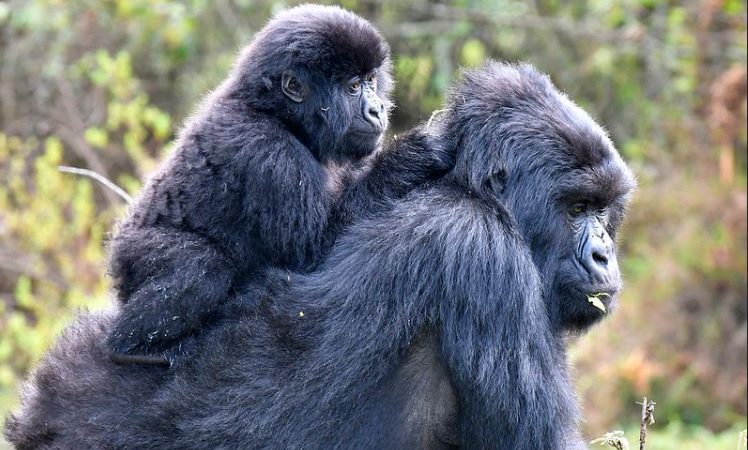
Mountain gorillas are among the most remarkable primates in East Africa. These endangered great apes inhabit the high-altitude forests of Uganda’s Bwindi Impenetrable National Park, Mgahinga Gorilla National Park and Rwanda’s Volcanoes National Park.
Gorilla trekking is a dedicated guided wildlife activity rather than an ordinary nature walk. Visitors follow experienced rangers and trackers into the forest to locate a habituated gorilla family.
During the encounter, visitors may observe silverbacks, adult females, infants and juveniles as they feed, groom, rest and interact. Their strong family relationships and fascinating behaviour make gorilla trekking one of the region’s most memorable wildlife experiences.
For more information, read our Bwindi and Rwanda primate trekking guide.
2. Chimpanzees
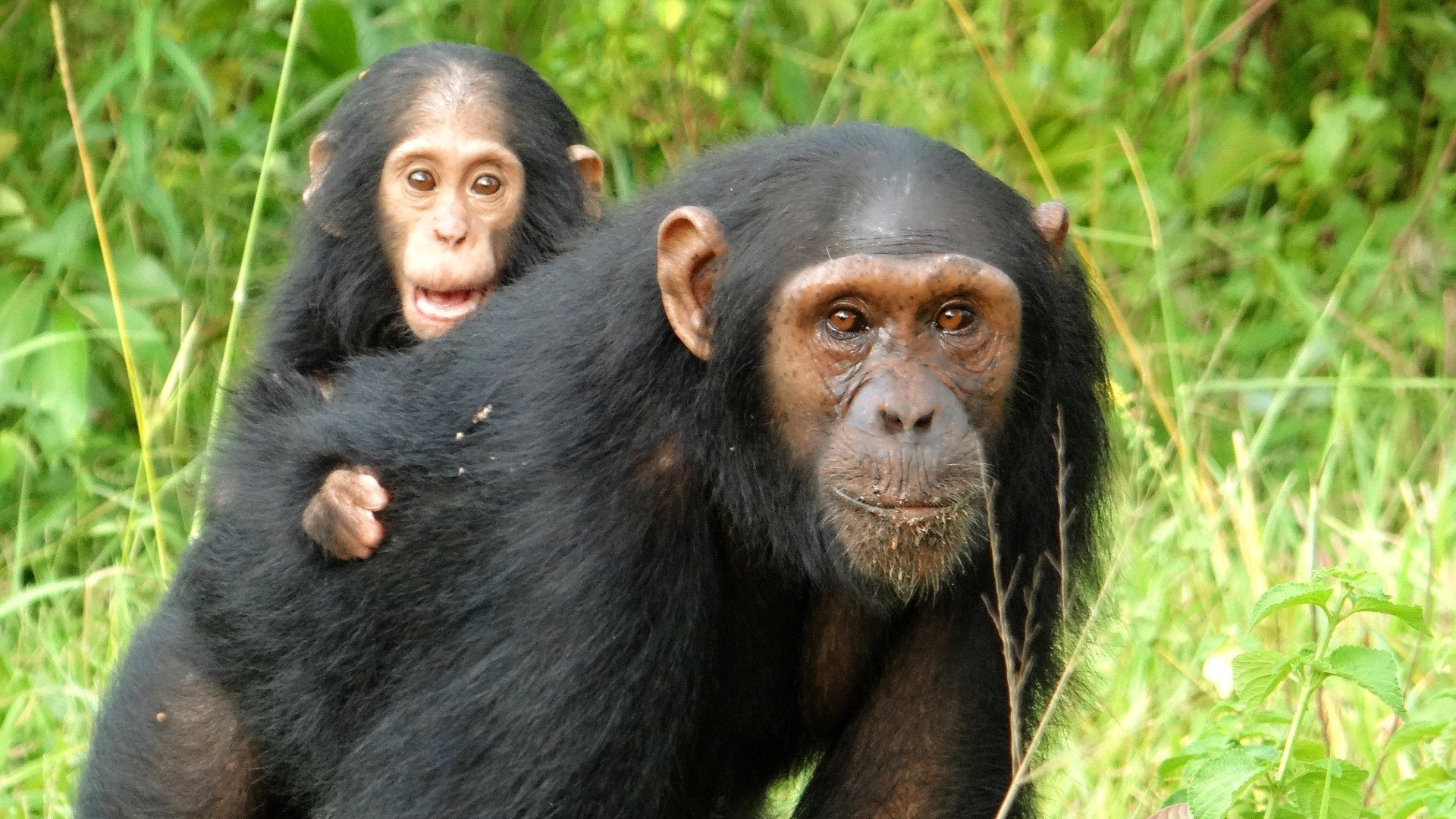
Chimpanzees are intelligent and highly social great apes found in several protected forests in Uganda and Rwanda. Uganda’s Kibale National Park is particularly famous for chimpanzee tracking, while Budongo Forest, Kalinzu Forest and Kyambura Gorge provide additional opportunities.
In Rwanda, Nyungwe National Park is the leading destination for chimpanzee trekking. Guided walks begin with a briefing before visitors enter the forest in search of habituated chimpanzee communities.
Chimpanzees communicate through pant-hoots, screams, grunts and other vocalisations. Visitors may observe feeding, grooming, nest building, playing and movement through the forest canopy.
Explore our chimpanzee facts and behaviour guide and learn to recognise chimpanzee calls.
3. Golden Monkeys
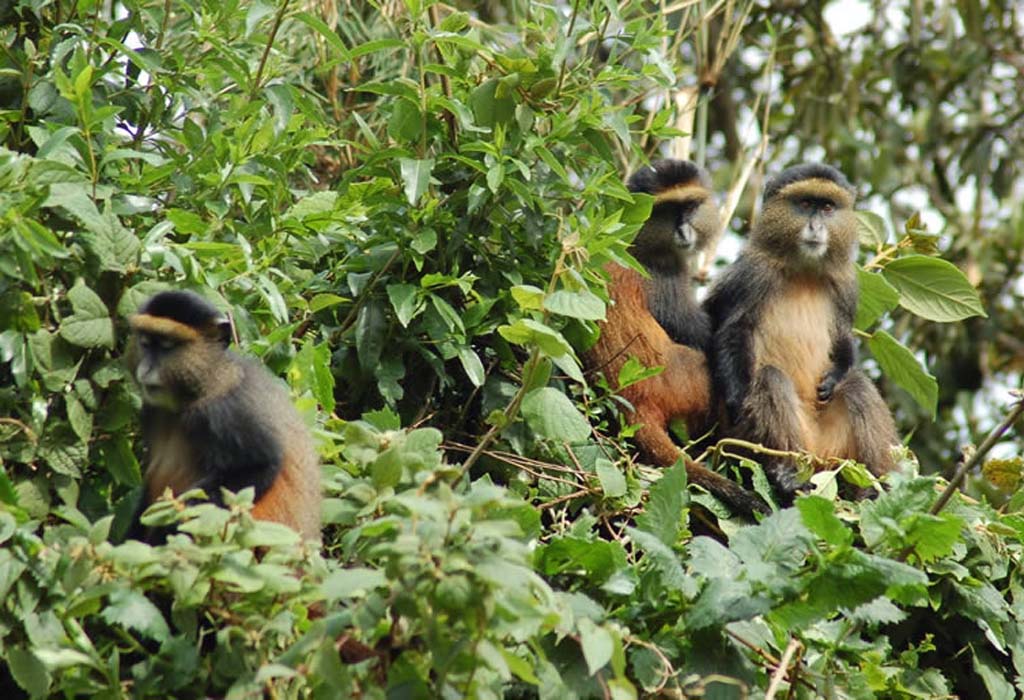
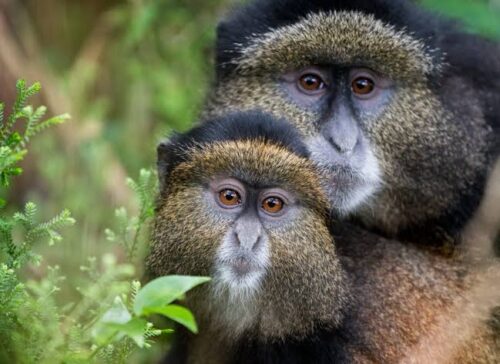
Golden monkeys are among the most colourful primates found in the Virunga volcanic region. Their distinctive golden-orange patches make them particularly attractive to wildlife enthusiasts and photographers.
In Uganda, golden monkeys are associated with Mgahinga Gorilla National Park. In Rwanda, visitors can track them in Volcanoes National Park.
They spend much of their time feeding on bamboo shoots, fruits and other vegetation. Their energetic movements make tracking them an exciting experience as they jump between bamboo stems and move through the forest.
Golden monkey tracking can also be combined with gorilla trekking in the Virunga region.
Read our detailed guide to golden monkey trekking in East Africa.

4. Black-and-White Colobus Monkeys
Black-and-white colobus monkeys are recognised by their contrasting black coats, white facial markings and long bushy tails. They are among the most graceful primates found in East African forests.
These monkeys spend much of their time in the canopy, feeding mainly on leaves. Their specialised digestive systems help them process a leafy diet.
Visitors may encounter them in Kibale, Bwindi and Nyungwe forests, among other suitable habitats. They are particularly interesting to watch when entire groups move between tree branches.
5. Red-Tailed Monkeys
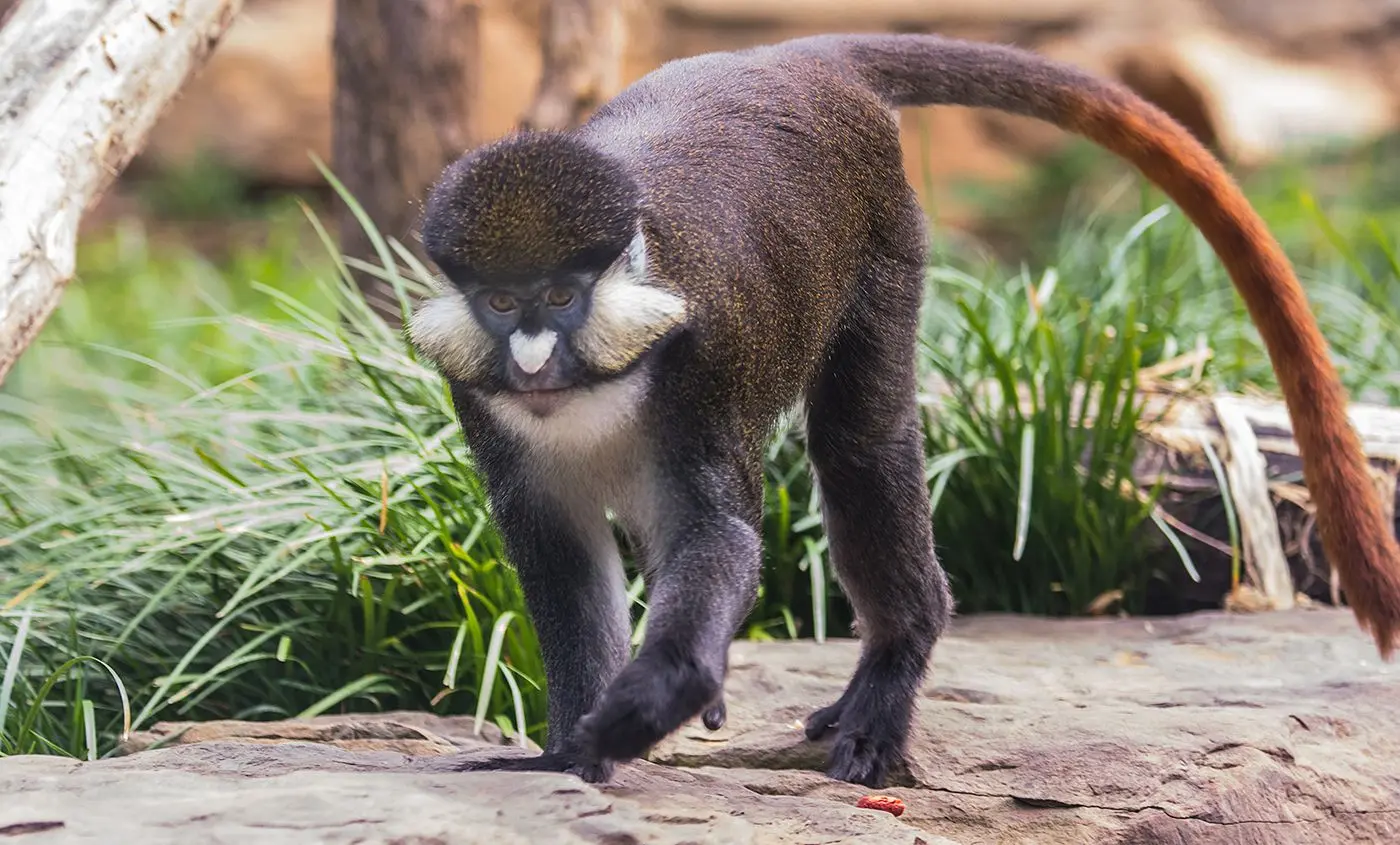
Red-tailed monkeys are small, agile forest primates recognised by their reddish tails, white nose markings and expressive faces. They live in social groups and are frequently encountered in Uganda’s tropical forests.
Kibale National Park is a rewarding destination for visitors hoping to observe these monkeys. They feed on fruits, seeds, leaves and insects and often move through the forest canopy.
During guided walks, watch for their quick movements and listen for calls that reveal their presence among the trees.
6. Blue Monkeys
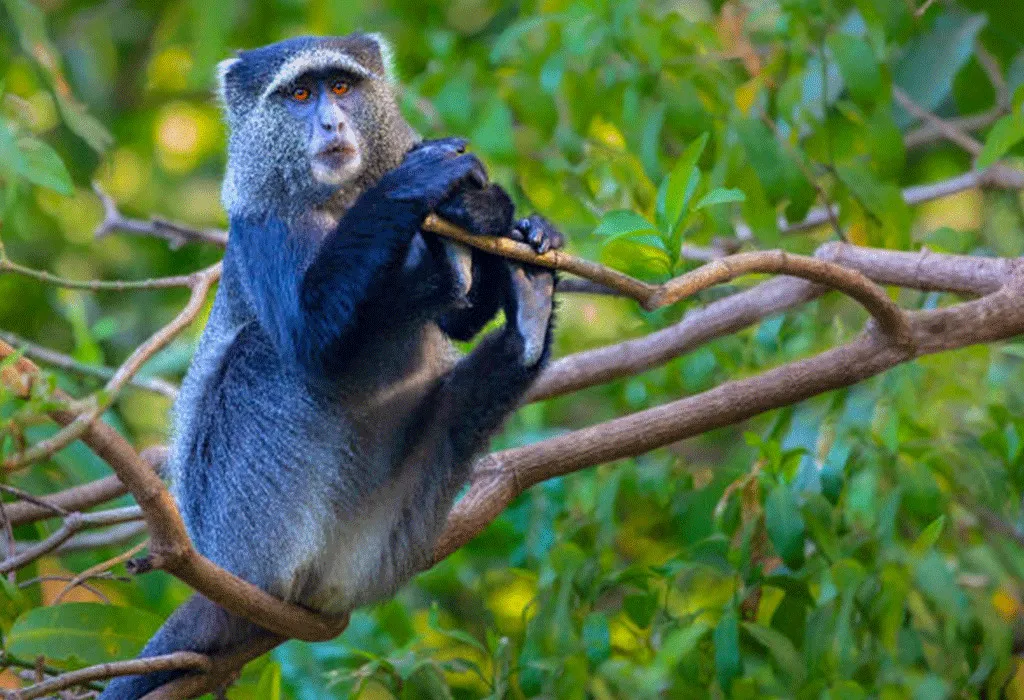
Blue monkeys are forest-dwelling primates with greyish or olive-coloured coats and subtle blue tones around parts of their faces. Their name does not mean that their entire bodies are bright blue.
They occur in several forest habitats across Uganda and Rwanda, including Kibale, Bwindi and Nyungwe. They usually spend considerable time in trees, feeding on fruits, leaves and insects.
Observing their social interactions and movements offers an interesting insight into the ecology of tropical forests.
7. L’Hoest’s Monkeys
L’Hoest’s monkeys are distinctive forest primates with dark coats and characteristic pale or white beards. They are generally shy and can be more difficult to observe than some other monkey species.
They are associated with forests in the Albertine Rift, including parts of Uganda and Rwanda. Unlike many other monkeys, they frequently spend time foraging on the forest floor.
Experienced guides may identify their presence through movement, feeding signs and calls. Their unusual appearance makes a sighting particularly rewarding.
8. Grey-Cheeked Mangabeys
Grey-cheeked mangabeys are lively, social monkeys found in several Ugandan forests, including Kibale. They have dark coats and distinctive pale cheek areas.
They are known for their loud vocalisations, which may be heard before the troop becomes visible. Their calls often travel through the forest and can help guides determine their approximate location.
They feed on fruits, seeds and other forest foods. Watching a troop communicate and move through the canopy adds another dimension to a guided primate walk.
9. Vervet Monkeys
Vervet monkeys are adaptable primates found in woodlands, savannah habitats and forest edges throughout Uganda and Rwanda.
They have greyish coats, black faces and characteristic blue colouring around their reproductive areas. Their alarm calls are particularly interesting because they use different vocalisations in response to different threats.
Visitors may encounter vervet monkeys during nature walks and wildlife drives in places such as Queen Elizabeth National Park, Murchison Falls National Park and Akagera National Park.
10. Olive Baboons
Olive baboons are large, ground-dwelling primates that inhabit a variety of environments, including woodland, savannah and forest margins.
They live in complex social groups and spend much of their time searching for food, grooming one another and interacting with other members of their troops.
During guided walks and safari drives, visitors may see adults caring for young ones while juveniles play and explore their surroundings.
Although they are accustomed to a range of habitats, visitors should never feed or approach baboons.
11. Bushbabies (Galagos)
Bushbabies, also known as galagos, are small nocturnal primates found in several African woodland and forest habitats. They have large eyes, excellent hearing and strong hind legs that help them leap between branches.
They are primarily active at night, feeding on insects, tree gum and other available food. Their calls can sound surprisingly loud compared with their small body size.
In suitable areas, visitors may have opportunities to look for bushbabies during guided night walks. Sightings depend on the location, local wildlife conditions and whether night activities are permitted.
12. Pottos
Pottos are slow-moving nocturnal primates that inhabit tropical forests. They have large eyes, dense fur and specialised hands and feet that allow them to grip branches securely.
Unlike the energetic movements of monkeys, pottos move slowly and carefully through the vegetation while searching for insects, fruits and tree gum.
They are difficult to spot because of their nocturnal behaviour and camouflage. Nevertheless, a guided night walk in suitable forest habitat may provide an opportunity to encounter one.
Best Destinations for Guided Primate Walks
Different protected areas support different primate communities. Choosing the right destination depends on the species you want to see and the kind of forest experience you prefer.
 Kibale National Park, Uganda
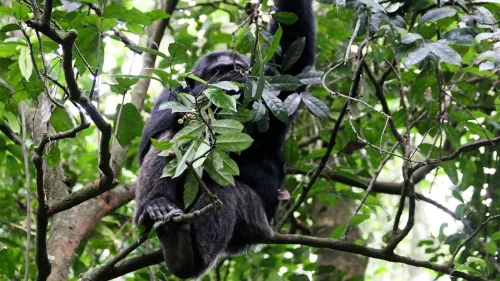
Kibale is one of East Africa’s leading chimpanzee tracking destinations. Its forest also supports red-tailed monkeys, blue monkeys, L’Hoest’s monkeys, grey-cheeked mangabeys and other primates.
 Nyungwe National Park, Rwanda
Nyungwe is famous for chimpanzee tracking, colobus monkeys and several other forest primates. Its canopy walkway and guided nature trails provide additional ways to explore the rainforest.
 Bwindi Impenetrable National Park, Uganda
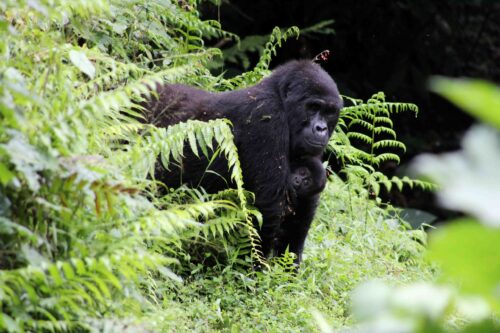
Bwindi is internationally recognised for mountain gorilla trekking. Guided forest experiences may also reveal black-and-white colobus monkeys, blue monkeys and other wildlife.
 Mgahinga Gorilla National Park, Uganda
Mgahinga offers mountain gorilla trekking and golden monkey tracking within the spectacular Virunga volcanic landscape.
 Volcanoes National Park, Rwanda
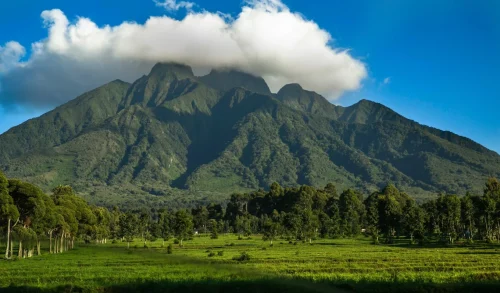
Volcanoes National Park is famous for mountain gorillas and endangered golden monkeys. Its bamboo and montane forest environments offer outstanding primate experiences.
 Budongo Forest, Uganda
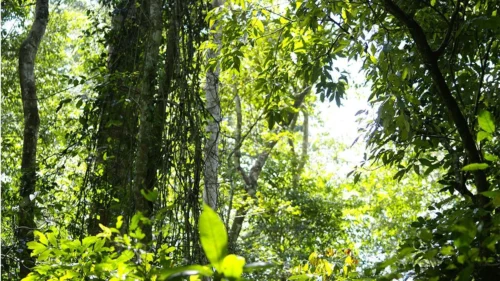
Budongo is an important forest destination for chimpanzee tracking and birdwatching. Visitors may also encounter other forest monkeys during suitable guided walks.
What to Expect During a Guided Primate Walk
A guided primate walk is an opportunity to explore natural habitats while learning about the animals that depend on them. The experience varies according to the destination, species and activity booked.
1. A Pre-Walk Briefing
Before entering the forest, guides explain the route, safety procedures, expected walking conditions and wildlife observation rules. For dedicated chimpanzee and gorilla tracking, park authorities provide specific briefings.
2. Searching for Wildlife
Guides use their knowledge of animal movements, calls, feeding signs and forest habitats to identify likely locations. You may hear monkeys calling long before you see them.
3. Observing Natural Behaviour
Once primates are located, visitors observe them without disturbing their activities. Depending on the species, you may see grooming, feeding, playing, resting, climbing or social communication.
4. Learning About Forest Conservation
Guides explain how forest ecosystems support wildlife and why protecting natural habitats is essential for the survival of primates.
Primate Species and Where to Look for Them
| Primate species | Main destinations | Experience |
|---|---|---|
| Mountain gorillas | Bwindi, Mgahinga, Volcanoes | Gorilla trekking |
| Chimpanzees | Kibale, Budongo, Nyungwe | Chimpanzee tracking |
| Golden monkeys | Mgahinga, Volcanoes | Golden monkey tracking |
| Black-and-white colobus | Kibale, Bwindi, Nyungwe | Guided forest walks |
| Red-tailed monkeys | Kibale, Nyungwe | Forest walks |
| Blue monkeys | Kibale, Bwindi, Nyungwe | Guided nature walks |
| L’Hoest’s monkeys | Kibale, Nyungwe | Forest exploration |
| Grey-cheeked mangabeys | Kibale, Nyungwe | Forest walks |
| Vervet monkeys | Queen Elizabeth, Akagera | Nature walks and game drives |
| Olive baboons | Uganda and Rwanda parks | Nature walks and game drives |
| Bushbabies and pottos | Suitable forest habitats | Guided night walks |
Species sightings depend on habitat, season, animal movements and the specific walking route. This table identifies potential encounters rather than guaranteed sightings.
Best Time for Guided Primate Walks in Uganda and Rwanda
Primate walks are available throughout much of the year, subject to park operating schedules and activity availability. However, some seasons offer more comfortable walking conditions.
Drier Months
June to September and December to February are commonly preferred for forest trekking because trails are often less muddy and walking conditions may be more manageable.
Rainier Months
March to May and October to November generally experience more rainfall in many forest regions. The vegetation becomes lush, and the forests can be particularly beautiful for nature photography. However, muddy and slippery trails may make walking more challenging.
Wildlife remains in its natural habitat throughout the year. Therefore, the best time also depends on your preferred travel dates, budget and availability of permits.
What to Pack for a Primate Walking Safari
- Comfortable waterproof hiking boots with good grip.
- Long-sleeved shirts and long trousers.
- Lightweight rain jacket or waterproof poncho.
- Drinking water and a small backpack.
- Insect repellent suitable for forest environments.
- Gardening gloves for protection against vegetation.
- Camera with a suitable zoom lens.
- Extra batteries and memory cards.
- Binoculars for observing primates in the canopy.
- A hat and sunscreen for exposed sections of the trail.
Always follow your ranger’s instructions, avoid feeding wildlife and maintain the required distance from primates.
The Importance of Responsible Primate Tourism
Guided primate experiences contribute to the protection of some of East Africa’s most important natural habitats. Tourism creates employment opportunities for guides, trackers, drivers, conservation workers and surrounding communities.
Permit revenue and tourism activities also contribute to protected-area management, wildlife monitoring and conservation initiatives.
Responsible visitors play an important role by following park regulations, maintaining appropriate distances, avoiding loud disturbances and never attempting to touch or feed wild primates.
When you choose a guided primate safari, you help support a tourism model that values wildlife protection and sustainable livelihoods.
Explore More Primate and Wildlife Safaris
Continue planning your East African wildlife adventure with these related travel guides:
Uganda Wildlife Encounters →
Uganda Primates Safari →
3 Days Chimpanzee Tour →
Chimpanzee Trekking in Nyungwe →
Uganda vs Rwanda Chimpanzee Trekking →
Chimpanzee Tracking in Two Countries →
Best Uganda Primate Safari →
Top Animals to See on a Uganda Safari →
Recognising Chimpanzee Calls →
Chimpanzee Facts →
Bwindi and Rwanda Primate Trekking →
Golden Monkey Trekking in East Africa →
Nyungwe Forest National Park →
Rwanda National Parks →
First-Time Travellers to Rwanda →
3-Day Uganda Chimpanzee Safari →
Rwanda Gorillas and Nyungwe Safari →
Rwanda Gorilla and Forest Safari →
Uganda Wildlife Experiences →
Plan a Uganda Primate Safari →
Explore a Rwanda Chimpanzee Tour →
Compare Uganda and Rwanda →
Discover Cross-Border Primate Safaris →
Discover More Uganda Primates →
Frequently Asked Questions About Primate Species on Guided Walks
1. How many primate species can I see in Uganda and Rwanda?
Uganda and Rwanda support a wide variety of primates, including great apes, monkeys and nocturnal species. The exact number depends on the country’s protected areas and the classification used.
2. Which destination is best for seeing different primate species?
Kibale National Park in Uganda and Nyungwe National Park in Rwanda are particularly rewarding for visitors interested in forest primate diversity. Both offer chimpanzee tracking and opportunities to encounter other monkeys.
3. Can I see gorillas during an ordinary guided forest walk?
Mountain gorillas are normally observed through dedicated gorilla trekking activities organised by park authorities. Visitors need the appropriate permit and must follow official trekking procedures.
4. Where can I see golden monkeys?
Golden monkeys can be tracked in Mgahinga Gorilla National Park in Uganda and Volcanoes National Park in Rwanda.
5. Are chimpanzees easy to see during guided walks?
Chimpanzee tracking can be rewarding, but sightings are not guaranteed. Chimpanzees move quickly through the forest and may spend time high in the canopy. Experienced trackers help locate them.
6. Can I see several monkey species during one walk?
Yes. In destinations such as Kibale and Nyungwe, visitors may encounter different monkey species during the same forest excursion. However, the number and types of sightings vary.
7. Are bushbabies visible during daytime walks?
Bushbabies are nocturnal and are generally easier to look for during suitable guided night walks rather than daytime forest excursions.
8. Do I need a permit for every guided forest walk?
Permit requirements depend on the activity and destination. Gorilla trekking, chimpanzee tracking and golden monkey tracking have specific permit arrangements. Other guided nature walks may have different entrance and guiding fees.
9. What should I wear for primate tracking?
Wear comfortable hiking boots, long trousers, long-sleeved clothing and a rain jacket. Carry drinking water, insect repellent and a small backpack.
10. Can I combine Uganda and Rwanda for a primate safari?
Absolutely. You can combine chimpanzee tracking in Kibale, gorilla trekking in Bwindi, golden monkey tracking in Mgahinga and chimpanzee tracking in Nyungwe, depending on your available time and permit arrangements.
Discover East Africa’s Amazing Primate Diversity
Explore Uganda and Rwanda’s tropical forests with experienced safari guides. From chimpanzees and mountain gorillas to golden monkeys and fascinating forest species, let us help you create a memorable primate safari.
UgandaRwanda Safaris – Discover Wildlife, Nature and Adventure.