Horseback Riding Safaris in Uganda

Horseback Riding Safaris Uganda: A Practical Rider’s Guide
horseback riding safaris Uganda offer a rare way to experience savannah wildlife without a vehicle between you and the landscape. The standout destination is Lake Mburo National Park, where guided rides move through open grassland, acacia woodland and rolling country used by zebra, impala, eland, warthog, giraffe and buffalo. For travelers comparing active wildlife experiences, a ride can feel quieter and more immediate than a conventional game drive, yet it still needs careful matching of horse, rider ability, route, weather and park conditions.
This guide answers the questions tourists most often ask before booking: where to ride, whether beginners can join, how long rides last, what wildlife you may see, what a Lake Mburo horseback safari costs, when to go, what to wear, how safety works, how to plan from Kampala or Entebbe, and how to combine horseback riding safaris Uganda with gorilla trekking or other highlights. It also distinguishes wildlife riding in Lake Mburo from recreational horseback riding safari in Jinja, so you can choose the experience that matches your trip.
Quick answer: For wildlife-focused horse riding in Uganda, Lake Mburo is the key choice. Book early, state your riding experience accurately, and confirm current rider-weight limits, park entry fees and ride availability before paying.

Where Are the Best Horseback Riding Safaris Uganda?
The strongest answer to “where can I do a wildlife ride?” is Lake Mburo, because a well-planned Uganda horse safari here combines open terrain with genuine plains-game viewing. The park’s compact scale, open habitats and strong plains-game character make it particularly suitable for horse riding in Uganda when the goal is wildlife rather than a simple trail ride. Visitors can research horseback riding in Lake Mburo National Park and compare the activity with nearby game drives, nature walks and boat trips. The riding operation is associated with Mihingo Lodge, and visitors can also review top activities in Lake Mburo before choosing a final schedule, on the eastern side of the park, and routes are adjusted according to conditions and experience.
A Lake Mburo horseback safari is not simply a horse trail with wildlife in the distance. The main appeal is the possibility of moving quietly through habitat used by zebra, impala and other grazers. Horses often blend into the visual rhythm of the savannah in a way vehicles do not. That can create slower observation and excellent photography, although wildlife is always unpredictable. Travelers interested in wildlife in Lake Mburo National Park should treat sightings as natural encounters, not guaranteed attractions.
Why Lake Mburo Works So Well for a horseback safari Lake Mburo
Lake Mburo combines grassy valleys, woodland, wetland edges and ridges in a relatively small area. That variety creates short-distance habitat changes, which keeps a ride visually interesting. The park is also known for active alternatives to vehicle-only sightseeing. Visitors can combine horseback riding safaris Uganda with safari game drives, a guided walking safari, or night game drives. This makes Lake Mburo especially useful for travelers who want movement and participation rather than spending every wildlife hour seated in a 4×4.
What Wildlife Can You See on a Lake Mburo horseback safari?
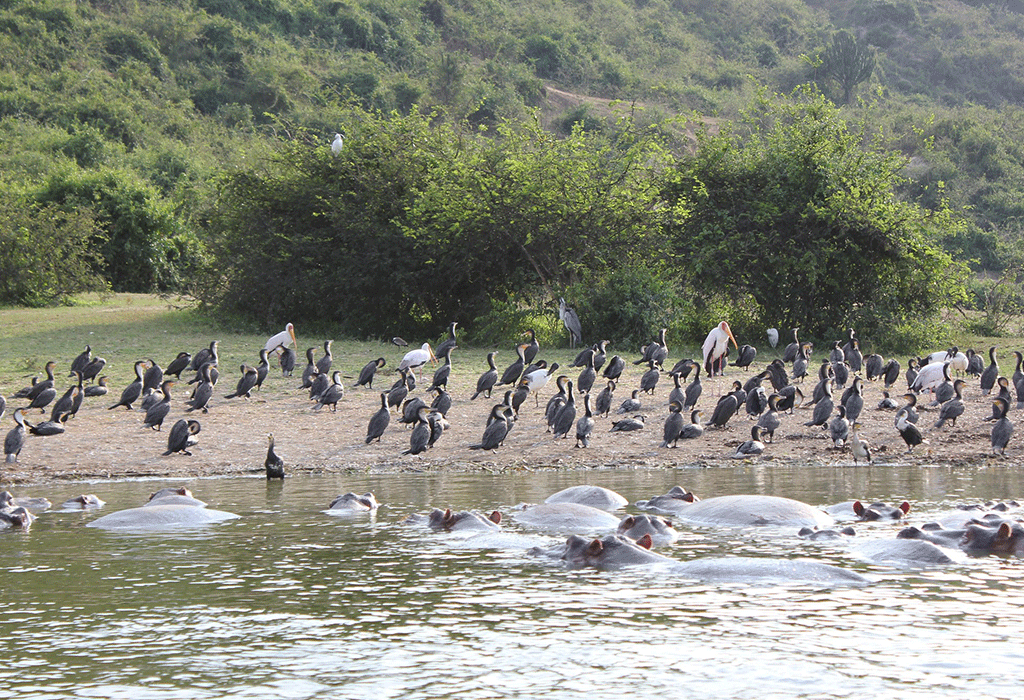
The species most strongly associated with a Lake Mburo horseback safari are plains and woodland animals such as zebra, impala, eland, topi, bushbuck, waterbuck, warthog, giraffe and buffalo. Birdlife can be excellent as well, particularly around woodland edges and wetlands. The experience differs from a predator-focused safari: the reward is proximity to grazing animals, behavior, sound and landscape rather than chasing headline sightings. If you want hippos and crocodiles too, add a Lake Mburo game and boat safari to the same stay.
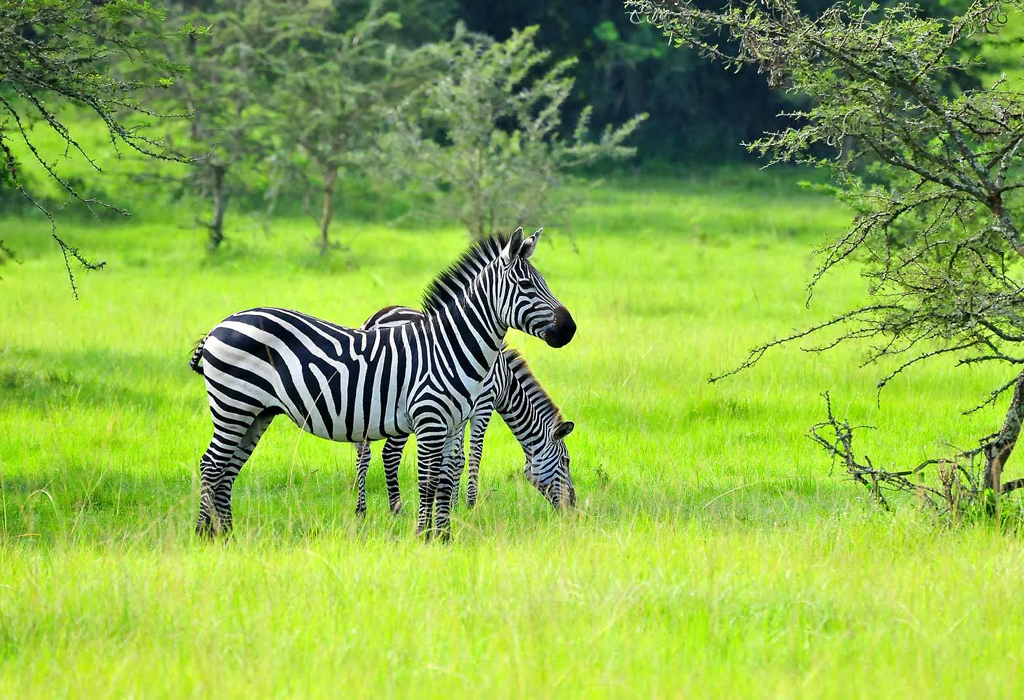
For photographers, horseback riding safaris Uganda create an unusual eye-level perspective. A rider can notice ears turning, herds shifting and birds flushing from grass in ways that are easy to miss from a vehicle. The best images usually come from patience rather than pushing close. Guides decide safe positioning, and riders should keep both hands and balance under control before reaching for a camera. A small camera with a secure strap is generally easier than bulky equipment while mounted.
Do Horses Get Close on Horseback Riding Safaris Uganda?
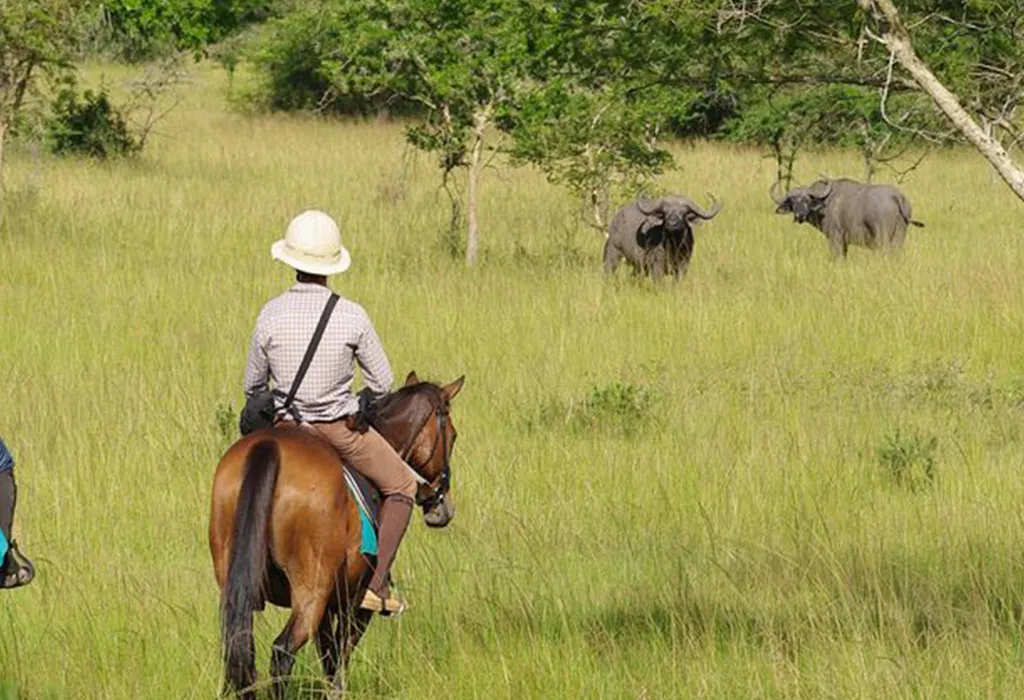
They can, but distance changes with animal behavior, weather and the guide’s judgment. A horseback safari Lake Mburo should never be sold as a guaranteed close-up encounter. Wildlife chooses whether to stay, move or cross the route. When animals remain relaxed, a horse’s quiet approach can allow memorable viewing. Giraffe, zebra and antelope may appear surprisingly tolerant, while buffalo require greater caution and space. Good guiding matters more than an exact distance.

Can Beginners Join Horseback Riding Safaris Uganda?
Yes, many first-time or rusty riders can participate when the horse and route are matched appropriately. Before setting off, be clear about your confidence, last riding experience, comfort with trotting, and any mobility limitations. Beginner rides are usually slower and more controlled, while experienced riders may be offered longer routes when conditions allow. Responsible Uganda horse safari planning is based on honest ability rather than ambition; overstating experience can make the ride less enjoyable for everyone.
Families should ask about minimum ages, pony availability, supervision and whether a child will be led. Policies can change by operator, horse availability and season. Adults should also expect weight checks or limits, because horse welfare determines which mounts can safely carry which riders. Publicly available operator information has listed different limits for different horses, so confirm the current figure rather than relying on an old blog post. The same principle applies to horseback riding safaris Uganda: welfare rules are part of the experience, not an inconvenience.
How Fit Do You Need to Be?
A short walk-paced ride does not require athlete-level fitness, but balance, hip mobility and core stability matter. Longer Uganda horse safari outings demand more from legs, seat and lower back. If you have not ridden for years, a shorter session may be more enjoyable than immediately booking a half day. Travelers with recent injuries, pregnancy, significant back problems or other medical concerns should obtain appropriate professional advice before riding and disclose relevant limitations to the operator.
Choose the Right Ride for Your Experience
Tell us your travel dates, riding level and preferred safari length. We can help match Lake Mburo time with the rest of your Uganda route.
Email: info@ugandarwanda-safaris.com
How Long Do Horseback Riding Safaris Uganda Take?
Ride lengths vary from introductory sessions to multi-hour outings. Short rides suit beginners, families and travelers on a tight schedule. Two-hour rides create more time to settle into the horse and move beyond the immediate lodge area. Three- or four-hour rides are better suited to riders who already know they are comfortable in the saddle. If your trip is very short, a 1-day Lake Mburo tour can introduce the park, but an overnight stay gives horseback riding safaris Uganda more breathing room.
A 2-day Lake Mburo safari usually works better for travelers who want a Lake Mburo horseback safari plus another activity without rushing. With more time, a 4-day Lake Mburo wildlife and nature safari allows the park to feel like a destination rather than a stopover. The most sensible duration depends on your riding goals: a complete beginner may be delighted by one hour, while an experienced equestrian may value a longer ride and a second session at a different time of day.
What Is the Best Time of Day for a Lake Mburo horseback safari?
For horseback riding safaris Uganda, morning and late-afternoon periods are attractive because temperatures are often gentler and the light is softer. Wildlife can also be active around these cooler hours, but there is no guaranteed sighting window. Ask about the best time of day for a horseback safari for your travel month, since weather, trail condition and current animal movement matter. Midday riding may feel hotter and harsher for photography, while very wet conditions can alter route choices.
How Much Does a Lake Mburo horseback safari Cost?
For horse riding in Uganda, prices depend on ride duration, whether you are staying with the riding operator, whether the route enters the national park, and the park fees that apply to your visitor category. Published rates can change, so treat old figures as planning references only. Current public material from Mihingo has shown separate prices for lodge guests and non-guests, with longer rides costing more and park entry charged separately when applicable. For any Uganda horse safari, ask for a written quote that states the riding fee, park entry, taxes, transfers and any accommodation package clearly.
When comparing the cost of horseback riding safaris Uganda, look beyond the ride price. A cheaper property far from the riding base can add transfers and reduce flexibility. A park entry fee may already be covered by another activity day, depending on timing and current rules. A private safari vehicle used to reach the area is another major cost. For a broader value comparison, look at the complete day: accommodation, meals, transport, park access, guiding and the ride itself.
Are Park Fees Included?
Do not assume they are. Some published horse-ride rate sheets state that park fees are separate when riding inside the protected area. Confirm this at booking, especially if you are combining a horseback safari Lake Mburo with another park activity on the same day. Rules and tariffs can change between seasons, so the final authority should be the current operator and Uganda Wildlife Authority information applicable to your dates.
Best Time of Year for Horseback Riding Safaris Uganda
Riding operates across much of the year, but drier periods are generally easier for trail conditions, comfort and photography. In many Uganda itineraries, June to August and December to February are popular because rainfall is often lower. That does not make wetter months a bad choice. Green-season landscapes can be beautiful, visitor numbers may be lower, and short showers can create dramatic light. The key is flexibility: a Lake Mburo horseback safari may use a different route after heavy rain.
If the ride is part of a larger Uganda trip, choose dates around the least flexible experience. Gorilla permits, school holidays, birding goals or a specific primate trek may matter more than a single riding day. The advantage of horseback riding safaris Uganda is that they can fit neatly into many western and southwestern routes. A traveler continuing toward Bwindi can use Lake Mburo as an active wildlife stop before the forest.
What Is Horse Riding in Uganda Like in the Rainy Season?
Expect greener vegetation, potentially muddy ground and a greater chance of route adjustments. Riders should bring a light waterproof layer that does not flap dangerously, quick-drying clothing and footwear suitable for stirrups. Never assume rain means cancellation; the operator will judge horse welfare, visibility and trail safety. For horse riding in Uganda, weather is a planning factor rather than a reason to avoid Uganda entirely.
What to Wear for Horseback Riding Safaris Uganda
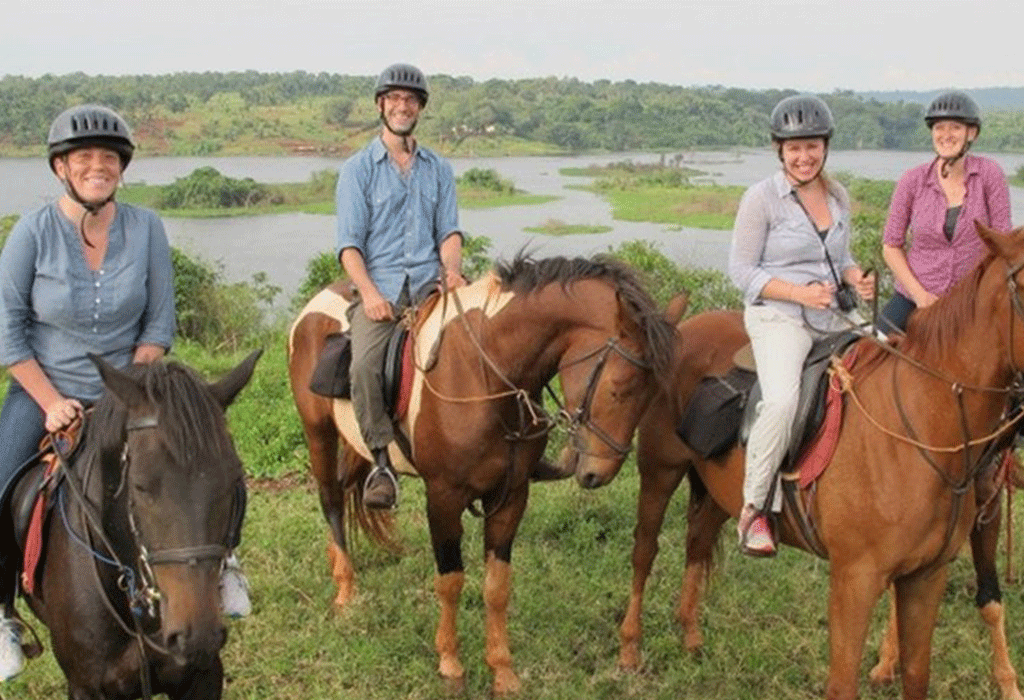
For horse riding in Uganda, wear long trousers that do not have thick inner seams, closed shoes with a secure fit, sun protection and clothing that allows free movement. Avoid loose scarves, dangling straps and anything that could catch on vegetation or tack. Helmets are essential and should fit correctly. If riding gear such as chaps is available, the guide can advise whether it is useful for your route. Neutral colors are practical for wildlife viewing and dust, but comfort and safety are more important than looking “safari ready.”
Bring only what you can secure. A phone or compact camera should have a reliable strap or zipped pocket. Sunscreen, insect repellent and water are useful, but ask how personal items are carried because a swinging backpack can affect balance. During horseback riding safaris Uganda, listen carefully during the mounting and safety briefing even if you are experienced; each horse responds differently, and local guides know the animals and terrain.
How Safe Are Horseback Riding Safaris Uganda?
No wildlife activity is risk-free, and horseback riding adds the normal risks of working with a large animal. Safety comes from matching horse to rider, using trained guides, keeping sensible distances from wildlife, following route instructions and adjusting plans when conditions change. A quality Uganda horse safari briefing should explain mounting, stopping, spacing between horses, what to do if wildlife moves suddenly, and how the group responds to guide signals.
Buffalo deserve particular respect, and any wildlife can behave unpredictably. Guides choose routes and distances based on local knowledge, current sightings and horse behavior. Riders should never push for a closer photo or leave the group. If you are nervous, say so early. A slower horseback safari Lake Mburo with a steady horse is far more rewarding than spending the entire ride tense because you selected a level beyond your comfort.
What About Rider Weight Limits?
Weight limits protect horse welfare and can vary by individual horse. Public rate sheets have listed a higher limit for only a small number of horses and lower limits for most of the stable. Because that allocation can change, always provide an accurate current weight when booking. This is especially important during busy dates when the suitable horse may already be assigned. Horse welfare is a core part of responsible horseback riding safaris Uganda.
Build Horseback Riding Safaris Uganda Into a Bigger Safari
Combine horseback riding safaris Uganda with gorillas, chimpanzees, game drives, boat safaris or a relaxed lakeside finish without overloading the itinerary.
Email: info@ugandarwanda-safaris.com
How to Combine Horseback Riding Safaris Uganda With Gorilla Trekking
Lake Mburo sits naturally on many road routes toward southwestern Uganda, which makes horse riding in Uganda a useful contrast before or after the forest. For horseback riding safaris Uganda, a common concept is one or two nights in Lake Mburo, then continue to Bwindi Impenetrable National Park for mountain gorilla trekking. The Lake Mburo, Bwindi and Lake Bunyonyi route shows why this sequence works geographically: open savannah first, steep rainforest next, then a slower lake landscape.
Travelers with four or five days can consider a 4-day Lake Mburo and gorilla tour; those with more time can add chimpanzees through a 5-day Lake Mburo and Kibale Forest safari. The strongest itineraries use horseback riding safaris Uganda as one distinct experience rather than trying to make every day active. After a long gorilla trek, for example, a transfer day or relaxed evening may be wiser than scheduling another demanding activity immediately.
Can You Add Queen Elizabeth National Park?
Yes. A route that continues to Queen Elizabeth National Park can add classic game drives and the Kazinga Channel to a Uganda horse safari itinerary. A Queen Elizabeth and Lake Mburo safari works particularly well for travelers who want two different savannah experiences: Lake Mburo for active riding and walking, Queen Elizabeth for broader vehicle-based wildlife viewing and water-based safari. Keep transfer times realistic and avoid one-night hopping when possible.

Horseback Riding Safaris Uganda vs Jinja Horse Riding: Which Should You Choose?
Lake Mburo and Jinja satisfy different search intents. A horseback safari Lake Mburo is primarily about wildlife viewing in a protected savannah environment. Jinja riding is better understood as a scenic adventure activity around rural landscapes and the Nile corridor. Travelers who want a full activity day can look at a 1-day horse ride safari in Jinja or combine riding with other adventure activities in Jinja. The two experiences should not be treated as interchangeable.
Choose Lake Mburo if zebras, antelope, giraffes and wildlife immersion are the priority. Choose Jinja if the Nile, village scenery and an adventure-focused extension suit your route better. Jinja pairs naturally with the Source of the Nile in Jinja, rafting and other eastern-Uganda activities. For a first-time visitor trying to fit everything into one week, Lake Mburo usually integrates more naturally with southwestern Uganda safaris that continue toward gorillas.

What Else Can You Do Around a Lake Mburo horseback safari?
One reason Lake Mburo is attractive is the variety of active experiences. In addition to horseback riding safaris Uganda, visitors can try a cycling safari in Lake Mburo where offered, take a safe walking safari in Lake Mburo, focus on birds through a birding Lake Mburo safari, or spend time on the water. These activities slow down wildlife viewing and make the park feel more immersive than a simple drive-through stop.
If you want a broader Uganda circuit after the ride, possibilities include chimpanzees, gorillas, savannah parks and river systems. Murchison Falls National Park adds the Nile and large-scale game viewing farther north, while Lake Bunyonyi can provide a calmer ending near the southwestern highlands. The best itinerary is not the one with the most parks; it is the one with enough time to enjoy each transition.
Is a Lake Mburo horseback safari Worth It if You Already Have Game Drives?
For many travelers, yes, because it changes both pace and perspective. A game drive covers more ground and is better for searching widely for wildlife. A Lake Mburo horseback safari is slower, more physical and more sensory. You hear hoofbeats, birds and wind instead of engine noise, and you experience terrain directly. Doing both can make the same park feel completely different rather than repetitive.
How to Book Horseback Riding Safaris Uganda Without Common Mistakes
For horseback riding safaris Uganda, book early when your dates are fixed, especially in peak travel months, because the number of suitable horses is limited. State each rider’s age, approximate weight and genuine riding ability. Ask what ride durations are available, whether the route enters the park, what the current park fees are, whether helmets are supplied, and what happens if weather forces a change. For a structured overview, compare horseback safaris in Lake Mburo National Park with your wider safari plan before paying deposits.
Do not build a tight same-day international flight connection after your ride. Road conditions and wildlife activities can overrun. Also avoid choosing a long ride simply because it seems better value. The right Uganda horse safari length is the one you can enjoy comfortably. If you have never ridden, start conservatively; if you ride regularly, ask whether the operator can create a route that better matches your ability and current trail conditions.
Questions to Ask Before Paying
20 Search Questions This Horseback Riding Safaris Uganda Guide Answers
- Where can tourists go horseback riding with wildlife in Uganda?
- Is Lake Mburo the best place for a horse safari in Uganda?
- Can beginners do a Lake Mburo horseback safari?
- How much does horse riding in Lake Mburo cost?
- Are park entry fees included in the horse-riding price?
- What animals can you see from horseback in Lake Mburo?
- How long do horseback safaris in Uganda take?
- What is the best time of year for horse riding in Uganda?
- What is the best time of day to ride in Lake Mburo?
- What should you wear on a Uganda horse safari?
- Are helmets provided for horseback riding in Uganda?
- What rider weight limits apply at Lake Mburo?
- Is horseback riding in Lake Mburo safe?
- Can children join a horseback safari?
- How fit do you need to be for a longer ride?
- Can you combine horseback riding with gorilla trekking?
- Can you combine Lake Mburo with Queen Elizabeth National Park?
- What is the difference between Jinja horse riding and Lake Mburo?
- Is horseback riding worth adding to a Uganda safari?
- How far in advance should you book a horse safari?
Frequently Asked Questions About Horseback Riding Safaris Uganda
Is a Horseback Safari Lake Mburo the Main Wildlife-Riding Choice?
Yes. For tourists seeking a genuine wildlife ride, Lake Mburo is the central destination. The combination of open savannah, plains game and an established riding operation makes it the clearest choice for horseback riding safaris Uganda.
Can a complete beginner ride?
Often yes, provided the operator has a suitable horse and route; this is why horse riding in Uganda requires honest rider details before arrival. Beginners should choose a shorter, slower ride and describe their experience accurately. A horseback safari Lake Mburo experience is more enjoyable when the pace matches confidence.
What wildlife is most likely?
Zebra, impala, warthog, eland, topi, bushbuck, waterbuck, giraffe and buffalo are among the animals associated with Lake Mburo. Sightings vary, and a horseback safari Lake Mburo never guarantees a particular species.
How many hours should an experienced rider book?
Two to four hours can suit experienced riders who are comfortable in the saddle, but route availability and weather matter. Ask what is realistic on your date rather than assuming the longest Uganda horse safari option is automatically best.
Can I Photograph Wildlife on Horseback Riding Safaris Uganda?
Yes, but safety comes first. Use secure straps, keep equipment compact and only handle a camera when the horse is settled and the guide permits it. During horseback riding safaris Uganda, balance and control take priority over getting a shot.
Do I Need Special Boots for Horseback Riding Safaris Uganda?
Not necessarily for a short tourist ride, but closed, secure footwear is important. Avoid sandals, open shoes and bulky soles that do not work well with stirrups. Ask the operator what is recommended; a Uganda horse safari is safer when footwear works properly with the stirrups.
Can I Combine Horseback Riding Safaris Uganda and a Boat Cruise?
Yes. This is one of the best ways to contrast savannah riding with water-based wildlife viewing. Allow enough time so a horseback safari Lake Mburo outing and the boat activity are not squeezed together.
Horseback Safari Lake Mburo or Jinja: Which Is Better for Horse Riding?
Choose Lake Mburo for wildlife-focused horse riding in Uganda and Jinja for a scenic Nile-region adventure. Both are valid forms of horse riding in Uganda, but they serve different travel goals.
Ready to Plan Your Ride?
Share your dates, number of travelers, riding experience, weight range and the Uganda experiences you want around Lake Mburo.
Request a Tailor-Made Riding Safari →
Email: info@ugandarwanda-safaris.com
Rider Planning Notes for Horseback Riding Safaris Uganda
Before confirming a ride, send the operator each rider’s age, approximate weight and real experience level. That information is used to match riders with suitable horses and sensible routes. Horse riding in Uganda is more enjoyable when the group is paced for the least-confident rider rather than the most experienced person. If anyone is nervous, returning after a long break, or uncomfortable at a trot, say so before the horses are assigned.
Horseback Safari Lake Mburo: Check the Horse, Route and Weather Together
A responsible Uganda horse safari should adapt to current trail conditions, heat, rainfall and wildlife movement. Ask how long you will actually be mounted, whether there are breaks, and what happens if heavy rain or another safety issue changes the route. For a horseback safari Lake Mburo itinerary, leave enough time around the ride for briefing, mounting and a relaxed return rather than scheduling an immediate departure.
Plan comfort as carefully as wildlife sightings
Drink water before setting out, use sun protection, wear secure closed footwear and avoid loose items that can flap or catch on tack. On horseback riding safaris Uganda, the best wildlife moments often come from quiet, patient observation, so there is little value in choosing a longer ride than your body can comfortably handle. A shorter ride at the right pace can be more rewarding than pushing through fatigue.
Final Planning Advice for Horseback Riding Safaris Uganda
The best horseback riding safaris Uganda are built around fit rather than hype: the right horse, the right ride length, the right time of day and enough room in the itinerary to enjoy Lake Mburo rather than rush through it. Confirm current prices and limits directly before travel, keep expectations realistic about wildlife, and choose a route that matches your true riding experience. For first-time visitors, one or two nights in Lake Mburo can add a completely different texture to a gorilla or wildlife circuit.
For travelers who value active, quiet wildlife viewing, a horseback ride in Lake Mburo can become one of the most memorable parts of the trip. It complements rather than replaces game drives, walking and boat safaris. Whether you are new to riding or experienced in the saddle, careful planning makes horseback riding safaris Uganda safer for riders, fairer to horses and more rewarding as a safari experience.