Chimpanzee Social Structures: Nyungwe Gishwati
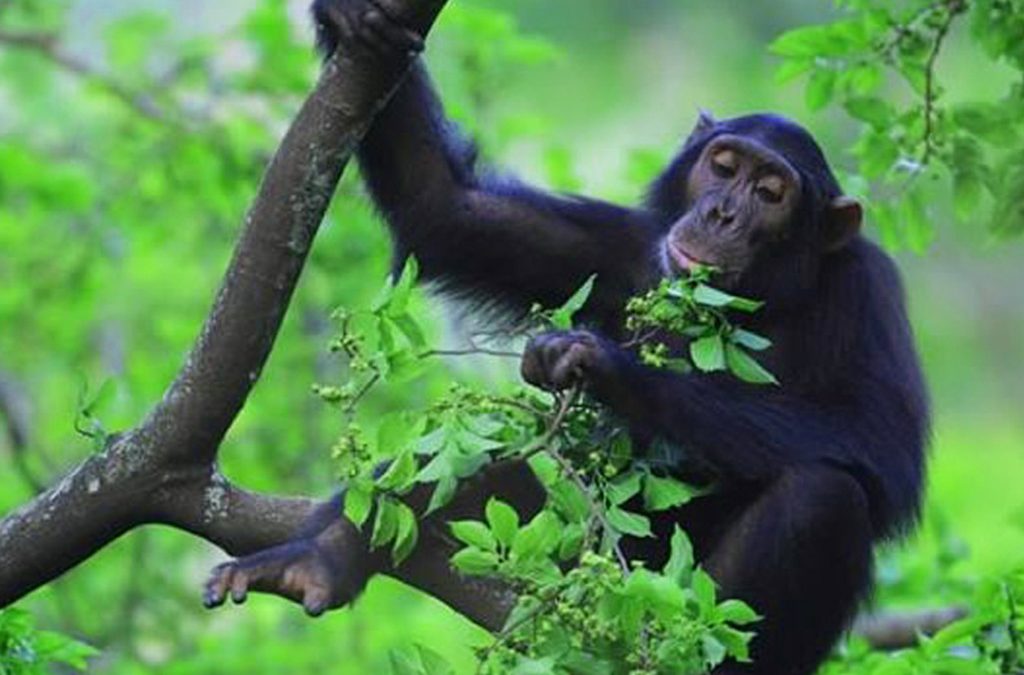
Chimpanzee Social Structures: Nyungwe Gishwati reveal a striking contrast between two Rwandan populations. Both groups share the same fission-fusion social system. Yet their lives could not be more different. Nyungwe hosts large, thriving communities in a vast, protected forest. Gishwati holds a tiny, struggling group clinging to survival in a damaged habitat. Habitat size and quality shape everything — from group numbers to daily behavior. Understanding these two populations helps us see what chimpanzees need to survive and what happens when humans take that away.
Understanding Fission-Fusion Social Structure
Chimpanzees live in large, stable communities. Each community holds a defined territory. All members know one another and stay connected as one social unit. However, they do not always move together. Instead, the group regularly splits into smaller parties. This process is called fission.
These smaller parties serve different purposes. Some groups are adult males on patrol. Others are mothers feeding their young. Some are mixed groups resting or playing together. Each party moves through the territory based on its immediate needs.
Later, the smaller parties come back together. This is called fusion. Large reunions often happen at productive food trees or during territorial patrols. Excited calls, greetings, and displays mark these moments. Through fission and fusion, chimpanzees balance two needs — reducing food competition and keeping the community strong.
Nyungwe Forest with Chimpanzee Social Structures
Nyungwe National Park covers roughly 1,000 square kilometers of montane rainforest. This large, intact ecosystem gives chimpanzees the space and resources they need. As a result, Nyungwe supports multiple, well-established communities with complex social structures.
Community Size and Composition
Nyungwe communities are impressively large. Some groups exceed 40 individuals. Certain communities may hold 100 or more members. The Uwinka group is the most well-known. Visitors track this group through guided treks. Its size reflects the rich habitat that Nyungwe provides.
Large communities allow complex social hierarchies to form. Adult males compete for status and mating rights. Females build long-term networks based on family ties and friendship. Young chimpanzees observe and learn from many adults. This social richness supports cultural transmission — passing on skills like tool use from one generation to the next.
Furthermore, large groups allow coalition-building among males. A male seeking a higher rank may team up with allies to challenge rivals. These strategies require memory, trust, and long-term relationships. All of this is possible because the community is large enough to support such dynamics.
During daily activities, smaller foraging parties still form. A few males may patrol boundaries while a female feeds in a fig tree elsewhere. However, the larger community remains stable. Members stay aware of one another and reunite regularly. This keeps social bonds and group identity alive.
Habituation and Human Observation
Several chimpanzee groups in Nyungwe Forest National Park have been semi-habituated to human presence. In particular, years of patient, consistent contact by researchers and trackers made this possible. Today, these groups allow observers to approach within 7 to 10 meters. In this way, this closeness enables a detailed study of behavior, communication, and social life.
However, semi-habituated chimpanzees do not become tame; they remain wild and follow natural behaviors. Researchers can observe feeding patterns, social interactions, and tool use up close. Afterward, this level of access proves both rare and scientifically valuable, as it gives us a window into chimpanzee life that completely wild groups cannot provide.
Tracking these groups still demands skill and effort. Groups range from several kilometers daily. Trackers locate fresh nests each morning and follow trails to find the moving community. Despite habituation, the chimpanzees continue to range freely and naturally.
Gishwati Forest with Chimpanzee Social Structures: A Vulnerable, Isolated Population
Gishwati-Mukura National Park tells a very different story. Severe deforestation reduced this forest to a tiny fragment. Today, the combined park covers only about 34 square kilometers. A small, isolated chimpanzee community survives here under very difficult conditions.
Critically Small Community Size
Surveys have recorded only 9 to 19 chimpanzees in Gishwati across different counts. Genetic sampling confirms they form one cohesive community. Despite the low numbers, they maintain social bonds and breeding connections. This is an important finding. It shows that the population has not yet completely collapsed socially.
However, such small numbers create serious problems. Few breeding adults mean limited reproductive potential. Inbreeding risk rises when unrelated partners are scarce. Social structures become simplified. Young chimpanzees have fewer adults to learn from, which limits their behavioral development. A community this small is fragile. One disease outbreak or poaching incident could cause collapse.
Nevertheless, Gishwati’s chimpanzees still show fission-fusion behavior. They split into smaller foraging parties and reunite. The small population size simply means these parties are smaller and have fewer possible combinations. The social pattern survives, but in a compressed, limited form.
Severe Habitat Constraints
The small forest fragment shapes every aspect of life for Gishwati’s chimpanzees. The limited territory cannot support large groups. Ranging patterns are constrained by the agricultural land surrounding the forest. Chimpanzees cannot move freely beyond the forest edge without encountering farms and people.
Food availability also differs from larger forests. The chimpanzees must adapt their diets and foraging strategies to what their small habitat offers. At times, they raid crops in surrounding farms. This creates conflict with local communities who depend on those crops for income. Human-wildlife conflict becomes an ongoing tension that puts both chimpanzees and people at risk.
Community-based conservation has brought some improvements. Reforestation efforts, anti-poaching work, and community engagement have reportedly led to modest population increases. These are encouraging signs. However, the population remains extremely vulnerable. Any additional pressure could reverse these gains quickly.
Unhabituated Status and Research Challenges
Unlike Nyungwe’s approachable communities, Gishwati’s chimpanzees flee from humans. Historical hunting pressure and proximity to settlements have made them deeply wary. Direct observation is nearly impossible. Researchers must rely on indirect methods to study this population.
Genetic sampling from feces and hair reveals population size, diversity, and family relationships. Camera traps capture images of behavior and group composition without human presence. Nest surveys and feeding signs show habitat use patterns. These tools provide valuable data, but they cannot replace direct observation. Fine-grained social interactions, communication, and cultural behaviors remain largely invisible to researchers.
This gap in knowledge limits our understanding of how Gishwati’s social structures compare to healthier populations. We know the group exists and maintains some cohesion. However, we cannot yet fully see how life inside this tiny community works.
Conservation Lessons from Both Sites
The contrast between Nyungwe and Gishwati carries clear conservation lessons. Nyungwe shows what is possible when large forests receive strong protection. Multiple communities thrive. Complex social dynamics develop. Natural behaviors persist across generations. This is the standard — what healthy chimpanzee life looks like.
Gishwati shows the cost of failure. Deforestation reduced a once-thriving population to a fragile remnant. The social structures that make chimpanzees resilient — large communities, rich hierarchies, cultural learning — have all been compromised by habitat loss. Gishwati is a warning about what happens when forests disappear.
Priorities for Gishwati
Gishwati-Mukura National Park urgently needs an expanded protected habitat. In particular, reforestation must connect isolated fragments and give the chimpanzees more room to range. In this way, anti-poaching efforts must intensify to safeguard the remaining populations. However, human-wildlife conflict must also be managed through community support programs that give local people viable alternatives to crop farming near the forest. Afterward, these combined efforts can create a more sustainable balance between conservation and local livelihoods.
Researchers must also continue monitoring genetic diversity. If the population proves non-viable over time, translocation or genetic rescue may become necessary. These are last-resort measures, but planning for them now is wise.
Priorities for Nyungwe
Nyungwe’s challenges are different but still real. Ongoing threats include poaching, disease, and encroachment. Protecting existing habitat must remain a top priority. The habituation programs that fund conservation through tourism also need continued investment. These programs bring income to local communities, creating incentives to protect rather than destroy the forest.
Research must continue across both habituated and unhabituated communities in Nyungwe. Comparing groups at different stages of habituation adds depth to our understanding of chimpanzee behavior. It also helps evaluate the long-term effects of human contact on wild populations.
Conclusion
The social structures of Nyungwe and Gishwati chimpanzees reflect the health of their habitats. Nyungwe supports large, complex communities with rich social lives because its forest is large and intact. Gishwati hosts a tiny, struggling group because its forest was largely destroyed. Both populations share the same fission-fusion system. However, habitat shapes how fully that system can function.
Protecting chimpanzees means protecting forests. Large, connected ecosystems give these animals the space to build the social lives they need to thrive. Fragments and remnants may sustain survivors for a time, but they cannot support the full complexity of chimpanzee society. The lesson from Rwanda is simple: where forests survive, chimpanzees flourish. Where forests fall, so do the animals that depend on them.