The Rift Valley lakes in Uganda

The Rift Valley lakes in Uganda
The Great Rift Valley is a natural wonder of the world, a geological trench, approximately 6,000 kilometers in length, that runs from northern Syria in Southwest Asia to central Mozambique in East Africa. The Great Rift Valley is a long depression in the Earth that runs down the eastern side of Africa. Through countries like Uganda, Tanzania, and Mozambique. In a layman’s understanding, a rift valley is an elongated valley formed by the depression of a block of the Earth’s surface between two faults. It is on a divergent plate boundary, a crustal extension or spreading apart of the surface, which is subsequently further made deep by the forces of erosion.
The Western Rift Valley and the Eastern Rift Valley.
In eastern Africa, the rift valley is divided into two: the Western Rift Valley and the Eastern Rift Valley. The Western Rift is edged by majestic mountains. And contains the Rift Valley lakes, which include some of the deepest lakes in the world (up to 1,470 meters deep at Lake Tanganyika). Lake Victoria, the second-largest area of freshwater lake in the world, is part of the Rift Valley system. Although it lies between the two branches. All of the African Great Lakes were a result of the rift, and most lie within it.
The Great Rift Valley
It runs through Africa, is a magical thing. Populated by huge escarpments, vast lakes, and beautiful vistas. Additionally, it is usually a hit on anyone’s itinerary when planning to visit East Africa. Tanzania has a wonderful portion of the Great Rift Valley, which is breathtaking, including Lake Manyara, which is famous for its huge herds of elephant, buffalo, and magical bird life. Here you can either base yourself from Lake Manyara, looking up at the dwarfing escarpments, or from up on high, looking down at Lake Manyara and the wilderness that surrounds it – both are sensational.
The Eastern Rift features vast Mineral Lakes such as Lake Natron, and bordering it is the highest Mountain in Africa, Mount Kilimanjaro. It is also there that we find some remarkable Tanzanian Volcanoes such as the Ngorongoro, the Empakai, the Olmo, ti and the Lengai. The East African Rift Valley is a great example of how many natural systems can be this unique geological setting may have altered the local climate.
This may have, in turn, caused our ancestors to develop the skills necessary to walk upright, develop culture, and ponder how such a rift came to be. Just like the Grand Canyon, the East African Rift System should be high on any nature lover’s list of geologic marvels to visit.
Rift Valley lakes
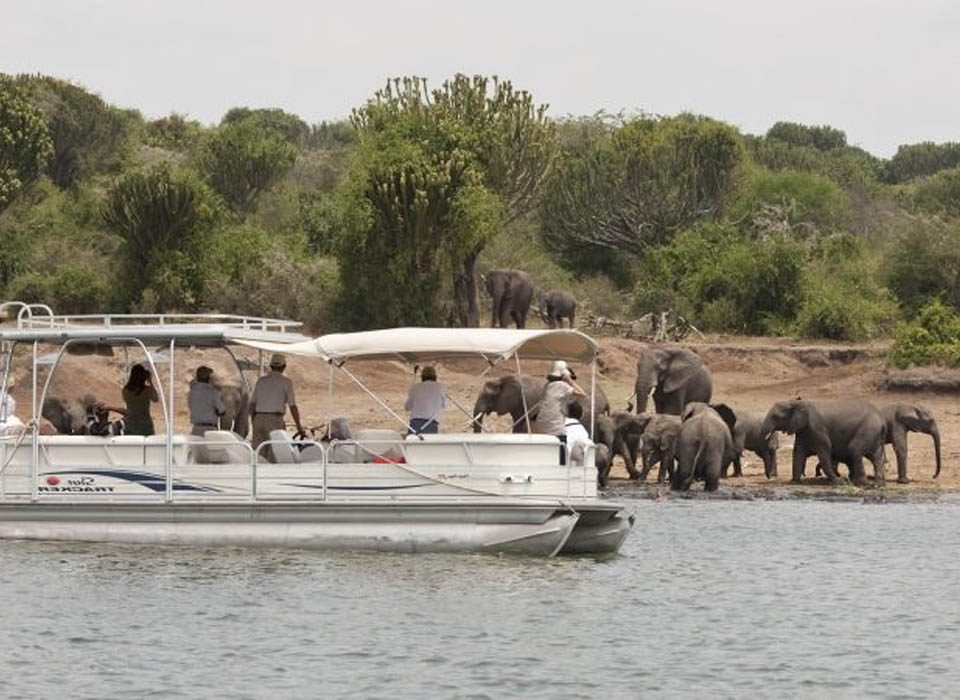
Below are the rift valley lakes in Uganda some of which are connected to Queen Elizabeth national park through the Kazinga channel in the southern part of the park that is Lake George and lake Edward, the other two lakes include Lake Albert and Lake Kyoga.
Lake Edward.
Lake Edward was formerly Rutanzige or Edward Nyanza. It is the smallest lake among the African Great Lakes. It is in an area of 2,325 km and its inflow source is the River Rutshuru. Most importantly, it is one of the water bodies in Queen Elizabeth National Park. More so, it is located on the western corner of the East African Rift Valley. The border of Uganda and the Democratic Republic of Congo.
Lake George
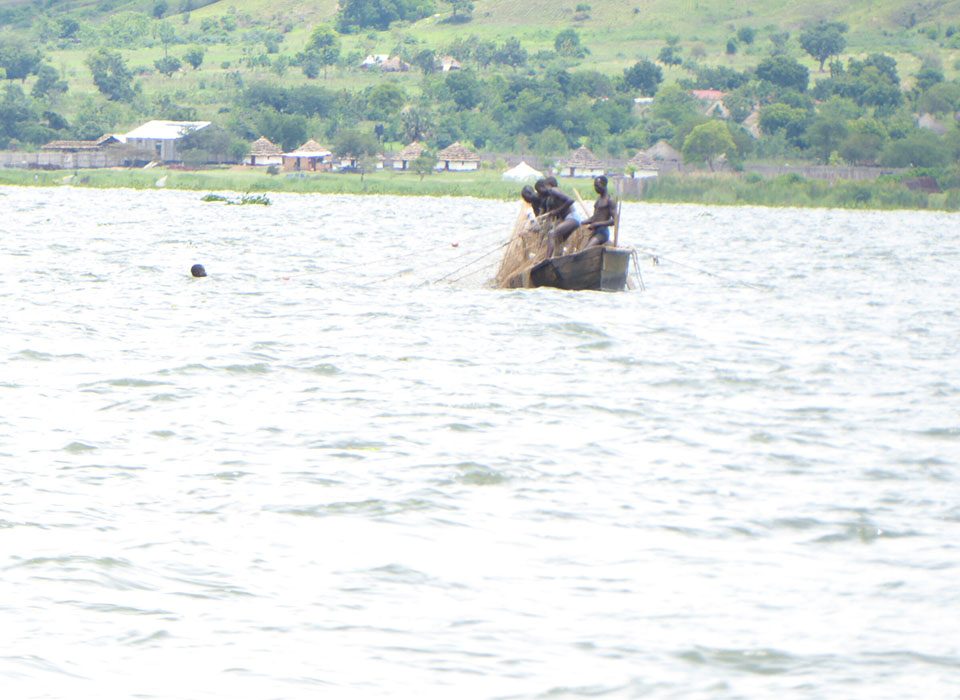
Lake Dweru is a lake in Uganda. Also, it covers a total surface area of 250 square kilometres (97 sq. mi). It is located in the western part of East Africa’s rift valley. It is linked to Lake Edward by the Kazinga channel was named after a British royal family member, Prince George. More so, he became King George V of the United Kingdom. A British explorer, Henry M. Stanley, is said to be the first European to have seen the lake in 1875. Its main entries are Mpanga and Dura from the northeast, plus Rumi, Nsonge, and Mubuku. This lake enables fishing, and its major islands are Iranqara, Kanuranga, and Akika.
Lake Albert
This is also Mwitanzinge and formerly Lake Mobutu Sese Seko. It is one of the African great lakes, located in Uganda and on the border of the Democratic Republic of Congo. In 1864, the explorers Samuel Baker and Sass Flora found the lake and renamed it. This was after the recently deceased Prince Albert, Consort of Queen Victoria. And in the 20th century, Zairian President Mobutu Sese Seko temporarily named the lake after himself.
Lake Kyoga
This is also spelled as Kioga. It is a large shallow lake in Uganda, about 1720km (660 mi). It is in the central Uganda region in the northwest of Lake Victoria. Lake Victoria flows through Lake Kyoga to Lake Albert and forms the Albert Nile. The extensions of Lake Kyoga include Lake Kwania, Lake Bisina, and Lake Opeta. Furthermore, surrounding these finger lakes is the swampland during the rainy seasons. All these in the Kyoga basin are shallow.