Karamba Birding Trail in Nyungwe Forest
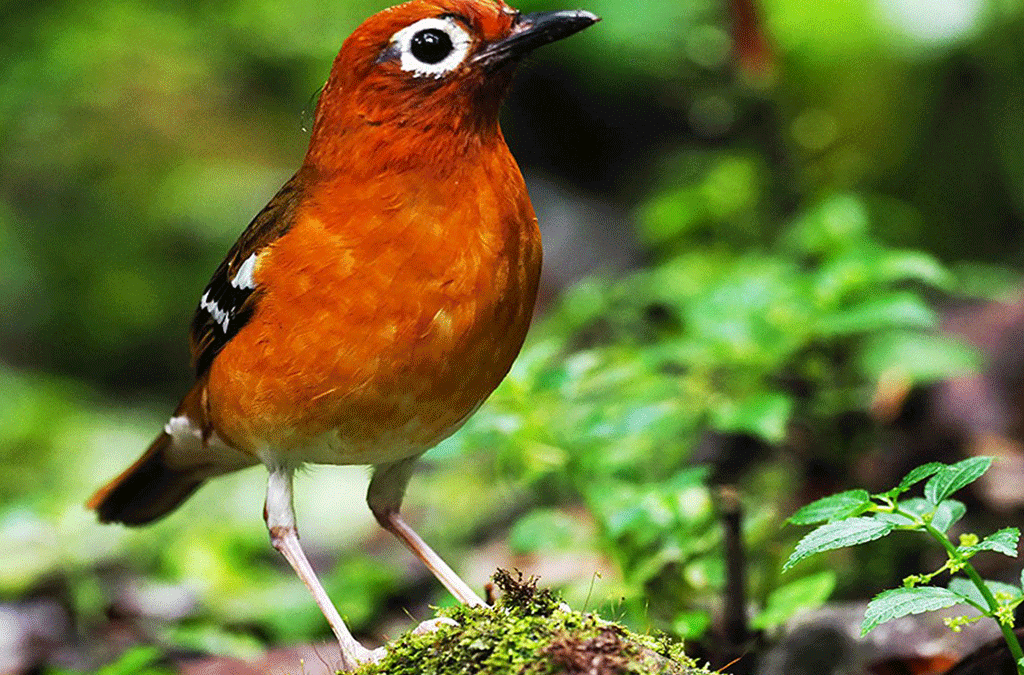
Karamba Birding Trail in Nyungwe Forest
Discover the calls, colours and hidden beauty of Rwanda’s mountain rainforest on a guided birdwatching walk through one of Nyungwe’s most rewarding trails.
The experience
A rewarding rainforest walk for bird lovers
The Karamba Birding Trail in Nyungwe Forest invites you into one of Rwanda’s most extraordinary natural environments. Rather than rushing between major viewpoints, the experience rewards quiet observation: movement along a branch, a call from the vegetation or an unexpected flash of colour in a sunlit opening. For bird enthusiasts, these moments can become the highlights of a Rwanda safari.
Located within Nyungwe National Park in southwestern Rwanda, Karamba is particularly appealing because it combines birding opportunities with comparatively manageable hiking. The route takes visitors through a landscape with fern-rich vegetation and a history unlike many other forest trails. The Karamba area was formerly associated with a gold mine, a market and an army camp. Today, the area is known for its birdwatching appeal and the changing textures of its forest.
Nyungwe itself supports more than 300 recorded bird species, including many specialities of the Albertine Rift. Nevertheless, this does not mean every species occurs on Karamba or that any particular sighting is guaranteed. A knowledgeable local bird guide helps identify calls, locate movement and understand the habitats around the trail.
Karamba Birding Trail at a glance
Planning note: The 6 km and approximately three-hour description comes from Rwanda’s published hiking guide. Birders who pause frequently for photographs may need additional time. Route access and departure instructions should always be reconfirmed with the park.
Three reasons to visit
What makes Karamba special?

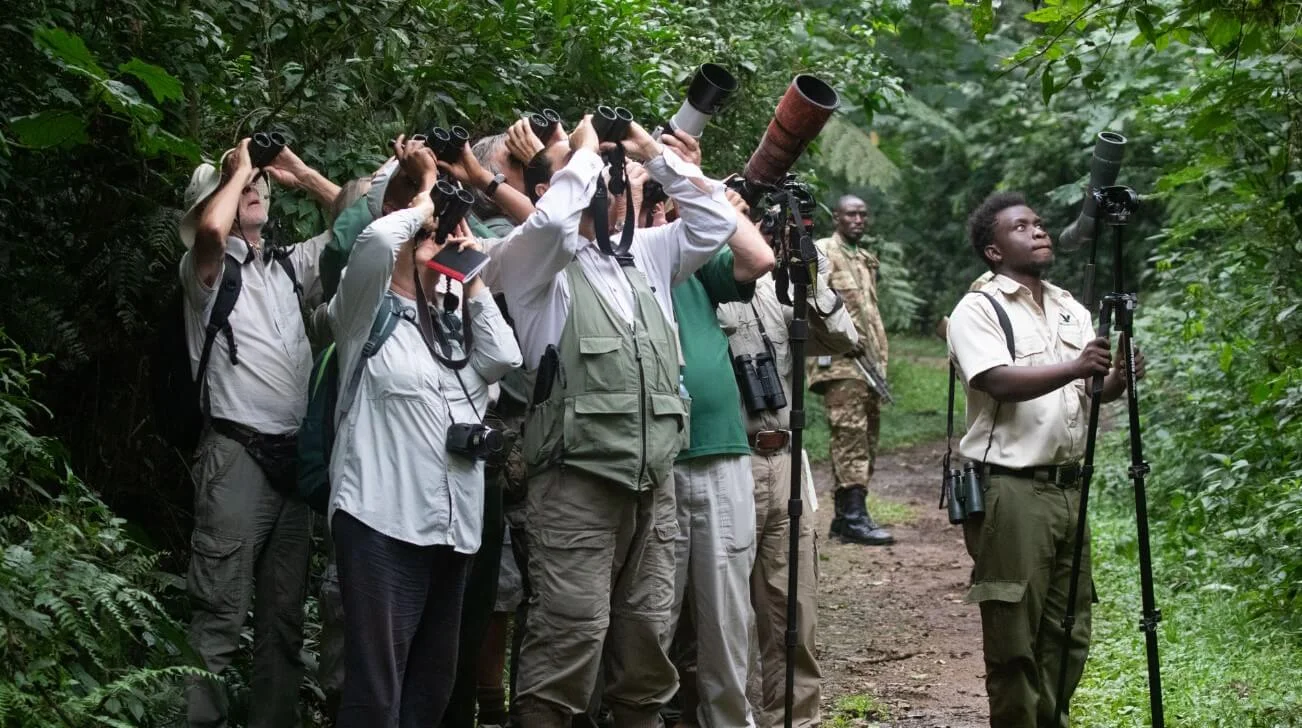

Where is Karamba Trail and how do you reach it?
Karamba is a hiking and birdwatching area within Nyungwe National Park in southwestern Rwanda. The published trail start is the Karamba main road, rather than the Uwinka visitor centre used for some other hikes. The trail passes through an area formerly occupied by a gold mine, a market and an army camp; today, its fern-rich environment and forest-edge viewing opportunities make it especially interesting for birds.
Getting there from Kigali
Most travelers start at Kigali International Airport or a Kigali hotel and travel southwest by private vehicle through Rwanda’s highland scenery toward Nyungwe. Plan a substantial road-transfer day, generally around five to seven hours depending on the final accommodation, road conditions and stops; this is a planning range, not a guaranteed journey time.
Because Nyungwe’s trails and accommodation are spread across different areas, let your driver and guide confirm the exact meeting point the evening before. Visitors coming from Lake Kivu, Rusizi or other parts of Rwanda can build Karamba into a longer circuit.
If you only have one day in the area, keep the program focused on Karamba. If you have two or three nights, you can include other forest habitats and a separate Nyungwe chimpanzee trekking experience without rushing.
Bird species
Birds to look for on Karamba Trail
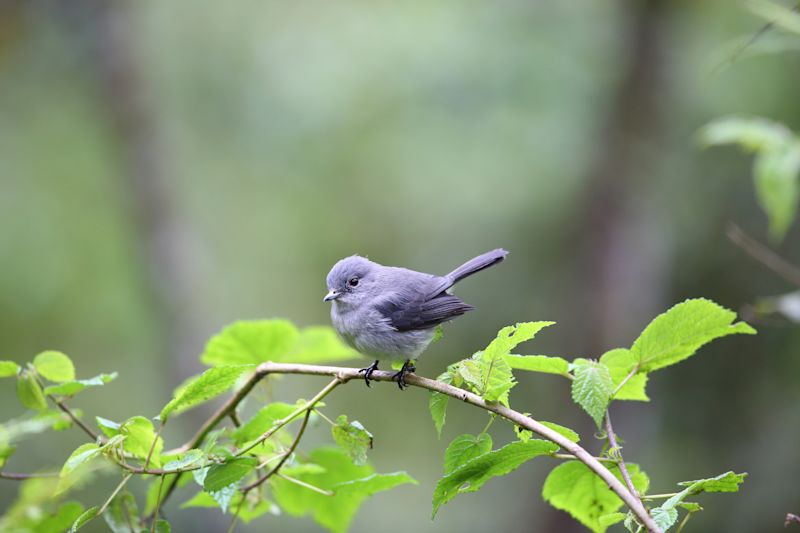
The trail has been specifically associated with the yellow-eyed black flycatcher and oriole finch. These make excellent target species for a focused Karamba birding walk. The wider Nyungwe forest also supports an impressive variety of turacos, sunbirds, forest flycatchers, bush-shrikes and other colourful birds.
Depending on habitat, season and luck, your guide may also help you search for species such as the Rwenzori turaco, regal sunbird, purple-breasted sunbird, Rwenzori batis and other Albertine Rift specialities. These should be treated as regional birding targets, not promises of sightings on this particular route.
Birders hoping to see a long checklist should consider combining Karamba with other Nyungwe sites and additional time in the forest. Some scarce species require a different altitude or a specialised location.
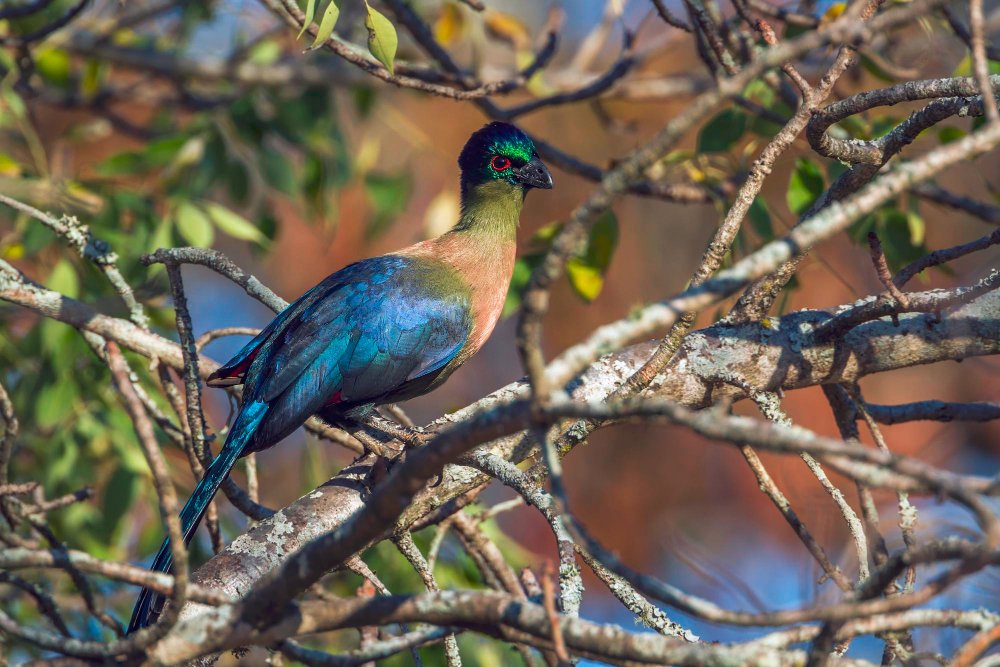
Birdwatching highlights: Karamba targets and wider Nyungwe species
For accuracy, distinguish birds specifically mentioned for Karamba from species associated with Nyungwe National Park more generally. These are targets, not promised sightings. Bird occurrence changes with weather, flowering and feeding patterns, season, and the guide’s knowledge of the current habitat.
Yellow-eyed black flycatcher
A particularly relevant target for Karamba and nearby forest-edge areas. Watch for a small, dark flycatcher working from shaded perches; allow the guide to identify it by plumage, calls and behavior.
Oriole finch
Reported in the Karamba area. Ask your guide to search suitable edges and fruiting or seed-bearing vegetation; sightings are not guaranteed.
Rwenzori turaco
An iconic Albertine Rift forest bird whose loud calls often reveal it before it appears. A strong wider-Nyungwe target, not a guaranteed Karamba sighting.
Regal sunbird
Look for a brightly colored, nectar-feeding forest sunbird, particularly around flowering vegetation; the species is among Nyungwe’s noted Albertine Rift birds.
Purple-breasted sunbird
Another highly sought-after bird of Nyungwe. The iridescence can vary greatly with light, so patient observation is rewarding.
Red-collared babbler
A sought-after forest specialist often detected through active, noisy groups. Seek a specialist guide and an itinerary that targets appropriate Nyungwe habitat.
Serious birders may also seek forest species such as Rwenzori batis, black-billed turaco, red-faced woodland warbler and blue-headed sunbird in suitable areas of Nyungwe. For a customized target list, share your life-list or priority species before we prepare the route.
How a guided Karamba birding walk unfolds


This is a sample activity outline, not a fixed park departure schedule. Starting times and route operations must be reconfirmed.
What happens on a guided Karamba forest birding walk?
Check in and meet your guide
Confirm permits, trail conditions, weather and safety instructions. Let your guide know whether you prefer relaxed nature appreciation, photography or targeted bird identification.
Begin slowly at the forest edge
Use ears as much as eyes. Watch canopy gaps, fern-covered ground and movement between branches. Stop for promising mixed feeding groups rather than trying to cover the distance quickly.
Observe respectfully and finish together
Keep to the designated route, avoid loud playback without park guidance and never approach nests. End with a species checklist and a discussion of the next best habitat to visit.
A guided walk does not guarantee specific wildlife encounters. Forest birding is often about brief views, distinctive calls, patience and the satisfaction of finding birds in their natural habitat.
Best time to visit Karamba for birdwatching
Karamba can be explored throughout the year, although weather influences visibility, photography and trail comfort. Rwanda’s relatively drier periods, often around June to September and December to February, are convenient for travellers who prefer less mud. Even then, showers remain possible in this mountainous rainforest.
Rainier periods may bring lush vegetation, strong bird activity and beautiful photographic conditions. However, wet paths can become slippery, and heavy showers can temporarily interrupt bird observation. Serious birders should plan around their target species rather than assuming a particular month guarantees better sightings.
Early morning can be rewarding because bird vocalisations and movement are often easier to detect before the day becomes busier. Actual start times are subject to the park’s arrangements. Bring a lightweight rain jacket regardless of season.
Is Karamba suitable for beginners and families?
Yes, for many visitors. Karamba is described as a relatively easy walk when compared with Nyungwe’s more demanding mountain routes. This makes it an attractive introduction to forest birding for travellers who are reasonably mobile, including those who may not wish to attempt a strenuous hike.
Easy does not mean fully level or universally accessible. Mud, roots, uneven surfaces and wet weather can change the experience. Families should ask about current age rules, walking conditions and appropriate trail options before booking. Travellers with limited mobility should request an individual assessment rather than assuming the trail is wheelchair accessible.
What should you bring?
- Binoculars: ideally a comfortable pair for spotting moving birds in shaded forest.
- Waterproof walking shoes: with reliable grip on damp and uneven ground.
- Rain protection: a lightweight jacket and dry bag for cameras or phones.
- Camera: a telephoto lens is useful for wildlife photography; avoid flash near animals.
- Water and a light snack: follow your guide’s park rules on food and rubbish.
- Field notes or checklist: record calls, locations and species you identify.
- Neutral clothing: comfortable layers suitable for changing mountain temperatures.
Karamba Trail fees, guide arrangements and booking
Entrance and guided-activity charges can vary with nationality, residency, visitor age, booking channel and current park policy. Rather than relying on an old online price, request an up-to-date quotation showing each component.
Park access
Confirm the entry category and whether your itinerary includes more than one day inside the park.
Birding guide
Confirm the guide, Karamba trail access, proposed start time and specialist bird-identification support.
Transport & lodging
Quote the transfer route, vehicle, accommodation category, meals and any extra excursions separately.
For current visitor arrangements, consult the official Nyungwe National Park website, or ask Safari Vacations for an itemized private safari quote. We confirm fees, availability and guiding conditions before payment.
Extend your safari
Other experiences to combine with Karamba


Trail difficulty, accessibility and a practical packing checklist
Karamba is described as relatively easy, but a rainforest walk is not the same as a flat paved path. Rain can make the ground muddy, the surface slippery and the air cool. Walk at the pace of your slowest companion and communicate mobility concerns in advance.
Clothing
Wear grippy walking shoes, long lightweight trousers and layers suitable for a cool, damp highland forest.
Birding equipment
Pack binoculars, a field guide or offline bird app, a small notebook and a camera with a modest telephoto lens if available.
Comfort and safety
Carry drinking water, a rain jacket, personal medication, a dry bag and a small snack if permitted by the guide.
Families with children, older travelers and first-time birders can enjoy the experience, but suitability depends on the visitor’s fitness, attention span, prevailing conditions and park participation rules. Let us know your needs so we can advise on pacing and alternatives.
Where to stay near Karamba and Nyungwe National Park
The best accommodation is not necessarily the most expensive: for serious birders, the ideal choice balances a quiet early departure, a realistic transfer to the assigned meeting point and a comfortable place to recover after the walk. Below are three different options from the original page.
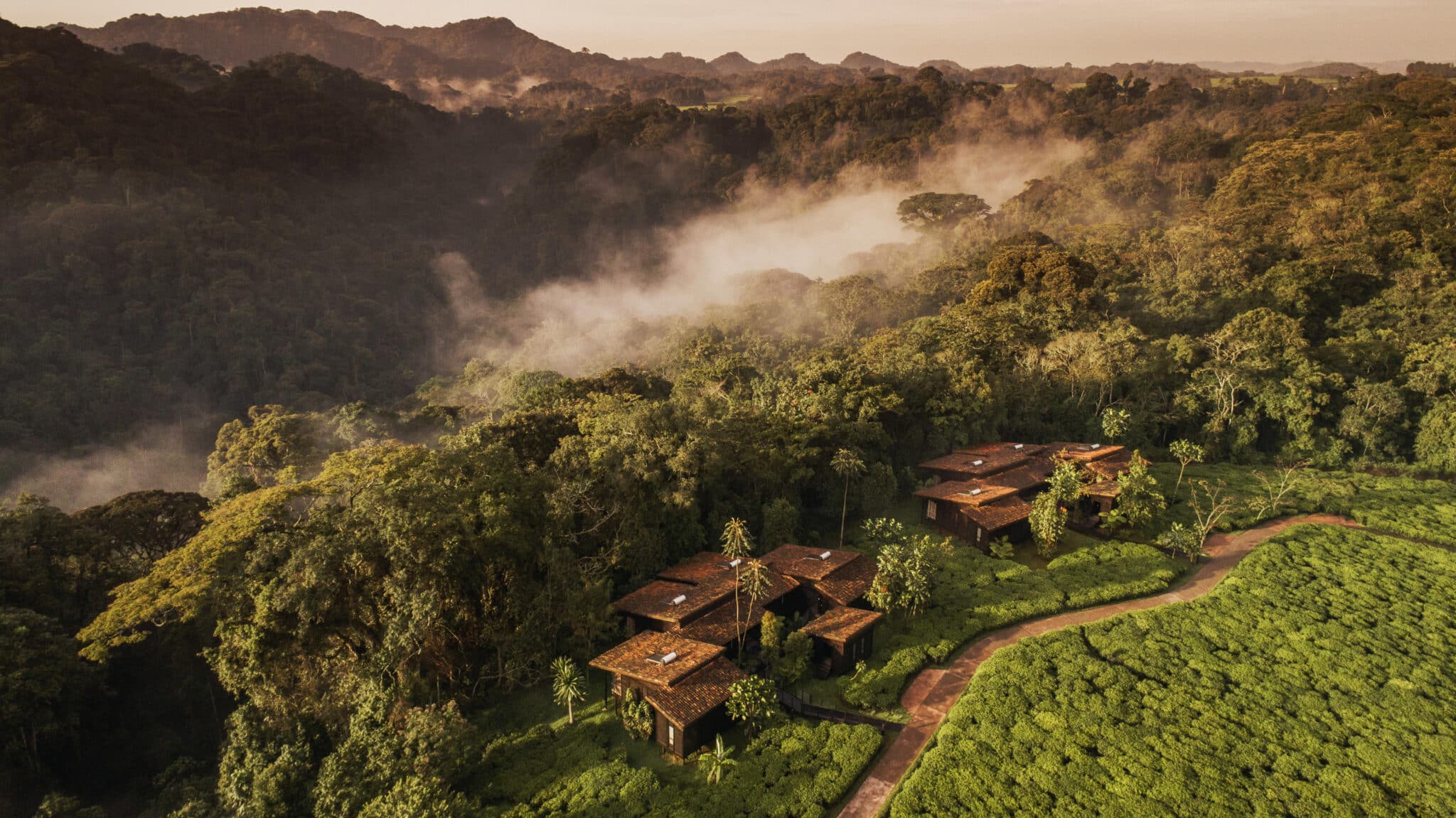


Room rates, meals, cancellation rules, travel times and accommodation availability are confirmed for the actual travel dates. We can also suggest other properties once you tell us your preferred budget and level of comfort.
Suggested three-day Nyungwe birding itinerary
1
Day 1: Kigali to Nyungwe National Park
Leave Kigali for southwestern Rwanda, taking in the changing hills and countryside along the way. Arrive near Nyungwe, check in at your lodge and enjoy a relaxed evening. Depending on your arrival time and confirmed park arrangements, your guide can discuss your expected birding targets and the following day’s meeting point.
2
Day 2: Karamba birding and forest exploration
Enjoy a guided morning birding walk on the Karamba Trail. Listen for forest birds, watch for movement in open vegetation and learn about the ecology of Nyungwe’s montane landscape. After lunch and a rest, an optional additional guided activity can be arranged, such as the canopy walkway, if the timing and permits allow.
3
Day 3: More Nyungwe birding and return to Kigali
Enjoy a final short birding session where practical, then depart for Kigali. Alternatively, add another night to allow a separate chimpanzee trekking excursion, colobus tracking or a longer forest hike. For committed birders, a four- or five-day itinerary generally offers more flexibility than trying to fit everything into one day.
Illustrative itinerary only; access, travel and park bookings depend on availability.
Choose a 3-, 4- or 5-day Nyungwe birdwatching itinerary
These sample routes are flexible examples, not fixed departures. Exact activity sequencing depends on park booking slots, road transfers, visitor fitness and species priorities.
A compact forest introduction
Day 1: drive from Kigali, check in and relax. Day 2: guided Karamba birdwatching in the morning and optional nature activity later, subject to timing. Day 3: breakfast, optional short birding near your lodge and return transfer.
Birding plus primate tracking
Day 1: arrive in Nyungwe. Day 2: birding on Karamba. Day 3: booked chimpanzee tracking or a contrasting forest trail, depending on permits. Day 4: depart, with time for roadside photography and planned stops.
Specialist photography and varied habitats
Day 1: transfer and settle in. Day 2: Karamba birding. Day 3: another birding site chosen for priority species. Day 4: canopy walkway, forest walk or primates. Day 5: final early observation and onward journey.
Responsible birdwatching in Nyungwe Forest
Nyungwe is a protected forest and a globally important landscape for conservation. Remain with your guide, keep to designated trails, take all litter out and observe wildlife from an appropriate distance. Do not feed animals, remove plants, approach nests or use drones without explicit authorization.
For bird photography, natural light and quiet observation are usually better than trying to force an encounter. If you want to use recorded calls or specialized audio equipment, ask your guide about current park rules first. Local guiding and responsible visits can contribute to the long-term value of forest conservation.
How to book Karamba Birding Trail with Safari Vacations
Safari Vacations and Travel Services Ltd arranges personalised Rwanda and Uganda wildlife holidays, including guided birding, private transfers, accommodation and additional forest activities. Tell us your travel dates, number of guests, preferred accommodation standard and whether your main priority is photography, endemic bird species, chimpanzees or a combination.
We can prepare an itinerary that gives you adequate time in Nyungwe instead of forcing every activity into a single crowded schedule. Park guides, permits, meeting points and prices are confirmed at the time of booking. If you are travelling from abroad, we can also discuss whether to start your journey from Kigali and how to combine Nyungwe with other parts of Rwanda.
Ready to discover the birds of Nyungwe?
Plan a private Karamba Trail birding safari with accommodation, transfers and additional rainforest experiences tailored to your interests.
More Karamba Trail questions answered
Practical answers for first-time visitors, photographers and specialist birders.
Is Karamba Trail the same as the canopy walkway?
No. Karamba is a birding and hiking route. The canopy walkway is a different experience, with its own access logistics and booking arrangements.
Can I see the yellow-eyed black flycatcher on Karamba?
The species has been specifically reported from the Karamba area. Finding it depends on conditions and a guide’s observations that day.
Are all Albertine Rift birds found on this single trail?
No. Different species favor different elevations, forest structures and wetlands. A multi-site birding program is better for a long target list.
Do I need a guide?
Nyungwe park hiking activities are guided. Arrange an authorized guide and check current registration procedures before arrival.
Can I do Karamba after chimpanzee tracking on the same day?
Sometimes a combination might be possible, but chimp tracking starts early and its duration varies. Two separate activity slots or days are safer for unhurried birding.
Does rain cancel a Karamba walk?
Not necessarily. Rain is part of the forest environment, but a guide or park team may change plans for unsafe conditions.
Can I take photographs using a mobile phone?
Yes, especially for scenery and general memories. Distant forest birds are usually easier to photograph with a zoom lens.
What is the ideal group size for birding?
A smaller private group often permits more listening, patient observation and personalized identification. Actual guiding capacity is subject to park arrangements.
Can I include Karamba on a Rwanda–Uganda itinerary?
Yes. Many travelers combine Rwanda rainforest excursions with other Rwanda destinations and Uganda primate experiences. Border arrangements and travel days must be planned carefully.
How early should I book?
Book well ahead for busy periods, specialist guiding and preferred lodges. Trail access and relevant permits should be confirmed before paying.
Is there an exact Karamba birding price?
The total depends on applicable park fees, guiding, transport and extras. Request a current itemized quote rather than relying on historical online prices.
What if I am not an experienced birder?
The walk can be enjoyable for curious beginners. Tell your guide your experience level so they explain birds by call, shape, movement and habitat.
Frequently asked questions about Karamba Trail
Where is Karamba Birding Trail?
Karamba is a birdwatching and hiking route within Nyungwe National Park in southwestern Rwanda. Rwanda’s hiking guide lists its starting point as Karamba Main-Road. Confirm the exact meeting location when reserving your guided walk.
How long is the Karamba Trail?
The published Rwanda hiking guide describes a 6 km route requiring approximately three hours. Birders may spend longer observing and identifying species, subject to the organised activity arrangements.
Is Karamba a difficult hike?
It is usually categorised as relatively easy compared with Nyungwe’s longer mountain trails. Nevertheless, the terrain can be wet or uneven and requires appropriate walking footwear.
Which birds can I see?
Yellow-eyed black flycatchers and oriole finches are notable Karamba targets. Nyungwe more broadly offers sunbirds, turacos, bush-shrikes, forest flycatchers and many Albertine Rift specialities. Sightings are always unpredictable.
Can I walk Karamba without a guide?
Hikes within Nyungwe National Park are regulated activities. Plan to visit with a designated park guide and the appropriate reservation or permit.
Can I combine Karamba with chimpanzee trekking?
Yes, over a suitably planned multi-day stay. Chimpanzee tracking starts early and has its own booking rules, so scheduling each activity on a different day is usually more comfortable.
When is the best time for Karamba birdwatching?
Birding is possible year-round. Drier periods may improve walking comfort, while lush and wetter conditions can also be rewarding. Allow for rain in any month.
What is the Karamba Trail entrance fee?
Prices depend on the current park entry fee schedule, activity rules and visitor category. Because these can change, we recommend requesting a dated quotation rather than relying on an old online figure.
Which lodge should I choose?
One&Only Nyungwe House suits a luxury stay; Nyungwe Top View Hill Hotel is another comfortable option; Gisakura Guest House offers a simpler base. Confirm your trail meeting point before choosing.
Can beginners enjoy birdwatching here?
Absolutely. A good local guide can introduce beginners to bird calls and forest habitats. Patience, binoculars and an interest in nature are more important than prior birding expertise.
Book Karamba Birding Trail in Nyungwe Forest
Continue exploring Rwanda with us
- Chimpanzee Trekking in Nyungwe
- What to Know Before Nyungwe Chimpanzee Trekking
- What to Expect on Nyungwe Canopy Walk
- Why Nyungwe Forest Guides Matter
- Explore Rwanda’s National Parks
- Contact Our Rwanda Safari Specialists
Editorial references: Visit Rwanda hiking information, Rwanda hiking guide, and Nyungwe park visitor information. Wildlife sightings, schedules and fees must be reconfirmed.
Planning references
Trail specifications: Visit Rwanda hiking guide. Trail and birding context: Nyungwe trail information and Nyungwe birding overview. Biodiversity context: African Parks. Activity availability and fees should be confirmed with Nyungwe National Park.