Exploring the Diversity of Gorillas

Exploring the Diversity of Gorillas: An In-Depth Study of Different Gorilla Species and Subspecies
Gorillas are the largest primates and one of our closest relatives, sharing over 98% of human DNA. Exploring the diversity of gorillas, we find that these magnificent creatures belong to the family Hominidae, which includes humans, chimpanzees, bonobos, and orangutans. They are known for their immense strength, especially the males, which are called silverbacks due to the gray hair that develops on their backs as they mature.
A group of gorillas is called a troop, usually led by a dominant silverback. Gorillas attain adult size between 6 and 8 years, with full growth reached around 15 to 20 years of age. Adult male gorillas, particularly mountain gorillas, can be about six times stronger than an average adult human male.
Historically, gorillas were once thought to inhabit large parts of the African continent. However, due to habitat loss, poaching, and disease, their populations are now limited to forested regions in central and western Africa. Despite their size and strength, gorillas are generally gentle creatures, known for their peaceful, social nature within their family groups.
Taxonomy and Classification of Gorillas
Gorillas belong to the genus Gorilla, which is part of the Hominidae family. Within this genus, scientists have identified two distinct species of gorillas:
- Eastern Gorilla (Gorilla beringei)
- Mountain Gorilla (Gorilla beringei beringei)
- Eastern Lowland Gorilla (Gorilla beringei graueri)
- Western Gorilla (Gorilla gorilla)
- Western Lowland Gorilla (Gorilla gorilla gorilla)
- Cross River Gorilla (Gorilla gorilla diehli)
The Eastern Gorilla lives in the Democratic Republic of Congo, Uganda, and Rwanda. The Western Gorilla lives in West Africa, mainly in countries like Cameroon, Central African Republic, Equatorial Guinea, and Gabon
Eastern Gorilla Subspecies
- Mountain Gorilla (Gorilla beringei beringei): Found in the volcanic mountains of Rwanda, Uganda, and the Democratic Republic of Congo, with a population of around 1,000 individuals.
- Eastern Lowland Gorilla (Gorilla beringei graueri): Also known as Grauer’s Gorilla, it is found in the eastern Democratic Republic of Congo, with a population of approximately 3,800 individuals.
Western Gorilla Subspecies
- Western Lowland Gorilla (Gorilla gorilla gorilla): The most numerous and widespread subspecies, found in the tropical rainforests of West and Central Africa, with a population of around 361,900 individuals.
- Cross River Gorilla (Gorilla gorilla diehli): The rarest subspecies, found in a small region along the border of Cameroon and Nigeria, with a population of only 250-300 individuals.
The Eastern and Western Gorilla species diverged from a common ancestor approximately 2 million years ago, and the subspecies within each species further evolved due to geographic isolation during the Ice Age. Gorillas are herbivorous, predominantly ground-dwelling great apes that inhabit the tropical forests of equatorial Africa. They are the largest living primates, with adult males reaching heights of up to 1.9 meters (6.2 feet) and weighing up to 200 kilograms (440 pounds)
Genus Gorilla
The genus Gorilla is divided into two species, as mentioned above. These two species are separated by geography, behaviors, and physical characteristics. Despite these differences, all gorillas share many traits, including their social structures, diets, and reliance on forest habitats.
Species and Subspecies Differentiation
The two species of gorillas, Eastern and Western, are further categorized into subspecies:
- Eastern Gorilla: This species includes the Mountain Gorilla (Gorilla beringei beringei) and the Eastern Lowland Gorilla, also known as Grauer’s Gorilla (Gorilla beringei graueri).
- Western Gorilla: This species includes the Western Lowland Gorilla (Gorilla gorilla gorilla) and the Cross River Gorilla (Gorilla gorilla diehli).
Physical Characteristics of Gorillas
Gorillas are known for their strong, muscular builds. They have broad chests, large hands, and powerful arms that are longer than their legs. This body structure enables them to move efficiently in their forested habitats. Gorillas are knuckle-walkers, which means they move on all fours using their knuckles for support.
Male gorillas can weigh between 136 and 230 kilograms (300 to 485 pounds), while females are smaller, typically weighing between 68 and 113 kilograms (150 to 250 pounds). Mountain gorillas tend to be bulkier than their lowland counterparts, with thicker fur to help them survive in colder, high-altitude environments.
Behavioral Patterns and Social Structures
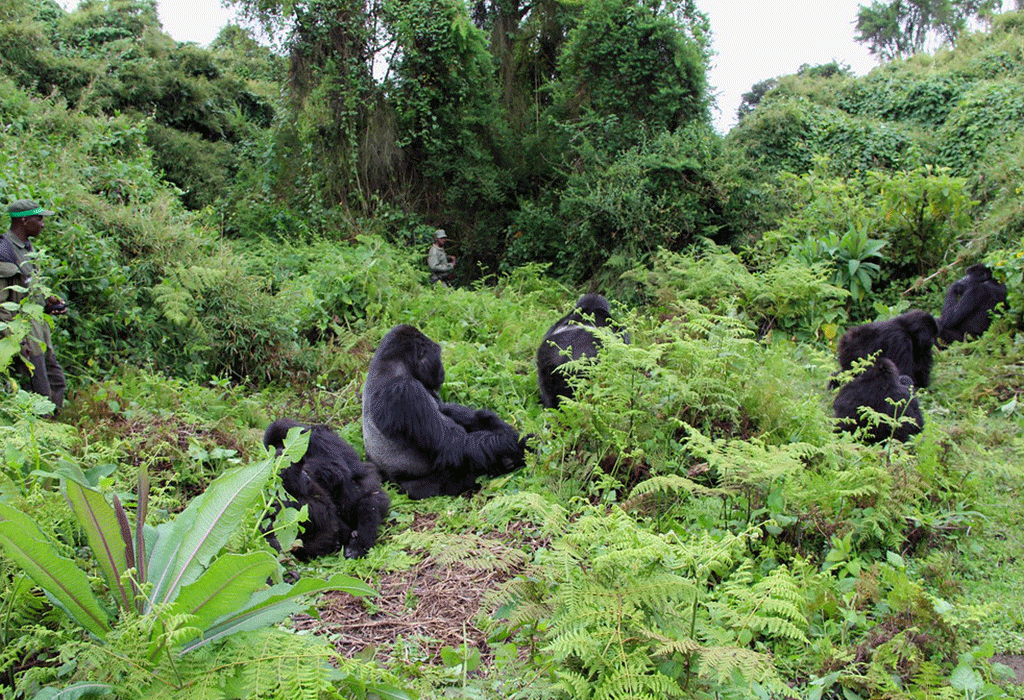
Gorillas are social animals that live in family groups, or troops, consisting of one dominant silverback, several adult females, and their offspring. In some cases, a troop may also include a few younger males, known as blackbacks. The Silverback is responsible for leading and protecting the group, making decisions about where to forage, and intervening during conflicts.
Gorillas communicate through vocalizations, body language, and facial expressions. They have been observed using tools in the wild, demonstrating their intelligence and problem-solving abilities. Despite their formidable appearance, gorillas are generally peaceful creatures. Aggression is rare and usually only occurs when a silverback feels his troop is threatened.
Habitat and Distribution of Gorillas
Gorillas are native to the forests of central and western Africa. Their habitats range from lowland tropical rainforests to mountainous regions. Each species of gorilla is adapted to the specific conditions of its environment:
- Western Gorillas are found in the dense rainforests of western and central Africa, including countries like Cameroon, Gabon, and the Republic of Congo.
- Eastern Gorillas inhabit the mountainous regions of Uganda, Rwanda, and the Democratic Republic of Congo. Mountain gorillas, in particular, are found at higher elevations in the Virunga Mountains and Bwindi Impenetrable Forest.
Gorillas play a vital role in their ecosystems by dispersing seeds and maintaining the health of their forest habitats.
Conservation Status and Threats
All species and subspecies of gorillas are classified as endangered or critically endangered. A combination of factors, including habitat destruction, poaching, and diseases like Ebola, has decimated their populations. Human encroachment, through deforestation for agriculture, logging, and infrastructure, has led to significant habitat loss.”
Conservation efforts are underway to protect gorillas and their habitats. Organizations such as the World Wildlife Fund (WWF) and local governments are working together to establish protected areas and promote sustainable tourism, such as gorilla trekking, which helps generate funds for conservation while raising awareness about the importance of protecting these majestic animals.
Western Gorilla (Gorilla gorilla)
Western Lowland Gorilla
The Western Lowland Gorilla is the most numerous of the gorilla subspecies. It is found in the dense rainforests of western and central Africa, from Cameroon to the Republic of Congo. Despite its relatively larger population, this subspecies faces severe threats from habitat destruction, hunting, and diseases. Western Lowland Gorillas are slightly smaller and lighter than mountain gorillas, with shorter fur and a wider range of habitats.
Cross River Gorilla
The Cross River Gorilla is the most endangered of all gorilla subspecies, with an estimated population of only a few hundred individuals. It is found in a small region along the border between Nigeria and Cameroon. Conservation efforts have been focused on protecting the remaining population and their habitat, but this subspecies remains critically endangered due to hunting and deforestation.
Comparison of Western and Eastern Gorilla Diets
The diets of western and eastern gorillas differ in several key ways:
Fruit Consumption
- Western lowland gorillas consume a higher proportion of fruit in their diet, up to 67%. They are more frugivorous and depend on fruit more than other subspecies.
- Eastern lowland gorillas have a more diverse diet that varies seasonally, with fruit making up around 25% of their diet.
- Mountain gorillas, a subspecies of eastern gorillas, eat very little fruit (only 2% of their diet) due to the limited availability at high elevations.
Foliage Consumption
- Mountain gorillas eat mostly foliage like leaves, stems, pith, and shoots, which make up 86% of their diet.
- Eastern lowland gorillas commonly eat leaves and pith.
- Western lowland gorillas have less access to terrestrial herbs compared to other subspecies.
Insect Consumption
- Eastern lowland gorillas regularly feed on ants, with the frequency varying seasonally.
- Western lowland gorillas eat termites and ants.
Habitat and Ranging
- Western lowland gorillas have larger home ranges of 7-14 km2 and travel farther each day, averaging 1,105 m, likely due to the more dispersed distribution of fruit.
- Eastern lowland gorillas have smaller home ranges of 2.7-6.5 km2 and travel 154-2,280 m per day.
- Mountain gorillas have the smallest home ranges of 3-15 km2 and travel the least, around 500 m per day.
In summary, western gorillas are more frugivorous, while eastern gorillas, especially mountain gorillas, are more folivorous. The diets of eastern lowland gorillas are intermediate between the other two subspecies. These differences are likely adaptations to the varying availability of fruit and other food resources across their habitats.
Eastern Gorilla (Gorilla beringei)
Mountain Gorilla
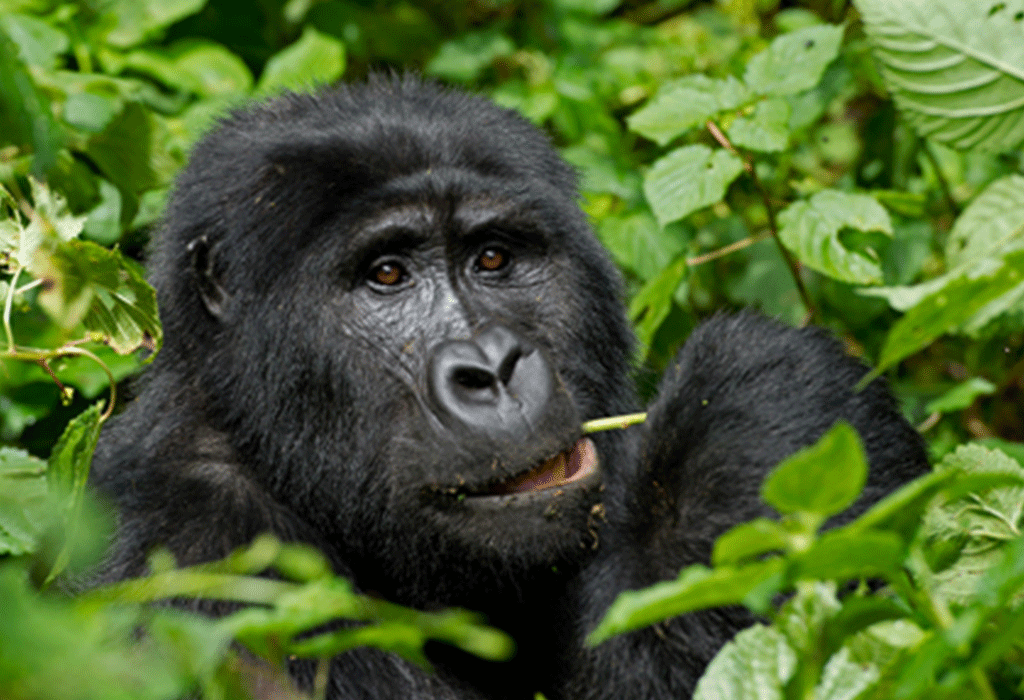
Mountain Gorillas are perhaps the most famous of all the gorilla subspecies, thanks to conservation efforts and gorilla trekking tours in Uganda, Rwanda, and the Democratic Republic of the Congo. These gorillas live at high altitudes in the Virunga Mountains and Bwindi Impenetrable Forest. They have thick fur to survive the cooler temperatures of their mountainous habitats. Mountain gorillas are critically endangered, with fewer than 1,000 individuals remaining in the wild.
Despite their endangered status, mountain gorilla populations have seen some recovery in recent years due to concerted conservation efforts, strict anti-poaching measures, and sustainable tourism initiatives. Gorilla trekking allows tourists to see these gentle giants in their natural habitats while contributing to the local economies and funding conservation projects.
Gorillas are among the most remarkable animals on the planet. From their powerful physical characteristics to their complex social structures, they offer a glimpse into our evolutionary history. However, their survival is threatened by human activities, and without continued conservation efforts, we risk losing these majestic creatures forever. By understanding the diversity of gorilla species and subspecies, we can appreciate the importance of protecting their habitats and ensuring their survival for future generations.