
Chimpanzee Habituation Experience in Uganda

What Is the Chimpanzee Habituation Experience?
The Chimpanzee Habituation Experience in Uganda, often abbreviated CHE, is a guided forest activity in which visitors observe a chimpanzee community undergoing habituation—the gradual process of becoming accustomed to the presence of people. Rather than simply locating chimpanzees and spending one hour with them, you have a longer opportunity to understand their social relationships, movements, feeding habits and communication.
The best-established visitor experience takes place in Kibale National Park, near Fort Portal in western Uganda. Under Uganda Wildlife Authority (UWA) guidelines, the permitted chimpanzee viewing period is up to four hours. The full outing takes longer because it also includes an early briefing, walking into the rainforest, locating the group and returning to the starting point. A sighting is never guaranteed: chimpanzees are wild, mobile animals.
For wildlife photographers, primate enthusiasts, birdwatchers and travelers looking for a more immersive adventure, chimpanzee habituation is among Uganda’s most rewarding forest experiences. Safari Vacations and Travel Services Ltd can arrange the permit alongside accommodation, private transport, professional safari guiding and a wider itinerary through western Uganda.
Three Reasons to Choose Chimpanzee Habituation


How Chimpanzees Become Habituated to Human Presence
Habituation is not taming, feeding or training a chimpanzee to perform. It is a slow field process in which researchers and authorized park personnel repeatedly approach a wild community while keeping their behavior predictable and non-threatening. Over time, chimpanzees may become more tolerant of observing humans. They remain fully wild, choose where to travel and retain their own social relationships.
The process can take years. Chimpanzees respond individually: some continue feeding, grooming or resting while others move into thicker vegetation or stay high in the canopy. Guests should therefore expect an authentic research-oriented encounter, not a guaranteed close-up photography session. Silence, patience and respect for ranger instructions are important parts of the experience.
What does a habituation day support? A managed visitor program generates conservation-related revenue, supports park operations and brings economic benefits to guides, lodges and nearby communities. However, tourist visits must remain carefully controlled to limit disturbance and the transmission of human diseases to great apes.
A Typical Chimpanzee Habituation Day in Kibale
Before sunrise: Leave your lodge after an early breakfast or with a packed meal, depending on your accommodation arrangements. Bring drinking water, snacks, packed lunch and rain protection. The forest can be wet even in a traditionally dry month.
Approximately 6:30 a.m.: Attend the UWA briefing and meet the authorized park personnel. You will be advised about wildlife safety, photography, minimum viewing distances, health precautions and how to move quietly through forest vegetation.
Early forest search: Follow authorized guides and trackers through the forest to locate the chimpanzee community. Listen for pant-hoots and other calls, and watch for movement in the canopy. The length and difficulty of the search vary with the chimpanzees’ location, weather and trail conditions.
Extended observation: Once the community is found, you may spend up to four hours with the chimpanzees under the direction of the park team. You could observe individuals feeding in fruiting trees, youngsters playing, mothers carrying infants, grooming partnerships or swift movements along the forest floor. These are possible behaviors, not guaranteed events.
Return to the lodge: Walk back with your guides, meet your safari driver and return to your accommodation to relax. Do not schedule a fixed-time afternoon activity unless the operator has confirmed that the logistics will work; the duration of the forest experience is unpredictable.
Important: UWA’s four-hour limit applies to viewing chimpanzees, not to a guarantee of a full day physically alongside them.
Chimpanzee Habituation vs. Standard Chimpanzee Trekking
Both experiences are valuable, but they suit different travel styles. Standard tracking is ideal for travelers who want a shorter forest excursion, have a busy safari schedule or prefer a lower permit cost. Habituation is better for those willing to start very early and spend longer observing chimpanzee behavior.
Standard tracking normally provides a maximum of one hour of chimpanzee viewing. Habituation provides a maximum of four hours and follows a community that is still becoming accustomed to people. This means the chimps may be more elusive and may move away unexpectedly.
Neither activity allows touching, feeding or interfering with chimpanzees. Visitor behavior remains tightly controlled to protect people and wildlife.

Chimpanzee Habituation Permit Prices: 2026 and 2027
Permits are issued through UWA, and rates depend on nationality or residency classification. The published 2026 habituation price for foreign non-residents is US$300 per person; published 2024–2026 tariff categories also list US$250 for foreign residents and UGX 250,000 for East African citizens. A change to US$400 for foreign non-residents from 1 January 2027 has been reported in the UWA 2026 tariff announcement. Confirm the final rate and relevant category at the time of booking.
| Experience / category | 2026 published rate | 2027 planning rate |
|---|---|---|
| Habituation – foreign non-resident | US$300 | US$400* |
| Habituation – foreign resident | US$250 | Confirm with UWA |
| Habituation – East African citizen | UGX 250,000 | Confirm with UWA |
| Standard tracking – foreign non-resident | US$250 | US$300* |
*Reported rates effective January 2027; verify before payment. Chimpanzee habituation permit rates in the UWA 2024–2026 published tariff include ranger/guide services and park entrance for the activity. Transfers, lodging, meals and other safari expenses are separately quoted. Source: Uganda Wildlife Authority.
Where Does Chimpanzee Habituation Take Place?
Kibale National Park in western Uganda is the principal destination for the official visitor chimpanzee habituation experience. Located near Fort Portal, the park combines evergreen rainforest with other forest and wetland habitats. Visitors typically stay around the Kanyanchu or Bigodi area and travel to their confirmed briefing point early in the morning.
Travel from Kampala or Entebbe generally takes much of a day by road, with the precise driving time dependent on traffic, road conditions, the route and where your lodge is located. For comfort, we recommend spending the previous night close to Kibale rather than attempting an overnight journey and early morning activity on arrival.
Kibale works particularly well in a three-day Uganda chimpanzee habituation safari. With additional time, it can be combined with the wildlife and boat activities of Queen Elizabeth National Park, gorilla trekking in Bwindi or birding and community visits around Bigodi.
More Wildlife Around Kibale and Bigodi
Chimpanzees are the headline attraction, but Kibale’s biodiversity makes the journey rewarding even between sightings. Forest walks may reveal black-and-white colobus monkeys, red-tailed monkeys, blue monkeys and an exceptional variety of forest birds. Sightings are never guaranteed, and observation is always from a safe distance.
On a separate excursion, the community-guided Bigodi Wetland Sanctuary is especially enjoyable for birdwatchers and visitors interested in local conservation. Look out for the great blue turaco, wetland vegetation and beautiful boardwalk scenery. We can add Bigodi before or after your chimpanzee day, depending on your walking energy and schedule.


What Chimpanzee Behaviors Might You See?
Chimpanzees are intelligent, social primates that live in communities with shifting subgroups. Depending on the group’s movements and the conditions on the day, you may encounter:
- Grooming: individuals cleaning one another’s hair and maintaining social bonds.
- Feeding: foraging for fruits, leaves and other natural foods.
- Vocal communication: loud pant-hoots and contact calls through the forest.
- Social play: energetic interactions among younger animals.
- Displays: brief, dramatic dominance behaviors and rapid movement.
- Parenting: mothers carrying, feeding and protecting infants.
Chimpanzees can move quickly and spend time high in the canopy. Some moments may be visible only briefly, particularly with groups that are not yet fully habituated.
Best Time for Chimpanzee Habituation in Uganda
The experience operates throughout the year. June to September and December to February are often favored for comparatively drier walking conditions, although rainfall is possible in every month. March to May and October to November are generally wetter, so expect more mud and slippery forest tracks. Rain can also influence where chimpanzees find fruit and how far they travel.
There is no single month that guarantees better sightings. A well-planned trip prioritizes permit availability, suitable fitness, good footwear and enough time near Kibale. Travelers visiting in busier periods should reserve accommodation and permits early. If your trip combines Kibale with Bwindi gorilla trekking, booking both sets of permits together helps avoid itinerary conflicts.
What to Pack for the Experience
Clothes and footwear
Waterproof hiking boots with traction, lightweight long trousers, long sleeves, a rain jacket, a hat and comfortable socks. Avoid clothing that restricts movement.
Food and essentials
Plenty of drinking water, packed lunch, snacks, insect repellent, any personal medication, a small backpack and a waterproof bag for electronics.
Photography
Camera with a suitable zoom lens, spare batteries, memory cards and binoculars. Forest light can be dim; never use flash with the chimpanzees.
Fitness, Age Limits and Wildlife Safety
Visitors should be prepared for an early start, extended walking, humid weather and uneven ground. You may face mud, roots, slippery slopes and thick vegetation. The exact distance varies because chimpanzees move freely. If mobility is limited, tell us before booking so that we can discuss whether standard chimpanzee tracking or another activity would be more appropriate.
UWA typically sets a minimum age of 12 years for chimpanzee tracking activities, but travelers should confirm the age requirement specifically for the habituation permit before making payment. Follow your park guide’s instructions at all times, keep the required distance, do not feed or touch chimpanzees, avoid loud noise and do not enter the forest with a potentially contagious illness. Protective health measures and group rules can be updated by UWA.
The habituation process aims to reduce chimpanzees’ fear of human observers, not to domesticate them. Respectful tourism keeps them wild and limits unnecessary disturbance.
Photography, Ethics and Responsible Chimpanzee Viewing
For a good photograph, prioritize steady shooting and natural moments over getting closer. A camera with a moderate telephoto lens is useful for chimps high in trees. Light is often patchy beneath the canopy, so a camera that performs well at higher ISO settings is helpful; a waterproof bag protects your equipment during sudden showers.
Do not use flash, imitate chimpanzee vocalizations or try to attract an animal’s attention. Remain with your ranger, avoid blocking chimpanzees’ movements and observe the minimum viewing distance specified at the briefing. Anyone experiencing flu-like symptoms should declare this before the activity: chimpanzees are vulnerable to human respiratory illnesses. Follow the current UWA requirements on face masks, distance and hygiene, as these may change.
Responsible viewing matters more than a perfect photograph. Occasionally, your guide may ask the group to stop, move away or end an observation early if the chimpanzees show discomfort or the conditions become unsafe.
Where to Stay Near Kibale National Park
Choosing the right lodge makes an early-morning chimpanzee habituation experience more comfortable. Kibale offers forest-side safari tents, well-appointed cottages and peaceful crater-lake retreats. Because the experience starts with an early briefing, we recommend prioritizing convenient access to the assigned UWA briefing point over the advertised distance to the park boundary. We confirm your meeting point and lodge-to-briefing transfer before travel.
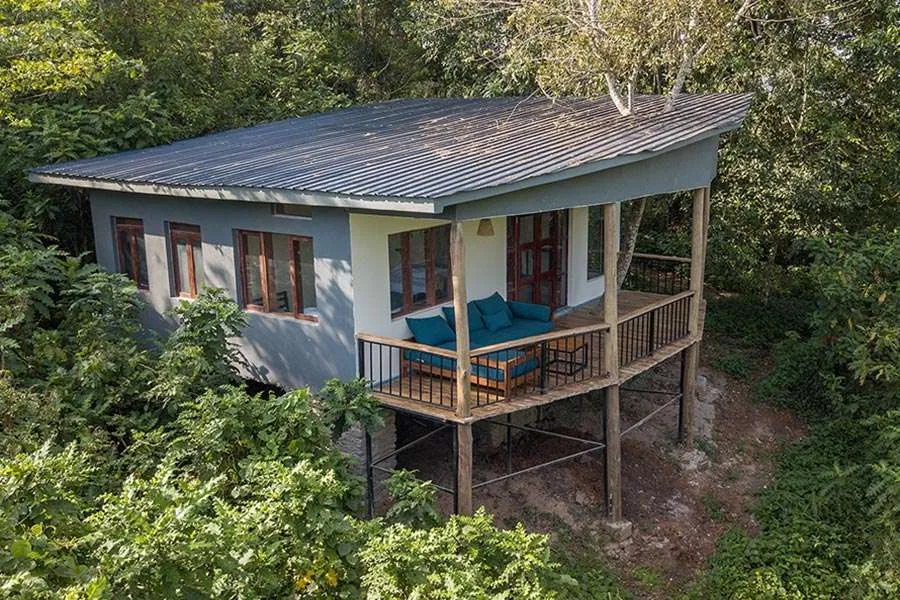
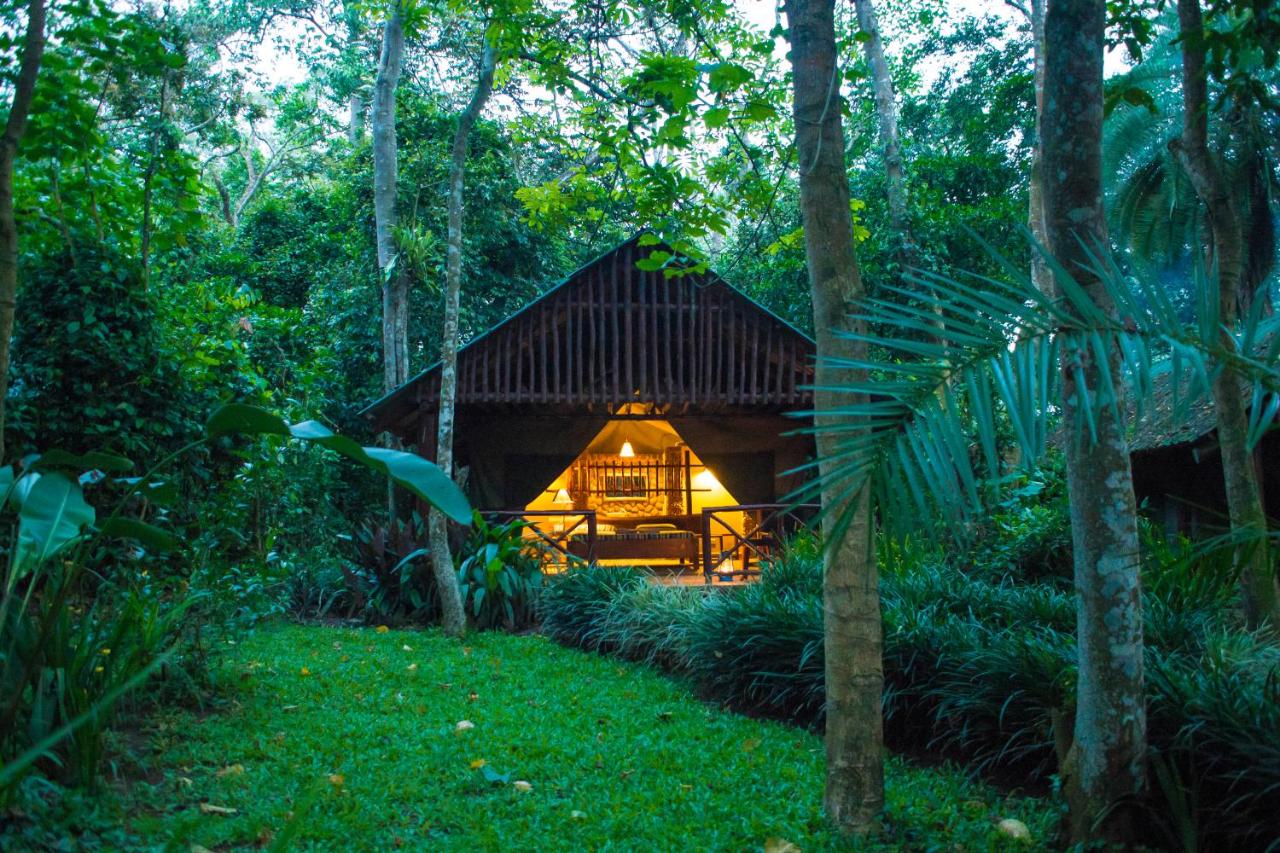


Which lodge should you choose?
For good value and a natural forest setting, consider Kibale Forest Camp. For comfortable forest cottages and a pool, Turaco Treetops is a strong option. For scenic crater-lake relaxation, Ndali Lodge and Crater Safari Lodge are worth exploring. All options are subject to room availability, your travel dates and the assigned habituation starting point.
We can include the lodge you prefer in a tailored itinerary, with transfers, meals and permit arrangements clearly specified in your quotation.
Combine Chimpanzee Habituation With Other Uganda Activities
Bigodi Wetland Sanctuary: Consider a guided community-run nature and birdwatching walk on a different day or during a sufficiently flexible free afternoon. The wetland is known for attractive birdlife, monkeys and local guiding initiatives.
Queen Elizabeth National Park: Add savanna game drives and a boat cruise on the Kazinga Channel, where elephants, hippos, buffaloes and numerous waterbirds may be observed. Wildlife sightings always depend on conditions.
Bwindi Impenetrable National Park: Combine chimpanzee habituation with a separate mountain gorilla trek for an unforgettable two-primate itinerary. Gorilla tracking requires its own advance-booked permit and additional travel days.
Fort Portal and crater lakes: Allow time for scenic crater-lake viewpoints, cultural experiences and relaxed lodge stays between demanding trekking days.
Explore related Uganda safari guides: Kibale Forest National Park · Bigodi Wetland Sanctuary · Kibale accommodation guide · Bwindi gorilla trekking · Primates of Kibale.
Getting to Kibale and Planning the Right Number of Days
Kibale lies in western Uganda near Fort Portal. Driving from Entebbe or Kampala generally takes much of the day, depending on the departure point, stops and traffic. A private safari vehicle is convenient because your accommodation, park briefing and onward safari destinations can be coordinated in one itinerary. Those flying within Uganda may consider an appropriate regional airstrip followed by a road transfer, subject to flight schedules and the final lodge location.
Allow at least two nights near Kibale for a relaxed three-day trip from Entebbe or Kampala. On the first day, travel west and settle into your lodge. Dedicate the following morning and much of the day to the habituation experience. Use the third day for your onward transfer or an additional activity if your return schedule permits.
Travelers adding Queen Elizabeth National Park, Bwindi gorilla trekking or other western Uganda attractions should consider a longer itinerary. We will sequence the activities to avoid a lengthy road transfer immediately before the very early chimpanzee briefing.
Sample 3-Day Chimpanzee Habituation Safari
Day 1 — Entebbe/Kampala to Kibale: Meet your private driver-guide and travel toward Fort Portal and Kibale National Park. Enjoy the countryside en route, stop for meals as appropriate and settle into your chosen lodge near the forest.
Day 2 — Chimpanzee Habituation Experience: Leave before sunrise for the UWA briefing and join authorized guides for the forest activity. Enjoy up to four hours of chimpanzee observation once the group is located. Return to the lodge afterward for rest and dinner.
Day 3 — Return to Entebbe: After breakfast, check out and transfer back to Kampala or Entebbe. If you are flying out the same day, we will assess your flight schedule and recommend an appropriate departure buffer.
FAQs About Chimpanzee Habituation Experience Uganda
How many hours can I spend with chimpanzees during habituation?
UWA guidelines permit up to four hours of viewing once the chimpanzees have been located. The complete forest activity can take considerably longer because the search and walk back are additional.
What is the cost of chimpanzee habituation in Uganda?
The published 2026 permit is US$300 for foreign non-residents, US$250 for foreign residents and UGX 250,000 for East African citizens. A US$400 foreign non-resident rate is reported from January 2027. Confirm all applicable fees with us when making your reservation.
Is chimpanzee habituation better than chimpanzee trekking?
Habituation is ideal for visitors who want longer observation time and are comfortable with a more demanding outing. Standard tracking is often better for travelers with limited time or those who prefer a shorter experience.
Is a chimpanzee sighting guaranteed?
No. Kibale is an excellent chimpanzee destination, but these are wild animals. The time required to find them, their location and the quality of views vary from day to day.
Can I take photos during the experience?
Yes, subject to the guide’s instructions and wildlife regulations. Use natural light and avoid flash, sudden movement or approaching chimpanzees for a closer photograph.
How far in advance should I book?
Book as early as practical, especially for popular travel months or when combining with gorilla trekking. Permits are limited and depend on the date requested.
Can you arrange both the permit and accommodation?
Yes. Safari Vacations and Travel Services Ltd can arrange the UWA permit, lodge, private transport, driver-guide and optional additions such as Bigodi, Queen Elizabeth National Park and Bwindi gorilla trekking.
Can I do chimpanzee habituation and Bigodi on the same day?
It may be possible when the chimpanzee activity ends early, but the forest outing can be tiring and unpredictable. We recommend planning Bigodi for another day or keeping the afternoon flexible.
Is chimpanzee habituation suitable for photographers?
Yes, the longer permitted observation time can offer more opportunities to record social behaviors. Still, sightings, light, distance and the chimpanzees’ movements cannot be controlled; flash photography is not appropriate.
How far in advance should I reserve?
Reserve as early as possible once your dates are firm, especially when traveling during popular safari months. We verify the permit inventory for your exact date before confirming an itinerary or payment instructions.
Can children join the experience?
Age restrictions are set by the Uganda Wildlife Authority and may vary by activity. We confirm the applicable minimum age for chimpanzee habituation with UWA before accepting bookings for younger travelers.
Plan your Kibale adventure
Spend More Time With Uganda’s Chimpanzees
Tell Safari Vacations and Travel Services Ltd your preferred travel dates, number of travelers and accommodation style. We will prepare a personalized itinerary and confirm permit availability and prices before booking.



