Chimpanzee Activity and Foraging
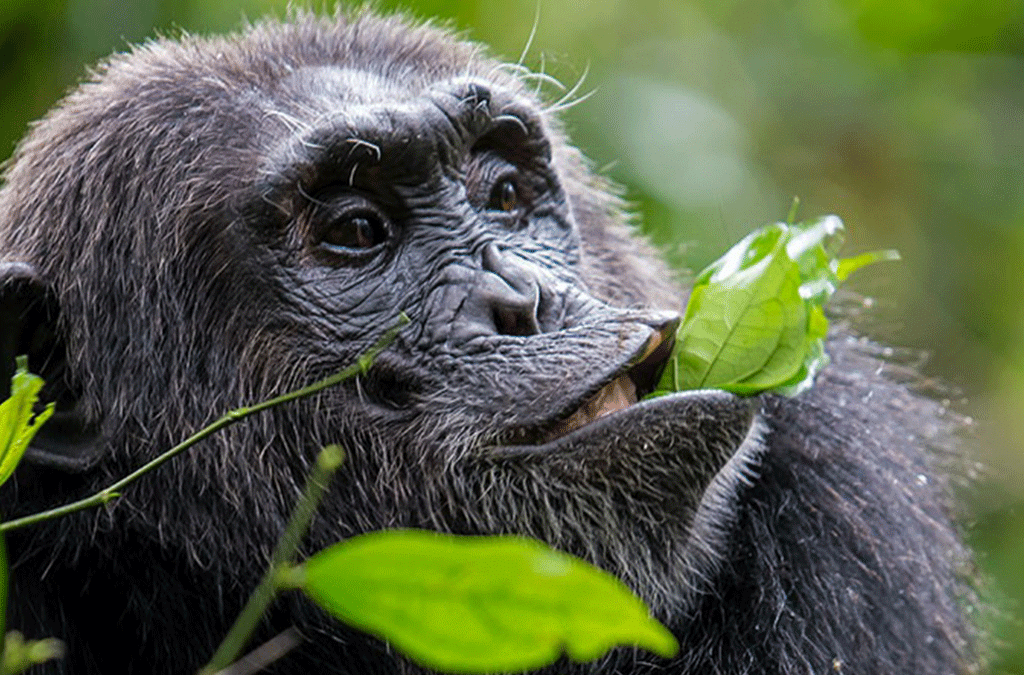
Chimpanzee Feeding Habits
Chimpanzee Feeding Habits
What Wild Chimpanzees Eat and How They Find Food
Your complete planning guide
Chimpanzee feeding habits reveal the intelligence and adaptability of Africa’s wild great apes. Fruit is central to most diets, yet leaves, insects, seeds and occasional meat also matter. What an individual eats changes with the season, its habitat and its social group. On a guided chimpanzee trek in Uganda or Rwanda, visitors may witness foraging, grooming or vocalising, but none of these behaviours can be guaranteed. This guide explains how chimpanzees find food, why feeding patterns matter for conservation and how to plan a rewarding, respectful primate safari.
Three ways to understand the experience
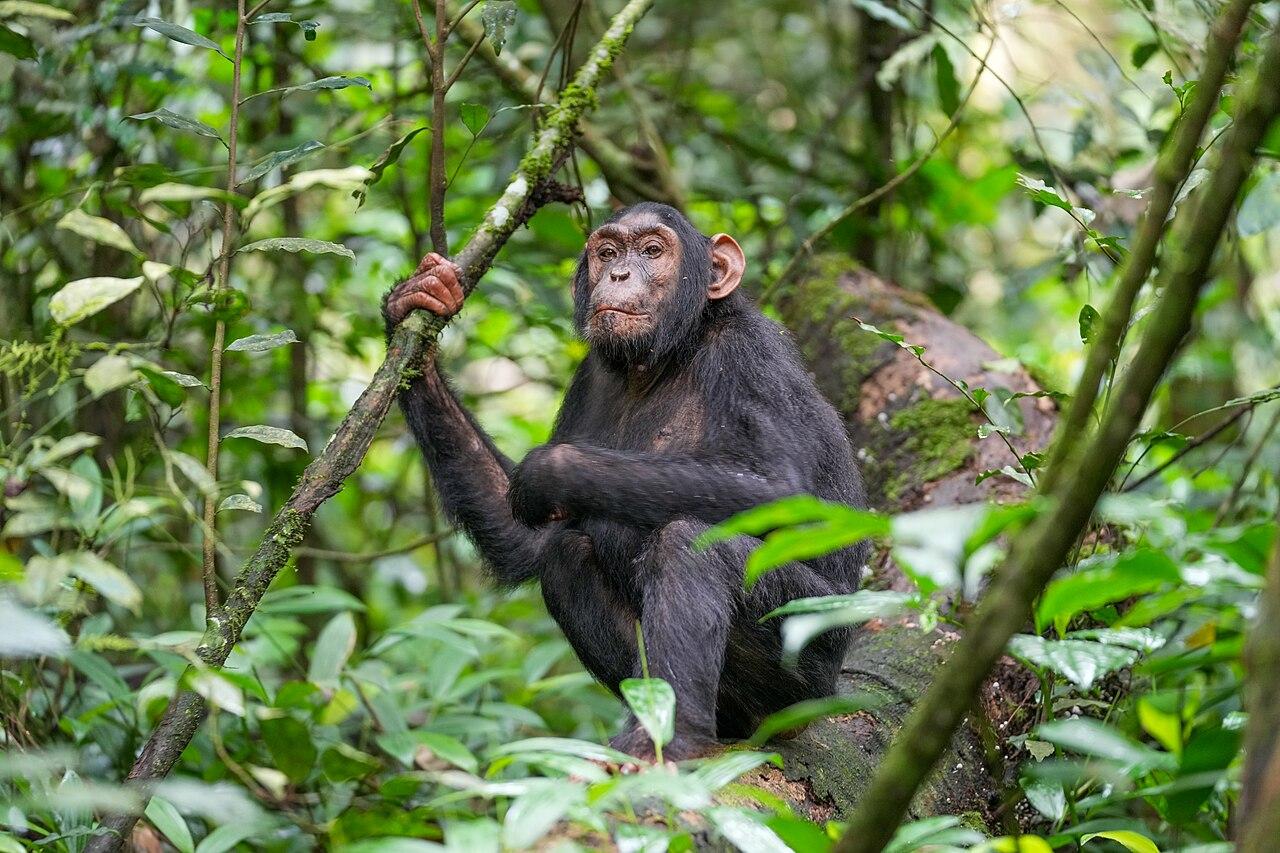
Fruit: the everyday staple
Ripe figs, wild berries and other seasonal fruits provide much of a chimpanzee community’s energy. Fruiting trees can attract feeding parties, although availability changes with rainfall and forest type.

Leaves, shoots and insects
Chimpanzees also browse young leaves, pith, flowers, seeds and insects. Termites and ants are valuable protein sources, and some populations use simple tools to extract them.

Occasional meat and hunting
Wild chimpanzees are omnivores. Some communities hunt small mammals, including monkeys, but meat is not a daily staple and hunting patterns vary among forests.
What travellers should know before booking
How chimpanzees find food
Chimpanzees remember productive feeding trees and travel between food patches. They may feed alone or in small, changing parties within a larger community. A morning can involve climbing into a canopy, selecting ripe fruit, descending to travel and pausing to groom or rest. Feeding behaviour therefore offers a window into their intelligence, social relationships and forest ecology.
Do chimpanzees use tools to feed?
In some populations, chimpanzees use twigs to fish for termites or ants, modify plant material to obtain food and use leaves as sponges to collect water. Tool traditions are not identical across communities: a behaviour common in one forest may be rare or absent in another. Visitors should not assume they will see tool use during a single trek.
How feeding changes with the seasons
Fruiting cycles, not simply wet versus dry months, drive feeding patterns. Some species produce fruit in seasonal peaks, while others provide food at different times. Chimpanzees may travel farther when preferred fruit is scarce, or spend longer feeding on lower-quality vegetation. Trekking encounters remain possible throughout the year, but the chimpanzees’ movements cannot be predicted exactly.
Where to observe natural feeding behaviour
Kibale National Park in Uganda is one of the best-known destinations for observing wild chimpanzees, while Nyungwe National Park offers trekking in Rwanda. Sightings can include feeding, climbing, vocalising or grooming. Chimpanzees are wild and highly mobile, so every visit is different.
Responsible viewing etiquette
Keep the distance required by park rangers, follow their instructions, avoid flash photography and never feed wildlife. Human foods can alter natural behaviour and create health risks. If you are ill, tell your guide before the trek; respiratory infections can be particularly dangerous to great apes.
A deeper look at the destination
Fruit trees shape a chimpanzee day
Forest figs are particularly important because different trees can bear crops at different times, creating useful food patches when other fruits are scarce. Chimpanzees also choose from many locally available wild fruits and may investigate ripeness by smelling, handling and tasting. A visitor who watches a feeding party high in the canopy will often notice that individuals select food rather than simply stripping a tree indiscriminately.
Travel planning insight: This is why a guide may ask the group to stop quietly near a known fruiting tree. The most rewarding observation may be several minutes of careful picking rather than dramatic movement through the forest.
Fallback foods when fruit is scarce
Leaves, young shoots, bark, pith, seeds and flowers help fill nutritional gaps when preferred fruits are difficult to find. These foods differ in energy, fibre and digestibility, and a chimpanzee may spend more time processing them. The diet is flexible, but flexibility does not mean all foods are equally useful or desirable. Long-term forest research tracks which plants become important in different months.
Travel planning insight: For visitors, a quiet afternoon of leaf feeding is still authentic wildlife behaviour. It tells a story about changing resource availability, not about a disappointing trek.
Insects and small animal prey
Chimpanzees may deliberately collect ants, termites and other invertebrates. In some populations, they also hunt small mammals, including monkeys, although hunting frequencies vary greatly. These behaviours supplement a plant-dominated diet and can involve excitement, vocalisations and group interactions. It would be misleading to describe chimpanzees either as strict vegetarians or as regular big-game predators.
Travel planning insight: Do not plan a safari around watching a hunt: it is unpredictable, can be disturbing, and is only one small part of the animals’ wider ecology.
Tool use and learned traditions
A chimpanzee may choose and modify a twig to extract insects or use a bundle of leaves to soak up water. Such behaviours are learned within communities and depend on opportunities provided by the environment. Researchers have documented meaningful differences between populations, so one cannot assume every forest displays the same techniques. Tool use is especially compelling because it joins practical problem-solving with social learning.
Travel planning insight: During a trek, watch what the chimpanzee is holding and how it manipulates the object. Never place food, sticks or other objects in its path to encourage a demonstration.
How young chimpanzees learn to feed
Infants remain near their mothers and watch adults choose food sources, move between trees and manipulate plant material. Youngsters may beg, sample objects, copy gestures and gradually improve their climbing and handling skills. Play is not separate from learning: exploring the canopy and handling unfamiliar things can develop skills used later in life. The mother’s experience and the group’s habits shape what young chimpanzees encounter.
Travel planning insight: A family group can be fascinating even when the animals are not feeding continuously. Ask the ranger to explain age differences without approaching for a closer photograph.
Competition at a good food source
One ripe tree may support a feeding party, yet individuals do not always share space equally. Rank, relationships, the amount of ripe fruit and the size of the group can influence access. Chimpanzee communities operate through changing subgroups, sometimes described as fission–fusion organisation. A single group arriving or departing can alter noise levels and feeding opportunities.
Travel planning insight: Expect a dynamic scene. When several chimpanzees climb or descend at once, follow the ranger’s positioning advice and avoid standing underneath active branches.
Food sharing and social bonds
Food sharing is not constant, but meat sharing and other forms of tolerance or exchange have attracted research attention. Social relationships may affect who approaches another chimpanzee and whether an individual can obtain food. Grooming, vocalisations and displays around a feeding session are part of this social context. Observers should be cautious about assigning human motives to every interaction.
Travel planning insight: Rather than counting how many animals you see, notice how their behaviour changes when neighbours arrive. Guided interpretation is often the most valuable part of a forest encounter.
A deeper look at planning and responsible travel
Water, drinking and leaf sponges
Wild chimpanzees obtain moisture from fruit and other foods, but they also drink available water. Some communities make leaf sponges by chewing or folding leaves and dipping them into water held in tree hollows or other hard-to-access places. Water collection is another example of flexible behaviour, not a fixed performance that every visitor will witness.
Travel planning insight: Keep your own drinking water packed away while observing chimpanzees. Rangers will explain when it is appropriate to take a break and drink.
Morning, midday and afternoon patterns
Chimpanzees may feed, travel, vocalise, rest or groom at any part of the day. Feeding opportunities depend on the locations of productive trees and the animals’ movements, so there is no universally best hour to witness a specific action. Forest light can change quickly, and activity in the canopy may be easier to hear than see.
Travel planning insight: A morning tracking permit can be excellent, but it should not be sold as a guarantee of feeding. Be prepared for shifting conditions and different forms of behaviour.
Why habitat protection matters to nutrition
A chimpanzee population needs more than a few isolated fruiting trees. Connected habitat provides a changing supply of fruit, fallback plants, nesting areas and travel corridors. Fragmentation can restrict movement and increase encounters with people or farms. Protecting a diversity of native vegetation helps sustain the food web on which chimpanzees depend.
Travel planning insight: Responsible tourism should support park protection rather than encourage feeding near roads, gardens or lodges. Do not share food or create an artificial attraction point.
Kibale as a wildlife classroom
Kibale National Park is widely recognised for chimpanzee tracking and has a history of primate research. A visitor might see fast canopy movements, communal calls, resting parties or individual feeding. Nearby Bigodi activities can broaden the trip into birdwatching, wetland ecology and community-based tourism.
Travel planning insight: An overnight stay is preferable to rushing in and out of the forest. It provides flexibility and lets the travel day feel like part of the experience.
Comparing Uganda and Rwanda for feeding observations
Uganda’s Kibale and Rwanda’s Nyungwe offer very different terrain and visitor experiences. In both places, chimpanzees remain free-ranging. Nyungwe’s steep slopes and foliage can make tracking demanding, while Kibale itineraries often integrate easily with Queen Elizabeth National Park and Bwindi. A traveller interested in behaviour should value interpretation and time in the forest over a promised sighting percentage.
Travel planning insight: If your main goal is a particular behaviour, tell the tour consultant. A well-paced itinerary can allow more than one permitted tracking opportunity where appropriate.
Photography without interrupting feeding
Forest photography is challenging because of low light, dense branches, quick movements and changing distances. A camera with good low-light performance, spare power and a secure strap is useful. Flash is not permitted around great apes, and photographers must never push past a ranger or separate from their group. Capturing an animal eating a single fruit can tell a stronger story than an intrusive close-up.
Travel planning insight: Prioritise an unobstructed view when one naturally occurs. The animals’ welfare and the ranger’s viewing distance always come before a photograph.
Planning your chimpanzee-focused safari
A balanced primate itinerary includes a suitable lodge, transport, a reserved tracking permit and enough time for briefing and the hike. Add other experiences only when road transfers allow comfortable travel. Ask in advance about the minimum age, current permit terms, medical restrictions and whether a particular itinerary includes regular tracking or a more specialised activity.
Travel planning insight: Safari Vacations can design a private route joining Kibale, Queen Elizabeth and Bwindi, or a Rwanda-based itinerary with Nyungwe and Volcanoes National Park.
In the field: an experience worth taking time for
Watch behaviour, not a staged performance
A chimpanzee safari offers a chance to understand animals on their own terms. Forest conditions determine where an individual feeds and whether it is visible from a safe viewing position. Take time to hear the ranger explain fruits, branches and the changing sound of the group.
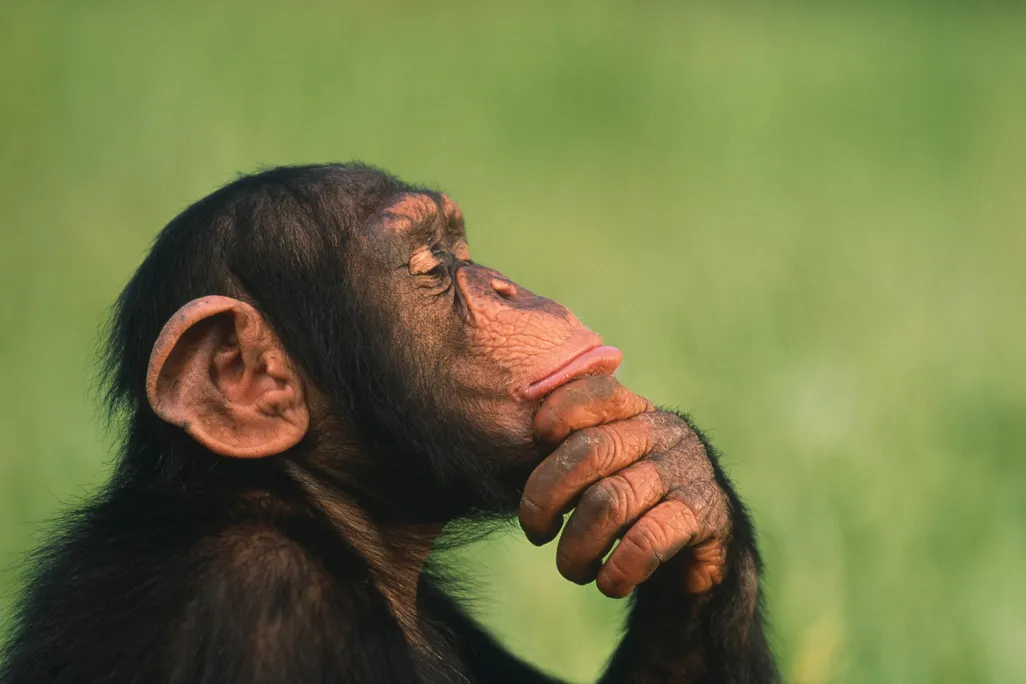
Compare your experience options
| Experience | What to expect | Best planning fit |
|---|---|---|
| Fruit | Major food resource | Look for feeding in fruiting forest trees |
| Vegetation | Leaves, shoots, seeds and pith | More prominent when preferred fruits are scarce |
| Animal foods | Insects and occasional meat | Variable, not guaranteed to observe |
Sample itinerary: a comfortable way to explore
Day 1 — Enter the Kibale landscape
Drive towards Fort Portal and Kibale, stopping as time allows to appreciate tea estates and highland scenery. Check in, review the following day’s briefing time and ask your guide what species of fruiting trees are currently active.
Day 2 — Track chimpanzees in Kibale
Attend the park briefing, then track chimpanzees with the authorised team. Observe whichever natural behaviours occur: feeding, climbing, resting, calls or grooming. Later, consider a guided Bigodi wetland or community visit.
Day 3 — Continue a primate and wildlife circuit
Extend south towards Queen Elizabeth National Park or return towards Entebbe. A longer itinerary can continue to Bwindi for a separate gorilla trekking experience, with permits reserved well in advance.
Costs, booking conditions and visitor safety
Chimpanzee Feeding Habits should be planned around confirmed activity access and current local conditions, not a fixed promise about wildlife, weather or trail availability. Before paying, ask for a written quotation distinguishing included guiding, accommodation, transport, meals, entry and permit charges, optional experiences and cancellation arrangements. Safari Vacations and Travel Services can organise a private journey that matches the number of travellers, available dates and preferred comfort level. We also recommend leaving realistic time between destinations because road conditions and activity durations vary.
Guests should follow their licensed guide’s instructions, respect local hosts and wildlife, use equipment appropriate to the terrain and disclose relevant mobility or health requirements when discussing an itinerary. Weather can change, especially in rainforest and highland destinations. Travel insurance and sensible flexibility are valuable. If a programme requires a park permit, an authorised ranger or a specialist adventure operator, those arrangements must be confirmed in advance. We never recommend independent close approaches to wild great apes or technical activities without qualified supervision.
Related safari packages and tailored tour ideas
3-Day Kibale Chimpanzee Discovery
Chimpanzee trek, Bigodi area nature or community excursion, guided forest interpretation.
5-Day Uganda Forest & Wildlife
Kibale chimpanzees, Queen Elizabeth landscapes and a balanced road itinerary.
7-Day Primates & Gorillas
Chimpanzee tracking in Kibale and a separate Bwindi gorilla experience, subject to permits.
Explore 30 related safari resources
Explore our related destination guides, national park information, trip comparisons and safari ideas. These resources help you plan a fuller journey before discussing a personalised route with our team.
Frequently asked questions
Are chimpanzees vegetarian?
No. They eat mostly plant foods, especially fruit, but also insects and occasionally meat.
Do chimpanzees eat bananas in the wild?
Wild chimpanzees eat naturally available forest fruits. Cultivated bananas are not a universal or defining part of their wild diet.
Do chimpanzees hunt other animals?
Some communities hunt small mammals, but hunting frequency and prey differ by location.
Can tourists watch chimpanzees feeding?
Yes, when feeding happens during a permitted trek. Specific behaviours cannot be guaranteed.
Is it safe to give chimpanzees food?
No. Feeding wild chimpanzees is prohibited and harmful.
What fruit do wild chimpanzees prefer?
Preferences depend on the forest and season; figs and other ripe native forest fruits may be especially important.
Do chimpanzees eat leaves?
Yes. Young leaves, shoots and other vegetation can be important, especially when favoured fruit is scarce.
How do chimpanzees find fruiting trees?
They travel through familiar ranges and respond to changing food availability; experience and memory are thought to help.
Will I see tool use on a trek?
Possibly, but tool use differs by population and is never guaranteed during a brief visitor encounter.
Are chimpanzees fed by park rangers?
Responsible wild chimpanzee tracking is based on natural foraging rather than visitor feeding.
Can chimpanzees eat meat?
Some populations hunt small mammals or eat other animal foods, although plant foods dominate their diet.