
3-Day Serengeti Safari and Ngorongoro Creater Tour
3-Day Serengeti Safari and Ngorongoro Creater Tour
Three days • Two nights • Serengeti and Ngorongoro • Start and finish in Arusha
Introduction: Two Iconic Landscapes in Three Days

A three-day journey into northern Tanzania puts two of Africa’s most remarkable wildlife landscapes on one compact route. The Serengeti is renowned for broad grasslands, river valleys, resident predators and grazing herds. Ngorongoro Crater offers a striking change of scenery: a large volcanic caldera with grasslands, woodland, marshes and lakes beneath a high rim. This combination is memorable, but the route is not a leisurely weekend break. It involves early starts, substantial travel over variable roads and careful decisions about where to sleep.
3-Day Serengeti Safari: the route at a glance
This guide treats a 3-Day Serengeti Safari as a realistic short trip rather than a promise of unlimited game viewing. You will see how to balance the Serengeti experience with a rewarding Ngorongoro Crater Tour, how to interpret a quote, and what to ask your operator before paying. Most itineraries start and finish in Arusha, a practical base for Tanzania’s northern safari circuit. With a knowledgeable guide and sensible expectations, three days can introduce you to remarkable wildlife without pretending that every famous migration sighting is guaranteed.
A well-designed Tanzania safari itinerary considers gates, park regulations, weather, accommodation location and the pace of road travel. The objective is not to race from photograph to photograph. It is to spend your available daylight where the likelihood of meaningful encounters is strongest, and to reach the next overnight stop safely.
3-Day Serengeti Safari: Snapshot and Essential Expectations
The standard road-based route links Arusha, the Ngorongoro highlands, the central Serengeti, the crater rim or Karatu, and Arusha again. Two nights are included, although their exact locations depend on whether the operator prioritizes more time in the Serengeti or an early arrival at the crater. A compact trip works best when the driver-guide explains the trade-offs before departure. The wildlife drive on a transfer day is still valuable, but you should distinguish it from hours devoted solely to searching for animals.
Your first question should be what time you actually leave Arusha and what time you expect to arrive back. The Arusha to Serengeti approach is long, especially when stops, entrance procedures, rough sections and sightings are included. The final day is similarly full because a crater descent is followed by the return journey. Avoid scheduling a tight flight connection immediately after the drive. A pre-safari overnight in Arusha removes avoidable pressure from the first morning.
Choose a tour that identifies overnight locations rather than merely promising “a lodge near the park.” Sleeping deep inside the Serengeti gives a different morning experience from sleeping beyond the entrance. Likewise, a crater-rim overnight can support an earlier descent than lodging farther away. The right choice depends on budget, availability and how the route is sequenced.
Day 1: Arusha to the Serengeti Plains
Leave Arusha early, ideally after breakfast or with a packed meal prepared by your accommodation. The first landscapes include cultivated areas and the rise toward the Ngorongoro highlands. The journey then moves through changing vegetation and, with the required authorizations, onward toward the Serengeti entrance. A brief viewpoint stop may be worthwhile, but your guide should keep enough daylight for wildlife watching after you enter the park. The 3-Day Serengeti Safari becomes much more satisfying when this afternoon is protected.
The central Seronera area is often a sensible focus for a short visit because wildlife can be encountered throughout much of the year. It has open country as well as riverine habitats that attract different animals. Watch for giraffes browsing trees, elephants moving between feeding grounds, impalas alert to danger and lions resting after a meal. A patient guide may spend time observing fresh tracks or listening to other guides’ sightings reports, rather than driving randomly.
At sunset, proceed to your reserved campsite or lodge according to the permitted driving hours. Confirm whether dinner is prepared at camp, served at a lodge or provided as part of a full-board package. Nights in the bush often feel surprisingly quiet until distant hyenas, birds or insects become audible. Follow accommodation staff instructions about walking outdoors after dark. The goal is a restful night before another early departure, not a late finish that disrupts tomorrow’s route.
Day 2: Morning Game Drive and Ngorongoro Transfer
Start as early as the accommodation and park rules permit. The morning can be productive because temperatures are often milder and many animals are active. Ask your guide whether the route will first follow river corridors, search nearby open plains or revisit an area where predators were recorded the previous evening. Even when no major sighting develops, sunrise over the grassland makes the drive atmospheric.
After breakfast or a picnic, begin the planned route toward the Ngorongoro Conservation Area. This is a critical distinction in a short Tanzania safari itinerary: Day 2 is generally a Serengeti morning paired with a substantial onward transfer, not automatically an uninterrupted full-day game drive. Some competing products keep the second night in the Serengeti and tackle the crater approach on the final day; this can make the last day considerably more demanding. Ask which arrangement you are buying.
Along the drive, look for changing scenery rather than treating the road as lost time. Grassland gives way to highland views, and the shifting light can be beautiful. Arrival at the crater rim or Karatu area in good time makes dinner and the next morning easier. If you stay at the rim, cooler evening air may require a warm jacket. If you stay in Karatu, confirm the additional drive needed before reaching the crater descent.
Day 2: Accommodation Strategy and Rest
The overnight stop is a major design choice. A basic public campsite usually offers the lowest entry cost but comes with shared facilities and less privacy. A comfortable tented camp can provide bedding, meals and the sounds of the bush without committing to the most expensive properties. Higher-end lodges add amenities, service and sometimes dramatic views, but their location matters more than the label on a brochure.
For a Ngorongoro Crater Tour the following morning, staying close to the conservation area can reduce the risk of arriving late. However, a campsite on the rim may be cold and windy, while a lodge in Karatu might provide more shelter and a lower rate. Ask for the actual property name, whether it is inside or outside the conservation area, and what happens if that property becomes unavailable.
Sleep is part of the itinerary. Avoid adding a late-night cultural performance, long detour or extra activity simply because it appears on a marketing list. Three full travel days demand enough rest to enjoy the crater rather than merely endure it. Have breakfast arrangements, luggage loading and departure timing confirmed before turning in. This small amount of preparation helps the final day run smoothly.
Day 3: Descend into Ngorongoro Crater
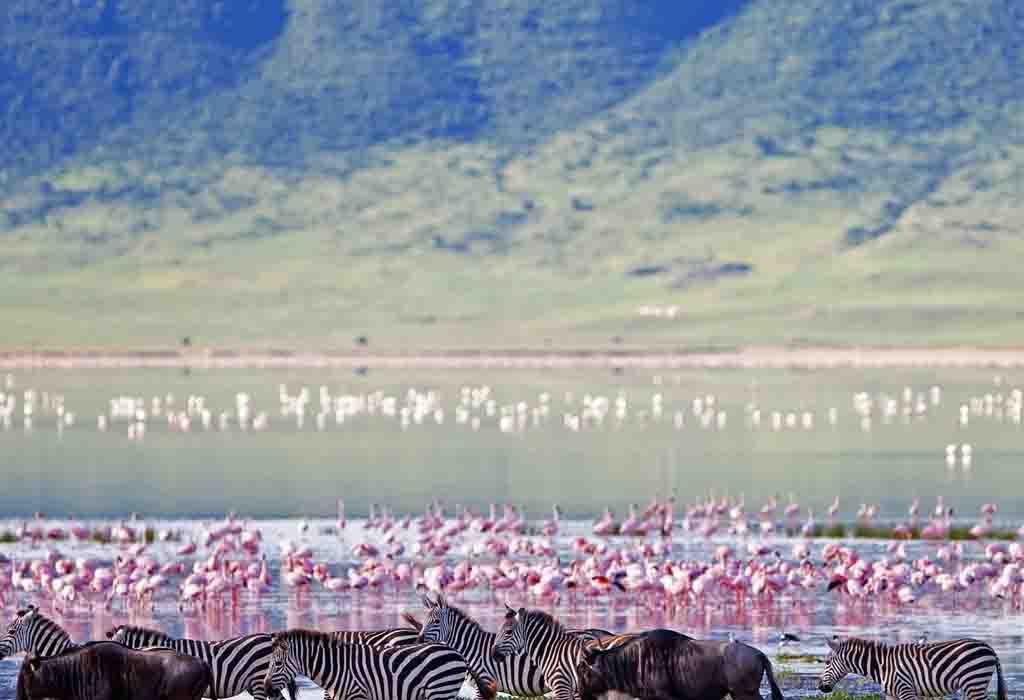
After an early breakfast, head toward the authorized crater access route. The descent reveals why Ngorongoro is such a memorable place: grasslands, water, woodland patches and dark volcanic walls form a compact wildlife landscape. The crater floor supports buffaloes, zebras, wildebeest, hippos, hyenas, lions and many birds. Black rhinos also occur here, but they are rare and should never be presented as a guaranteed sighting.
A Ngorongoro Crater Tour usually occupies several hours on the crater floor, depending on current rules, permit arrangements and the operator’s schedule. The driver may explore open areas, marsh edges and woodland, choosing routes according to conditions and animal movements. Flamingos may be present near suitable water, although their numbers vary. Elephant bulls are sometimes encountered; large breeding herds are less typical of the crater floor than some travelers imagine.
A picnic break is often built into the visit at a designated area. Do not leave food unattended or approach wild animals at the stop. The crater is both a protected ecosystem and a working conservation landscape with specific vehicle and visitor rules. The guide’s responsibility is to respect those requirements, even when another vehicle appears to ignore them. The aim is a wildlife experience that does not damage the place you came to see.
Day 3: Return to Arusha Without Rushing
After the crater drive, ascend to the rim and begin the return toward Arusha. Road conditions, weather, traffic, entrance formalities and the length of wildlife stops can affect arrival. Plan for a late-afternoon or evening finish rather than assuming that a midday airport transfer is realistic. If you have an international flight, an extra night near the airport may be prudent, especially during busy travel periods.
The return journey is a useful time to review your photographs and ask the guide about animals that were difficult to identify in the field. Good guides can explain why certain habitats supported different species or why an animal behaved a particular way. That understanding often becomes the most lasting part of the 3-Day Serengeti Safari. It gives context to sightings that might otherwise blur together.
If you are extending the trip, the northern circuit provides additional choices, but these should be added as separate days. Tarangire is attractive for elephant viewing and varied seasonal landscapes, while Lake Manyara offers forest and lake environments. Neither park should be squeezed casually into this already dense three-day route. A well-paced short safari is preferable to an overloaded program that compromises safety and time in the places you most wanted to see.
Serengeti Wildlife: What You May See
Serengeti National Park supports an impressive range of large mammals and smaller species. Lions, hyenas and cheetahs are among the well-known predators, although their visibility changes with habitat and time of day. Leopards can be difficult to find, and searching for them requires patience around suitable trees and riverine areas. Herd animals including zebra, wildebeest, gazelle and buffalo provide many opportunities to observe social behavior.
The most satisfying safari moments often involve relationships between species rather than a checklist. Vultures circling overhead may signal a carcass, while antelope alarm calls can indicate hidden predators. A moving herd changes the behavior of nearby birds and smaller mammals. By slowing down, you may notice the way terrain, shade and water shape the entire scene. Your driver-guide is especially valuable in interpreting such signals.
Do not judge the success of a 3-Day Serengeti Safari solely by the Big Five. Rhinoceros sightings are exceptionally uncertain in the Serengeti, and even famous predators may remain hidden. A photograph of a lilac-breasted roller, a jackal in morning light or a group of giraffes crossing an open ridge can be just as memorable. Setting realistic expectations makes the experience more enjoyable for everyone traveling in the vehicle.
The Great Migration: Timing and Reality

The Serengeti migration follows rainfall, grazing and breeding conditions rather than a fixed calendar. Different sectors of the wider ecosystem become important at different times, and the animals do not assemble conveniently for a single tour date. Short trips based around central Serengeti may encounter large herds in some periods and far fewer in others. Guides cannot control where the animals move, and travel claims implying otherwise deserve skepticism.
If seeing large migrant herds is your first priority, ask an operator which sector the animals have recently favored and whether your accommodation matches that part of the system. Reaching distant migration areas can require longer drives or a different entry and exit arrangement. A three-day road safari from Arusha cannot cover every major sector in a relaxed way. Being honest about that limitation protects your time and your budget.
Migration enthusiasts may benefit from adding days, selecting a different Serengeti base or using a scheduled bush flight when available. Even without vast herds, the park’s resident wildlife and landscapes justify a visit. Choose the 3-Day Serengeti Safari for a concentrated introduction to the ecosystem, not for a guaranteed river crossing or a scripted predator chase. The most rewarding journeys remain responsive to actual conditions.
Why the Crater Feels Different from Serengeti
The contrast between destinations is the main strength of this route. Serengeti scenes can stretch almost endlessly, with wildlife dispersed across expansive plains and wooded corridors. Ngorongoro concentrates varied habitats within the walls of a spectacular caldera. This does not mean every animal is easy to find, but it changes the rhythm of the drive and makes landscape transitions more visible within a shorter period.
The crater’s distinctive setting also shapes its ecology. Wetland edges may attract water-associated birds, while grasslands support grazing mammals and associated predators. Forested patches provide shade and shelter, and the rim’s higher elevation can bring dramatically different temperatures from the floor. Visitors sometimes arrive prepared only for hot lowland weather and discover that mornings near their accommodation are cold.
A Ngorongoro Crater Tour is not identical to visiting a conventional national park. The surrounding conservation area contains important human and cultural landscapes, including Maasai communities, alongside protected wildlife habitats. Treat cultural encounters with respect and arrange any visits through legitimate local hosts. Avoid photographing people without consent or viewing local residents as an attraction. Responsible travel means respecting both the environment and the people whose lives intersect with it.
Best Time of Year for a Three-Day Safari
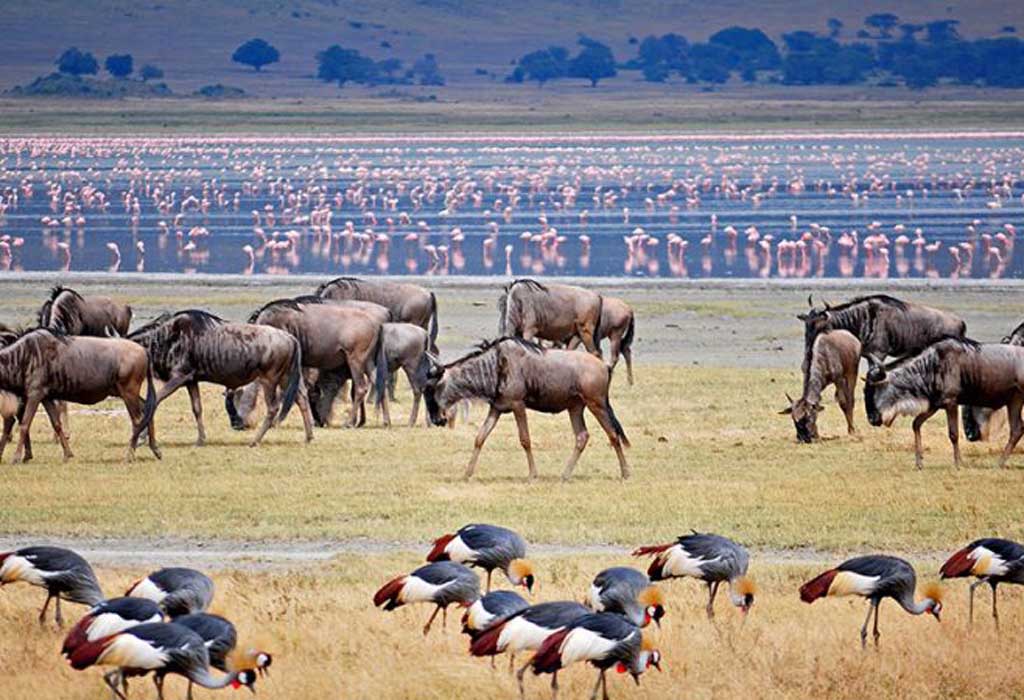
Wildlife viewing is possible in northern Tanzania across much of the year, but conditions vary. Drier periods can make some animals easier to locate around remaining water and can reduce certain road difficulties, while greener periods bring fresh vegetation, dramatic skies and bird activity. Rain may make tracks muddy and increase travel uncertainty. No month delivers every advantage at once.
The best date depends on your priority. Photographers may love clear early light or vivid green landscapes. Travelers focused on particular migration stages need a route that matches the herd’s probable location, which can shift between years. Families may prefer seasons with more predictable road conditions and accommodation availability. Ask about recent conditions and recognize that seasonal patterns are guides, not guarantees.
Popular travel periods can fill desirable camps and lodges well in advance. This is particularly important for a short Tanzania safari itinerary, where changing accommodation location by many miles can seriously affect the schedule. A good operator will explain how the season changes the plan and will confirm any recommended timing without claiming to know precisely where wildlife will be on a future date.
How Much Does the Safari Cost?
The price of a short safari depends on more than the number of days. Park and conservation fees, crater vehicle arrangements, transport, fuel, guide services, accommodation, meals, taxes and group size all influence the total. A shared camping tour may be far less expensive than a private lodge safari, but the comfort level, departure flexibility and daily pacing will differ. Published starting prices should not be mistaken for final quotations.
Request an itemized quote that identifies each entrance and conservation fee, the overnight properties, the number of travelers per vehicle and all included meals. Confirm whether the vehicle has a pop-up viewing roof and whether the same driver-guide accompanies you throughout. Clarify charges for drinking water, airport transfers, optional activities and tips. If an operator offers a surprisingly low price, ask what has been excluded rather than assuming it is a discount.
For a Ngorongoro Crater Tour, verify that the quote actually covers the crater descent and associated vehicle fees, not merely transit through the surrounding conservation area. The details matter because the visit is a defining feature of the itinerary. Current fees and regulations can change, so use a written, date-specific quotation instead of relying on a static figure in an old blog post. This is one of the best ways to avoid disappointment on arrival.
Budget Camping, Midrange Camps and Luxury Lodges
Budget camping suits travelers who are comfortable with shared bathrooms, simple facilities and close contact with the outdoors. It can be convivial and memorable, particularly when meals are freshly prepared and the guiding is strong. However, the exact site, bedding, shower arrangements and cold-weather preparation should be clear before booking. A campsite name is more informative than the vague phrase “overnight in the wilderness.”
Midrange tented camps and lodges add private rooms or tents, more predictable comfort and sometimes strong wildlife locations. They are often a practical balance for travelers who want an immersive safari but do not require luxury amenities. Check whether the property is inside the park, near a gate or farther along the route; location can have a larger impact on game viewing than decorative finishes.
Luxury properties can offer excellent service, dining and views, yet even the most expensive room cannot guarantee a particular animal sighting. If your primary reason for booking the 3-Day Serengeti Safari is wildlife, spend your money on good guiding and sensible location before paying for extras you may barely use. Two nights disappear quickly, and a beautifully appointed lodge becomes less valuable when excessive transfers cut into daylight on the plains.
Shared Versus Private Safari Vehicles
A shared vehicle is usually more economical because transport and guiding costs are divided among travelers. It can work well for sociable guests with similar priorities, but a group must agree on how long to watch each sighting, when to stop and how much time to devote to photographs. Ask for the maximum number of passengers and whether everyone has an appropriate viewing position. An overloaded vehicle can make long days frustrating.
A private vehicle offers greater control of timing and the ability to tailor stops to your interests. Photographers, families with younger children and travelers who want a gentler pace may appreciate that flexibility. Private does not remove the limits of park operating hours, the weather or the distance between destinations, but it allows the guide to organize the day around a more consistent set of preferences.
Whatever the format, safety matters more than promises of speed. A responsible driver-guide should respect road conditions, vehicle rules and wildlife distances. Ask about emergency arrangements and whether a breakdown would be managed through a support network. A Tanzania safari itinerary is not improved by aggressive driving or late arrivals that compromise safety. Transparent communication about the plan is a better sign of professionalism than exaggerated claims about guaranteed sightings.
Packing List for Early Drives and Highland Evenings
Pack light, layered clothing rather than relying on a single outfit for every temperature. A breathable shirt and long trousers work well in the vehicle, while a fleece or light insulated jacket helps during cold starts in the highlands. A brimmed hat, sunglasses, sunscreen and comfortable closed shoes are helpful throughout. Neutral earth tones are practical for dust and photographs; elaborate camouflage outfits are unnecessary.
Bring personal medication, a small daypack, a refillable water bottle if suitable for your operator’s arrangements, and protective cases for electronics. Binoculars add tremendous value even when the guide has a good pair. Cameras with a moderate zoom often prove more useful than very heavy equipment on a short trip. Spare batteries or a power bank are sensible, although charging facilities vary by accommodation and vehicle.
Check luggage restrictions if your trip includes a bush flight, because soft bags and strict weight limits may apply. Carry important documents and essentials in your hand luggage, and keep a copy of your operator’s contact details available offline. A 3-Day Serengeti Safari is too short to spend half a day recovering a forgotten prescription, camera charger or appropriate warm layer. Thoughtful packing supports the experience without requiring excessive gear.
Safety, Health and Responsible Wildlife Viewing
The safari environment is exciting because its animals are genuinely wild. Stay in the vehicle unless your guide identifies an approved place to exit, follow lodge instructions after dark and keep food secured. Do not extend hands or equipment toward animals, block their movement or ask the driver to drive off an authorized track. Even apparently calm animals can react quickly when surprised.
Discuss relevant health precautions with a qualified travel-health professional before departure. Recommendations can depend on your recent travel history, health profile and the exact route. Confirm travel insurance that covers the activities and destinations you intend to visit, and keep essential medications accessible. The operator should be able to explain what happens in the event of illness, injury or an unexpected road closure.
Respect other visitors and your guide. Avoid loud music around sightings, limit unnecessary movement when animals are close and allow time for other vehicles to observe safely. Photography should not take priority over an animal’s welfare. On a Ngorongoro Crater Tour, designated roads, picnic areas and access rules protect both visitors and habitat. A good safari is one in which guests leave with memories while the wildlife continues its ordinary life undisturbed.
Travel Documents, Arrival and Departure Planning
Most international visitors reach the northern safari circuit through Kilimanjaro International Airport or arrive via another Tanzanian gateway and connect onward. Arusha is a practical staging point with hotels, tour offices and transport services. Check your airline schedule and allow time for immigration, baggage collection and the onward drive before planning to meet the safari vehicle. For a 3-Day Serengeti Safari, a night in town before departure is often the simplest approach.
Entry requirements depend on nationality, route and current regulations. Confirm passport validity, visa rules and any health-document requirements through official channels close to travel. Do not assume that documents accepted for a neighboring country automatically permit entry into Tanzania. If you are arriving from Kenya, Uganda or Rwanda, discuss the border or flight connection as a separate logistical step, not part of the park drive unless your contract explicitly includes it.
Keep the final evening flexible. The crater drive and return to Arusha can take longer than anticipated, especially in difficult weather. Travelers heading to Zanzibar, Dar es Salaam or an international flight should consider an overnight buffer. A missed connection can erase the savings from an aggressively compressed itinerary. Reliable transfers and realistic timing are more useful than optimistic arrival promises.
Photography: Better Images Without Chasing Sightings

Plan around light and animal behavior rather than hoping for an uninterrupted series of iconic portraits. Early mornings can produce soft light, warm colors and active wildlife. Midday may be harsher for photography, but animals at water or in shade can still create interesting scenes. Use a lens that you can handle steadily from a vehicle and keep it protected between stops on dusty tracks.
Take wide photographs showing how a pride of lions fits into the landscape, not only close portraits. The sky, grassland, acacia silhouettes and volcanic rim are part of the story. A good series might include a distant herd, a mid-range environmental scene and a careful detail shot. This makes the eventual album feel like a journey rather than a collection of unrelated animals.
Ask the guide to stop safely when a sighting has good composition, but do not request off-road driving where it is prohibited. Respect other vehicles’ sightlines and avoid using noise to make an animal look toward your camera. On a Ngorongoro Crater Tour, weather may bring mist on the rim and bright sun below, so be ready to adjust exposure. Patience and ethical positioning matter more than a larger camera bag.
Is Three Days Enough for Both Destinations?
Three days are enough to visit the central Serengeti and descend into Ngorongoro Crater, provided the route is managed carefully. They are not enough to explore the Serengeti’s far-flung regions, spend long periods watching one wildlife family and still include additional parks comfortably. Travel time is significant. Travelers should think of this as an introduction to two contrasting landscapes, not a comprehensive northern Tanzania expedition.
If wildlife photography, the migration or a slower family holiday is your highest priority, extending to four, five or six days can meaningfully reduce pressure. An extra night in the Serengeti creates opportunities for a full day of game viewing without an immediate move to another lodge. An extra night near Ngorongoro can make the crater experience less rushed and provide time to appreciate the surrounding highlands.
The 3-Day Serengeti Safari is an attractive choice when dates are fixed, when it is part of a longer East African holiday or when visitors want a focused taste of Tanzania’s wildlife. Value comes from clear expectations and thoughtful organization. It should not be sold as identical to a weeklong journey. A candid operator who explains its limits is more trustworthy than one promising to see everything in three days.
How to Compare Safari Operators and Quotes
Request an itinerary that states departure time, daily routes, expected overnight stops and the general division between transfer and game viewing. Ask how the operator responds if road conditions change or a particular campsite becomes unavailable. A professional quote should explain inclusions clearly, provide realistic vehicle information and set out payment and cancellation terms. A glossy photograph is not a substitute for a written program.
Check whether the operator has local guiding experience and understands the rules for both parks and the conservation area. The guide is central to the quality of the trip: observation, safe driving, wildlife interpretation and respectful visitor management all depend on that person. Reviews can be useful when they describe actual guiding and logistics rather than generic praise, but circumstances change, so clarify current details directly.
Ask if the Ngorongoro Crater Tour involves a full descent on the final day, where the second night is booked and how much time will be available after the crater for the return journey. Ensure you understand who pays if taxes or statutory fees change before departure. Written clarity protects both traveler and operator. It also helps you compare offers fairly instead of choosing solely by the lowest headline price.
Frequently Asked Questions
Can I see the Big Five in three days? You may see several of the famous large mammals, and the crater provides opportunities for species such as buffalo and occasionally black rhino, but no responsible operator can guarantee all five. Wildlife moves freely and may remain hidden. Is the trip suitable all year? It operates in many seasons, although rain, vegetation and road conditions can change the quality and timing of particular drives.
Can I visit the crater before the Serengeti? Some routes reverse the sequence, but they must be planned around access and driving time. The common Arusha–Serengeti–Ngorongoro–Arusha pattern keeps the crater on the final morning. Are park fees included? They often are in complete packages, but you must check the written quote. Is a hot-air balloon possible? Balloon flights are offered in some Serengeti areas, subject to availability and extra costs, but adding one to a short itinerary requires careful timing.
Should I book a shared or private vehicle? Choose shared for economy and company; choose private when flexible stops, family needs or photography are more important. Can I add Zanzibar afterward? Yes, but plan the internal flight or overnight connection separately. These questions matter because a rewarding Tanzania safari itinerary depends as much on logistics and expectations as it does on wildlife sightings.
Final Planning Advice
Begin with your travel dates and preferred accommodation standard, then ask for a route that protects the best wildlife hours. Choose a guide who explains the program honestly, and avoid proposals that treat substantial road journeys as effortless. The Serengeti rewards patient observation, while the crater offers a compact and strikingly different setting. Both deserve time to be appreciated rather than hurried past.
The most effective 3-Day Serengeti Safari has clear overnight stops, a sensible second-day transfer, an early crater start and a realistic return to Arusha. It does not promise that every migration herd or rare animal will appear on command. It offers a thoughtful introduction to northern Tanzania’s wildlife, landscapes and conservation story.
When requesting a quote, specify whether you want shared camping, a midrange private arrangement or a more comfortable lodge-based journey. Include the number of travelers, dates, pickup location, preferred room type and any special interests. This helps the operator price the right experience instead of responding with a generic brochure. With those foundations in place, the safari can feel adventurous, personal and manageable even within three compact days.




