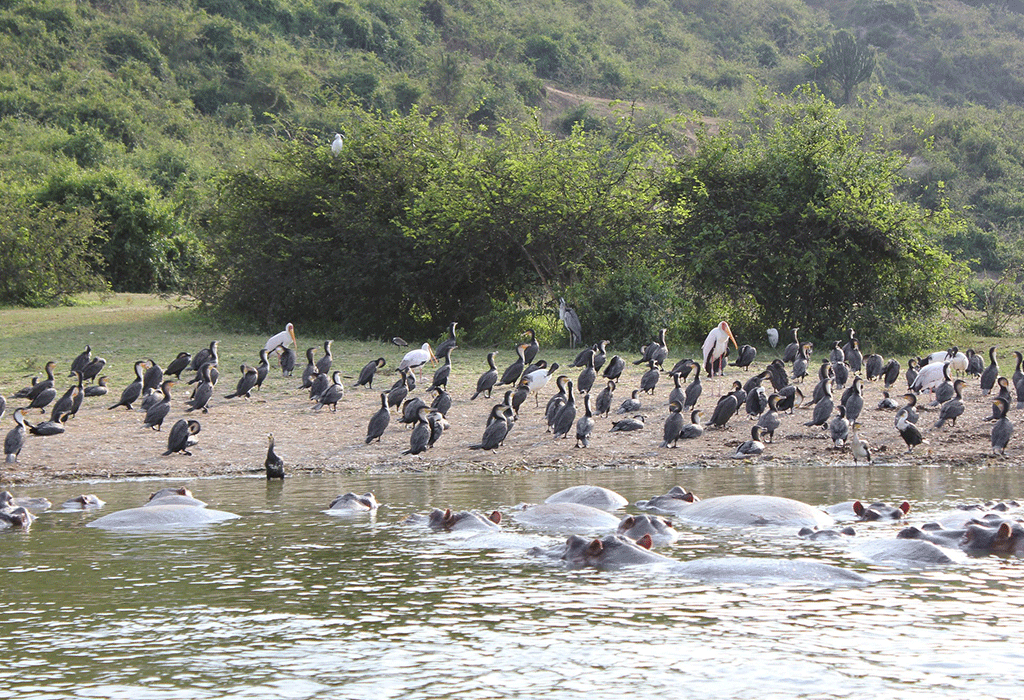
Birds of Kidepo Valley National Park
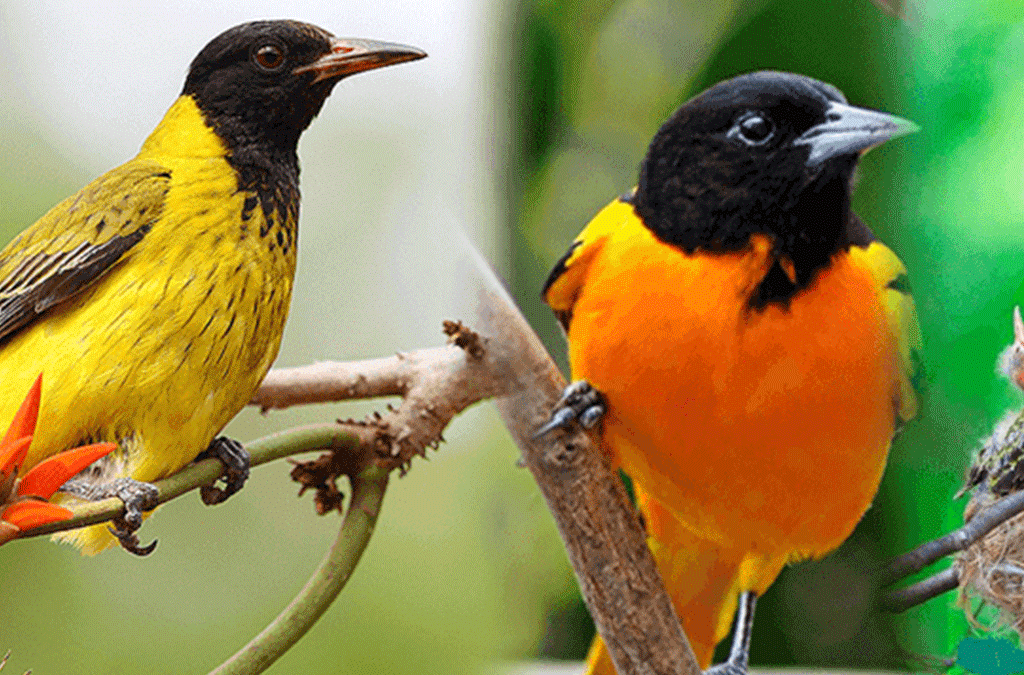
KIDEPO VALLEY · UGANDA BIRDING
Birds of Kidepo Valley National Park
Discover ostriches, dramatic raptors, rare dry-country birds and the habitats that make northeastern Uganda exceptional.
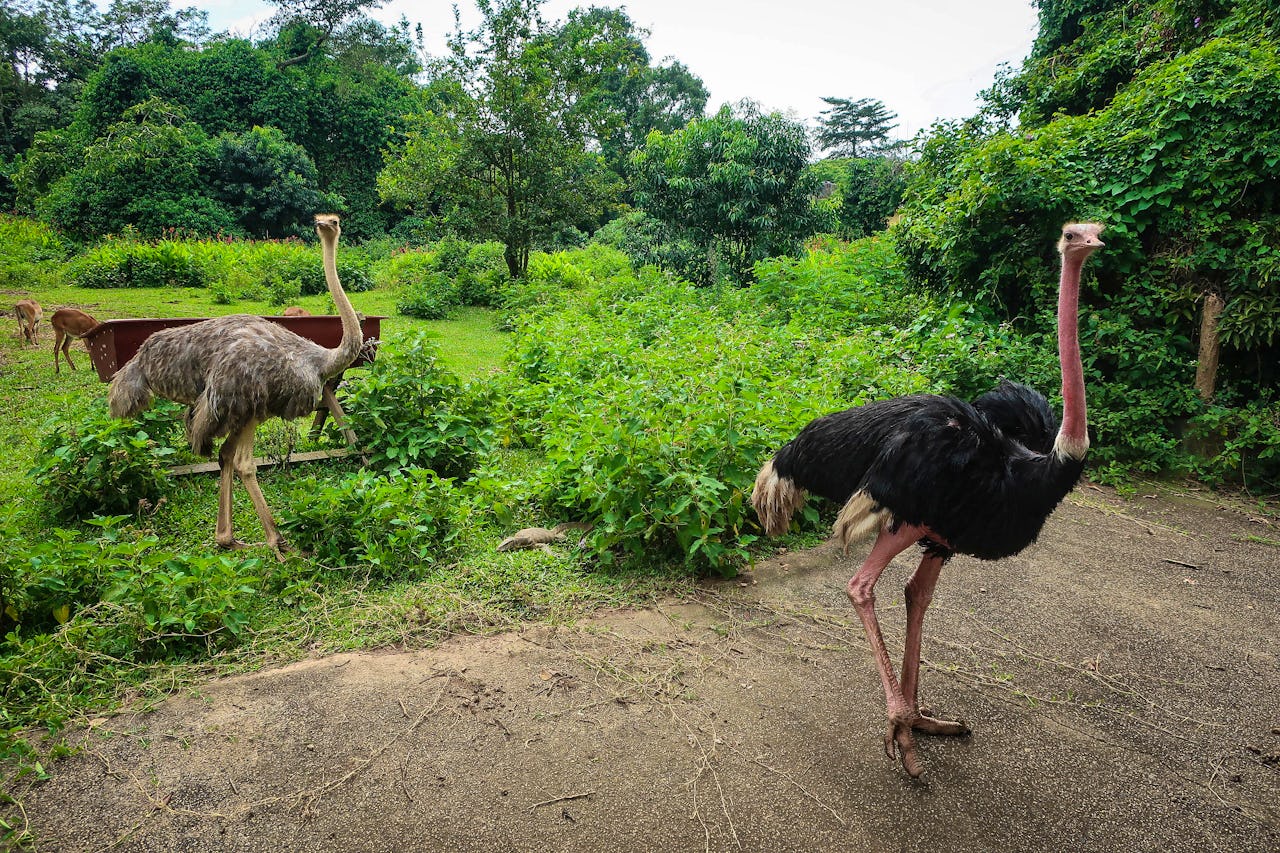
Kidepo Valley National Park has more than 475 recorded bird species, according to Uganda Wildlife Authority. Its great appeal is the northern dry-country bird community: ostrich, Karamoja apalis, black-breasted barbet, Clapperton’s francolin, kori bustard and a remarkable range of eagles, vultures and smaller raptors. The Narus and Kidepo valleys provide contrasting habitats; a specialist guide and several early starts improve your chances of meaningful observations.
The birds of Kidepo Valley National Park are one of the strongest reasons to travel to northeastern Uganda. The park looks and feels different from western Uganda’s forests: thorny acacia, rocky ridges, open grassland and seasonal riverbeds support birds that may be absent from a conventional gorilla-and-chimpanzee itinerary. Read our general Kidepo guide for the wider wildlife setting, or compare habitats in our Uganda birding safari overview.

Why Kidepo is a special birdwatching destination
Kidepo’s northern location brings a distinctive set of birds associated with dry eastern Africa. Some occur elsewhere in the wider Karamoja landscape, but relatively few Uganda national parks offer the same combination of savanna, thorn scrub, rocky country and riverine woodland. UWA describes more than 475 species in the park and highlights its unusually strong representation of birds of prey. For a wider appreciation of the landscape, see what makes Kidepo different.
The two major valley systems also behave differently. In the drier months, pools in Narus can hold wildlife activity while northern Kidepo may be substantially drier. Birdwatching therefore means seeking the right habitat rather than driving randomly in search of a long species list. Guests who prefer quieter destinations may also enjoy our guide to Uganda’s less-crowded parks.
Notable birds of Kidepo Valley National Park
Use the following birds as a target list, not a promise of sightings. Some are widespread enough to find with patience; others are localized, scarce or difficult to detect. A good guide will adapt the route to current local conditions and help distinguish similar-looking species. Our Uganda bird identification overview is a useful companion.
Karamoja apalis
A small, elusive warbler associated with suitable thorny vegetation. It is one of the region’s most sought-after birds, best approached with a knowledgeable specialist who can recognize calls and habitat. Do not confuse it with more widespread apalis species.
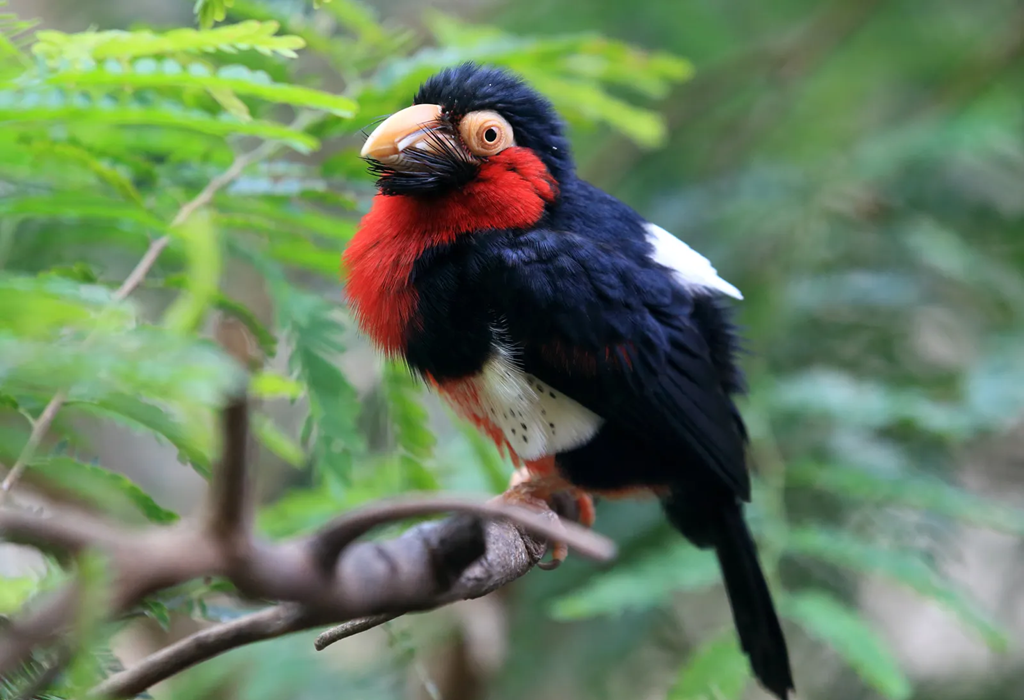
Black-breasted barbet
A striking, heavy-billed bird of dry wooded country. Its large pale bill and contrasting pattern are useful identification clues. Search suitable fruiting trees and woodland patches, while accepting that local encounters can be unpredictable.
Clapperton’s francolin
A ground-dwelling bird that may be heard before it is seen. Quiet early-morning drives near suitable grassy or lightly wooded cover are more useful than hurried midday searches.
Kori bustard
A large, heavy terrestrial bird best searched for in open habitat. It can blend surprisingly well with dry grass, making slow scanning with binoculars worthwhile.
Abyssinian ground hornbill
A large black bird with a prominent bill and colorful facial skin. Often encountered on the ground in open grassland, usually in pairs or small groups; observers should avoid crowding or following it.
Abyssinian roller
A beautiful roller with bright blue features and a long tail. Watch exposed branches and roadside perches in open woodland for a sudden flight to catch insects.
Red-throated bee-eater
A colorful bee-eater associated with suitable banks and open country. Small flocks can be most visible while feeding on flying insects; check areas with suitable perches.
Pygmy falcon
A tiny, sharp-looking falcon and a specialist prize for dry-country birders. Scan acacia tops carefully; its size makes it easy to overlook.
Egyptian vulture
An uncommon scavenging raptor, noted in Kidepo bird records. Never describe a sighting as certain; a good guide will explain identification features and conservation concerns.
Lappet-faced vulture
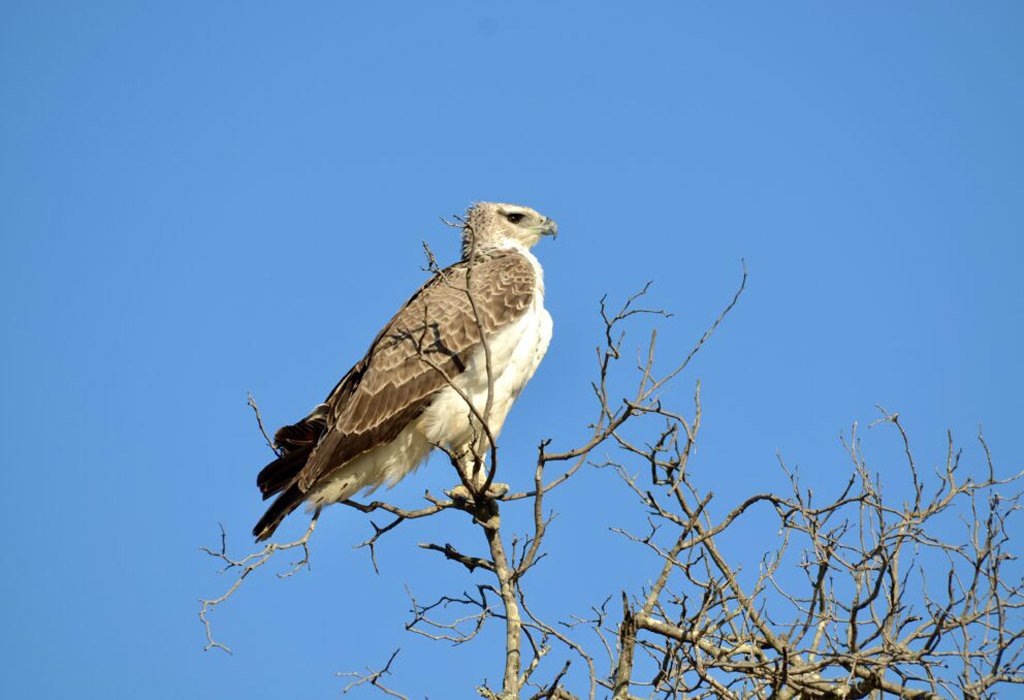
A very large vulture that may be encountered overhead or near suitable feeding areas. Record sightings responsibly and never approach feeding birds.
Fox kestrel
A slim, warm-colored kestrel associated with rocky slopes and escarpments in suitable areas. Scan cliffs and high rocky perches from permitted viewpoints.
Superb starling
A conspicuous, iridescent blue-and-orange bird often easier to observe around open woodland and accommodation surroundings than the more elusive specialists.
If you are compiling a major Uganda list, combine Kidepo’s northern specialties with forest and wetland stops in our longer Uganda birding itinerary. The value of Kidepo is not simply the number of birds, but how different its bird community is from the rest of the country.
Where to find birds: the best Kidepo birdwatching areas
Narus Valley and Apoka area
Narus is the most practical starting point for many birding drives because accessible grassland, scattered trees and seasonal water concentrate different bird activities within a manageable circuit. Look for ground hornbills, rollers, starlings, bee-eaters and raptors. In the dry season, pause near water from an authorized stopping point rather than moving between locations too quickly. See our guide to exploring the park for additional context.
Northern Kidepo Valley and Borassus palms
The northern valley is less developed and drier, with wide sandy sections, palms and open habitats. A longer visit can be rewarding for ostrich and dry-country species, but the exact route must account for road conditions, permitted access and the time needed to return. A ranger or experienced local guide should determine which tracks are available. Our park highlights overview explains the differences between the valleys.

Namamukweny Valley and woodland edges
This area is useful for exploring the transition between open grassland and shrubby or lightly wooded habitat. Watch for movement in thorn trees and listen before advancing: small birds often reveal themselves by sound. A guide may choose these sections when the main valley feels quiet or when a species target requires different cover.
Rocky slopes and permitted viewpoints
Rocky hills and cliff edges introduce another search environment, especially for raptors. Use binoculars to scan the sky and exposed outcrops rather than attempting unapproved hikes. The park has large wildlife, and walking arrangements must follow Uganda Wildlife Authority rules. If hiking interests you, the Kidepo hiking and safari itinerary offers related trip ideas.
Lodge surroundings and short observation stops
Birdwatching can begin around approved accommodation grounds, where starlings, doves, weavers and other conspicuous species may appear. A relaxed pre-breakfast session is excellent for beginner birders, but it is not a replacement for time in specialist habitats. Always ask staff where it is safe to walk, and do not enter surrounding bush alone.
Best time to see birds in Kidepo
Birding is possible throughout the year, but there is no single perfect month for every target. The broad drier period, particularly around December to February, often gives clearer visibility through thinner grass and easier road movement; water-dependent activity can be more concentrated around remaining pools. Hot temperatures and haze, however, can make midday birding uncomfortable. Compare the timing with our Kidepo seasonal travel guide.
Wetter months can offer greener backgrounds, increased calling activity and breeding behavior among some resident birds. They can also bring tall vegetation, muddy tracks and more dispersed wildlife. Migrants from the Palearctic are broadly relevant between about November and April, although migration timing varies by species. Our birding season guide explains how to set priorities by habitat and season rather than assuming more rain always means more birds.
| Travel period | Potential advantage | What to plan for |
|---|---|---|
| December–February | Generally clearer views and stronger dry-season water focus | Heat, dust and early departures |
| March–May | Greener cover and vocal resident birds in suitable conditions | Rainfall and changing track accessibility |
| June–September | Varying woodland and grassland activity | Potential taller grass and variable weather |
| October–November | Transition periods; some migrants begin arriving | Local conditions can change quickly |
How to organize a productive Kidepo birding safari
Aim for at least two full days inside the park rather than treating Kidepo as an afternoon stop. Birdwatching is slower than ordinary game viewing: even a familiar stretch of road may justify ten minutes of careful observation when a bird calls from woodland. Read our Kidepo safari planning guide for transfer choices and general travel decisions.
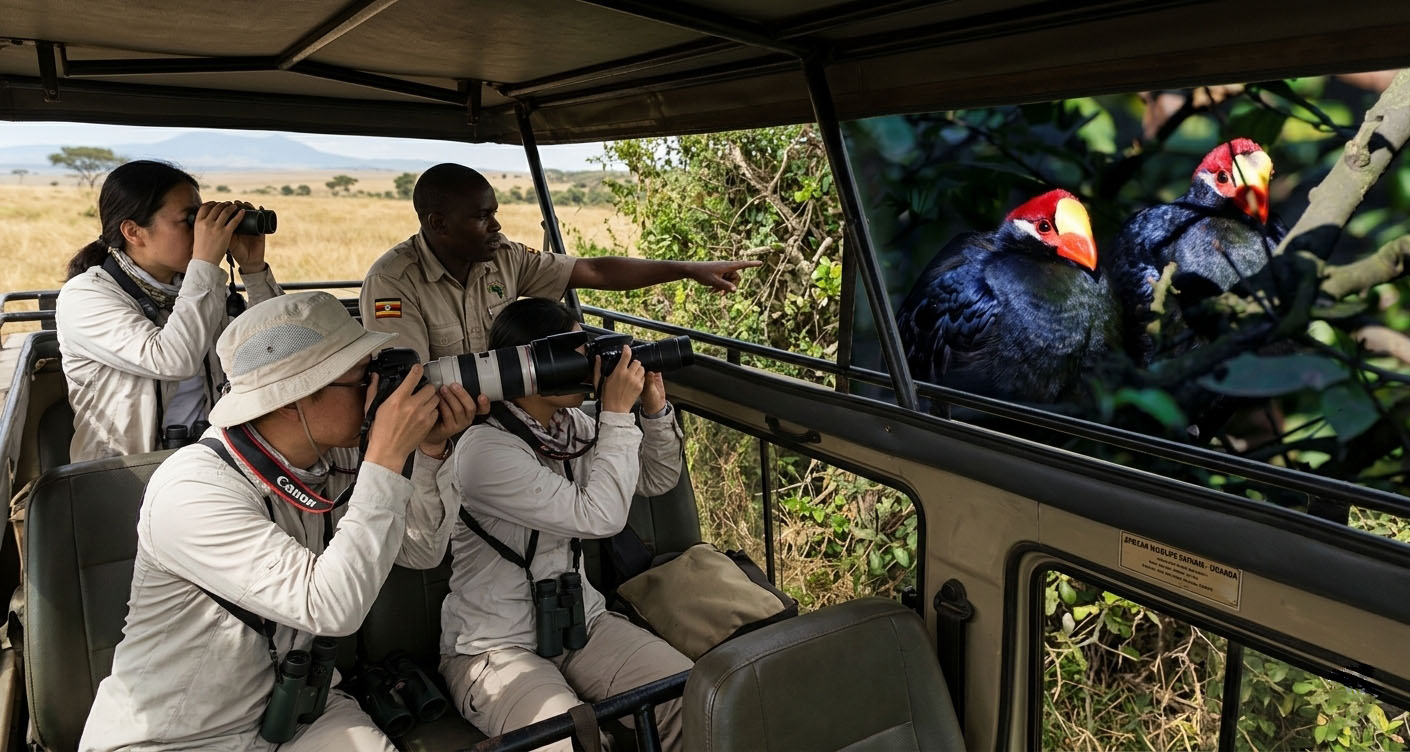
Choose a private safari vehicle with an experienced driver-guide, keep the group small where possible, and share target birds before departure. Binoculars are essential; a regional field guide, camera with telephoto lens, water, sun protection and a lightweight jacket make the experience more comfortable. A written species checklist helps distinguish confirmed identification from tentative sightings. For broader preparations, read how to plan a Kidepo visit and road access from Kampala.
Suggested three-day Kidepo birdwatching itinerary
Day 1: Arrival and introductory birding
Arrive by prearranged road transfer or domestic flight, check in and meet your guide. If daylight allows, take a gentle introductory birdwatching drive around the Apoka and Narus area, scanning open trees for rollers and starlings and looking for ground hornbills on the grassland. The main goal is to learn the habitat, light and driving conditions rather than chase every rare species on arrival. The Kidepo destination archive offers additional park information.
Day 2: Narus Valley dawn and specialist habitat
Begin at first light, spending the cool morning observing ground birds, bee-eaters and raptors around appropriate Narus routes. Pause for breakfast and a midday rest when the heat is strongest. In the afternoon, investigate woodland edges and alternative areas selected by the guide according to sightings and permitted access. Birders with a target list can devote extra time to species such as the black-breasted barbet or Karamoja apalis without assuming success.
Day 3: Northern valley birding and onward travel
Where travel timing and park access permit, use the morning to explore different northern habitats before beginning your onward transfer. Look carefully across open plains for ostriches and bustards and check acacia tops for small raptors. A longer stay is recommended when Kidepo is the principal reason for the trip. Our northern Uganda travel ideas can help with the wider circuit.
Bird photography and respectful viewing
The best images often come from patience rather than proximity. Use a long lens, keep the vehicle at a suitable distance and avoid playing recorded bird calls repeatedly or disturbing nests. Bright sunshine may require careful exposure, while early and late light is often more flattering. When a bird is partly hidden, wait for it to move naturally rather than pressuring the guide to reposition off track. Our Uganda birdwatching experiences guide has more ideas for matching activities to habitat.
Where to stay for birdwatching in Kidepo
Location matters because early starts are central to birdwatching. Staying inside or close to the park can reduce wasted travel time, but accommodation standards and availability vary. The following are practical options to compare with the where-to-stay guide and our Kidepo accommodation comparison.



For visitors considering Kidepo Savannah Lodge, this lodge is near the park rather than at Apoka; account for the daily transfer to your chosen birding areas. Apoka Rest Camp is comparatively simple, so confirm bedding, meals and facilities ahead of time. Check additional details in our Kidepo lodging guide.
Combine Kidepo birding with other Uganda destinations
For a longer birding journey, Kidepo works naturally with northern Uganda’s wider savanna circuit. Murchison Falls National Park adds the Nile, woodland and wetlands; its birding opportunities differ from Kidepo’s dry-country specialties. Travelers interested in waterbirds may also consider the Nile boat safari, while the Murchison Falls planning guide explains the broader park.
For similar dry-country bird habitats outside Kidepo, consider Pian Upe Wildlife Reserve and our Pian Upe birdwatching guide. A northern itinerary can also include Karamojong cultural experiences with appropriate community arrangements, or continue to different environments described in the Murchison activities guide. A general Murchison wildlife introduction and our Murchison highlights overview help guests compare activities without attempting to squeeze too many parks into a short trip.

Frequently asked questions about Kidepo birds
How many bird species are in Kidepo?
Uganda Wildlife Authority lists more than 475 recorded species. Published counts can vary as lists are updated and taxonomy changes.
Which bird is Kidepo most famous for?
The ostrich is an iconic sight, but serious birders also value the Karamoja apalis and black-breasted barbet.
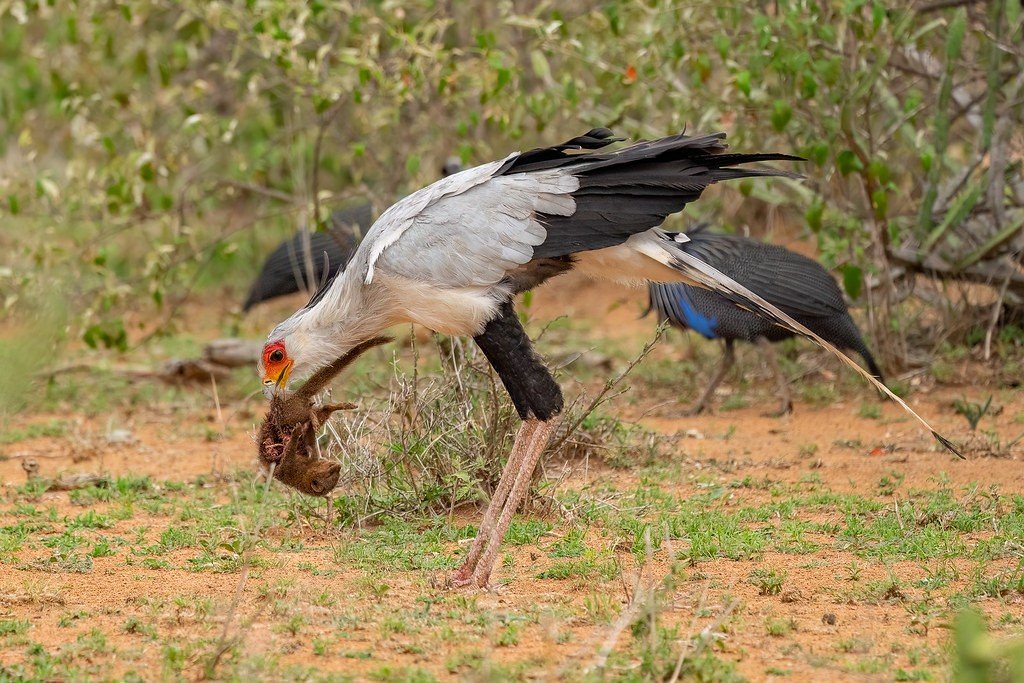
Can I see a secretary bird?
The secretary bird is on the park list, but sightings depend on habitat, movements and luck.
Where should beginners start?
The Narus Valley and Apoka area provide accessible mixes of grassland, scattered trees and water-associated birdlife.
Is Kidepo suitable for bird photography?
Yes. Open terrain can make some large birds easier to photograph, although patient observation and a long lens are helpful.
Can I go birding on foot?
Only in places and under arrangements approved by park authorities and your guide. Kidepo contains dangerous large wildlife.
When are migrant birds present?
Some Palearctic migrants are present broadly between November and April, but dates and individual species differ.
How many days are best?
Two full birding days are a practical minimum; three or more full days suit specialist target lists and photography.
Can I find Karamoja apalis easily?
No. It is an elusive specialty associated with suitable thorny habitat, and expert local knowledge improves the search.
Is a 4×4 needed?
A capable 4×4 is advisable for remote roads and park tracks. Route conditions change with weather.
Should I combine birding with a wildlife safari?
Yes. Kidepo’s bird habitats overlap with areas used for wildlife drives, but birders should reserve time for slower observation.
Can I guarantee ostriches or rare raptors?
No wild bird can be guaranteed. A well-planned route helps, but movement, weather and natural behavior determine sightings.
Plan your Kidepo birding safari with Safari Vacations
Safari Vacations and Travel Services organizes private birdwatching and wildlife journeys in Uganda. Tell us your dates, target species, preferred comfort level and whether you want a dedicated birding guide or a mixed wildlife-and-birding itinerary. We can help build a sensible route with time for the early mornings and different habitats that make Kidepo rewarding. Browse our Kidepo travel articles or Uganda birding inspiration while planning.
Ready to explore Kidepo’s remarkable birds?
Ask us for a tailored birdwatching itinerary with private transport, accommodation advice and time for the species on your wish list.