
Combining Gorilla Trekking with Chimpanzee Habituation

Introduction: The Land of Primates
Uganda is home to one of the most extraordinary wildlife experiences on earth. While many travelers dream of coming face-to-face with the magnificent mountain gorillas, there’s another incredible primate encounter that deserves equal attention: chimpanzee habituation. At Safari Vacations and Travel Services, we believe that your Uganda adventure should include both of these life-changing experiences, and in this comprehensive guide, we’ll show you exactly why you should be combining gorilla trekking with chimpanzee habituation.

Close-up of a mountain gorilla’s face showing expressive eyes and gentle nature
When you travel thousands of miles to Africa for a primate safari, why limit yourself to just one species when you can witness two of our closest genetic relatives in their natural habitats? Uganda is one of the few places on earth where you can see both mountain gorillas and chimpanzees, making it the perfect destination for an all-encompassing primate adventure.
Understanding Mountain Gorillas: The Gentle Giants

chimpanzee sitting in a tree, showing their intelligent expression
Mountain gorillas are among the world’s most endangered animals, with only about 1,000 individuals remaining in the wild. These gentle giants live in the misty forests of Uganda’s Bwindi Impenetrable National Park and Mgahinga Gorilla National Park. Standing up to six feet tall and weighing up to 400 pounds, mountain gorillas are imposing yet remarkably peaceful creatures.
Gorilla trekking involves hiking through dense forest vegetation to spend one precious hour with a habituated gorilla family. The experience is nothing short of magical. You’ll watch as silverback males protect their families, mothers nurture their babies, and juvenile gorillas play in the trees. The moment you lock eyes with a mountain gorilla, something profound happens – you recognize yourself in their gaze, and you understand the deep connection we share with these magnificent beings.
However, gorilla trekking, while absolutely spectacular, is just one chapter in Uganda’s primate story. To truly understand our evolutionary family tree and witness the full spectrum of great ape behavior, you need to meet their smaller, more energetic cousins: the chimpanzees.
What is Chimpanzee Habituation?

Researchers and tourists observing chimpanzees in the forest
Before we explain why you should combine gorilla trekking with chimpanzee habituation, let’s clarify what chimpanzee habituation actually means. Unlike regular chimpanzee tracking, where you spend one hour with chimps that are already used to human presence, habituation is a much more immersive experience.
Chimpanzee habituation is the process of gradually getting wild chimpanzees comfortable with human presence. This process can take two to three years, during which researchers and guides spend time with the chimps daily, allowing them to get used to humans without fearing them or changing their natural behavior.
As a visitor on a habituation experience, you join researchers and trackers for until Chimpanzees build their evening nests. You follow the chimpanzees from the moment they wake up in their nests, watch them throughout their daily activities, and stay with them until they build their evening nests. This extended time allows you to witness behaviors that you’d never see during a standard one-hour tracking session.
Why Chimpanzees Are Different from Gorillas
While both gorillas and chimpanzees are great apes and share over 98% of their DNA with humans, they are remarkably different in behavior, social structure, and personality. This is exactly why experiencing both species provides such a rich and complete understanding of our primate relatives.
Energy and Activity Levels
Mountain gorillas are generally calm and measured in their movements. They spend much of their day eating vegetation, resting, and engaging in gentle social interactions. Watching them is a peaceful, meditative experience that fills you with tranquility.
Chimpanzees, on the other hand, are dynamic, energetic, and constantly on the move. They swing through trees with acrobatic grace, engage in loud vocalizations that echo through the forest, and display complex social behaviors including grooming sessions, dominance displays, and even hunting. Watching chimpanzees is exhilarating and entertaining – you never know what will happen next.
Social Complexity
Gorilla families are led by a dominant silverback male who makes decisions for the group and protects his family. Their social interactions are relatively straightforward, with clear hierarchies and peaceful coexistence.
Chimpanzee societies are far more complex. They live in communities of up to 150 individuals with intricate social hierarchies, alliances, and politics. Males compete for dominance through displays of strength and intelligence. Chimpanzees use tools, wage territorial wars, and demonstrate problem-solving abilities that constantly astonish researchers. They show emotions ranging from joy and affection to anger and grief.

Chimpanzees feeding on fruits in their natural habitat
Diet and Foraging
Gorillas are primarily vegetarian, eating leaves, shoots, and stems. They’re peaceful foragers who rarely compete aggressively for food.
Chimpanzees are omnivores with a varied diet. They eat fruits, leaves, seeds, and insects, and they also hunt smaller animals like monkeys and bush babies. Watching chimps hunt, share meat, and use tools to extract insects from logs provides fascinating insights into their intelligence and social cooperation.
The Unique Benefits of Chimpanzee Habituation Over Regular Tracking
Even if you’re planning to do chimpanzee tracking (which takes about one hour), here’s why the habituation experience is superior and worth the additional investment:
Extended Time in the Forest
With habituation, you spend 6-8 hours or more with the chimpanzees instead of just one hour. This extended time means you’re not rushed, you can relax and truly observe the chimps’ natural behavior, and you witness a much broader range of activities.
Fewer Tourists, More Intimate Experience
Regular chimpanzee tracking permits allow groups of six people. Habituation experiences are limited to just four people, making it a more exclusive and intimate encounter. With fewer people, the chimps are less disturbed, you have better viewing opportunities, and you can ask researchers more questions and truly learn about the chimps’ individual personalities and behaviors.
Learn from Researchers
During habituation, you’re accompanied by researchers and trackers who know these chimps intimately. They can identify each individual, explain the social dynamics, point out interesting behaviors, and share stories about the chimps’ personalities and life histories. This educational component transforms your experience from simple wildlife viewing into a deep learning opportunity about primate behavior and conservation.
Contribute to Conservation Research
By participating in habituation, you’re directly contributing to conservation research. Your permit fees support the ongoing habituation process and research projects that help protect chimpanzees. You’re not just a tourist – you’re a partner in conservation.
Photographic Opportunities
With 6-8 hours in the forest, you have countless opportunities to photograph the chimpanzees in various situations and lighting conditions. You’re not racing against a one-hour clock, so you can wait for the perfect moment, the ideal pose, or the most interesting interaction.
Where to Experience Chimpanzee Habituation in Uganda
Uganda offers chimpanzee habituation experiences in several locations, but the premier destination is Kibale National Park, home to the largest population of chimpanzees in Uganda.
Kibale National Park: The Primate Capital

The lush green canopy of Kibale Forest National Park
Kibale National Park is often called the “Primate Capital of the World” because it contains one of the highest densities of primates in Africa. The park is home to approximately 1,500 chimpanzees and 12 other primate species, including red colobus monkeys, L’Hoest’s monkeys, and the rare Uganda mangabey.
The experience is based out of the Kanyanchu Visitor Centre in the central area of the park.. The forest here is a tropical rainforest with towering trees, thick undergrowth, and a canopy that filters sunlight into a green glow. The trails are well-maintained, though you should expect to walk through muddy sections, climb over fallen logs, and navigate dense vegetation.
Kibale’s chimpanzee communities are semi-habituated, meaning they’re comfortable with human presence but still maintain their wild behaviors. This creates the perfect balance – the chimps don’t run away when they see you, but they’re not overly interested in humans either. They simply go about their daily lives as you observe.
Other Locations
While Kibale offers the best habituation experience, you can also track (though not habituate) chimpanzees in other Ugandan locations:
- Budongo Forest in Murchison Falls National Park
- Kyambura Gorge in Queen Elizabeth National Park
- Kalinzu Forest near Queen Elizabeth National Park
However, for the full habituation experience, Kibale is unmatched.
The Perfect Primate Safari Itinerary: Combining Gorillas and Chimps
At Safari Vacations and Travel Services, we’ve crafted countless primate safaris, and we’ve found that the ideal Uganda primate experience combines gorilla trekking in Bwindi or Mgahinga with chimpanzee habituation in Kibale. Here’s why this combination creates the perfect safari:
Geographical Diversity
Bwindi Impenetrable National Park, where most gorilla trekking occurs, is in southwestern Uganda. Kibale National Park is in the western region. Traveling between these two parks allows you to see different landscapes – from the impenetrable montane forests of Bwindi to the lush tropical rainforests of Kibale. Along the way, you’ll pass through rural villages, tea plantations, and crater lakes, experiencing the diversity of Uganda’s geography.
Wildlife Variety
By visiting both parks, you maximize your wildlife viewing opportunities. In Bwindi, besides gorillas, you might see forest elephants, duikers, and over 350 bird species. In Kibale, besides chimpanzees, you’ll likely encounter multiple other primate species, forest elephants, and an incredible array of birds and butterflies.
Complete Great Ape Experience
Gorillas and chimpanzees represent two ends of the great ape behavioral spectrum. Gorillas show you the gentle, contemplative side of our primate family. Chimpanzees reveal the energetic, intelligent, and social side. Together, they provide a complete picture of our closest relatives and help you understand the diversity of primate life.
Physical Balance
Gorilla trekking can be physically demanding, with treks ranging from one hour to six hours through steep, muddy terrain at high altitude. Having a chimpanzee habituation experience either before or after gorilla trekking provides a nice balance. While habituation involves a full day in the forest, Kibale’s terrain is generally less steep and at a lower altitude, making it somewhat less physically demanding.

A gorilla family resting together in Bwindi Impenetrable Forest
What to Expect During Your Chimpanzee Habituation Experience
Understanding what happens during a habituation day helps you prepare mentally and physically for this incredible adventure. Here’s a detailed breakdown of a typical chimpanzee habituation experience:
Pre-Dawn Start (5:30-6:00 AM)
Your day begins early. You’ll wake up before sunrise, have a quick breakfast or coffee, and meet your guide. You’ll drive to the park headquarters for a briefing about the rules and what to expect.
The Briefing (6:00-6:30 AM)
At the park headquarters, researchers will explain the habituation process, tell you about the specific chimpanzee community you’ll be visiting, and review the rules for your safety and the chimps’ protection. You’ll learn about keeping a safe distance (typically 8 meters), not making loud noises or sudden movements, and what to do if a chimp approaches you.
Finding the Nest Site (6:30-7:30 AM)
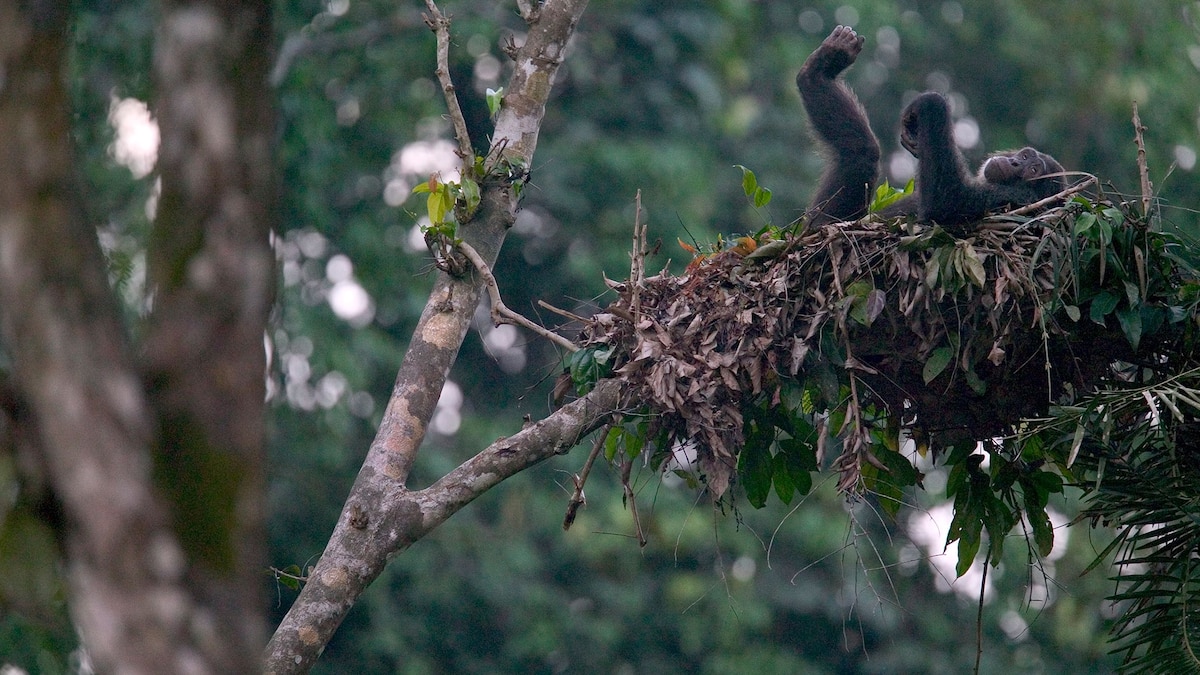 Chimpanzees build new nests each evening in trees where they sleep. Trackers who went out earlier in the morning will have located where the chimps nested overnight. You’ll hike to this location – this initial walk can take anywhere from 30 minutes to over an hour, depending on where the chimps chose to sleep.
Dawn Awakening (7:00-8:00 AM)
One of the most magical moments is watching the chimps wake up. They stretch, yawn, and slowly become active. Young chimps play in the nests while adults scan their surroundings. Eventually, they begin descending from the trees. The forest fills with their morning calls – a mixture of hoots, pants, and screams that send shivers down your spine.
Morning Activities (8:00 AM-12:00 PM)
Once on the ground, the chimps begin their daily routine. Morning is typically dedicated to feeding and social bonding. You might witness:
- Grooming sessions: Chimps spend hours grooming each other, strengthening social bonds and removing parasites. This is intimate social time where alliances are formed and maintained.
- Feeding: Chimps are selective eaters. You’ll watch them choose fruits, inspect them carefully, and eat. They might use tools to extract insects from logs or break open hard nuts.
- Playing: Young chimps are incredibly playful. They chase each other, swing from branches, and wrestle, much like human children.
- Tool use: If you’re lucky, you might see chimps using tools – sticks to extract termites, stones to crack nuts, or leaves as sponges to drink water.
- Vocalizations: Chimps communicate constantly. You’ll hear food calls (when they find a fruiting tree), alarm calls (warning of danger), and pant-hoots (long-distance calls to communicate with distant group members).
Midday Rest (12:00-2:00 PM)
During the heat of midday, chimps often rest. They might sit in the shade, continue grooming, or simply relax. This is when you can take a break too, eat your packed lunch, and observe the chimps at leisure. These quiet moments are perfect for photography and simply appreciating being in the presence of these remarkable beings.
Afternoon Activities (2:00-4:00 PM)
As the day cools, chimps become active again. They might travel to a new feeding site, engage in more social interactions, or prepare for the evening. Late afternoon sometimes brings dramatic moments – dominance displays, territorial calls, or even conflicts between individuals.
Nest Building (4:00-5:00 PM)
If you stay late enough, you’ll witness nest building. Each chimpanzee constructs a new nest each evening, weaving branches and leaves to create a comfortable sleeping platform high in the trees. Watching this process reveals their engineering skills and individual preferences – some chimps build elaborate nests while others create simpler structures.
Return Journey
After the chimps settle into their nests or when your time expires, you’ll hike back to the trailhead and return to your lodge, exhausted but exhilarated.

Chimpanzees grooming each other
The Emotional and Educational Impact: Why Both Experiences Matter
When guests return from a combined gorilla and chimpanzee safari, they consistently tell us that having both experiences transformed their understanding of wildlife and conservation. Here’s why both encounters matter:
Different Emotional Connections
Meeting gorillas creates a sense of peace, gentleness, and protective love. These gentle giants evoke your nurturing instincts. You want to protect them, preserve their habitat, and ensure their survival.
Meeting chimpanzees creates a different emotional response. Their intelligence, energy, and complex social lives mirror human behavior in sometimes uncomfortable ways. You see both the best and worst of human nature reflected in chimps – their capacity for cooperation and affection, but also their violence and power struggles.
Having both experiences gives you a more complete emotional connection to primates and strengthens your commitment to conservation.
Educational Completeness
Gorillas teach you about quiet strength, family bonds, and gentle coexistence. Chimpanzees teach you about intelligence, adaptability, and social complexity. Together, they provide a comprehensive education about our evolutionary past and what makes us human.
Understanding both species helps you appreciate the diversity of survival strategies, social structures, and behaviors that evolution has created. This knowledge deepens your appreciation for nature’s complexity and the importance of preserving biodiversity.
Conservation Perspective
Both species face significant threats – habitat loss, disease, poaching, and climate change. By experiencing both gorillas and chimpanzees, you gain a broader perspective on conservation challenges and solutions. You become an advocate not just for one species but for entire ecosystems and the interconnected web of life they support.
Practical Information: Planning Your Combined Primate Safari
Permits and Costs
Gorilla Trekking Permits:
- Uganda: $800 per person (foreign non-residents)
- Permits must be booked months in advance as they’re limited
Chimpanzee Habituation Permits:
- Kibale Forest: $300 per person
- Also limited and should be booked in advance
At Safari Vacations and Travel Services, we handle all permit bookings for you, ensuring you secure your desired dates.
Best Time to Visit
Uganda can be visited year-round, but the best times for primate tracking are:
Dry Seasons (June-September and December-February):
- Easier trekking conditions with less mud
- Clearer trails and better footing
- Better photography with more sunlight
- However, these are peak seasons, so book early
Wet Seasons (March-May and October-November):
- More challenging trekking with muddy, slippery trails
- Fewer tourists, more intimate experiences
- Lush, green forests at their most beautiful
- Chimps are often easier to find as fruiting trees are abundant
Physical Fitness Requirements
Both gorilla trekking and chimpanzee habituation require moderate to good fitness levels:
- Gorilla Trekking: Can be strenuous with steep slopes at high altitude (2,000-4,000 meters). Treks can last 1-6 hours each way. You should be able to hike for several hours on uneven terrain.
- Chimpanzee Habituation: Less altitude (1,100-1,600 meters) but requires stamina for a full day of hiking and standing. The terrain is generally less steep but can be muddy and slippery.
If you have concerns about fitness, discuss them with us. We can arrange porters for both experiences to assist with carrying your belongings and even helping you through difficult sections.
What to Pack
For both experiences, pack:
- Waterproof hiking boots with good ankle support
- Long-sleeved shirts and pants in neutral colors (no bright colors)
- Waterproof jacket
- Garden gloves (for holding vegetation and branches)
- Insect repellent
- Sunscreen and hat
- Camera with good zoom lens
- Extra batteries (charging opportunities are limited)
- Snacks and packed lunch for habituation
- Walking stick (often provided by parks)
- Small backpack to carry essentials
Age Requirements
- Gorilla trekking: Minimum 15 years old
- Chimpanzee habituation: Minimum 12 years old
This makes chimpanzee experiences more accessible for families with teenagers.
Health Considerations
Both gorillas and chimpanzees can contract human diseases. Therefore:
- You cannot trek if you have any illness (cold, flu, etc.)
- Masks may be required during your encounter
- Maintain the required distance at all times
- Cover your mouth if you need to cough or sneeze
You’ll also need to be up-to-date on yellow fever vaccination and may need prophylaxis for malaria.
Accommodation Options
Near Bwindi Impenetrable National Park (Gorillas)
Luxury:
- Sanctuary Gorilla Forest Camp
- Bwindi Lodge
- Clouds Mountain Gorilla Lodge
Mid-Range:
- Silverback Lodge
- Ichumbi Gorilla Lodge
- Gorilla Mist Camp
Budget:
- Buhoma Community Rest Camp
- Ride 4 a Woman Guesthouse
Near Kibale National Park (Chimpanzees)
Luxury:
- Primate Lodge Kibale
- Kyaninga Lodge
- Papaya Lake Lodge
Mid-Range:
- Turaco Treetops
- Kibale Forest Camp
- Chimpanzee Forest Guesthouse
Budget:
- Kibale Forest Backpackers
- Isunga Lodge
Safari Vacations and Travel Services works with all these properties and can recommend the best option based on your budget and preferences.
Sample 7-Day Gorilla and Chimpanzee Habituation Itinerary
Here’s a suggested itinerary that combines both experiences:
1st Day: Arrival in Entebbe
- Arrive at Entebbe International Airport
- Transfer to the hotel
- Rest and prepare for your adventure
- Overnight: Entebbe
2nd Day: Transfer to Kibale National Park
- Drive to Kibale (5-6 hours)
- Afternoon at leisure or optional crater lake walk
- Pre-habituation briefing
- Overnight: Near Kibale Forest
3rd Day: Chimpanzee Habituation Experience
- Full day of chimpanzee habituation (6-8 hours)
- Evening relaxation at the lodge
- Overnight: Near Kibale Forest
4th Day: Transfer to Bwindi Impenetrable National Park
- Drive to Bwindi (6-7 hours) through beautiful landscapes
- Pass through Queen Elizabeth National Park (possible wildlife viewing)
- Overnight: Near Bwindi
5th Day: Gorilla Trekking
- Early morning gorilla trek
- Afternoon at leisure or optional community walk
- Overnight: Near Bwindi
6th Day: Optional Second Gorilla Trek or Cultural Experience
- Second gorilla trek OR
- Batwa cultural experience OR
- Birding and nature walks
- Overnight: Near Bwindi
7th Day: Return to Entebbe
- Long drive back to Entebbe (8-9 hours) OR
- Optional flight back to Entebbe
- Departure or overnight before next-day flight
This itinerary can be customized to include additional experiences like golden monkey tracking, boat safaris, or more nights at each location.
Why Book with Safari Vacations and Travel Services
When planning a complex safari that combines multiple parks and experiences, working with an experienced local operator makes all the difference. Here’s what Safari Vacations and Travel Services offers:
Local Expertise
We’re based in Uganda and have extensive knowledge of both Bwindi and Kibale. Our guides know the parks intimately, the best times to visit, and how to maximize your wildlife viewing opportunities.
Permit Management
Securing gorilla and chimpanzee habituation permits can be challenging, especially during peak season. We handle all permit bookings on your behalf, ensuring you get your preferred dates.
Customized Itineraries
Every traveler is different. We create personalized itineraries based on your interests, fitness level, budget, and time constraints. Whether you want a budget camping safari or a luxury lodge experience, we craft the perfect trip for you.
Experienced Guides
Our guides are not just drivers – they’re naturalists, storytellers, and educators. They enhance your experience with their knowledge of wildlife, birds, plants, and local culture.
Logistics Support
Uganda’s parks are remote, and logistics can be complicated. We handle all transportation, accommodation bookings, meals, and park entry fees. You simply relax and enjoy your safari.
Emergency Support
With 24/7 emergency support, you’re never alone. If anything goes wrong – a vehicle breakdown, a medical issue, or a change of plans – we’re there to help.
Sustainable Tourism
We practice responsible tourism that benefits local communities and supports conservation. When you travel with us, you’re contributing to the protection of gorillas, chimpanzees, and their habitats while supporting local employment and community development.
Conservation Success: The Importance of Your Visit
When you combine gorilla trekking with chimpanzee habituation, you’re not just enjoying an amazing vacation – you’re actively contributing to conservation. Here’s how:
Direct Financial Support
Permit fees directly fund park operations, ranger salaries, and conservation programs. Gorilla tourism generates millions of dollars annually for Uganda’s national parks, which funds:
- Anti-poaching patrols
- Habitat protection and restoration
- Veterinary care for sick or injured animals
- Research and monitoring programs
Economic Incentives for Conservation
Tourism provides economic incentives for local communities to protect wildlife. When gorillas and chimpanzees become valuable through tourism, communities become their protectors rather than their threats. Local people find employment as guides, porters, lodge staff, and craft vendors, creating a direct link between wildlife conservation and economic prosperity.
Raising Global Awareness
Every visitor becomes an ambassador for primate conservation. When you return home and share your experiences, you raise awareness about these endangered species and the urgent need to protect them. This global awareness translates into support for conservation organizations and pressure on governments to strengthen wildlife protection laws.
Success Stories
The conservation news is actually good! Mountain gorilla populations have increased from about 600 in the 1980s to over 1,000 today. This success is largely due to tourism revenue funding effective conservation programs. Your visit directly contributes to this ongoing success story.
Similarly, chimpanzee populations in protected areas like Kibale have remained stable, while unprotected populations elsewhere have declined. This shows that tourism-funded conservation works.
Beyond Primates: Other Experiences to Consider
While gorillas and chimpanzees are the stars, Uganda offers other incredible experiences that can be combined with your primate safari:
Golden Monkey Tracking
Found in Mgahinga Gorilla National Park, these beautiful primates with golden fur are endangered and found only in the Virunga Mountains. Tracking them is easier and less expensive than gorilla trekking but equally rewarding.
Boat Safari on Kazinga Channel
If your itinerary includes time near Queen Elizabeth National Park, don’t miss the boat safari on Kazinga Channel. You’ll see hippos, crocodiles, elephants, buffaloes, and countless water birds.
Tree-Climbing Lions
Queen Elizabeth National Park’s Ishasha sector is famous for its tree-climbing lions – a behavior seen in few places worldwide.
Murchison Falls
Witness the mighty Nile River squeeze through a narrow gorge and plunge 43 meters in a thunderous cascade. The boat ride to the falls is spectacular, with sightings of hippos, crocodiles, and elephants along the riverbanks.
Cultural Encounters
Meet the Batwa people (pygmies) who once lived in the forests with gorillas, or visit local villages to learn about Ugandan culture, traditions, and daily life.
Birding
Uganda is a birder’s paradise with over 1,060 bird species. Both Bwindi and Kibale offer exceptional birding opportunities.
Frequently Asked Questions
Q: Is it safe to be near gorillas and chimpanzees? A: Yes, when you follow the rules and stay with experienced guides. Gorillas are gentle and rarely aggressive toward humans. Chimpanzees are more unpredictable, but habituated chimps generally ignore humans. Your guides are trained in primate behavior and keep you safe.
Q: What if I can’t complete the trek due to fitness limitations? A: Porters can help carry your backpack and even assist you physically through difficult sections. For gorilla trekking, you can request to be assigned to a gorilla family closer to the trailhead. Communication with your tour operator about fitness concerns before booking helps us plan appropriately.
Q: Can children participate? A: Chimpanzee habituation permits are available from age 12, while gorilla trekking requires a minimum age 15. This makes the chimp experience more family-friendly for those with teenagers.
Q: What are my chances of seeing gorillas and chimps? A: Gorilla sighting success rate is over 95% because trackers locate them before your trek. Chimpanzee sighting rates in Kibale are around 95% for habituated groups. Because you spend a full day during habituation, your chances are even higher.
Q: How close can I get? A: The rule is 7 meters (about 23 feet) for both chimps and for gorillas. However, the animals don’t know these rules! Sometimes they come closer to you. If this happens, stay calm, move slowly backward, and avoid direct eye contact.
Q: Can I use flash photography? A: No, flash photography is strictly prohibited as it can startle the animals and damage their eyesight.
Q: What if it rains? A: Uganda is tropical, so rain is possible at any time. Treks continue in rain (that’s why you bring waterproof gear). Actually, animals are often more active in light rain, and the forest is beautifully atmospheric.
The Experience of a Lifetime
Combining gorilla trekking with chimpanzee habituation in Uganda offers something truly unique – the opportunity to observe two of humanity’s closest relatives in their natural habitats, witnessing the full spectrum of great ape behavior and understanding our own place in the natural world.
While gorilla trekking provides an hour of serene, contemplative communion with gentle giants, chimpanzee habituation offers a full day of energetic, educational, and entertaining observation of our most intelligent primate relatives. Together, these experiences create a complete primate safari that will transform your understanding of wildlife, deepen your commitment to conservation, and provide memories that last a lifetime.
The misty mountains of Bwindi hold the magic of meeting the gentle giant gorillas eye-to-eye. The lush rainforests of Kibale echo with the exuberant calls of chimpanzees going about their complex daily lives. Both experiences are powerful, both are transformative, and both should be part of your Uganda adventure.
At Safari Vacations and Travel Services, we’ve witnessed thousands of guests return from these experiences with tears of joy, profound gratitude, and a renewed sense of wonder about our natural world. We’ve seen how these encounters inspire people to make changes in their lives, support conservation efforts, and become ambassadors for wildlife protection.
Don’t limit yourself to just one species when you travel to Uganda. Embrace the full primate experience. Witness both the gentle strength of gorillas and the vibrant intelligence of chimpanzees. Your journey will be richer, your understanding deeper, and your heart fuller.
The Pearl of Africa awaits you with its greatest treasures – the mountain gorillas of Bwindi and the chimpanzees of Kibale. Let Safari Vacations and Travel Services craft your perfect primate safari by combining gorilla trekking with chimpanzee habituation into the adventure of a lifetime..
Contact us today to begin planning your combined gorilla trekking and chimpanzee habituation safari. The great apes are waiting to meet you.


