
What to expect on safari in Burundi
What to expect on safari in Burundi
What to expect on safari in Burundi. Expectations on Burundi safari are many, but the majority are wilderness-related. Burundi’s tourism industry is still growing as the country’s unstable internal and external political environments affected it.
A visit to the Rusizi National Park allows you to enjoy some of the still untouched areas in the world. While in this park, you want the view of River Rusizi, where the park acquired its name.
Most Popular Safaris
5 Day Gorilla Habituation & Chimps
5 Days Gorillas & Whitewater Rafting Safari
14-Day Uganda Safari via Kigali
14 Days Burundi Rwanda – Uganda Cultural & Wildlife Safari
3 Day Serengeti National Park Safari
5 Day Rwanda Gorillas & Culture
Visiting Ruvubu National Park is the jewel in the crown of Burundi’s game safaris. While in this park, you may spot animals like sitatungas, waterbucks, cape buffaloes, hippos, and impalas.
Kabira National Park is the gist of primates safaris in Burundi. You can spot animals like black and white colobus, olive baboons, red-tailed monkeys, and blue monkeys. Look out for several birds that find a home in this park’s forests.
Do not expect a smooth ride while driving to Burundi’s different safari destinations. The infrastructure of Burundi is still growing, so the roads in the countryside may be bumpy and dusty. In case you have road sickness, you may take some pills.
Burundi still has fewer accommodation facilities, so facilities are available for the class services. You may pack some toiletries if your accommodation doesn’t provide them.
Don’t forget some hard cash to exchange into local currency, as credit cards are not a standard means of exchange. The process of acquiring money from them is long. Even those who know how to operate them are still few in Burundi.
You may need to learn some French words to make communication easier while on the ground.
Where to go on Safari in Burundi?
Kigwena National Reserve
This national park lies in southwestern Burundi, close to Lake Tanganyika. The forest hosts several primates like blue monkeys, grey-cheeked mangabey, red-tailed monkeys, olive baboons, and others.
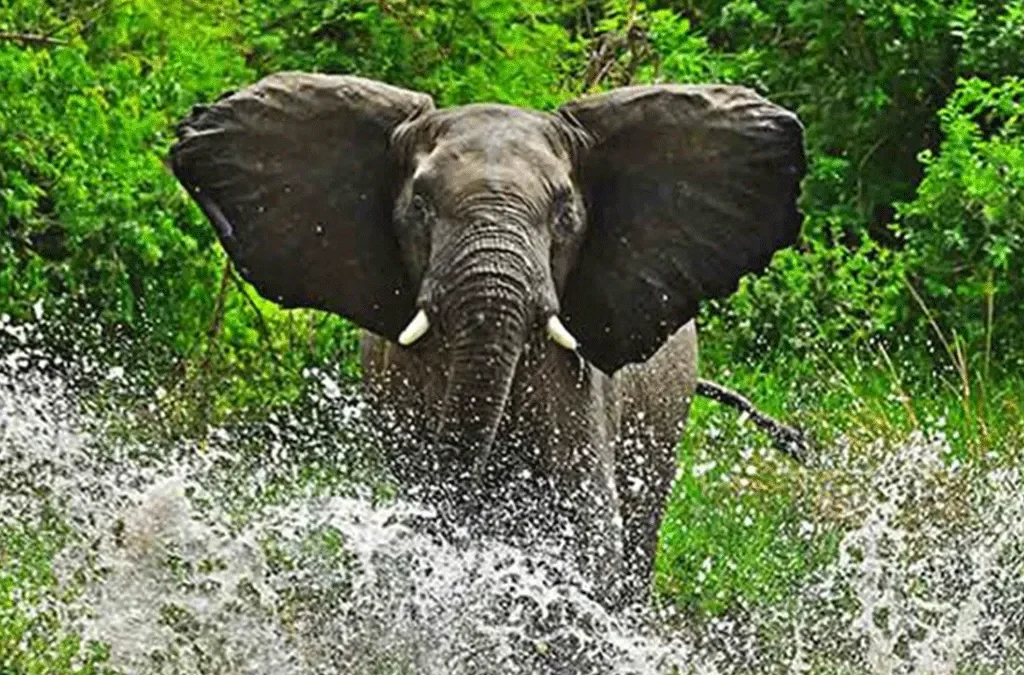
Several other wild animals live in Kigwena National Park, like pythons, duikers, forest elephants, and several bird species. They love feasting on the freebies of the forest.
Ruvubu National Park
What to expect on safari in Burundi- a visit to Ruvubu National Park. This national park covers about 508 square kilometers with various habitats that host several wild animals. Ruvubu National Park is the largest in Burundi, covering provinces like Ruyigi, Karuzi, Muyinga, and Karunzi.
While in this Burundi National Park, you may encounter animals like elephants, lions, leopards, duikers, waterbucks, bushbucks, and warthogs, to mention but a few. Within the forested area of this park, you may encounter various primates, including olive baboons, grey chegrey-cheekedy, blue monkeys, Senegal bush babies, black and white colobus, and several others.
Kibira National Park
In French, Kibira National Park is called Parc National De Kibira and is in northern Burundi. This park is along the Mountains of Congo-Nile to Muramvya, closer to Nyungwe National Park in Rwanda.
Its habitats host several wild animals, more than 98 mammals, and various bird species, including some Albertine rift endemics. Botanists may have a chance of sporting more than 644 plant species.
Rusizi National Park
This is the closest National park to Bujumbura city, and one can cover approximately 15 kilometers. Rusizi National Park is near the Rusizi River near the Congo border. While in this park, you may spot warthogs, statugas, crocodiles, hippos, and much more.
Gitega National Museum
Most of the cultural demonstrations of Burundi culture are in this Burundi Museum. You witness the traditional attire of Burundians, musical instruments, traditional regalia, and much more.
You can enjoy the Kalyenda royal drum sanctuaries and Ibwami, the royal court in this area.
Burundi Religious places
While in Burundi, you can also visit the prominent religious places in this country. These include the Union of Baptised churches of Burundi, Gitega Roman catholic church, Province of the Anglican Church of Burundi, and others.
Bujumbura city tour
How do you leave Burundi without knowing where the heart beats Bujumbura, the Capital city? This is the busiest town center of Burundi and its commercial center too. You can see the shopping centers, enjoy the aromas of Burundi coffees, check out the major education centers of Burundi, and so much more, depending on the check-in time of your flight or the amount of time on your African holiday.
What to do on a Rwanda Visit?
Birding in Burundi
While on safari in Burundi, Keen birders have a variety of species to spot as the country has some of the still virgin habitats for these birds, including Albertine rift endemics. You need a birding guide with experience who understands the country’s various bird-rick destinations. Chances of spotting Albertine rift endemics are more open in Butrundi’s forests.
During birding in Burundi, you may spot birds like Rwenzori Turaco, Handsome Francolin, African Hill Babbler, and collared Apalises. Others include Montane Masked Apalises, and yellow-eyed Black Flycatchers, Red-faced Woodland Warbler, Rwenzori Batis, and others.
Nature walks On the Burundi safari.
During the nature walks in the forested parks of Burundi, you may spot several primates. These include blue monkeys, grey-cheeked mangabey, black and white colobus, olive baboons, bush babies, and so many others. You must book a ranger guide to lead this adventure and avoid getting lost in the jungle.
What is the cost of Burundi Safari?
The cost of Burundi safaris varies depending on the number of days, activities to engage in, and other factors. You must know that you need to pay park fees for every Burundi National Park you enter. This is one way to support the conservation of wild animals in these parks. The park fees are valid 24 hours from the time you enter the National Park.
Safari Vacations and Travel Services categorizes our safari packages according to luxury, mid-range, and budget. We also consider other factors like the vehicle hire cost, but selecting a 4×4 wheel drive, driver guide fees, and gas to be used while on safari in Burundi is best.
How safe is Burundi for a safari?
What to expect on safari in Burundi- How safe is a Burundi Safari? Burundi is safe for a visit and safari as security is critical for the Burundi government and conservation bodies. Burundi may have been under political turmoil in the past, but this has ceased. The country is embarking on growth in all industries. Within Burundi’s safari destinations, especially wildlife parks, are government security bodies. These work closely with ranger guides to keep law and order.
The Burundi National Parks have well-trained ranger guides who dedicate their lives to guarding the wildlife and visitors. The ranger guides escort every group or tourist walking in the wilderness. They make sure nothing hurts you in the wilderness.
At least two ranger guides escort each group of tourists. One holds a machete and another a rifle in case of an emergency. These rangers also have radio call communication with those on the ground in case you need backup.
Tourists are briefed before entering the forest to avoid agitating the animals in the wilderness. You must follow the guidelines for staying in the wilderness. You need to keep your voices low so as not to cause any stampede in the wilderness.
Do not panic when you see something odd in the wilderness to avoid escalating the situation. Wait for the ranger guide to establish the root cause of the matter. Sometimes, the primates try to tease their visitors.
How difficult are Burundi safaris
What to expect on safari in Burundi- Are Burundi Safaris difficult? The walks in the jungles of Burundi are pretty tiring. The most significant part of the topography of Burundi was affected by volcanic action that led to the formation of highlands like plateaus and ridges. Expect some hiking during the walk in the wilderness, so you must wear the right gear.
You may hire a porter to help you carry some of your belongings as you walk in the jungle. A porter is a local person who can assist you with your belongings at an affordable cost. If you wish to give back to the community during your safari in Burundi, this is one of the ways to do so. The funds the porter collects are what they use to run their home affairs.
Although the ranger guide follows the paces of the slowest tourists, having some fitness before traveling to Burundi gives you an upper hand in completing the walk in the wilderness. Even when you find vines draping to obstruct your way, the ranger guide with a machete trims them to create a way for you.
What you are expected to do and not to do on the Burundi safari
Most of the Burundi safari activities happen in the wilderness, where you may be required to walk. Some of the guidelines you must follow include:
- Never enter the forest in Burundi without an escorting ranger guide. This is because you may encounter animals that may hurt you.
- While in the wilderness, do not make noise. This scares the wild animals because they are keen on intruders in their vicinity.
- No dumping garbage in the wilderness because this alters the nature of the forest where these primates live.
- Provoking or mimicking the primates or animals may cause them to rampage, so try to avoid it.
- Avoid feeding the wild animals because they must depend on their habitats rather than human supply.
- While on game safari, drive at the advised speed limit to avoid knocking down the animals, as this is penalized.
- Off-track driving is not accepted during the game safari in Burundi unless authorized.
- Do not use flash photography while taking photos in the forest, as this scares these primates.
What Can I Pack For Burundi Safari?
There is no need to overpack for your Burundi safari but carry what is necessary for your days on holiday. Having many bags may become a burden to you and an inconvenience if you have to share space with others.
- Warm wear to put on early morning and late afternoon. This is because it gets so cold you need to keep friendly as sometimes temperatures drop as low as 7 degrees centigrade.
- Insect repellant to keep away stinging insects that would harm you while walking to locate the mountain gorillas.
- Garden gloves protect your palms from stinging nettles and even rough surfaces you may land on when you trip and fall.
- Bug spray is in case your room is infected.
- Toiletries in case your skin is very sensitive or your lodge does not provide.
- Snacks to munch on in case you get hungry. You have breakfast too early to last the entire time in the wilderness.
- You’ll need a raincoat or poncho if it rains in the wilderness. This area receives rain at any time without warning.
- Wear long trousers and a long-sleeved shirt in the wilderness to protect your body from harsh conditions in the forest.
- A pair of stockings to tack in your trousers and protect your body from insects that would creep into your clothes.
- Safari boots can go through the soggy surfaces in the jungle. The wilderness is wet most of the time, and rivers overflow, especially in the severe rainy seasons.
- Safari hat to protect your hair from getting wet in case it rains or dew drips off the leaves.
- Pajamas to wear in the night when getting to bed.
- Duffel bag to carry with your belongings, as you may get no help offloading or loading your bags.
- Flip flops to change into in case you come from walking in the jungle and are tired of wearing closed shoes.
- Some cash to exchange into local currency when purchasing anything locally.
- Clean Face masks to wear when standing before the Burundi primates. The government adopted this policy after the Covid-19 period. The primates in the forests of Burundi can be victims of this virus since they are susceptible to human infections.
- A camera to take photos and protect memories of your experience during primate safari or game drives in Burundi National Park.
Bring a light, waterproof bag with your Burundi safari gear; if you hire a porter, they can collectively carry your bags. Even when you trip and fall, you lose none of your gear.
Contact us for more information.



