
What are the Top Safari Experiences in Serengeti National Park
Safari Experiences in Serengeti National Park
The safari experiences in Serengeti National Park are numerous. However, the standout activity is game drives. Through game drives, you can observe a spectacular variety of wild animals in their natural habitat. Birdwatching is another must-do, with countless avian species calling the park home. And of course, witnessing the Great Wildebeest Migration—originating in the Serengeti—remains an unforgettable highlight.
Serengeti National Park is in the northwestern part of Tanzania, and it stretches to the border with Kenya. Visiting here is the real deal for an African safari. This is because you could very well encounter some or even all of the Big Five. If you want to experience the iconic Great Wildebeest Migration, timing is key, even though the precise start date remains unpredictable. It’s essential to stay updated, as regular migration reports are released during the season. Feel free to reach out anytime for the latest updates and guidance.
What are the top safari Experiences/ Activities to do in Serengeti National Park, Tanzania?
Witnessing the Great Wildebeest Migration
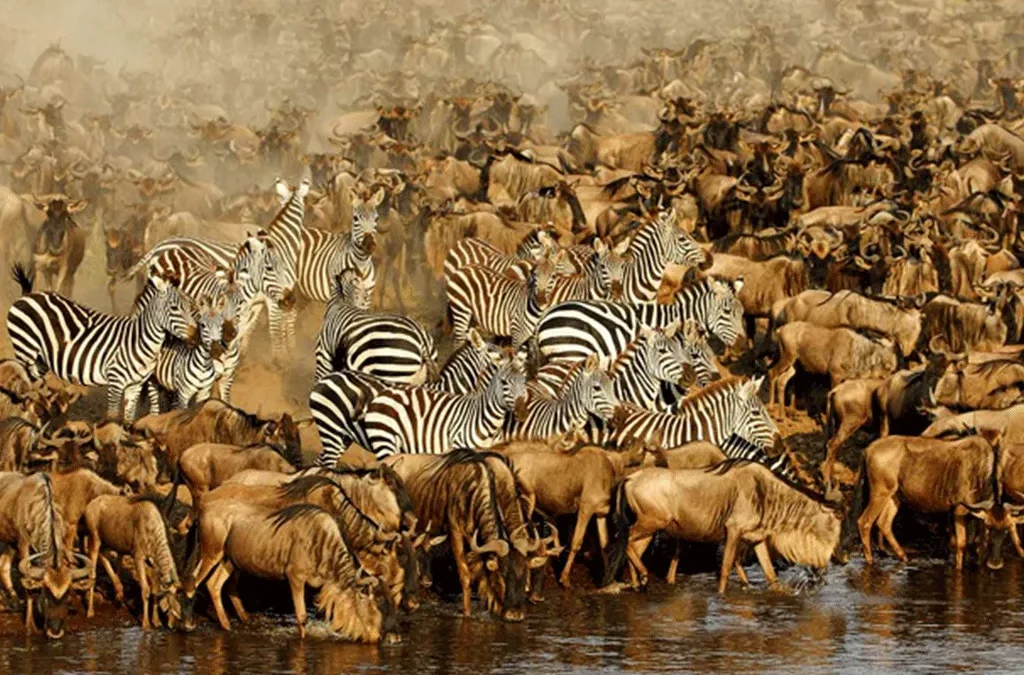
Top Safari Experiences in Serengeti- wildebeest migration. Although the Great Wildebeest Migration is a seasonal event in Serengeti National Park, it remains one of the most sought-after wildlife experiences in the world. Popular as one of nature’s greatest wonders, this phenomenon continues to intrigue scientists and safari-goers alike, as the exact reasons prompting these animals to embark on their annual journey to Kenya’s Masai Mara National Reserve and back are still based on assumptions.
Each year, millions of animals—including wildebeest, gazelles, impalas, waterbucks, bushbucks, elephants, buffaloes, and predators like lions, leopards, cheetahs, hyenas, and more—begin their long trek from the Serengeti. A dramatic highlight of this migration is the crossing of the Mara River, where both survival and spectacle unfold.
While there are experts who monitor and share updates on the migration’s progress, its exact start and end remain beyond anyone’s control. This incredible event is not confined to a single day—it unfolds gradually over several months. This makes timing and location crucial for those hoping to witness it.
Visitor numbers in Serengeti National Park tend to peak between June and August. This means more safari vehicles and activity in the park. To fully enjoy the migration experience, it’s important to position yourself strategically. Wildlife photographers and filmmakers planning to capture this event should have updated information about latest information. This ensures that they get the best opportunities for observation and documentation.
Game Drives in Serengeti National Park
Top Safari Experiences in Serengeti- Game drives. Game drives in Serengeti National Park offer thrilling wildlife encounters beyond the popular wildebeest migration. Venturing along the park’s tracks—ideally in a well-maintained 4×4 with an expert driver-guide—gives you the chance to spot lions, leopards, giraffes, and kudus. You also see impalas, zebras, elands, waterbucks, bushbucks, wildebeest, hartebeests, buffaloes, elephants, warthogs, rhinos, and many more. Departing early in the morning, around dawn, is especially rewarding. During this time, animals are most active before they disperse to face the day’s heat. A guide with experience not only increases your chances of sightings. But also, he enriches your journey with insights into animal behavior, ecology, and the park’s history. With the right vehicle and guide, your game drive becomes a rich educational adventure and a memorable safari experience.
Bird Watching in Serengeti National Park
Top Safari Experiences in Serengeti- Bird watching. Serengeti National Park is truly a birdwatcher’s paradise, with over 500 species recorded within its vast boundaries. Among the many sightings are iconic birds like ostriches, kori bustards, African fish eagles, grey-crested helmet-shrikes, Schalow’s wheatears, and Schalow’s turacos. Enthusiasts searching for unique regional species won’t face disappointment. This is because Serengeti has ‘specials” including grey-breasted spurfowl, Fischer’s lovebird, rufous-tailed weaver, and the Usambiro barbet. These are all either endemic or nearly so.
This remarkable bird diversity stems from the park’s mosaic of habitats. These include open savannah and grasslands, woodland-covered hills like those around Lobo. Others include riverine forests lining the Grumeti River and scattered wetlands. While the southern grasslands support fewer species, they still offer excellent views of plains-adapted birds. In contrast, the woodlands and river corridors in the west and north are hotspots for both resident and migratory birds.
The best time for birdwatching is November through April. This is when migratory species from Europe and North Africa arrive, and many residents display breeding plumage. Whether you’re hoping to spot large raptors, colorful rollers, endemic lovebirds, or melodious songbirds, Serengeti’s varied landscapes make every outing a rewarding discovery.
Hot Air Balloon in Serengeti NP
Top Safari Experiences in Serengeti- hot air balloon safari. Experience the Serengeti from a whole new perspective with a hot air balloon safari. Ascend above the landscape for breathtaking views and the unique opportunity to spot wildlife from above. As you drift gently over the savanna, keep an eye out for rhinos, elephant herds, buffalo, zebras, giraffes, wildebeests, kudus, impalas, and more.
Each balloon carries only a small number of guests, ensuring an intimate and personalized experience. This aerial adventure offers a fresh vantage point in relation to traditional game drives, revealing sights and wildlife encounters you might miss on the ground.
Go For a Masai Community Tour
Top Safari Experiences in Serengeti- community tour. The Maasai are a resilient, semi-nomadic community in Kenya and Tanzania. The community has preserved its rich traditions and cultural identity across generations. At the heart of their society is a deep relationship with cattle. Cattle serve as food, a symbol of wealth, and even familial currency. While herdsmen protect livestock from predators, women manage daily care and milking.
They live in manyattas—circular homesteads comprising simple huts that they build from wood, mud, cow dung, and grass, all inside thorn fences for protection. These structures are thoughtfully designed by the women, who craft each household to be functional yet temporary, reflecting the Maasai’s seasonal movement across the savanna.
Visiting a Maasai community offers an immersive experience where you can join in milking ceremonies or traditional food preparation. You can also be involved in beadwork—an art form that communicates social values through color and pattern. Gathering around a communal space, they may also invite you to participate in cultural rituals. These include dancing to traditional songs led by women or taking part in a warrior’s performance, hence being one of the Top Safari Experiences in Serengeti.
One of the most captivating traditions is the Adumu, or “jumping dance,” performed by Maasai warriors in a circle as they leap high into the air. Dressed in vibrant shúkà cloth and adorned with beaded jewelry and traditional attire, they compete for height, grace, and endurance, chanting rhythmically—a striking display of agility, strength, and heritage.
This cultural immersion is more than a visit. It’s a journey into a way of life that balances livestock stewardship, community solidarity, and craftsmanship. It also showcases vibrant ceremonial traditions passed down through time.
Guided Nature Walks
Top Safari Experiences in Serengeti- Guided nature walks. A guided nature walk in the Serengeti delivers an exhilarating opportunity to immerse yourself fully in the wilderness. Nature walks usually start in the early morning or late afternoon. During this time, temperatures are ideal, and scents in the air are crisp. These walks take you through scenic buffer zones just beyond the main park. With expert guides and armed rangers, you traverse the savanna on foot. Consequently, each step offers a richer sensory experience than a vehicle safari ever could.
Short, lodge‐based walks typically last 45 minutes to an hour and reveal the smaller wonders of the ecosystem—such as insects, birdlife, vegetation, and animal tracks—that often go unnoticed on drives. For those seeking a deeper adventure, longer treks of two to three hours that cover 9 to 15 kilometers are ideal. These sometimes include a packed breakfast or lunch, and venture into more remote concessions.
These on‑foot excursions foster intimate encounters with giants like elephants, buffalo, and giraffes, all while maintaining respectful distance and ensuring safety through trained leadership. Walking in silence and solitude lets you appreciate the Serengeti’s vast beauty—and rare moments of stillness—without the noise of engines or crowds.
Whether you choose a brief dawn stroll or a full wilderness trek, a Serengeti walk is an unforgettable journey into the heart of nature, heightening awareness, connection, and awe.
Visiting Ngorongoro Crater
Top safari experiences in Serengeti- Ngorongoro crater visit. Visiting the Ngorongoro Crater region is a breathtaking addition to any Serengeti safari. Anchored at the southern edge of Serengeti National Park, Ngorongoro is a separate conservation area that houses the world’s largest intact volcanic caldera. Towering walls—up to 600 meters deep—encircle a vast, wildlife-rich basin where elephants, lions, rhinos, buffalo, hippos, flamingos, zebras, and many other species roam freely.
Standing on the crater rim, you get to see the sweeping panoramic views of lush forests, sparkling lakes, and plains teeming with life—a perfect vantage point for sunrise and sunset photography. The landscape also holds profound historical significance. Within this conservation area lies Olduvai Gorge (also famous as the “Cradle of Mankind”). Louis and Mary Leakey unearthed fossils from early human species like Homo habilis and Paranthropus boisei from here. Walking the rim and exploring the gorge museum offers a tangible connection to the dawn of humanity.
Beyond wildlife and history, the region blends natural beauty with Maasai culture. This is because pastoralists live alongside wildlife in a conservation model that balances tradition and ecology. Whether you’re gazing across the crater’s vast floor or tracing ancient footsteps in Olduvai, this region transforms a safari into an unforgettable journey through time, nature, and culture.
Camping in Serengeti National Park
Top safari experiences in Serengeti- Camping. Camping in the Serengeti offers an incredibly unique way to experience the park—fall asleep under a blanket of stars and wake up to the moon’s soft glow right from your tent. Whether you prefer luxury, mid-range, or basic camping, there are options to suit every travel style. Luxury camps often feature upscale tents with en-suite bathrooms, hot showers, and attentive service. Mid-range camps provide a comfortable yet authentic safari experience; many have private tents, flushing toilets, and communal dining areas. Budget and public campsites are more rustic but budget-friendly, offering shared facilities—like pit latrines and water access—often set right within wildlife-rich areas of the park.
In addition to overnight stays, many operators arrange a bush breakfast—an alfresco meal prepared in the wild, usually accompanied by a ranger—it’s the perfect blend of wilderness and comfort. Staying in these camps gives you closer access to nature, from roaring lions at dusk to the dawn chorus around your tent. Camping in the Serengeti is more than lodging—it’s a sensory, immersive plunge into the rhythms and beauty of the wild.
Why Visit Serengeti National Park
Serengeti National Park stands as one of Africa’s most iconic wildlife destinations. It offers unbeatable opportunities to witness nature’s grandeur in its most authentic form.
The Great Wildebeest Migration
The Serengeti is popular for hosting the Great Wildebeest Migration, a remarkable natural event where over 1.5 million wildebeest, along with zebras and gazelles, journey across the plains in search of fresh grazing grounds. This annual spectacle involves dramatic river crossings, particularly at the Grumeti and Mara Rivers, where the herds face perilous encounters with crocodiles and predators. The migration is a testament to the resilience and survival instincts of these animals, offering observers a profound connection to the rhythms of the wild.
Diverse Wildlife Encounters
Serengeti National Park is one of the few places where visitors can encounter the “Big Five”—lion, leopard, elephant, buffalo, and rhinoceros—in their natural habitat. The park is home to over 3,000 lions, 1,000 leopards, approximately 7,700 elephants, and more than 30,000 buffalo. While rhinos are rare, you can occasionally spot them, especially in the Ngorongoro Crater.
Conservation Efforts
The park’s entrance fees play a pivotal role in conservation. Funds help support anti-poaching initiatives, habitat preservation, and community development programs. These efforts ensure the protection of endangered species and maintain the ecological balance of the park.
Family-Friendly Education
For families, a visit to the Serengeti offers an educational adventure. Children can observe animals they study in school, fostering a deeper appreciation for wildlife and promoting the importance of conservation. This hands-on experience brings classroom lessons to life, making learning both fun and impactful.
In essence, Serengeti National Park is not just a destination. It’s rather a journey into the heart of nature, offering unforgettable experiences that resonate with visitors long after they leave.
What is the Best Time to Visit Serengeti National Park
The ideal time for a safari in Serengeti National Park depends on your wildlife interests and tolerance for crowds. The park offers remarkable experiences year-round, each season bringing unique opportunities.
Dry Season (June to October)
The dry season, spanning from June to October, is considered the best time for a safari in Serengeti National Park. During this period, the vegetation is sparse, and animals congregate around water sources, making wildlife sightings more frequent and easier. This is also the time when the Great Wildebeest Migration is at its peak, with dramatic river crossings occurring between July and September. However, this is also the peak tourist season, so popular areas like Seronera can become crowded. It’s advisable to book accommodations well in advance during this time. Temperatures are generally warm, but mornings and evenings can be chilly, so packing layers is recommended.
Wet Season (March to May)
While the wet season from March to May sees fewer tourists and lower accommodation rates, it coincides with the calving season from January to March. During this time, over 400,000 wildebeest calves are born within a span of just a few weeks in the southern plains of the Serengeti. This attracts a high concentration of predators, offering thoads may becorilling wildlife interactions. The landscape becomes lush and green, providing excellent photography opportunities. However, some rme impassable due to rain, and certain areas might be less accessible.
Shoulder Seasons (November to February)
The months of November and December mark the short rains, leading to a quieter park with fewer tourists. This is an excellent time for birdwatching, as migratory species are present. The landscape is still green, and while some areas might experience brief afternoon showers, they generally don’t interfere with safari activities. January and February are particularly notable for the calving season, providing opportunities to witness newborn wildlife and predator-prey interactions.
Conclusively, for those seeking the classic safari experience with abundant wildlife and the chance to witness the Great Migration, the dry season from June to October is ideal. If you prefer fewer crowds and are interested in newborn wildlife and predator activity, consider visiting during the wet season or shoulder months. Each season offers a unique perspective on the Serengeti’s rich ecosystem.
Can I be Sure that I’ll see the Big 5 in Serengeti National Park?
Spotting all five of Africa’s iconic Big Five—lion, leopard, elephant, buffalo, and rhinoceros—on a single safari in Serengeti National Park is a rare and unpredictable experience. Unlike animals in enclosed reserves, Serengeti’s wildlife roams freely across vast, open plains, making sightings dependent on chance, timing, and the animals’ natural behaviors.
Lions are relatively easier to find, especially in the Seronera Valley and around kopjes like Moru and Simba, where they rest and hunt. Estimates suggest Serengeti is home to about 3,000 to 4,000 lions. Leopards, on the other hand, are more elusive, which you often find resting in trees or rocky outcrops, making sightings less frequent.
Elephants are abundant, with over 7,700 individuals, and can be seen across the park, often near waterholes. Buffaloes are also common, with herds of up to 100 members, particularly during the rainy season when the park is lush. Rhinos are the rarest, with fewer than five individuals present in the park.
While it’s possible to encounter all five during a safari, it’s not guaranteed. The best chances come during the dry season (June to October), when animals are more concentrated around water sources. However, even then, sightings depend on various factors, including the animals’ movements and the vastness of the park.
For those aiming to see all five, combining a Serengeti safari with a visit to Ngorongoro Crater, known for its dense wildlife population, can increase the likelihood of a Big Five encounter.
When does the Great Wildebeest Migration start in Serengeti National Park?
The Great Wildebeest Migration in Serengeti National Park is a dynamic and unpredictable natural event, making it challenging to pinpoint an exact start date. However, observations suggest that the migration typically commences between late April and early June, following the calving season in the southern Serengeti. During this period, over a million wildebeest, along with zebras and gazelles, begin their journey northward in search of fresh grazing grounds. This movement is driven by the availability of rain-ripened grass and the instinctual need to find better feeding areas.
The zebras are often considered the leaders of the migration, guiding the wildebeest herds through the vast plains. Their role in the migration is crucial, as they are believed to possess superior navigational skills, helping the herds find the best grazing spots and water sources.
The migration’s unpredictability adds to its allure, as the herds face numerous challenges along the way, including river crossings and the constant threat of predators. The Mara River crossing, in particular, is a dramatic and perilous event, where many wildebeest face crocodile-infested waters and swift currents. Witnessing this spectacle is considered one of the most iconic moments in wildlife observation.
In essence, while the exact timing of the Great Wildebeest Migration can vary, its occurrence is a testament to the resilience and adaptability of nature’s cycles.
Is Serengeti National Park safe for safaris?
Serengeti National Park is generally a safe destination for safaris, thanks to stringent safety protocols and vigilant park management.
The park is managed by the Tanzania National Parks Authority (TANAPA), which employs trained rangers to patrol the area regularly. These rangers work in coordination with other security agencies to ensure the safety of both visitors and wildlife. Additionally, accommodations within the park often have their security personnel monitor wildlife movements and protect guests.
To further enhance safety, Serengeti National Park enforces specific rules that visitors are expected to follow:
Visitors must remain inside their vehicles during game drives unless in designated areas to avoid potential threats from wildlife. Driving off designated tracks is prohibited to prevent damage to the ecosystem and to minimize disturbance to wildlife. Speaking loudly or playing music can disturb animals and other visitors, so it’s recommended to keep noise to a minimum. Visitors should dispose of waste in designated bins or carry it out to prevent harm to wildlife and maintain the park’s cleanliness. Feeding animals is strictly prohibited as it can alter their natural behavior and pose safety risks.
While Serengeti is considered safe, visitors should exercise general caution:
Keep valuables in a safe place to prevent theft. Keep emergency contact numbers handy and stay updated on any park advisories. Engage with licensed tour operators who adhere to safety standards and regulations.
By adhering to these guidelines and respecting the park’s rules, visitors can enjoy a safe and memorable safari experience in Serengeti National Park.
Why book your Tanzania trip with Safari Vacations and Travel Services?
Booking a safari to Serengeti National Park with Safari Vacations & Travel Services offers a personalized and enriching experience, backed by over a decade of expertise in organizing African safaris. As a proudly indigenous Ugandan company, we possess an intimate knowledge of East Africa’s landscapes, wildlife, and cultures, ensuring that each journey is both authentic and immersive.
Customer satisfaction is at the forefront of their mission. The team is dedicated to turning your safari dreams into reality, offering tailored itineraries that cater to various budgets and preferences. Whether you’re seeking a luxury, mid-range, or basic safari experience, they collaborate closely with you to craft the perfect itinerary.
Safari Vacations & Travel Services provides a range of safari packages, including gorilla trekking, chimpanzee tracking, golden monkey tracking, game drives, nature walks, and more. Their fleet of well-maintained 4×4 safari vehicles ensures comfort and safety during your adventures.
For a safari that combines expert guidance, personalized itineraries, and a commitment to sustainable travel, Safari Vacations & Travel Services is a trusted choice for your Serengeti adventure. Contact us now to get started


