Tree climbing lions in Kigezi Wildlife Reserve

Tree Climbing Lions: 11 Amazing Safari Secrets
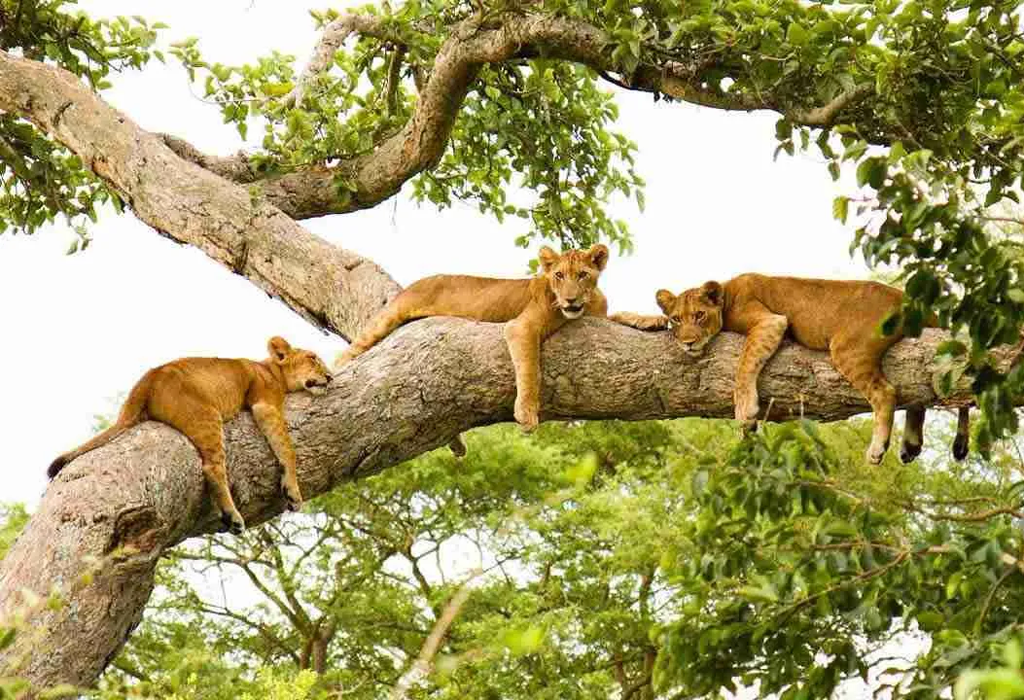
Tree climbing lions are a memorable Uganda wildlife surprise: big cats resting on broad fig branches above open savannah. The best-known sightings come from the southern Ishasha Sector of Queen Elizabeth National Park, where certain prides have made tree resting a regular part of their behavior. For travelers planning a Uganda lion safari, this guide answers the questions that matter most—where to look, why the cats climb, when sightings are most likely, how much time to allow, what else lives in Ishasha, and how to combine the experience with gorillas, chimpanzees and the Kazinga Channel.
Quick answer: the most famous tree climbing lions are searched for on game drives in Ishasha, in the far south of Queen Elizabeth National Park. Sightings are never guaranteed, but allowing at least one night and two game-drive windows gives a more relaxed and realistic chance than racing through the sector in transit. This context also shapes Queen Elizabeth National Park lions.
Tree Climbing Lions Uganda: Where Can You See Them?
The search term tree climbing lions Uganda points most strongly to the Ishasha Sector at the southern end of Queen Elizabeth National Park. This quieter landscape is separated from the busier northern tourism zone and is characterized by open grassland, riverine habitat and scattered trees large enough to support resting lions. The Ishasha lions are not a separate species or subspecies; they are African lions displaying an unusual local behavior. A good guide searches likely trees, fresh tracks, prey concentrations and known pride areas instead of driving randomly across the plains.
Ishasha also works well in a wider Uganda safari because it lies naturally between the central Queen Elizabeth area and the gorilla regions to the south. That makes a Uganda lion safari easier to combine with forest trekking without backtracking. Travelers who want a focused overview can compare the site’s existing Tree Climbing Lions of Ishasha page with this deeper planning guide. The important distinction is that Ishasha is a wildlife sector, not a zoo-like viewing point: the lions move freely, and finding them is part of the safari.
Why Do these famous lions Climb Trees?
There is no single proven explanation behind the behavior travelers associate with tree climbing lions Uganda in Ishasha. The leading ideas overlap rather than compete. Shade and moving air may make elevated branches comfortable during hot periods; getting above ground level may reduce irritation from biting insects; and a higher perch can provide a broad view over grassland. Large fig trees also have wide, supportive limbs that can hold heavy cats. Because the same prides repeatedly use trees and younger animals can observe older ones, learned behavior may help keep the habit within particular groups. The same viewing principle applies to Ishasha Sector lions.
Tree Climbing Lions Uganda: Heat, Shade and Airflow
Lions spend much of the day resting, so comfort matters. During warm hours the ground can radiate heat while a large canopy creates shade and catches a breeze. That does not mean every hot day produces cats in trees, but it helps explain why visitors sometimes find Ishasha lions draped over branches when other predators are hidden in grass or thickets. The sight can look effortless from a distance, although climbing and descending requires balance from animals built more for powerful ground movement than leopard-like agility. This is one reason tree climbing lions Uganda remains such a distinctive wildlife search.
Ishasha Tree Climbing Lions and Local Habitat Habits
Another common theory is relief from ground-level biting insects, especially in a landscape influenced by seasonal moisture and riverine vegetation. An elevated branch can also improve visibility across tall grass, allowing a resting lion to survey prey and other animals without moving. The site’s guide to behaviors of tree-climbing lions in Ishasha explores these patterns in more detail. For tourists, the safest takeaway is simple: the behavior probably has several practical benefits, and it has become a recognizable cultural habit among certain local prides rather than a behavior shown by every lion in Africa. Patient viewing gives tree climbing lions space to behave naturally, which is central to a responsible tree climbing lions Uganda safari.

How Rare Are these famous lions?
Lions are capable of climbing, especially when young, but regular tree resting by whole prides is unusual enough to make the behavior a safari attraction. The Ishasha population is famous because visitors can deliberately search for it in a defined landscape. Tree-resting lions are also associated with parts of northern Tanzania, particularly around Lake Manyara, and occasional climbing can occur elsewhere. What makes Ishasha special is not that no lion outside Uganda ever climbs; it is the frequency and tourism visibility of the behavior among local prides. This context also shapes Queen Elizabeth National Park lions.
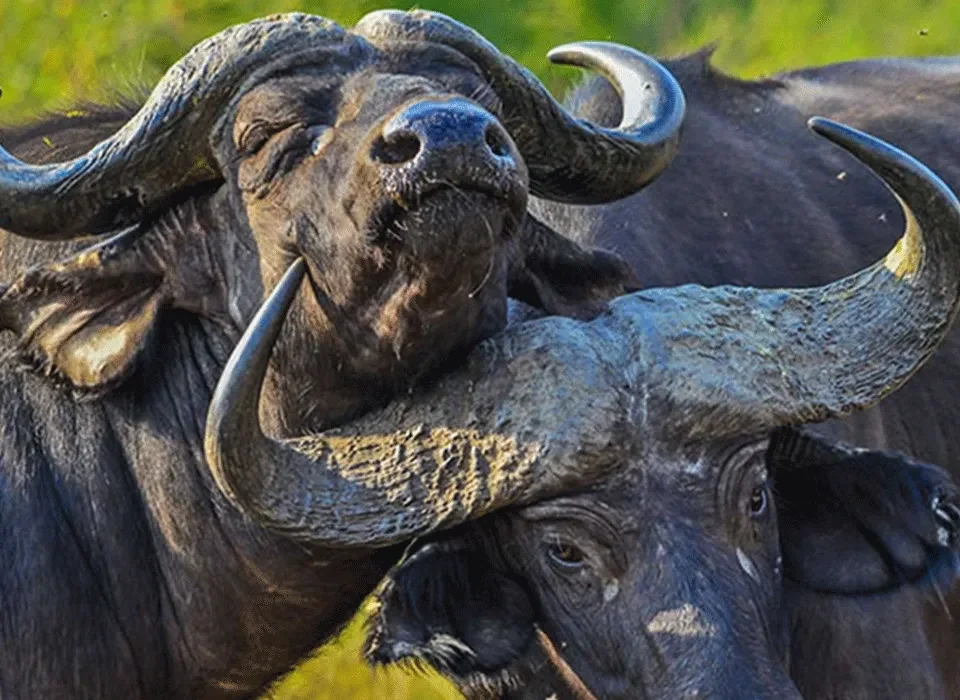
That distinction matters for realistic expectations. A photograph of several tree climbing lions in Uganda on one branch can make the encounter seem routine, yet wildlife is not scheduled. Some days the cats may rest on the ground, move through dense cover or be far from the tracks open to visitors. The best safari plan treats the sighting as a high-priority objective inside a broader wildlife experience. If the lions are not in the trees, Ishasha still offers elephants, buffalo, topi, Uganda kob, warthogs, birds and an attractive savannah setting. The page on {a(“https://www.ugandarwanda-safaris.com/wildlife-in-ishasha-sector/”,”wildlife in Ishasha Sector”)} is useful for understanding that wider cast.
Best Time to See these famous lions
There is no month in which tree climbing lions in Uganda are guaranteed. Many travelers prefer drier periods because park tracks can be easier and grasses may be shorter, improving visibility. Uganda’s seasons are variable, however, and the lions live in Ishasha year-round. Rather than choosing dates only for one species, compare the lion search with your overall route using the Uganda Weather Guide. If gorilla trekking, chimpanzee tracking or other parks are part of the journey, the best travel window is the one that balances all priority experiences.
Queen Elizabeth National Park Lions: Best Time of Day
Morning and late afternoon are classic game-drive windows because temperatures are cooler and many animals are more active. For tree climbing lions in Uganda, however, guides may continue checking favored trees as the day warms because resting behavior can become more obvious once the cats settle. A practical approach is to avoid treating one specific hour as a guarantee. Spend enough time in the Ishasha Sector to search in more than one period, and let an experienced guide adjust the route according to tracks, fresh reports, prey movement and weather. The same viewing principle applies to Ishasha Sector lions.
Want the Best Chance of Seeing the Lions?
Build Ishasha into your route with enough time for more than one game drive, rather than treating the sector as a quick roadside stop. Ishasha tree climbing lions remain the signature wildlife search here.
Email: info@ugandarwanda-safaris.com This context also shapes Queen Elizabeth National Park lions.
Ishasha Tree Climbing Lions: What to Expect on a Game Drive
One night is a sensible minimum for travelers who specifically want to search for tree climbing lions in Uganda. It creates the possibility of an afternoon drive after arrival and another drive the next morning. Two nights can be better for photographers, families who prefer a slower pace, and anyone for whom the Ishasha lions are a major trip priority. A rushed transit drive can work when schedules are tight, but it leaves little flexibility if the cats are not near the accessible tracks at that moment.
For a compact trip, a dedicated 3 Day Ishasha tree climbing lions in Uganda itinerary provides a useful benchmark for travel time and game-drive pacing. Travelers adding more of the park can look at a 3 Days Queen Elizabeth National Park Safari or a longer wildlife circuit. The key is to count nights in the wildlife area, not just calendar days. A day that is mostly road transfer should not be treated as equivalent to a full day available for searching.
Ishasha Sector Lions: How Many Safari Days Do You Need?
A search for tree climbing lions in Uganda is still a normal wildlife game drive. You travel in a safari vehicle with a driver-guide, scanning both the plains and the canopy. Guides may stop at large fig trees, inspect tracks on the road, watch the behavior of prey animals and listen to information shared by other professional guides. When a lion is found, the best sightings are calm: vehicles keep a respectful distance, engines and voices are managed carefully, and visitors allow the animal to rest or move without pressure. The same viewing principle applies to Ishasha Sector lions.
If you are interested in a more research-oriented lion experience elsewhere in the park, read about experiential lion tracking in Queen Elizabeth National Park. That activity is different from an ordinary Ishasha game drive and should not be confused with simply looking for the tree-resting prides. On any Uganda lion safari, follow ranger and guide instructions, never request off-track chasing, and remember that a respectful viewing position often produces better behavior and better photographs.

Queen Elizabeth National Park Lions Beyond Ishasha
The lion search is only one reason to visit Queen Elizabeth National Park. The wider conservation area contains savannah, crater landscapes, wetlands, lakes, woodland and the famous Kazinga Channel. That habitat variety supports elephants, buffalo, hippos, crocodiles, antelope, primates and rich birdlife. For travelers who arrive focused entirely on tree climbing lions in Uganda, adding at least one contrasting activity makes the trip feel much more complete.
Ishasha Sector Lions and the Kazinga Channel Route
A Kazinga Channel boat cruise gives a completely different perspective from the dry-land game drive. Hippos, crocodiles, buffalo, elephants and waterbirds can gather around the shoreline, and the slower pace is a useful break after hours in a vehicle. Combining Ishasha with the channel also helps explain why Queen Elizabeth National Park is more than one habitat. A lion-focused traveler may come for the trees but leave remembering the mixture of plains and water-based wildlife just as strongly. This context also shapes Queen Elizabeth National Park lions.
Wildlife and landscapes around Ishasha
The southern sector itself rewards travelers who look beyond the cats. The guide to the sights and sounds of Ishasha Sector highlights the value of slowing down for birds, grassland mammals and the atmosphere of a quieter part of the park. That is particularly useful when tree climbing lions in Uganda are hidden. A strong guide keeps the drive interesting rather than turning every minute without a lion into “waiting time.”
Best Places to Stay Near the Ishasha Lions
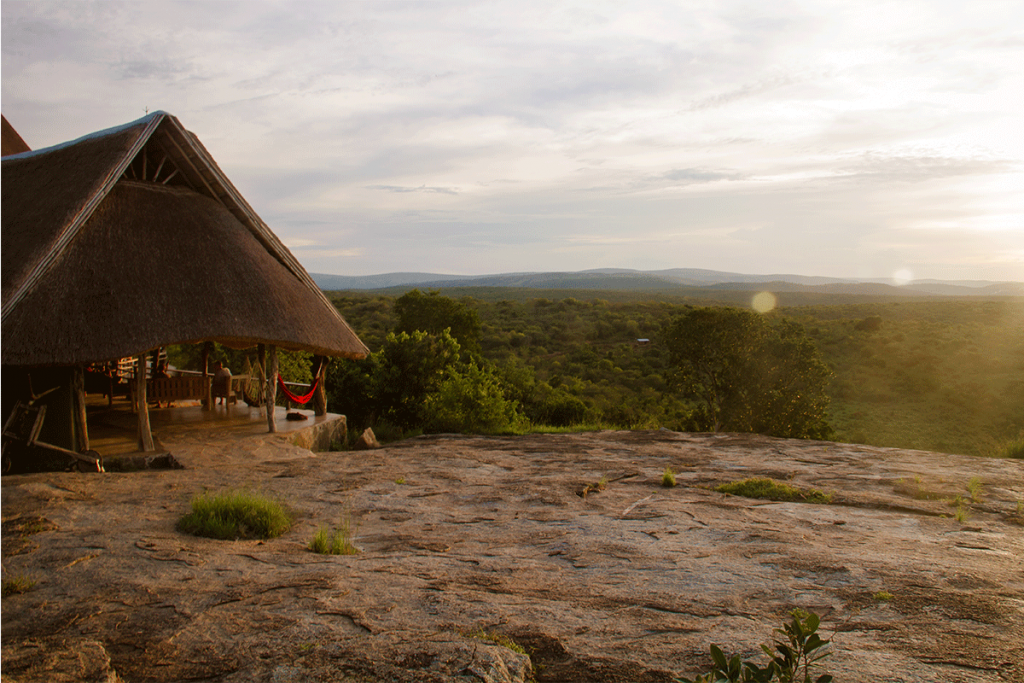
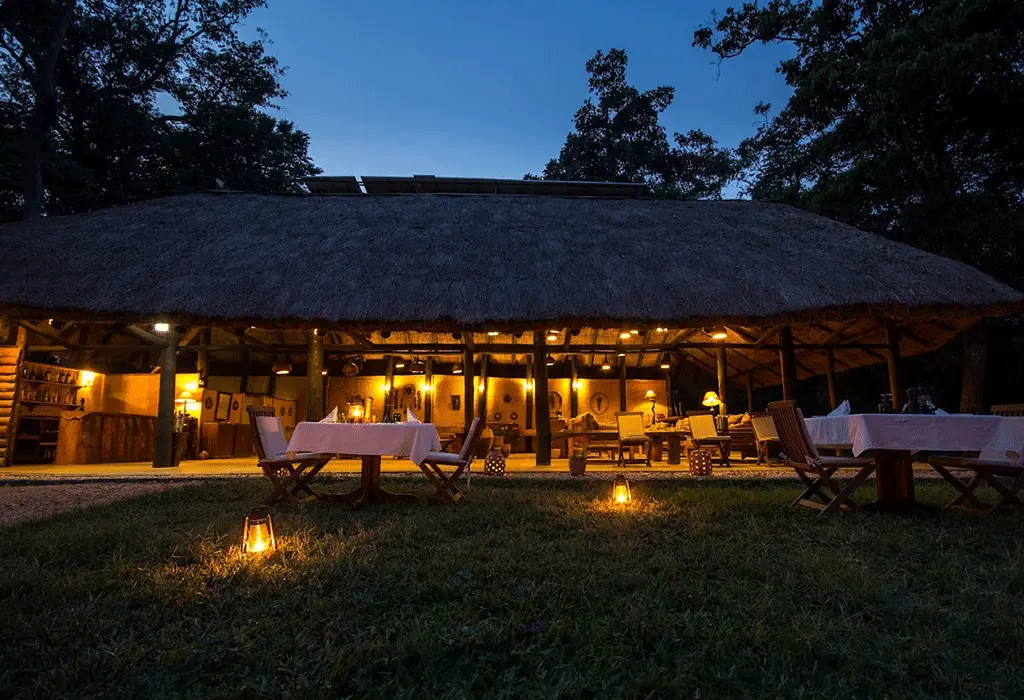
Accommodation choice affects how efficiently you can search for Ishasha tree climbing lions. Staying in or close to the Ishasha Sector reduces repeated transfers and makes it easier to start early. Options vary from more comfortable wilderness camps to simpler lodges around the approaches to the sector. The site’s Ishasha Sector Lodges guide can help compare location and style. When choosing, ask how long it takes to reach the game-drive tracks, whether meals can fit early departures, and whether the lodge routinely hosts guides familiar with current pride movements.
A lodge with an attractive room but a long daily transfer can cost you valuable wildlife time. For photographers or travelers building a dedicated Uganda lion safari, location is often more important than extra amenities. One or two nights close to the search area can make the experience calmer, especially if the first drive does not produce a sighting. It also lets you enjoy Ishasha at dusk and dawn rather than experiencing the landscape only through a vehicle window during a hurried transfer. The same viewing principle applies to Ishasha Sector lions.
How to Combine these famous lions with Gorilla Trekking
One of the strongest Uganda itineraries combines Ishasha tree climbing lions with mountain gorillas because Ishasha lies on a logical route toward Bwindi. The contrast is excellent: one day you scan open savannah for lions, and another day you hike through dense rainforest with trackers. The page on gorilla trekking combined with the tree-climbing lions of Ishasha shows how naturally the experiences fit together.
If gorillas are a major priority, learn the practical differences between sectors through the Bwindi Impenetrable Forest guide and confirm permits before finalizing the route. A 5-Day Tree-Climbing Lions and Gorillas in Bwindi plan is a useful minimum-style example, while travelers who dislike moving quickly may prefer an extra night. The combination works especially well for first-time visitors because it pairs Uganda’s best-known primate experience with the unusual Ishasha lions.
Can You Add Chimpanzees to a Uganda Lion Safari?
Yes. A western circuit can connect the Ishasha Sector with chimpanzee trekking in or around Kibale, producing three very different wildlife experiences: savannah predators, forest apes and water-based game viewing. The Kibale Forest National Park guide explains the classic chimpanzee component, while a combined route can continue south through Queen Elizabeth National Park before reaching Bwindi. This context also shapes Queen Elizabeth National Park lions.
The mistake is trying to compress every highlight into too few nights. Long road transfers, early starts and daily hotel changes quickly reduce enjoyment. If Ishasha tree climbing lions are important, protect at least one dedicated Ishasha night rather than assuming you can search while simply passing through. If chimpanzees and gorillas are equally important, treat their permit times as fixed anchors and build the vehicle-based safari days around them. This approach creates a more reliable Uganda lion safari and a more relaxed primate journey.
Photography Tips for these famous lions
Ishasha tree climbing lions are unusually photogenic because the branches create clean silhouettes and reveal behaviors that are hard to see when a pride is hidden in grass. A moderate telephoto lens is usually more useful than an extreme lens when the vehicle can stop at a respectful viewing distance. Include some wider frames that show the lion in its tree and the surrounding savannah; those images explain the behavior better than a tight portrait alone. Watch exposure when bright sky sits behind a darker animal, and stabilize the camera on the vehicle when possible.
For a broader approach, the site’s Uganda safari for photographers guide covers pacing and equipment considerations. On a dedicated Uganda lion safari, tell the guide that photography matters before the drive begins. A private vehicle can be helpful because you control how long to remain at a sighting and which side of the vehicle is positioned toward the light. Never ask a guide to disturb a resting lion for a better pose; patience produces more natural images. The same viewing principle applies to Ishasha Sector lions.

What Other Animals Can You See in Ishasha?
The search for Ishasha tree climbing lions takes place inside a functioning ecosystem, not an isolated lion habitat. Depending on season, luck and route, visitors may encounter elephants, buffalo, topi, Uganda kob, warthogs, waterbuck, bushbuck, baboons and many birds. Prey distribution helps shape lion movement, so watching antelope carefully is part of reading the landscape. Large herbivores can also create some of the best photographic moments of the day even when the cats are sleeping or out of sight.
Travellers who want a wider species overview can use the Uganda wildlife encounters guide to compare parks. For Ishasha specifically, the attraction is the feeling of a quieter southern plain where wildlife unfolds without the same concentration of vehicles found in some famous East African reserves. The Ishasha lions are the headline, but the experience becomes richer when you allow time for everything around them.
these famous lions vs Lion Tracking: What Is the Difference?
Looking for Ishasha tree climbing lions in Ishasha is a conventional game-drive experience: your guide searches for free-ranging animals and, with luck, finds them resting in trees or moving through the grass. Experiential lion tracking is a specialized activity associated with research and monitoring in other areas of Queen Elizabeth National Park. It can involve a more structured approach to locating known lions and learning about conservation work. The two experiences should not be marketed as interchangeable. This context also shapes Queen Elizabeth National Park lions.
If you are choosing between them, compare the practical details in the guide to lion tracking in Queen Elizabeth National Park. A traveler whose dream image is a lion on a branch should prioritize Ishasha. A traveler fascinated by research methods may value the tracking experience. Some longer itineraries can include both, but do not sacrifice a relaxed search for the Ishasha lions just to add another activity to the checklist. Patient viewing gives tree climbing lions space to behave naturally.
Is an Ishasha Safari Good for Families?
Families can enjoy a Uganda lion safari with tree-resting lions because the activity takes place from a vehicle rather than on a demanding trek. Children who already enjoy wildlife often find the idea of lions in trees instantly engaging. The main challenge is drive length: searching can require patience, and road transfers between parks can be long. Break up the day, carry water and snacks where permitted, and choose accommodation that can serve meals around game-drive times. A private vehicle offers useful flexibility for younger travelers. Ishasha tree climbing lions remain the signature wildlife search here.
Parents should also set expectations before arrival. Seeing Ishasha tree climbing lions is possible but never guaranteed, and a safari is more enjoyable when children are encouraged to notice tracks, birds, antelope and elephants along the way. The same rule applies to adults. If the trip is framed only as “find the lion in the tree,” every other wildlife moment feels secondary. If it is framed as an exploration of the Ishasha Sector, the signature sighting becomes a bonus inside a wider adventure. The same viewing principle applies to Ishasha Sector lions.
How Much Does a Tree Climbing Lions Safari Cost?
There is no single fixed price because cost depends on trip length, vehicle type, group size, accommodation level, park fees, guide services and the number of additional destinations. A short private safari for two generally costs more per person than a vehicle shared by a larger party, while premium lodges and fly-in connections increase the total. The most useful quote is itemized so you can see what is included rather than comparing headline prices alone. Travelers comparing broader wildlife options can also review Uganda safari deals for route ideas rather than treating every package as directly comparable.
A focused 4-Day Tree-Climbing Lion Safari to Uganda illustrates how a short route can be structured, while longer tours spread fixed transport costs across more experiences. If you are comparing options, ask whether the quote includes park entry, the vehicle and fuel, accommodation and meals, guide services, airport transfers and any boat or primate activities. A well-designed Uganda lion safari spends money on access and time in the right wildlife areas rather than on unnecessary backtracking.
Build the Lions Into a Bigger Uganda Journey This context also shapes Queen Elizabeth National Park lions.
Combine Ishasha with the Kazinga Channel, chimpanzees or gorillas while keeping enough game-drive time for the lion search.
Design My Uganda Wildlife Route →
Email: info@ugandarwanda-safaris.com
Getting to Ishasha and Planning the Route
Ishasha is in southwestern Uganda, so most itineraries reach it by road as part of a western circuit. Drive times depend on the starting point, road conditions, stops and the exact lodge. Instead of relying on map distance alone, ask for realistic transfer hours and the expected arrival time at the game-drive tracks. This matters because a late arrival can turn a planned wildlife afternoon into a simple transit day. The same viewing principle applies to Ishasha Sector lions.
The Uganda Driving Guide is useful background for road expectations, while travelers planning a broader route can consult the Uganda Travel Guide. For a Uganda lion safari, a common sequence is Kibale or the northern part of Queen Elizabeth National Park, then the Ishasha Sector, then Bwindi. That order keeps the tree climbing lions on a natural path toward gorilla country. Regional flights can shorten some journeys, but road transfers remain important for reaching the southern sector itself. The complete Uganda safari guide can help travelers compare road and air connections across a wider itinerary.
Safety and Responsible Viewing Around Lions
Wild lions should always be treated as powerful predators, whether they are on the ground or above your vehicle. Stay inside the vehicle unless your guide says a specific area is safe for exit, keep hands and bodies within the vehicle at close sightings, and never try to attract attention with food or loud noises. Do not pressure a driver to approach too closely, block an animal’s route or remain in a position that causes visible stress. Responsible safari behavior protects both visitors and wildlife.
Before travel, review current practical advice in the Uganda Safety Guide and follow the instructions of park staff on the day. Rules, road access and local conditions can change. For tree climbing lions, the most important tourism principle is to let resting cats rest. Quiet observation gives everyone a better experience and reduces the chance that animals associate vehicles with disturbance. This context also shapes Queen Elizabeth National Park lions.
20 Search Questions This Guide Answers
These questions mirror the practical intent behind most searches for tree climbing lions: travelers want to understand the behavior, improve their chances of a sighting, choose the right amount of time, and fit Ishasha into a realistic Uganda itinerary. The sections below answer the most common final planning questions in a concise format.
Frequently Asked Questions About Tree Climbing Lions
Are tree climbing lions a special subspecies?
No. The Ishasha lions are African lions known for a distinctive local behavior. Tree resting is a habit, not a separate taxonomic identity.
Are sightings guaranteed in the Ishasha area?
No wildlife sighting is guaranteed. For anyone researching tree climbing lions Uganda, multiple game-drive windows are more realistic than a rushed transit stop. The best approach is to allow multiple game-drive windows and use a guide familiar with current pride movements. The same viewing principle applies to Ishasha Sector lions.
What trees do the lions climb?
Large fig trees are strongly associated with the classic Ishasha photographs, although lions may use other sturdy, accessible trees with broad branches.
Do the lions hunt from trees?
The trees are primarily associated with resting, shade, visibility and comfort. That behavior is the core attraction behind searches for tree climbing lions Uganda. Hunting typically takes place on the ground.
Can I see the lions in the rainy season?
Yes. The lions live in the area year-round, but road conditions, grass height and daily movement can affect how easy they are to find. Seasonal planning still matters for a tree climbing lions Uganda itinerary. This context also shapes Queen Elizabeth National Park lions.
Is one game drive enough?
It can be enough if you are lucky, but two separate search periods provide a more realistic plan if the sighting is important to you.
Can I combine Ishasha with gorilla trekking?
Yes. The southern location makes Ishasha one of the most logical savannah stops to pair with Bwindi on a western Uganda route, especially for travelers combining gorillas with tree climbing lions Uganda.
Is the Ishasha area crowded?
It is generally regarded as quieter than the park’s busier northern tourism areas, which is part of its appeal for photographers and slow safari travel. The same viewing principle applies to Ishasha Sector lions.
What should I bring for the game drive?
Bring binoculars, sun protection, a light layer for cool starts, drinking water, camera batteries and patience. Neutral clothing is practical but specialized trekking gear is unnecessary for vehicle-based drives.
Are tree climbing lions found outside Uganda?
Yes, tree-resting behavior is also well known around Lake Manyara in Tanzania, and occasional climbing occurs elsewhere. Ishasha remains one of the most famous places to search deliberately for the behavior, which is why tree climbing lions Uganda is so closely tied to this sector.
A Practical 5-Day Route for Tree Climbing Lions and Gorillas
A compact route can begin with transfer into Queen Elizabeth NP, include a boat safari or northern game drive, continue into the Ishasha area for the tree-resting lions, and then finish in Bwindi for gorilla trekking. The exact order depends on arrival point and permit availability. Travelers can compare the dedicated 5 Days Uganda Gorilla Tour and Tree Climbing Lions plan or a longer 6-day Uganda Gorilla and Tree-climbing Lions Safari for a slower pace. This context also shapes Queen Elizabeth National Park lions.
Day one should avoid overpromising wildlife if most of it is spent on the road. Day two can focus on the wider park and water-based wildlife. Day three can be protected for Ishasha, with both an afternoon and following-morning search if possible. Day four then moves toward gorilla country, and day five centers on the trek. Adding one extra night makes this structure noticeably more comfortable because it reduces the pressure to leave a wildlife sighting early just to meet the next transfer.
Why the Ishasha Lions Are Worth the Detour
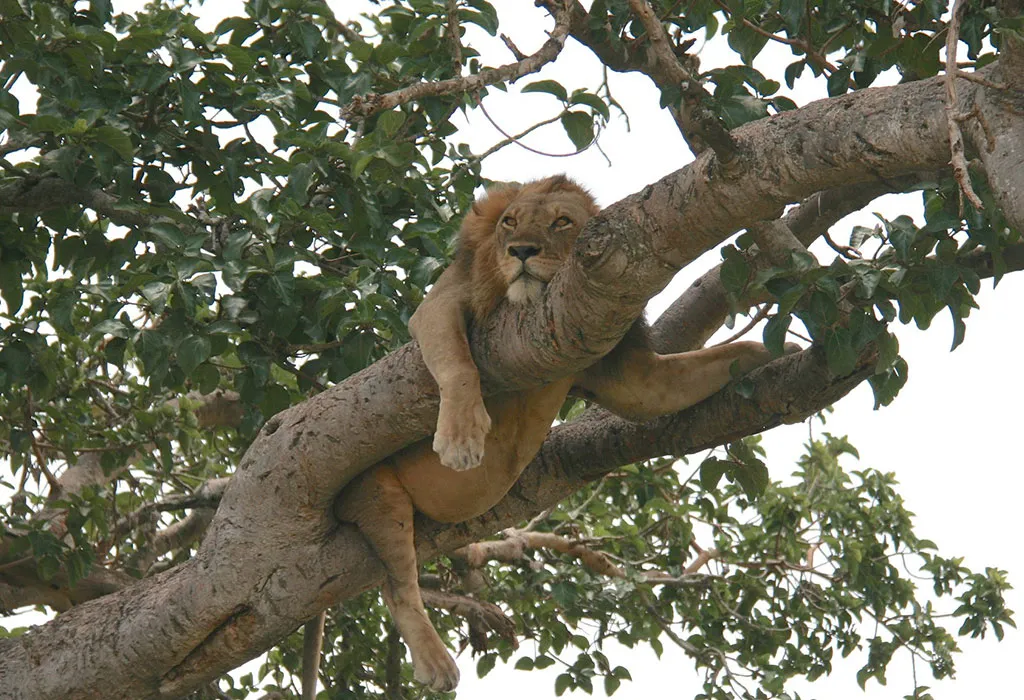
The appeal of tree-resting lions is not simply that a lion can climb. It is the visual contradiction of a heavy, ground-oriented predator stretched across a branch above the plains, often with paws hanging over either side. The scene changes the way many travelers think about lion behavior. It also rewards looking upward in a habitat where most safari attention is usually directed across the horizon. Ishasha tree climbing lions remain the signature wildlife search here.
Ishasha adds geographical logic as well as novelty. It can connect the central park with Bwindi, it offers a quieter atmosphere, and it creates variety inside a trip that might otherwise jump directly from savannah to rainforest. Travelers who want a combined southern-park experience can also examine Explore the Ishasha area and the Kazinga Channel. The strongest itinerary is not the one that promises a guaranteed lion in a tree; it is the one that creates enough time and context for the wildlife encounter to happen naturally. The same viewing principle applies to Ishasha Sector lions.
Ready to Look Up in Ishasha? Patient viewing gives tree climbing lions space to behave naturally.
Share your dates, group size and must-see wildlife. We can help shape a route with realistic game-drive time for Ishasha and smooth connections to gorillas or chimpanzees.
Start Planning My Lion Safari →
Email: info@ugandarwanda-safaris.com This context also shapes Queen Elizabeth National Park lions.
Final Planning Checklist for Tree Climbing Lions
Before booking, confirm how many nights are actually spent close to Ishasha, how many game-drive windows are planned, whether the vehicle is private or shared, and how the route connects to your next destination. Ask about park fees, meals, accommodation, vehicle and guide inclusions. If photography matters, confirm seating and luggage space. If traveling in a wetter period, ask about road conditions shortly before arrival. This is equally relevant to Ishasha Sector lions.
For a broader national-park comparison, the Best National Parks in Uganda guide helps place Queen Elizabeth NP within the wider safari circuit. For visitors building a Uganda lion safari around big cats, the existing Ultimate Tree Climbing Lions Guide offers another planning reference. Most importantly, arrive with patience: tree climbing lions are wild animals, and the search is part of the experience. A well-planned tree climbing lions Uganda safari should never promise a guaranteed sighting. When a pride finally appears above the savannah, the unusual posture, scale and setting make the wait feel worthwhile.