
Tracking Chimpanzee in Kyambura Gorge Uganda

Tracking Chimpanzee in Kyambura Gorge Uganda
Wildlife tracking guide • Queen Elizabeth National Park • Updated November 2026
Tracking Chimpanzee in Kyambura Gorge Uganda: Why This Gorge Is Different
Tracking Chimpanzee in Kyambura Gorge Uganda: Key Details
A chimpanzee call cuts across the forest, then vanishes behind a curtain of leaves. Above you, the grasslands of western Uganda stretch toward crater lakes and distant hills. Below, a steep, green ribbon of riverine forest holds one of the country’s most atmospheric primate walks. Tracking Chimpanzee in Kyambura Gorge Uganda is about this surprising contrast as much as the animals themselves. You descend from open savannah into a cooler world of tall trees, vines, roots, bird calls and moving shadows. The landscape changes within minutes, making the walk unusually memorable even before a chimpanzee appears.
Kyambura lies on the eastern side of Queen Elizabeth National Park, a major wildlife destination in the Albertine Rift. The gorge is often called the Valley of Apes, but it is important to understand what that name does and does not promise. A small, mobile chimpanzee community lives here, and locating it is a genuine wildlife search rather than a staged encounter. Guides interpret signs, listen for calls and adjust their approach to conditions. This guide sets realistic expectations, explains how the activity works and shows how to include it in a balanced Uganda journey.
Where Is Kyambura Gorge and What Makes Its Setting So Remarkable?
Kyambura Gorge cuts through an area of savannah and cultivated landscapes near the eastern edge of Queen Elizabeth. From certain viewpoints, its canopy looks like a long green seam stitched into the dry plains. The river has shaped a steep-sided corridor that shelters a habitat noticeably different from the surrounding grassland. Descriptions commonly place its depth at roughly 100 metres in sections, although the actual descent you make depends on the established trail and briefing point. Do not mistake a short distance on a map for an easy walk: a steep slope can demand more effort than a longer level trail.
The landscape helps explain why a Queen Elizabeth National Park itinerary can offer both savannah wildlife and primate tracking without moving to an entirely different region. On the plains, guests seek elephants, buffalo and antelope; down in the gorge, the highlights are chimpanzee behavior, forest birds and an intimate sense of enclosure. Travelers who enjoy geology, vegetation and ecological contrasts often value the journey as much as the eventual sighting. Bring a little patience to appreciate the forest rather than treating the descent as merely the quickest route to an animal photograph.

What Happens During Kyambura Gorge Chimpanzee Tracking?
A typical visit begins at the designated Uganda Wildlife Authority meeting point, where the ranger team checks arrangements and gives a safety briefing. UWA’s published management guidelines describe morning chimpanzee tracking beginning at 8:00 a.m. and afternoon tracking beginning at 2:00 p.m. Confirm the current reporting time and location when booking because logistics, weather and operational instructions may change. The ranger then leads the group down an established route, pausing frequently to listen for vocalizations and watch movement through the vegetation. There is no fixed distance to the animals because chimpanzees travel independently.
Once inside the forest, the pace varies. Some stretches demand careful footing over roots or loose soil; others allow comfortable walking while the guide explains feeding trees, territorial calls and social activity. You might hear chimps long before seeing them. A sudden series of pant-hoots can sound close yet come from a hidden slope. If the group locates chimpanzees, the ordinary viewing limit is one hour under UWA guidelines. That limit protects the animals and keeps visits manageable. Chimpanzee tracking experiences elsewhere in Uganda follow similar conservation principles, although the forest environment and likelihood of sightings differ.
How Likely Are You to See Chimpanzees?
The most useful answer is that sightings are possible, exciting and never guaranteed. Kyambura’s chimpanzees occupy a relatively restricted forest corridor, yet visibility can be difficult because the canopy is dense and the animals move quickly. They may feed high in trees, cross difficult ground or travel beyond the practical reach of visitors on a particular outing. A guide’s skill increases the chance of detecting activity, but no responsible operator should promise a face-to-face encounter. When comparing tours, be wary of precise success percentages unless they come with a clear source, observation period and method.
Set expectations according to your priorities. If your principal ambition is the strongest possible chimpanzee encounter, Kibale Forest National Park generally makes a more suitable dedicated tracking base thanks to its extensive forest and established primate tourism. If you are already enjoying Queen Elizabeth, Kyambura adds distinctive scenery and a compelling search without creating a separate multi-day detour. Birdwatchers, hikers and photographers may enjoy it even on a day when the apes remain hidden. Consider a second forest activity only if your schedule allows and your main objective is primate observation.

Let us help coordinate the right tracking date, lodge and park activities.
The Descent, Forest Floor and Climb Back Out
The most underestimated part of the experience is often the return climb. At the rim, the gorge looks dramatic but manageable; underfoot, soil can be slick, steps uneven and roots exposed. The outward descent may feel effortless compared with ascending when you are tired and warm. A moderate level of fitness, sensible pacing and confidence on irregular terrain are helpful. The activity is not a technical climb, yet it is more demanding than a flat nature walk or a vehicle-based safari. Visitors with knee problems, balance limitations or concerns about steep gradients should discuss the trail before securing a permit.
Wear footwear with reliable grip, choose socks that do not bunch and leave space in the day for unhurried movement. A walking stick may be useful if the ranger permits it; your guide can advise. Keep hands free at difficult points rather than attempting to film every step. Since forest conditions change following rainfall, no online description can guarantee a dry or gentle trail on your particular date. The same principle applies to the fitness preparation recommended for rainforest treks farther south: choose a pace you can maintain, communicate discomfort early and do not rush because others are walking faster.
Chimpanzee Behavior You Might Witness
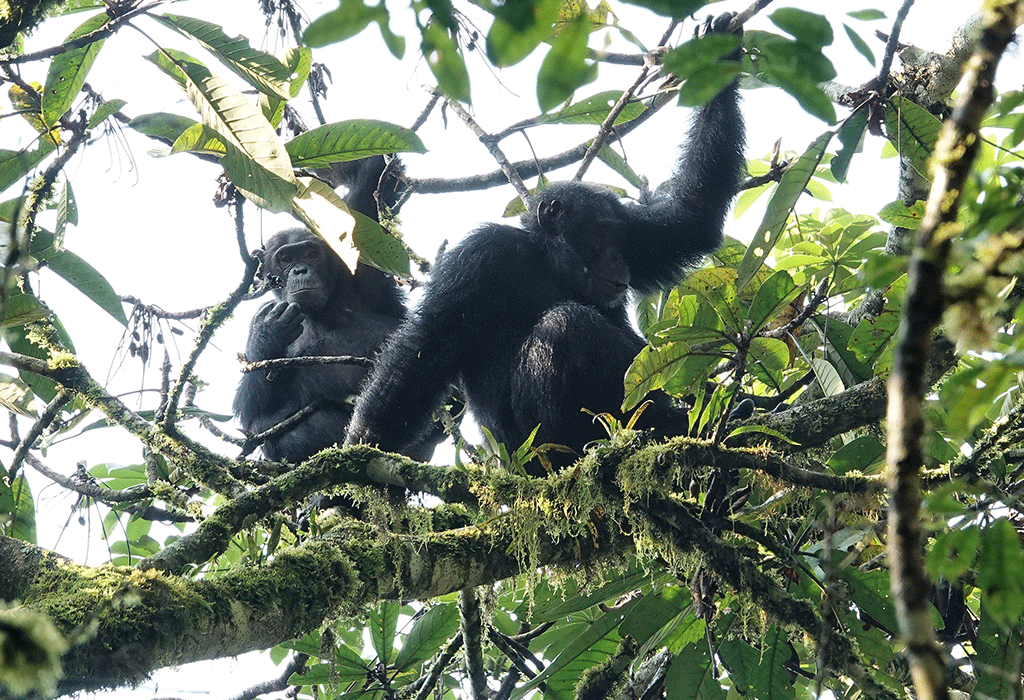
Chimpanzees are social great apes with sophisticated communication and changing group relationships. Depending on the animals’ location and activity, you might see an individual feeding, grooming a companion, moving purposefully along branches or resting beneath leaves. They can also be loud and energetic. Calls may build quickly as separated animals communicate, and a quiet forest can turn noisy without warning. Observing these behaviors is more satisfying when you understand that chimpanzees are not performing for visitors: they are continuing ordinary daily life while humans briefly watch from an appropriate distance.
Take time to look for the context rather than only the photograph. Is a chimpanzee selecting fruit, monitoring another animal or resting in shade? Does the group appear dispersed or gathered around a feeding tree? Your ranger can help explain what is visible without pretending to know every motive. Respect that a short observation never reveals the entire social history of the community. Chimpanzee behavior and biology make a useful topic to explore before travel, especially for families whose children are old enough to join a supervised primate trek.
Forest Birds, Monkeys and Other Wildlife Along the Trail
A wildlife day in Kyambura need not depend exclusively on one species. The forest canopy shelters birds that are less obvious from the surrounding plains, and patient visitors may hear several calls before seeing their owners. Watch for movement across branches, scan flowering trees and use binoculars instead of straining to identify distant shapes with the naked eye. The gorge and adjacent park landscape may also offer sightings of other primates, though which species you actually encounter varies by location and day. A respectful visitor enjoys these discoveries without approaching animals or leaving the ranger-led route.
For a wider wildlife combination, schedule an afternoon Kazinga Channel boat cruise after the tracking session if the timing works. The waterway between Lakes Edward and George is associated with hippos, waterbirds, and animals visiting the shore. A boat safari offers a gentle contrast to the physically active forest morning. Alternatively, a game drive can focus on open-country wildlife with binoculars and long lenses. Remember that neither a boat cruise nor a game drive is a substitute for the forest experience; combining them simply creates a richer picture of western Uganda’s ecosystems.

Permits, Age Rules and Booking Arrangements
Kyambura is a regulated wildlife activity, not a walk visitors should attempt on their own. Book through an appropriate operator or authorized channel and make sure your confirmation specifies Kyambura Gorge rather than a different chimpanzee location. The UWA guidelines identify Kyambura as a designated chimpanzee tracking entry point and set a minimum participation age of 12 years. Travelers with younger children should plan another supervised activity for the time when adults are inside the gorge. Keep booking evidence and identification accessible for the check-in procedure, and avoid relying on an informal arrangement made at the last minute.
Published prices have changed over time and prospective 2027 tariffs are reported inconsistently across travel sites. For that reason, confirm the current chimpanzee permit rules and exact amount for your nationality and dates directly with the Uganda Wildlife Authority or your licensed operator before paying. Ask whether park entrance, guiding, transport and any separate activity charge are included; historic UWA schedules priced the Kyambura activity separately from Queen Elizabeth entrance. The amount shown in an older article is not an offer or a guarantee. Obtain an itemized quotation and make sure the permit status is clearly explained before you commit to accommodation.
How Much Time Should You Allow?
Do not plan the day around an exact finish time. Forest tracking length depends on where the chimpanzees move, trail conditions, the speed of the group and operational decisions made by the ranger. UWA’s regular viewing limit is a maximum of one hour once chimpanzees are located; this is not the total duration of the walk. The approach, search, descent, return and briefing can together take several hours. Allow a generous morning or afternoon block rather than squeezing the experience between tightly timed transfers, meals and boat departures.
A sensible schedule builds in time for an early breakfast, getting to the meeting point, sorting equipment and resting after the climb. Arrange a packed meal or snacks for use before or after the forest visit, remembering that eating near chimpanzees is prohibited. If your lodge sits far away on the park’s opposite side, the transfer may be more disruptive than the walk itself. Share the exact lodge location with your driver and confirm road conditions the previous evening. Practical safari planning is often about these small logistical decisions rather than adding another headline attraction.
Let us help coordinate the right tracking date, lodge and park activities.
Best Time of Year for Tracking
Chimpanzee tracking can operate throughout the year, but seasonal rainfall strongly influences how comfortable the walk feels. June through August and December through February often bring comparatively drier conditions in many parts of western Uganda, although rain remains possible even in a favored travel window. Trails may be firmer and the descent easier to manage. During wetter periods, vegetation looks lush, the gorge can be especially atmospheric and fewer visitors may be on the broader circuit, yet wet soil increases the effort of climbing and descending.
Think about the whole itinerary rather than Kyambura alone. A traveler combining Queen Elizabeth with Bwindi gorilla tracking needs to consider mountain rainfall and road access as well as conditions in the gorge. Wildlife observation also varies with food availability and daily movements; no season ensures chimpanzees will be visible. Choose the period that matches your tolerance for mud, your accommodation budget and your other activities. If travel dates are fixed, good boots, flexible scheduling and realistic expectations usually matter more than chasing a supposedly perfect month.
What to Wear and Pack for the Forest
The ideal outfit is simple and protective: long trousers, a light long-sleeved shirt, strong closed walking shoes or hiking boots, and a breathable rain layer. Long clothing helps reduce scratches from vegetation and contact with insects. Neutral colors are practical in the forest; avoid clothing that rustles loudly or catches on branches. Carry drinking water for the overall activity, but follow ranger directions about when it is appropriate to drink. A small daypack keeps your hands free, while a dry bag or waterproof pouch protects your phone, identification and other valuables from a surprise shower.
Bring binoculars for birds, a camera you already know how to operate and sufficient batteries. In humid vegetation, repeated lens changes can introduce moisture, so a versatile lens may be more useful than an elaborate kit. Sunscreen and a hat serve the exposed approach to the gorge even though the forest itself is shaded. Insect repellent and any personal medicines belong in your bag. The primate trekking packing principles used for Bwindi also transfer well here, with particular emphasis on footwear grip and the weight you will carry uphill.

Photography Without Disturbing Chimpanzees
Chimpanzees can shift between sunlight and dark foliage in seconds. Avoid trying to force a perfect portrait from every brief view; watch the animal and use a modest burst only when an unobstructed moment arrives. A faster shutter speed helps capture motion, while a wider aperture or higher ISO may be necessary under the canopy. Check your equipment before entering the gorge so you do not spend precious viewing time searching through camera menus. Take a few establishing shots of the habitat as well; the unusual gorge landscape often tells a more complete story than a close-up alone.
Flash photography is not permitted around the chimpanzees, and visitors must maintain the separation directed by the ranger. Do not advance to clear branches, imitate calls or break away from the group to pursue a better angle. A telephoto lens allows photographs from a responsible distance without pressuring the animals. If visibility is limited, accept a memory rather than forcing the encounter. Much of the advice in wildlife photography on a Uganda safari applies here: manage light, observe behavior and let animal welfare determine the shot.
Safety, Health and Wildlife Etiquette
Wild chimpanzees are powerful animals and should never be approached as though they were habituated pets. Follow the ranger’s instructions immediately, stay with the group and keep your movements quiet. UWA guidance establishes a minimum viewing distance and limits time with the animals. Do not feed wildlife, leave rubbish, make deliberate chimpanzee calls or attempt to touch an animal. If a chimpanzee approaches unexpectedly, let the ranger manage the situation instead of moving toward it for a photograph. Rules may be adjusted by staff when animal behavior or terrain requires extra caution.
Great apes are vulnerable to human illnesses. If you have a contagious respiratory illness or feel unwell, disclose it before the activity rather than risk exposing chimpanzees and other visitors. Carry any prescribed medication and discuss mobility or health limitations with the operator in advance. A responsible chimpanzee conservation experience protects wildlife through visitor discipline as well as formal rules. Simple actions—keeping distance, respecting time limits and staying on the path—help limit stress and disturbance. The ranger’s judgment takes precedence over a visitor’s desire to complete a particular photograph or route.
Kyambura Gorge Versus Kibale and Kalinzu Forest
Three names regularly appear when planning chimpanzee tracking in Uganda: Kyambura, Kibale and Kalinzu. They are not interchangeable. Kibale is a large tropical forest and a well-known specialist chimpanzee destination; visitors often allocate more time there to focus on primates and nearby forest activities. Kalinzu Forest chimpanzee trekking provides another forest option in the wider Queen Elizabeth region, with its own operating procedures and entry arrangements. Kyambura is defined by the dramatic gorge, the small chimpanzee community and the convenience of pairing it with classic savannah wildlife viewing.
Choose according to what you would regret missing. If chimpanzees are the sole purpose of a Uganda trip, prioritize the option with the strongest established tracking program for your dates and budget. If you have only a few days for Queen Elizabeth, a Kyambura excursion can add variety without rearranging the entire route. It is also reasonable to visit both Kyambura and Kibale if you value different forest habitats, provided you do not assume either encounter is guaranteed. Uganda’s different chimpanzee trekking regions deserve comparison by terrain, transfer time, cost and the experience you want, not by marketing superlatives.

Let us help coordinate the right tracking date, lodge and park activities.
A Thoughtful Two-Day Queen Elizabeth Itinerary
Day one can focus on reaching the park without rushing. Travel from your previous overnight stop, check into a lodge positioned sensibly for the next morning and leave late afternoon for a relaxed game drive or scenic viewpoints if daylight and park rules permit. Take the opportunity to review your briefing location, permit confirmation and the condition of the access road. Dinner is a good time to agree on an early breakfast and prepare your forest bag. A well-paced Uganda safari itinerary usually works better than one packed so tightly that every activity depends on ideal driving conditions.
On day two, meet the ranger for the morning chimpanzee tracking activity. After returning, take lunch and allow time to recover before considering a Kazinga Channel launch cruise or a short game drive. If you have booked an afternoon tracking slot instead, reverse the emphasis: enjoy a relaxed morning activity and keep the later hours free for the gorge. Do not book nonrefundable connections immediately after the forest walk. A lodge near the park reduces fatigue and gives you breathing space when weather or wildlife movements extend the visit. This two-day pattern suits travelers who want both primates and savannah animals without turning every hour into a transfer.
Building a Longer Uganda Wildlife and Primate Circuit
With more time, Kyambura fits comfortably into a circuit that includes Kibale, Queen Elizabeth and Bwindi. A northern start near Kibale supports dedicated chimpanzee forest time, while Queen Elizabeth brings varied game drives, crater scenery and the Kazinga Channel. Continuing south toward Bwindi introduces mountain forest and gorilla trekking in Bwindi, another regulated great-ape experience with different age rules, permits and physical demands. Exact driving times depend on your accommodation choices, route, weather and park access, so build the trip around realistic travel days rather than distances quoted without context.
Travelers with five to ten days can also decide whether to add a rest day or second wildlife area instead of another long drive. Families might prioritize shorter transfers, while keen photographers may prefer additional mornings in the same park. The five-day gorilla and chimpanzee safari concept demonstrates how primate highlights can be linked, but the best plan depends on permit availability and the route you actually book. More destinations are not automatically better; enough time at each destination often delivers a calmer, more memorable holiday.
Getting There and Choosing Where to Stay
Most international visitors arrive through Entebbe and continue west by road or a combination of domestic flight and road transfer, depending on their overall schedule. Queen Elizabeth National Park spans a large area, and two lodges described as being near the park can still be far apart in driving time. When booking Kyambura, choose accommodation with access to the correct briefing point and confirm the exact pickup time. Road surfaces vary, and rainy conditions can slow transfers; a capable driver and a vehicle suitable for the planned route are worthwhile investments.
Accommodation ranges from simple guesthouses to comfortable tented camps and high-end safari lodges, but price alone does not determine suitability. Ask about early breakfast, packed meals, hot water, road access and the reliability of morning departures. A beautiful lodge on the wrong side of the park may add an unnecessary early start. Couples interested in a relaxed Uganda safari for couples may enjoy an additional night near the park; families may prefer fewer lodge changes. Select the place that supports your itinerary rather than designing every activity around an attractive marketing photograph.
Other Activities to Combine With Kyambura
A gorge walk is one chapter of Queen Elizabeth’s story. Game drives in suitable areas may reveal elephants, buffalo, Uganda kob and predators, though sightings are unpredictable. The Kazinga Channel is valued for wildlife along its banks and the chance to observe aquatic life from a boat. The park’s wider landscapes also include crater features, escarpment views and grasslands that look completely different from the gorge forest. In southern sections, visitors sometimes seek the tree-climbing lions of Ishasha, but their movements cannot be scheduled around a tour brochure.
Choose the combination that matches your energy. A strenuous forest morning followed by a seated boat trip makes a satisfying contrast; stacking a long cross-park transfer afterward may not. Birdwatchers could spend more time at forest edges or lake margins, while travelers with a keen interest in savannah mammals might arrange an additional early game drive. If you are considering a customized Uganda safari, use your priorities to decide the balance instead of purchasing every available excursion. A flexible schedule lets your guide adapt to changing weather, road conditions and actual wildlife activity.
Traveling Responsibly in and Around Kyambura
Responsible travel starts with respecting the forest as habitat rather than treating it as a backdrop. Remain on established routes, carry out every piece of litter and avoid collecting plants or disturbing nesting birds. Follow all ranger instructions about chimpanzee distance, viewing limits and group behavior. Never pressure a guide to approach an animal more closely than conservation rules allow. The narrowness of the forest corridor makes its ecological context especially visible: the health of the landscape outside the gorge matters to the wildlife living inside it.
Look for opportunities to support local livelihoods through legitimate accommodation, guides, crafts and other community enterprises, but do not assume a particular purchase automatically funds conservation unless the arrangement is documented. Ask operators how they work with local people and what their conservation claims actually mean. Ethical primate tourism principles extend beyond gorillas to chimpanzees: transparent permits, small-group discipline, a respectful viewing distance and honest expectations all matter. Your best contribution as a visitor is to follow the rules consistently and choose operators who take them seriously.
Let us help coordinate the right tracking date, lodge and park activities.
Common Mistakes to Avoid When Planning
The first mistake is assuming chimpanzee sightings are certain because the outing is marketed as tracking. The second is underestimating the climb out of the gorge. Other common missteps include bringing slippery shoes, booking a lodge without checking transfer distance, ignoring age restrictions and relying on permit prices copied from an old blog. Another easily avoided problem is scheduling a boat departure or long road transfer too close to the expected finish of the tracking activity. Give the forest the flexibility it deserves, and ask clear questions before paying.
Some travelers also confuse Kyambura with Kibale when arranging chimpanzee permit bookings. An activity confirmation should identify the precise protected area, date and visitor category, not simply say chimpanzee trekking in Uganda. Finally, do not prioritize the camera over the ranger briefing. A safe, unhurried visitor tends to notice more, and a disappointing photo is far less important than a respectful wildlife encounter. Keep expectations grounded and the wider safari can still be rewarding even if the chimpanzees choose to remain hidden.

Practical Questions to Ask Before You Book
Start with the essentials: Is my requested tracking date available? Which visitor category applies to the permit? What is the full price, including park entry, guiding, transfers and any compulsory charges? Where must I report, and when? Is a morning or afternoon session being requested? What happens if I am ill or unable to negotiate the trail? These questions help distinguish a genuine confirmed arrangement from an optimistic itinerary draft. They are particularly important if a booking agent is coordinating several parks and multiple permits for the same trip.
Ask also how far the lodge is from the reporting point, whether the driver remains available during tracking and what the cancellation terms say. When reviewing chimpanzee tracking and habituation costs, check that a habituation activity in another park is not being confused with standard Kyambura tracking. Different experiences have different rules, durations and access arrangements. A trustworthy supplier should answer these questions plainly without insisting that a wildlife sighting is guaranteed. Keep copies of confirmations so that last-minute logistical adjustments do not become expensive surprises.
Frequently Asked Questions About Kyambura Chimpanzee Tracking
Can I track chimpanzees at Kyambura year-round? The activity is generally offered throughout the year, subject to operational conditions. Wet weather can change the difficulty of the descent, and UWA or your operator should confirm your particular date. Choosing the best season for chimpanzee tracking is a question of comfort and the wider itinerary, not a guarantee of sightings.
How old must I be? UWA’s published chimpanzee tracking guidelines set a minimum age of 12 years. Check current conditions at booking, and arrange age-appropriate activities for children who cannot join the forest walk. Do not assume the mountain gorilla age rule is identical.
How much time do I spend with the chimpanzees? Under UWA’s ordinary tracking rules, visitors have up to one hour with the animals after locating them. Searching and walking can take much longer. The entire activity should be treated as a flexible half-day commitment rather than a timed performance.
Is the trek suitable for beginners? Some reasonably active first-time hikers manage it well, but the steep entry and return can be demanding. Discuss your fitness and mobility frankly with the guide before the descent; there is no merit in hiding a limitation that could affect your safety.
Can I combine tracking with gorillas? Yes, on a multi-day route that accommodates the distance, permits and rest. Uganda gorilla and wildlife journeys commonly connect several western destinations, but the order should be built around confirmed dates and practical transfers.
Are photographs allowed? Photography is generally possible under ranger instructions, but flash is prohibited around chimpanzees. Do not leave the group or approach an animal to secure a better frame. Keep equipment quiet and ready before the encounter.
Final Advice: Make the Gorge Part of a Balanced Safari
Tracking Chimpanzee in Kyambura Gorge Uganda rewards visitors who arrive curious about the whole forest, not only a guaranteed ape portrait. Its greatest strength is the striking change from grassland to shaded riverine habitat and the possibility of observing wild chimpanzees with a trained ranger. Plan for steep paths, variable tracking time and the possibility of no sighting. Reserve through an authorized channel, confirm the current tariff and protect the animals by following the viewing rules. Done thoughtfully, the experience adds a distinctive dimension to a Queen Elizabeth safari.
Pair the gorge with the activities that matter most to you, whether that means a river cruise, careful birdwatching, open-country game drives or a continuing journey toward Kibale and Bwindi. The best itinerary will be neither the longest nor the busiest; it will leave enough space for the unexpected. Consider working with a local specialist who can coordinate park timing and lodging without making unrealistic promises. That way, the gorge becomes a meaningful part of your story in Uganda rather than a hurried stop between destinations.
Planning note: Confirm permits, park entrance fees, age rules, reporting times and any updated conservation tariffs with Uganda Wildlife Authority or your licensed safari operator before traveling. Wildlife sightings are never guaranteed.


