How to Support Community-Based Tourism Organizations

How To Support Community-Based Tourism Organizations
How to support Community-Based Tourism Organizations. Community-based tourism (CBT) refers to a variety of tourist-host interactive activities. These types of activities generate economic and social benefits for the host communities. CBT enables rural communities to participate in tourism development to supplement their household incomes. This is made possible by the formation of Community-based organizations among the host communities.
There are several ways through which one can show his/her support for community-based Tourism organizations.
One of the most prominent ways is through visiting these communities.
The tourism activities within these communities are a direct source of revenue for these organizations. In the case of Uganda, these may include the Bigodi wetland walk near Kibale National Park by KAFRED. The communities use the fees they generate from such activities to maintain the smooth running of conservation-based activities. Therefore, you should not overlook an itinerary with such an activity, as it is one of the ways you can support these organizations. In case you have an interest in the activity but the itinerary you have doesn’t have it, you can contact your tour operator, as he can help to advise you or add it to the itinerary.
Visiting national parks.
In some parks like Kibale National Park, visiting is one of the ways to support these communities. This is so because the park gives part of its revenue(compulsory) to the communities to develop their conservation projects. So, when you visit both a national park and go for a community-based tourism activity, it’d be a double effort you have made to support that Community-based tourism organization.
Supporting their eco-friendly lodges, such as the ecolodges.
Havens Lodge and Buhoma Community Rest Camp in Bwindi Impenetrable National Park are the perfect examples of such. Buhoma Community Development Association, a CBT organization in Bwindi, built these ecolodges. The employees are well-trained local people, except in cases when there’s a need for expertise, then the organization can employ from outside the community. Thus, booking and staying in such lodges is a way of supporting those organizations.
Purchasing souvenirs from the organizations.
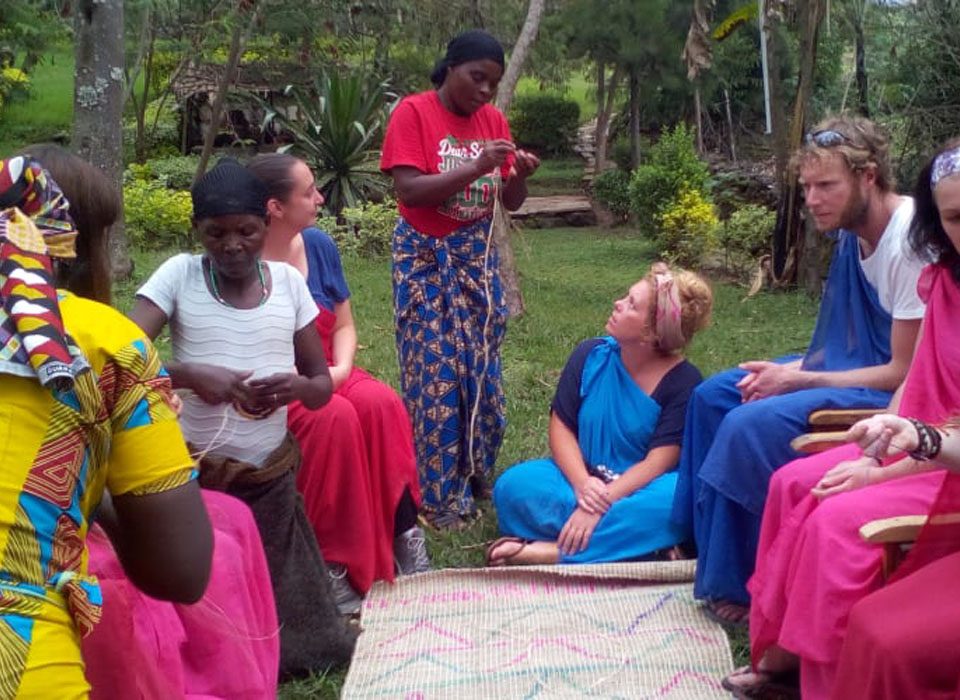
These organizations have souvenir shops that they use to support the women and locals who are official members of the organization. These are usually handmade materials like hats, scarfs, wooden carvings of animals, and many others. The local people make them from local materials like papyrus. The locals are always trained and monitored to harvest in an eco-friendly way, meaning there is no risk of wastage and environmental degradation.
Donations
Donations are also one of the ways through which one can support these organizations. This method applies to all organizations of such a kind. Whenever you have visited any of those organizations and feel like supporting or appreciating the work the organization is doing, you can voluntarily decide to donate some funds so that they can keep up with the conservation work they are doing.
Why do many tourists have an interest in community-based tourism organizations?
The main reason why tourists are interested in Community-based tourism organizations is because of the benefits that these organizations bring to their respective communities. Below are some of the benefits;
- Cultural conservation
- Sustaining local culture for future generations
- Cultural conservation
- Employment for locals
- Bridging gaps between tourism resource owners/managers and the local people
- Diversifying economic activity in a community
- Supporting the movement of good tourism
You will help create these benefits by visiting the communities directly. You can easily observe the local communities once you visit them by yourself. Are you interested in community-based tourism activities, and would you like to take part in these activities? You can book with us for the best of what you need, be it community tourism, gorilla trekking, wildlife safaris, chimpanzee trekking, and so on.