
The Serengeti Photographic Safari offers an unparalleled opportunity to capture the breathtaking beauty and diverse wildlife of this iconic landscape. Participants will engage in guided excursions, led by experienced professionals who are adept at maximizing photographic potential in various environments. This safari not only emphasizes the artistry of photography but also fosters a deeper understanding of the Serengeti’s ecosystem. Each moment spent in this stunning setting is designed to inspire and enrich the photographic experience.
A Serengeti photographic safari differs from a conventional game-viewing trip because the day’s decisions are shaped by photography as well as wildlife viewing. Early starts can take advantage of softer light, productive sightings may deserve more time, and vehicle positioning matters when a photographer is working with a long lens, a moving subject or a complex background. The Serengeti offers an extraordinary range of subjects—from lions and cheetahs to immense wildebeest herds, elephants, giraffes, birds and expansive savannah landscapes. This safari can be tailored around the season, the wildlife you most want to photograph and your level of photographic experience.
Why the Serengeti Is Exceptional for Wildlife Photography
The Serengeti combines abundant wildlife with varied habitats and enormous visual scale. Open grasslands can produce uncluttered backgrounds for cheetahs and plains game, while kopjes and river systems add structure to images of lions, leopards and other resident wildlife. The changing seasons alter both the landscape and the distribution of animals, so a photographic itinerary should be designed around the pictures and behaviours a traveler hopes to pursue.
Photography here is not limited to tight animal portraits. Dust illuminated by low sun, storm clouds above the plains, giraffes crossing an open horizon, a lion resting on granite and thousands of wildebeest moving through the landscape can all become compelling Serengeti photographs. The strongest trips leave enough flexibility to respond to those conditions rather than treating every game drive as a race between sightings.

What Makes a Photographic Safari Different?
| Regular wildlife safari | Photography-led safari |
|---|---|
| Broad game viewing | Game viewing shaped around photographic opportunities |
| May move frequently between sightings | More time can be spent with a productive subject |
| Standard seating priorities | Vehicle space and camera access receive greater attention |
| Wildlife visibility is the main goal | Light, background, subject direction and behaviour also matter |
| Conventional drive schedule | Early and late light may receive greater emphasis |
A photographic safari improves the conditions in which photographers work; it cannot control nature. Particular species, hunts, river crossings and other behaviours should never be presented as guaranteed.
Wildlife to Photograph in the Serengeti
The Serengeti’s photographic value comes from the diversity of subjects and the possibility of showing animals within a recognizable East African landscape.

Lions
Prides, cubs, territorial males, kopjes and low evening light can support portraits, behaviour studies and wider environmental frames.

Leopards
Leopard photography rewards patience. Trees and riverine habitats can produce both intimate portraits and images that reveal the cat’s environment.

Cheetahs
Open plains can give cheetahs clean backgrounds and room for behavioural, family and movement photography.

Wildebeest & Zebra
Herds allow photographers to explore movement, dust, repetition, compressed telephoto scenes and vast landscape compositions.

Elephants & Giraffes
Large mammals work particularly well in environmental photographs where sky, grassland, trees and scale become part of the story.

Birds
Raptors, vultures, ostriches, secretary birds and many smaller species add another dimension for photographers carrying longer lenses.
Great Migration Photography
The Great Migration is a moving ecological system rather than a single event. Depending on rainfall and grazing, photographic opportunities can include calving on the southern plains, columns of animals moving through the ecosystem, predator activity and—during the appropriate northern season—possible Mara River crossings.
Calving and predator activity
Southern plains can become particularly compelling when newborn wildebeest, green landscapes and predators coincide. This is a very different visual experience from the dry northern migration season.
Mara River crossings
Crossings can produce intense action, but they are unpredictable. A responsible itinerary provides time in the correct region without promising that a crossing will happen on a particular day.
Think beyond the crossing
Some of the strongest migration images can be quieter: lines of wildebeest under a huge sky, dust hanging over moving herds, zebra patterns or predators watching the plains.

Best Places for Photography in the Serengeti
Central Serengeti & Seronera
Strong year-round interest for resident wildlife and predators. River systems, open grassland and kopjes provide varied backgrounds for lions, leopards, cheetahs and plains game.
Northern Serengeti
Particularly important when migration herds are in the north. Kogatende and surrounding areas can offer herd, predator and river-environment photography.
Southern Serengeti & Ndutu Ecosystem
Associated with green-season and calving photography when conditions bring herds onto the short-grass plains. Geographic boundaries should be considered carefully when planning permits and accommodation.
Western Corridor
A different mix of riverine habitat, woodland and plains, with seasonal migration interest and opportunities to create images distinct from the classic open central landscape.
Best Time for a Serengeti Photographic Safari
There is no single best month for every photographer. The right timing depends on whether the priority is calving, migration, river activity, resident predators, green landscapes or lower visitor density.
| Period | Likely focus area | Photographic interest |
|---|---|---|
| Jan–Mar | Southern ecosystem | Calving, predators, young animals, green plains |
| Apr–May | Central / western areas | Lush landscapes, dramatic skies, seasonal movement |
| June | Central / western movement | Herd movement, predators, changing dry-season conditions |
| Jul–Oct | Northern Serengeti | Migration herds and possible Mara River activity |
| Nov–Dec | Central / southern movement | Short rains, greener landscapes and shifting herds |
Migration timing varies with rainfall and grazing; seasonal descriptions should be treated as planning guidance, not a guarantee of herd location.
Suggested 9-Day Serengeti Photographic Safari Itinerary
This sample itinerary emphasizes Central and Northern Serengeti. It should be adapted to the travel month and current wildlife conditions.
Day 1 – Arrive in Arusha
Arrival, safari briefing and time to prepare cameras, batteries, memory cards and luggage before entering the field.
Photography focus: equipment preparation and trip briefing.
Day 2 – Arusha to Central Serengeti
Travel to the Serengeti by the selected routing, followed by the first photography drive when timing permits.
Photography focus: landscapes, first wildlife encounters and evening light.
Day 3 – Central Serengeti Big Cats
Use the cooler morning hours to search productive habitats for predators and remain flexible when a sighting develops into interesting behaviour.
Photography focus: lions, leopards, cheetahs, portraits, behaviour and kopjes.
Day 4 – Wildlife Behaviour & Storytelling
A second full day in Central Serengeti creates time to move beyond species collecting and work on behavioural sequences and environmental photographs.
Photography focus: behaviour, interaction, negative space and golden-hour images.
Day 5 – Central to Northern Serengeti
Move north while using the changing habitats as photographic subjects in their own right.
Photography focus: landscape transitions, plains game and seasonal herd movement.
Day 6 – Northern Serengeti
Explore productive northern areas according to current conditions rather than following a rigid route.
Photography focus: wildebeest, zebra, predators, river environments and migration landscapes.
Day 7 – Migration Photography
Allow a full day for patient observation. River activity may be possible in season but cannot be scheduled or guaranteed.
Photography focus: action, herd patterns, dust, environmental frames and predator interaction.
Day 8 – Final Full Photography Day
Use knowledge gathered during previous drives to prioritize subjects, habitats or techniques that deserve additional time.
Photography focus: portfolio gaps and priority species.
Day 9 – Serengeti to Arusha
Final photography where flight or road schedules allow, followed by onward travel or an extension elsewhere in East Africa.
Extension ideas: Ngorongoro, Tarangire or gorilla trekking in Uganda or Rwanda.
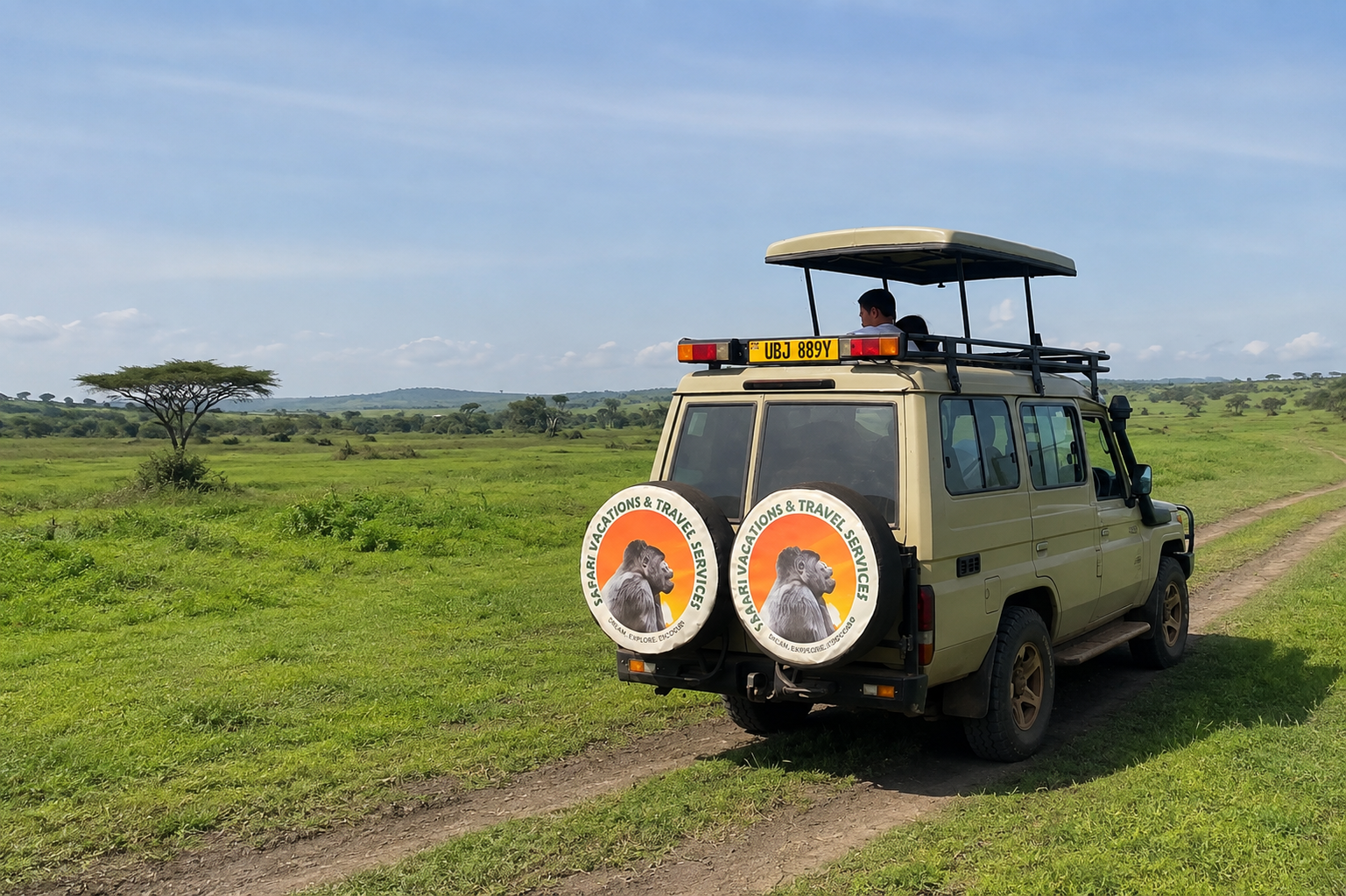
The Photographic Safari Vehicle
Vehicle design can influence a photographer’s experience almost as much as camera equipment. The exact vehicle offered should be described transparently: maximum photographers, seating configuration, roof and window access, storage for camera bags, support for long lenses, charging options and whether bean bags are supplied.
For a private photography trip, the guide should also understand that positioning is about more than getting close. Subject direction, background, light and the likely movement of an animal all matter—and positioning must remain within park rules and avoid disturbing wildlife.
Before booking, confirm
Maximum guests • row allocation • window access • roof configuration • bean bags/support • charging • camera-bag storage • private vehicle availability.
Camera Gear for a Serengeti Photographic Safari
70–200mm
Useful for larger animals, close encounters and environmental compositions where some habitat should remain in the frame.
100–400mm
A highly versatile general wildlife range, balancing reach with flexibility when subject distance changes quickly.
150–600 / 200–600mm
Helpful for birds, distant subjects and tighter portraits when greater reach is needed.
Wide & standard lenses
Useful for landscapes, camps, vehicles, dramatic skies and large herds where the environment is part of the photograph.
Batteries & storage
Carry sufficient batteries and memory cards, and consider a duplicated backup workflow for important files.
Dust protection
Minimize unnecessary lens changes in dusty conditions and carry appropriate cleaning and protective equipment.
Camera Settings for Serengeti Wildlife Photography
There is no universal Serengeti setting. Shutter speed, aperture and ISO should respond to subject movement, available light, focal length and the creative result you want.
Stationary wildlife
When an animal is resting, photographers can often work with more moderate shutter speeds while paying close attention to eye sharpness and depth of field.
Walking and running subjects
Increase shutter speed as movement becomes faster, use an appropriate continuous autofocus mode and leave enough room in the frame for the animal’s direction of travel.
Birds in flight
Fast shutter speeds and responsive subject tracking become more important, especially with long focal lengths.
Low light
Rather than allowing shutter speed to fall too far for a moving animal, raising ISO can be the better compromise. Exact limits depend on the camera and intended output.
Backlighting and dust
Low sun can create rim light, silhouettes and glowing dust. Exposure should be chosen for the intended mood rather than following a single formula.
River-crossing action
When action happens, prioritize a shutter speed capable of rendering the motion as intended and maintain focus discipline as animals overlap.
Ethical Wildlife Photography
A strong image should never depend on pressuring an animal. Photographic drives should respect park regulations, appropriate distances and wildlife movement. Guides should not chase animals, obstruct routes or disturb resting, hunting, feeding or breeding behaviour for the sake of a photograph. Crowded sightings also require restraint: sometimes the responsible photographic decision is to wait, reposition legally or leave the sighting.
Accommodation and Safari Pricing
Where you stay matters
For photographers, camp location affects departure times and how much of the best light is spent driving to productive areas. Seasonal camps can be useful when an itinerary follows wildlife movement, while permanent lodges may offer different levels of comfort and infrastructure.
When selecting accommodation, consider charging facilities, safe camera storage, travel time to game-drive areas and the season in which the camp operates.
What determines the price?
Season, trip length, accommodation standard, private vehicle arrangements, internal flights, group size and route all affect cost. Publish a genuine starting price or realistic range once the operating details are confirmed rather than inventing a figure for SEO.
Combine Serengeti Photography with Gorilla Trekking
A wider East African photographic journey can contrast the open savannah of Tanzania with the forest environment of mountain gorillas in Uganda or Rwanda. The photographic challenges are very different: long-lens wildlife and expansive landscapes in the Serengeti versus closer primate portraiture, dense vegetation and lower light in the forest. For photographers who want a broader wildlife portfolio, the combination can create a compelling progression from big cats and migration subjects to great apes.
Explore Safari Vacations’ existing East African itineraries at Uganda Rwanda Safaris and ask for a tailor-made Tanzania and gorilla extension.
Serengeti Photographic Safari FAQ
Is the Serengeti good for wildlife photography?
Yes. Its combination of predators, plains game, seasonal migration, birds and open landscapes supports everything from tight wildlife portraits to environmental and behavioural photography.
What is the best month for photography in the Serengeti?
It depends on the subject. Southern green-season and calving photography differs from northern migration photography, while Central Serengeti can provide strong resident wildlife opportunities across much of the year.
Which part of the Serengeti is best for photography?
Central Serengeti is valuable for resident wildlife and predators, the north becomes particularly important during appropriate migration months, and the southern ecosystem is notable around the calving season.
What lens should I take?
A flexible telephoto such as a 100–400mm-class lens can cover many situations. Longer lenses can help with birds and distant subjects, while a 70–200mm or wider lens is valuable for close wildlife and environmental compositions.
Are Mara River crossings guaranteed?
No. Herd movement and crossings are natural events influenced by rainfall, grazing and animal behaviour. An itinerary can put you in an appropriate region and season, but cannot guarantee a crossing.
Can beginners join a photographic safari?
Yes, when the safari is designed to accommodate different experience levels. Familiarity with basic camera controls before departure will help a beginner get more from time in the field.
Can the Serengeti be combined with gorilla trekking?
Yes. A tailor-made East African itinerary can combine Tanzania’s savannah wildlife with gorilla trekking in Uganda or Rwanda, subject to permits, flights and the desired trip length.
Plan Your Serengeti Photographic Safari
Build the trip around the season, wildlife subjects, photographic experience and accommodation style that matter to you. A tailored itinerary can focus on resident predators, migration photography, landscapes, birds or a wider East African journey combining the Serengeti with primate photography.