Rwenzori Mountains National Park: 7 Ultimate Stunning Views

SONY DSC
Rwenzori Mountains National Park in Uganda
At first light, clouds rise from the valleys of western Uganda and briefly uncover a world of dark forest, shining waterfalls, enormous plants and distant ice. This is Rwenzori Mountains National Park in Uganda, one of Africa’s most unusual mountain destinations. Here, a trek is not simply a race toward a summit. It is a journey through remarkable changes in vegetation and weather, from cultivated foothills and tropical forest to moss-covered heath, boggy moorland and an alpine landscape that feels far removed from the equator.
The range is often called the Mountains of the Moon. Its highest point, Margherita Peak on Mount Stanley, reaches 5,109 metres and is generally recognised as Africa’s third-highest summit. Yet the mountains offer much more than one demanding ascent. Travelers can choose guided foothill walks, forest birding, two- or three-day mountain experiences and longer journeys deep into the upper valleys. Choosing the right route, season, equipment and pace makes a much greater difference than arriving with a particular summit photograph in mind.
This guide explains what makes the park special, which trails suit different travelers, how to approach the mountain safely, what to budget for and how to combine a visit with the wildlife attractions of western Uganda. It is written for visitors who want an inspiring trip without glossing over steep ascents, wet ground, rapidly changing conditions or the value of experienced local guides.
Why Rwenzori Mountains National Park Is So Extraordinary
The Rwenzori range rises along the Uganda–Democratic Republic of Congo border, above the Albertine Rift. Rwenzori Mountains National Park protects roughly 996 square kilometres of this landscape and was inscribed on the UNESCO World Heritage List in 1994. UNESCO recognises its dramatic beauty and exceptional biodiversity, especially the layered vegetation zones and remarkable Afro-alpine plants. These are not volcanic cones like the Virunga mountains. The Rwenzoris form a rugged block of mountains with sharp ridges, glacial valleys and complex drainage.
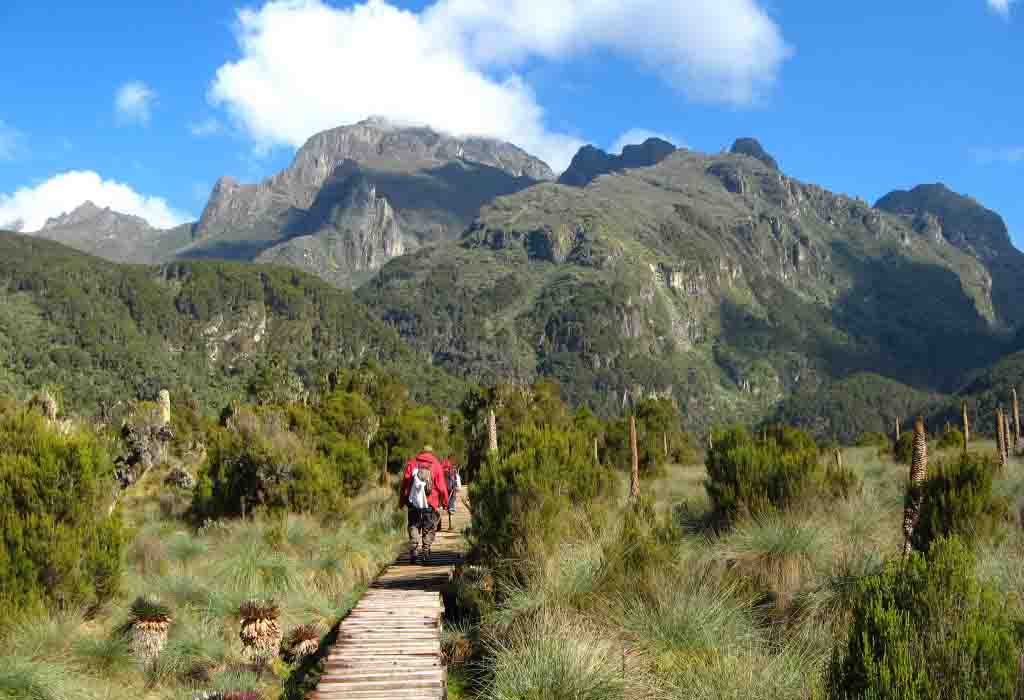
The reward for visiting is the sensation of moving between distinct worlds. Below the misty summits, trees drip with moss and the forest resonates with birds. Farther up, giant heathers, lobelias and groundsels create an almost prehistoric scene. Clear mountain pools and waterfalls interrupt stretches of peat and grass. At the highest elevations, rock, snow and shrinking glaciers reveal how powerful and fragile this ecosystem is. Even without reaching the top, hikers encounter scenery very different from Uganda’s savannah parks.
The mountains also hold deep cultural importance. Communities living along the foothills, especially Bakonzo communities, have longstanding connections with the landscape, its rivers and its agricultural seasons. Responsible itineraries recognise that a successful visit depends not only on mountain guides and porters but also on local hospitality, conservation and respect for community life.

Who Should Visit Rwenzori Mountains National Park?
Where the Mountains Are and How to Get There
Most travelers approach the Ugandan side of the range through Kasese, a town west of Kampala and south of Fort Portal. The two best-known starting areas for longer expeditions are Nyakalengija, associated with the Central Circuit, and Kilembe, associated with the Kilembe route. They are different trailheads, so your accommodation and transfer arrangements should match the route booked. Reaching the wrong starting point on the morning of a trek can create unnecessary delays.
Visitors arriving internationally generally travel through Entebbe International Airport before continuing by road or arranging a suitable domestic connection and onward transfer. Road journeys across western Uganda are scenic, but actual travel time depends on the chosen route, traffic, weather and roadworks. Leave a generous buffer between an international flight and your first mountain day, particularly when carrying specialist equipment or joining a fixed departure. The park is not somewhere to arrive exhausted and immediately begin a serious ascent.
Fort Portal makes a pleasant stop on some road itineraries, while Kasese provides a practical base for buying small supplies and meeting the guiding team. Ask whether your quote includes airport collection, hotel nights before and after hiking, transfers to the precise trailhead, and transport after the descent. A carefully arranged transfer is worth more than saving a little money on an inconvenient last-minute connection.
The Central Circuit: Classic Valleys and Mountain Huts
The Central Circuit is one of the traditional Rwenzori hiking trails, usually approached from the Nyakalengija or Mihunga side. The trail enters forest before climbing toward mountain huts and upper valleys. Places commonly associated with the route include Nyabitaba, John Matte, the Bujuku valley, the Scott Elliott Pass area, Kitandara Lakes and Guy Yeoman. Exact hut use and stage order can vary, so treat online route diagrams as an introduction rather than a substitute for your operator’s current itinerary.
This route is memorable for the slow transformation of the mountain landscape. The lower sections can feel warm and green, while higher days may involve slippery boardwalks, deep bog, exposed rock and cold wind. Hikers learn quickly that distance on a map is a poor predictor of effort. A short section across waterlogged ground may take longer than expected, and even simple descents can be demanding after days of climbing. Guides constantly adapt the pace to weather and group condition.
A classic Central Circuit journey can be undertaken without committing to a technical summit. This makes it appealing to strong walkers who want high mountain scenery rather than glacier climbing. Travelers planning more ambitious routes should request a day-by-day altitude profile, clear information about included summits, and a description of equipment requirements. The name of the circuit alone does not tell you whether a package includes a glacier crossing or a technical ascent.

The Kilembe Route: Forest, Valleys and High Ridges
The Kilembe route approaches the mountains from the southern side near the former mining town of Kilembe. It is popular with hikers who appreciate a sustained journey through vegetation zones, dramatic river valleys and wide-ranging mountain views. Routes may include several camps at different elevations and access to high points or a Mount Stanley summit program, depending on duration and operator. Like the Central Circuit, the Kilembe route should be booked through a guide team familiar with current conditions.
On this approach, the landscape changes repeatedly. One day may pass through forest where roots and wet leaves demand careful footing; the next may cross open moorland dotted with giant plants. As elevation increases, clear skies can quickly give way to mist. Hikers who keep their camera dry and walk at a steady, manageable rhythm often enjoy the route far more than those trying to cover ground quickly. Mountain weather rarely respects a tight photographic schedule.
When comparing the Kilembe route with the Central Circuit, ask about the number of trail days, hours of walking, sleeping arrangements, technical sections, emergency procedures and the conditions under which a summit attempt would be abandoned. The most suitable route is not necessarily the one advertised as shortest. It is the route that gives you the safest and most satisfying experience for your ability and goals.
Short Treks and Day Walks for Non-Climbers
You do not need to reserve a week to appreciate the Rwenzori landscape. Guided forest walks near the foothills introduce visitors to richly layered vegetation and the sounds of mountain birds. Short excursions may also incorporate waterfalls, village encounters and viewpoints where the upper ridges appear between clouds. These experiences suit travelers combining Rwenzori Mountains National Park with several other destinations on one Uganda holiday.
Two- or three-day programs can offer an introduction to mountain huts, rainforest trails and higher viewpoints, with route choice dependent on local arrangements. A shorter program should be described precisely: which trail is used, what altitude it reaches, where visitors sleep, and what happens during poor weather. A listing called a 'mountain climbing adventure' does not automatically mean a technical ascent or access to snow. Read the actual itinerary rather than relying on a promotional name.
Short treks work particularly well for people interested in landscape photography, botanical life and a sense of remoteness without the additional risk of a glacier ascent. They can also be a valuable first test before committing to a much longer African mountain expedition. Even on a day walk, however, bring waterproof clothing, drinking water, suitable footwear and a little patience. The lower paths can be slippery after rain, and guides may change a route to protect safety or trail conditions.
Climbing Margherita Peak: What Makes It Different
A Margherita Peak climb is a serious mountaineering objective, not merely an extended forest hike. The summit sits on Mount Stanley at 5,109 metres. Approaching it typically involves several days of ascent, high-altitude acclimatisation and demanding terrain. The upper mountain can require rope techniques, crampons and other glacier or steep-terrain equipment, depending on current route conditions. Operators should assess experience rather than treating every fit traveler as automatically ready.
Uganda Wildlife Authority announced a resumption of Margherita hiking in August 2024 after safety work associated with a glacier crevasse. That historical announcement does not guarantee present-day route access or conditions. Glacial terrain changes, and guides must follow the latest park instructions. Ask your operator for the present status of the intended summit line, required technical gear, guide qualifications and weather-related turnaround rules before committing money to a peak-specific program.
Many climbers sensibly allow more days than the minimum advertised route, especially when acclimatisation or poor visibility may affect progress. Even with preparation, no responsible guide can guarantee the summit. The better measure of success is returning safely after experiencing the landscape. For visitors drawn chiefly to giant plants, alpine lakes and mountain views, a non-technical high trek may offer comparable enjoyment without the additional hazards of technical glacier travel.

The Remarkable Vegetation Zones
The plant life is one of the strongest reasons to visit Rwenzori Mountains National Park. Lower elevations support montane forest with tall trees, ferns, vines and mosses. Higher up, bamboo and heather communities become prominent. Above them lie moorland and Afro-alpine zones where cold conditions, heavy moisture and unusual soils shape striking plant forms. The precise boundaries are not hard lines: slope direction, local drainage and elevation all influence what grows where.
Giant lobelias and groundsels attract particular attention. Their oversized leaves and rosettes are adaptations to demanding mountain conditions, not decorative garden plants. Moss and lichen can cover branches and rocks so thickly that forests seem draped in green fabric. In open bog areas, these plants stand against dark ridges and drifting cloud, making the mountains a paradise for patient nature photographers. Take time to look closely at the smaller details as well as the distant peaks.
Stay on designated trails and boardwalks where provided. Alpine and bog vegetation can be vulnerable to trampling, and apparently firm ground may hide deep wet sections. Guides understand which patches are safe to cross and which should be avoided. Do not pick flowers or remove plants. The same extraordinary ecosystems that make the Rwenzoris worth visiting depend on careful movement and respect from each trekking group.
Wildlife and Birdwatching in the Rwenzori
Although the mountains are best known for scenery and hiking, the forest habitat supports a diverse range of animals. Uganda Wildlife Authority identifies numerous mammal and bird species in the park, including Albertine Rift birds. Travelers may hear or occasionally see forest monkeys, while larger animals tend to be elusive. Unlike an open savannah drive, forest wildlife viewing depends on sound, movement in the canopy, changing light and a substantial measure of luck.
Birders are often fascinated by the possibility of seeing the Rwenzori turaco, sunbirds and other forest species, although sightings are never guaranteed. A knowledgeable specialist guide will listen for calls, recognise productive feeding areas and explain how habitat changes with elevation. Early starts and a patient walking pace can be more valuable than trying to cover a great distance. Binoculars, a weather-resistant notebook and a camera protected from rain are useful additions.
The mountain is also a lesson in ecological connections. Rivers descending from the high slopes sustain communities and habitats below; forests help regulate water and protect soil; plants, birds and insects occupy different zones along the gradient. This is why responsible Uganda birding safari itineraries sometimes include a Rwenzori foothill excursion rather than concentrating only on famous wetlands and national parks elsewhere.
Best Time to Visit Rwenzori for Trekking
The best time to visit Rwenzori depends partly on the experience you want, but the relatively drier periods are generally around December to February and June to August. These months may offer better trail conditions and more opportunities for mountain views. Nevertheless, the range has its own weather system, and rain, fog and cold conditions are possible at any time. A dry-season booking should never be interpreted as a promise of dry boots or an unobstructed summit.
March to May and parts of September to November are often wetter, making some paths harder and increasing the chance of difficult crossings or reduced visibility. The actual pattern varies from year to year. For forest walks, a wet landscape may be atmospheric and beautifully green. For a technical climb, persistent precipitation and cloud can be a serious operational concern. Your guide’s judgement on the day matters more than an average monthly weather chart.
Book popular trekking periods well ahead, especially when hut space, guide availability or specific equipment is limited. If your travel dates are fixed, build the itinerary around the conditions rather than demanding the same route in every season. Travelers seeking to combine mountain hiking with gorilla trekking should also check permit availability before locking international flights. Wildlife permits and mountain route space are separate arrangements with different rules.

How Difficult Is Rwenzori Mountain Trekking?
Rwenzori mountain trekking is often harder than visitors expect because of wet ground, steep sections and the accumulation of effort over consecutive days. Walking at altitude can feel slower than a similar climb at home. The trail may demand balancing on roots, stepping across slick rocks or negotiating bog sections where every foot placement matters. A fit person accustomed only to smooth walking paths may find the terrain tiring even before reaching extreme elevation.
Preparation should include regular uphill walking, long hikes with a light pack, strengthening for legs and core, and practice descending on uneven surfaces. Break in your boots well before arrival. If possible, train in wet conditions while practising how to keep essential layers and equipment dry. Mountain experience is especially valuable for people contemplating the technical summit because fitness alone does not teach rope handling, crampon movement or risk assessment on snow and ice.
The pace should allow conversation and frequent checks on how people feel. Tell your guide promptly about significant headache, nausea, dizziness or unusual breathlessness at altitude. These symptoms can have several causes and deserve assessment, not bravado. A guided expedition should have clear plans for illness, evacuation and communication. If you have health concerns or have never spent time at altitude, seek professional medical advice before committing to a demanding high-mountain itinerary.
What to Pack for the Mountains of the Moon
Packing for the Rwenzori demands a layered approach. A waterproof jacket and trousers, warm insulating layers, moisture-managing base clothing, durable hiking trousers and well-fitting trekking boots are fundamental. Gaiters can be particularly helpful on muddy trails, and gloves and a warm hat become important as elevation rises. Bring spare socks in waterproof bags, and do not assume a lodge-style packing list will suit multiple nights in cold mountain accommodation.
Carry a small daypack with water, snacks, rain protection, sunscreen, personal medication, headlamp and a way to protect your phone or camera. Operators may provide meals and some communal equipment, while sleeping bags, mats or specialist climbing kit may be included, rented or entirely your responsibility. Confirm each item in writing. For a Margherita Peak climb, request the technical equipment list and the operator’s guidance on fit and suitability instead of improvising with general hiking gear.
Porters can make a long trek more manageable, but they are not an excuse to bring unnecessary weight. Ask about permitted luggage limits, how loads are handled and whether your personal gear remains accessible during the day. A practical packing system separates daily essentials from overnight equipment. Keep passports, cash and fragile devices protected. Trekking poles can help on slippery descents, although they may need to be stowed on scrambling or technical sections.
Permits, Trek Prices and What a Quote Should Include
Costs vary significantly because a forest day walk and a multi-day summit expedition are entirely different products. A quote may combine Uganda Wildlife Authority park fees, guiding, porters, accommodation, meals, equipment rental, road transfers and operator services—or it may exclude several of those items. Published prices can change by season, visitor category and operator, so request a current written quotation rather than relying on a single figure found in an older article.
The most useful comparison is a clear inclusions list. Check the number of nights in the park, whether technical equipment and specialist guides are included, how much porter weight is covered, and whether summit attempts are conditional on weather. Ask about extra hotel nights, rescue arrangements, tips and costs arising from an early descent or altered itinerary. Some packages also combine other western Uganda attractions, which can make a higher headline price more economical than booking each element separately.
Confirm payment arrangements and cancellation conditions directly with a reputable operator. Park tariffs and trekking company fees are not interchangeable, and an attractive price is no substitute for competent guiding. Before paying a deposit, insist on dates, route name, group size, expected walking hours, equipment responsibilities and contact details for the organization delivering the trek. Save the agreed itinerary offline, since mobile coverage can be unreliable in mountain valleys.

Suggested Three-Day Scenic Mountain Trek
A three-day itinerary can be a satisfying introduction to the Rwenzori wilderness for reasonably fit walkers. Day one typically begins with a briefing, a gear check and entry onto a lower mountain trail. The ascent passes into forest, where steady climbing and careful footing are more important than speed. After reaching the arranged overnight stop, hikers settle into the rhythm of basic camp or hut accommodation and an early dinner.
On day two, the group continues toward a viewpoint, upland forest or moorland section selected for the route and weather. The landscape may begin to reveal giant heathers, open ridges and a wider view of the valley. There should be time for photographs and rest stops rather than an endless push for altitude. Depending on the route, the group may return to the same camp or sleep at a different designated location. A guide should adapt the plan if heavy rain, fatigue or trail damage changes conditions.
The third day usually involves descending toward the trailhead, where a vehicle meets the group for transfer to Kasese or another lodge. Descents can be surprisingly tough on knees, so pacing and trekking poles remain useful until the final steps. Such a trek provides a genuine mountain experience without suggesting that three days are sufficient for every high peak or for a technical Margherita ascent.
Combining Rwenzori With Queen Elizabeth National Park
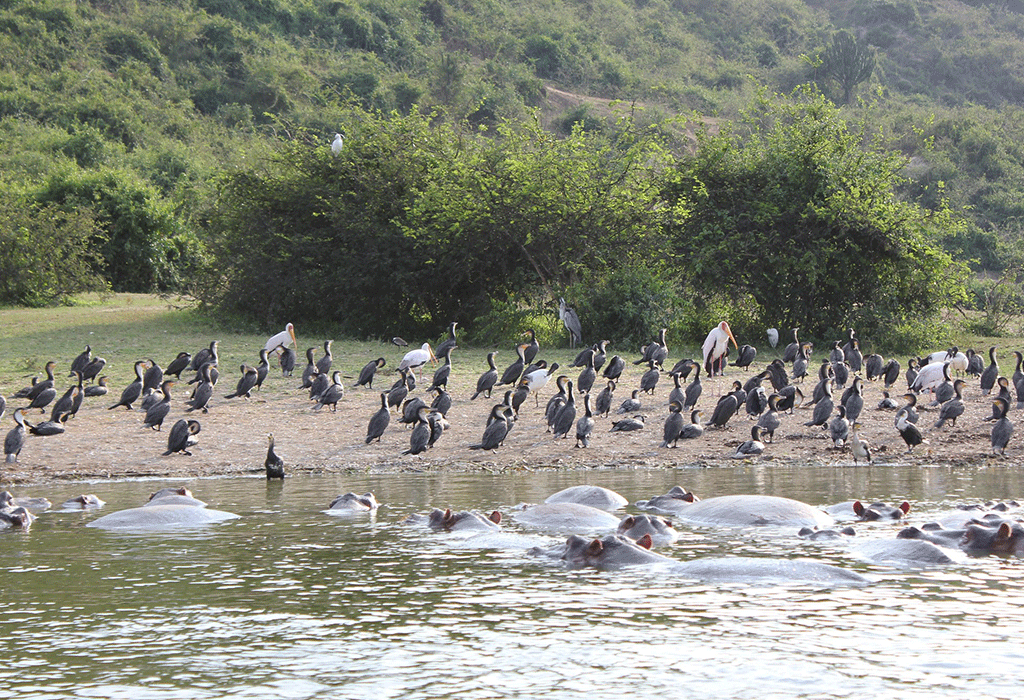
One of the easiest ways to broaden the trip is to add a safari in Queen Elizabeth National Park, whose northern areas can be reached from the Kasese region. The contrast is striking: after damp forest and high-altitude landscapes, visitors enter a world of open plains, crater scenery and wildlife viewing. Game drives may offer sightings of elephants, antelope and other animals, while the Kazinga Channel is known for boat experiences with waterbirds and aquatic wildlife.
The combination works best when the program allows a recovery day after a demanding hike. Muscles may be sore, clothing may need drying and travel can feel tiring following several nights at elevation. Instead of scheduling a long road transfer immediately after the mountain exit, consider staying in or near Kasese and beginning the safari the following morning. That small planning decision can improve both comfort and the quality of wildlife viewing.
A Queen Elizabeth National Park guide can help travelers understand the differences between the northern savannah areas, crater landscapes and Ishasha region. If you are booking a Kazinga Channel boat cruise, confirm departure details separately. Wildlife sightings and weather conditions always vary, but the opportunity to pair mountain scenery with savannah habitats makes western Uganda an unusually rewarding destination.

Adding Kibale Forest and Chimpanzee Tracking
Kibale National Park is another logical addition on a western Uganda journey. Famous for its tropical forest and primate experiences, it creates a compelling contrast with the upper Rwenzori landscapes. A combined program might spend several days around the mountains, continue toward Fort Portal and Kibale, then add a guided chimpanzee tracking activity with the appropriate permit. It is important to reserve wildlife permits separately from mountain trekking arrangements.
Chimpanzee tracking is an active forest activity, but the experience differs from a high-altitude trek. Guides focus on locating a habituated community, interpreting behavior and managing visitor movement in forest habitat. Conditions can still be muddy and warm, and sightings depend on animal location and park procedures. Reading about the chimpanzee tracking experience helps travelers prepare for realistic walking conditions and respectful viewing practices.
Kibale and the Rwenzoris appeal to travelers who love biodiversity as much as big-game photography. When time permits, consider a quiet day around Fort Portal or the nearby crater-lake landscapes between activities. This gives an itinerary breathing room and reduces the temptation to turn a nature-focused journey into a sequence of rushed transfers.
Combining the Mountains With Gorilla Trekking
For travelers with a longer holiday, Rwenzori mountain trekking can be paired with a mountain gorilla encounter in Bwindi Impenetrable National Park. The experiences complement each other beautifully: one emphasizes the scale of dramatic mountains and changing vegetation, while the other centers on a carefully regulated visit to a gorilla family in a dense forest. Both require appropriate walking clothing and respect for guides, but the permits, travel logistics and daily procedures are different.
The most important planning issue is time. Bwindi has several gorilla trekking sectors, and the permit is linked to a specific starting area and date. A lodge near one sector may be inconvenient for another. Build the route around the correct meeting point and allow adequate transfer time from the mountains or Queen Elizabeth region. The most convenient pairing will depend on the chosen Bwindi sector and the direction of travel.
Reserve the gorilla permit early, then organize the trekking and driving days around it. If your mountain expedition is technical and strenuous, schedule rest before attempting another demanding forest outing. Travelers considering a combined hiking-and-gorilla safari should prioritize comfort and recovery over fitting the maximum possible number of activities into a calendar.
Safety, Altitude and Responsible Mountain Decisions
Safety begins with an honest discussion of what your chosen route involves. Ask about the qualifications of the guides, communication options, evacuation procedures, weather monitoring and how the team handles injuries or signs of altitude illness. Serious problems may require descent rather than waiting for improvement at a high camp. For technical climbs, equipment condition and guide competence are essential; general hiking experience should not be mistaken for glacier skills.
Pay attention to the guide’s instructions at river crossings, on bog boardwalks and across slippery rock. Water levels and trail surfaces can change quickly after heavy rain. Do not wander away from the group for photographs or take shortcuts through vegetation. Keep drinking and eating regularly, even when cold weather reduces thirst or appetite. If something feels wrong, speak up early. Silence can make a manageable issue more difficult.
Responsible trekking also means accepting changes. A route closure, severe storm, damaged bridge or unsafe glacier section is a legitimate reason to adapt or cancel a particular objective. Uganda Wildlife Authority monitors park access and has previously changed summit arrangements for safety reasons. Confirm the latest guidance close to travel rather than assuming that an itinerary published months earlier remains guaranteed. An experienced team makes conservative decisions because the mountains will still be there another day.
Choosing a Reputable Rwenzori Trekking Operator
A good operator will ask questions before quoting a price. They should want to know your hiking history, intended dates, physical condition, equipment needs and whether your priority is scenery, birdwatching or reaching a named summit. Their proposal should identify the trail, the number of days, overnight arrangements, expected altitude, included services and the qualifications of the guiding team. Vague promises of an easy summit are a warning sign rather than an advantage.
Ask what happens if severe weather prevents the planned route, and whether the operator has a clear cancellation policy. Confirm whether porters, meals, park charges, tents or huts, and technical equipment are included. For summit programs, request details of rope systems, current glacier procedures and equipment inspection. You do not need to be an expert to ask these questions; responsible companies should explain them clearly and without defensiveness.
Independent travelers may appreciate an itinerary that combines the mountains with a wider Uganda safari. Custom Uganda safari packages can help coordinate road transfers and wildlife permits, but the mountain portion still requires specialist attention. Choose the team based on experience and clarity, not solely on the promise of a low headline cost. Ask for a final itinerary you can save and review before departure.
Frequently Asked Questions About the Rwenzori
Is Rwenzori Mountains National Park suitable for beginners? Yes, if beginners choose appropriate guided foothill walks or introductory treks. High-altitude routes demand much more preparation, and a technical Margherita Peak climb should be considered a separate category. Tell the operator your experience level and select a realistic itinerary rather than booking by the photograph on the tour page.
How many days are needed? A guided day walk is possible in some areas, while scenic multi-day treks may take two to several days. Full high-mountain expeditions require substantially more time, with a technical summit program commonly arranged across roughly a week or longer depending on the route. The booking team should explain the actual walking stages and transport days. Never assume that travel to the trailhead is included in advertised trek days.
Can you see snow or glaciers? Snow and ice survive near the highest summits, but visibility depends on weather and some lower routes do not approach them. Glacier extent has changed over time, and access requires current safety assessment. For most visitors, the rich plants, waterfalls, valleys and mountain atmosphere are reason enough to visit even without a view of ice.
Plan a Thoughtful Rwenzori Adventure
Rwenzori Mountains National Park rewards travelers who are curious about landscapes, not merely those chasing a summit. The most appealing journey may be a simple forest walk with a knowledgeable guide, a three-day introduction to the high valleys, or a carefully planned expedition toward Mount Stanley. Each reveals a different aspect of the same extraordinary mountain ecosystem, from bird calls in shaded forest to rare plants standing beneath cold, distant ridges.
Start by choosing the experience you genuinely want. Decide how many days you can devote to the mountains, evaluate your fitness, then ask for route details and a current quote. Keep flexibility for weather, protect the fragile mountain environment and treat the guiding team as partners in the adventure. If the trip also includes Kibale, Queen Elizabeth or Bwindi, allow enough time to enjoy each place at its own pace.
The real distinction of the Mountains of the Moon is their sense of discovery. Mist may obscure a peak, rain may slow a climb and plans may change, yet the journey can still be extraordinary. With sound preparation and realistic expectations, the Rwenzoris offer one of Uganda’s most rewarding encounters with wild landscape, biodiversity and the people who know it best.