7 Amazing Mabira Forest Eco-Tourism Tour Highlights

Mabira Forest eco-tourism center tour Uganda: Your Complete Nature Escape
The Mabira Forest eco-tourism center tour Uganda is an inviting way to exchange city noise for birdsong, shaded trails and the atmosphere of a living tropical forest. Just off the Kampala–Jinja highway, this protected landscape gives day visitors an accessible introduction to central Uganda’s rainforest environment. You can take a guided walk, listen for forest birds, learn about the importance of indigenous trees and discover how responsible tourism can support conservation. Unlike a long national-park safari, a Mabira outing can fit into a single day, although a relaxed overnight stay allows time to explore more deeply. A Mabira Forest tour also works well for first-time visitors who want a clear introduction without a complicated schedule. The Mabira eco-tourism centre offers a practical entry point for learning about the reserve.
This guide explains which entrance to use, what happens at the eco-tourism centre, how to choose a walk, when to arrive, how much time to allow and what to bring. It also distinguishes the main visitor centre from the separate Griffin Falls adventure operations, a useful detail if your plans include zip-lining. Because activity prices, operating arrangements and road conditions can change, ask your guide or operator to confirm the latest arrangements before departing. The goal is a comfortable, engaging forest visit rather than an overpacked checklist.
Why choose a Mabira Forest eco-tourism center tour Uganda?

Mabira is one of central Uganda’s important surviving tropical forests. The forest reserve is commonly described as covering roughly 300 square kilometres, and Uganda’s forestry tourism materials place the principal visitor access about 54 kilometres from Kampala. The wider landscape is far more than a strip of trees beside the highway: it includes forest interior, regenerating edges, wetlands and local communities whose livelihoods intersect with conservation. A guided tour reveals details that are easy to miss when you simply drive through, from climbing vines and buttressed trunks to the alarm calls of birds high overhead. In searches for Mabira Forest Uganda, remember that the reserve covers several access areas rather than one single attraction.
The experience is especially attractive to travellers who want a low-impact activity between city visits and bigger safaris. It complements other Uganda eco tourism experiences without demanding days of travel or extensive trekking equipment. Families can choose easier sections, keen walkers can request a longer route, and photographers can slow down to study textures, light and animal movement. You do not need to arrive with specialist natural-history knowledge; a patient guide can explain habitats and species in accessible language.
Who enjoys a Mabira Forest eco-tourism center tour Uganda most?
Birdwatchers appreciate the patient, listening-focused pace. Nature lovers enjoy an immersive forest setting, while students can explore topics such as biodiversity, water cycles and forest protection. Couples, friends and small groups often combine a walk with a picnic or a Jinja excursion. If mobility or stamina is limited, explain your needs before booking: trail gradients, roots and muddy stretches vary, and an easy outing should be selected around the least confident person in the group. The focus is meaningful time outdoors, not distance covered.
Where is Mabira Forest and how do you get there?

Mabira lies east of Kampala along the highway leading through Mukono and Lugazi towards Jinja. The conventional access for the forestry eco-tourism centre is at Najjembe, where a short side road leads away from the busy highway. Look carefully for the correct turn rather than relying only on a map pin. The drive from central Kampala is often approximately one to two hours depending on traffic, departure point and roadworks; coming from Jinja usually involves a shorter westbound journey. These are planning estimates, never guaranteed transfer times.
A private transfer makes it easier to start early, carry walking shoes and adjust the schedule around weather. Travellers coming by public transport can ask a Jinja-bound taxi or bus operator about the Najjembe stop, then arrange the short final approach. Do not assume a vehicle will enter the reserve or wait for you unless you have arranged that service. Anyone adding the forest to Kampala city tours should leave a generous traffic buffer for the journey home, particularly near evening rush hour.
Najjembe eco-tourism centre versus Griffin Falls adventure site
This distinction is central to a successful visit. The principal eco-tourism centre near Najjembe is the sensible starting point for forest interpretation, guided walking and birdwatching. Griffin Falls Camp and associated canopy activities use a different approach around the Lugazi side of the forest. Their access road may be more challenging after rain, and the drive between activity points takes time. If you want both a quiet nature walk and zip lining in Mabira, ask for precise meeting points, the current operating status and a realistic transfer plan before making payment.
Guided rainforest walks and forest interpretation

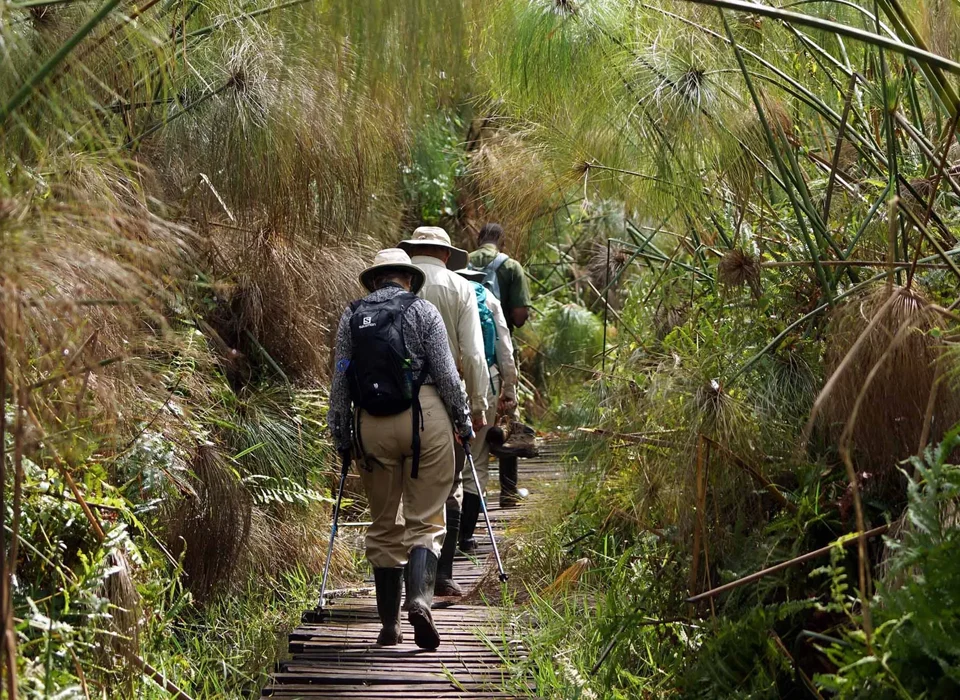
A guided forest walk is the heart of the Mabira visit. It begins with a conversation about your interests and walking comfort, then a route choice suited to the group and trail conditions. The guide points out plants that shape the forest structure, places where insects are active and signs of wildlife that might otherwise go unnoticed. In thick vegetation, the most rewarding encounter may be a call, a rustle in the canopy or the discovery of an unusual seed pod rather than a dramatic animal sighting. Allow time to stop, ask questions and absorb the setting.
Some paths pass through tall shade, while others open near forest edges and younger growth. Conditions change after rainfall: roots become slippery, low ground may hold water and the humid air can make a modest walk feel more demanding. Wear footwear with grip and avoid pushing beyond the itinerary agreed with the guide. For travellers who enjoy nature walks in Uganda, Mabira is a good reminder that a slow trail can reveal as much as a strenuous one when there is knowledgeable interpretation.
The interpretation centre adds context to the walk. Displays and conversations may describe the role of forest cover in protecting soils, storing carbon, regulating local water systems and providing habitat. Ask how community groups participate in the local visitor economy and whether crafts sold on site are made by nearby artisans. Buying thoughtfully and following established paths help a tourism visit contribute positively rather than simply extracting photographs from a fragile habitat.
How long should a Mabira walking trail take?
For a gentle introductory route, reserve roughly one to two hours on foot plus time for a briefing and short breaks. A more involved birding or forest exploration outing may need several hours. Exact trail lengths, access and guiding options should be confirmed on arrival because routes may be adjusted for maintenance or weather. Tell the guide early if you are travelling with children, older relatives, guests with a health constraint or anyone uncomfortable on uneven ground. An appropriately chosen pace matters more than finishing a named loop.
Birdwatching in Mabira Forest
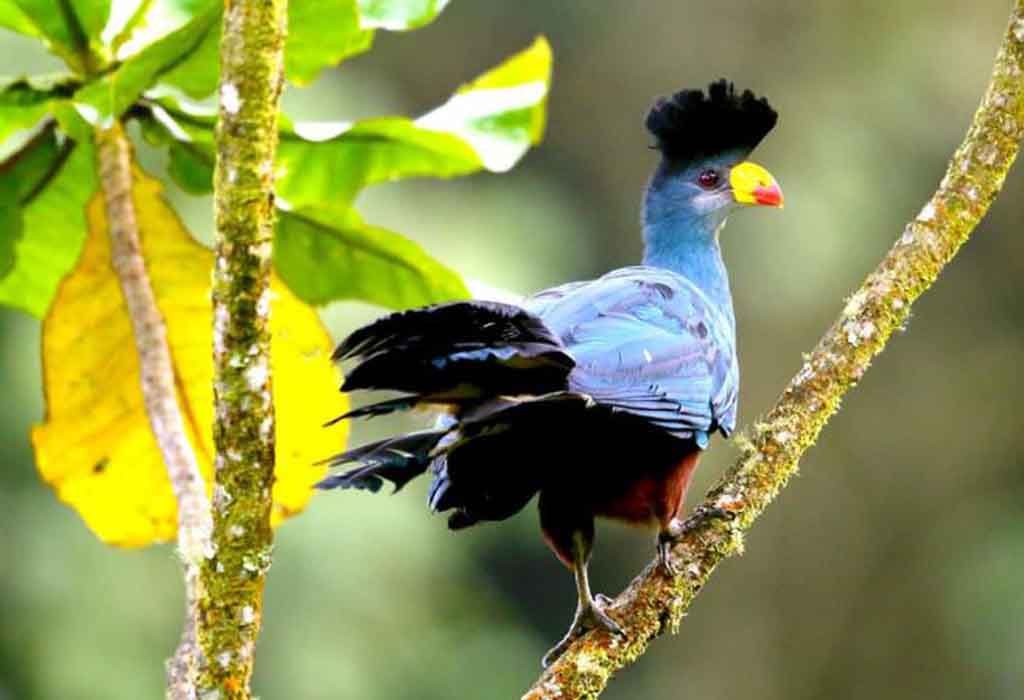
The forest is a rewarding stop for people interested in bird watching in Uganda. Published tourism references describe more than 300 bird species in the wider reserve, although the number seen on a single walk depends on weather, season, patience and local knowledge. Listen for hornbills and turacos, scan fruiting trees and watch the understory for movement. Dense foliage often hides birds that can be heard clearly, so a local birding guide can be valuable for interpreting calls and identifying likely feeding areas.
Mornings tend to provide comfortable walking temperatures and useful periods of bird activity. Carry binoculars if you own them, but do not postpone a visit simply because you lack expensive gear. A small notebook or phone checklist helps record observations. Bird photography calls for quiet movement and realistic expectations: forest light is uneven and branches frequently obscure subjects. This is why a dedicated Uganda birding safari operates at a much slower tempo than a conventional sightseeing stop.
People who already enjoy birding in Uganda may want to reserve a longer guided session instead of fitting birds into a short general walk. Ask whether a guide with strong bird identification skills is available, whether an early start is possible and what habitat the proposed route covers. Serious birders can compare the forest experience with bird watching in Budongo Forest Reserve or the birdwatching experience in Entebbe, each of which offers a different landscape and bird community.
Forest wildlife, butterflies and photography
Mabira supports monkeys, butterflies, reptiles and other forest animals, but sightings are never guaranteed. Wildlife encounters happen on the animals’ terms, and many species are naturally secretive. A guide may identify calls, feeding signs or the movement of a troop above the trail. Keep a respectful distance, never feed animals and do not surround them for photographs. If children are especially eager to see monkeys, prepare them for the possibility of hearing wildlife rather than seeing it clearly.
Forest photography works best when you shift attention from elusive large animals to the remarkable visual detail around you. Look for towering trunks, patterned bark, mushroom clusters, leaf shapes, flowers and shafts of light reaching through the canopy. A waterproof pouch protects a phone or camera from a sudden shower. Avoid using flash directly on wildlife at close range, and do not step off trail to chase an image. These habits are good Uganda safari tips for both beginners and experienced travellers.
Zip-lining and adventure activities near Mabira

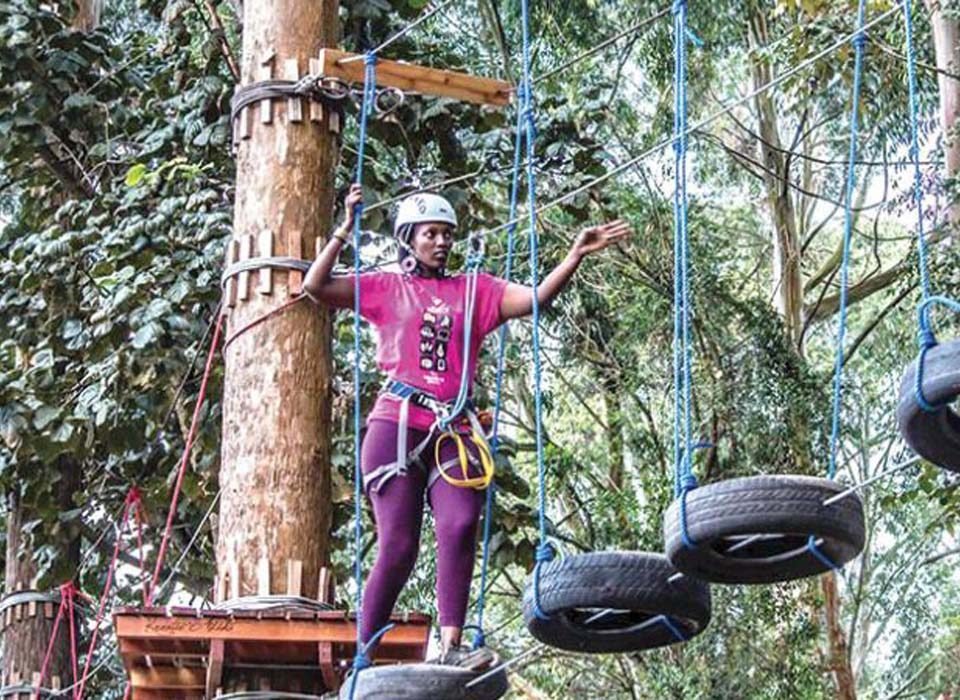
A canopy adventure can add energy to a forest day, but it should be arranged separately from the standard visitor-centre walk. The zip-line experience associated with Griffin Falls is not automatically included with a Najjembe forest entry or guided trail. Operators may set age, height, weight, weather and health restrictions, and equipment or platforms can be temporarily unavailable. Before making firm plans, confirm the company running the activity, its safety briefing, equipment checks, insurance arrangements, cancellation rules and transport access.
Participants should wear closed shoes, secure loose belongings, tie back long hair and listen carefully to the guide’s instructions. Anyone uncomfortable with heights should feel free to skip the canopy activity and enjoy the forest at ground level. The walking tour is not a lesser option: the quieter trails give you different access to forest plants, animal calls and ecological stories. Families comparing options may find advice on a Uganda safari with children useful for matching activities to different ages and comfort levels.
A realistic Mabira Forest day-trip itinerary from Kampala
Morning: transfer and arrival
Depart Kampala early enough to miss the heaviest outbound congestion where possible. Carry drinking water and a light breakfast, and agree beforehand whether your guide will collect you at your hotel or another meeting place. On reaching Najjembe, confirm the correct visitor-centre entrance, meet the local guide and discuss trail conditions. Use the briefing to explain your interests: quiet photography, birds, trees, a moderate walk or a family-friendly introduction. Starting with a clear plan saves time and avoids disappointment later.
Late morning: guided forest exploration
Spend the main part of the morning on the trail. The guide can pause near distinctive trees, explain how vines and epiphytes use the canopy, and encourage the group to listen rather than talk continuously. Where safe and appropriate, take a short break in a shaded spot. People hoping to identify birds may prefer to split the party if others want to walk quickly. A slower group benefits from more observation, and a faster group can still enjoy the rhythm of moving through tropical forest without treating the walk as a race.
Midday: picnic and visitor centre
Return to the visitor area for a snack, picnic or arranged meal, depending on current facilities. Bring reusable containers and take all rubbish away if disposal services are limited. Use this period to ask questions about forest regeneration, local conservation work and community participation in tourism. If artisan products are offered, consider buying something small that you genuinely value. After the break, decide whether you still have time and energy for a short additional trail rather than pressing on simply because the day is not over.
Afternoon: Jinja extension or return to Kampala
A straightforward day tour returns to Kampala after the forest programme, leaving buffer time for traffic. If you prefer a longer outing, the route towards Jinja can accommodate river scenery or one carefully chosen attraction. A Jinja Source of the Nile tour can work as a fuller excursion, but only if the transport schedule and site arrangements allow it. Do not promise guests a full forest hike, multiple adventure sports and a leisurely city exploration on the same short day. A well-paced programme creates better memories than an exhausting transfer. A Mabira Forest day trip is easier to enjoy when the afternoon remains flexible.
Can you combine Mabira with Ssezibwa Falls and Jinja?

Yes, but choose priorities. Ssezibwa Falls provides an additional natural and cultural stop on the Kampala–Jinja corridor. The waterfall area has significance to local communities, so visitors should respect instructions at cultural sites and seek permission before photographing ceremonies or individuals. Travellers interested in Sezibwa Falls nearby attractions can treat the waterfall as a separate visit rather than a rushed ten-minute photo stop. Its paths and steps may be slippery after rain, so footwear suitable for the forest is also useful here.
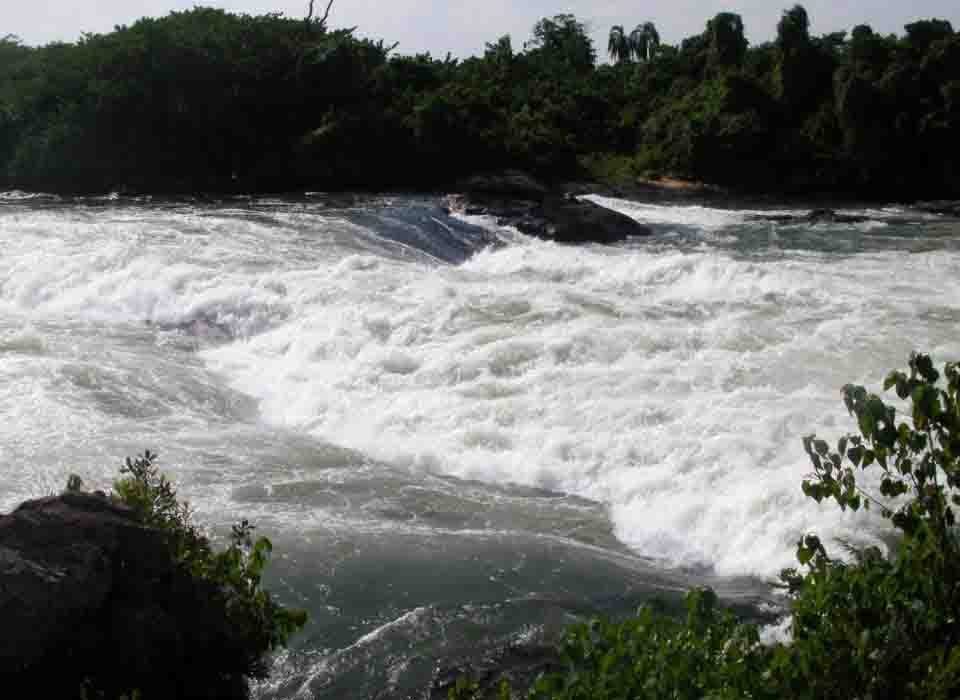
Jinja adds a different mood: river views, cafés and activities focused on the Nile. Visitors exploring attractions in Jinja might choose a boat outing or sightseeing rather than another strenuous walk. White Water Rafting in Jinja is usually best given its own adequate time, with an accredited operator and a safety-led schedule. Likewise, quad biking and horse riding in Jinja need advance arrangements and suitable clothing. A traveller seeking adventure may prefer two days rather than trying to compress everything into one.
An overnight version can combine Mabira with a day tour to Jinja at a more comfortable pace. Multi-stop programmes such as the 2 Days Mabira Forest Itanda Falls Tour and 2 Days Mabira Source of the Nile illustrate the kinds of extended combinations that may be considered. Check exactly what a package includes; similar trip names do not imply identical routes, accommodation, meals or activities. The best choice is the one that respects how you actually like to travel.
When is the best time to visit Mabira Forest?

Mabira can be visited throughout the year, but rainforest weather is unpredictable even in relatively drier periods. In Uganda, the commonly discussed wetter periods include roughly March to May and September to November, although individual days can depart from seasonal patterns. Rain gives the forest lush colours and dramatic atmosphere, yet it can make muddy trails more slippery and complicate access to remote adventure areas. An early start generally helps with temperature, bird activity and leaving enough daylight for the return journey.
For a bird-focused visit, tell the guide whether you are interested in general forest species or photography, because timing and route selection can differ. For a family walk, manageable conditions and a dry change of clothes may be more important than the nominal season. Ask the operator about the expected forecast shortly before departure, and be prepared to modify the schedule if lightning or heavy rain affects outdoor activities. Nature should set the pace, particularly where ropes or elevated platforms are involved.
What does a Mabira Forest eco-tourism center tour Uganda cost?
The final cost depends on whether you are arranging a self-drive visit, a guided forest walk, a specialist birding outing, a private vehicle or an additional adventure activity. Some older websites display entry prices that may no longer be current. Rather than publishing an unreliable fixed price, request a date-specific quote identifying entrance fees, guide services, vehicle costs, meals and any optional activities. Ask if resident or student rates exist and which identification documents are required. Payments and booking arrangements may differ between the forestry visitor centre and independently operated experiences.
For a fair comparison, check how much guided time is included and whether the operator pays the relevant site fees. A cheap quotation without transport, meals or an experienced guide may not be better value than a complete private excursion. If the tour includes zip-lining, ask whether safety equipment and an instructor are included. Travellers designing larger Uganda safaris should compare Mabira’s short-trip costs separately from park-entry fees or permits for other destinations.
What should you wear and pack?
Wear lightweight trousers, a breathable long-sleeved top and shoes with firm tread. Forest paths can be damp, and low plants may brush against exposed skin. Bring a rain jacket or compact poncho, a reusable water bottle, insect repellent and personal medication. A small daypack is usually more convenient than a large suitcase. Protect electronics in a dry bag, especially if you plan to spend time photographing birds. Avoid strong perfume and brightly reflective accessories that distract both people and wildlife.
Binoculars are useful for birdwatching, while a simple notebook or identification app can make the trip educational. Carry a small amount of local currency for incidental purchases where electronic payment may be unreliable. If travelling with children, pack snacks and explain beforehand why littering and shouting are discouraged in a forest. The general principles in what to pack for a Uganda safari also apply here, though Mabira rarely requires the heavier equipment used on multi-day wilderness treks.
Accessibility, safety and responsible travel
Mabira is a natural forest environment, not a fully paved urban park. Expect exposed roots, uneven surfaces, humidity, occasional muddy patches and insects. Trails may not be wheelchair accessible, and individual routes vary significantly in difficulty. Travellers with limited mobility should speak to the operator in advance, explain the specific assistance required and ask for a clear description of the proposed route. It is better to choose a short, comfortable nature experience than to discover a difficult trail halfway through.
Stay with your guide, avoid unknown shortcuts and do not enter restricted forest areas. Carry essentials, let someone know your intended return time and avoid wearing valuables openly at busy road stops. Children should be supervised near water, steep edges and any elevated adventure infrastructure. A good guide will adapt the pace and explain what to do if the weather changes. Responsible visitors keep noise low, leave plants and animals undisturbed and take rubbish back out. These small actions protect both the experience and the forest.
Mabira also offers an opportunity to think about the wider role of forests in Uganda. Protection is not only about charismatic wildlife; forests support water catchments, local climate resilience and plant diversity. Forest-edge livelihoods matter too. When choosing a guide or tour provider, ask how local people benefit and whether the business follows conservation rules. On Uganda adventure holidays, choosing local guides can make that economic connection visible. It is a practical expression of responsible Uganda travel adventure rather than a slogan attached to a brochure.
Where to stay near Mabira Forest

A day trip usually does not require accommodation. Visitors who want sunrise birding or a quieter atmosphere may prefer a night near the forest or in Jinja. Forest-area options can range from rustic camping and bandas to more comfortable lodge arrangements, depending on what is currently operating. Verify water, power, meal service, road access and cancellation policies before confirming a stay. A property described as being in Mabira may still require a separate transfer to the particular trail or zip-line entrance you have booked.
If you stay in Jinja, the forest can form part of your onward journey rather than a return trip from Kampala. If you stay in Kampala, confirm your pickup location and whether the hotel can arrange an early breakfast. People combining Mabira with activities to do in Kampala can enjoy a useful contrast between markets, cultural stops and the calmer forest setting. Consider travel time more seriously than the map distance; short kilometres can still mean a long drive in traffic.
How Mabira compares with Uganda’s larger forests

Mabira works best as an accessible introduction to rainforest life rather than a substitute for every forest experience in the country. Kibale Forest National Park is better known for organised chimpanzee trekking, while Bwindi Impenetrable Forest is internationally associated with mountain gorilla trekking and rugged montane habitat. Neither comparison diminishes Mabira’s appeal. A short day beneath mature trees may suit a traveller who has limited time, prefers a modest budget or wants a nature break between business meetings.
Birdwatchers and serious forest enthusiasts may weave Mabira into a broader itinerary that visits other habitats, including Sipi Falls exploration in the eastern highlands. If you are planning a longer itinerary, plan your first Uganda safari around travel days and activity priorities rather than simply collecting place names. Mabira is an excellent early or final stop: near the international arrival corridor, relatively flexible, and different from the savannah landscapes that dominate many classic safari packages.
Frequently asked questions about the Mabira Forest eco-tourism center tour Uganda
Is Mabira a national park?
No. Mabira is a central forest reserve with an eco-tourism visitor programme, not a national park. The distinction matters because guiding systems, entry charges and activity management differ from those in national parks. Follow instructions from the responsible forestry authority or designated site operator, and check the current booking channel before travelling.
How far is Mabira from Kampala?
The principal forest visitor area is commonly described as about 54 kilometres from Kampala on the Jinja highway. Actual drive time varies considerably with traffic, roadworks and where in the city you start. Allow more travel time than a simple distance calculation suggests, especially if you have a fixed onward appointment.
Do I need to book a guide?
Booking in advance is strongly recommended if you want a particular departure time, specialist birding guide or longer route. At-the-gate arrangements may be possible but should not be assumed. Confirm who is guiding, what the fee covers and where your group will meet.
Can I see gorillas or chimpanzees in Mabira?
Mabira is not a gorilla trekking destination, and a visitor should not expect a managed chimpanzee trekking experience here. The forest supports other wildlife, including monkeys and many birds. If primates are your main reason for visiting Uganda, choose a destination and permit system specifically suited to that activity.
Can children enjoy a Mabira day trip?
Yes, many families enjoy easy guided walking and the visitor-centre setting. Match the route to the youngest participant, provide snacks and water, and ask about current age or size restrictions for any adventure activity. A calm, shorter experience is often more rewarding for children than a lengthy, humid walk.
Is zip-lining included in the eco-tourism centre ticket?
Do not assume it is. Zip-lining has its own operator and may use a different access point, schedule and fee structure. Ask for a written list of inclusions and the exact meeting location if your package combines canopy adventure with nature walking.
Can I visit during the rainy season?
Usually yes, provided the site and trails are open and conditions are safe. Bring rain protection and shoes that grip well, and accept that the guide may shorten or change a route. Elevated adventure activities are more weather sensitive and can be postponed for safety.
Can the tour include Ssezibwa Falls and the Nile?
Yes, with a realistic itinerary. Choose between a focused forest visit and a longer multi-stop excursion. A short visit to the waterfall and a simple river stop may fit some day tours, but demanding adventure sports are better scheduled separately. Your driver should explain travel buffers before you book.
Plan your Mabira Forest experience
A memorable Mabira day starts with a sensible choice: the right entrance, the right trail and enough time to notice the forest. Choose an early transfer, take a guide who understands your interests and leave space for the unexpected. Whether your priority is birds, a gentle rainforest walk, responsible family travel or an optional canopy adventure, the forest rewards a pace that suits the environment. If you are comparing short excursions with longer itineraries, how to book a Uganda safari can help frame the questions to ask before committing.
Share your travel date, pickup location, group size and preferred activities when requesting a quote. Specify whether you want the Najjembe eco-tourism centre, Griffin Falls adventure activities, a Jinja extension or a simple return trip. You can then receive a route and quotation built around the actual programme rather than an assumed package. A well-organised Mabira Forest eco-tourism center tour Uganda should feel relaxed, informative and respectful of the woodland that makes the experience possible.