Lesser Known Primates in Rwanda
Lesser Known Primates in Rwanda
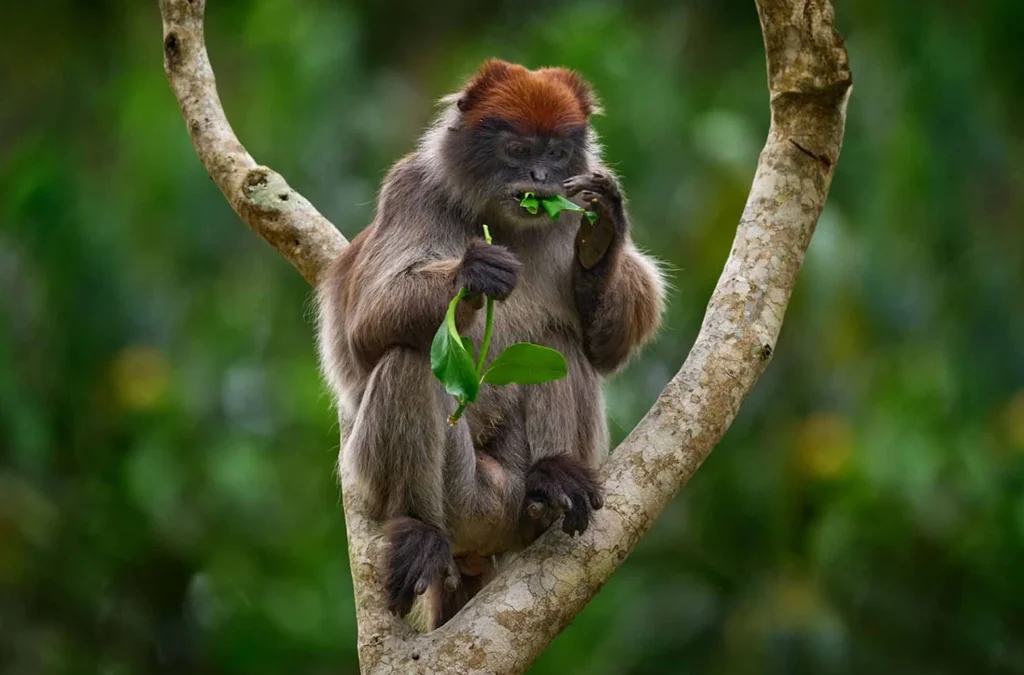
Rwanda, often celebrated for its iconic gorillas, chimpanzees, and golden monkeys, boasts an equally fascinating list of lesser-known primates. These remarkable creatures contribute significantly to the country’s biodiversity, offering a unique glimpse into the world of primates that you can watch within Rwanda’s diverse landscapes.
L’Hoest’s Monkey (Allochrocebus shoes)
L’Hoest’s Monkey, also known as the mountain monkey, is a striking primate characterized by its dark fur and distinctive white beard. Their behavior is marked by a strong sense of community, as they often live in close-knit groups known as troops.

These troops traverse the lush montane forests of Rwanda, displaying agility in both tree-climbing and ground movement. L’Hoest’s monkeys are endemic to Albertine Rift, and you can easily spot them in Nyungwe and Gishwati Forest.
Olive Baboon (Papio Anubis)
Olive Baboons, with their distinctive grayish-green fur, are highly social creatures. They thrive in various habitats, from open savannas to dense forests, and are known for their remarkable adaptability.
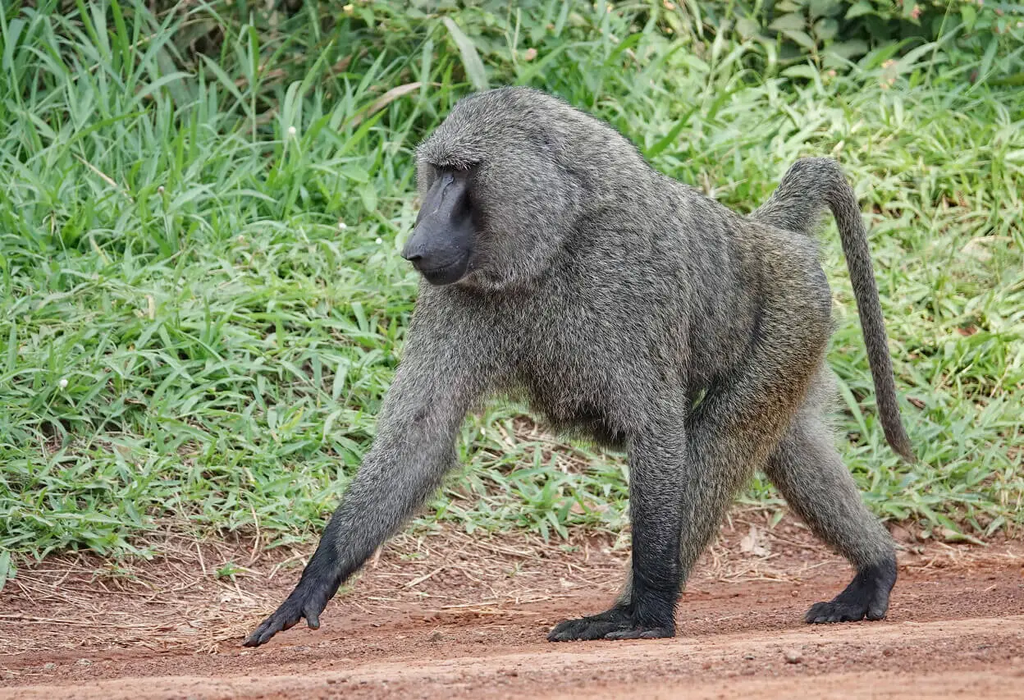
Their vocalizations, ranging from sharp barks to grunts, are common in Rwanda’s woodlands. You can spot olive baboons in random places near or inside Rwanda’s fantastic four national parks.
Grey-cheeked Mangabey (Lophocebus albigena)
The Grey-cheeked Mangabey is a fascinating primate with a striking appearance, characterized by distinctive gray cheeks and a bushy white tuft at the base of its tail.

These Mangabeys are known for their arboreal lifestyle, often swinging gracefully through the trees, and their preference for dense, evergreen forests. You can spot the grey-cheeked Mangabey on a trekking adventure in Nyungwe Forest, southwest of Kigali.
Red-tailed Monkey (Cercopithecus Ascanius)
Easily recognizable by their bright russet tails, Red-tailed Monkeys are agile acrobats of the forest canopy. These primates are famous for their playful antics.

Naturalists frequently encounter them near water bodies where they find their favorite snacks, such as aquatic plants and insects. With luck, you can spot the red-tailed monkey on a walk through Nyungwe Forest National Park.
Vervet Monkey (Chlorocebus pygerythrus)
Vervet Monkeys are known for their distinctive black faces and grizzled coats. They are adaptable and can be found in many habitats, including woodlands, grasslands, and urban areas.

Their vocalizations serve as a complex language for communicating within their troop. You can watch vervet monkeys in any of Rwanda’s four national parks.
Blue Monkey (Cercopithecus mitis)
Blue Monkeys, often found in the forests of Rwanda, have striking blue-gray fur and expressive faces and are some of the most exciting primates to see in Rwanda.

These agile climbers thrive in dense canopies, foraging for fruits, leaves, and insects. You can spot the blue monkey on a guided forest walk in Nyungwe Forest.
Black and White Colobus Monkey (Colobus guereza)
One of the most captivating lesser-known primates you should look out for in Rwanda is the black and white colobus monkey.

They are particularly adept at leaping through the trees, making them an enchanting sight in Rwanda’s forests. Nyungwe, Akagera, and Gishwati-Mukura National Parks are the best places to spot the black and white colobus monkey in Rwanda.
Angolan Black-and-white Colobus (Colobus angolensis)
These striking colobus monkeys, with their black fur and contrasting white fringes, are captivating to observe.

They primarily inhabit forests, feeding on various leaves, fruits, and flowers.
Dent’s Mona Monkey (Cercopithecus dentist)
Dent’s Mona Monkey is a medium-sized primate found in tropical rainforests and wooded areas. With its dark brown or black fur, white or yellowish forehead and cheek bands, and a long, slender body with a tail longer than its body, Dent’s Mona Monkey has a striking appearance.

These diurnal monkeys are primarily arboreal, exhibiting agile climbing and leaping abilities, and they live in social groups led by a dominant male. Their diet includes fruits, seeds, leaves, flowers, and occasional insects.
In Nyungwe, spotting Dent’s mona monkeys can be challenging. Only one Mona monkey lives with the Gisakura Colobus monkeys, acting as a scout for them. This mona monkey checks the area before the Colobus monkeys move and signals if it’s safe to proceed. It’s fascinating to witness this behavior firsthand while trekking with the Gisakura Colobus monkey group.
Crowned Monkey (Cercopithecus pogonias)
The Crowned Monkey is a medium-sized primate with a dark body and a distinctive white crest on its head. These arboreal monkeys are social and diurnal, living in groups and primarily feeding on fruits, leaves, flowers, seeds, and insects.

While they are not currently considered endangered, local populations may face threats from habitat loss and hunting. You can spot crowned monkeys in the dense forests of Nyungwe National Park, away from the typical trails.
While these Rwanda primates may not be as famous as their larger counterparts, they are integral to Rwanda’s rich biodiversity. They play an important role in the ecosystem and are essential to Rwanda’s cultural heritage.
Primate Conservation Efforts in Rwanda
Rwanda has made commendable efforts to protect its primate populations through stringent conservation measures and community involvement. The revenue generated from primate tourism contributes significantly to these efforts. Participating in primate tracking experiences directly supports the conservation of these magnificent creatures and their habitats.
Additionally, the Rwandan government has implemented strict regulations to ensure the safety and well-being of both primates and tourists. These regulations include limits on the number of visitors, required pre-booking of permits, and strict guidelines on visiting Rwanda’s animals.
Best Time to Visit
You can visit primates in Rwanda year-round, but the dry seasons from June to September and December to February are generally the best seasons for primate tracking. During these periods, the trails are less muddy, and the forest foliage is less dense, improving visibility and the overall trekking experience.
Conclusion
Rwanda’s enchanting landscapes, warm-hearted people, and vibrant wildlife make it a must-visit destination for any nature enthusiast. The opportunity to witness primates in their natural habitat is a privilege you should consider when planning your Rwanda vacation safari. Whether observing the gentle giants the mountain gorillas, or delighting in the playful antics of golden monkeys, Rwanda promises an unforgettable primate trekking adventure that will leave a lasting impact on your heart and soul. So, pack your bags, obtain your permits, and embark on a journey into the primates paradise in Rwanda.
Tailor-made Rwanda Primates Safaris
The team at Safari Vacations & Travel Services is available to help you plan a tailor-made primate trekking adventure in Rwanda. Comprising experienced professionals, they offer valuable guidance, arrange necessary permits, secure appropriate lodging, and ensure seamless execution of your entire expedition. Feel free to explore these visuals for a glimpse into the experience.
Safari Vacations and Travel Services is a Local tour operator based in Uganda with its head offices in Entebbe. Moreover, Safari Vacations and Travel Services is a business for Ugandan natives. We specialize in life-changing experiences, sustainable tours, and holidays for all East African countries. Also, we are members of the Association of Uganda Tour Operators and with registration from the Uganda Tourism Board. We have a good and long working relationship with the Uganda Wildlife Authority. We are making booking your gorilla permits and gorilla trekking safari easy. Safari Vacations and Travel Services is also high in Trip Advisor reviews.