Garamba National Park

Garamba National Park
Garamba National Park is one of Africa’s oldest national parks. It is located in the north-eastern region of the Democratic Republic of Congo. The park, an area of 5200 square kilometers, is a UNESCO World Heritage site due to its ability to support an extraordinary variety of plant life. The park consists of unique vegetation which transitions from savanna to thick tropical forest, which consists of marshland and numerous tree species. Garamba National Park is home to the world’s largest mammals, i.e., elephants, rhinoceroses, giraffes, and hippopotamuses.
Garamba National Park is located in the north eastern part of the Congo (at the border with South Sudan) and covers an area of about 5,200 square kilometers. It is one of Africa’s oldest parks, having been declared in 193,8 and 1980 was declared a UNESCO World Heritage Site. This was due to its extraordinary variety and density of plant life, and being the natural habitat for four of the world’s largest mammals, namely, the elephant, the rhinoceros, the hippopotamus, and the giraffe.
Flora
Garamba National Park is also one of the most diverse and critically important ecological landscapes in Africa containing extensive savanna grasslands/ woodland, rivers and forests.
Fauna
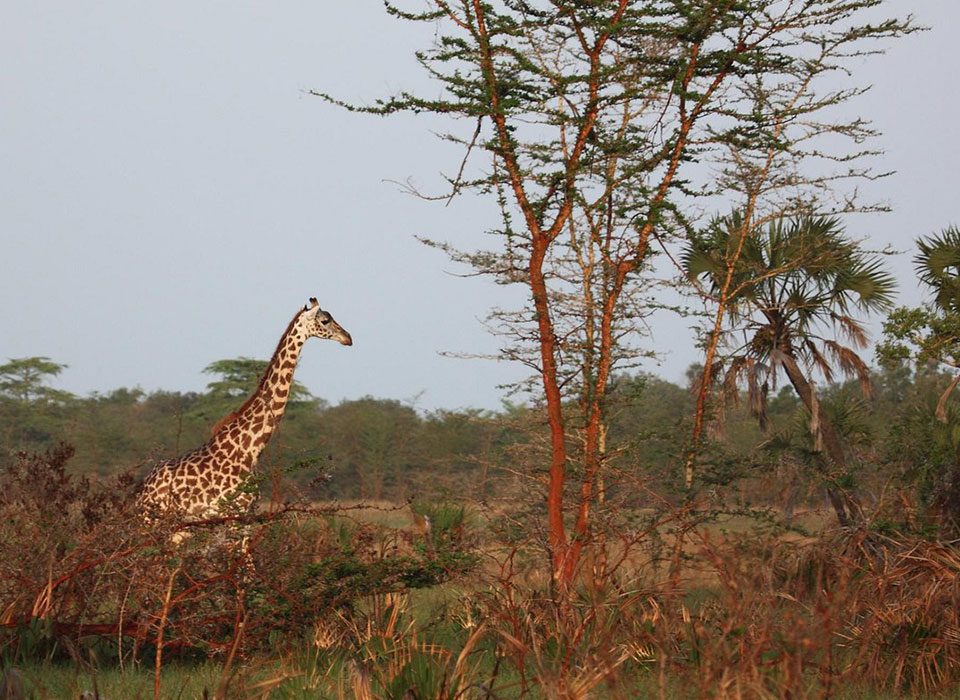
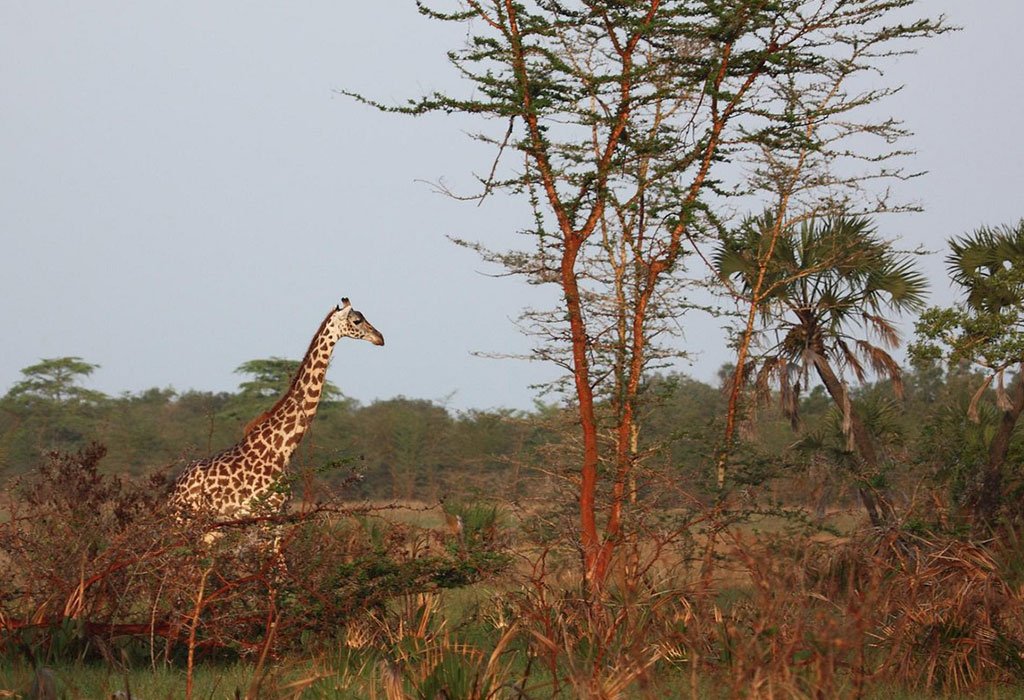
Garamba National Park is home to African elephants, forest elephants. Additionally, it has buffalo, the endemic Congolese giraffes, lions, leopards, chimpanzees, spotted hyenas, forest hogs, hippos, and several species of antelopes. The Garamba National Park may still be the only one hosting wild northern white rhinos.
This beautiful landscape has suffered a tragic past. It is often referred to as ground zero in the elephant poaching wars in Africa. In the 1970s, the number of elephants was more than 22,000. The park was once known to be the home to the largest population of the Northern white rhinoceros. Later, when the park was declared a World Heritage Site, all this glory was crushed. Even the Kordofan giraffes are hanging on by a thread because they have rapidly reduced in numbers due to poaching.
Through the various wars between Congo and Sudan of the 1980s and 990s, Garamba National Park lost a lot of its wildlife, but luckily enough, many international conservation Agencies have teamed up to save this biologically diverse national park. Several organizations have taken the initiative to help in rehabilitating the park. These include the World Wildlife Fund, the International Union for Conservation of Nature, and the Frankfurt Zoological Society, among many others.
Another threat to tourism in almost all the national parks in Congo is the presence of the Rebels and instabilities. After being sent out of Uganda and South Sudan, the Kony rebels took refuge in parts of this park. This became a great threat to tourism and its development.
Activities in Garamba National Park
Garamba National Park is your perfect destination to experience unforgettable, exciting Congo tours. Major attractions in Garamba National Park include
Wildlife
Garamba National Park is a natural habitat for fascinating wildlife species, including mammals and primates. The park is famous for harboring four of the largest animals in the world, that is, the hippopotamus, giraffe, elephant, and rhinoceros. Rhinos in this park come in different types that is northern white rhinos (though extinct due to poaching), southern white rhino and black rhino, in additional to these animals there is Congolese giraffe, large and small antelopes, bushbucks, waterbuck, Oribi, Uganda knob, dicker, lion, leopard and nocturnal animals like striped bongo. Primates in the park include chimpanzee, shaggy colobus, patas monkey, little smiling vervet monkey, and bearded de Brazza’s monkey.
Vegetation cover
Garamba National Park is made up of distinct attractive vegetation cover, which varies from rain forest, marshland, savannahs, and woodlands. The forest cover, most especially along river riverbank, harbors numerous bird and animal species.
River Dungu and River Garamba: River Dungu and River Garamba create a magnificent scenic view as they flow through the park. River Dungu flows through Haut-Uele district, passing the town of Faradje, joining Kibali River at Dungu to form Uele River. The river is home to crocodiles, hippopotamuses, and snakes. River Garamba also passes through the park, and the rivers have different tree species along their banks.
Birdlife
Garamba National Park supports a variety of birdlife harboring over 340 species of birds such as colored red and blue carmine bee-eater, heron, Wattled plovers, black crake, knob billed ducks, long-tailed cormorants, white-backed pelicans, pink backed pelicans, spur-winged plovers and many more. Bird watching in this park is very interesting as they are spotted either in the forest or on the river banks.
Activities
Wildlife watching
The national park is well known for harboring a large number of wildlife with mammals and primates which can be seen while touring the park, animals like lions, buffalos, African elephants, hippopotami, Kordofan giraffes, giant forest hogs, antelopes, bush pig, mongoose, de Brazza monkey, vervet monkey, golden cat, warthogs, and waterbucks.
Bird watching
Bird watching in Garamba park is very mesmerizing and memory-filled as you spot colorful forest, land, and water birds on the river Garamba, river Dungu, and in the forests.
Boat cruise
A boat cruise in Garamba National Park takes place on the river Garamba and the river Dungu. Touring the park on a boat sailing on these rivers is very exhilarating. You enjoy the cool air, sounds made by birds and wild animals, and also the green forest cover along the river banks.
Nature walks
Guided nature walks in Garamba National Park will expose you to the natural wonders of Garamba the park. These nature walks go through the beautiful savannah vegetation to the beautiful forest. Also, through the rivers, which are filled with colored butterflies, animals like hippos, and primates.