Cycling Adventures in Rwanda

Is Rwanda Good for Cycling Adventures?
Yes. Rwanda is an excellent destination for cycling, particularly for travellers who enjoy hills, beautiful countryside, mountain biking and meaningful cultural encounters. The country offers scenic roads, rural tracks and guided cycling experiences for different fitness levels.
The most famous route is the 227-kilometre Congo Nile Trail, which runs roughly alongside the eastern shore of Lake Kivu between Rubavu and Rusizi. A full cycling journey commonly takes around five days, while shorter individual stages are possible.
Other cycling destinations include Kigali, Musanze, the twin lakes of Burera and Ruhondo, and selected countryside roads near Rwanda’s major tourism regions.
Rwanda’s mountainous terrain means even comparatively short rides can be demanding. Choose the right route based on your cycling experience, fitness, and available time.
Explore the Land of a Thousand Hills on Two Wheels
Rwanda is one of Africa’s most remarkable destinations for outdoor adventures. Although the country is internationally famous for mountain gorillas and wildlife safaris, its spectacular hills, beautiful lakes and countryside roads also make it an exceptional cycling destination.
Cycling adventures in Rwanda offer travellers an opportunity to explore landscapes at a slower pace, experience everyday rural life and discover places that are easily missed during ordinary road transfers.
Instead of observing the countryside entirely through a safari vehicle window, cyclists can ride through farming communities, tea-growing regions, villages and highland landscapes while enjoying impressive views across the country’s rolling hills.
For serious cycling enthusiasts, Rwanda provides challenging climbs, thrilling descents and long-distance mountain biking routes. Visitors seeking a gentler experience can arrange shorter guided cycling tours near Kigali, Musanze or Lake Kivu.
Rwanda’s growing cycling culture is another attraction. The country has developed a strong reputation for competitive cycling, supported by events, local cycling clubs and dedicated training facilities.
At Safari Vacations and Travel Services, we help travellers combine cycling adventures with other attractions such as gorilla trekking, golden monkey tracking, cultural experiences and scenic lake visits.
Before choosing your route, explore our complete Rwanda travel guide and Rwanda tourist attractions overview.
Whether you want an adventurous five-day cycling expedition or a relaxed afternoon ride through the countryside, this guide explains the best routes, what to expect, how to prepare and how to organize a rewarding Rwanda cycling safari.
THREE SIGNATURE RWANDA CYCLING EXPERIENCES
Explore Rwanda’s Most Beautiful Cycling Landscapes
These three experiences highlight the variety of cycling opportunities across Rwanda, from demanding lakeside trails to shorter scenic rides.


RWANDA CYCLING ROUTES
Best Places for Cycling Adventures in Rwanda
1. The Congo Nile Trail: Rwanda’s Most Famous Cycling Route
The Congo Nile Trail is widely considered Rwanda’s signature long-distance cycling adventure.
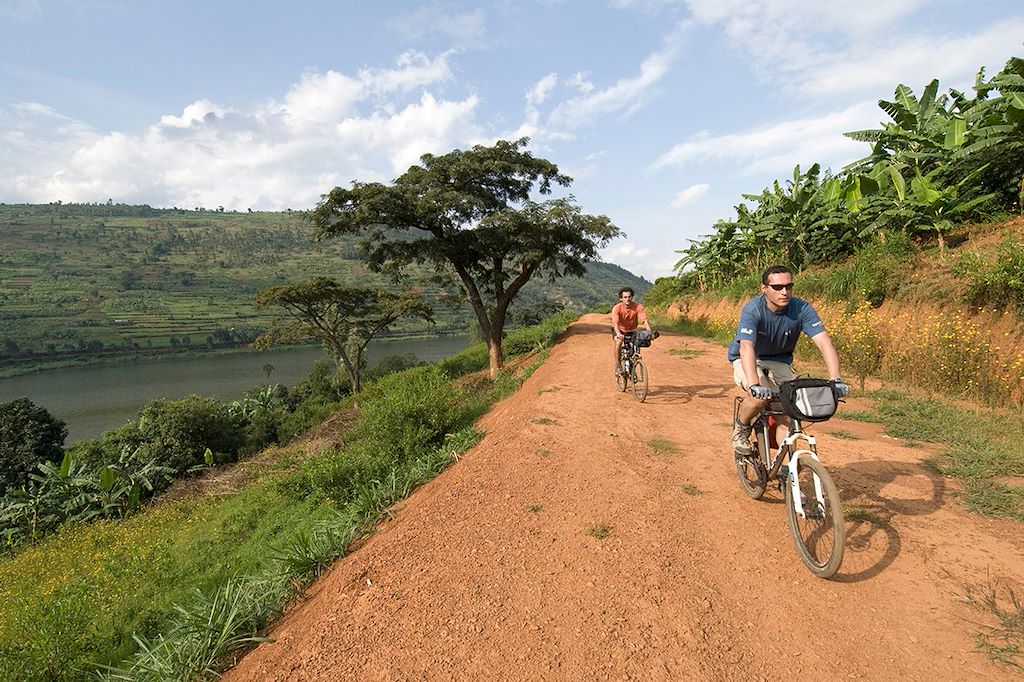
This famous trail follows the scenic eastern side of Lake Kivu, passing through rural communities, hills, plantations and small lakeside settlements between Rubavu in the north and Rusizi in the south.
The official Visit Rwanda tourism website describes the route as approximately 227 kilometres long, with a typical cycling duration of five days.
Travellers without five days can choose shorter stages with a guide rather than ride the entire route.
The terrain varies between rough dirt roads, gravel sections, hills and some paved connections. Riders encounter frequent climbs and descents, making the full route more demanding than its total distance might suggest.
One of the great attractions is the opportunity to appreciate rural Rwanda at close range. Along the way, cyclists may pass coffee plantations, farming areas, trading centres and communities overlooking Lake Kivu.
Stops can be arranged for photography, refreshments, cultural experiences and visits to local businesses.
Different stages offer changing views of islands, hills, shoreline settlements and beautiful agricultural landscapes.
Recommended duration: Approximately five cycling days for the full route, with flexibility for rest days or shorter sections.
Recommended equipment: Suitable mountain bike or robust gravel bike with reliable brakes and climbing gears.
Fitness level: Moderate to high for the full route.
Before planning your trip, read our Lake Kivu beaches guide and Lake Kivu fishermen experience.
2. Cycling in Kigali City
Kigali is a fascinating destination for visitors who want to explore Rwanda’s capital from a different perspective.
The city is spread across numerous hills and offers striking views, busy neighbourhoods, markets and modern urban scenery.
A guided cycling excursion can introduce visitors to selected neighbourhoods, scenic viewpoints and aspects of Kigali’s everyday life.
However, Kigali is not a flat city, and riding uphill can be physically demanding even over relatively short distances.
Urban traffic also requires care. Motorcycles, vehicles and pedestrians share many roads, so a local guide familiar with suitable cycling routes is recommended for first-time visitors.
Some scheduled car-free road events may offer additional recreational cycling opportunities, but routes and event dates should be confirmed before travelling.
Visitors interested in cultural sightseeing can combine a cycling outing with a separate guided city experience.
Our Kigali city and Volcanoes itinerary shows how the capital can fit into a longer Rwanda visit.
Best for: Travellers interested in short cycling tours, local neighbourhoods and city viewpoints.
Recommended duration: Half-day or full-day.
3. Musanze Cycling Adventures Near Volcanoes National Park
Musanze is one of Rwanda’s best destinations for combining scenic cycling with mountain gorilla tourism.
Located in the northern part of the country, Musanze sits close to the Virunga Mountains and serves as the main gateway to Volcanoes National Park.
The surrounding region features picturesque agricultural landscapes, volcanic scenery, local villages and beautiful countryside roads.
Visitors can arrange guided cycling routes through selected areas outside the protected park, enjoying views of the Virunga volcanoes.
Musanze is also associated with the Africa Rising Cycling Centre, an important part of Rwanda’s cycling development.
The centre and local cycling organizations have helped promote the country’s competitive and recreational cycling culture.
Visitors interested in the region can combine cycling with gorilla trekking, golden monkey tracking or a suitable cultural excursion.
Learn about the wider destination in our Volcanoes National Park guide and Volcanoes visitor guide.
Best for: Mountain biking, scenic countryside rides and cycling enthusiasts combining adventure with primate trekking.
4. Cycling Around Lakes Burera and Ruhondo
Lakes Burera and Ruhondo are commonly known as Rwanda’s twin lakes. They are located in the scenic northern highlands, surrounded by green hills and impressive views toward the Virunga volcanic landscape.
The surrounding countryside provides attractive opportunities for guided cycling excursions.
Depending on the selected route, cyclists may pass rural homes, farming areas, small villages and viewpoints overlooking the lakes.
Some roads are steep or rough, so visitors should choose an itinerary appropriate for their experience.
Rather than assuming there is one universally suitable marked trail, ask your operator to confirm the current route, road conditions and estimated cycling distance.
A twin-lakes cycling excursion can be a good addition to a longer stay around Musanze.
For visitors interested in other regional activities, explore our golden monkey trekking guide.
Best for: Scenic cycling, photography and rural exploration.
5. Cycling Around Karongi and Lake Kivu
Karongi, also known as Kibuye, is a beautiful lakeside town along Rwanda’s western region.
The surrounding hills offer remarkable views across Lake Kivu, with winding roads and rural tracks connecting villages and agricultural areas.
Visitors can arrange selected shorter cycling excursions in the Karongi region instead of committing to the entire Congo Nile Trail.
This is particularly appealing to travellers who want a balance between cycling, relaxation and lake activities.
After a guided ride, visitors may enjoy a boat excursion, scenic waterfront stay or an evening overlooking the lake.
Lake Kivu also provides opportunities for cultural and photography-focused excursions.
Explore our Lake Kivu destination guide for background on the region.
Best for: Cycling enthusiasts who appreciate lake views, smaller towns and scenic rural routes.
6. Countryside Cycling Near Huye and Southern Rwanda
Southern Rwanda offers another attractive setting for visitors interested in cultural cycling and countryside exploration.
The region includes cultivated hillsides, local communities and roads connecting smaller towns with rural agricultural areas.
Huye is particularly important as a centre of education and Rwandan cultural history.
Visitors can combine a guided cycling excursion on appropriate local routes with an organized visit to cultural attractions.
One notable option is the Ethnographic Museum, which introduces travellers to Rwanda’s traditional material culture and heritage.
Read our Ethnographic Museum in Rwanda guide.
Best for: Cultural travellers, experienced countryside cyclists and visitors exploring southern Rwanda.
7. Cycling Routes Near Nyungwe and Gishwati-Mukura
Rwanda’s western and southwestern highlands feature remarkable rainforest scenery, tea-growing landscapes and mountainous roads.
Selected public roads and community routes near these destinations may be suitable for guided cycling, subject to road safety and local authorization.
However, cycling on roads near a national park is not the same as being permitted to cycle inside that national park.
Protected forests have specific access rules. Visitors should not enter park trails with bicycles unless the relevant authority explicitly authorizes the activity.
Instead, many travellers combine a countryside cycling excursion with a separately booked park experience, such as a rainforest walk, chimpanzee trek or canopy walk.
For planning, see our Rwanda national parks guide and Nyungwe canopy walk guide.
Rwanda Cycling Routes Compared
Choose a route based on your fitness, interests, available days and preferred level of assistance.
| Cycling area | Typical experience | General difficulty |
|---|---|---|
| Congo Nile Trail | Multi-day mountain biking | Moderate to challenging |
| Kigali | Urban and hill cycling | Varies; traffic and steep climbs |
| Musanze | Countryside cycling and volcano views | Easy to challenging, depending on route |
| Burera & Ruhondo | Lake viewpoints and village roads | Moderate, with hilly sections |
| Karongi | Lake Kivu and rural tracks | Moderate to challenging |
| Southern countryside | Rural roads and cultural stops | Route-dependent |
Important: These are general planning descriptions, not official difficulty ratings. Exact routes, elevation gain, road surfaces and distances should be confirmed with the cycling guide before booking.
Why Choose Rwanda for a Cycling Safari?
Spectacular Hilly Landscapes
Rwanda’s famous rolling hills create a beautiful backdrop for cycling. Routes pass through valleys, cultivated slopes, villages and scenic highlands.
The changing elevations offer rewarding viewpoints, although they also make many cycling routes physically demanding.
Beautiful Lake Kivu Scenery
Lake Kivu is one of Rwanda’s most attractive regions for cycling, particularly along the Congo Nile Trail.
The lake’s shoreline, green hills and islands provide excellent opportunities for photography and peaceful breaks during a ride.
Meaningful Cultural Encounters
Cycling creates opportunities to observe everyday life in rural Rwanda at a slower pace.
Visitors may pass farming communities, roadside markets and local trading centres while travelling between destinations.
Cultural interactions should remain respectful and appropriately arranged, particularly when visiting private farms or homes.
Rwanda’s Strong Cycling Culture
Competitive cycling has become an important part of Rwanda’s sporting identity.
Tour du Rwanda and the country’s cycling development programmes have helped draw international attention to local talent and cycling infrastructure.
Rwanda also hosted the 2025 UCI Road World Championships, a significant milestone for cycling on the African continent.
Cycling Combined with Wildlife Safaris
One of Rwanda’s greatest advantages is the possibility of combining cycling with other memorable activities.
A visitor can enjoy a scenic ride near Musanze, then take part in a separately arranged gorilla trek in Volcanoes National Park.
Other options include golden monkey tracking, Lake Kivu boat trips, cultural experiences and rainforest adventures in Nyungwe.
Learn more about the range of experiences in our Rwanda multi-park safari guide.
How Fit Do You Need to Be for Cycling in Rwanda?
Rwanda’s hilly terrain makes cycling more physically demanding than riding the same distance on flat ground.
However, not every cycling tour requires advanced fitness.
For Beginners
Choose a short guided ride on a suitable route with manageable climbs and regular rest stops.
An electric-assist mountain bike may make longer or steeper rides more accessible when rental equipment is available.
For Intermediate Cyclists
Consider longer countryside rides near Musanze, Lake Kivu or selected stages of the Congo Nile Trail.
Regular cycling experience, reasonable endurance and confidence on uneven surfaces are useful.
For Experienced Cyclists
The full Congo Nile Trail provides a challenging multi-day adventure involving hills, rough surfaces and sustained daily effort.
Experienced riders may also enjoy custom longer routes on suitable roads through Rwanda’s mountainous countryside.
The most important factors are your endurance, balance, bike-handling skills and comfort with climbing and descending.
Travellers with significant health or mobility concerns should seek individualized advice before committing to a demanding cycling route.
What to Pack for a Cycling Adventure in Rwanda
Proper equipment makes a significant difference to comfort, safety and enjoyment during a Rwanda cycling tour.
Should You Bring Your Own Bicycle?
Bringing your own bicycle can be worthwhile if you are an experienced cyclist and prefer specific equipment.
However, transporting a bicycle by air can involve additional charges, packaging requirements and logistical challenges.
For many travellers, hiring a suitable mountain bike or electric mountain bike locally is a more convenient option.
Before accepting a rental, check the frame size, tires, brakes, gears, suspension and general condition. Confirm whether a helmet, spare tube, pump and mechanical support are included.
Is an Electric Bike a Good Option?
Electric-assist mountain bikes can help reduce the effort required on some hills, allowing riders to enjoy longer routes at a more comfortable pace.
They do not eliminate the need for balance, basic fitness and cycling skills.
Rental availability, battery range, charging arrangements and suitability for the selected route must be confirmed before departure.
Cycling Safety Tips for Travellers in Rwanda
Always Wear a Helmet
Use a properly fitted cycling helmet and avoid riding without suitable protective equipment.
Cycle with a Guide on Unfamiliar Routes
A knowledgeable local guide can help with navigation, road conditions, safety decisions and appropriate cultural stops.
Avoid Cycling After Dark
Rural roads may have limited lighting, narrow shoulders and unexpected hazards. Schedule rides to finish in daylight.
Be Careful on Steep Descents
Rwanda’s hills can produce fast downhill sections. Maintain a controlled speed and use a bike with dependable brakes.
Check the Weather
Heavy rainfall can make dirt roads muddy and slippery. Your guide should adjust or postpone routes when conditions become unsafe.
Carry Sufficient Drinking Water
Cycling uphill in warm conditions can be tiring. Drink regularly and plan safe places to refill water.
Use Support Transport for Multi-Day Tours
For longer cycling trips, a support vehicle can carry luggage, provide logistical assistance and transport riders who cannot comfortably complete a stage.
Check Current Regional Travel Advice
Some routes near Lake Kivu approach Rwanda’s border with the Democratic Republic of the Congo. Security conditions and travel advisories can change, particularly around parts of Rubavu and Rusizi. Confirm current advice and route suitability before travelling.
Respect National Park Restrictions
Do not assume you may ride inside protected areas simply because there are roads or trails nearby. National parks may require permits, authorized guides or specific activities. Confirm cycling access separately with the relevant authority.
Best Time for Cycling Adventures in Rwanda
Rwanda can be visited throughout the year, but rainfall influences the condition of mountain biking trails and countryside roads.
June to September: Popular Dry-Season Cycling
This is generally one of the most convenient periods for cycling because dirt roads and trails are often firmer and less slippery.
Clearer weather can make long-distance riding and scenic photography more comfortable, although rain is still possible.
December to February: Another Good Cycling Period
These months often provide relatively favourable conditions for road and mountain cycling.
The highland climate can remain cool, particularly in the morning and evening, so suitable layers are useful.
March to May: Wetter Conditions
The long rainy season commonly brings muddy tracks, slippery descents and changing weather.
Cycling is still possible on suitable routes, but challenging off-road sections may require additional caution or itinerary changes.
October to November: Short Rains
Rainfall may affect cycling routes during this period, particularly on dirt roads and mountain trails.
Travellers planning a cycling safari during wetter months should allow flexibility and discuss alternative routes with their guide.
For detailed month-by-month planning, read our best time to visit Rwanda guide.
SIGNATURE CYCLING ITINERARY
Sample 5-Day Congo Nile Trail Cycling Safari
This itinerary illustrates a classic north-to-south journey along Lake Kivu. Distances are approximate because actual tracks, detours and overnight locations can change.
DAY 1 • APPROX. 40–45 KM
Rubavu to Kinunu
Begin near Rubavu on Lake Kivu’s northern shore. After a cycling briefing and bicycle check, follow countryside routes through green hills, farms and lakeside communities. Enjoy scenic views before reaching your overnight accommodation around Kinunu.
DAY 2 • APPROX. 45–55 KM
Kinunu to Karongi
Continue south through changing highland landscapes, rural settlements and cultivated hills. Some sections involve demanding climbs and descents. Arrive in the Karongi area and relax beside Lake Kivu after the day’s ride.
DAY 3 • APPROX. 30–40 KM
Karongi to Mugonero Area
Enjoy another scenic day with forested hills, agricultural landscapes and opportunities for local encounters. The route may include challenging uphill sections, so allow enough time for breaks and photography.
DAY 4 • APPROX. 30–40 KM
Mugonero Area to Kibogora
Continue through southwestern Rwanda’s beautiful countryside. Depending on the confirmed route, encounter villages, rolling farmland and views over the lake. Finish at a suitable guesthouse or lodge near Kibogora.
DAY 5 • APPROX. 45–60 KM
Kibogora to Rusizi
Complete the final stage toward Rusizi in southern Rwanda. Celebrate your cycling adventure, enjoy lunch and continue with your planned onward transfer or additional Rwanda safari activities.
Route note: These daily figures are indicative rather than surveyed GPX stage measurements. The official trail totals approximately 227 km, but the distance ridden on each day depends on the precise route, accommodation, detours and surface conditions. Have your guide confirm the full itinerary before booking.
Where to Stay During a Cycling Safari in Rwanda
Rwanda offers a range of accommodation options, from simple guesthouses and community properties to comfortable lakeside lodges.
The ideal place to stay depends on the confirmed cycling route, daily distance and your preferred level of comfort.
Rubavu: Beginning of the Congo Nile Trail
Rubavu provides a convenient base for visitors preparing to begin the Congo Nile Trail. The town offers accommodation choices, restaurants and lakeside scenery.
Staying overnight before departure allows time to check the bicycle, meet your guide and prepare equipment.
Kinunu: Rural Lakeside Accommodation
Kinunu is a common stop for cyclists travelling south from Rubavu.
Accommodation in the area may include guesthouses and properties associated with the beautiful agricultural landscapes surrounding Lake Kivu.
Karongi: Comfortable Lake Kivu Lodges
Karongi offers a broader selection of lakeside accommodation, from modest guesthouses to more comfortable resorts.
Visitors can relax by the water after a challenging cycling day and enjoy a peaceful evening surrounded by hills.
Kibogora and Rusizi: Southern Trail Stops
The southern part of the route has guesthouses and local accommodation suitable for planned overnight stops.
Availability and standards vary, so accommodation should be reserved around the confirmed daily cycling stages.
Visitors continuing toward Nyungwe may also wish to compare our Nyungwe rainforest activities and Nyungwe canopy walk information.
Combining Cycling with a Rwanda Gorilla and Wildlife Safari
A cycling adventure can be the highlight of your Rwanda holiday or one part of a longer itinerary.
Cycling and Gorilla Trekking
Many travellers combine cycling near Musanze or Lake Kivu with mountain gorilla trekking in Volcanoes National Park.
Gorilla trekking requires a separate official permit and must be booked for a specific date.
It is advisable to avoid scheduling an exhausting cycling stage immediately before your gorilla trek, especially if you are concerned about physical fatigue.
Read our Rwanda gorilla trekking guide and first-time gorilla trekking advice.
Cycling and Golden Monkey Tracking
Golden monkey trekking provides another memorable experience near Musanze.
The activity takes place in Volcanoes National Park and offers opportunities to observe these active primates in their bamboo habitat.
Travellers can organize cycling on one day and golden monkey tracking on another.
Cycling and Lake Kivu Relaxation
After a long cycling route, visitors may choose to remain near Lake Kivu for additional relaxation.
Depending on the location, activities can include boat trips, kayaking, lakeside photography or cultural experiences.
A visit to the lake can be especially refreshing before continuing to another destination.
Cycling and Nyungwe National Park
For travellers finishing near Rusizi, Nyungwe National Park can be a rewarding onward destination.
It offers chimpanzee trekking, guided forest walks, birdwatching and a canopy walkway.
These activities must be booked separately and are subject to park regulations and availability.
Cycling and Akagera Wildlife Safaris
Visitors interested in classic savannah wildlife can extend their Rwanda holiday to Akagera National Park.
Akagera is known for elephants, buffaloes, giraffes, zebras, lions and rhinoceros, along with other wildlife and bird species.
The park is best explored through authorized safari arrangements rather than assuming bicycles can be used on game-drive routes.
Read our Akagera safari guide and Akagera wildlife guide.
How Much Does a Cycling Safari in Rwanda Cost?
The price depends on the number of cycling days, route difficulty, group size, accommodation, bicycle choice and whether a support vehicle is needed.
A short guided ride around Kigali or Musanze generally has a different cost structure from a five-day Congo Nile Trail expedition.
For a multi-day cycling trip, the quotation may include bicycle hire, guides, accommodation, meals, support transport, luggage transfers and mechanical assistance.
Some tour operators offer both regular mountain bikes and electric-assist bikes, with different prices.
Visitors should also budget for personal expenses, optional activities, travel insurance and park permits if adding wildlife experiences.
Rather than relying on an old published rate, request a current quotation based on your actual travel dates and group size.
Our Rwanda safari planning tips explain the importance of coordinating official activities and travel arrangements.
Why a Support Vehicle Can Be Worth Including
A support vehicle makes longer cycling itineraries more comfortable by transporting luggage, carrying extra supplies and providing an alternative when a rider becomes tired or encounters mechanical problems.
Support transport is particularly valuable on remote routes with steep hills and limited roadside assistance.
For travellers planning a more extensive Rwanda holiday, our Uganda and Rwanda combined safari guide introduces cross-border itinerary options.
How to Choose a Reliable Cycling Tour Operator
Before booking, confirm that the provider understands your route and supplies suitable, maintained equipment.
Ask about guide experience, bicycle sizes, safety procedures, emergency support, weather arrangements and the maximum cycling distance per day.
The itinerary should clearly identify accommodation, meals, support transport and any additional fees.
Safari Vacations and Travel Services can help coordinate a personalized Rwanda adventure, including cycling arrangements through suitable local providers where available.
Travellers combining cycling with gorilla trekking can also explore our Volcanoes National Park porter guide.
Frequently Asked Questions About Cycling Adventures in Rwanda
1. Is Rwanda a good destination for cycling?
Yes. Rwanda offers beautiful hills, scenic rural roads, off-road trails and guided cycling experiences for different skill levels.
2. What is the best cycling route in Rwanda?
The Congo Nile Trail is Rwanda’s most famous long-distance cycling route, stretching approximately 227 kilometres between Rubavu and Rusizi along the Lake Kivu region.
3. How long does it take to cycle the Congo Nile Trail?
Rwanda’s official tourism website describes a typical journey of approximately five days. The exact duration depends on fitness, route conditions and overnight stops.
4. Can beginners enjoy cycling in Rwanda?
Yes. Beginners can select shorter guided rides on suitable routes, although Rwanda’s hills can make cycling more demanding than expected.
5. Do I need to bring my own bicycle?
No. Suitable bicycles may be rented through cycling providers. Confirm size, condition, helmet availability and any additional rental charges.
6. Can I rent an electric mountain bike in Rwanda?
Some providers offer electric-assist mountain bikes. Availability, battery range and suitability for your route should be confirmed before booking.
7. What is the best time of year for cycling in Rwanda?
June to September and December to February are generally favourable periods because trail conditions are often drier.
8. Can I cycle in Rwanda during the rainy season?
Yes, on suitable routes. However, heavy rain can make off-road surfaces slippery and increase the risk of delays or route changes.
9. Is cycling in Kigali suitable for tourists?
Yes, with appropriate route planning. Kigali has steep hills and urban traffic, so a knowledgeable local guide is recommended for first-time visitors.
10. Can I cycle around Volcanoes National Park?
Guided cycling is possible on suitable roads around Musanze and the Volcanoes region. Access inside the national park requires separate authorization and should never be assumed.
11. Can I combine cycling with gorilla trekking?
Yes. Cycling near Musanze or Lake Kivu combines well with a separately booked gorilla trek in Volcanoes National Park.
12. What bicycle is best for the Congo Nile Trail?
A suitable mountain bike with dependable brakes, low climbing gears and durable tires is generally recommended. Experienced riders may consider an appropriate gravel bike.
13. Is the Congo Nile Trail difficult?
The full route can be demanding because of hills, rough surfaces and sustained riding over several days. Shorter stages can be arranged for less experienced cyclists.
14. Do I need a cycling guide in Rwanda?
A guide is strongly recommended for unfamiliar off-road routes and multi-day adventures. Guides help with navigation, safety and local arrangements.
15. Is cycling near Lake Kivu safe?
Cycling can be arranged on suitable routes, but terrain, road traffic, weather and changing regional security conditions must be assessed. Consult current travel advice, particularly for areas near the DRC border.
16. Where can cyclists stay along the Congo Nile Trail?
Accommodation can be arranged around Rubavu, Kinunu, Karongi, Kibogora and Rusizi, depending on the confirmed itinerary and lodging availability.
17. Can I combine Rwanda cycling with a Uganda safari?
Yes. A Rwanda cycling tour can be combined with Uganda gorilla trekking, chimpanzee tracking or wildlife safaris, subject to travel dates, permits and border arrangements.
18. Can Safari Vacations organize a Rwanda cycling adventure?
Yes. Safari Vacations and Travel Services can help plan Rwanda itineraries and coordinate available cycling guides, bicycle rental, accommodation, transfers and optional wildlife experiences.
Final Thoughts: Why Cycling in Rwanda Is Worth Experiencing
Cycling adventures in Rwanda provide an exciting way to explore the country’s scenic beauty and experience its landscapes beyond the familiar safari routes.
From the stunning Lake Kivu shoreline to the volcanic countryside around Musanze and the lively hills of Kigali, Rwanda has something to offer different types of cyclists.
The Congo Nile Trail is particularly rewarding for those who want a multi-day adventure through rural communities, challenging hills and spectacular lake scenery.
Travellers with less time can still enjoy shorter guided cycling excursions, cultural encounters and beautiful viewpoints without committing to a demanding five-day journey.
Cycling can also be combined with Rwanda’s celebrated wildlife experiences, including mountain gorilla trekking, golden monkey tracking and rainforest adventures in Nyungwe.
The most successful itineraries balance cycling distances, fitness, accommodation, weather and comfortable transport arrangements.
Before deciding on your final route, explore our Rwanda attractions guide and Akagera safari experiences.
For travellers interested in combining a cycling holiday with primate experiences across East Africa, our Bwindi and Rwanda primate trekking guide provides more ideas.
Safari Vacations and Travel Services can help you create a personalized Rwanda adventure that combines spectacular cycling routes with carefully selected cultural, wildlife and scenic experiences.
EXPLORE RWANDA WITH SAFARI VACATIONS
Ready for an Unforgettable Cycling Adventure in Rwanda?
Discover scenic Lake Kivu cycling routes, explore the Congo Nile Trail, ride through the beautiful countryside and combine your adventure with Rwanda’s gorilla trekking and wildlife experiences. Let Safari Vacations and Travel Services help design a trip suited to your interests, schedule and fitness level.
Safari Vacations and Travel Services Ltd
WhatsApp: +256 776 423286
www.ugandarwanda-safaris.com