
The Chimpanzee Habituation Experience in Uganda: A satisfying Primate Experience
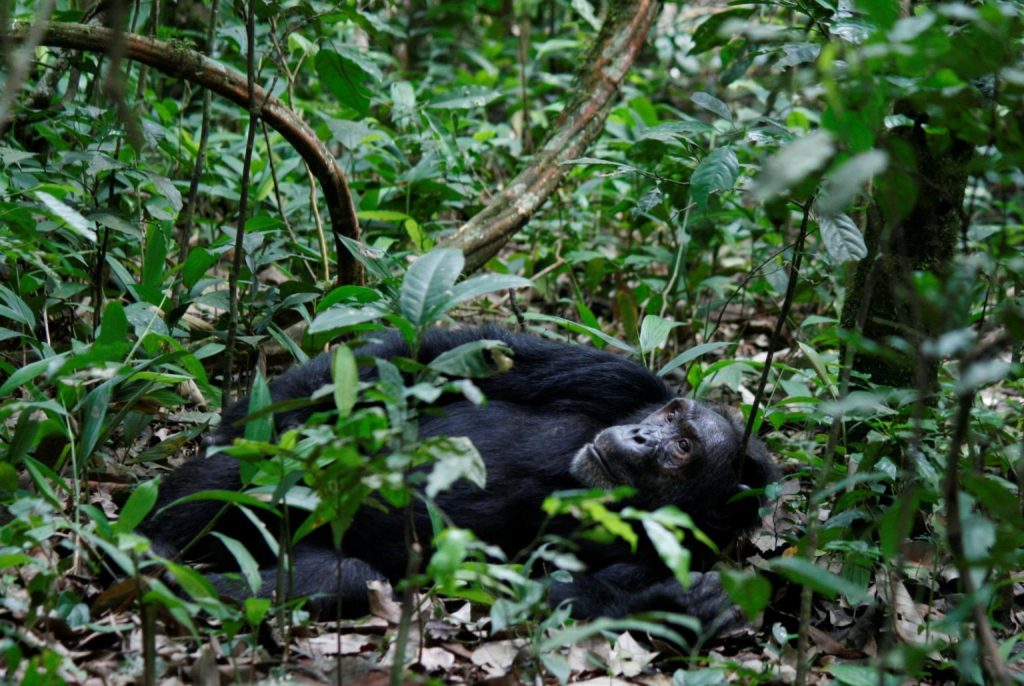 The Chimpanzee Habituation Experience is an immersive primate adventure that allows visitors to spend extended time observing wild chimpanzees as they gradually become accustomed to the presence of humans. Unlike an ordinary chimpanzee trek, which normally provides one hour with a fully habituated chimpanzee community after it has been located, the Chimpanzee Habituation Experience in Uganda allows participants to spend up to four hours following a chimpanzee group under the guidance of experienced researchers, trackers and ranger guides.
The experience takes visitors deep into a tropical rainforest, where they can observe chimpanzees feeding, travelling, grooming, communicating, resting, playing and interacting within their communities. Because the chimpanzees are still becoming familiar with controlled human presence, their behaviour may be more unpredictable and their movements more active than those of fully habituated groups. This makes the activity particularly rewarding for wildlife enthusiasts, primate researchers, conservation-minded travellers and photographers seeking a deeper understanding of chimpanzee life.
Understanding Chimpanzee Habituation
Chimpanzee habituation is the gradual process of introducing a wild chimpanzee community to the carefully managed presence of researchers, conservationists and tourists. The process is conducted slowly to reduce stress and ensure that the chimpanzees continue behaving naturally. It can take several years before a completely wild chimpanzee community becomes comfortable enough for regular tourism activities.
Throughout the process, researchers identify individual chimpanzees, study their social relationships and record their reactions to human observers. They may distinguish individuals through facial features, body size, scars, behaviour and other physical characteristics. Travelers joining the experience contribute indirectly to this important research and the long-term conservation of chimpanzees within Kibale National Park.
Habituation does not mean taming, feeding or physically interacting with chimpanzees. The animals remain completely wild and are free to move naturally throughout their forest territory. Visitors must maintain the recommended viewing distance, avoid direct contact and follow every instruction provided by their ranger guides. These regulations protect both the chimpanzees and the people entering their habitat.
How the Experience Differs from Ordinary Chimpanzee Trekking
The main difference between chimpanzee trekking and the Chimpanzee Habituation Experience is the amount of time visitors spend with the chimpanzees. Standard chimpanzee trekking in Kibale normally allows one hour with a fully habituated community after the chimpanzees have been located. The habituation experience provides up to four hours with a chimpanzee community participating in the habituation process.
Ordinary trekking is suitable for visitors who want a shorter and less demanding rainforest activity. The habituation experience is better suited to travellers who want to spend more time observing chimpanzee behaviour, following their movements and learning directly from researchers and ranger guides. The additional time also creates opportunities to witness behaviours that might not occur during a shorter encounter.
The Chimpanzee Habituation Experience generally starts earlier in the morning and may involve spending much of the day inside the forest. Participants should therefore be prepared for longer walking distances, unpredictable chimpanzee movements and changing rainforest conditions. This deeper level of participation makes habituation one of the most educational and rewarding primate safaris available in East Africa.
Why Chimpanzees Are Habituated
Chimpanzees are habituated to support conservation, scientific research and carefully managed tourism. Researchers need to observe chimpanzees over long periods to understand their communication, social organisation, feeding habits, territorial behaviour, reproduction and responses to environmental change. Habituation allows researchers to gather this information without capturing or removing the animals from their natural habitat.
The information collected helps conservation authorities protect chimpanzee communities and the forests on which they depend. It can reveal changes in population size, health, food availability and habitat use. Tourism revenue generated through permits also contributes to park management, ranger operations, conservation programmes and community development around protected forests.
Participation is strictly controlled, and every visitor must have a valid permit. Travelers should learn how to book a chimpanzee permit early because only a limited number of habituation permits are issued for each date. Restricting group sizes reduces pressure on the chimpanzees while providing participants with a quieter and more personal forest experience.
History of Chimpanzee Habituation in Uganda
Uganda has a long history of chimpanzee research and conservation, particularly in the forests of western Uganda. Researchers have spent decades studying chimpanzee communities and documenting their complex social lives. These long-term studies have helped establish Uganda as one of Africa’s most respected destinations for responsible chimpanzee tourism.
Kibale’s combination of extensive rainforest, abundant food sources and a significant chimpanzee population has supported both research and controlled visitor experiences. Over time, collaboration between researchers, wildlife authorities, local communities and tourism operators has made the Chimpanzee Habituation Experience accessible to travelers interested in more than a conventional wildlife sighting.
Although Uganda has several forests associated with chimpanzee tourism, travelers should carefully compare the best places for chimpanzee habituation before arranging their safari. Kibale remains the country’s principal destination for the organized four-hour habituation activity and offers the strongest combination of chimpanzee research, biodiversity, accessibility and visitor infrastructure.
What Visitors Do During the Experience
The day usually begins early with registration and a briefing at the designated visitor center. Rangers explain forest safety, chimpanzee viewing regulations, photography requirements and what participants should expect during the activity. Understanding the official start time for chimpanzee habituation is important because travelers must stay near the park and arrive before the briefing begins.
After the briefing, participants enter the forest with ranger guides, trackers and, in some cases, researchers. The team searches for evidence of chimpanzee activity, including calls, broken branches, feeding remains, footprints and nests. Once the chimpanzees are located, visitors follow them while maintaining the required distance and observing their behaviour.
The chimpanzees may remain on the forest floor, climb into the canopy or move rapidly through dense vegetation. Visitors may watch adults feeding, mothers carrying infants, juveniles playing, dominant males displaying or community members grooming one another. Vocalisations can travel over long distances, creating one of the most powerful and memorable sounds of the African rainforest.
Why Kibale Is Ideal for the Experience
Kibale is widely regarded as Uganda’s leading chimpanzee destination because of its extensive tropical forest, impressive primate diversity and established research activities. Its varied vegetation provides fruits, leaves, seeds, insects and other food resources required by chimpanzees throughout the year. This productive ecosystem supports several chimpanzee communities as well as numerous other primates, birds, butterflies and forest mammals.
The park can be reached by road from Kampala, Entebbe, Fort Portal, Queen Elizabeth National Park and other western Uganda destinations. Its location makes it easy to add crater lakes, Bigodi Wetland Sanctuary, community walks and wildlife safaris to a longer itinerary. Travelers can explore several activities to combine with chimpanzee trekking without travelling far from the forest.
Kibale also offers accommodation for different budgets, ranging from simple guesthouses and community lodges to comfortable mid-range camps and luxury forest retreats. Staying close to the visitor centre is particularly important because the habituation activity begins early and late arrival could result in missing the briefing or entering the forest after the group has departed.
Why the Chimpanzee Habituation Experience Is Special
The extended observation period is what makes the Chimpanzee Habituation Experience different from most wildlife activities. Four hours can provide enough time to see how chimpanzee behaviour changes as the community feeds, travels, rests and interacts. Visitors may notice individual personalities, alliances between adult males, relationships between mothers and infants, playful behaviour among juveniles and the role of grooming in maintaining social bonds.
Photographers benefit from having more time to adjust to challenging forest light, changing chimpanzee positions and movement within the canopy. Researchers and ranger guides also provide valuable explanations that help visitors understand what they are seeing. Instead of simply photographing a chimpanzee, participants begin to appreciate the complexity of an entire community.
The experience can also be combined with mountain gorillas for a comprehensive Uganda primate adventure. Travellers interested in seeing both species can explore options for combining gorilla trekking with chimpanzee habituation in one carefully planned itinerary.
Who Should Choose the Experience?
The Chimpanzee Habituation Experience is ideal for wildlife photographers, primate enthusiasts, researchers, conservation supporters and travellers who want a more immersive activity than standard chimpanzee trekking. It also suits visitors who have enough time to spend most of the day in the forest and are comfortable walking across uneven or muddy terrain.
Travellers with limited time may prefer a standard one-hour chimpanzee trek, while those seeking a deeper encounter should consider a dedicated chimpanzee habituation safari. A multi-day itinerary provides sufficient time to reach Kibale, rest before the early start and enjoy additional forest, wetland or cultural activities after the habituation experience.
Participants should be reasonably fit, patient and prepared for unpredictable wildlife movements. Chimpanzees do not follow a fixed route, and sightings depend on their natural behaviour. The activity can involve extended periods of walking, standing and following the community through dense forest. Proper hiking boots, long trousers, a rain jacket, drinking water and a comfortable daypack are therefore essential.
Why Uganda Offers an Exceptional Chimpanzee Adventure
Uganda combines accessible rainforest, experienced ranger guides, long-term chimpanzee research and exceptional biodiversity within one destination. Visitors can observe chimpanzees in the morning and later explore wetlands, crater lakes, savannah parks or local communities. A detailed Kibale chimpanzee guide can help travellers understand the forest, its wildlife and the activities available around the national park.
The Chimpanzee Habituation Experience is not simply a longer version of chimpanzee trekking. It is an opportunity to participate in a carefully managed conservation experience, learn how researchers study wild primates and develop a deeper appreciation for the social intelligence of chimpanzees. The extended viewing period, smaller group and research-focused approach make it one of Uganda’s most meaningful wildlife encounters.
Planning the experience requires advance permit confirmation, suitable accommodation and reliable transportation to Kibale. Booking through Safari Vacations and Travel Services gives travellers access to local knowledge, permit assistance, professional driver-guides and tailor-made itineraries that can combine chimpanzees with gorillas, wildlife, birdwatching and cultural experiences across Uganda
Why Choose the Chimpanzee Habituation Experience?
The Chimpanzee Habituation Experience is one of Uganda’s most immersive wildlife activities. It offers considerably more time in the rainforest than ordinary chimpanzee tracking and allows visitors to observe a wild chimpanzee community during different stages of its daily routine. Travelers join experienced ranger guides, trackers and researchers as they follow chimpanzees that are gradually becoming accustomed to controlled human presence.
Instead of entering the forest only for a brief wildlife sighting, participants become part of a longer and more educational conservation experience. The activity may begin early in the morning and continue for several hours as the chimpanzees leave their nests, search for food, travel through the forest and interact with other members of their community. This makes the Chimpanzee Habituation Experience in Uganda especially suitable for travellers who want to understand chimpanzee behaviour rather than simply take a few photographs.
Spend Four Hours with Wild Chimpanzees
The greatest advantage of the Chimpanzee Habituation Experience is the opportunity to spend up to four hours with the chimpanzees after they have been located. Standard chimpanzee tracking generally provides one hour of observation, which can pass very quickly when the chimpanzees are moving through dense vegetation or resting high in the forest canopy.
Four hours provide more opportunities to observe changes in behaviour. During the experience, the chimpanzees may feed, groom, travel, communicate, rest, play or climb between trees. Visitors can watch how individual chimpanzees interact and begin to recognize the different personalities within the community. The extended duration is one of the main reasons travelers compare chimpanzee trekking in Kibale with the more comprehensive habituation activity.
The four-hour period does not include the time spent searching for the chimpanzees. The total forest experience can therefore be much longer depending on the location and movement of the community. Chimpanzees are wild animals that travel freely within their territory, meaning that participants must be prepared to follow them across natural rainforest terrain.
Join Experienced Researchers and Ranger Guides
Another reason to choose the Chimpanzee Habituation Experience is the opportunity to enter the forest with people who understand chimpanzee ecology and behaviour. Ranger guides and trackers use vocalizations, nests, footprints, broken branches, feeding remains and previous movement patterns to locate the chimpanzee community.
Researchers may explain how individual chimpanzees are identified, how social relationships are recorded and how behavioural changes are monitored over time. Participants learn why habituation must be conducted gradually and why visitors must follow strict rules when approaching the chimpanzees. This educational element transforms the activity into a meaningful Kibale National Park adventure rather than an ordinary forest walk.
Guides also interpret the sounds and signs of the rainforest. A distant pant-hoot may indicate the location of chimpanzees, while fresh fruit remains can show where the community recently fed. Learning how trackers read the forest gives visitors a deeper appreciation of the knowledge and patience required to study wild primates.
Observe Natural Chimpanzee Behaviour
The Chimpanzee Habituation Experience gives visitors enough time to observe a wider range of natural behaviour. Chimpanzees live in complex communities with social hierarchies, alliances and family relationships. Their activities can change throughout the day depending on food availability, weather, territorial movements and interactions with other chimpanzees.
 Visitors may see chimpanzees feeding on fruits, young leaves, seeds, flowers or insects. Some individuals may groom one another, strengthening their social bonds, while mothers protect and care for infants. Juveniles may chase, wrestle or swing from branches as older chimpanzees rest nearby. Adult males can display their strength by charging across the forest floor, striking tree roots or shaking branches.
Because the experience lasts longer, participants have a greater chance of witnessing several of these behaviours during one visit. Travellers planning a dedicated chimpanzee habituation safari can arrange enough time to enjoy the activity without rushing between distant destinations.
Enjoy a Smaller and More Exclusive Visitor Group
The Chimpanzee Habituation Experience is organised for a limited number of participants each day. Smaller groups reduce disturbance in the forest and create a quieter, more personal experience. They also make it easier for participants to hear explanations from the ranger guide and observe the chimpanzees without being surrounded by a large number of visitors.
A smaller group can be particularly valuable when chimpanzees are moving through narrow forest trails or feeding within dense vegetation. Participants can reposition carefully under the direction of their guide while maintaining the required distance from the animals. This controlled approach protects the chimpanzees and improves the quality of the visitor experience.
Because availability is limited, travellers should secure permits early, particularly during the popular dry-season months. Understanding how to book a chimpanzee permit helps visitors avoid disappointment and coordinate the activity with accommodation and transportation near Kibale National Park.
Benefit from Better Photography Opportunities
Rainforest photography can be challenging because chimpanzees move quickly, light levels are often low and vegetation can partially obstruct the subject. A standard one-hour encounter may provide limited time to adjust camera settings or wait for a chimpanzee to move into a clearer position. The Chimpanzee Habituation Experience gives photographers more time to understand the forest light and respond to changing conditions.
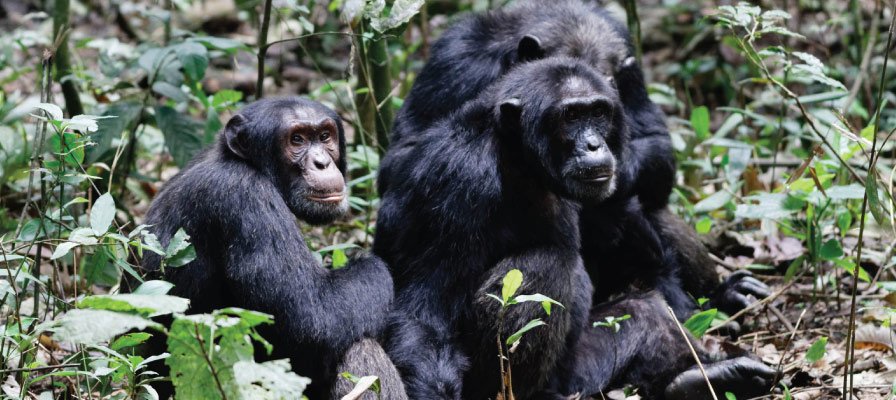
During four hours of observation, chimpanzees may move between the forest floor and the canopy. They may briefly enter open areas, rest on low branches or feed near a trail. The extended viewing period increases the possibility of capturing portraits, social interactions, mothers with infants, grooming sessions and active movement through the trees.
Photographers must avoid flash because it can disturb the chimpanzees. A camera that performs well in low light, a moderate telephoto lens, spare batteries and sufficient memory cards are useful. Visitors should also protect equipment from rain and humidity. A detailed guide to planning the habituation experience can help travelers prepare suitable clothing and photography equipment before arriving in Kibale.
Learn About Chimpanzee Social Structure
Chimpanzees live in communities that may contain numerous males, females, juveniles and infants. Unlike animals that remain together in one visible group throughout the day, chimpanzees have a flexible social system in which smaller parties separate and reunite depending on food, social relationships and other conditions.
Spending several hours with the community allows participants to see how these relationships change. Dominant males may display or patrol their territory, while females may travel independently with their young. Grooming can help maintain alliances, reduce tension and strengthen relationships between individuals. Vocal communication enables chimpanzees to remain connected even when they are separated by dense forest.
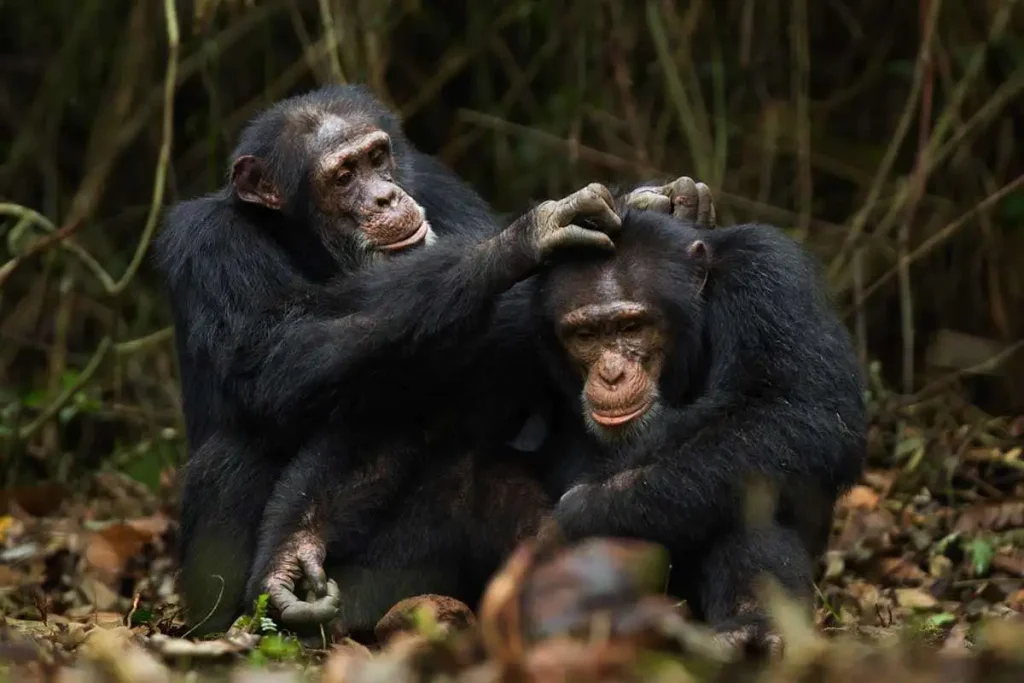 These observations help visitors understand why chimpanzees are among the most socially complex animals in Africa. The experience becomes more meaningful when combined with background information about Kibale’s chimpanzee population, forest ecosystem and long history of primate conservation.
Contribute to Chimpanzee Conservation
Choosing the Chimpanzee Habituation Experience also supports the conservation of chimpanzees and their rainforest habitat. Permit revenue contributes to protected-area management, ranger operations, wildlife monitoring and other conservation activities. Tourism can also create employment for guides, trackers, lodge workers, drivers, porters and community members living near the national park.
Habituation enables researchers to observe chimpanzees without removing them from the wild. Long-term monitoring can provide information about population changes, health, reproduction, social relationships and habitat use. This information helps conservation authorities make informed decisions about protecting chimpanzees and the forests on which they depend.
Visitors contribute most effectively when they respect the regulations established by the responsible wildlife authorities. Maintaining the recommended viewing distance, avoiding loud noise, following health requirements and obeying ranger instructions reduce the risks associated with human contact. Responsible participation helps ensure that the chimpanzee experience remains safe for both travellers and wildlife.
Explore the Rich Biodiversity of Kibale Forest
Although chimpanzees are the main attraction, the forest contains many other species that can enrich the experience. Participants may encounter black-and-white colobus monkeys, red-tailed monkeys, blue monkeys, grey-cheeked mangabeys and olive baboons. Forest duikers, bush pigs and signs of larger mammals may occasionally be seen along the trails.
Kibale is also an excellent destination for birdwatching. Hornbills, turacos, greenbuls, flycatchers and many other forest birds can be seen or heard during the walk. Colourful butterflies, unusual insects, towering trees, vines and dense undergrowth add to the atmosphere of the rainforest.
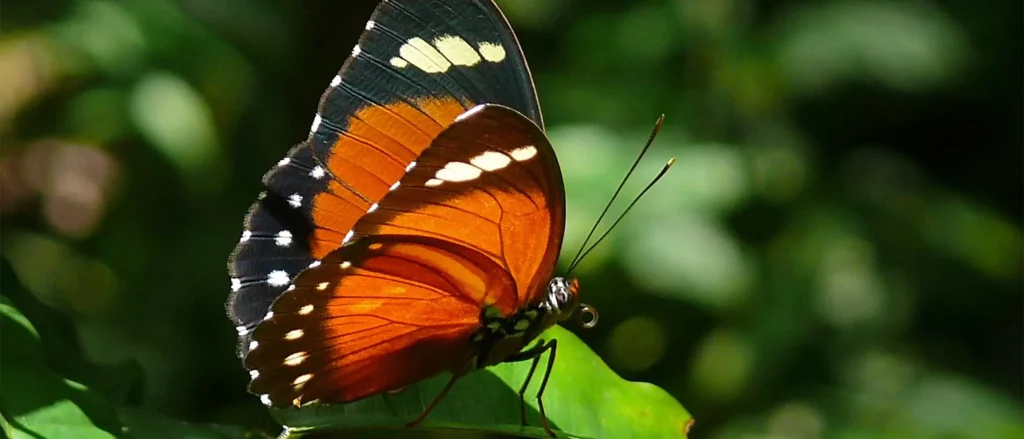 The longer duration gives visitors more time to notice this biodiversity instead of concentrating only on locating chimpanzees. Travellers can extend their stay and add guided forest walks in Kibale to explore plants, birds and smaller wildlife that may receive less attention during the habituation activity.
Combine Chimpanzees with Other Kibale Activities
The Chimpanzee Habituation Experience can be combined with several attractions around Kibale National Park. Bigodi Wetland Sanctuary offers community-guided walks with opportunities to observe monkeys, wetland birds and village life. The nearby crater lakes provide scenic landscapes, hiking opportunities and peaceful places to relax after the demanding forest activity.
Visitors can also explore Fort Portal, tea-growing areas, local communities and cultural attractions. Adding these experiences creates a balanced itinerary that combines wildlife observation with landscapes and meaningful community encounters. There are several activities to combine with chimpanzee trekking and habituation, making Kibale suitable for stays of several days.
Spending more than one night near the park is recommended. Arriving at least one day before the activity allows travellers to rest after the road journey and report for the early briefing on time. An additional night after the experience provides an opportunity to relax before travelling to another national park.
Combine Chimpanzee Habituation with Gorilla Trekking
Uganda is one of the few destinations where travellers can observe both wild chimpanzees and mountain gorillas during the same safari. Chimpanzee habituation in Kibale can be followed by gorilla trekking in Bwindi Impenetrable National Park or Mgahinga Gorilla National Park. This combination provides contrasting encounters with two of humanity’s closest living relatives.
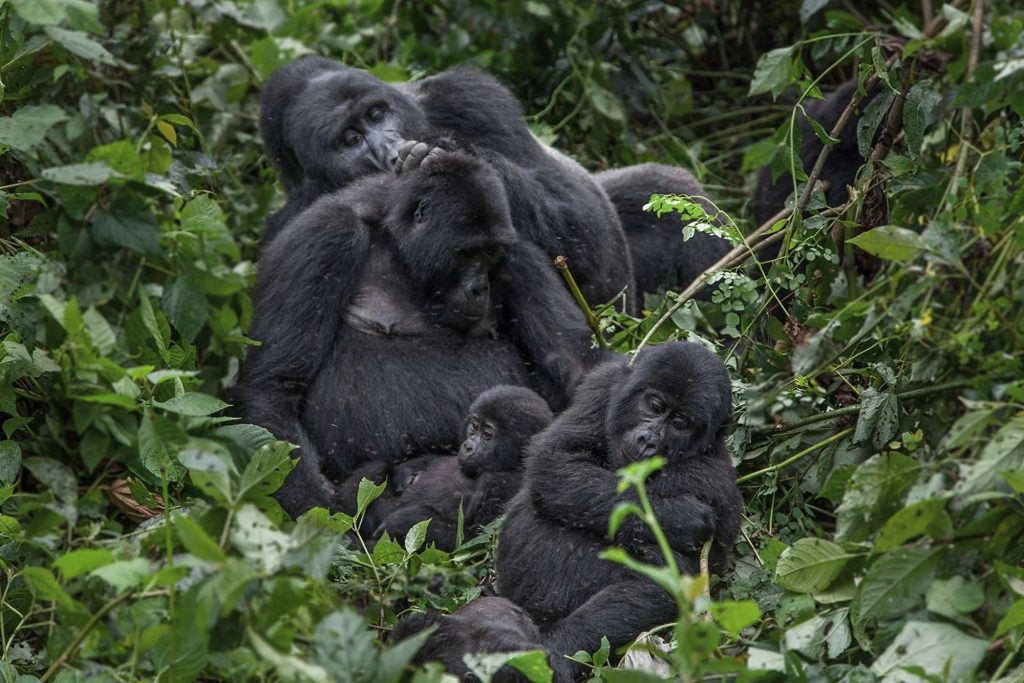 Chimpanzees are highly active and may move quickly through the forest, whereas mountain gorillas often remain together in a more visible family group. Experiencing both activities reveals important differences in their habitats, movement, communication and social behaviour. Travellers can arrange an itinerary focused on combining gorilla trekking with chimpanzee habituation while including wildlife viewing in Queen Elizabeth National Park between Kibale and Bwindi.
A combined primate safari requires careful planning because both activities depend on limited permits. Travel distances, accommodation locations and briefing times must also be coordinated correctly. Booking early is especially important during June to September and December to February.
Experience a More Adventurous Forest Activity
The Chimpanzee Habituation Experience is appealing to travellers who enjoy active and unpredictable wildlife encounters. The chimpanzees may travel considerable distances, climb steep areas or move through sections of dense vegetation. Participants must follow the ranger’s instructions while adapting to the natural movements of the community.
The physical effort adds to the sense of adventure. Forest conditions can include mud, exposed roots, fallen branches and slippery sections, particularly after rainfall. Proper hiking boots, long trousers, gaiters, gardening gloves and a lightweight rain jacket can improve comfort. Travellers should carry enough drinking water and a packed meal or snacks, depending on the arrangements for the day.
Anyone concerned about the physical demands can review information about Kibale chimpanzee trekking difficulty and discuss their fitness level with the tour operator. Although the activity can be demanding, preparation, suitable equipment and a manageable pace make it accessible to many reasonably fit travellers.
Enjoy an Educational Experience for Primate Enthusiasts
The Chimpanzee Habituation Experience is particularly valuable for travellers interested in animal behaviour, ecology, conservation and primate research. Instead of focusing only on seeing chimpanzees, participants learn how the animals use their habitat, communicate with one another and respond to environmental changes.
Ranger explanations help visitors recognise vocalisations, displays, feeding behaviour and interactions within the community. Participants may also learn about threats affecting chimpanzees, including habitat loss, human-wildlife conflict, disease transmission and illegal hunting. This knowledge creates a stronger connection between the visitor experience and the need for long-term conservation.
The activity is therefore suitable for photographers, students, researchers, wildlife enthusiasts and travellers seeking a meaningful Uganda primate safari. It provides a rare opportunity to observe science, conservation and tourism working together within the chimpanzees’ natural habitat.
Choose a Rare and Memorable Uganda Safari Experience
Many African safaris focus on observing wildlife from a vehicle. The Chimpanzee Habituation Experience is different because visitors enter the rainforest on foot and follow one of the world’s most intelligent primates. The sounds, vegetation, changing weather and physical movement create a sensory experience that cannot be reproduced in a vehicle or wildlife sanctuary.
Every habituation experience is different. One group may spend the morning feeding in fruiting trees, while another may travel rapidly across its territory. Visitors might hear chimpanzees long before seeing them or encounter several individuals at close but controlled viewing distances. This unpredictability makes the activity authentic and memorable.
Planning with Safari Vacations and Travel Services Ltd provides access to local permit assistance, suitable accommodation, experienced driver-guides and personalised itineraries. Whether the activity is booked as a dedicated Kibale safari or combined with gorillas and wildlife, the Chimpanzee Habituation Experience offers exceptional depth, education and adventure for travellers exploring Uganda.
Where Does the Chimpanzee Habituation Experience Take Place?
The Chimpanzee Habituation Experience takes place exclusively in Kibale National Park, one of Africa’s most important tropical rainforests and the undisputed primate capital of Uganda. Located in western Uganda, Kibale National Park is internationally recognised for its remarkable chimpanzee population, exceptional biodiversity and decades of scientific research. It is the only destination in Uganda where visitors can legally participate in the four-hour Chimpanzee Habituation Experience alongside researchers, Uganda Wildlife Authority ranger guides and experienced trackers.
Unlike ordinary chimpanzee trekking, which allows visitors to observe a fully habituated chimpanzee community for one hour, the Chimpanzee Habituation Experience provides a much deeper insight into the lives of wild chimpanzees. Participants accompany the research team from the early hours of the morning, following chimpanzees as they wake from their nests, begin searching for food and interact naturally throughout the forest. This unique opportunity is only possible because Kibale has spent decades developing successful chimpanzee research and conservation programmes.
Kibale National Park – Uganda’s Chimpanzee Capital
Kibale National Park covers approximately 795 square kilometres of protected tropical rainforest stretching across western Uganda. The park lies mainly within Kabarole and Kamwenge Districts, approximately 320 kilometres from Kampala and about 26 kilometres from Fort Portal, the region’s tourism hub. The combination of fertile volcanic soils, reliable rainfall and varying altitudes has created one of East Africa’s richest forest ecosystems.
The park is famous for supporting one of the highest concentrations of primates in Africa, with thirteen recorded primate species including chimpanzees, black-and-white colobus monkeys, red-tailed monkeys, blue monkeys, L’Hoest’s monkeys, grey-cheeked mangabeys, olive baboons and bush babies. Visitors interested in learning more about the park’s incredible biodiversity should explore the complete guide to Kibale Forest National Park before planning their safari.
The dense rainforest also shelters forest elephants, buffaloes, bush pigs, duikers, giant forest hogs, over 375 bird species and thousands of plant species that provide food for the resident chimpanzee communities throughout the year.
The Kanyanchu Visitor Centre
The Chimpanzee Habituation Experience begins at the Kanyanchu Visitor Centre, the main tourism and research headquarters inside Kibale National Park. Every participant must report here early in the morning for registration and a detailed briefing before entering the forest.
During the briefing, Uganda Wildlife Authority rangers explain forest safety, chimpanzee viewing regulations, conservation principles and the day’s programme. Participants are informed about maintaining the recommended viewing distance, avoiding flash photography, reducing noise and respecting the natural behaviour of the chimpanzees.
Because the activity starts very early, most travellers choose accommodation near Kanyanchu. Staying close to the visitor centre reduces travel time and ensures participants arrive before the official Chimpanzee Habituation Experience briefing.
Why Kibale National Park Is Ideal for Chimpanzees
Kibale National Park provides nearly perfect conditions for chimpanzees because of its diverse vegetation, abundant food resources and extensive protected forest. The rainforest contains hundreds of tree species that produce fruits, seeds, flowers and young leaves throughout different seasons, ensuring a reliable food supply.
Chimpanzees also feed on termites, ants, honey and occasionally small mammals. The availability of these natural food sources allows several chimpanzee communities to thrive within the park while maintaining their natural social behaviour.
The forest canopy, climbing vines, river valleys and swamp forests create ideal nesting and feeding habitats. These varied environments also support the long-term scientific studies that have made the Chimpanzee Habituation Experience one of Uganda’s most respected wildlife activities.
The Tropical Rainforest Ecosystem
Kibale’s tropical rainforest is among the oldest surviving forests in East Africa. It consists of mature evergreen forest, semi-deciduous woodland, riverine forest, grassland patches and wetlands that together create an exceptionally rich ecosystem.
Towering mahogany trees, figs, wild palms and numerous indigenous hardwood species dominate the landscape. Thick undergrowth, hanging vines and flowering plants provide shelter for insects, reptiles, amphibians and birds while supplying chimpanzees with nesting sites and food.
Walking through the forest during the Chimpanzee Habituation Experience allows visitors to appreciate not only the chimpanzees themselves but also the intricate ecological relationships that sustain this remarkable rainforest. Those interested in a broader rainforest adventure can also enjoy guided forest walks in Kibale National Park.
Altitude and Climate
Kibale National Park lies between approximately 1,100 and 1,600 metres above sea level. This moderate altitude creates pleasant temperatures throughout the year, generally ranging between 14°C and 27°C depending on the season and elevation.
The park receives rainfall during most months of the year, although the heaviest rains normally occur between March and May and again from September to November. These rains keep the forest permanently green while supporting fruiting trees that sustain chimpanzees and other wildlife.
Even during the dry seasons, visitors should expect occasional showers because tropical rainforests create their own microclimate. Carrying waterproof clothing remains essential when participating in the Chimpanzee Habituation Experience.
Accessibility from Kampala
Kibale National Park is easily accessible by road from Kampala, Uganda’s capital city. The journey covers approximately 320 kilometres and usually takes between five and six hours depending on traffic and road conditions.
The route passes through Mityana, Mubende and Fort Portal before reaching the national park. Along the way, visitors enjoy changing landscapes including rolling hills, tea plantations, small trading centres and scenic countryside.
Travellers beginning their safari from Kampala often combine the Chimpanzee Habituation Experience with Queen Elizabeth National Park, Bwindi Impenetrable National Park or Murchison Falls National Park to create a longer Uganda wildlife itinerary. A detailed guide to how to get to Kibale National Park helps visitors choose the most suitable travel option.
Accessibility from Entebbe International Airport
International visitors arriving through Entebbe International Airport can drive directly to Kibale National Park or spend their first night in Entebbe or Kampala before travelling the following morning.
The drive from Entebbe generally takes between six and seven hours, making it convenient for travellers arriving on morning flights. Visitors landing late in the evening normally overnight near the airport before beginning the journey to Kibale the next day.
Several safari itineraries also combine domestic flights with shorter road transfers for visitors wishing to minimise driving time while maximizing wildlife activities.
Accessibility from Queen Elizabeth National Park
One of the greatest advantages of Kibale’s location is its proximity to Queen Elizabeth National Park. The drive between the two parks usually takes about two to three hours, allowing visitors to combine chimpanzee habituation with Big Five game drives, Kazinga Channel boat cruises and the famous tree-climbing lions of Ishasha.
This combination creates one of Uganda’s most popular safari circuits because it blends rainforest primates with classic African savannah wildlife in a relatively short distance. Many travellers explore activities to combine with chimpanzee trekking when designing longer itineraries.
Accessibility from Bwindi Impenetrable National Park
Kibale National Park also connects conveniently with Bwindi Impenetrable National Park, home to Uganda’s famous mountain gorillas. Depending on the chosen sector of Bwindi, the drive generally takes between five and seven hours.
This connection makes it possible to experience Africa’s two greatest primate encounters during one safari. Many visitors spend several days in Kibale before travelling south to Bwindi for gorilla trekking or gorilla habituation.
Travellers interested in seeing both species should consider combining gorilla trekking with chimpanzee habituation, one of Uganda’s most rewarding wildlife itineraries.
Research and Conservation Centre
Kibale National Park is not only a tourism destination but also an internationally respected centre for chimpanzee research. Scientists from Uganda and around the world have conducted long-term studies here for decades, documenting chimpanzee communication, reproduction, feeding ecology, disease, genetics and social behaviour.
The research conducted in Kibale has significantly improved global understanding of wild chimpanzees and continues to support conservation planning across Africa. Visitors participating in the Chimpanzee Habituation Experience benefit directly from this scientific knowledge as researchers often explain the significance of behaviours observed during the forest walk.
The long-term partnership between researchers, Uganda Wildlife Authority and conservation organisations has helped establish Kibale as one of Africa’s premier destinations for responsible primate tourism.
Nearby Attractions Worth Combining
Beyond the Chimpanzee Habituation Experience, Kibale National Park offers numerous attractions that enrich every safari. Bigodi Wetland Sanctuary provides outstanding birdwatching, monkey sightings and community tourism experiences. The nearby crater lakes offer breathtaking viewpoints, hiking opportunities and peaceful scenery ideal for relaxation after an active day in the rainforest.
Visitors can also explore tea plantations, cultural villages, Fort Portal City and the foothills of the Rwenzori Mountains before continuing to other national parks. Many travellers choose a comprehensive Uganda primates safari that combines chimpanzees, gorillas, golden monkeys and diverse wildlife within one unforgettable journey.
Why Kibale Remains the World’s Best Chimpanzee Habituation Destination
Few places in Africa offer the same combination of accessibility, biodiversity, scientific research and tourism infrastructure as Kibale National Park. The forest’s healthy chimpanzee population, experienced ranger guides, established research programmes and well-managed visitor system have made it the undisputed home of the Chimpanzee Habituation Experience.
Whether you are a wildlife photographer, conservation enthusiast, student or first-time safari traveller, Kibale offers an unmatched opportunity to observe our closest living relatives in their natural habitat while supporting long-term conservation efforts. Planning your journey with Safari Vacations and Travel Services Ltd ensures expert permit booking, carefully selected accommodation, comfortable transportation and a seamless safari experience from arrival to departure.
Chimpanzee Behaviour You May Observe
One of the greatest rewards of the Chimpanzee Habituation Experience is the opportunity to observe a wide range of natural chimpanzee behaviour over an extended period. Because visitors may spend up to four hours with the chimpanzees after locating them, there is more time to watch how individuals feed, communicate, groom, travel, rest and respond to other members of the community. This makes the experience especially valuable for wildlife photographers, primate enthusiasts and travellers interested in animal behaviour.
Chimpanzees live in complex communities with changing social relationships, family bonds and dominance structures. Their behaviour varies according to food availability, weather, age, social status and the presence of other chimpanzees. During a Chimpanzee Habituation Experience in Uganda, visitors may witness several behaviours within a single day, although every encounter remains unpredictable because the chimpanzees are completely wild.
Chimpanzee Feeding Behaviour
Feeding is among the most commonly observed activities during the Chimpanzee Habituation Experience. Chimpanzees are mainly fruit eaters, but their diet is highly varied and can include leaves, seeds, flowers, bark, honey, insects and occasionally small mammals. The availability of ripe fruit often influences where a chimpanzee community travels and how long it remains in a particular section of the forest.
Visitors may watch chimpanzees climb high into fruiting trees, select ripe fruits and discard unwanted parts. Some individuals feed quietly on their own, while others gather in small parties around a productive food source. Dominant animals may receive priority access, and younger chimpanzees often learn by watching their mothers and other adults.
The rich vegetation of Kibale National Park provides food throughout much of the year, helping support one of Uganda’s most important chimpanzee populations. During the Kibale Chimpanzee Habituation Experience, researchers may explain how seasonal fruiting patterns influence chimpanzee movement and social organisation.
Grooming and Social Bonding
Grooming is one of the most important social behaviours seen among chimpanzees. One individual carefully searches through another chimpanzee’s hair and skin, removing dirt, insects and dry skin. Although grooming serves a hygienic purpose, it is also essential for building and maintaining social relationships.
Chimpanzees often groom family members, close companions and important political allies. Lower-ranking individuals may groom dominant males, while friends may exchange grooming for extended periods. These quiet interactions can reduce tension, strengthen trust and help maintain stability within the community.
The longer observation period offered by the Chimpanzee Habituation Experience makes it easier to notice these subtle relationships. During ordinary chimpanzee tracking, visitors may focus mainly on locating and photographing the animals. A four-hour chimpanzee experience provides more time to watch how grooming reveals friendships, alliances and family connections.
Chimpanzee Communication
Chimpanzees communicate through vocalisations, gestures, body posture and facial expressions. Their calls can travel over long distances through the forest, allowing community members to remain connected even when they are separated by dense vegetation.
One of the most recognisable vocalisations is the pant-hoot, a rising series of calls often used to announce identity, location or excitement. Chimpanzees may also scream during conflict, grunt while feeding, bark when alarmed and exchange softer sounds during close social interactions.
During the Chimpanzee Habituation Experience, visitors may hear chimpanzees before seeing them. Experienced trackers interpret these sounds to determine the direction and approximate location of the community. Travellers interested in a deeper understanding of primate communication can explore more about Kibale’s chimpanzees before joining the forest activity.
Drumming on Tree Roots and Trunks
Chimpanzees sometimes drum against large tree roots or trunks using their hands and feet. These powerful sounds can travel considerable distances through the forest and may help individuals communicate their location, strength or excitement.
Adult males are particularly associated with drumming, although other members of the community may also use it. A male may drum before a display, during travel or while attempting to attract the attention of distant chimpanzees. Each individual may develop a recognisable rhythm that familiar researchers can identify.
Hearing drumming during a Uganda chimpanzee habituation safari can be one of the most dramatic moments of the day. The sound may echo through the forest long before the chimpanzee becomes visible, creating a powerful sense of anticipation for visitors following the ranger team.
Tool Use
Chimpanzees are famous for their intelligence and ability to use tools. In different populations across Africa, they have been observed using sticks to extract termites, leaves to collect water, stones to crack nuts and branches to investigate unfamiliar objects.
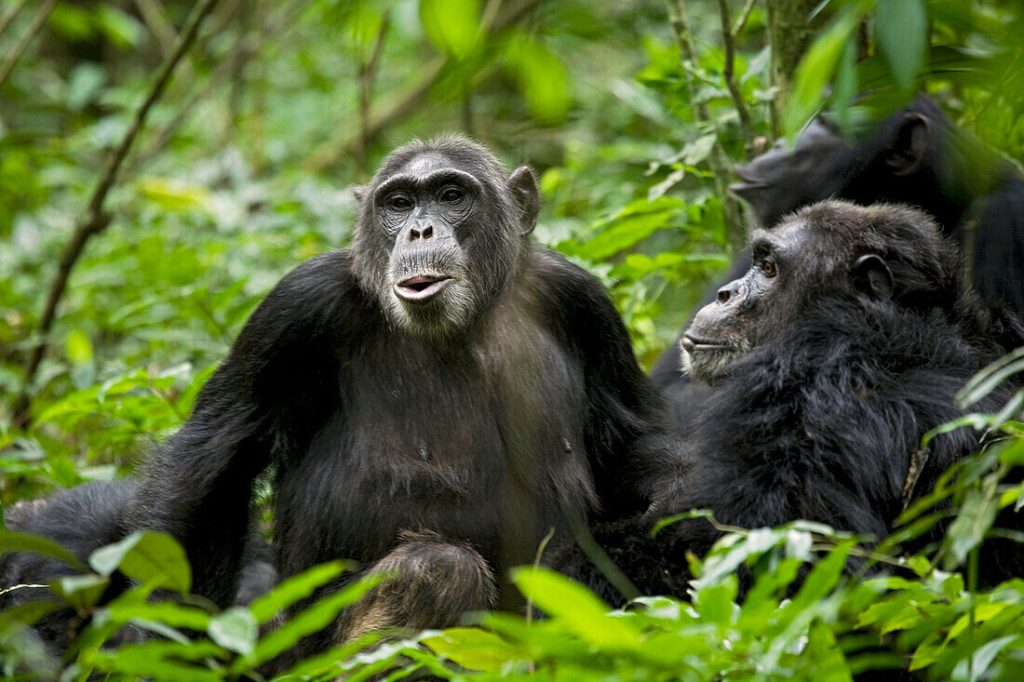 Tool use can vary between chimpanzee communities, suggesting that certain techniques are learned socially and passed from one generation to another. Young chimpanzees often watch adults closely before attempting to copy their actions. These learned traditions are sometimes described as forms of chimpanzee culture.
Visitors participating in the Chimpanzee Habituation Experience may occasionally observe tool use, although sightings are not guaranteed. Researchers may also point out signs that chimpanzees have used plants or branches in a particular way. Such observations demonstrate why chimpanzees are considered among the most intelligent animals in the world.
Chimpanzee Hunting Behaviour
Although chimpanzees are primarily fruit eaters, they sometimes hunt smaller animals. Red colobus monkeys are among the species that may be targeted, although hunting frequency varies according to location, season and the composition of the chimpanzee group.
Chimpanzee hunting can involve cooperation between several males, with individuals taking different positions during the pursuit. Successful hunters may share meat with allies, females or other members of the community. Meat sharing can strengthen social bonds and sometimes influence political relationships.
Witnessing a hunt during the Kibale Chimpanzee Habituation Experience is rare and can be intense. Visitors must remain calm and allow the ranger or researcher to explain what is happening. The behaviour is a natural part of chimpanzee ecology and should not be interrupted.
Nest Building
Chimpanzees build nests in trees where they rest and sleep. Each evening, an individual normally bends and weaves branches into a stable platform before adding smaller leafy branches for comfort. Mothers often share nests with young infants, while older juveniles gradually learn to build their own.
Researchers use fresh and old nests to understand chimpanzee movement, group size and habitat use. The location of a fresh nest can help trackers determine where a community spent the previous night. In some cases, participants may begin the Chimpanzee Habituation Experience by searching for the previous evening’s nesting area.
Nest building shows the planning ability and practical intelligence of chimpanzees. Visitors may also see temporary daytime nests used for resting. A detailed full-day chimpanzee experience can provide enough time to observe both active movement and quieter resting behaviour.
Dominance Displays
Adult male chimpanzees use dominance displays to demonstrate strength, reinforce rank and influence other members of the community. A display may involve rapid charging, branch shaking, loud vocalisations, tree drumming, ground slapping or dragging vegetation.
These displays can look intimidating, particularly when a large male moves quickly through the forest. However, the behaviour is usually directed toward other chimpanzees rather than visitors. Participants should remain still, avoid sudden movements and follow every instruction given by the ranger guide.
Dominance displays are among the most memorable behaviours observed during the Chimpanzee Habituation Experience. Researchers may explain which male holds the highest rank and how alliances with other males support his position. Leadership within a chimpanzee community can change over time through competition, coalition building and social strategy.
Social Hierarchy and Political Alliances
Chimpanzee communities have complex social hierarchies. Adult males often compete for dominance, but physical strength alone does not always determine leadership. Successful males may rely on intelligence, confidence, grooming partnerships and alliances with other individuals.
Lower-ranking males can cooperate to challenge a dominant individual, while a powerful male may maintain his position by sharing food, supporting allies or intervening in conflicts. Females also have social ranks and relationships that influence access to food, safety and support.
The Chimpanzee Habituation Experience allows visitors to observe how these political relationships operate in daily life. Small gestures, grooming sessions and temporary associations can be as important as loud displays. This depth of observation is one reason many primate enthusiasts prefer chimpanzee habituation to standard chimpanzee tracking.
Mother and Infant Care
Chimpanzee mothers have extremely close relationships with their infants. A newborn clings to its mother’s chest before eventually riding on her back as it becomes stronger. Mothers provide milk, warmth, protection and guidance while teaching their young how to move, feed and interact within the community.
Young chimpanzees remain dependent for several years and gradually learn essential survival skills by observing their mothers. They discover which foods are safe, how to build nests and how to respond to other chimpanzees. Strong mother-infant bonds are critical because chimpanzees have a long period of childhood and development.
Watching mothers care for infants is one of the most emotional parts of the Chimpanzee Habituation Experience in Uganda. Visitors may see infants exploring nearby branches, returning quickly to their mothers or watching older juveniles play. These interactions reveal how much chimpanzee development depends on patience, learning and family support.
Juvenile Play Behaviour
Young chimpanzees spend considerable time playing. They may chase one another, wrestle, swing from vines, climb small trees or imitate the behaviour of adults. Play helps juveniles develop coordination, strength, communication skills and social relationships.
Play can also teach young chimpanzees how to manage conflict and understand social boundaries. A juvenile may test the patience of an older individual before learning when to stop. Mothers often remain nearby while their young explore, although they may intervene if play becomes too rough.
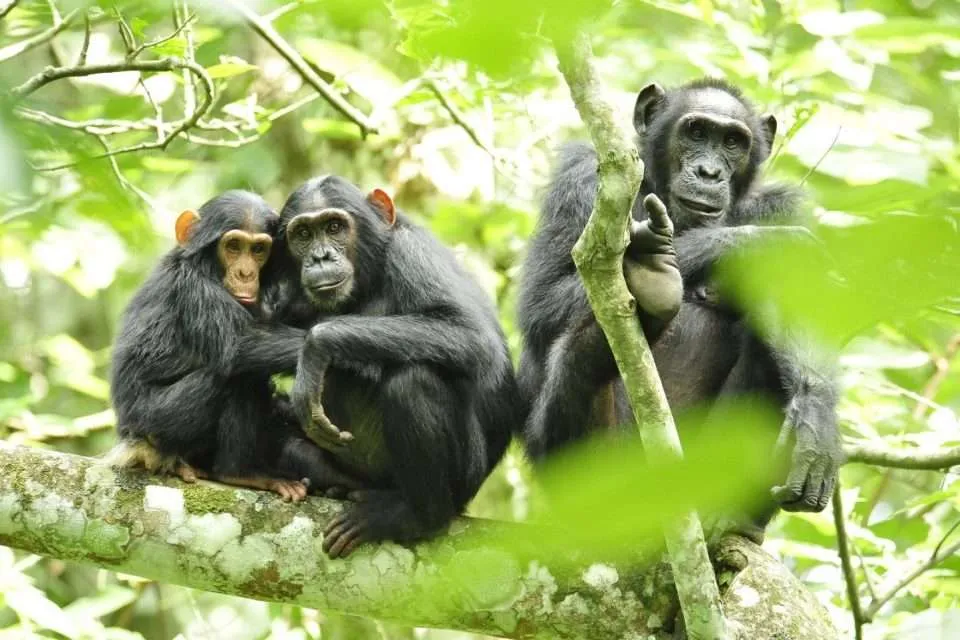 The four-hour chimpanzee experience increases the possibility of watching juveniles move between energetic play and quiet rest. Their curiosity and unpredictable movements are particularly rewarding for photographers, although visitors should avoid making noises or gestures intended to attract their attention.
Resting Behaviour
Chimpanzees spend part of the day resting, especially after feeding or during hot weather. Individuals may sit on the forest floor, lie on branches or gather in small groups. Resting periods provide opportunities for grooming, infant care and quiet social contact.
Although resting may appear less dramatic than feeding or displays, it offers excellent chances to observe facial expressions and individual relationships. Photographers may also benefit because stationary chimpanzees are easier to photograph in low forest light.
During the Chimpanzee Habituation Experience, visitors should remain patient when the community rests. Chimpanzees may suddenly become active and begin travelling again. The ranger decides when the group should move, change position or continue waiting.
Travel and Group Movement
Chimpanzees travel through the forest in flexible subgroups rather than remaining together as one large unit throughout the day. This social system is known as fission-fusion organisation. Individuals separate into smaller parties and later reunite depending on food, social interests and territorial activity.
A mother may travel with her offspring, while several adult males form another party. When a major fruiting tree is available, many members may gather in the same location. These changing group arrangements make chimpanzee tracking unpredictable and scientifically fascinating.
During a Kibale Chimpanzee Habituation Experience, visitors may follow one subgroup before hearing calls from another section of the forest. Researchers use these movements to understand relationships, community size and habitat use. Participants should be prepared for sudden changes of direction when the chimpanzees begin travelling quickly.
Territorial Patrols
Adult males sometimes travel together along the boundaries of their community’s territory. During these patrols, they may move quietly and remain highly alert for signs of neighbouring chimpanzees. Territorial behaviour helps protect food resources, females and important sections of forest.
Encounters between neighbouring communities can be aggressive, although visitors are unlikely to witness such events regularly. Rangers and researchers closely monitor the situation and decide whether it is appropriate for tourists to remain nearby.
Territorial patrols demonstrate the cooperative and strategic nature of chimpanzee society. Even males that compete for rank within the community may work together when responding to an external threat. This cooperation is one of the complex behaviours that long-term research in Kibale continues to document.
Greetings and Reunions
When chimpanzees that have been separated meet again, they may greet one another with vocalisations, embraces, touches or excited movements. Reunions between close companions can be especially energetic and reveal the strength of their social relationships.
Lower-ranking individuals may crouch, extend a hand or make submissive sounds when approaching a dominant chimpanzee. Friends may groom soon after reuniting, while juveniles may immediately begin playing together.
Because the Chimpanzee Habituation Experience lasts several hours, visitors may witness chimpanzees separating and later rejoining. Researchers can explain how greetings communicate rank, trust and emotional connection within the community.
Conflict and Reconciliation
Conflict can occur over food, mating opportunities, social position or access to preferred grooming partners. Chimpanzees may threaten, chase, scream or strike one another, although many disputes end quickly without serious injury.
After a conflict, individuals may reconcile through grooming, touching, embracing or sitting close together. Reconciliation helps restore social stability and reduces the risk of continued tension. Bystanders may also comfort an individual that has lost a confrontation.
Observing both conflict and reconciliation during the Chimpanzee Habituation Experience highlights the emotional complexity of chimpanzees. Their ability to repair relationships is one of many behaviours that demonstrate similarities between chimpanzee and human social life.
Facial Expressions and Gestures
Chimpanzees use facial expressions and gestures to communicate mood, intention and social information. An open-mouth expression may occur during play, while a tense face can indicate fear or uncertainty. Lip movements, hand extensions, body posture and gentle touches all carry meaning.
Juveniles learn many gestures through repeated social interaction. Adults may request grooming by presenting part of the body, while an infant may reach toward its mother when seeking contact. Interpretation requires experience because the meaning of a gesture depends on the surrounding context.
Rangers and researchers can help visitors understand these subtle signals during the Chimpanzee Habituation Experience in Uganda. Quiet observation is especially important because many meaningful interactions happen without loud calls or dramatic movement.
Responses to Rain and Weather
Weather can influence chimpanzee behaviour. During heavy rain, chimpanzees may remain still beneath dense vegetation or sit with their bodies hunched to reduce exposure. After the rain, activity may increase as individuals resume feeding and travel.
Cooler conditions can encourage movement, while warmer periods may lead to longer resting sessions. Seasonal rainfall also affects fruit production, which in turn changes where chimpanzees feed and how far they travel.
Visitors should be prepared for changing conditions throughout the Chimpanzee Habituation Experience. A rain jacket, waterproof daypack cover and proper hiking footwear can make it easier to continue observing without discomfort. The rainforest remains active during wet weather, and rainfall can add to the atmosphere of the experience.
Behaviour Toward Human Observers
Chimpanzees involved in the habituation process are gradually learning that controlled human observers do not present a threat. Some individuals may appear relaxed, while others remain cautious or move away when visitors approach.
The aim of habituation is not to tame the chimpanzees but to reduce fear enough for research and responsible tourism. Visitors must never attempt to touch, feed or attract the animals. Remaining quiet and following the ranger’s instructions allows the chimpanzees to determine their preferred distance.
Responses may differ between individuals. A confident adult male may pass near the group, while a female with a young infant may remain further away. Understanding these differences is central to the Chimpanzee Habituation Experience because participants observe the gradual development of trust without interfering with natural behaviour.
Why Extended Observation Matters
Chimpanzee behaviour changes continuously throughout the day. A one-hour encounter can provide an excellent introduction, but the Chimpanzee Habituation Experience offers more time to see how feeding, travel, grooming, play and communication connect with one another.
Extended observation allows visitors to move beyond viewing chimpanzees as isolated animals. Participants begin to understand the community as a network of mothers, infants, juveniles, allies, rivals and dominant individuals. Each behaviour contributes to the survival and stability of the group.
Travellers who want to experience this depth can plan a dedicated chimpanzee habituation safari with enough time for forest preparation, the four-hour encounter and additional activities around Kibale National Park.
Respecting Natural Chimpanzee Behaviour
Every behaviour observed during the Chimpanzee Habituation Experience should be allowed to continue without interference. Visitors must avoid calling to the chimpanzees, blocking their path or repositioning without permission from the ranger. Flash photography, feeding and physical contact are strictly prohibited.
Maintaining the required viewing distance reduces stress and limits the risk of disease transmission. When a chimpanzee moves closer, visitors should remain calm and wait for instructions. The ranger understands the individual animals and knows how the group should respond.
Responsible observation protects the chimpanzees and preserves the authenticity of the encounter. Planning with Safari Vacations and Travel Services Ltd provides travellers with permit assistance, professional guides, suitable accommodation and a carefully organised itinerary for an educational and unforgettable Chimpanzee Habituation Experience.
Other Primates You May See During the Chimpanzee Habituation Experience
Although the Chimpanzee Habituation Experience is centred around observing wild chimpanzees, Kibale National Park is home to one of the richest concentrations of primates anywhere in Africa. The park supports thirteen recorded primate species, making it one of the continent’s premier destinations for primate tourism, wildlife research and rainforest conservation. As visitors move through the forest during the Chimpanzee Habituation Experience, they are likely to encounter several monkey species, each occupying different levels of the forest canopy and playing a unique role within the ecosystem.
The remarkable primate diversity found in Kibale is one of the reasons the park has earned the reputation as Uganda’s Primate Capital. Every forest walk offers opportunities to observe different species feeding, travelling, communicating and interacting with one another. Because the Chimpanzee Habituation Experience usually lasts much longer than standard chimpanzee tracking, participants have more time to appreciate the incredible variety of primate life beyond the chimpanzees themselves. Visitors interested in learning more about the rainforest ecosystem can begin with this comprehensive guide to Kibale National Park.
Black-and-White Colobus Monkeys
The black-and-white colobus monkey is one of Kibale National Park’s most striking primates. Its long white mantle, flowing tail and glossy black coat make it one of the easiest monkey species to identify while walking through the rainforest. These graceful primates spend nearly all their lives in the forest canopy, moving effortlessly between tall trees with remarkable agility.
 Unlike chimpanzees, black-and-white colobus monkeys rarely descend to the ground. Their specialised digestive system allows them to survive primarily on mature leaves, although they also consume young shoots, flowers and seeds. Their slow feeding behaviour often gives photographers excellent opportunities to capture detailed images during the Chimpanzee Habituation Experience.
Large family groups are commonly encountered throughout Kibale, and visitors frequently hear leaves rustling overhead before spotting the monkeys themselves. Their calm behaviour contrasts sharply with the energetic movements of chimpanzees, highlighting the diversity of primate lifestyles within the rainforest.
Red-tailed Monkeys
Red-tailed monkeys are among the most frequently observed primates during the Chimpanzee Habituation Experience. Named for their distinctive reddish-brown tails and colourful facial markings, these agile monkeys move quickly through the middle levels of the forest canopy searching for fruits, flowers, leaves and insects.
Red-tailed monkeys are highly social and usually travel in groups that communicate constantly through soft calls and body movements. Their curiosity often brings them close to forest trails, allowing visitors excellent viewing opportunities while waiting for the chimpanzees to settle or move between feeding sites.
Because they occupy a different ecological niche from chimpanzees, red-tailed monkeys compete very little for food. This separation allows multiple primate species to thrive within the same section of rainforest. Travellers planning a Chimpanzee Habituation Experience in Uganda are almost certain to encounter this colourful species.
Grey-cheeked Mangabeys
The grey-cheeked mangabey is one of Kibale National Park’s most charismatic primates. Recognisable by its grey facial fur, dark body and expressive eyes, this monkey is highly active and often travels rapidly through the forest canopy in search of fruits, seeds and insects.
Mangabeys are intelligent and inquisitive animals that frequently produce loud calls while moving through the forest. Their vocalisations sometimes resemble those of other primates, making them an interesting species for visitors learning to recognise different rainforest sounds.
Researchers studying primate ecology in Kibale often observe interactions between mangabeys and other monkey species occupying similar feeding areas. Watching these relationships during the Kibale Chimpanzee Habituation Experience provides valuable insight into how multiple primate species coexist within one forest ecosystem.
Blue Monkeys
Blue monkeys are elegant forest primates known for their subtle grey-blue colouring, white throat patches and graceful movements through the canopy. Despite their name, their fur appears more grey than blue under most lighting conditions.
These monkeys feed mainly on fruits, leaves, flowers and insects. They usually remain alert and cautious, making quiet observation essential. Visitors participating in the Chimpanzee Habituation Experience may notice blue monkeys watching the group from high branches before quietly disappearing into dense foliage.
Blue monkeys play an important ecological role by dispersing seeds throughout Kibale National Park, helping maintain the health and regeneration of the rainforest that supports chimpanzees and many other wildlife species.
L’Hoest’s Monkeys
L’Hoest’s monkey is one of the less commonly seen but highly sought-after primates of Kibale National Park. Distinguished by its white beard, dark face and compact body, this shy species prefers dense forest undergrowth and lower vegetation compared to many canopy-dwelling monkeys.
 Unlike several other monkey species, L’Hoest’s monkeys spend considerable time on the forest floor searching for fallen fruits, leaves, insects and small invertebrates. Their cautious nature means that sightings are often brief but extremely rewarding.
Because the Chimpanzee Habituation Experience involves extended periods inside the forest, visitors have a better chance of encountering L’Hoest’s monkeys than those participating in shorter activities. Their presence demonstrates the remarkable habitat diversity protected within Kibale.
Olive Baboons
Olive baboons are among the largest primates found in Kibale National Park. These highly adaptable animals divide their time between the ground and the lower branches of large trees, travelling in sizeable troops with complex social structures.
Baboons feed on fruits, roots, grasses, insects, seeds and many other natural food sources. Their intelligence and curiosity occasionally bring them close to roads or visitor areas, although they remain completely wild animals that should never be fed.
During the Chimpanzee Habituation Experience, baboons are more commonly encountered near forest edges or open clearings than deep inside dense rainforest. Their social interactions provide fascinating comparisons with the behaviour of chimpanzees observed later in the day.
Bush Babies
Bush babies, also known as galagos, are among Kibale National Park’s smallest primates. These nocturnal animals have enormous eyes that help them navigate through the forest after sunset while searching for insects, fruits and tree gum.
Although bush babies are rarely seen during the daytime Chimpanzee Habituation Experience, visitors may hear guides discussing their presence or notice sleeping sites hidden within tree hollows and dense vegetation. Evening forest walks provide much better opportunities to observe these remarkable little primates.
Their powerful hind legs allow them to leap astonishing distances between branches, making them among Africa’s most agile nocturnal mammals.
Vervet Monkeys
Vervet monkeys occasionally occur around the edges of Kibale National Park, particularly in more open woodland and nearby agricultural landscapes. Their grey bodies, black faces and long tails make them relatively easy to recognise.
These adaptable primates feed on fruits, flowers, seeds, leaves and insects while remaining highly alert for predators. Their intelligence allows them to thrive in a wide variety of habitats, although they are less dependent on dense rainforest than many of Kibale’s specialist monkey species.
Visitors travelling between their lodge and the briefing point for the Chimpanzee Habituation Experience often encounter vervet monkeys before entering the national park.
Potto
The potto is another fascinating nocturnal primate inhabiting Kibale National Park. Closely related to bush babies but moving much more slowly, pottos spend their nights carefully climbing through branches while searching for insects, fruits and tree sap.
Their slow, deliberate movements and exceptionally strong grip make them difficult for predators to detect. During daylight hours they remain hidden within dense vegetation, making daytime sightings extremely uncommon.
Although visitors participating in the Chimpanzee Habituation Experience are unlikely to see a potto, knowing that these secretive primates inhabit the same forest adds to the appreciation of Kibale’s extraordinary biodiversity.
How Primates Share the Rainforest
One of the most fascinating aspects of Kibale National Park is how so many primate species successfully coexist within the same forest. Rather than competing directly for identical resources, different species have evolved to occupy different ecological niches.
Chimpanzees may travel across large areas searching for seasonal fruits, while black-and-white colobus monkeys specialise in digesting mature leaves. Red-tailed monkeys often feed in the middle canopy, blue monkeys exploit different food sources and L’Hoest’s monkeys spend more time on the forest floor.
This natural separation reduces competition and allows Kibale to support one of Africa’s richest primate communities. Visitors experiencing the Chimpanzee Habituation Experience gain valuable insight into these ecological relationships while following ranger guides through the forest.
Primate Communication
Every primate species in Kibale has developed its own communication system using vocalisations, facial expressions, body posture and movement. Loud calls echo through the rainforest throughout the day, creating an unforgettable soundtrack for visitors participating in the Chimpanzee Habituation Experience.
Experienced ranger guides can often identify a species simply by listening to its calls. Chimpanzees produce pant-hoots and drumming sounds, while mangabeys, colobus monkeys and baboons each have distinctive vocal patterns that help maintain contact within their groups.
Learning to recognise these sounds transforms an ordinary forest walk into an educational wildlife experience where visitors begin understanding the hidden language of the rainforest.
Primate Conservation in Kibale National Park
Protecting Kibale National Park safeguards far more than chimpanzees alone. Conservation efforts preserve the habitat required by all thirteen primate species, along with hundreds of birds, mammals, reptiles, amphibians and countless plant species that depend upon the rainforest.
Revenue generated through the Chimpanzee Habituation Experience contributes directly to ranger patrols, scientific research, habitat protection and community conservation programmes. Responsible tourism therefore supports the long-term survival of every primate species living within Kibale.
Visitors who follow park regulations, respect wildlife viewing distances and support responsible tour operators help ensure that future generations will continue enjoying Uganda’s extraordinary primate diversity.
Why Kibale Is Africa’s Best Primate Destination
Few places in Africa offer visitors the opportunity to observe so many different primate species during a single rainforest excursion. From chimpanzees and mangabeys to colobus monkeys, blue monkeys and L’Hoest’s monkeys, every walk through Kibale National Park offers exciting wildlife encounters.
The extended duration of the Chimpanzee Habituation Experience increases the chances of observing multiple primate species while learning how they interact within one of Africa’s richest rainforest ecosystems. Rather than focusing solely on chimpanzees, visitors discover an entire community of intelligent, adaptable and fascinating animals that have evolved together over thousands of years.
Planning your safari with Safari Vacations and Travel Services Ltd ensures professionally organised permits, experienced local guides, comfortable transportation and carefully selected accommodation, allowing you to enjoy every aspect of the Chimpanzee Habituation Experience while discovering the incredible diversity of Kibale National Park’s primates.
Other Wildlife Found in Kibale National Park
Although the Chimpanzee Habituation Experience is the primary reason most visitors travel to Kibale National Park, the rainforest supports an extraordinary diversity of wildlife that extends far beyond its famous chimpanzees. Every walk through the forest reveals a thriving ecosystem where mammals, reptiles, amphibians, butterflies, insects and countless smaller creatures interact within one of Africa’s richest tropical rainforests. Spending several hours inside the forest during the Chimpanzee Habituation Experience greatly increases the chances of encountering many of these fascinating species while gaining a deeper appreciation of Kibale’s ecological importance.
Kibale National Park protects approximately 795 square kilometres of tropical rainforest, woodland, wetlands and grassland. This remarkable habitat supports hundreds of vertebrate species alongside thousands of plants, insects and fungi. While chimpanzees remain the highlight, visitors often leave equally impressed by the incredible biodiversity surrounding them. Travellers planning the Chimpanzee Habituation Experience in Uganda should therefore view the activity as a complete rainforest exploration rather than simply a primate excursion.
Forest Elephants
Among the largest mammals living in Kibale National Park are the elusive African forest elephants. Unlike the larger savannah elephants commonly seen in Uganda’s open national parks, forest elephants are generally smaller, darker and better adapted to life beneath a dense rainforest canopy. They spend much of their time feeding on leaves, fruits, bark and young shoots while creating natural pathways through thick vegetation.
Direct sightings of forest elephants during the Chimpanzee Habituation Experience are uncommon because these shy animals usually avoid areas with regular human activity. However, visitors frequently encounter footprints, broken branches, dung or freshly disturbed vegetation that reveal their recent presence. Experienced ranger guides explain how these signs help researchers monitor elephant movements throughout the forest.
The continued protection of forest elephants highlights the importance of conserving Kibale’s rainforest ecosystem. Visitors interested in learning more about the park’s remarkable biodiversity can explore the complete guide to Kibale National Park before beginning their safari.
African Buffaloes
African buffaloes also inhabit Kibale National Park, although they are considerably less visible than their counterparts in Uganda’s savannah parks. These powerful animals prefer forest clearings, swampy areas and thick vegetation where they graze on grasses and browse on shrubs.
During the Chimpanzee Habituation Experience, buffalo sightings are possible but relatively rare. Rangers remain alert for fresh tracks and advise visitors if buffaloes have recently been observed along a particular trail. Their excellent knowledge of animal movements helps minimise unexpected encounters while ensuring visitor safety.
The presence of buffaloes demonstrates that Kibale supports a complete rainforest ecosystem where large herbivores continue to play an important ecological role by shaping vegetation and dispersing seeds throughout the forest.
Bush Pigs
Bush pigs are among the most secretive mammals inhabiting Kibale National Park. These nocturnal animals spend much of the day resting within dense vegetation before becoming more active during the evening and night. They feed on roots, fruits, insects, fallen seeds and other plant material found on the forest floor.
Although sightings during the Chimpanzee Habituation Experience are infrequent, visitors may discover fresh rooting signs where bush pigs have searched for food beneath the leaf litter. Their digging behaviour contributes to nutrient recycling and soil aeration, benefiting many other forest organisms.
Trackers often use these signs as opportunities to explain the hidden lives of Kibale’s nocturnal mammals, adding another educational dimension to the rainforest experience.
Duikers
Several species of duikers inhabit Kibale National Park. These small forest antelopes are perfectly adapted to moving quietly through dense undergrowth, using narrow game trails and excellent camouflage to avoid predators.
Red duikers and blue duikers occasionally cross forest paths during the Chimpanzee Habituation Experience, often disappearing almost immediately into thick vegetation. Their cautious behaviour makes every sighting memorable, particularly for photographers fortunate enough to react quickly.
Duikers play an important ecological role by feeding on fruits, leaves and seeds before dispersing plant species throughout the forest. Their presence contributes to the remarkable biodiversity that makes the Kibale Chimpanzee Habituation Experience so rewarding.
Giant Forest Hogs
The giant forest hog is Africa’s largest wild pig and one of Kibale’s most impressive yet rarely seen mammals. These powerful animals inhabit remote sections of mature rainforest where they forage for roots, tubers, fruits and other vegetation.
Direct encounters during the Chimpanzee Habituation Experience are unusual because giant forest hogs naturally avoid areas with frequent human movement. Nevertheless, ranger guides occasionally identify footprints or feeding signs that indicate their presence nearby.
The existence of giant forest hogs reflects the excellent condition of Kibale’s forest habitat, which continues to support large mammals requiring extensive undisturbed territories.
Tree Squirrels and Small Mammals
While searching for chimpanzees, visitors frequently notice the movement of smaller mammals among the trees. Various squirrel species leap gracefully between branches while searching for seeds, fruits and insects. Their rapid movements often attract attention long before the chimpanzees appear.
Other small mammals found in Kibale include civets, mongooses, rodents and several species of bats. Although many remain hidden during daylight hours, evidence of their activity contributes to the complex ecological interactions occurring throughout the rainforest.
The longer duration of the Chimpanzee Habituation Experience provides more opportunities to observe these often-overlooked animals while waiting for chimpanzees to settle or move through the forest.
Butterflies
Kibale National Park is home to an astonishing variety of butterflies, with well over 250 recorded species adding colour to the rainforest throughout the year. Sunny clearings, flowering plants and forest edges often attract large numbers of butterflies displaying remarkable colours and wing patterns.
Blue swallowtails, charaxes, admirals and numerous forest specialists can be seen fluttering around streams, muddy patches and flowering shrubs. Their beauty provides excellent photographic opportunities during breaks in the Chimpanzee Habituation Experience.
Butterflies also serve as important pollinators and environmental indicators. Healthy butterfly populations generally reflect a well-preserved rainforest ecosystem with abundant native vegetation.
Visitors interested in combining wildlife with nature photography may also enjoy guided forest walks in Kibale National Park, where smaller forest species receive greater attention.
Reptiles
Kibale supports numerous reptile species adapted to life within tropical rainforest habitats. Lizards bask quietly on fallen logs while several harmless snake species move discreetly through vegetation in search of prey.
Most reptiles remain well concealed and rarely interact with visitors. Ranger guides are trained to identify potentially dangerous species and ensure that participants follow safe forest practices throughout the Chimpanzee Habituation Experience.
Although reptiles rarely become the focus of the excursion, their presence contributes to the ecological balance by controlling rodent, insect and amphibian populations within the forest.
Amphibians
The permanently moist environment of Kibale National Park provides ideal conditions for frogs, toads and other amphibians. Streams, wetlands and shaded forest floors support numerous species, many of which become particularly active after rainfall.
Visitors participating in the Chimpanzee Habituation Experience during the rainy seasons may hear the chorus of tree frogs echoing through the forest long before they see them. Their calls create part of the distinctive rainforest atmosphere that makes Kibale so memorable.
Amphibians are sensitive to environmental change, making them valuable indicators of ecosystem health. Their continued presence reflects the relatively intact condition of Kibale’s rainforest habitats.
Insects and Forest Ecology
Thousands of insect species inhabit Kibale National Park, from colourful beetles and dragonflies to ants, termites, bees and countless pollinating insects. Although often overlooked, insects form the foundation of many ecological processes occurring throughout the rainforest.
Chimpanzees themselves feed on termites and ants, occasionally using simple tools to extract them from nests. Watching researchers explain these feeding strategies during the Chimpanzee Habituation Experience provides fascinating insight into chimpanzee intelligence and adaptation.
Termites also recycle dead vegetation, while bees pollinate flowering plants that eventually produce fruits eaten by chimpanzees and many other animals.
Streams, Wetlands and Aquatic Life
Several streams and seasonal wetlands cross Kibale National Park, providing essential water sources for wildlife throughout the year. These watercourses support fish, aquatic insects, amphibians and numerous smaller organisms that contribute to the rainforest food web.
Chimpanzees frequently visit streamside vegetation while travelling through their territories, particularly during dry periods. Visitors may pause briefly near these areas while researchers explain how water availability influences chimpanzee movement and habitat use.
The combination of rivers, wetlands and mature forest creates diverse microhabitats that sustain Kibale’s extraordinary wildlife richness.
Wildlife Photography Opportunities
The Chimpanzee Habituation Experience offers exceptional opportunities for wildlife photography beyond chimpanzees alone. Forest elephants, butterflies, colourful fungi, reptiles, amphibians, towering trees and dramatic rainforest landscapes all provide rewarding photographic subjects.
Patience is essential because rainforest wildlife often appears unexpectedly and disappears just as quickly. Visitors should keep cameras ready throughout the walk rather than waiting only for chimpanzee encounters.
The extended duration of the Chimpanzee Habituation Experience allows photographers to appreciate the forest as a complete ecosystem rather than focusing exclusively on one species.
The Importance of Biodiversity in Kibale
Kibale National Park’s extraordinary biodiversity is one of the main reasons why the Chimpanzee Habituation Experience is recognised as one of Africa’s finest primate adventures. Every plant, insect, bird and mammal contributes to the health of the rainforest ecosystem that supports Uganda’s largest protected chimpanzee population.
Visitors quickly realise that chimpanzees represent only one part of a much larger natural community. Forest elephants disperse seeds, butterflies pollinate flowers, amphibians indicate environmental quality and countless insects recycle nutrients that sustain the vegetation upon which chimpanzees depend.
Choosing the Chimpanzee Habituation Experience therefore means exploring an entire living rainforest rather than simply searching for one remarkable species.
Conservation Protects Every Species
Conservation efforts within Kibale National Park benefit far more than chimpanzees alone. Protecting the rainforest safeguards hundreds of mammals, reptiles, amphibians, birds, insects and plant species that share this exceptional ecosystem.
Revenue generated through the Chimpanzee Habituation Experience supports park management, ranger patrols, scientific research, community conservation programmes and habitat protection. Responsible tourism therefore contributes directly to preserving one of Africa’s most important tropical forests for future generations.
Planning your safari with Safari Vacations and Travel Services Ltd ensures that your Chimpanzee Habituation Experience combines expert local guidance, responsible tourism practices and unforgettable encounters with the incredible wildlife that makes Kibale National Park one of the world’s greatest rainforest destinations.
Chimpanzee Habituation Experience Permit Prices
A valid permit is required for every traveller participating in the Chimpanzee Habituation Experience in Kibale National Park. The permit is issued by the Uganda Wildlife Authority and must be purchased before the activity date. Because daily spaces are limited, travellers should confirm permit availability before booking international flights, accommodation or other non-refundable safari arrangements.
The Chimpanzee Habituation Experience permit price depends on the traveller’s residency or citizenship category and the year of travel. Rates valid during 2026 differ from the revised tariffs beginning on 1 January 2027. Understanding these categories is essential because travellers must present supporting identification when booking and may be required to show the same documents during registration at Kibale National Park.
Chimpanzee Habituation Experience Permit Prices for 2026
For visits taking place up to 31 December 2026, a Chimpanzee Habituation Experience permit costs USD 300 for a foreign non-resident, USD 250 for a foreign resident and UGX 250,000 for an East African citizen. These official rates apply per person for one scheduled experience in Kibale National Park.
| Traveller Category | 2026 Permit Price | Required Proof |
|---|---|---|
| Foreign Non-Resident | USD 300 per person | Valid passport |
| Foreign Resident | USD 250 per person | Valid passport and proof of residency |
| East African Citizen | UGX 250,000 per person | Valid national identification or passport |
The 2026 permit includes the ranger guide fee and Kibale National Park entrance fees for the activity. It also allows participants to spend up to four hours observing the chimpanzees after locating the designated community. Accommodation, transport, meals, porter services, personal expenses and additional activities are not included unless they form part of a complete chimpanzee habituation safari package.
Chimpanzee Habituation Experience Permit Prices from 1 January 2027
The Uganda Wildlife Authority has announced revised Chimpanzee Habituation Experience permit prices that take effect on 1 January 2027. From that date, the permit will cost USD 400 for a foreign non-resident, USD 300 for a foreign resident, USD 250 for a citizen of another African country and UGX 250,000 for an East African citizen.
| Traveller Category | Permit Price from 1 January 2027 | Payment Currency |
|---|---|---|
| Foreign Non-Resident | USD 400 per person | United States dollars |
| Foreign Resident | USD 300 per person | United States dollars |
| Rest of Africa Citizen | USD 250 per person | United States dollars |
| East African Citizen | UGX 250,000 per person | Uganda shillings |
The introduction of a separate Rest of Africa category from 2027 provides a reduced rate for qualifying African citizens who are not covered by the East African citizen tariff. Travellers must submit a valid African passport to qualify. A person’s country of residence alone does not automatically make that traveller eligible for the Rest of Africa price.
Anyone planning a future Chimpanzee Habituation Experience in Uganda should use the tariff that applies on the actual activity date rather than the date on which the safari is booked. A permit reserved in 2026 for an experience taking place in 2027 is therefore subject to the 2027 rate.
Who Qualifies as a Foreign Non-Resident?
A foreign non-resident is an international visitor who is neither a citizen of an East African Community member country nor legally resident within the recognised qualifying region. Most tourists travelling from Europe, North America, Asia, Australia, the Middle East and other parts of the world fall within this category.
Foreign non-residents pay USD 300 for the Chimpanzee Habituation Experience during 2026 and USD 400 from 1 January 2027. A clear copy of the traveller’s passport is normally required when Safari Vacations and Travel Services Ltd requests the permit from the Uganda Wildlife Authority.
Passport information must match the details provided during booking. Errors in names, nationality or passport numbers should be corrected before the permit is issued to avoid difficulties during registration for the Kibale Chimpanzee Habituation Experience.
Who Qualifies as a Foreign Resident?
A foreign resident is a non-citizen who holds valid residency or an accepted work permit within Uganda or another qualifying East African country. A tourist visa, entry stamp or short-term visitor pass does not normally provide eligibility for the foreign resident rate.
Foreign residents pay USD 250 for the Chimpanzee Habituation Experience during 2026. The rate increases to USD 300 per person for activities taking place from 1 January 2027. Applicants should provide a passport and valid proof of residency when requesting the permit.
Residency documents must remain valid on the activity date. Travellers with expired permits or incomplete documentation may be required to pay the foreign non-resident rate. It is therefore important to confirm eligibility before making payment for a Uganda chimpanzee permit.
Who Qualifies for the Rest of Africa Rate?
The Rest of Africa tariff becomes applicable to the Chimpanzee Habituation Experience from 1 January 2027. It is designed for citizens of African countries who do not qualify under the East African citizen category. The official rate will be USD 250 per person.
Eligibility is generally based on citizenship rather than residence. A qualifying traveller should submit a valid passport issued by an African country. An international visitor merely living or working in Africa may instead fall under the foreign resident or foreign non-resident category, depending on the applicable documentation.
Travellers intending to use the Rest of Africa rate should provide passport copies early so that their category can be confirmed before payment. This avoids delays when reserving the limited spaces available for the Chimpanzee Habituation Experience.
Who Qualifies as an East African Citizen?
East African citizens qualify for the regional tariff by presenting a valid national identity card or passport from an eligible East African Community member state. The Chimpanzee Habituation Experience permit costs UGX 250,000 per person during 2026 and remains UGX 250,000 under the tariff beginning on 1 January 2027.
The East African citizen rate is not automatically extended to foreign residents simply because they live in the region. Foreign residents are normally charged according to the separate foreign resident tariff and must provide valid residency documentation.
Citizens should travel with the identification used during booking because park officials may request it during registration. Failure to provide suitable proof can result in additional payment or denial of participation in the Chimpanzee Habituation Experience.
What Does the Permit Include?
The Chimpanzee Habituation Experience permit includes entry to Kibale National Park for the scheduled activity, the services of Uganda Wildlife Authority ranger guides and access to the designated chimpanzee community. Participants may spend up to four hours with the chimpanzees after the community has been located.
The permit also contributes to chimpanzee conservation, ranger operations, habitat management, wildlife research and community programmes around Kibale. Part of the value of the activity therefore extends beyond the visitor encounter by supporting the long-term protection of the forest and its primates.
Travellers should remember that the four-hour observation period begins after the chimpanzees are found. The complete full-day chimpanzee experience may take much longer when registration, briefing, searching and the return walk are included.
What Is Not Included in the Permit Price?
The permit does not cover transportation to Kibale National Park, transfers between the lodge and Kanyanchu Visitor Centre, accommodation, meals, drinking water or personal trekking equipment. International flights, visas, travel insurance and optional gratuities are also separate expenses.
A porter is not automatically included. Travellers who want assistance carrying a daypack or navigating difficult sections of the trail should arrange and pay for a porter separately. Hiring local assistance can make the Chimpanzee Habituation Experience more comfortable while providing direct income to nearby communities.
Additional activities such as Bigodi Wetland walks, crater lake tours, birding excursions and community visits also require separate payment unless included within the quoted safari package.
Chimpanzee Habituation Permit Versus Tracking Permit Price
The Chimpanzee Habituation Experience costs more than ordinary chimpanzee tracking because it provides a longer and more specialised forest encounter. During 2026, standard chimpanzee tracking in Kibale costs USD 250 for foreign non-residents, USD 200 for foreign residents and UGX 180,000 for East African citizens.
By comparison, the 2026 habituation permit costs USD 300, USD 250 and UGX 250,000 for the same respective categories. The Chimpanzee Habituation Experience permits visitors to spend up to four hours with the chimpanzees, while ordinary tracking generally provides one hour after the animals have been located.
| Experience | Observation Time | 2026 Foreign Non-Resident Price | 2026 Foreign Resident Price | 2026 East African Citizen Price |
|---|---|---|---|---|
| Chimpanzee Tracking in Kibale | Up to one hour | USD 250 | USD 200 | UGX 180,000 |
| Chimpanzee Habituation Experience | Up to four hours | USD 300 | USD 250 | UGX 250,000 |
The most suitable option depends on the traveller’s available time, budget, physical ability and level of interest. Visitors seeking a shorter introduction may prefer chimpanzee tracking in Uganda, while photographers, researchers and primate enthusiasts generally gain greater value from the extended habituation activity.
Are There Low-Season Chimpanzee Habituation Permit Discounts?
Uganda Wildlife Authority introduced discounted chimpanzee tracking permits for April, May and November 2026. However, the announced low-season offer applies to standard chimpanzee tracking and not to the Chimpanzee Habituation Experience.
During the qualifying low-season months, a standard chimpanzee tracking permit costs USD 200 for a foreign non-resident and USD 150 for a foreign resident. The Chimpanzee Habituation Experience remains subject to its regular 2026 tariff of USD 300 for a foreign non-resident, USD 250 for a foreign resident and UGX 250,000 for an East African citizen.
Travellers should not assume that a general chimpanzee discount applies to every primate activity. Permit type, travel date and visitor category must all be checked before calculating the final Kibale chimpanzee safari cost.
How to Book a Chimpanzee Habituation Experience Permit
A permit can be secured through a licensed Uganda tour operator that checks availability and completes the booking through the Uganda Wildlife Authority system. Travellers normally provide their preferred date, full passport name, nationality, passport number and a clear passport copy.
Safari Vacations and Travel Services Ltd can check Chimpanzee Habituation Experience availability before preparing the complete itinerary. Once space is confirmed and payment has been received, the company purchases the permit and coordinates it with accommodation, transportation and the remaining safari arrangements.
Using a local operator is particularly helpful when combining chimpanzee habituation with gorilla trekking, wildlife safaris or domestic flights. Permit dates must fit logically within the route to prevent unnecessary driving and missed briefings.
Full Payment Is Required to Confirm the Permit
From 1 March 2026, the Uganda Wildlife Authority suspended the former seven-day unpaid reservation window. Permits are now secured only when full payment is made at the time of booking. An operator can check availability, but an unpaid space should not be treated as a confirmed Chimpanzee Habituation Experience permit.
This policy makes timely payment especially important during busy periods. Availability can change while travellers are discussing an itinerary, waiting for companions or arranging funds. A permit remains at risk until the required payment has been completed and the transaction confirmed.
Travellers should therefore be prepared to pay promptly after approving their safari. Delayed payment may require selecting a different date, adjusting accommodation or reorganising the entire Uganda primate safari.
How Far in Advance Should You Book?
Booking the Chimpanzee Habituation Experience three to six months in advance is advisable, especially for travel during June, July, August, September, December, January and February. Travellers combining chimpanzees with gorilla trekking should consider booking even earlier because both activities have limited daily availability.
Last-minute permits may sometimes be available, but relying on them can restrict the choice of dates, lodges and transport arrangements. Advance planning is particularly important for families, private groups and visitors travelling within a fixed international flight schedule.
Early confirmation also allows Safari Vacations and Travel Services Ltd to select accommodation close to the briefing point, reducing the risk of a stressful early-morning transfer before the Chimpanzee Habituation Experience.
Information Required When Booking
Every traveller should provide their full name exactly as it appears in the passport, nationality, passport number, date of birth and preferred activity date. Foreign residents should also supply valid proof of residency, while East African and Rest of Africa citizens should present documentation supporting their eligibility.
Incorrect information can create delays or complications when the permit is processed. Travellers renewing a passport after booking should notify their tour operator and carry both the old and new passport details where necessary.
The Chimpanzee Habituation Experience permit is issued for a specific participant and date. It should not be assumed that names or dates can be changed freely after confirmation.
Can a Chimpanzee Habituation Permit Be Rescheduled?
Rescheduling is subject to Uganda Wildlife Authority rules, availability and any applicable administrative conditions. A request does not guarantee that the Chimpanzee Habituation Experience permit can be moved to the traveller’s preferred new date.
Changes should be requested as early as possible because the new date must have an available habituation space. Accommodation, transport and connected activities may also need to be changed, potentially creating additional costs.
Travellers should purchase comprehensive travel insurance that covers unexpected illness, emergencies and other acceptable cancellation causes. Insurance is important because wildlife permits represent a significant non-refundable component of many Uganda safari packages.
Chimpanzee Habituation Permit Cancellation Considerations
Permit cancellations are governed by Uganda Wildlife Authority terms rather than the policies of an individual lodge or tour operator. The amount that may be recovered generally depends on when the cancellation is submitted and whether the authority accepts the request under its prevailing rules.
Travellers should never assume that the full Chimpanzee Habituation Experience permit cost will be refundable. Once a permit has been purchased, Safari Vacations and Travel Services Ltd has already transferred the relevant payment to the issuing authority on the client’s behalf.
Before confirming a safari, visitors should request the applicable booking conditions and purchase suitable travel insurance. This provides greater protection when unforeseen circumstances affect the planned trip.
Additional Costs to Include in Your Budget
The complete cost of a Kibale Chimpanzee Habituation Experience extends beyond the permit. Travellers should budget for accommodation, private or shared transport, meals, drinking water, porter assistance, travel insurance and any additional activities included in the itinerary.
Safari prices also vary according to the point of departure, number of travellers and preferred accommodation standard. A visitor travelling privately from Entebbe will usually pay more for transportation than someone sharing a vehicle with several companions.
Luxury lodges, domestic flights and private specialist guides increase the total cost, while comfortable mid-range accommodation and road transport can provide a more affordable Uganda chimpanzee habituation safari without reducing the quality of the primate encounter.
Sample Chimpanzee Habituation Experience Budget
| Budget Item | What It Covers | Important Consideration |
|---|---|---|
| Habituation Permit | Park access, ranger guide and up to four hours with chimpanzees | Price depends on category and travel year |
| Accommodation | Overnight stay near Kibale National Park | Rates vary by budget, mid-range or luxury standard |
| Transportation | Transfers to Kibale and the briefing point | Cost depends on departure point and group size |
| Meals and Water | Breakfast, packed lunch, dinner and drinking water | Meal plans differ between lodges and packages |
| Porter Assistance | Carrying a daypack and providing support on difficult terrain | Optional but useful for a long forest activity |
| Travel Insurance | Protection against eligible interruptions and emergencies | Policy should cover wildlife activities and permit losses |
A complete quotation should clearly separate included and excluded services. Transparent pricing helps travellers understand whether the quoted amount covers permits alone or the entire Chimpanzee Habituation Experience itinerary.
Combining Chimpanzee and Gorilla Permit Costs
Many travellers combine Kibale’s chimpanzees with mountain gorillas in Bwindi Impenetrable National Park or Mgahinga Gorilla National Park. In this case, both permits must be checked and purchased for the correct dates before the main accommodation arrangements are finalised.
A gorilla trekking and chimpanzee habituation safari provides two contrasting primate encounters. Gorilla trekking usually allows one hour with a habituated mountain gorilla family, while the Chimpanzee Habituation Experience provides up to four hours with a chimpanzee community involved in the habituation process.
Because permits account for a substantial portion of the safari price, travellers should compare the complete package rather than choosing an operator based solely on the lowest advertised figure.
Why Permit Revenue Matters
Paying for a Chimpanzee Habituation Experience permit supports the protection of Kibale National Park and its wildlife. Revenue contributes to ranger patrols, habitat management, tourism operations, monitoring and the scientific work required to understand chimpanzee communities.
Protected-area tourism also creates employment for ranger guides, trackers, lodge workers, drivers and community guides. Nearby communities benefit through tourism-related businesses and conservation programmes that strengthen the relationship between wildlife protection and local livelihoods.
Purchasing an official permit therefore provides more than access to the chimpanzees. It supports the long-term survival of the forest ecosystem that makes the experience possible.
Avoiding Unauthorised Permit Sellers
Travellers should obtain a Chimpanzee Habituation Experience permit through the Uganda Wildlife Authority or a legitimate Uganda tour operator. Extremely low prices, requests for payment to unidentified individuals or promises of participation without personal information should be treated cautiously.
A professional operator should confirm the activity date, traveller category, permit rate and services included in the safari quotation. The company should also provide clear booking terms and remain available to answer questions about the reservation.
Using an established local operator reduces the risk of incorrect permits, unsuitable accommodation locations and poorly coordinated transfers. It also provides support if official schedules or travel arrangements change.
Booking with Safari Vacations and Travel Services Ltd
Safari Vacations and Travel Services Ltd can check Chimpanzee Habituation Experience permit availability, verify the correct visitor category and coordinate payment with the Uganda Wildlife Authority. The company can then build the permit into a complete itinerary with accommodation, meals, transfers and complementary safari activities.
Travellers receive local support throughout the planning process, including advice about passport documentation, trekking preparation and realistic driving times. The safari can begin in Entebbe, Kampala, Kigali or another agreed location and may continue to Queen Elizabeth National Park, Bwindi or other destinations.
Booking through Safari Vacations and Travel Services Ltd ensures that the correct permit price is applied and that every element of the Chimpanzee Habituation Experience is professionally arranged around the confirmed activity date.
The 2026 and 2027 rates, permit inclusions, low-season distinction and full-payment booking rule are based on the latest Uganda Wildlife Authority tariff publications.
What to Pack for the Chimpanzee Habituation Experience
Preparing the right clothing and equipment can significantly improve your comfort during the Chimpanzee Habituation Experience in Kibale National Park. The activity involves walking through a humid tropical rainforest, following chimpanzees across uneven ground and remaining outdoors for several hours. Forest conditions can change quickly, with sunshine, light rain, muddy trails and cool shaded areas all possible within the same day.
The ideal packing list should therefore focus on comfort, protection, mobility and weather resistance. Travelers do not need specialized expedition equipment, but they should avoid entering the forest in unsuitable shoes, heavy clothing or unprotected electronic devices. Packing carefully for the Chimpanzee Habituation Experience in Uganda allows visitors to concentrate on chimpanzee behaviour rather than discomfort caused by rain, insects or inappropriate clothing.
Comfortable Waterproof Hiking Boots
A strong pair of waterproof hiking boots is one of the most important items to pack for the Chimpanzee Habituation Experience. Kibale’s forest trails can be muddy, slippery and covered with exposed roots, fallen leaves and loose soil. Boots with deep tread provide better grip and ankle support than ordinary trainers, sandals or lightweight street shoes.
The boots should be worn several times before the safari to reduce the possibility of blisters. New footwear can become uncomfortable during a long forest walk, especially when feet become warm or damp. Travelers should test their boots on uneven ground and confirm that there is enough room for thicker hiking socks.
Water-resistant footwear is particularly useful during the rainy seasons, although showers can occur throughout the year. Visitors preparing for the Kibale Chimpanzee Habituation Experience should also clean mud from their boots after each activity and allow them to dry naturally before packing them again.
Long Lightweight Trousers
Long trousers protect the legs from insects, thorny vegetation, stinging plants, mud and scratches. Lightweight hiking trousers made from quick-drying material are usually more comfortable than heavy denim, which can absorb moisture and take a long time to dry.
Neutral shades such as khaki, brown, olive or grey blend naturally with the forest environment. Extremely bright clothing is not ideal because it can be visually distracting during wildlife observation and photography. Camouflage-style military clothing may also be restricted or considered inappropriate in some travel situations, so plain natural colours are the safest choice.
Some visitors tuck their trousers into long socks or gaiters to reduce the possibility of insects entering from the ankle. This simple preparation can make the Chimpanzee Habituation Experience more comfortable, particularly when walking through dense undergrowth or areas with safari ants.
Long-Sleeved Shirt
A breathable long-sleeved shirt provides protection against insects, vegetation and changing temperatures. The forest can feel cool during the early morning and warm later as the group begins moving across more demanding terrain. Lightweight sleeves can be rolled up when conditions become warmer and lowered again when passing through dense vegetation.
Moisture-wicking or quick-drying fabrics are preferable to heavy cotton because they release heat and dry more efficiently after rain or perspiration. Shirts with ventilation panels can be especially comfortable during a full Chimpanzee Habituation Experience.
Travellers may carry a spare lightweight shirt in the vehicle for changing after the activity. This is useful when continuing to another lodge or destination without returning to the same accommodation.
Waterproof Rain Jacket
Kibale National Park is a tropical rainforest where rain is possible during any month. A lightweight waterproof jacket should therefore remain inside the daypack throughout the Chimpanzee Habituation Experience, even when the morning begins with clear skies.
The jacket should be breathable, comfortable and large enough to fit over the traveller’s shirt without restricting movement. A hood provides additional protection for the head and neck, while zipped pockets can protect small personal items.
Heavy winter coats are unnecessary and can become uncomfortable in humid conditions. A compact rain shell is more practical because it can be folded into the daypack when not required. Visitors can review the broader conditions described in the Kibale National Park travel guide while selecting suitable clothing.
Lightweight Rain Poncho
A rain poncho can be carried in addition to or instead of a standard rain jacket. Ponchos provide wider coverage and may protect part of the daypack, camera equipment and upper legs during heavier rainfall.
However, an oversized poncho can catch on branches or limit movement through dense vegetation. Travellers should choose a durable but compact design that can be adjusted securely around the body.
A reusable poncho is preferable to a thin disposable version, which may tear easily and create unnecessary waste. Responsible packing supports the conservation values associated with the Chimpanzee Habituation Experience and helps keep Kibale National Park free from plastic pollution.
Long Hiking Socks
Comfortable hiking socks help prevent blisters and reduce friction inside the boots. Long socks can also be pulled over the lower section of the trousers to provide extra protection from ants and other insects.
Moisture-wicking socks are more suitable than thin everyday socks because they keep the feet drier during extended walking. Travellers should carry at least one spare pair in case the first becomes wet or muddy.
After completing the Chimpanzee Habituation Experience, socks should be washed and dried thoroughly before another forest activity. This is particularly important for visitors combining chimpanzee habituation with gorilla trekking or guided nature walks.
Gardening Gloves or Lightweight Trekking Gloves
Gardening gloves may appear unusual on a safari packing list, but they can be extremely helpful inside Kibale Forest. During difficult sections, visitors may need to hold a branch, tree trunk or vine for balance. Gloves protect the hands from rough bark, mud, insects and plants that may irritate the skin.
Lightweight gardening gloves with a strong grip are sufficient for most travellers. Thick winter gloves are unnecessary and may make it difficult to operate a camera or hold walking equipment.
The gloves can be stored in an outside pocket of the daypack and used only when required. This practical item is especially valuable during a wet-season Chimpanzee Habituation Experience when trails become more slippery.
Small Comfortable Daypack
A lightweight daypack is necessary for carrying drinking water, food, rain gear, camera equipment and personal items. The bag should fit comfortably across both shoulders and remain secure while walking or bending beneath branches.
A capacity of approximately 20 to 30 litres is generally sufficient for a day in the forest. Large travel backpacks are unnecessarily heavy and can restrict movement when following chimpanzees through narrow trails.
The daypack should have strong zips, padded shoulder straps and several compartments for organising equipment. A waterproof cover is highly recommended. Visitors who expect difficulty carrying the bag can hire a porter, allowing them to enjoy the Chimpanzee Habituation Experience with less physical strain.
Waterproof Daypack Cover
Even when a daypack is described as water-resistant, prolonged tropical rain can eventually reach the items inside. A fitted waterproof cover provides an additional protective layer for clothing, food, electronics and documents.
The cover should fit securely and include a strap or fastening system that prevents it from slipping during movement. Bright reflective covers may help the bag remain visible, but natural or darker colours are less distracting around wildlife.
Important electronics should also be placed in separate waterproof pouches or resealable bags. Double protection is worthwhile because camera equipment and phones may be difficult or expensive to replace during a Uganda primate safari.
Sufficient Drinking Water
Participants should carry enough drinking water for several hours inside the forest. The complete Chimpanzee Habituation Experience can be lengthy because time is required for registration, briefing, locating the chimpanzees, observing them and returning to the visitor centre.
A reusable bottle or hydration system is preferable to multiple disposable plastic bottles. The amount required depends on weather, fitness and personal hydration needs, but carrying approximately two litres is sensible for many adults.
Visitors should drink regularly before becoming excessively thirsty. However, water should only be consumed when the ranger confirms that the group is at a suitable distance from the chimpanzees. Food and drinks must never be offered to wildlife.
Packed Lunch and Energy Snacks
The long duration of the activity means that visitors should carry a packed lunch or suitable energy snacks. Most lodges near Kibale National Park can prepare packed food when informed the evening before the Chimpanzee Habituation Experience.
Practical options include sandwiches, fruit, boiled eggs, pastries, energy bars and other food that remains fresh without refrigeration. The meal should be packed securely to prevent leakage or strong smells inside the daypack.
Food can only be eaten in an area approved by the ranger and away from the chimpanzees. All wrappers, peels and leftovers must be carried out of the forest. Even biodegradable waste should not be left behind because it can alter animal behaviour or introduce non-native plant material.
Camera with Suitable Lens
A camera is one of the most popular items carried during the Chimpanzee Habituation Experience. The extended observation period creates opportunities to photograph feeding, grooming, communication, infant care and movement through the rainforest.
A moderate telephoto lens is usually more practical than an extremely large wildlife lens. Chimpanzees may appear high in the canopy, partly hidden by leaves or relatively close to the visitor group. A zoom lens allows photographers to adapt quickly without changing equipment in humid or dusty conditions.
The forest is often dark, so photographers should understand how to adjust shutter speed, aperture and sensitivity before entering. Flash photography is prohibited. Those interested in longer photographic opportunities can explore a full day with the chimpanzees of Kibale Forest.
Spare Camera Batteries
Chimpanzee activity can continue for several hours, and frequent photography quickly reduces battery power. Travellers should carry at least one fully charged spare battery, while serious photographers may need two or three.
Batteries should be stored in a dry internal pocket where they remain protected from rain and excessive humidity. Charging every battery the night before avoids disappointment when an important interaction occurs late in the Chimpanzee Habituation Experience.
Some lodges operate on solar power or generators with scheduled charging times. Visitors should therefore ask about electricity availability and charge equipment whenever reliable power is available.
Extra Memory Cards
Extended time with chimpanzees can produce hundreds of photographs and video clips. An additional memory card prevents visitors from running out of storage during an important moment.
Memory cards should be formatted and tested before the activity. Photographers may prefer several medium-capacity cards rather than relying on one extremely large card, reducing the risk of losing every image if a card becomes damaged.
A small waterproof case keeps cards organised and protected. Images can be backed up after the Chimpanzee Habituation Experience using a laptop, portable storage device or secure cloud service when internet access permits.
Camera Rain Cover
A simple waterproof camera cover is essential for protecting equipment from tropical rain. Even a brief shower can damage an unprotected camera or lens, especially when water enters buttons, battery compartments or connection ports.
The cover should allow photographers to continue using essential controls without fully exposing the camera. A small absorbent cloth can also be carried for wiping moisture from the lens exterior.
Photographers should avoid changing lenses during rain or in extremely humid conditions. Selecting one versatile lens before beginning the Chimpanzee Habituation Experience reduces the risk of moisture entering the camera body.
Binoculars
Binoculars are useful for observing chimpanzees feeding high in the canopy and identifying the numerous birds found throughout Kibale National Park. They also help visitors appreciate monkeys, butterflies and distant movement while trackers search for the chimpanzee community.
A compact pair is more practical than large, heavy binoculars during an extended forest walk. A comfortable neck strap or harness prevents strain and keeps them accessible without interfering with the camera.
Birdwatchers can combine the Chimpanzee Habituation Experience with guided forest walks in Kibale National Park for more dedicated observation of forest species.
Insect Repellent
A reliable insect repellent helps protect against mosquitoes and other biting insects around Kibale National Park. It should be applied to exposed skin before leaving the lodge and reapplied according to the manufacturer’s instructions.
Repellent should not be sprayed directly beside chimpanzees or other wildlife. Travellers should apply it before entering the forest or during a break in an appropriate area selected by the ranger.
Long trousers, sleeves and socks provide an additional physical barrier. Combining protective clothing with repellent is generally more effective than relying on either method alone during the Chimpanzee Habituation Experience.
Sunscreen
Although much of the activity occurs beneath a shaded canopy, visitors may still be exposed to sunlight along forest edges, clearings and open sections of the trail. Sunscreen is therefore useful, particularly for travellers with sensitive skin.
A high-protection, water-resistant sunscreen should be applied before departure. Excessively scented products are best avoided around wildlife, and visitors should wash their hands before handling camera equipment if the lotion is oily.
Sunscreen is also important when the safari includes open-vehicle game drives, boat cruises or crater lake walks after the Chimpanzee Habituation Experience.
Wide-Brimmed Hat or Cap
A lightweight hat protects the face and head from sunlight, falling leaves and light rain. It can also prevent insects from entering the hair while walking beneath vegetation.
The hat should fit securely and should not have loose straps that catch on branches. A neutral-coloured cap or soft wide-brimmed hat is usually more practical than a rigid fashion hat.
Visitors may remove it when photographing chimpanzees if the brim interferes with the camera. The hat can then be attached securely to the daypack rather than carried by hand.
Reusable Waterproof Pouches
Waterproof pouches or resealable bags protect passports, money, medication, batteries and phones from rain. Each category of item should be packed separately so that one leak does not affect everything inside the daypack.
Travellers should avoid taking unnecessary documents into the forest. A passport may be required for permit verification, but the ranger or guide may advise whether the original document should remain safely in the vehicle after registration.
Reusable pouches are preferable to disposable plastic bags and can be used throughout a longer Uganda safari. Keeping sensitive items dry reduces stress during the Chimpanzee Habituation Experience.
Personal Medication
Any essential medication should remain accessible inside the daypack. This may include asthma inhalers, allergy medication, pain relief, blood sugar supplies or other prescriptions required during a long activity.
Medication should remain in its original packaging, and travellers should carry a copy of the prescription when necessary. Items that are sensitive to moisture should be sealed in waterproof protection.
Participants with a medical condition that could affect the Chimpanzee Habituation Experience should inform their safari organiser and ranger guide. This allows the team to provide appropriate support without compromising privacy or safety.
Small Personal First-Aid Kit
Ranger teams and safari vehicles normally carry basic first-aid supplies, but a small personal kit can still be useful. It may contain adhesive dressings, blister treatment, antiseptic wipes and any traveller-specific medical items.
The kit should remain compact and should not replace appropriate travel insurance or professional medical advice. Travellers should avoid carrying unnecessary medicines that they do not understand how to use.
Blister treatment is especially valuable because even a small foot injury can make several hours of walking uncomfortable. Proper boots and socks remain the best prevention during the Chimpanzee Habituation Experience.
Walking Stick
A walking stick provides balance on muddy slopes, stream crossings and trails covered with roots. Basic wooden sticks may be available near the briefing point, while travellers who prefer adjustable trekking poles can bring their own.
The stick should be used carefully to avoid damaging plants or disturbing wildlife. Rangers may advise when it is useful and where it should be placed while observing chimpanzees.
Visitors concerned about the physical demands can read more about the difficulty of chimpanzee trekking in Kibale before choosing footwear, support equipment and the most suitable itinerary.
Face Mask
Travellers should carry a clean face mask because park authorities or ranger guides may require its use near chimpanzees. Chimpanzees share many biological similarities with humans and can be vulnerable to respiratory infections.
A well-fitting mask should cover the nose and mouth without requiring constant adjustment. Carrying a spare is useful if the first becomes wet from rain or perspiration.
Visitors should never participate when suffering from a contagious illness. Wearing a mask supports responsible primate tourism, but it does not replace honest health reporting or compliance with the rules of the Chimpanzee Habituation Experience.
Hand Sanitiser
A small bottle of hand sanitiser is useful before eating and after using shared facilities. It should remain securely sealed to prevent leakage inside the daypack.
Sanitiser should be used away from the chimpanzees, and heavily scented products should be avoided where possible. Visitors should follow instructions from the ranger regarding hygiene and waste management.
Responsible personal hygiene helps reduce disease risks and protects both participants and wildlife during the Chimpanzee Habituation Experience.
Portable Phone Power Bank
A fully charged power bank can keep a phone available for emergency communication, photography or navigation after the activity. Mobile coverage inside the forest may be limited, so the device should not be relied upon as the primary safety tool.
The power bank should be protected from rain and carried with the appropriate charging cable. Travellers should activate battery-saving settings before entering the forest and avoid unnecessary phone use.
Ranger guides manage communication during the Chimpanzee Habituation Experience, making it more important for visitors to remain attentive to the group than to focus on mobile devices.
Small Towel or Absorbent Cloth
A compact microfibre towel can be used to dry hands, wipe rain from equipment or remove mud after the forest walk. It dries faster and occupies less space than a standard cotton towel.
Photographers should carry a separate clean lens cloth rather than using the same towel on delicate glass. Both items should remain in sealed protection until required.
A spare towel and clean footwear can also be left in the safari vehicle, allowing visitors to become more comfortable immediately after completing the Chimpanzee Habituation Experience.
Change of Clothes
A complete change of clothing does not need to be carried through the forest, but it can be left at the lodge or inside the safari vehicle. Trousers, socks and shirts may become muddy or wet, particularly during the rainy seasons.
Changing into dry clothing before a long transfer improves comfort and helps prevent chills after physical activity. A separate bag should be carried for dirty boots and clothing.
This preparation is particularly useful for travellers continuing directly from the Chimpanzee Habituation Experience to Queen Elizabeth National Park, Fort Portal or another safari destination.
Gaiters
Gaiters cover the area between the hiking boots and trousers, preventing mud, small stones and insects from entering the footwear. They are optional but useful for travellers who expect wet conditions or prefer extra protection.
Lightweight waterproof gaiters are sufficient for Kibale Forest. Heavy mountaineering gaiters can become unnecessarily warm in tropical humidity.
Visitors should practise fastening them before the safari. Correctly fitted gaiters can make the Chimpanzee Habituation Experience more comfortable without restricting movement.
Travel Insurance Documents
Every traveller should have comprehensive travel insurance covering medical emergencies, evacuation, trip interruption and the activities included in the itinerary. A digital and printed copy of the policy details should be accessible during the safari.
The policy should clearly cover primate trekking and walking activities at the elevations and conditions expected in Uganda. Travellers should understand the emergency contact procedure before departure.
Insurance does not prevent difficulties, but it provides valuable protection when illness, injury or unexpected disruption affects the Chimpanzee Habituation Experience or the wider safari.
Passport and Permit Information
Visitors should carry the identification used when booking the permit. Foreign non-residents normally provide a passport, while residents and regional citizens may require additional documentation supporting their permit category.
The passport should be stored in waterproof protection and handled carefully. Safari Vacations and Travel Services Ltd can advise whether the original must be taken to the registration desk or whether the driver-guide will assist with verification.
Travellers should confirm all names, passport numbers and activity dates before beginning the journey to Kibale. Correct documentation prevents unnecessary delays on the morning of the Chimpanzee Habituation Experience.
Cash for Porter Services and Gratuities
Carrying a small amount of cash is useful for paying a porter or offering optional gratuities to guides and support staff. Porter charges and tipping practices should be confirmed with the safari organiser before the activity.
Cash should be kept securely in a waterproof wallet and should not be displayed unnecessarily. Large amounts are not required inside the forest.
Hiring a porter provides practical support and contributes directly to local livelihoods. The porter can carry the daypack, help on difficult terrain and make the Chimpanzee Habituation Experience easier for visitors of different fitness levels.
Items to Leave at the Lodge or in the Vehicle
Large suitcases, laptops, jewellery and unnecessary valuables should remain securely at the lodge or inside the safari vehicle. Carrying excessive equipment increases fatigue and makes movement through the forest more difficult.
Visitors should also avoid bringing strong perfumes, portable speakers, noisy accessories or food that cannot be sealed properly. These items may distract wildlife, disturb other participants or create unnecessary waste.
A well-organised daypack should contain only the equipment required for the Chimpanzee Habituation Experience. Everything else can remain safely stored until the group returns.
What Not to Wear
Sandals, flip-flops and open shoes are unsuitable because they expose the feet to mud, insects, roots and sharp vegetation. Short skirts and very short trousers also provide insufficient protection for a long rainforest walk.
Heavy jeans can become uncomfortable when wet, while white clothing quickly shows mud and may be visually distracting. Clothing that is extremely tight can restrict movement when stepping over roots or climbing slopes.
Visitors should choose practical outdoor clothing rather than fashionable safari costumes. Comfort and protection are more important than appearance during the Chimpanzee Habituation Experience.
Packing for the Rainy Seasons
Travellers visiting during wetter months should place greater emphasis on waterproof protection. Rain jackets, daypack covers, gaiters, spare socks and sealed electronic pouches become particularly important when the forest receives frequent showers.
Quick-drying clothing is preferable because humidity can make heavy garments difficult to dry overnight. An extra pair of walking shoes may be helpful for travellers completing several activities on consecutive days.
Wet-season conditions often produce lush vegetation, dramatic photography and fewer visitors. Proper preparation allows travellers to enjoy these advantages without being discouraged by mud or rain during the Chimpanzee Habituation Experience.
Packing for the Drier Seasons
Dry-season trails are often easier to navigate, but Kibale remains a tropical rainforest where unexpected rain is still possible. Waterproof equipment should not be removed from the packing list simply because the safari takes place between June and September or December and February.
Warmer conditions may increase the need for drinking water, breathable clothing and sunscreen. Dust can also occur on access roads, making a protective camera bag and cleaning cloth useful.
Travellers should prepare for changing forest conditions rather than relying entirely on seasonal expectations. The Chimpanzee Habituation Experience remains an outdoor activity influenced by local weather on the specific day.
Packing for Photographers
Photographers should balance image quality with portability. A camera body, versatile zoom lens, spare batteries, memory cards, rain cover and lens cloth are usually more practical than carrying several heavy lenses.
A monopod may be useful in some circumstances, but large tripods can be difficult to position on narrow trails and may interfere with other visitors. Rangers decide where participants may stand, so photography equipment must remain flexible.
Chimpanzees may move rapidly between deep shade and bright openings. Practising low-light settings before the Chimpanzee Habituation Experience helps photographers respond quickly without disturbing the group.
Packing for Senior Travellers
Senior visitors should prioritise supportive footwear, lightweight clothing, a walking stick and a small daypack. Hiring a porter can reduce fatigue and provide assistance on slippery or uneven ground.
Personal medication, drinking water and energy snacks should remain accessible. Visitors should discuss any mobility limitations honestly with their tour operator so that accommodation, transfer times and the day’s pace can be planned carefully.
Age alone does not determine whether someone can complete the Chimpanzee Habituation Experience. Preparation, general fitness and suitable support are usually more important than a traveller’s birth date.
Packing When Combining Chimpanzees with Gorilla Trekking
Much of the equipment used for chimpanzee habituation is also suitable for gorilla trekking. Waterproof hiking boots, long trousers, gloves, rain protection and a daypack can be used for both activities.
Travellers should carry enough spare clothing to allow wet equipment to dry between trekking days. Bwindi’s terrain may be steeper than many sections of Kibale, so strong footwear and porter assistance remain important.
A well-planned gorilla trekking and chimpanzee habituation safari should include at least one comfortable overnight stay between demanding activities whenever the route permits.
Final Packing Check Before Departure
The evening before the activity, travellers should place boots, trousers, a long-sleeved shirt and rain gear where they can be reached easily. The camera should be charged, memory cards checked and drinking water prepared.
The daypack should contain food, a rain jacket, binoculars, gloves, medication, identification and waterproof protection. Unnecessary items should be removed to reduce weight.
Safari Vacations and Travel Services Ltd can advise travellers about seasonal conditions, porter arrangements and suitable accommodation near the briefing point. Booking through Safari Vacations and Travel Services Ltd ensures that the Chimpanzee Habituation Experience is supported by practical preparation, reliable transportation and professional local guidance from the beginning to the end of the safari.
Plan Your Chimpanzee Habituation Experience with Safari Vacations and Travel Services Ltd
The Chimpanzee Habituation Experience is one of Uganda’s most extraordinary wildlife adventures, offering visitors an authentic opportunity to spend extended time with wild chimpanzees in their natural rainforest habitat. Unlike ordinary chimpanzee tracking, this immersive experience allows up to four hours with a chimpanzee community after it has been located, providing unmatched opportunities to observe feeding, grooming, communication, hunting, nesting, parenting and many other fascinating behaviours.
Beyond the chimpanzees themselves, the Chimpanzee Habituation Experience introduces visitors to the incredible biodiversity of Kibale National Park. Throughout the day, travellers may encounter several monkey species, colourful forest birds, butterflies, reptiles and numerous other wildlife species that make Kibale one of Africa’s richest tropical rainforests. Every visit is unique because the chimpanzees remain completely wild, ensuring that no two experiences are ever exactly the same.
Planning a successful Chimpanzee Habituation Experience requires careful preparation. Securing permits early, choosing the right accommodation, packing appropriate trekking gear and organising reliable transportation all contribute to a smooth and enjoyable safari. For travellers combining chimpanzee habituation with gorilla trekking, wildlife safaris, birdwatching or cultural experiences, proper itinerary planning becomes even more important.
This is where Safari Vacations and Travel Services Ltd makes the difference. With extensive experience organising Uganda primate safaris, the company offers professional assistance from the moment you begin planning until your safari is successfully completed. The team helps travellers secure official Uganda Wildlife Authority permits, recommend the most suitable lodges, organise private transportation, arrange experienced English-speaking safari guides and customise itineraries according to individual travel dates, interests and budgets.
Whether you are travelling alone, as a couple, with family, a photography group, researchers or a group of friends, Safari Vacations and Travel Services Ltd designs personalised itineraries that maximise your wildlife experience while ensuring comfort, safety and excellent value. Every itinerary is carefully planned to minimise unnecessary driving and maximise your time enjoying Uganda’s spectacular national parks.
The Chimpanzee Habituation Experience also combines perfectly with many of Uganda’s other world-famous attractions. Safari Vacations and Travel Services Ltd can seamlessly combine Kibale National Park with gorilla trekking in Bwindi Impenetrable National Park or Mgahinga Gorilla National Park, wildlife safaris in Queen Elizabeth National Park and Murchison Falls National Park, rhino tracking at Ziwa Rhino Sanctuary, birdwatching excursions, Bigodi Wetland Sanctuary, crater lakes around Fort Portal, cultural experiences and cross-border safaris into Rwanda.
Every Chimpanzee Habituation Experience booked through Safari Vacations and Travel Services Ltd directly supports responsible tourism and conservation. Revenue generated through tourism contributes to protecting Kibale National Park, supporting Uganda Wildlife Authority conservation programmes, funding scientific research and creating employment opportunities for local communities living around the forest.
Choosing Safari Vacations and Travel Services Ltd means travelling with a fully registered Ugandan tour operator that understands the country’s destinations, seasonal travel conditions, permit systems and conservation regulations. Their experienced team remains available before, during and after your safari to ensure every detail runs smoothly, allowing you to focus entirely on enjoying one of Africa’s greatest primate encounters.
If you have always dreamed of spending extended time with our closest living relatives in one of Africa’s finest tropical rainforests, now is the perfect time to start planning your journey. The Chimpanzee Habituation Experience is much more than a wildlife activity—it is an educational, conservation-focused and life-changing adventure that creates memories lasting a lifetime.
Contact Safari Vacations and Travel Services Ltd today to reserve your Chimpanzee Habituation Experience permit and allow our experienced safari specialists to create a personalised Uganda primate safari tailored specifically to your interests, travel dates and budget. From your first inquiry until your final airport transfer, Safari Vacations and Travel Services Ltd is committed to delivering an unforgettable chimpanzee safari experience in Uganda.