Bird watching in Budongo Forest Reserve

Budongo Forest Bird Watching: 7 Ultimate Tips
Plan your Budongo birding day: Explore the Royal Mile, look for sought-after forest species, choose the best time to visit, arrange a knowledgeable guide, and combine birding with chimpanzees or Murchison Falls.
Budongo Forest bird watching is one of the most rewarding lowland-forest experiences for birders visiting northwestern Uganda. The main attraction is not simply a long checklist: it is the chance to walk beneath giant mahogany and ironwood trees while listening for kingfishers, hornbills, flycatchers, greenbuls, spinetails and other Guinea–Congo forest specialists. Budongo lies close to Murchison Falls National Park, so a forest morning can fit naturally into a wider wildlife itinerary without turning the trip into a specialist expedition only.
For most travelers, the key questions are practical: where to bird, which species are realistic targets, when to go, whether a guide is required, how long to spend, what to carry and how to combine the forest with nearby safari experiences. Budongo Forest birding also differs from open-country birding because many species are located by voice, canopy movement and patient observation rather than by driving from sighting to sighting.

Why Budongo Forest Bird Watching Is Worth the Trip
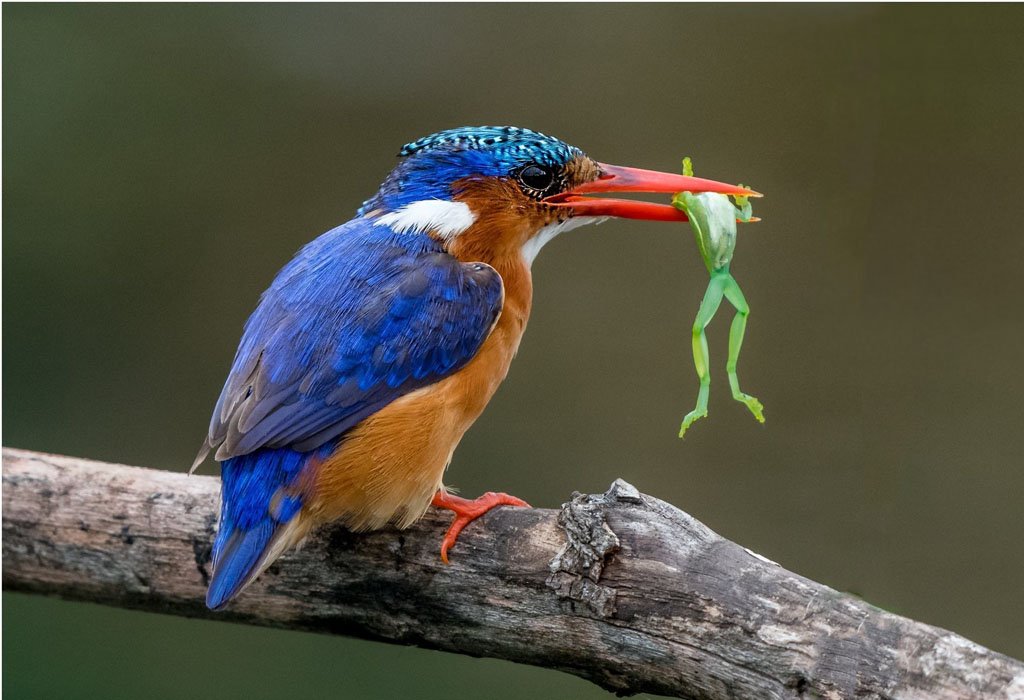
Budongo protects a large block of semi-deciduous tropical forest and is widely reported to hold more than 360 bird species. Its real value to visiting birders is the concentration of forest specialists, including Chocolate-backed Kingfisher, Blue-breasted Kingfisher, African Dwarf Kingfisher, White-thighed Hornbill, Ituri Batis, Chestnut-capped Flycatcher, Yellow-footed Flycatcher, Nahan’s Francolin and Sabine’s Spinetail. Sightings vary with weather, fruiting trees, breeding activity and luck, so it is more useful to think in terms of habitats and likely species groups than to expect a guaranteed checklist.
Another advantage is variety. A traveler researching bird watching in Uganda can use Budongo for forest specialists, then continue into savannah and river habitats. That contrast is why the forest often appears on a longer Uganda birding safari. It is also appealing to photographers and first-time tropical birders because the Royal Mile offers a broad track and relatively comfortable walking compared with steeper montane forest trails elsewhere in the region. Budongo Forest bird watching also works well for travelers who want a forest experience without abandoning a wider wildlife itinerary.
Royal Mile: The Essential Budongo Forest Birding Walk
Royal Mile birding is the signature Budongo experience. The broad forest track near Busingiro passes beneath tall canopy and gives access to canopy, mid-storey and understorey birds on the same walk. The walking is not technically difficult, but finding birds can be: a mixed flock may pass quickly, a kingfisher may call from dense shade, and an understorey species can remain hidden only metres away. Moving slowly, stopping often and using a guide who knows local calls usually produces better results than trying to cover the route quickly.
Early morning is usually the most productive time to be on the Royal Mile because temperatures are cooler and many species are more vocal. Starting around dawn also gives you several useful hours before midday activity slows. General visitors can learn a great deal in a focused half-day, while keen birders may spend most of the day working the road and nearby habitat. In either case, leave enough time to stop for calls, scan the canopy carefully and wait for shy birds to reveal themselves.

What makes Royal Mile birding different?
The Royal Mile is a place where sound matters as much as sight. Chocolate-backed and Blue-breasted Kingfishers may first be detected by voice, hornbills can announce themselves with calls or heavy wingbeats, and spinetails may appear only briefly above a canopy gap. Small flycatchers and batises can be even harder to locate. Ask your guide not only what is calling, but also how high in the vegetation to look and what movement pattern to expect; that skill quickly improves your own forest birding.
Can beginners enjoy Royal Mile birding?
Beginners can enjoy Budongo just as much as experienced birders if the pace is right. Tell your guide that you want explanations rather than a rapid list of names. Shape, behavior, feeding height and call pattern are often easier to remember than plumage details seen for only a few seconds. Binoculars are the most useful piece of equipment; a camera is optional. If photography matters, allow extra time because forest light is low and many birds remain partly hidden. The site also fits naturally into a wider Uganda safari for photographers itinerary, where forest photography can be balanced with brighter open-country conditions later in the trip.
Plan a Royal Mile Morning That Matches Your Birding Goals
Share your travel month, experience level and priority species before the walk. A guide can then decide where to spend time, which calls to prioritize and how quickly the group should move.
20 Birds to Look For in Budongo Forest Reserve
There is no fixed “must-see” list, but often-requested targets include Chocolate-backed Kingfisher, Blue-breasted Kingfisher, African Dwarf Kingfisher, White-thighed Hornbill, Ituri Batis, Yellow-footed Flycatcher, Chestnut-capped Flycatcher, Nahan’s Francolin, Puvel’s Illadopsis, Sabine’s Spinetail, Cassin’s Spinetail, Blue-throated Roller, Lemon-bellied Crombec, Spotted Greenbul, Fire-crested Alethe, Western Black-headed Oriole, African Crowned Eagle, Great Blue Turaco, White-spotted Flufftail and Green-breasted Pitta. Treat these as possibilities rather than promises. A short priority list is more practical than trying to chase twenty difficult species in one morning.
A habitat-first approach makes the forest easier to read. Scan open sky and canopy gaps for spinetails and raptors; fruiting crowns for hornbills, turacos and orioles; shaded horizontal branches for kingfishers and flycatchers; dense understorey for illadopsises and alethes; and damp edges for secretive ground species. This approach also prevents “target tunnel vision,” where you ignore common but instructive birds while waiting for one rarity. Over time, you begin to predict which species are likely in each layer before the guide points them out.
Best Time for Budongo Forest Bird Watching
Budongo can be birded throughout the year, but the experience changes with rainfall, breeding activity, fruiting cycles, migrant presence and road conditions. Wetter periods can bring strong vocal activity and lush forest, while drier periods may make access and walking easier. Because seasonal patterns are not identical every year, it is better to plan around your target species, tolerance for rain and wider Uganda itinerary than to rely on a single “best month.”
If you prefer relatively straightforward road conditions, the drier parts of the year are usually easier to plan around, although rain can still occur. Travelers considering an early-year trip can compare Uganda safari in March with Uganda safari in April and then check recent local conditions before fixing a forest day.
By late April and May, wetter conditions can make some roads muddier, but the forest may be very active and richly green. If that trade-off suits your interests, the practical notes for Uganda safari in May are useful. For visitors who would rather travel in a drier mid-year period, Uganda safari in July provides a different seasonal reference point.
August and September are popular months for broader Uganda itineraries, so availability for guides and accommodation can matter as much as rainfall. Compare Uganda safari in August and Uganda safari in September if Budongo will be combined with Murchison or other parks, and reserve specialist birding time early enough to protect the dawn hours.
Later in the year, November can bring wetter conditions while December is often chosen by holiday travelers. The pages on Uganda safari in November and Uganda safari in December can help with wider trip planning, but your final Budongo decision should still be based on current access, target species and the advice of a local guide.
Best time of day for Budongo Forest bird watching
Whenever possible, protect the first hours after dawn for forest birding. Birds are often more vocal then, temperatures are comfortable and the guide has more time to work through difficult calls before the day warms up. Midday can be quieter, although fruiting trees, mixed flocks and soaring raptors can still be productive. If you have two mornings, use the second to revisit missed targets or a productive section rather than repeating the first walk mechanically.
How to Plan a Uganda Birding Safari Around Budongo
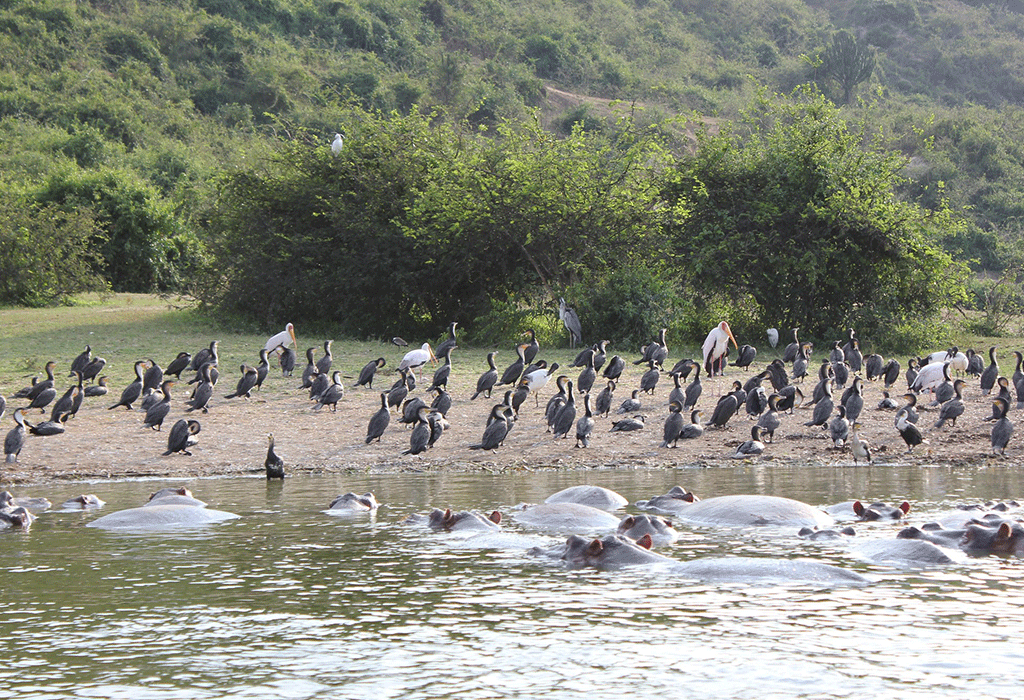
A Uganda birding safari becomes much stronger when it combines habitats. Budongo supplies lowland forest species, while nearby Murchison Falls National Park adds savannah, woodland, river and wetland birds. That means one compact region can deliver hornbills and kingfishers in the forest, then bee-eaters, raptors, waterbirds and open-country species around the Nile and game-drive areas. Travelers with more time can connect Budongo to other major birding forests, wetlands and Albertine Rift sites. Budongo Forest bird watching is especially valuable in a multi-habitat Uganda birding safari because it adds lowland forest species to the route. That contrast gives the birds of Budongo Forest a clear role in the itinerary.
For a short trip, one practical approach is to spend a night near Masindi or the forest, devote the next morning to the Royal Mile, and then continue toward Murchison Falls. A 3 Days Murchison Falls Safari can provide a simple wildlife-led framework, but it is worth asking for a dedicated early-morning forest session rather than treating birding as an incidental stop.
If you want more breathing room, a 6 Days Murchison Falls safari allows extra time for forest, river and savannah habitats. That slower pace is especially useful when weather, road conditions or bird activity make a second morning in Budongo worthwhile.
Dedicated birders can use a 10 Days Uganda birding safari as a starting point and then ask to increase time in target habitats. The key is to reduce unnecessary driving and protect the best morning hours for birding.
Sample 3-day birding and wildlife flow
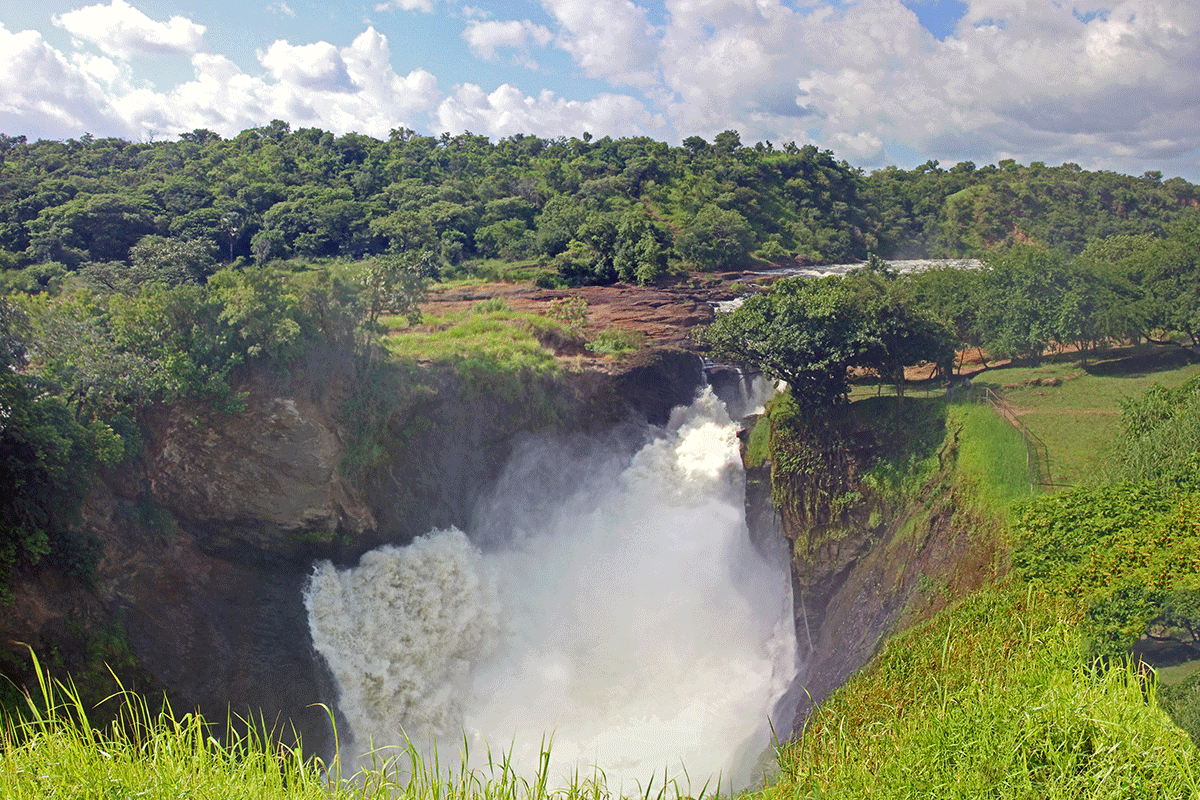
Day 1: travel toward Budongo, settle near the forest and use late afternoon for edge species. Day 2: start Royal Mile birding early, spend the core morning on forest specialists, then continue slowly through secondary habitat. Day 3: transfer into Murchison for open-country and Nile birding. This flow keeps Budongo Forest bird watching as the specialist centerpiece while giving non-birding companions a broader safari experience.
Guides and Access for Budongo Forest Bird Watching
Use an authorized local guide for Budongo Forest bird watching. Current visitor information indicates that Royal Mile access is guided rather than a self-guided forest walk. This is valuable for both conservation and results: many specialties are difficult to locate without knowledge of calls, territories and seasonal behavior. Arrange access before arrival when possible, especially if you have a tight itinerary or want a specialist bird guide rather than a general nature walk. For Budongo Forest bird watching, an experienced local guide also helps visitors understand calls, territories and seasonal movement.
Masindi is a common gateway for the Royal Mile, while Kaniyo Pabidi is closely associated with forest and chimpanzee activities on the Murchison side. The exact meeting point matters, so confirm it with your operator instead of assuming “Budongo” refers to one entrance. Travelers planning a road trip to Murchison Falls should also build realistic road time into the day. Forest roads can change with rain, and an early birding start is easier when you sleep reasonably close to the chosen sector. Good logistics make Budongo Forest bird watching far more relaxed, especially when the meeting point and transfer time are confirmed in advance.
What to bring for Budongo Forest bird watching
For Budongo Forest birding, pack binoculars, a compact rain layer, water, insect protection, a hat, closed walking shoes and a small notebook or birding app. Neutral clothing is practical, and a lightweight layer helps during cool starts. Camera users should protect equipment from humidity and sudden showers. The broader checklist in packing for a Uganda safari is useful, but avoid overpacking the daypack: heavy gear becomes tiring during hours of upward canopy scanning. A light daypack is usually enough for Budongo Forest bird watching, provided rain protection and optics are easy to reach.

Photography Tips for Budongo Forest Bird Watching
Forest photography rewards preparation more than speed. Light levels can be low, backgrounds are busy and birds may perch high above the trail. For the birds of Budongo Forest, prioritize a lens you can handhold comfortably, raise ISO when needed, use a shutter speed that protects against subject movement, and watch exposure when a bird is framed against bright canopy gaps. Do not leave the permitted trail or pressure a guide to disturb vegetation for a cleaner image. Photography during Budongo Forest bird watching improves when you prepare for low light instead of chasing birds off the trail.
Royal Mile birding also favors behavioral photography. Instead of chasing only close portraits, look for hornbills moving between fruiting trees, turacos crossing the canopy, a kingfisher calling from a shaded branch or a mixed flock feeding through different forest levels. Travelers building a wider Uganda safari for photographers can combine this low-light forest challenge with brighter savannah photography in Murchison.
Combine Budongo Birding With Chimpanzees
Budongo is also known for chimpanzees, so birders often ask whether both experiences can fit into one trip. They can, but the pacing is different. A dedicated bird walk may stop repeatedly for calls and canopy flocks, while chimpanzee tracking follows primate movements and ranger procedures. If both matter, assign separate sessions rather than expecting one activity to fully substitute for the other. Budongo Forest bird watching and chimpanzee tracking complement each other best when each activity has its own dedicated session.
The combination works especially well for mixed-interest travelers. One person may be focused on Budongo Forest birding, while another is excited by primates and rainforest ecology. Explore the Budongo chimpanzee experience and wider chimpanzee trekking regions in Uganda before deciding how many forest days to allocate. A two-night stay usually gives more flexibility than arriving, birding and departing on the same rushed day. That extra time makes Budongo Forest bird watching calmer and gives you a better chance to revisit productive stretches of forest. Mixed-interest groups often find Budongo Forest bird watching easier to enjoy when birding and primate time are planned separately.

Where Budongo Forest Birding Fits in a Wider Uganda Trip
Budongo Forest birding is best treated as one habitat chapter in a diverse country. Travelers researching Uganda birdwatching parks will find that Uganda’s strongest birding routes often combine forests, wetlands, savannahs and highland areas. Budongo’s role is particularly valuable for Guinea–Congo forest species and for the easy connection with Murchison. That makes it a logical northern component rather than an isolated detour. In a wider route, Budongo Forest bird watching adds a forest chapter that contrasts strongly with wetlands and open savannah. Many travelers use the same principle when designing a Uganda birding safari.
If this is your first Uganda safari, keep the route simple. Spend enough time in each habitat to learn its rhythm, avoid long transfers immediately before dawn birding, and tell your guide which species or bird families matter most. General Uganda safari tips also help with road pacing, clothing, cash and communications. The goal is not to maximize the number of park names; it is to maximize useful hours in the field. For that reason, Budongo Forest bird watching deserves a protected morning rather than being squeezed between long transfers. First-time visitors should treat Budongo Forest bird watching as a focused field experience, not as a quick stop between long drives. The approach is particularly useful on a first Uganda birding safari.
Common Birding Mistakes to Avoid in Budongo
The first mistake is arriving too late. Forest bird activity can be strongest early, and a late transfer may sacrifice the most productive hours. The second is assuming every colorful bird will sit in the open. Many birds of Budongo Forest are heard first and require patient positioning. The third is trying to photograph every bird before confirming identification; sometimes binoculars and a quick field mark are more useful than a blurred image. During Budongo Forest bird watching, patience with heard-only birds often pays off better than rushing after every movement in the canopy.
Another mistake is treating rain as a failed day. Tropical showers can interrupt activity, but birding may improve when rain eases. Carry protection and stay flexible. Finally, do not make the itinerary so tight that a missed target becomes frustrating. Budongo Forest bird watching should feel exploratory. A second morning often adds more value than squeezing in another distant attraction. Budongo Forest bird watching is more rewarding when the schedule leaves room for showers, quiet spells and a possible second attempt at difficult targets. This flexibility matters on any Uganda birding safari that includes forest targets.
Want a Birding-Led Uganda Route?
Combine Budongo forest specialists with Murchison, wetlands and other priority habitats at a pace that protects early-morning birding time.
How to Identify Forest Birds in Budongo
Successful forest identification depends on patient fieldcraft. Note feeding level, size, posture, bill shape, tail movement, flock behavior and voice before relying on plumage alone. Forest shade can change apparent colors, while leaves often hide the features shown clearly in field guides. Learning a small set of priority calls before arrival makes field time more productive. Ask the guide to describe where a sound originates and which vegetation layer to scan. Mixed flocks deserve patience: confirm one bird at a time, then look for companions moving through the same level. This turns difficult forest birding into a repeatable process rather than a series of lucky glimpses.
These identification habits are especially useful on the Royal Mile, where birds often move quickly between forest layers. Keep track of where each bird was feeding, whether it joined a mixed flock and which call first drew attention to it. Those notes make later identification easier and help you learn patterns that can be applied at other Ugandan forest sites.
One or Two Days for Budongo Forest Bird Watching?
A full morning gives general visitors a strong introduction, but two sessions suit specialists and photographers better. Bird activity changes with weather, fruiting trees and vocal behavior, so a target that stays silent on one morning may be active the next. Staying two nights also protects the early start from road delays. Rather than adding a distant destination simply to make the itinerary look fuller, repeat a high-value habitat when target species matter. The second visit can concentrate on missed species, photography and quieter observation, while afternoons remain available for rest, primates or onward travel.
For keen birders, a second Royal Mile session can be more productive than adding another long transfer. It gives you a chance to revisit a fruiting tree, follow up on birds heard but not seen, and spend more time with species that were rushed on the first morning. Photographers also benefit from a second attempt because light and perch choice can be completely different from one day to the next.
Weather and Rain Strategy for Budongo Birding
Rain is part of tropical forest birding. A shower can quiet the canopy temporarily, then trigger fresh activity when it passes. Carry a light waterproof layer, protect binoculars and camera equipment, and keep a dry lens cloth accessible. Road and trail conditions can change after persistent rain, so confirm local access before setting out. Cloudy conditions may lower light but can reduce harsh contrast for photography. Use productive weather windows rather than treating a wet hour as a failed day. Flexible timing, suitable footwear and patience are more valuable than a rigid schedule.
A flexible weather plan helps you use the forest efficiently. During heavy rain, shelter safely and protect optics; when the shower passes, listen again before moving because feeding and calling can resume quickly. Leaving margin in the schedule is important—if every hour is tied to a transfer, a short storm can force you to abandon the best part of the birding day.
Birding Etiquette and Conservation in Budongo
Good birding etiquette protects both the forest and the quality of the experience. Stay on approved routes, keep voices low around active birds and follow the guide’s decisions about viewing distance and playback. Do not clear vegetation, approach nests closely or block normal bird movement for a photograph. Rare species are valuable because their habitat remains healthy, not because every visitor gets the same image. Share viewpoints with other groups and move on after a reasonable observation. Responsible bird tourism supports guides, visitor services and forest conservation while keeping disturbance low.
Low-impact behavior also improves your own sightings. Quiet groups are less likely to push shy birds deeper into cover, and giving other visitors space prevents several people from crowding the same perch or trail section. Follow the guide’s judgment about playback, nesting birds and viewing distance, especially when a species is sensitive or breeding.
Who Will Enjoy Budongo Birding Most?
Budongo suits travelers who enjoy slow observation and do not need every wildlife encounter from a vehicle. Dedicated listers can pursue regional specialties, photographers can practice low-light forest technique, naturalists can combine birds with primates and butterflies, and beginners can learn how sound and habitat guide identification. Mixed-interest groups can shorten or split sessions so serious birders have more field time without forcing everyone into the same pace. Setting expectations in advance makes the forest enjoyable for both specialists and general safari travelers.
Budongo is particularly rewarding for travelers who enjoy learning how habitat, sound and behavior fit together. Experienced birders can concentrate on regional specialties, while first-time visitors can use the forest to learn practical skills such as locating a call, following a mixed flock and scanning different canopy levels. That makes the experience educational even on a morning when a rare target does not appear.
How to Brief Your Budongo Bird Guide
Brief your guide before the walk. Explain which species you have already seen, which targets matter most, whether photography is important and how quickly you prefer to walk. Choose a small group of high-priority birds plus a second tier of welcome sightings. This helps the guide make sensible tradeoffs when a secretive understorey bird competes for time with a moving canopy flock. Beginners should ask for identification explanations; experienced birders should share their regional list. After the walk, record whether each bird was seen, heard or photographed and add a habitat note while details are fresh.
A clear pre-walk briefing lets the guide set the right pace from the start. Mention your highest-priority species, whether you need time for photographs, and any mobility or walking concerns. It is also useful to say whether you prefer detailed identification explanations or a faster specialist pace. That small conversation can prevent the group from spending too long on birds that are not important to you.
How to Extend a Budongo Birding Route
After a forest session, the most efficient extension is usually into contrasting habitat. Nearby savannah, river edges and wetlands can add raptors, waterbirds, bee-eaters and open-country species without requiring an immediate cross-country transfer. Longer itineraries should be designed by habitat and target families rather than fame alone. Protect early mornings for the sites where bird activity matters most, include recovery time, and remember that alert eyes and ears produce better results than an overloaded schedule. A compact route with repeated productive habitats can outperform a long checklist of destinations.
Pairing Budongo with Murchison is efficient because the habitats complement each other rather than duplicate one another. Forest birds dominate the Budongo sessions, while the park adds open-country, wetland and Nile-associated species. This gives birders greater variety without sacrificing a large part of the trip to cross-country transfers.
Frequently Asked Questions About Budongo Birding
How many species can I see during birding along the Royal Mile?
There is no dependable daily number. A productive Royal Mile birding session can produce a substantial list, but totals depend on season, weather, guide skill, group pace and whether you prioritize target species or general diversity. Focus on quality sightings and habitat coverage rather than a promised count.
Is Budongo Forest bird watching good for beginners?
Yes. Budongo Forest bird watching suits beginners who are comfortable walking slowly and using binoculars. Ask the guide to explain calls and identification features. Beginners may actually benefit from the Royal Mile because the broad track allows time to stop and scan without tackling steep terrain.
Which kingfishers are associated with birding in Budongo?
Chocolate-backed Kingfisher, Blue-breasted Kingfisher and African Dwarf Kingfisher are among the notable targets associated with Budongo. Sightings are never guaranteed, and these forest kingfishers can be easier to hear than to locate. That is one reason a specialist guide adds so much value to birding in Budongo.
Do I need a guide for birding along the Royal Mile?
Plan on visiting with an authorized guide rather than walking the Royal Mile independently. Beyond access requirements, a guide improves Budongo Forest bird watching by identifying calls, finding concealed birds and keeping visitors on appropriate routes.
How long should I spend on Budongo Forest bird watching?
Allow at least a focused half-day for Budongo Forest bird watching; a full morning is better, and dedicated birders can use a full day or a second morning. If Budongo is one part of a broader safari, two nights near the area reduces pressure from transfers and protects the best birding hours.
Can I combine the Budongo forest birds with Murchison wildlife?
Yes. This is one of the strongest reasons to include Budongo. The Budongo forest birds represent forest habitat, while Murchison adds open savannah, woodland, wetlands and the Nile. Review activities in Murchison Falls and the current Murchison Falls safari guide when shaping the combined route.
What months are best for a birding safari in Uganda?
A birding safari in Uganda can work year-round, but the “best” month depends on the sites included and your priorities. Budongo can be productive in multiple seasons, with rain influencing roads and forest activity. Compare the target habitats rather than applying one month to the entire country.
Is Budongo Forest bird watching suitable for photographers?
Yes, but forest photography is technically demanding. Expect lower light, high perches and cluttered backgrounds. A monopod or steady handholding technique, weather protection and realistic expectations help. Budongo Forest bird watching is especially rewarding for photographers who value behavior and habitat images, not only frame-filling portraits.
What else can I see during birding in Budongo?
Primates are an important bonus. Chimpanzees may be heard or encountered in parts of the forest, and black-and-white colobus, red-tailed monkeys, blue monkeys and other mammals occur in the wider ecosystem. Butterflies, giant trees and forest ecology make quiet periods between birds interesting.
How do I start booking Budongo Forest bird watching?
Start with travel dates, group size, birding experience and a short list of priority species. Then confirm the Budongo sector, guide, meeting time, accommodation and onward route. If the forest is part of a longer trip, use Uganda safari FAQs to clarify practical questions and connect the day to other Uganda safaris without sacrificing the early start.
Final Advice for Budongo Forest Bird Watching
The best plan for Budongo Forest bird watching is simple: sleep close enough for an early start, use a knowledgeable guide, walk slowly, listen before scanning, give difficult species time and keep the rest of the itinerary flexible. Royal Mile birding deserves to be treated as a primary experience rather than a short roadside stop. That approach improves sightings and makes the forest itself—not just the checklist—memorable.
For dedicated birders, Budongo can anchor the northern section of a longer birding in Uganda. For general tourists, it can be a focused forest morning before Murchison wildlife. Either way, the birds of Budongo Forest reward patience. Build enough time for weather, calls and unexpected mixed flocks, and Budongo Forest bird watching becomes one of the most distinctive forest experiences in Uganda.
Plan Your Budongo Visit Around the Best Birding Hours
Use your travel dates, birding experience and priority species to shape the route. Keeping dawn and early morning free for the forest usually matters more than adding another stop to the itinerary.