
Rwanda and Uganda Safaris: Complete Guide to Gorilla Trekking, Wildlife and Primate Adventures
 Rwanda and Uganda Safaris combine two remarkably complementary East African destinations into one journey filled with mountain gorillas, chimpanzees, golden monkeys, savannah wildlife, tropical forests and dramatic highland scenery. Travelers can move from Rwanda’s volcanic landscapes into Uganda’s ancient forests before continuing toward wildlife-rich plains and waterways. This diversity makes a combined safari particularly attractive to travelers who want considerably more than a single gorilla trekking experience.
Safari Vacations and Travel Services Ltd. designs private Rwanda and Uganda Safaris around individual interests, available travel days, preferred accommodation standards and wildlife priorities. Rather than forcing every traveler into the same route, a journey can emphasize gorilla trekking, primates, traditional game viewing, photography, culture or relaxation. The result is a safari where destinations complement each other and unnecessary transfers are reduced wherever practical.
Why Choose Combined Rwanda and Uganda Safaris?
The greatest advantage of combining Rwanda and Uganda is the remarkable variety travelers can experience without arranging two completely separate holidays. Rwanda provides a compact safari circuit centered around Kigali, Volcanoes National Park, Akagera National Park and Nyungwe National Park. Uganda contributes Bwindi, Kibale, Queen Elizabeth, Murchison Falls and other ecosystems, creating opportunities to combine intimate forest encounters with traditional African wildlife viewing.
Rwanda and Uganda Safaris are particularly suitable for travelers who consider mountain gorillas the centerpiece of their African journey but do not want gorilla trekking to become the only significant experience. Chimpanzees, golden monkeys, elephants, lions, buffaloes, hippos, antelopes and remarkable birdlife can all become part of the same journey, depending on the destinations selected and the number of travel days available.
The countries also work well geographically because southwestern Uganda connects naturally with northern Rwanda. Travelers can arrive through Kigali and cross into Uganda for Bwindi or Mgahinga, while longer itineraries can continue through Queen Elizabeth National Park and Kibale before finishing in Entebbe. The journey can operate equally well in reverse, allowing international flight arrangements to influence the direction without fundamentally reducing the quality of the safari.
What Makes Rwanda and Uganda Safaris Special?
 Mountain gorilla trekking immediately distinguishes Rwanda and Uganda Safaris from many conventional African wildlife holidays. Uganda provides trekking opportunities in Bwindi Impenetrable National Park and Mgahinga Gorilla National Park, while Rwanda offers trekking in Volcanoes National Park. Travelers can select one destination or trek in both countries, creating opportunities to encounter different gorilla families within noticeably different forest and volcanic environments during the same journey.
Chimpanzee tracking adds another important dimension, particularly in Uganda’s Kibale National Park and Rwanda’s Nyungwe National Park. Chimpanzees are more active and mobile than mountain gorillas, making the tracking experience noticeably different. Their calls can travel through the forest before the animals appear, and encounters may involve watching individuals feeding, climbing, grooming and communicating as trackers follow their movements through the surrounding vegetation.
Traditional wildlife viewing prevents the journey from becoming exclusively forest based. Queen Elizabeth National Park introduces open savannah, elephants, buffaloes, antelopes, predators and the wildlife-rich Kazinga Channel, while Akagera provides Rwanda with a major savannah safari environment. Longer Uganda and Rwanda Safaris can incorporate Murchison Falls, allowing travelers to experience the Nile, extensive wildlife habitats and another completely different landscape within the same multi-country adventure.
Who Should Choose Rwanda and Uganda Safaris?
Rwanda and Uganda Safaris work exceptionally well for first-time visitors to East Africa because they combine several signature experiences within one journey. Travelers can experience great apes, traditional safari wildlife, rainforest landscapes and local culture without arranging multiple independent holidays. The itinerary can remain relatively focused for travelers with limited time or expand into a comprehensive exploration for visitors who prefer a slower journey through several contrasting ecosystems.
- Primate enthusiasts: Travelers whose main interest is primates can combine mountain gorillas in Bwindi, Mgahinga or Volcanoes National Park with chimpanzees in Kibale or Nyungwe and golden monkeys in the Virunga region. Each experience differs significantly in habitat, animal behavior and trekking style, allowing a primate-focused safari to remain varied even when several days of the journey involve guided forest activities.
- Wildlife enthusiasts: Travelers seeking more than primates can combine gorilla trekking with Queen Elizabeth National Park, Akagera National Park or, on longer itineraries, Murchison Falls National Park. This creates opportunities for game drives, boat safaris and encounters with elephants, buffaloes, hippos, lions, antelopes and numerous birds. Forest trekking and open-country wildlife viewing consequently become complementary parts of one carefully balanced journey.
- Couples and honeymooners: Private Rwanda and Uganda Safaris can balance adventurous activities with scenic accommodation, private transportation and slower days between demanding experiences. Couples may combine gorilla trekking with a peaceful stay near Lake Bunyonyi or Lake Kivu, while honeymooners can choose higher-end forest lodges and additional relaxation. The itinerary can emphasize privacy and quality instead of continuously changing lodges to maximize destination numbers.
- Photographers: Combining Rwanda and Uganda provides opportunities to photograph mountain gorillas, chimpanzees, monkeys, savannah mammals, birds, forests, crater landscapes, lakes and the Virunga volcanoes. Photographers generally benefit from slower itineraries because additional time allows repeated wildlife activities and better responses to changing light and animal movements. A well-paced safari can therefore prioritize photographic opportunities instead of attempting to cover the maximum number of parks.
- Senior travelers: Rwanda and Uganda Safaris can be adapted around comfortable transfer distances, suitable accommodation and carefully positioned rest periods. Starting or finishing in Kigali may reduce unnecessary road travel on itineraries concentrated around southwestern Uganda. Individual mobility and trekking expectations should influence the route, allowing travelers to experience the major highlights without assuming that every guest wants consecutive strenuous activities and lengthy transfers.
How Many Days Are Best for Rwanda and Uganda Safaris?
The ideal duration depends on how much travelers want to experience beyond mountain gorillas. A shorter journey can concentrate on the Virunga region and Bwindi, while additional days allow Queen Elizabeth, Kibale, Akagera, Nyungwe or Murchison Falls to become realistic additions. Safari Vacations and Travel Services recommends prioritizing meaningful experiences instead of forcing numerous distant destinations into an itinerary simply because they are well known.
- 5–6 days: A short Rwanda and Uganda Safari should concentrate primarily on gorilla trekking and nearby experiences. Travelers can begin in Kigali, visit Volcanoes National Park and continue into southwestern Uganda for Bwindi or Mgahinga. Golden monkey tracking, cultural activities or scenic experiences can provide additional variety, but attempting to include distant chimpanzee and savannah destinations usually creates excessive driving within such a limited period.
- 7–9 days: This duration creates enough flexibility to combine gorillas with selected wildlife or chimpanzee experiences. A traveler might begin in Kigali, trek gorillas, cross into Uganda, continue through Bwindi and Queen Elizabeth National Park, and finish toward Entebbe. Alternatively, a primate-focused journey can connect Volcanoes, Bwindi and Kibale, allowing several important wildlife experiences without turning every day into a lengthy transfer.
- 10–14 days: This is one of the strongest ranges for comprehensive Rwanda and Uganda Safaris because travelers can combine mountain gorillas, chimpanzees, savannah wildlife and cultural experiences while maintaining reasonable pacing. Kibale, Queen Elizabeth, Bwindi and Volcanoes National Park can form an excellent core route, while additional days can introduce Lake Bunyonyi, Lake Kivu, Nyungwe, Akagera or another destination according to individual interests.
- 15–21 days: Longer journeys suit travelers seeking greater depth, photographers, birdwatchers and visitors who dislike rushed travel. Additional time can introduce Murchison Falls, Akagera and Nyungwe while retaining sufficient nights around major primate destinations. Rather than simply increasing the number of parks, the additional days can provide repeated game drives, second gorilla encounters, forest walks, cultural experiences and strategically placed relaxation between demanding activities.
Best Places to Visit on Rwanda and Uganda Safaris
The destinations selected determine the character of Rwanda and Uganda Safaris. Travelers primarily interested in great apes may concentrate on Bwindi, Kibale and Volcanoes National Park, while visitors seeking greater wildlife diversity can incorporate Queen Elizabeth or Akagera. Longer itineraries provide opportunities to include Murchison Falls, Nyungwe and scenic lake regions, but every destination should contribute something meaningful rather than merely increasing the number of places visited.
Bwindi Impenetrable National Park

The lush, mist-covered hills of Bwindi Impenetrable National Park, Uganda’s renowned mountain gorilla trekking destination.
Bwindi Impenetrable National Park is one of Uganda’s most important wildlife destinations and a centerpiece of many Rwanda and Uganda Safaris. Its ancient rainforest spreads across steep ridges and valleys in southwestern Uganda and provides habitat for mountain gorillas alongside numerous birds, primates and other forest species. The combination of extraordinary biodiversity, dramatic terrain and intimate gorilla encounters makes Bwindi far more than simply a location where travelers purchase a trekking permit.
Bwindi has 4 principal trekking sectors: Buhoma, Ruhija, Rushaga and Nkuringo. Choosing the correct accommodation therefore requires knowing where the relevant gorilla activity will take place. Travelers should avoid booking an attractive lodge without considering its relationship to the trekking sector. Safari Vacations and Travel Services coordinates permits, accommodation and transfers together so that logistics support the gorilla experience rather than creating an unnecessarily difficult trekking morning.
Bwindi also works particularly well within cross-border Rwanda and Uganda Safaris because the southern part of the forest can be approached from Rwanda. Travelers beginning in Kigali can therefore reach southwestern Uganda without first traveling across the entire length of Uganda. Longer itineraries can subsequently continue toward Queen Elizabeth National Park and Kibale, creating a logical progression from gorilla forest to savannah wildlife and eventually chimpanzee habitat.
Mgahinga Gorilla National Park

Mgahinga Gorilla National Park offers a different interpretation of Uganda’s primate experience. Located within the Virunga landscape, the park combines bamboo vegetation, montane forest and dramatic volcanic scenery. Mountain gorillas are an important attraction, but golden monkeys and hiking possibilities broaden its appeal. Its position near Rwanda makes Mgahinga especially useful for shorter Rwanda and Uganda Safaris concentrated around Kigali, Volcanoes National Park and southwestern Uganda.
Travelers should not automatically overlook Mgahinga simply because Bwindi is better known internationally. The correct gorilla destination depends on permit availability, desired accommodation, itinerary direction and additional activities. For travelers interested in the wider Virunga ecosystem, combining Mgahinga with Volcanoes National Park can create a geographically concentrated safari featuring gorillas, golden monkeys and remarkable mountain scenery without requiring lengthy transfers between distant national parks.
Queen Elizabeth National Park
 Queen Elizabeth National Park provides one of the strongest contrasts to the rainforest environments encountered elsewhere on Rwanda and Uganda Safaris. Travelers arriving from Bwindi move from steep forested mountains into open savannah, wetlands, crater landscapes and wildlife-rich waterways. This transition is particularly valuable for visitors who want their journey to include traditional African game viewing rather than concentrating almost entirely on primates and forest trekking.
Game drives can reveal elephants, buffaloes, Uganda kobs, waterbucks, warthogs and predators when conditions are favorable. The park’s Ishasha sector is particularly associated with tree-climbing lions, although sightings remain natural and cannot be guaranteed. Ishasha also sits conveniently between parts of Bwindi and the northern areas of Queen Elizabeth, allowing wildlife viewing to become part of the transfer instead of requiring an unrelated geographical detour.
The Kazinga Channel adds a completely different perspective through boat-based wildlife viewing. Hippos, crocodiles, buffaloes, elephants and numerous waterbirds can be encountered around the shoreline depending on wildlife movements. Combining game drives and a boat safari within the same national park increases experiential variety while limiting accommodation changes, making Queen Elizabeth especially valuable on approximately 8–14-day Rwanda and Uganda Safaris.
Kibale National Park

Chimpanzee trekking in Kibale can be incorporated into primate-focused and combination Uganda safari deals.
Kibale National Park is a major destination for chimpanzee tracking and an essential component of many primate-focused Rwanda and Uganda Safaris. Its tropical forest supports remarkable primate diversity, but chimpanzees remain the primary attraction for many international visitors. Tracking them provides a dynamic wildlife experience involving calls, movement through vegetation and interactions that differ considerably from the quieter observation frequently associated with mountain gorilla encounters.
Kibale combines particularly well with Queen Elizabeth National Park because the destinations can form consecutive stages within Uganda’s western safari circuit. Travelers can experience chimpanzees in the forest before continuing toward savannah wildlife and eventually mountain gorillas in Bwindi. This geographical progression helps create one of East Africa’s strongest primate-and-wildlife combinations without repeatedly returning through the same towns and road sections during the journey.
The surrounding region can also introduce Bigodi Wetland and community-based experiences for travelers with sufficient time. Guided walks may provide opportunities for additional primates, birds, vegetation and interaction with the wider landscape surrounding Kibale. These activities are most valuable when travelers genuinely appreciate nature, birdwatching or community experiences rather than when they are added simply to fill every free hour on an already demanding itinerary.
Volcanoes National Park
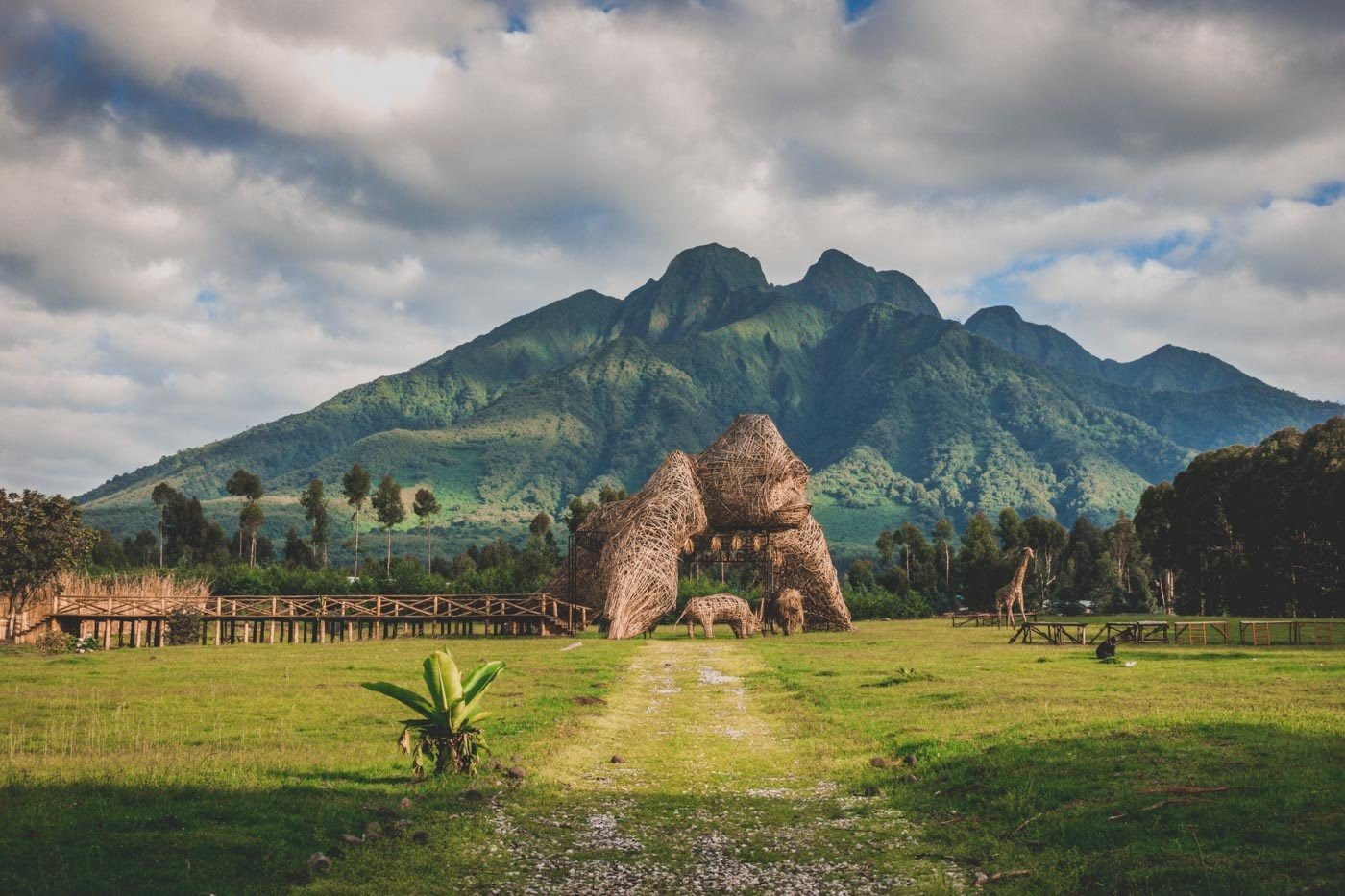
A scenic view of Volcanoes National Park and the dramatic Virunga Mountains, home to Rwanda’s famous mountain gorillas.
Volcanoes National Park is Rwanda’s celebrated mountain gorilla destination and one of the most important locations on combined Rwanda and Uganda Safaris. Situated within the Virunga Mountains, the park presents a dramatic landscape of bamboo forest and volcanic peaks. Its relative accessibility from Kigali makes it suitable for both short gorilla-focused journeys and longer itineraries continuing across the border into Uganda for additional primate and wildlife experiences.
Travelers can trek mountain gorillas here as their only gorilla encounter or combine Volcanoes National Park with Bwindi or Mgahinga for 2 different trekking experiences. Double gorilla trekking is particularly attractive to primate enthusiasts and photographers because different gorilla families, landscapes and conditions can produce noticeably different encounters. The second trek should therefore be viewed as another opportunity rather than simply repeating the first activity.
Golden monkey tracking is another valuable experience around Volcanoes National Park. These energetic primates occupy bamboo-rich environments and behave very differently from mountain gorillas. Including golden monkeys can increase wildlife diversity without requiring another long transfer. Travelers staying several nights in the region can consequently experience different aspects of the Virunga ecosystem while maintaining a more relaxed pace around one accommodation base.
Akagera National Park
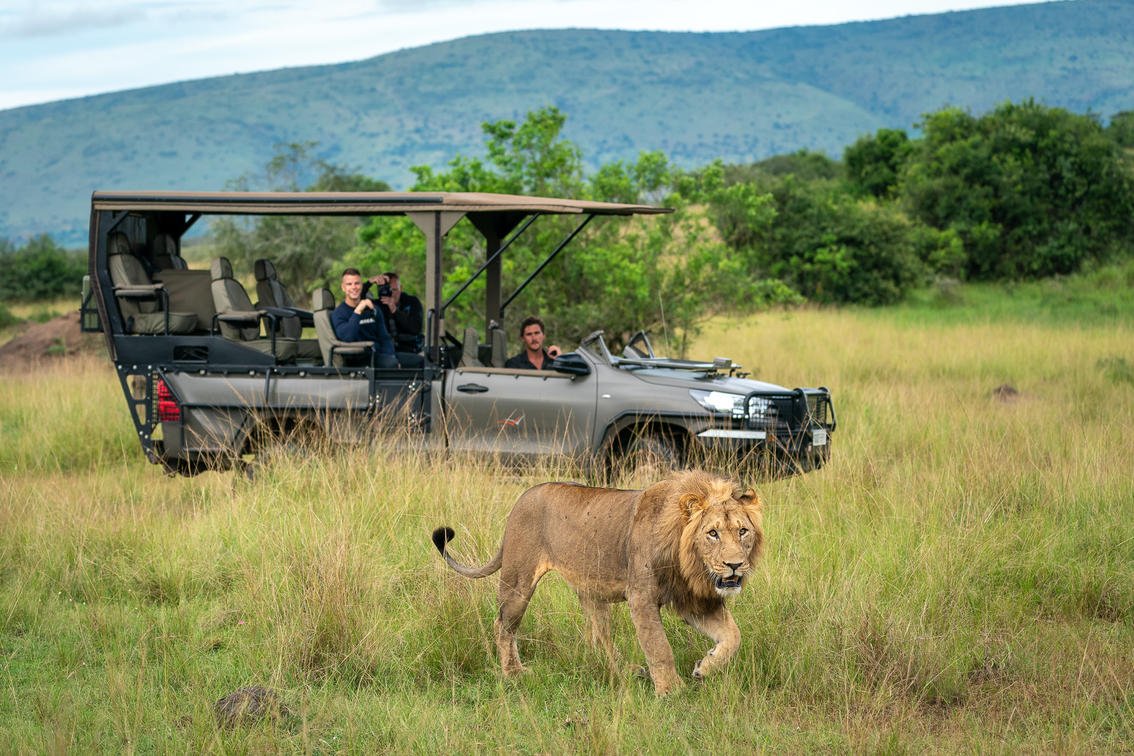
Travelers enjoy a close wildlife encounter with a male lion during an exciting game drive across the savannah of Akagera National Park.
Akagera National Park demonstrates that Rwanda and Uganda Safaris can extend far beyond mountain gorillas. Its savannah, woodland, wetlands and lakes support a broad selection of wildlife and create opportunities for classic game viewing. Akagera is especially valuable for travelers spending substantial time in Rwanda because it adds a traditional safari environment that contrasts strongly with the mountainous primate landscapes found around Volcanoes National Park.
Akagera requires thoughtful routing because it lies east of Kigali rather than directly along the Rwanda–Uganda gorilla corridor. It therefore works best when travelers have sufficient days to explore Rwanda properly rather than squeezing it into an already compressed itinerary. For longer journeys, Akagera can complement Uganda’s wildlife parks or provide the principal savannah component when travelers want to allocate more of their overall safari time to Rwanda.
Nyungwe National Park

Nyungwe National Park’s extensive montane rainforest in southwestern Rwanda.
Nyungwe National Park introduces another major forest environment and expands the primate possibilities available on Rwanda and Uganda Safaris. The montane forest is associated with chimpanzees, several other primates and extensive hiking opportunities. Travelers who want to explore Rwanda beyond Kigali and Volcanoes National Park can incorporate Nyungwe as part of a broader circuit, particularly when rainforest ecology and primates are major interests.
Including both Nyungwe and Kibale makes most sense for dedicated primate enthusiasts or travelers with a longer itinerary. Visitors with fewer days may obtain greater overall diversity by selecting 1 principal chimpanzee destination and using their remaining time for gorillas or savannah wildlife. Good safari design considers what another forest adds to the journey instead of automatically including every famous destination available.
Murchison Falls National Park
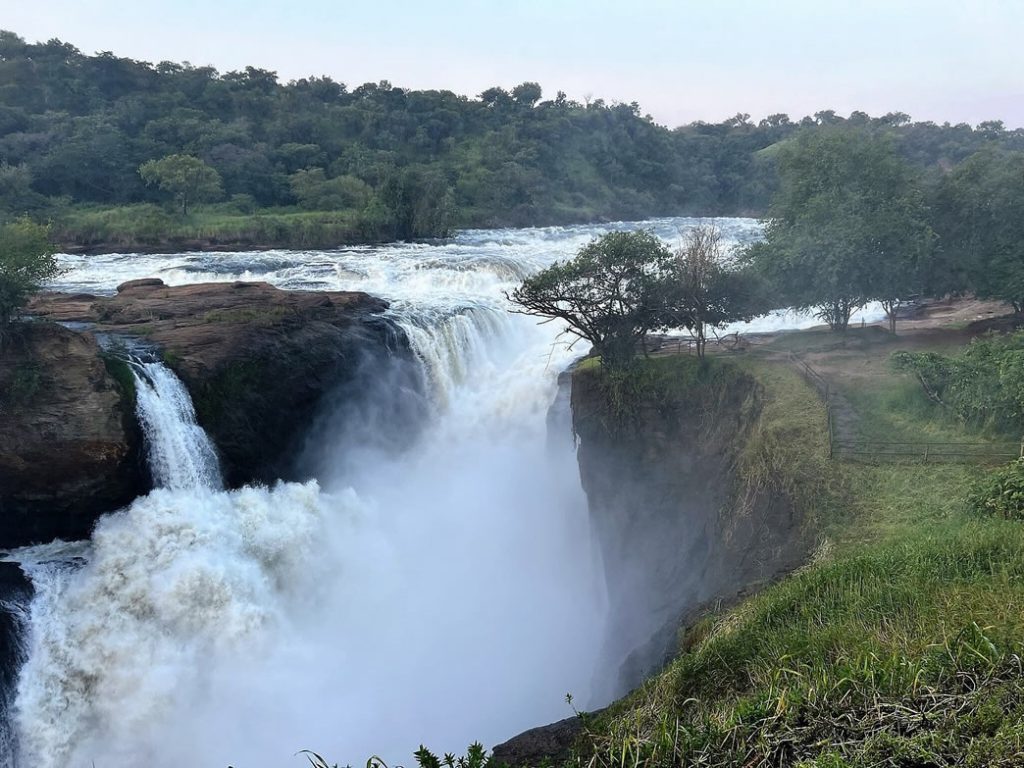
The Nile River crashes dramatically through Murchison Falls, creating one of Uganda’s most spectacular natural attractions and a major highlight of wildlife safaris in the park.
Murchison Falls National Park can dramatically expand longer Rwanda and Uganda Safaris by introducing the River Nile, extensive savannah and another major wildlife ecosystem. Its location farther north means that it requires substantially more travel time than the southwestern circuit. Travelers should therefore include Murchison when they have enough days to explore it properly rather than adding it to an already compressed gorilla-and-chimpanzee itinerary.
Game drives and boat experiences can provide encounters with diverse wildlife while the falls themselves create one of Uganda’s most dramatic landscapes. Murchison is particularly attractive for travelers undertaking 15–21-day journeys because the additional time allows it to become a meaningful part of the safari. Shorter itineraries are generally stronger when they concentrate on geographically connected western and southwestern destinations.
Lake Bunyonyi and Lake Kivu
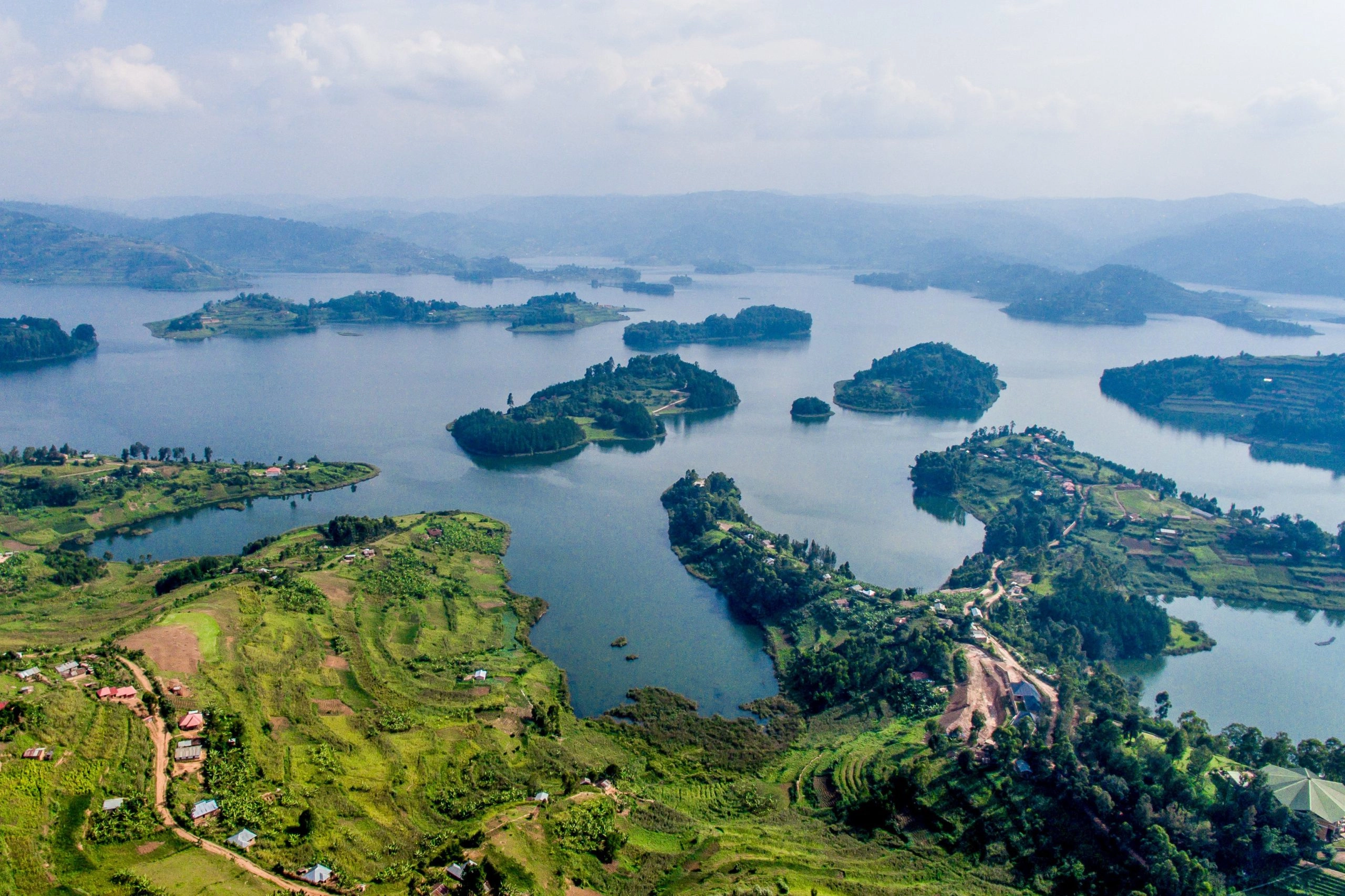 Not every day of Rwanda and Uganda Safaris needs to involve tracking wildlife or waking before sunrise. Lake Bunyonyi in southwestern Uganda and Lake Kivu in Rwanda provide opportunities to slow the journey between more physically demanding experiences. Scenic landscapes, relaxed accommodation and gentle activities can help travelers recover after gorilla trekking while creating a more balanced rhythm across a longer multi-country safari.
Lake Bunyonyi can fit conveniently into itineraries around Bwindi, Mgahinga and the Rwanda border, while Lake Kivu works well with selected Rwanda circuits involving Volcanoes or Nyungwe. Couples, honeymooners and travelers undertaking longer journeys may particularly appreciate these pauses. The lakes should nevertheless be included because relaxation and scenery matter to the traveler, rather than simply adding another destination name to the itinerary.
Kigali
 Kigali is both an important international gateway and a meaningful destination within Rwanda and Uganda Safaris. Travelers can use the city for arrival recovery, cultural exploration and historical context before beginning wildlife activities. The Kigali Genocide Memorial provides an important opportunity to understand Rwanda’s history, while other city experiences can introduce contemporary life before travelers continue toward forests, volcanoes or neighboring Uganda.
Kigali is also strategically important because it can serve as the beginning or end of a cross-border journey. Travelers concentrating on southwestern Uganda may find Kigali particularly convenient, while longer routes can start in Rwanda and finish at Entebbe. Using 2 different international gateways can substantially improve itinerary efficiency by reducing unnecessary return driving after the final major safari destination.
Gorilla Trekking, Chimpanzees and Primate Experiences
Primate encounters provide the defining wildlife experiences on many Rwanda and Uganda Safaris. Mountain gorillas naturally receive the greatest attention, but combining them with chimpanzees and golden monkeys creates a much broader understanding of the region’s primate diversity. Each activity involves different habitats, animal behavior and tracking conditions, meaning a carefully planned primate itinerary can include several forest experiences without making the journey feel repetitive.
Gorilla Trekking in Uganda
Uganda provides mountain gorilla trekking in Bwindi Impenetrable National Park and Mgahinga Gorilla National Park. Visitors attend a briefing before entering the forest with trained guides and trackers to search for their allocated habituated gorilla family. Trekking duration varies because the gorillas move naturally through their habitat, so travelers should prepare for anything from a relatively manageable walk to several demanding hours across uneven terrain.
Once the gorillas are located, standard trekking provides regulated observation time during which visitors can watch feeding, grooming, resting, playing and family interaction. The experience can be remarkably intimate, particularly when a silverback or younger gorilla moves through vegetation nearby. Travelers must follow ranger instructions carefully because protecting gorilla health and maintaining appropriate behavior remains more important than obtaining any particular photograph.
Gorilla Trekking in Rwanda
Rwanda’s gorilla trekking takes place in Volcanoes National Park, where the Virunga Mountains provide a striking setting. Visitors normally stay around the Musanze and Volcanoes region before reporting for their scheduled trekking experience. The combination of bamboo vegetation, mountain scenery and relatively convenient access from Kigali gives Rwanda gorilla trekking a distinctive character that can complement rather than compete with trekking in Uganda.
Travelers deciding between the countries should consider the entire safari rather than judging the experience only by permit cost. Rwanda may suit a compact itinerary particularly well, while Uganda allows gorilla trekking to combine naturally with Kibale, Queen Elizabeth and other wildlife destinations. Travelers who consider gorillas their primary interest can avoid the decision entirely by including trekking in both countries within one carefully paced journey.
Uganda vs Rwanda Gorilla Trekking
Neither destination can universally be described as better for gorilla trekking. Uganda provides Bwindi’s ancient rainforest, Mgahinga’s Virunga environment and the possibility of a specialized gorilla habituation experience. Rwanda provides Volcanoes National Park’s dramatic mountain setting and convenient access from Kigali. Terrain, accommodation choices, permit costs and wider safari routing can all influence which destination provides the stronger fit for an individual traveler.
For many Rwanda and Uganda Safaris, Uganda becomes the primary gorilla destination while Rwanda contributes golden monkeys, Kigali and other experiences. Other travelers specifically want Volcanoes National Park or 2 gorilla treks. Safari Vacations and Travel Services can compare the complete journey instead of treating the countries as competitors, allowing each destination to contribute according to its geographical and experiential strengths.
Double Gorilla Trekking in Uganda and Rwanda
Double gorilla trekking is particularly suitable for travelers who regard mountain gorillas as the principal purpose of their journey. Completing 1 trek in Uganda and another in Rwanda provides opportunities to encounter different gorilla families, vegetation and terrain. Wildlife behavior also changes from day to day, meaning the second experience may produce completely different observations even when both treks involve the same species.
Photographers can benefit particularly from 2 encounters because forest light, gorilla positioning and behavior cannot be predicted. One trek might produce close portraits while another reveals social interactions or environmental compositions. Travelers should nevertheless allow appropriate recovery and transfer time between treks. The strongest double-gorilla itinerary gives each experience room to breathe rather than scheduling physically demanding activities simply to minimize the total number of travel days.
Gorilla Habituation Experience
Uganda’s gorilla habituation experience provides an alternative for travelers seeking more time around mountain gorillas. Participants visit a gorilla group undergoing the gradual process of becoming accustomed to carefully managed human presence. The experience provides substantially longer regulated observation after the gorillas are located than conventional trekking, making it particularly attractive to photographers, dedicated primate enthusiasts and travelers wanting deeper immersion within Bwindi.
Availability is considerably more limited than standard trekking, so habituation should be considered early when planning Rwanda and Uganda Safaris. Some travelers combine habituation in Uganda with conventional trekking in Rwanda, creating 2 distinctly different gorilla experiences. Others select habituation as their only gorilla activity and allocate remaining days to chimpanzees and savannah wildlife. The correct choice depends on budget, physical expectations and personal priorities.
Chimpanzee Tracking in Uganda and Rwanda
Chimpanzee tracking provides a completely different great-ape experience from mountain gorilla trekking. Chimpanzees are highly mobile, vocal and frequently active in the forest canopy, meaning visitors may hear them before seeing them. Tracking can involve following movements through the forest while observing feeding, grooming, communication and social interaction. This energy makes chimpanzee encounters an excellent complement to the generally more settled observation associated with gorilla families.
Kibale National Park is the principal chimpanzee destination incorporated into many Uganda circuits, while Nyungwe provides Rwanda with an important chimpanzee and montane forest experience. Travelers with approximately 8–14 days will often gain greater variety by selecting 1 major chimpanzee destination, whereas dedicated primate enthusiasts undertaking longer journeys can incorporate both forests to compare habitats and broaden their overall primate experience.
Golden Monkey Tracking
 Golden monkeys provide another rewarding primate activity in the Virunga region. They can be tracked in Rwanda’s Volcanoes National Park and Uganda’s Mgahinga Gorilla National Park. Their smaller size, distinctive coloring and energetic movement through bamboo vegetation create a noticeably different experience from observing great apes. Golden monkey tracking therefore works particularly well as a complementary activity before or after mountain gorilla trekking.
The activity can also improve itinerary efficiency because travelers already staying around Volcanoes or Mgahinga can experience another significant primate species without changing accommodation or undertaking a long transfer. This is especially valuable on shorter Rwanda and Uganda Safaris where every travel day matters. Photographers should expect faster movement and more challenging compositions than those typically encountered when photographing resting or feeding mountain gorillas.
How Difficult Is Gorilla Trekking?
Gorilla trekking difficulty cannot be predicted precisely because mountain gorillas move freely through their habitat. One group may be encountered relatively close to the starting point, while another may require several hours of walking across steep, muddy and uneven terrain. Rainfall can make trails more slippery, and altitude may add to the physical challenge in some areas, particularly for travelers unaccustomed to sustained uphill walking.
Visitors do not need to be elite athletes, but reasonable preparation can substantially improve the experience. Walking regularly before travel, using appropriate footwear and discussing mobility concerns during itinerary planning can help. Hiring a porter is also highly worthwhile because carrying a daypack becomes noticeably more tiring on steep terrain. Porters can additionally provide practical support when crossing difficult or slippery sections of the forest trail.
What to Wear for Gorilla and Chimpanzee Trekking
Forest trekking requires practical clothing rather than conventional safari fashion. Travelers should wear sturdy hiking footwear with reliable grip, long trousers and lightweight long-sleeved clothing that provides protection against vegetation and insects. A waterproof outer layer is important because rainfall can occur even during comparatively dry periods. Gardening-style gloves can also be useful when travelers need additional hand protection while moving through thick vegetation.
A small daypack should contain drinking water, rain protection, essential personal items and camera equipment without becoming unnecessarily heavy. Travelers should consider whether they genuinely need every lens or accessory during a demanding trek. Using a porter allows visitors to concentrate more fully on footing and the surrounding forest while supporting local livelihoods connected with tourism around the gorilla trekking regions.
Responsible Primate Trekking
Responsible behavior is essential because gorillas and chimpanzees are wild animals living within sensitive ecosystems. Visitors should follow all instructions concerning distance, noise, food, illness, photography and movement around primates. Rangers may adjust visitor positioning depending on animal behavior, and travelers should cooperate immediately. No photograph or video is important enough to justify ignoring instructions designed to protect wildlife and visitor safety.
Responsible Rwanda and Uganda Safaris also extend beyond the actual primate encounter. Travelers should avoid littering, respect communities surrounding protected areas and choose experiences that treat wildlife appropriately. Tourism can contribute meaningfully to conservation and local economies when managed responsibly. Understanding this relationship adds depth to the journey because visitors experience not only extraordinary animals but also the landscapes and human communities connected to their long-term protection.
Best Rwanda and Uganda Safari Itineraries
The best itinerary depends on available travel days, international flights, permit dates and the experiences travelers value most. Rwanda and Uganda Safaris should progress geographically rather than jumping between distant attractions simply to include famous names. Short trips benefit from a concentrated route around Kigali and southwestern Uganda, while longer journeys can gradually expand toward Kibale, Queen Elizabeth, Akagera, Nyungwe or Murchison Falls.
5-Day Rwanda and Uganda Gorilla Safari
A 5-day safari works best when mountain gorillas remain the principal objective. Travelers can arrive in Kigali, continue toward Volcanoes National Park or southwestern Uganda and complete 1 or potentially 2 gorilla experiences according to permit availability and budget. Golden monkeys or a cultural activity can add variety without requiring the journey to leave the geographically concentrated Virunga and Bwindi region.
Trying to include Kibale, Queen Elizabeth, Bwindi and several Rwanda destinations within only 5 days usually sacrifices experience quality for destination numbers. Safari Vacations and Travel Services instead recommends concentrating on logically connected attractions. Travelers can therefore spend meaningful time around the gorilla regions and still enjoy Rwanda’s landscapes rather than spending much of a short East African holiday inside a vehicle racing between distant national parks.
7-Day Rwanda and Uganda Safari
A 7-day Rwanda and Uganda Safari creates enough flexibility to combine mountain gorillas with selected wildlife experiences. One route can begin in Kigali, include Volcanoes National Park and continue into Uganda for Bwindi before reaching Queen Elizabeth National Park. Travelers can experience gorillas, scenic cross-border travel, game drives and boat-based wildlife viewing while maintaining a reasonably focused geographical route through the neighboring countries.
A primate-focused alternative can replace Queen Elizabeth with another forest experience according to traveler priorities. This flexibility is important because 7 days are not enough to experience every major attraction properly. Choosing 3 principal destinations generally creates a stronger safari than attempting to include 5 or 6 locations connected by demanding transfers and single-night stays that provide little opportunity to appreciate the surrounding landscape.
8-Day Gorilla, Chimpanzee and Wildlife Safari
An 8-day itinerary provides a strong balance for travelers wanting several signature experiences without committing to a longer holiday. Kigali can provide the starting point before travelers continue into Uganda for mountain gorillas, Queen Elizabeth National Park and Kibale. Another version can begin at Entebbe and progress through Uganda before crossing into Rwanda, depending on international flights and the confirmed dates of permit-controlled activities.
This duration allows gorilla trekking, chimpanzee tracking and traditional game viewing to coexist within one journey. The additional time compared with shorter safaris can also prevent demanding activities from being combined with unnecessarily long transfers. This matters particularly after gorilla trekking because nobody can predict how many hours travelers will spend in the forest before finding their allocated gorilla family and completing the experience.
10-Day Rwanda and Uganda Safari
A 10-day Rwanda and Uganda Safari provides enough time for a genuinely comprehensive primate and wildlife journey. A strong route can connect Kigali, Volcanoes National Park, Bwindi, Queen Elizabeth National Park and Kibale. Travelers can experience mountain gorillas, chimpanzees, golden monkeys or another selected activity, game drives and a boat safari while seeing landscapes change naturally as the journey progresses between Rwanda and Uganda.
The itinerary can also operate from Entebbe toward Kigali. Starting in Uganda allows travelers to experience Kibale, Queen Elizabeth and Bwindi before crossing the border and finishing around Volcanoes National Park and Kigali. This open-jaw arrangement reduces unnecessary return driving and creates a satisfying sense of progression, particularly for travelers who can secure international flights arriving in one country and departing from the other.
12-Day Rwanda and Uganda Safari
A 12-day itinerary provides additional breathing space between the major experiences. Instead of completing an activity and immediately beginning a lengthy transfer, travelers can spend additional nights around selected destinations. This can be particularly valuable for couples, senior travelers and photographers who appreciate slower mornings, lodge time and opportunities for repeated wildlife viewing rather than continuously packing and changing accommodation throughout the journey.
The core route can still combine Kibale, Queen Elizabeth, Bwindi, Volcanoes National Park and Kigali, with additional time allocated according to personal priorities. A scenic lake stay, second gorilla experience or another wildlife activity can be introduced without making the itinerary feel overloaded. The objective of adding days should be improving depth and comfort rather than simply adding another distant national park to the list.
14-Day Best of Rwanda and Uganda Safari
A 14-day Rwanda and Uganda Safari provides one of the strongest balances between comprehensive exploration and manageable overall duration. Travelers can experience chimpanzees, mountain gorillas, golden monkeys, savannah wildlife, boat safaris, landscapes and cultural activities while allowing sufficient time for realistic transfers. Two weeks also provides greater flexibility to include both countries meaningfully instead of treating one as a brief extension of the other.
A possible route can begin in Entebbe, continue toward Kibale and Queen Elizabeth National Park, reach Bwindi for gorilla trekking and then cross into Rwanda. Volcanoes National Park and Kigali can complete the journey, while additional days may accommodate Lake Bunyonyi, Lake Kivu or another carefully selected experience. The direction can be reversed when international flights or permit dates make Kigali the more practical starting point.
15–21-Day Rwanda and Uganda Grand Safari
Travelers with 15–21 days can explore beyond the core gorilla and chimpanzee circuit. Murchison Falls can extend the Uganda component, while Akagera and Nyungwe can substantially broaden the Rwanda experience. The additional time makes it possible to include different ecosystems without creating the rushed sequence of 1-night stays and long transfers that can undermine shorter multi-country safari itineraries.
Longer Rwanda and Uganda Safaris are particularly rewarding for photographers, birdwatchers and returning African travelers. Additional nights can support repeated game drives, 2 gorilla treks, specialized primate experiences and slower cultural exploration. The strongest grand safari does not necessarily visit every possible park. It uses the extra time to deepen important experiences while including enough rest to keep a long journey enjoyable from beginning to end.
Gorilla-Focused Safari Itineraries
Travelers primarily interested in mountain gorillas can build their journey around Bwindi, Mgahinga and Volcanoes National Park rather than extending toward distant wildlife areas. A focused itinerary can include standard gorilla trekking in Uganda and Rwanda, golden monkey tracking and selected scenic or cultural activities. This minimizes transfer distances while providing considerably more time within the landscapes associated with the region’s famous mountain gorilla populations.
Dedicated enthusiasts can replace 1 standard trek with Uganda’s gorilla habituation experience or undertake multiple conventional treks. The itinerary should still include sufficient recovery time because forest trekking can be physically demanding. Safari Vacations and Travel Services can arrange accommodation around confirmed permit locations so that the safari prioritizes time with primates rather than requiring inconvenient early-morning transfers between distant lodges and trekking sectors.
Gorilla, Chimpanzee and Wildlife Itineraries
For many first-time visitors, the strongest Rwanda and Uganda Safaris combine 3 distinct wildlife categories: mountain gorillas, chimpanzees and savannah animals. Kibale, Queen Elizabeth National Park and Bwindi create an exceptionally logical Uganda sequence, while Volcanoes National Park and Kigali extend the journey into Rwanda. Each destination introduces a new habitat and style of wildlife viewing, helping the safari remain varied throughout its duration.
This combination works particularly well within approximately 8–14 days. Chimpanzee tracking provides an energetic forest encounter, Queen Elizabeth introduces game drives and water-based wildlife viewing, and Bwindi provides the mountain gorilla centerpiece. Rwanda can then add another gorilla trek, golden monkeys or cultural experiences. Travelers consequently experience much more than primates while keeping the overall route geographically sensible and relatively efficient.
Luxury Rwanda and Uganda Safaris
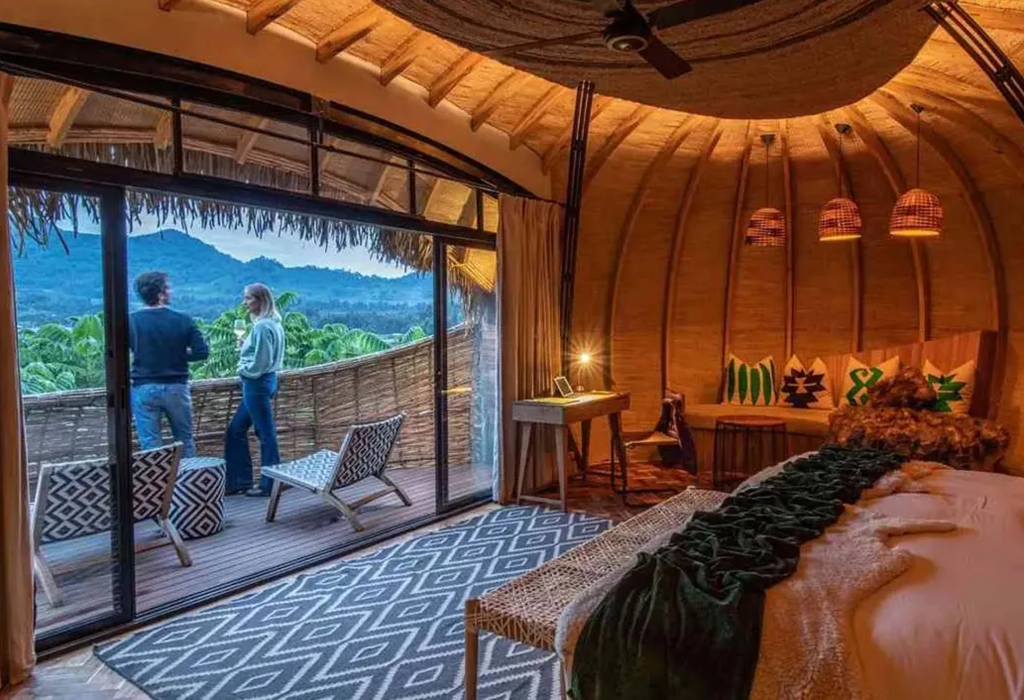 Luxury Rwanda and Uganda Safaris should provide more than expensive rooms. Strategically positioned accommodation, private transportation, excellent guiding and carefully timed transfers contribute more to overall journey quality than simply selecting the highest-priced lodge in every destination. Domestic flights can also be incorporated selectively where they substantially reduce demanding road journeys and create additional time for wildlife activities or relaxation.
Some travelers prefer exceptional forest lodges around gorilla destinations while selecting comfortable mid-range accommodation during shorter transit stays. Others prioritize consistently premium properties throughout the journey. Safari Vacations and Travel Services can allocate the budget according to what luxury actually means to each traveler, whether that is privacy, exceptional accommodation, fewer transfers, personalized service, scenic locations or additional time at particularly important destinations.
Honeymoon and Private Safaris

A couple shares an intimate mountain gorilla encounter in the forest, highlighting the unforgettable experience of a luxury fly-in gorilla safari to Bwindi in Uganda.
Honeymoon Rwanda and Uganda Safaris can combine adventurous wildlife experiences with privacy, scenery and carefully selected accommodation. Gorilla trekking may provide the emotional centerpiece, but slower evenings and strategically placed rest days can prevent the honeymoon from becoming a continuous sequence of early starts and long transfers. Lake destinations and forest lodges can provide valuable contrast between physically demanding wildlife activities.
Private transportation allows couples to travel at a more personal pace within the limits of scheduled park activities. Photography stops, meal timing and scenic breaks can be managed without coordinating with unrelated travelers. The itinerary can therefore reflect whether the couple wants adventure, luxury, relaxation or a combination of all 3, producing a genuinely tailored honeymoon rather than simply renaming a standard safari package.
Rwanda and Uganda Safari Costs, Permits, Accommodation and Best Time
The cost of Rwanda and Uganda Safaris varies substantially because no single price can accurately represent every itinerary. Duration, number of travelers, gorilla permits, chimpanzee permits, accommodation category, transportation and selected activities all influence the final amount. A short mid-range gorilla safari and a 14-day luxury journey may visit some of the same destinations but represent completely different budgets because of their accommodation and logistical requirements.
Travelers should therefore compare quotations according to inclusions rather than selecting a safari solely because one headline price appears lower. A transparent quotation should explain accommodation, transportation, meals, permits, park activities and significant exclusions. This allows travelers to understand where their money is being spent and identify which components can be adjusted without compromising the experiences that originally motivated them to visit Rwanda and Uganda.
What Determines Rwanda and Uganda Safari Costs?
Several major components influence safari pricing, but transportation and accommodation provide more flexibility than regulated wildlife permits. Private vehicle costs can become more economical per person as group size increases, while luxury accommodation can dramatically increase the total journey price. Routing also matters because unnecessarily distant destinations create additional fuel, guiding and accommodation costs without automatically producing a better safari experience.
- Number of travelers: A private safari vehicle and driver-guide represent significant operational costs that can be divided among several travelers. Couples normally pay more per person for transportation than a private group of 4 or 6 using an appropriately sized vehicle. Solo travelers carry an even larger proportion of these costs, although they gain complete flexibility over the journey without adapting to another guest’s preferences.
- Accommodation standard: Comfortable budget and mid-range lodges can keep Rwanda and Uganda Safaris relatively affordable, while exclusive forest lodges and premium properties can increase costs substantially. Location should remain as important as luxury level. An inexpensive lodge positioned inconveniently for the next morning’s activity may create additional driving, whereas a strategically located property can improve both comfort and overall itinerary efficiency.
- Safari duration: Additional travel days create more accommodation, meals, guiding and vehicle expenses, but longer safaris can still provide excellent overall value because expensive permits become distributed across a broader journey. Travelers should not shorten an itinerary so aggressively that major experiences become rushed. Sometimes adding 1 strategically positioned night substantially improves comfort without changing the fundamental structure of the safari.
- Activities and permits: Mountain gorilla trekking, gorilla habituation and chimpanzee tracking require regulated permits, while game drives, boat safaris and other activities create additional park costs. Travelers undertaking several gorilla treks should expect a significantly higher overall budget than those completing only 1 encounter. These experiences should therefore be selected according to genuine priorities rather than included simply because they appear on another traveler’s itinerary.
Gorilla and Chimpanzee Permits
Gorilla permits are among the most significant fixed costs within primate-focused Rwanda and Uganda Safaris. Uganda and Rwanda maintain different permit structures, and travelers should confirm the applicable tariff for their nationality, residency category and travel date before finalizing the safari budget. Permit costs can change, so planning should always use the rate applicable when the actual trek will take place rather than relying on older online articles.
Uganda also provides the specialized gorilla habituation experience, which carries a different permit cost from standard trekking and has more limited visitor availability. Chimpanzee tracking and habituation experiences likewise require separate permits where applicable. Safari Vacations and Travel Services can incorporate these permit-controlled activities into the quotation so travelers understand the actual safari cost instead of discovering substantial mandatory expenses after accommodation has already been selected.
Budget Rwanda and Uganda Safaris
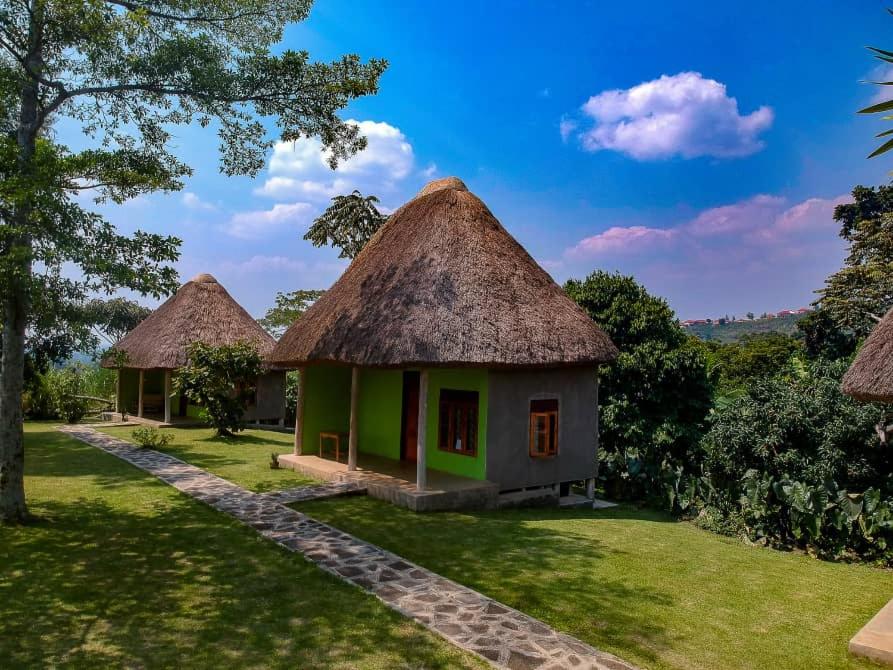
Budget-conscious travelers can reduce costs without removing the principal wildlife experiences. The most effective approach is usually selecting simpler accommodation, maintaining efficient routing and prioritizing activities according to personal importance. Gorilla permits remain a major fixed expense, so choosing a less expensive lodge can make more sense than eliminating the mountain gorilla experience that originally inspired the traveler to visit East Africa.
An unusually low safari quotation should still be examined carefully. Travelers need to understand whether permits, park fees, meals, border transfers and scheduled activities are actually included. Saving money through efficient planning is different from receiving an incomplete quotation. Safari Vacations and Travel Services can balance affordability with reliable transportation, appropriate accommodation and realistic daily scheduling rather than reducing prices by removing important components without making the exclusions clear.
Mid-Range Rwanda and Uganda Safaris

Comfortable mid-range accommodation around Lake Mburo offers travellers a relaxing base for exploring the park’s wildlife and beautiful savannah landscapes.
Mid-range Rwanda and Uganda Safaris provide an excellent balance for travelers who want comfortable private accommodation without paying for premium features at every destination. Lodges can provide ensuite rooms, good meals, attractive surroundings and convenient access to planned activities while leaving more of the overall budget available for gorilla permits, chimpanzees, private transportation and additional wildlife experiences.
The accommodation category does not need to remain identical throughout the journey. Travelers can select a higher-standard property around Bwindi or Volcanoes National Park and use comfortable mid-range lodges elsewhere. This mixed approach often produces better value because money is concentrated around the destinations where accommodation atmosphere matters most instead of paying premium prices during every short transit stay.
Luxury Rwanda and Uganda Safaris

An elegant and spacious interior at Nkuringo Bwindi Gorilla Lodge, offering beautiful views of the southwestern Ugandan highlands and a comfortable base for gorilla trekking in the Nkuringo sector of Bwindi.
Luxury safaris can incorporate exclusive lodges, premium rooms, personalized services, private transportation and selected domestic flights. The objective should be improving comfort and experience rather than simply maximizing expenditure. Travelers may value exceptional views, privacy, fine dining or reduced road time differently, so the itinerary should identify which aspects of luxury matter most before accommodation and transportation decisions are finalized.
Rwanda and Uganda both offer premium accommodation around major safari destinations, but nightly rates vary enormously. Safari Vacations and Travel Services can combine different luxury levels to create an itinerary aligned with the traveler’s priorities. A spectacular gorilla lodge might justify additional expenditure, while another destination may require only a comfortable property conveniently positioned for an early departure the following morning.
Best Time for Rwanda and Uganda Safaris
Rwanda and Uganda Safaris operate throughout the year, and there is no single month that is perfect for every traveler. Mountain gorilla trekking remains possible year-round, while rainfall, vegetation and road conditions vary seasonally. Travelers should choose dates according to their tolerance for rain, wildlife interests, accommodation preferences and international travel schedules instead of assuming that excellent safaris occur during only a narrow seasonal window.
The relatively drier periods are particularly popular because forest trails can be more manageable and traditional wildlife viewing can be excellent. Wetter months bring greener landscapes, atmospheric photography and potentially quieter experiences at selected destinations. Rainforest areas can receive showers at any time, however, so waterproof clothing remains essential even when traveling during periods generally described as dry.
- June–September: These months are popular for Rwanda and Uganda Safaris because comparatively drier conditions can improve forest trekking and road travel. Wildlife viewing can also be rewarding, making the period particularly suitable for travelers combining gorillas with Queen Elizabeth, Akagera or other savannah destinations. Strong demand means travelers requiring specific lodges or multiple primate permits should consider confirming arrangements well before arrival.
- December–February: Another comparatively dry period, these months work particularly well for travelers combining gorilla trekking, chimpanzees and traditional wildlife viewing. Conditions remain variable in rainforest and mountain environments, so occasional rainfall should still be expected. This period can be especially attractive to visitors escaping Northern Hemisphere winter while experiencing East Africa’s forests, savannahs and highlands within one multi-country journey.
- March–May: Wetter conditions can make forest trails muddier and some road journeys slower, but the landscapes become exceptionally green. Travelers comfortable with rain may appreciate quieter surroundings and dramatic photography. Wildlife activities generally remain possible according to local conditions. The season should therefore not automatically be dismissed, particularly by visitors whose priority is primates and who are prepared with suitable footwear and waterproof clothing.
- October–November: These months can bring wetter conditions, lush landscapes and rewarding birding opportunities. Gorilla and chimpanzee activities remain possible, although visitors should prepare for slippery forest trails and changing weather. Photographers may appreciate fresh vegetation and dramatic skies, while travelers seeking consistently dry conditions may prefer another period. Flexible expectations are particularly important when planning outdoor activities during wetter months.
When Should You Book?
Travelers should begin planning once their approximate dates become clear, particularly when mountain gorilla trekking is central to the journey. Gorilla permits are limited for specific dates, and specialized experiences such as habituation have even fewer places. Confirming these activities early creates greater flexibility when selecting strategically located accommodation and designing the surrounding Rwanda and Uganda Safari route.
Early planning becomes especially valuable for travelers requiring 2 gorilla treks, premium lodges, particular room configurations or travel during popular holiday periods. Last-minute safaris can sometimes be arranged when permits and accommodation remain available, but relying on this approach reduces choice. The strongest process secures the least flexible activities first and then builds accommodation, transportation and additional wildlife experiences around those confirmed dates.
Planning Rwanda and Uganda Safaris: Flights, Borders, Visas and Transport
Successful Rwanda and Uganda Safaris depend heavily on logistics. A beautiful list of national parks does not automatically create a good itinerary if travelers repeatedly backtrack or spend most days driving. International arrival and departure airports, permit dates, accommodation locations and border crossings should work together so the route develops naturally from one experience to the next while maintaining realistic daily travel times.
Safari Vacations and Travel Services can structure the journey around Kigali International Airport, Entebbe International Airport or a combination of both. Open-jaw travel is particularly useful because visitors can arrive in 1 country and depart from the other instead of returning hundreds of kilometers to their original gateway. The best direction depends on international flights, permit availability and which national parks form the core of the safari.
Start in Kigali or Entebbe?
Kigali works particularly well when Rwanda or southwestern Uganda provides the first major safari experience. Travelers can continue toward Volcanoes National Park, Bwindi or Mgahinga without first crossing the full length of Uganda. This makes Kigali especially attractive for shorter gorilla-focused itineraries and for longer journeys that subsequently continue through Queen Elizabeth and Kibale before finishing at Entebbe.
Entebbe is generally more convenient when the safari begins with a broader Uganda circuit. Travelers can move west toward Kibale, continue through Queen Elizabeth and Bwindi, then cross into Rwanda for Volcanoes National Park and Kigali. Both directions can create excellent Rwanda and Uganda Safaris, so international airfare should be evaluated alongside itinerary efficiency rather than choosing the arrival airport independently from the planned route.
Kigali to Bwindi
Traveling from Kigali to Bwindi is one of the most useful cross-border connections for gorilla-focused safaris. The journey passes through Rwanda’s highland scenery before entering southwestern Uganda and continuing toward the appropriate trekking sector. Actual travel time depends on border formalities, road conditions, stops and the specific Bwindi accommodation, meaning itineraries should avoid promising unrealistically precise arrival times.
The route can save substantial overland travel compared with reaching Bwindi from Entebbe by road, particularly when the traveler has only a few safari days. Visitors can subsequently return to Kigali or continue deeper into Uganda. Safari Vacations and Travel Services can coordinate the vehicle, border crossing and accommodation location so that the transfer supports the next scheduled activity rather than creating unnecessary logistical pressure.
Entebbe to Bwindi
The overland journey from Entebbe to Bwindi is considerably longer, but it becomes far more attractive when integrated into a broader Uganda circuit. Travelers can stop at Kibale, Queen Elizabeth, Lake Mburo or another suitable destination instead of treating the route as a single transfer. This approach turns travel time into part of the safari and introduces landscapes and wildlife experiences that would be missed when flying directly.
Visitors with limited time can consider domestic flights toward southwestern Uganda, followed by road transportation to their lodge. Flying can be particularly attractive for honeymooners, senior travelers and luxury guests who prioritize comfort and time. Road travel remains worthwhile for visitors wanting to experience more of the countryside, meaning neither option is universally superior for every Rwanda and Uganda Safari.
Crossing the Rwanda–Uganda Border
Cross-border safaris require travelers to complete immigration procedures between Rwanda and Uganda. Passports and relevant travel documents should therefore remain easily accessible rather than packed deep inside luggage. Border processing times can vary, so itineraries should include reasonable flexibility and avoid scheduling activities immediately after a crossing when a delay could jeopardize a permit-controlled experience or another fixed appointment.
Visa and entry requirements depend on nationality and can change. Travelers should verify the regulations that apply to their passport and complete itinerary before departure. This becomes especially important when entering 1 country, crossing into the other and potentially returning. Safari Vacations and Travel Services can explain the planned sequence of border movements, allowing guests to obtain travel authorization appropriate for the actual route.
Private 4×4 Safari Transportation
A comfortable 4×4 safari vehicle becomes an important part of the experience because most Rwanda and Uganda Safaris involve substantial overland travel. The vehicle should provide adequate seating, luggage space and wildlife-viewing functionality for the number of guests traveling. Photographers may require additional space for equipment, while families and longer journeys naturally produce more luggage than short gorilla-focused trips.
Private transportation provides additional flexibility because the vehicle serves only the traveling party rather than a collection of unrelated guests. Scenic stops, photography opportunities and comfort breaks can be accommodated where schedules permit. This becomes especially valuable during longer journeys, when the relationship between travelers and their driver-guide contributes significantly to the overall quality and rhythm of the safari.
Domestic Flights
 Domestic flights can reduce long road journeys within Uganda and may be particularly useful when travelers have limited time. Flights toward airstrips serving southwestern safari regions can shorten the journey between Entebbe and gorilla destinations, after which a road transfer completes the connection to the lodge. This can preserve valuable hours for relaxation or wildlife activities instead of spending an entire day driving.
Flying should nevertheless be used strategically rather than automatically. Road journeys reveal changing landscapes, towns, farms and rural life that travelers miss from the air. Flights also introduce additional costs, fixed schedules and baggage considerations. Safari Vacations and Travel Services can compare both options and recommend flights where the time saved genuinely improves the Rwanda and Uganda Safari rather than merely increasing its price.
Health, Insurance and General Packing
Travelers should seek personalized health advice appropriate to their nationality, medical circumstances and wider international itinerary before departure. Recommendations can change, so general safari articles should not replace professional medical guidance. Comprehensive travel insurance is also strongly recommended, particularly because primate permits, premium accommodation and international flights can represent substantial prepaid costs with specific amendment or cancellation conditions.
General packing should emphasize lightweight clothing, comfortable closed footwear, sun protection, rain protection and layers for cooler highland mornings and evenings. Travelers should also carry prescribed medication, charging equipment and sufficient camera batteries. Laundry may be available at selected lodges, so guests undertaking longer Rwanda and Uganda Safaris can often travel comfortably without packing separate outfits for every individual day.
Why Book Rwanda and Uganda Safaris With Safari Vacations and Travel Services?
Planning a multi-country safari requires much more than reserving hotels and connecting famous attractions on a map. Gorilla permits, chimpanzee activities, border crossings, accommodation locations and road transfers must align correctly. Safari Vacations and Travel Services Ltd. designs private Rwanda and Uganda Safaris around the traveler’s actual dates, wildlife priorities, preferred accommodation category and available time rather than expecting guests to adapt to a rigid standardized route.
Local Destination Knowledge
Local knowledge is particularly important when planning cross-border safaris because realistic transfer times and accommodation locations can determine whether an itinerary feels comfortable or exhausting. Safari Vacations and Travel Services understands how Uganda’s western safari circuit connects with Rwanda, allowing destinations to be positioned according to geography rather than popularity. This helps reduce unnecessary backtracking while allocating more time to the wildlife experiences travelers actually came to enjoy.
Tailor-Made Private Safaris
Every traveler approaches Rwanda and Uganda Safaris differently. Some prioritize mountain gorillas above everything else, while others want chimpanzees, lions, birdwatching, photography, culture or luxury accommodation. A tailor-made approach allows the journey to emphasize those priorities instead of including activities simply because they appear on a standard package. Travel days, accommodation and pacing can therefore be adjusted around the individual group.
Private safaris also provide greater flexibility during road journeys. Travelers have their own vehicle and driver-guide rather than sharing transportation with unrelated guests following different interests. Within the restrictions of scheduled activities, stops and daily pacing can be adapted according to photography, comfort and scenery. This creates a more personal experience, particularly for couples, families, photographers and travelers undertaking longer multi-country journeys.
Permit and Accommodation Coordination
Gorilla and chimpanzee permits should be coordinated with accommodation rather than booked independently. This is especially important around Bwindi because the trekking sector influences where travelers should stay. Safari Vacations and Travel Services can arrange the permit-controlled experiences first and position suitable accommodation around them, reducing the possibility of travelers discovering that their chosen lodge is inconveniently located for the following morning’s activity.
Accommodation can range from comfortable budget and mid-range lodges to premium properties, and the entire journey does not need to remain within one rigid category. Travelers can spend more around destinations that matter particularly to them and choose simpler properties elsewhere. This flexibility helps create Rwanda and Uganda Safaris that balance comfort, experience and budget instead of assuming the most expensive option is automatically the best.
Professional Driver-Guides and Safari Vehicles
A professional driver-guide contributes significantly to the quality of a private safari. Beyond driving, the guide helps coordinate activities, interpret wildlife and landscapes and manage the practical flow of the journey. On longer Rwanda and Uganda Safaris, having a consistent local professional accompanying the trip provides continuity as travelers move between forests, savannah parks, accommodation properties and international border points.
Reliable 4×4 transportation is equally important because road travel forms a substantial part of most itineraries. Safari Vacations and Travel Services can match the vehicle to group size and route requirements while maintaining sufficient space for passengers and luggage. The objective is to make transfers comfortable and wildlife viewing practical, ensuring transportation supports rather than undermines the overall safari experience.
Support Before and During the Safari
Travelers frequently have questions about permits, border crossings, packing, accommodation, physical preparation and transfer times before reaching East Africa. Clear communication during planning helps establish realistic expectations and reduces uncertainty. Safari Vacations and Travel Services can explain itinerary-specific logistics so guests understand how their journey will operate instead of relying on generic information that may not apply to their particular route.
Local support remains valuable after the safari begins because weather, road conditions and wildlife movements can never be controlled completely. Having an established safari team and professional driver-guide provides practical assistance when circumstances require reasonable adjustments. Travelers can therefore concentrate on mountain gorillas, chimpanzees, wildlife and landscapes while the operational details of their Rwanda and Uganda Safari remain professionally coordinated.
Frequently Asked Questions About Rwanda and Uganda Safaris
Is Uganda or Rwanda Better for a Safari?
Neither country is universally better because they offer complementary strengths. Uganda provides an extensive circuit of primate forests and savannah parks, while Rwanda offers a compact journey involving Volcanoes, Akagera, Nyungwe and Kigali. Travelers wanting the broadest experience can combine both countries, allowing Rwanda’s volcanic landscapes and Uganda’s extensive wildlife diversity to contribute different elements to the same East African safari.
Can You Visit Rwanda and Uganda on the Same Safari?
Yes. Rwanda and Uganda Safaris can be designed as continuous cross-border journeys using private road transportation and appropriate immigration arrangements. Travelers can arrive through Kigali, explore Rwanda or continue directly toward southwestern Uganda, then finish in Entebbe. The opposite direction works equally well. Using different arrival and departure airports can reduce backtracking and make a multi-country itinerary considerably more efficient.
How Many Days Do You Need for Rwanda and Uganda Safaris?
Approximately 7–14 days provides an excellent range for most travelers. A 5-day itinerary can concentrate on gorillas, while 7–9 days allow selected wildlife or chimpanzee experiences. With 10–14 days, travelers can combine Kibale, Queen Elizabeth, Bwindi and Volcanoes National Park comfortably. Journeys of 15–21 days can extend toward Murchison Falls, Akagera, Nyungwe and additional scenic destinations.
Is Gorilla Trekking Better in Uganda or Rwanda?
Both countries provide exceptional mountain gorilla encounters, but the wider experience differs. Uganda offers Bwindi’s ancient rainforest, Mgahinga’s Virunga landscape and the specialized gorilla habituation experience. Rwanda offers Volcanoes National Park and convenient access from Kigali. Travelers should consider permit costs, itinerary direction, accommodation and other planned activities rather than expecting one country to be objectively superior for every visitor.
Can You Trek Gorillas in Both Uganda and Rwanda?
Yes. Double gorilla trekking is one of the most rewarding options for dedicated primate enthusiasts. Travelers can complete 1 trek in Uganda and another in Rwanda, encountering different gorilla families and landscapes. The 2 experiences can produce very different wildlife behavior and photographic conditions. A well-designed itinerary should provide appropriate transfer and recovery time between treks rather than compressing both encounters unnecessarily.
Can You See Gorillas and Chimpanzees on the Same Safari?
Yes. Combining gorillas and chimpanzees is one of the strongest reasons to choose Rwanda and Uganda Safaris. Kibale can provide chimpanzee tracking before travelers continue through Queen Elizabeth National Park toward Bwindi for gorillas. The journey can then cross into Rwanda for Volcanoes National Park. Approximately 8–14 days generally provides enough time to combine these great apes with selected savannah wildlife experiences.
Can You See the Big Five on Rwanda and Uganda Safaris?
A carefully designed journey can include opportunities for Big Five wildlife, particularly when the itinerary incorporates suitable savannah destinations and rhino experiences. Rwanda’s Akagera National Park contributes an important Big Five environment, while Uganda offers extensive wildlife viewing across several destinations. Travelers should remember that wildlife remains completely natural, meaning sightings can never be guaranteed simply because a particular species inhabits the protected area being visited.
What Is the Best Time for Rwanda and Uganda Safaris?
Rwanda and Uganda Safaris operate throughout the year. June–September and December–February are popular because conditions are often comparatively drier, while wetter periods can offer green landscapes, excellent birding and atmospheric photography. Rain can occur in forest environments during any month. Travelers should therefore choose dates according to trekking preferences, wildlife interests and schedule rather than searching for one universally perfect travel month.
Should I Fly Into Kigali or Entebbe?
Kigali is particularly useful for safaris beginning around Volcanoes National Park, Bwindi or Mgahinga, while Entebbe generally works better for broader Uganda circuits beginning with destinations such as Kibale. Travelers can also arrive through 1 airport and depart through the other. This open-jaw strategy frequently creates a more efficient Rwanda and Uganda Safari by removing unnecessary return driving after the final destination.
Is Kigali a Good Gateway for Bwindi?
Yes. Kigali can provide a practical gateway to southwestern Uganda, particularly for travelers whose primary objective is gorilla trekking in Bwindi or Mgahinga. The journey crosses through attractive highland landscapes before reaching Uganda. Actual transfer time depends on the selected Bwindi sector, border procedures, road conditions and stops, so travelers should plan according to their specific lodge rather than relying on one universal driving estimate.
Do I Need Visas for Both Rwanda and Uganda?
Entry requirements depend on nationality, passport type and the complete sequence of countries visited. Travelers should check the applicable immigration requirements before departure and ensure any travel authorization matches their actual route, particularly when crossing borders more than once. Safari Vacations and Travel Services can explain the planned border sequence, while travelers remain responsible for obtaining the appropriate documentation required for their individual circumstances.
How Much Do Rwanda and Uganda Safaris Cost?
There is no single reliable price because duration, number of travelers, accommodation, permits, vehicle arrangements and activities differ substantially. A private 5-day gorilla safari and a 14-day luxury wildlife journey naturally require very different budgets. Travelers should request a detailed quotation based on their actual dates and preferences, then compare what is included rather than judging competing safari arrangements solely by headline prices.
Are Rwanda and Uganda Safaris Suitable for First-Time Visitors?
Yes. Rwanda and Uganda Safaris can be excellent for first-time African travelers because a single journey can combine mountain gorillas, chimpanzees, traditional wildlife viewing and striking landscapes. Private transportation and prearranged activities simplify the logistics considerably. First-time visitors should resist trying to include every famous destination, however, because a carefully paced itinerary generally provides a more rewarding introduction than continuously moving between distant parks.
Are Rwanda and Uganda Safaris Good for Honeymoons?
Yes. A private safari can combine mountain gorillas and wildlife with intimate lodges, scenic landscapes and relaxing stays around destinations such as Lake Bunyonyi or Lake Kivu. Honeymoon itineraries should include sufficient downtime rather than scheduling demanding activities every morning. Approximately 10–14 days can provide an excellent balance between adventure, privacy and relaxation while allowing couples to experience both countries meaningfully.
Are Rwanda and Uganda Safaris Suitable for Senior Travelers?
Yes, provided the itinerary is designed around individual comfort, mobility and preferred pace. Strategically located accommodation, selected domestic flights and additional rest nights can reduce unnecessary physical pressure. Gorilla trekking difficulty remains unpredictable because gorillas move naturally, so travelers should discuss mobility considerations before booking. Appropriate preparation and porter assistance can also make demanding forest terrain considerably more manageable for many visitors.
What Should I Pack for Rwanda and Uganda Safaris?
Travelers should pack lightweight safari clothing, long trousers, long-sleeved shirts, waterproof protection, sturdy trekking footwear, sun protection and warmer layers for high-altitude mornings and evenings. Camera equipment, binoculars, personal medication and charging accessories are also useful. Gorilla trekking requires particularly good footwear and rain protection. Packing should remain practical because carrying unnecessary luggage between multiple safari lodges can quickly become inconvenient.
How Early Should I Book Gorilla Permits?
Travelers should consider securing gorilla permits as soon as their travel dates become reasonably firm, particularly when planning during popular periods or requiring multiple trekking experiences. Specialized gorilla habituation spaces are even more limited. Early confirmation gives Safari Vacations and Travel Services greater flexibility when selecting accommodation and arranging transfers around the permit date instead of trying to restructure an already completed itinerary later.
Are Rwanda and Uganda Safaris Safe?
Safari safety depends on current local conditions, responsible travel behavior and professionally organized logistics. Travelers should review applicable official travel guidance before departure, follow park regulations and listen carefully to their driver-guide and wildlife rangers. Comprehensive travel insurance is strongly recommended. Conditions can change, so travelers should use current information rather than relying entirely on an article written long before their actual travel dates.
Why Choose a Private Rwanda and Uganda Safari?
Private Rwanda and Uganda Safaris provide greater flexibility over accommodation, routing, pacing and travel style than standardized group departures. The vehicle and driver-guide serve the traveling party, allowing selected scenic and photography stops where schedules permit. Private arrangements are particularly valuable for couples, families, photographers and senior travelers because the itinerary can reflect their priorities rather than requiring them to adapt continuously to unrelated guests.
Plan Your Rwanda and Uganda Safari With Safari Vacations and Travel Services
To plan your Rwanda and Uganda safari with Safari Vacations, share your preferred travel dates, group size, number of safari days, activities of interest, and preferred travel style with our local safari experts. You can reach us through our online booking form, email us directly at info@ugandarwanda-safaris.com, or tap the WhatsApp icon at the bottom-left corner of your screen for a quick conversation with our team.