Antelopes in Uganda

Antelopes in Uganda
Uganda is one of the countries with a large number of Antelopes, they are distributed across all the 10 national parks in Uganda, However, there are different types of antelopes found in game reserves and parks which you can encounter on your safari. Antelopes live in the Savannah plains in the eastern and southern parts of Africa. The regions where the Antelopes of Uganda inhabit are buses, semi-arid, and woodlands, they normally keep away from swampy areas, and the forested areas are pure desert regions.
Most of the Antelopes are found in East Africa in Uganda, Kenya, Rwanda, Tanzania, Malawi, Burundi, Zimbabwe, and other countries within the African region but particularly in Uganda’s most national park, a number of them are found in Lake Mburo National Park, Kidepo valley National Park, Queen Elizabeth National park, Semliki National park Murchison falls national park and many more reserves.
Uganda Kob
Scientific Name: Kobus kob thomasi
Description:
- The Uganda kob is the national symbol of Uganda and is featured on the country’s coat of arms.
- It is medium-sized with reddish-brown fur and white underparts. Males have impressive, spiraled horns.

Habitat: Open savannahs and grasslands.
Where to Spot: Common in Queen Elizabeth National Park, Murchison Falls National Park, and Lake Mburo National Park.
Impala
Scientific Name: Aepyceros melampus
Description:
- A medium-sized antelope with reddish-brown fur and distinctive black stripes on its rear and tail.
- Males have long, lyre-shaped horns.

Habitat: Savannah woodlands and open grasslands.
Where to Spot: Found in Lake Mburo National Park, the only park in Uganda where impalas are present.
Eland
Scientific Name: Taurotragus oryx
Description:
- The largest antelope species, elands have a robust build, light tan fur, and long, spiraled horns in both males and females.
- Known for their slow movements but capable of sudden bursts of speed.
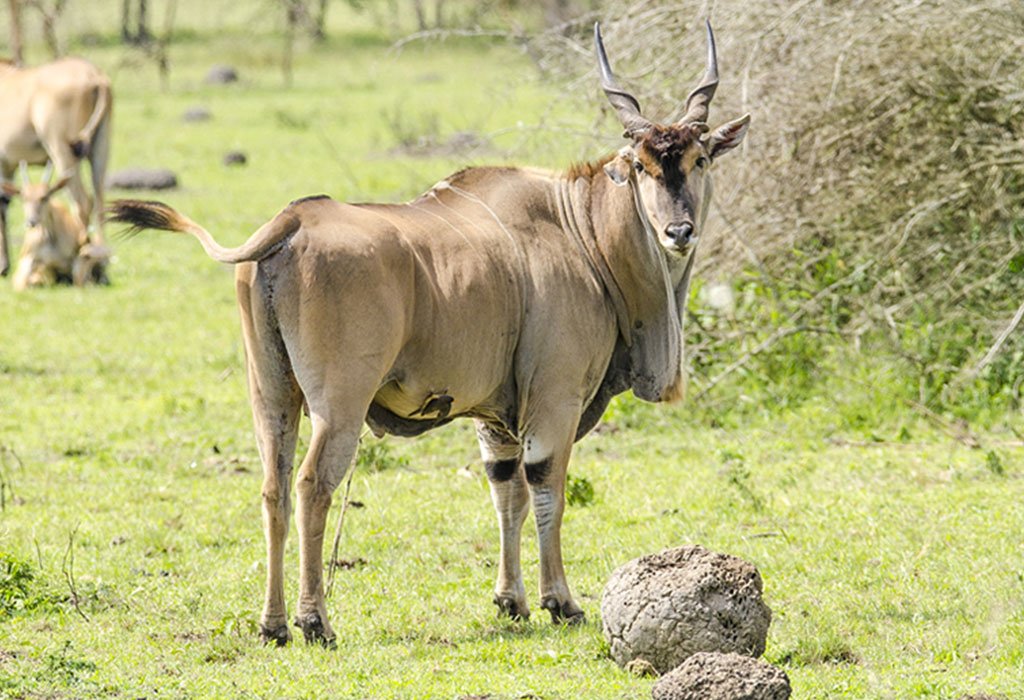
Habitat: Grasslands and open savannahs.
Where to Spot: Lake Mburo National Park and Kidepo Valley National Park.
Bushbuck
Scientific Name: Tragelaphus scriptus
Description:
- A shy and solitary antelope with reddish-brown or grayish fur, marked with white spots and stripes.
- Males have short, sharp horns.

Habitat: Dense forests and thickets near water bodies.
Where to Spot: Found in most national parks, including Queen Elizabeth National Park, Murchison Falls National Park, and Bwindi Impenetrable Forest.
Waterbuck
Scientific Name: Kobus ellipsiprymnus
Description:
- A large antelope with shaggy brown-gray fur and a distinctive white ring on its rump.
- Males have large, curved horns.

Habitat: Grasslands and areas near water bodies.
Where to Spot: Common in Queen Elizabeth National Park, Murchison Falls National Park, and Lake Mburo National Park.
Oribi
Scientific Name: Ourebia ourebi
Description:
- A small antelope with slender legs and a reddish-brown coat.
- Only males have small, straight horns.

Habitat: Open grasslands and savannahs.
Where to Spot: Found in Queen Elizabeth National Park and Murchison Falls National Park.
Jackson’s Hartebeest
Scientific Name: Alcelaphus buselaphus Jackson
Description:
- A subspecies of the hartebeest, it has a light tan coat and long, curved horns.
- Known for its long face and slightly humped back.

Jackson’s Heart beest
Habitat: Open grasslands and savannahs.
Where to Spot: Found in Murchison Falls National Park.
Sitatunga
Scientific Name: Tragelaphus spekii
Description:
- A swamp-dwelling antelope with a shaggy brown coat and white stripes on its body.
- Males have spiraled horns.

Habitat: Wetlands, papyrus swamps, and marshes.
Where to Spot: Seen in Mabamba Swamp, Lake Mburo National Park, and Semuliki National Park.
Topi
Scientific Name: Damaliscus lunatus Jimena
Description:
- A medium-sized antelope with a reddish-brown coat and dark patches on its legs and face.
- Both males and females have long, ringed horns.

Topi
Habitat: Savannahs and grasslands.
Where to Spot: Found in Queen Elizabeth National Park and Lake Mburo National Park.
Klipspringer
Scientific Name: Oreotragus oreotragus
Description:
- A small, stocky antelope adapted to rocky habitats, with a coarse, gray-brown coat.
- Males have small, straight horns.

Habitat: Rocky outcrops and hills.
Where to Spot: Found in Kidepo Valley National Park and areas with rocky terrain.
Duikers
Common Species in Uganda:
Blue duiker (Philantomba monticola): Found in forested areas like Bwindi and Kibale.
Red duiker (Cephalophus natalensis): Found in forests and thickets.
Yellow-backed duiker (Cephalophus silvicultor): Larger duiker species found in dense forests.

Description:
- Small antelopes with compact bodies and short legs, often shy and elusive.
Habitat: Forests and thickets.
Where to Spot: Found in Bwindi Impenetrable Forest, Kibale Forest, and Semuliki National Park.
Bohor Reedbuck
Scientific Name: Redunca reduce
Description:
- A medium-sized antelope with a reddish-brown coat and white underparts.
- Males have curved horns.

Habitat: Wetlands and grasslands near water.
Where to Spot: Found in Murchison Falls National Park and Queen Elizabeth National Park.
Best Places to See Antelopes in Uganda:
Queen Elizabeth National Park – High diversity of antelope species.
Lake Mburo National Park – Famous for impalas, elands, and topis.
Murchison Falls National Park – Abundance of kobs, hartebeests, and oribis.
Kidepo Valley National Park – Remote park with elands, klipspringers, and oribis.
Bwindi Impenetrable Forest – Excellent for duikers and bushbucks.
Antelopes are a crucial part of Uganda’s ecosystems, and spotting them on a safari is a memorable experience! Let me know if you’d like safari recommendations or tips!