
Karisoke Research Center: 7 Inspiring Rwanda Insights

Karisoke Research Center Rwanda: 7 Inspiring Visitor Insights
Why this place matters
The the historic research station is not simply a name in the history of African rwanda-national-parks/” style=”color:#0f766e;font-weight:bold;text-decoration:underline;text-underline-offset:3px;”>wildlife tourism. It represents decades of patient observation, dangerous fieldwork, local expertise, and persistent efforts to protect animals that live in one of Africa’s most dramatic mountain landscapes. The original camp stood in the high forest between the Karisimbi and Bisoke volcanoes. From this base, scientists learned how families of mountain gorillas feed, travel, communicate, raise infants, and respond to changes in their habitat. That research influenced how rangers and conservation organizations approach protection today. For travelers, the the historic research station gives a deeper meaning to the experience of entering the Virunga forest.
A visit is best understood as a journey into the legacy of Dian Fossey, not as an ordinary wildlife attraction. Visitors can hike with an authorized guide toward the historic site and memorial, while the contemporary research and education work is interpreted at a separate campus near Musanze. These experiences complement, rather than replace, a standard gorilla encounter. The distinction matters because a historic-site hike does not promise a sighting of mountain gorillas. A traveler who understands the different activities can plan a meaningful itinerary without confusing them.
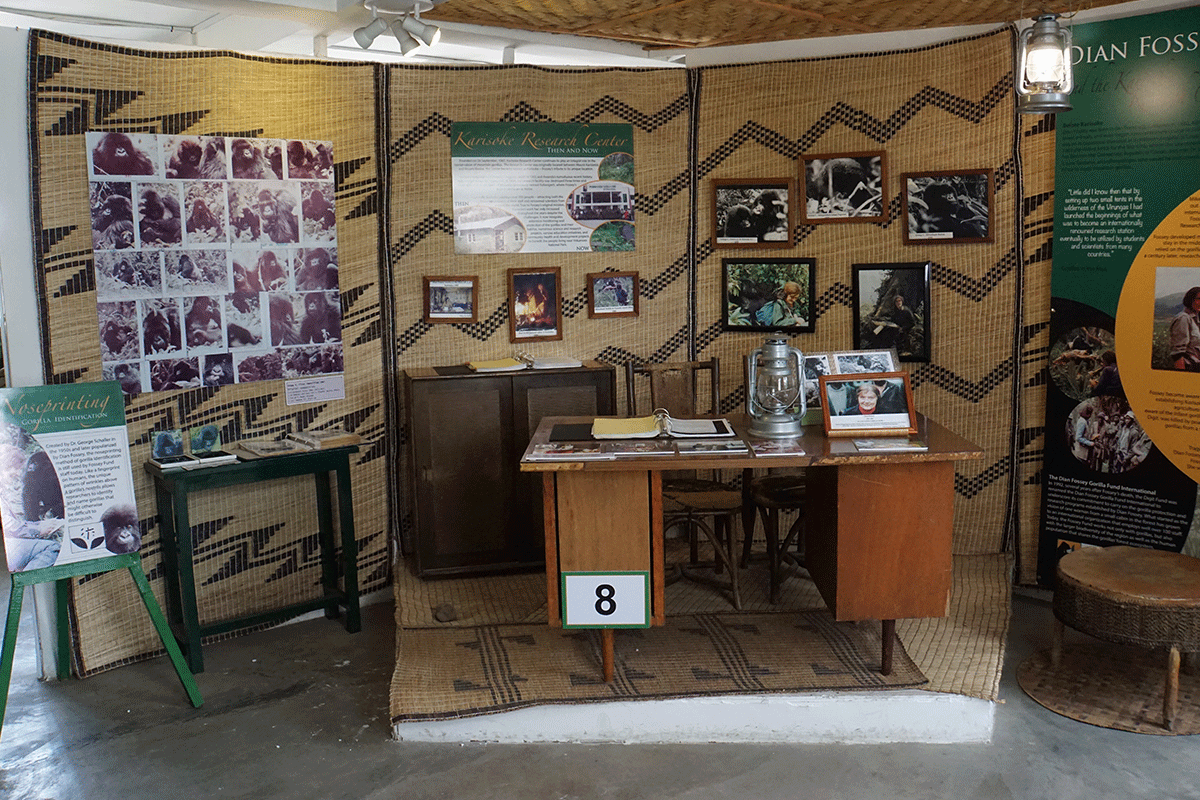
Where the original camp stood
The the historic research station was established at high altitude in the Virunga Mountains, within the landscape now protected as Volcanoes National Park in northwestern Rwanda. Its name blends Karisimbi and Visoke, another spelling of Bisoke, the two volcanic landmarks framing the camp. Mist, bamboo, moss-covered trees, steep slopes, and fast-changing weather shape the setting. Being here can feel very different from visiting the lakes and savannahs elsewhere in the country. The forest is beautiful, but its terrain demands respect.
Travelers usually base themselves in the Musanze or Kinigi area rather than at the old research camp. Kinigi is the practical starting point for ranger briefings and organized activities in Volcanoes National Park. Road transfers then connect visitors to the trailhead used for the memorial walk. Exact access arrangements can change, so confirm the departure meeting place and latest instructions when the activity is booked. The present-day the historic research station legacy extends well beyond the original hillside, through teams working in the broader region on long-term research and protection.
How the story began in 1967
Dian Fossey established the the historic research station in September 1967 after beginning her study of mountain gorillas in the Virunga region. Her approach depended on sustained time in the field: careful identification of individual animals, detailed notes about social relationships, and repeated observation of the same groups. Unlike a short expedition that captures a moment, a continuing study reveals patterns across seasons and generations. The pioneering methods and records made Karisoke especially important to the history of primatology.
The early years were not romantic in the easy sense often suggested by photographs. Equipment had to be transported through wet terrain, communication was limited, and working conditions could be physically exhausting. Finding and following animals in dense vegetation required immense patience. Dian Fossey and her colleagues gradually assembled observations that made mountain gorillas less mysterious to researchers and the wider public. When visitors hear about the the historic research station today, it is worth remembering both the internationally recognized scientist and the field assistants, trackers, rangers, and other local contributors whose knowledge supported the work.
What research changed our understanding
One enduring contribution of the Karisoke Research Center is its long-term perspective. Researchers can recognize particular gorillas over many years, follow changes in family composition, document births and deaths, and understand how relationships affect group behavior. Such records have considerable value because mountain gorillas are long-lived animals. A quick survey cannot substitute for knowing the history of individuals and families over decades.
Dian Fossey helped bring those intimate observations to international attention. Her work challenged simplistic images of gorillas as aggressive monsters and encouraged more nuanced understanding of their social lives. Today, mountain gorillas remain vulnerable to threats that cannot be solved by research alone. Habitat protection, veterinary response, law enforcement, community relationships, and tourism management all matter. The Karisoke Research Center story is therefore not a finished chapter but an example of why science and practical gorilla conservation must inform each other. For a visitor, the value lies in recognizing the decades of work behind a seemingly effortless wildlife encounter.
Plan Your Rwanda Conservation Journey
Share your preferred dates, fitness level and wildlife priorities for a thoughtfully paced itinerary.
Ask About a Tailor-Made Itinerary
Email: info@ugandarwanda-safaris.com
Poaching and the protection of gorillas
The history of Dian Fossey also includes fierce opposition to poaching and the setting of snares in gorilla habitat. Wire traps intended for other animals can injure mountain gorillas, while illegal activity in protected forests may disturb families and endanger rangers. The loss of Digit, a gorilla closely associated with Fossey, became a powerful symbol of the stakes involved. Her response drew attention to the urgent need for stronger protection, although the methods and historical context of her activism deserve thoughtful discussion rather than uncomplicated hero worship.
Modern gorilla conservation draws on a broader partnership of institutions and communities. Ranger patrols, scientific monitoring, park authorities, veterinary specialists, local livelihoods, and responsible tourism all contribute. The Karisoke Research Center remains associated with this long effort to make protection effective and sustainable. Visitors should resist the notion that purchasing any single excursion automatically guarantees a conservation benefit of a specific size. Instead, ask operators how they work with licensed park services and whether their practices respect communities, guides, and wildlife.

The memorial and the grave of Fossey
Karisoke Research Center memorial: what to expect
The historic Karisoke Research Center site is also a place of remembrance. Dian Fossey was killed in 1985 and buried near gorillas she had studied, including Digit. Seeing the memorial in its remote forest setting makes the story more immediate than reading a museum panel.
The setting should be treated with the respect appropriate to a burial ground. Keep voices low, remain with the guide, and avoid posing in ways that trivialize the graves. Photography may be possible subject to current instructions, but a respectful attitude matters more than collecting photographs. A hike to the Karisoke Research Center memorial is primarily a historical and environmental experience, not a promise of mountain gorillas emerging around the site. The journey becomes more rewarding when visitors arrive familiar with the wider work of Dian Fossey.
How the guided hike works
A guided excursion to the former Karisoke Research Center generally begins with reporting to the park authorities at Kinigi for instructions. Travelers are taken toward the authorized starting point before walking through changing landscapes. The approach can pass cultivated land near the park edge and then climb into damp mountain vegetation. Walking times vary according to conditions and the pace of the group.
Rwanda’s official booking information describes a morning departure and an approach that can require roughly one to one and a half hours from the park boundary to the memorial area, excluding transfers and other walking. This is an indicative figure rather than a guaranteed end-to-end duration. Rain, a slower group, and trail conditions can make the day longer. Because the Karisoke Research Center is in highland forest, bring enough water and allow your guide to set a sustainable pace. The hike is different from gorilla trekking, even when both start in the same wider Volcanoes National Park region.
Fitness, altitude and difficult terrain
The Karisoke Research Center trail can be demanding for someone accustomed only to urban walking. High elevation means cooler air and potentially harder exertion, while a wet trail requires balance and deliberate foot placement. No advanced climbing technique is normally needed on a standard guided memorial hike, yet visitors should be comfortable walking uphill for extended periods. Tell the operator beforehand about mobility concerns, previous injuries, and any other needs that affect suitable pacing.
A porter may make the experience more comfortable by helping with a daypack where this service is available. Sturdy boots with dependable grip are more useful than fashionable trainers. Walking poles can help on slippery descents, provided their use follows ranger instructions. In the rainy season, even strong walkers may move slowly. The point is to enjoy the forest responsibly, not to race to the grave and back. Travelers who cannot comfortably undertake the Karisoke Research Center hike can still engage with Dian Fossey’s story through the modern visitor-focused interpretation facilities around Musanze.
What to pack for the memorial walk
Plan for shifting mountain weather rather than the warmth you may associate with equatorial Africa. A waterproof jacket, long trousers, long sleeves, comfortable layers, a small backpack, drinking water, and simple trail snacks are sensible starting points. Gardening-style gloves may help with rough vegetation where permitted. Gaiters can reduce the amount of mud that enters your boots. Protect phones, documents, and camera equipment in waterproof pouches or dry bags.
Try not to carry unnecessary weight. Large lenses are less essential on a historical walk than on a dedicated wildlife photography activity, and the Karisoke Research Center trail is not an occasion to fly a drone. Ask your guide about current camera restrictions inside Volcanoes National Park. If you are joining more than one forest activity, clean footwear and outdoor clothing between protected areas where advised. That practical habit supports hygiene and shows respect for the delicate habitats shared by mountain gorillas and other wildlife.

Best time of year to visit
The Karisoke Research Center area experiences mountain weather throughout the year. Travelers often prefer comparatively drier periods because walking conditions may be easier, but rain can fall in any season. In Rwanda, June to September and parts of December to February are often considered more favorable windows for outdoor activities. That does not mean every day will be dry or that an excursion outside these periods is impossible.
Rain changes the experience more than the scenery alone. Wet roots, slick soil, and a cold breeze can make the route noticeably harder; conversely, mist and deep green foliage can give the forest extraordinary atmosphere. The best month for your trip may depend on whether the Karisoke Research Center memorial is your main goal or an addition to a wider safari. If gorilla trekking, golden monkeys, and other park activities also matter, consider the entire route before selecting dates. Book controlled activities early during popular travel periods and keep reasonable flexibility around weather-sensitive plans.
Plan Your Rwanda Conservation Journey
Share your preferred dates, fitness level and wildlife priorities for a thoughtfully paced itinerary.
Ask About a Tailor-Made Itinerary
Email: info@ugandarwanda-safaris.com
Karisoke and a gorilla trek are different
A standard gorilla trekking permit gives eligible visitors an organized opportunity to track a habituated gorilla family with park personnel, under strict viewing rules. The Karisoke Research Center memorial hike takes visitors to a historic location connected to Dian Fossey. Although both occur in the greater Volcanoes National Park landscape, they have distinct objectives, schedules, permit arrangements, and physical demands. Neither permit should be assumed to cover the other activity.
This difference is especially important when planning a short stay. If seeing mountain gorillas is your highest priority, secure the appropriate permit before adding optional experiences. If the historical narrative interests you, set aside a separate day for the Karisoke Research Center visit rather than trying to fit it into an already crowded trekking schedule. A visitor might choose the two activities on consecutive days, allowing the second experience to deepen the first. Both are meaningful, but they are not interchangeable.
The modern conservation campus
The Karisoke Research Center name is also associated with the contemporary work of the Dian Fossey Gorilla Fund. A modern research and education campus near Musanze provides a very different way to encounter the conservation story. Its visitor-facing exhibitions can help explain gorilla behavior, scientific methods, and long-term protection efforts without demanding an arduous mountain walk. The campus and the original graveside site should not be confused as though they were in the same location.
For travelers interested in science, interpretive exhibits may provide a useful foundation before a wildlife activity. They can make terms such as individual identification, monitoring, habituation, and habitat management easier to understand. The campus also demonstrates that gorilla conservation relies on ongoing institutions, not only on the historic achievements of Dian Fossey. Visitor experiences, access to particular facilities, opening arrangements, and paid programs can vary; ask the organization directly before planning around a specific tour. The historic Karisoke Research Center hike remains separately administered through the national park system.

Visiting from Kigali and Musanze
Most international travelers enter Rwanda through Kigali and continue by road toward Musanze and Kinigi. The journey offers an introduction to the country’s highlands, with increasingly prominent volcanic scenery as you approach the north. Allow realistic transfer time rather than assuming an early international arrival guarantees a same-day park activity. A night near the park is usually more comfortable before a morning briefing, particularly after a long flight.
Accommodation ranges from simple guesthouses and practical town hotels to high-end lodges positioned for Volcanoes National Park access. When comparing properties, look beyond the advertised distance to the national park. Ask how long the actual morning transfer takes, whether breakfast can be ready early, and who will arrange transport to the correct meeting point. The Karisoke Research Center excursion starts with logistics that need coordination; choosing a lodge close to the correct departure area can make the day significantly less stressful. Visitors who prioritize the modern campus may prefer flexibility within Musanze itself.
Permits, booking and prices
A visitor should arrange the Karisoke Research Center historical hike through authorized channels or a reputable operator able to organize the official process. The Rwanda Development Board operates a booking portal for the Dian Fossey tomb excursion. Published prices, eligible categories, required identification, and cancellation conditions can change, so the live booking confirmation is more reliable than an old travel blog. Do not assume that a quoted fee includes private transport, porter services, meals, or a hotel transfer.
When requesting a quote, ask for a clear breakdown: the official activity permit, guiding arrangements, vehicle transfer, optional porter support, and any other local expense. Also confirm the meeting time and whether your < a href="https://anthillgorillasafaris.com/category/accommodation"> accommodation can provide a packed breakfast or lunch. If the historic site and mountain gorillas are both on your itinerary, check that each activity is booked on the intended day. Transparency avoids disappointment and allows the Karisoke Research Center experience to feel unhurried. Travelers should recheck any online price close to payment rather than relying on estimates in older articles.
What wildlife might be seen on the route
The trail passes through a landscape valued for its biodiversity. Depending on the route and conditions, visitors may notice birds, plants, smaller mammals, and signs of larger forest animals. Wildlife sightings are unpredictable and must never be represented as guaranteed. The Karisoke Research Center memorial excursion is not designed as a substitute for the guided gorilla trekking experience, which follows separate protocols.
Pay attention to the wider ecology. Bamboo stands, forest clearings, tree ferns, moss, and mountain vegetation tell a story about altitude and moisture. A knowledgeable guide can interpret sounds and signs even when animals remain out of sight. Respect quiet periods: the absence of visible mountain gorillas does not mean the forest is empty. The same habitats depend on ongoing gorilla conservation and careful park management. This is an opportunity to appreciate the landscape that shaped Dian Fossey’s fieldwork rather than to demand the most dramatic possible animal encounter.
Plan Your Rwanda Conservation Journey
Share your preferred dates, fitness level and wildlife priorities for a thoughtfully paced itinerary.
Ask About a Tailor-Made Itinerary
Email: info@ugandarwanda-safaris.com
Understanding science in the field
Long-running field studies are built from ordinary-looking details. Researchers may document the location of a group, the composition of its members, feeding behavior, changes in vegetation, and social interactions. Reliable notes become valuable when collected consistently over many years. This is why the Karisoke Research Center legacy should be understood as sustained scientific work rather than a single dramatic discovery. A visit to the surrounding landscape helps travelers appreciate how difficult even routine observations can be in thick vegetation and changing weather.
Individual identification is another important concept. Scientists can track the same animals through time rather than treating each sighting as an anonymous encounter. Changes in a gorilla family can then be interpreted within the context of its previous behavior. In more recent work, multidisciplinary approaches can bring together habitat studies, veterinary support, conservation planning, and local knowledge. This is a useful theme to discuss with an educational guide at the modern campus. Visitors can appreciate why careful science remains part of effective gorilla conservation, even when research has already continued for generations.
The scientific story also shows why tourists should never pressure guides to guarantee a particular animal interaction. Wild animals decide where to move and how to behave. A successful visit does not require unusually close photographs. It requires curiosity about the living forest and awareness of the people who have worked to understand it.

Photography with respect for the site
Photography on the Karisoke Research Center walk works best as a way to document the atmosphere rather than stage a triumphal portrait. Wide images of the forest, patterns of mist, and small details of the trail may communicate the experience beautifully. Keep equipment protected against moisture and avoid delaying the entire group while changing lenses. Always follow the ranger’s guidance about where you may stop, step, or photograph.
The memorial has a special character because it is a grave site. Be discreet around other visitors who may find the visit emotional. Never move objects, step across graves, or disturb vegetation to improve a camera angle. If mountain gorillas or other wildlife are encountered unexpectedly, the guide’s instructions take priority over photography. Respectful tourism is part of the wider ethic of gorilla conservation. The historic Karisoke Research Center should be remembered through its scientific and human significance, not merely as a striking social-media backdrop.
Building a two-day visit
With two full days in the Volcanoes National Park area, travelers can dedicate one day to a prebooked gorilla trek and another to the Karisoke Research Center historical walk. This combination brings together a living wildlife encounter and the history of the science that helped transform public understanding of mountain gorillas. Keep the evenings relatively easy because both activities can involve early starts and tiring mountain terrain.
Where the party includes travelers with different interests or fitness levels, consider splitting activities: some may enjoy the longer memorial route while others visit interpretive exhibits near Musanze. Everyone can reunite later to share observations. Weather and permit availability may require changes to the order. Rather than tying a rigid schedule to an unconfirmed activity, arrange essential bookings first and then coordinate lodge transfers. In a well-paced itinerary, the Karisoke Research Center becomes a thoughtful part of the journey, rather than a hurried addition.
Choosing a lodge and setting a realistic budget
The right accommodation is usually the property that supports the activities you have chosen, not necessarily the one with the most dramatic advertising photographs. Travelers who are heading to Kinigi at daybreak need a dependable transfer and an early breakfast. A lodge with beautiful views but a long journey to the meeting point may be less practical for a demanding morning walk. Ask about road conditions, transfer duration, and whether the driver understands the assigned departure location. In the Volcanoes National Park area, weather, traffic, and the exact trailhead influence the daily schedule.
Budget for the entire experience instead of comparing permit prices alone. A relatively inexpensive activity can become costly when private transport, premium accommodation, and additional travel days are included. Equally, a budget guesthouse and shared transfers may be suitable for someone who wants to focus spending on a particular gorilla experience. The Karisoke Research Center memorial is often added to a broader itinerary, so the incremental cost depends on where you are staying and how many days you already have nearby. Request itemized prices and written confirmation.
Consider your pace, too. Two physically demanding days in the forest can be satisfying for regular hikers, but other travelers will enjoy a rest afternoon or a cultural activity between walks. A personalized itinerary should allow for differences in age, stamina, interests, and preferred comfort. Avoid squeezing the most important experience into the hours before an international flight.
Three and four day extensions
An additional day opens more choices. Golden monkey tracking introduces visitors to another charismatic primate of the Virunga ecosystem and often differs from a gorilla experience in group movement and habitat. Volcano hikes offer landscape-focused adventure, but their difficulty should be assessed independently. The Karisoke Research Center memorial itself is not the same as climbing Mount Bisoke or Karisimbi; each route has its own expectations and arrangements.
A slower trip can also include village-led cultural experiences, lakes near Musanze, and time to explore the contemporary conservation campus. Select activities for variety instead of collecting them merely to fill a schedule. If someone is especially interested in Dian Fossey and gorilla conservation, an educational session may be more rewarding than another demanding ascent. For visitors traveling with children or less mobile companions, confirm age restrictions and accessibility before paying.

The future of the Virunga landscape
The survival of mountain gorillas should never be treated as a completed conservation victory. Protected areas face ongoing pressures, and the health of an animal population depends on habitat, disease prevention, security, and effective relationships with the people who live nearby. Researchers must respond to new questions as conditions change. A landscape that supports gorillas also contains other wildlife, watersheds, plants, and communities whose needs matter. The work associated with Karisoke Research Center therefore belongs within a wider conversation about conservation, science, public policy, and livelihoods.
Travelers have a practical role, although it is easy to exaggerate what one booking achieves. Use authorized services, follow ranger directions, respect health restrictions, and make choices that support reputable local organizations. Ask questions instead of assuming that every advertised conservation claim has been independently measured. The lasting influence of Dian Fossey is visible not only in memorials but also in the continuation of careful fieldwork, trained local staff, and sustained public interest. Responsible visits can help maintain that interest when they are conducted thoughtfully.
The most meaningful encounter with the Virungas may be a quiet moment on a misty path rather than a photograph of a silverback. Understanding why the forest matters can influence how people talk about wildlife after they return home.
Plan Your Rwanda Conservation Journey
Share your preferred dates, fitness level and wildlife priorities for a thoughtfully paced itinerary.
Ask About a Tailor-Made Itinerary
Email: info@ugandarwanda-safaris.com
Traveling responsibly around communities
Protected-area tourism occurs alongside communities with everyday needs, livelihoods, and priorities. In the Volcanoes National Park region, travelers can support local employment through licensed guides, drivers, accommodation, and community-hosted activities. The history of Karisoke Research Center should not overshadow the knowledge and contributions of Rwandan researchers, trackers, rangers, and residents who remain central to conservation work.
Choose cultural activities where participation is welcomed and benefits are clearly explained. Ask permission before taking portraits, especially of children, and do not treat villages as a backdrop for photographs. Buying locally made crafts or using experienced local guides can create a more meaningful exchange. Responsible gorilla conservation involves working relationships as well as wildlife rules. When visiting the Karisoke Research Center memorial or modern facilities, approach the surrounding region with curiosity rather than assumptions. The conservation landscape includes people whose lives are much more complex than a short tourist itinerary can capture.
A practical checklist before departure
Before paying a deposit, confirm whether your priority is the historic Karisoke Research Center memorial, the modern campus, or an official gorilla trek. Check which bookings are needed and whether any activity has an age requirement. Verify the exact date, start location, meeting time, permits, and transfer plan. Ask what happens if weather or park operations disrupt the schedule. Keep copies of confirmations and the contact details of your operator. If your itinerary crosses international borders, confirm immigration and health documentation using official guidance appropriate to your nationality and route.
Several weeks before travel, test the boots you intend to wear rather than packing new footwear for the first time. Build up walking endurance if you do not regularly hike, and discuss health or accessibility needs well in advance. Pack warm and waterproof layers, and review luggage rules for any regional flights. If you bring photography equipment, plan for moisture and mud. Leave valuable items at your accommodation when they are unnecessary for the walk.
On the day itself, eat adequately, carry water, arrive on time, and listen carefully to the ranger briefing. Be realistic about the pace you can maintain. At the historical memorial, act with the restraint appropriate to a burial site. Afterward, spend a little time reflecting on the significance of the research rather than immediately rushing to another appointment.
What safety rules matter most
A guided mountain excursion requires following park instructions from start to finish. Remain with your assigned ranger, do not leave the approved route, and report fatigue or discomfort before it becomes a serious difficulty. Conditions can change quickly at elevation. Even experienced hikers should carry rain protection and enough water. The Karisoke Research Center route may become slippery after rainfall, and the descent can be as demanding as the climb.
Do not feed animals, leave litter, collect plants, or try to approach wildlife for a photograph. If you feel unwell before a primate-related activity, disclose symptoms and follow the park’s health rules; great apes are susceptible to human infections. Good gorilla conservation practice includes reducing avoidable disturbance and disease risk. Travelers should also arrange suitable travel insurance and discuss relevant trekking fitness concerns with a qualified professional when needed.
Common planning mistakes
One common mistake is assuming the Karisoke Research Center is a conventional museum inside Volcanoes National Park. In reality, the historical memorial requires a guided hike, while the modern educational campus is a separate experience. Another mistake is reserving only a gorilla trek and expecting the historic-site walk to be included. Each activity needs its own confirmation, and a mountain itinerary should not be built around outdated fee information.
Other problems are avoidable: starting without suitable boots, underestimating the altitude, choosing a lodge far from the morning departure point, or leaving no buffer around transfers. Visitors occasionally expect to see mountain gorillas at the burial site, which is not the purpose of the excursion. Read the experience description carefully before booking. When an operator understands why you want to visit the Karisoke Research Center, they can help balance research history, physical effort, gorilla conservation learning, and any separate wildlife priorities.

Frequently asked questions
Is the Karisoke Research Center still used for research? The historical field camp is not the same as the modern institutional facilities, but the long-running research and protection legacy continues through the Dian Fossey Gorilla Fund and its teams. Can I visit the original location? An authorized guided memorial hike takes visitors toward the historical site and Fossey’s grave. Can I visit without hiking? The modern campus near Musanze provides a different, more accessible way to engage with the story, subject to its current visitor arrangements.
Will I see mountain gorillas during the hike? Sightings are not guaranteed, and the trail is not a gorilla tracking permit. Where should I stay? Musanze and Kinigi are practical bases for activities in Volcanoes National Park. Is the route suitable for everyone? The muddy, elevated terrain may be challenging; discuss your needs before confirming a place. Why is Dian Fossey important? Her sustained observations helped change scientific and public understanding, while the Karisoke Research Center became a cornerstone of continued gorilla conservation and field research.
Making the experience meaningful
The strongest reason to visit the Karisoke Research Center is the opportunity to connect wildlife travel with the people and knowledge behind protection. Hiking through misty forest toward a quiet memorial is a different sort of encounter from watching mountain gorillas on a guided tracking day. Both can be powerful in their own way. The historic camp invites reflection on decades of research, difficult choices, conservation failures, and sustained progress.
For a rewarding journey, begin with the experience that matters most, book official activities early, and choose a pace that allows you to appreciate the forest rather than rush through it. Combine the historical walk with contemporary interpretation if you want a fuller picture of Dian Fossey and the work that continues. The Karisoke Research Center is ultimately both a physical place and a long scientific story. Understanding that distinction helps visitors support responsible gorilla conservation while experiencing a remarkable corner of Rwanda.
Plan Your Rwanda Conservation Journey
Share your preferred dates, fitness level and wildlife priorities for a thoughtfully paced itinerary.
Ask About a Tailor-Made Itinerary
Email: info@ugandarwanda-safaris.com
An extra afternoon in the Musanze region can be valuable after a morning activity. Rather than filling every hour, use that time to dry hiking equipment, compare observations with your guide, or consider how the historical account relates to nearby communities and habitats. Travelers who are curious about scientific work can prepare questions before visiting an educational exhibition, while photography enthusiasts may prefer time with mountain scenery. Rest days help everyone enjoy the trip safely.


