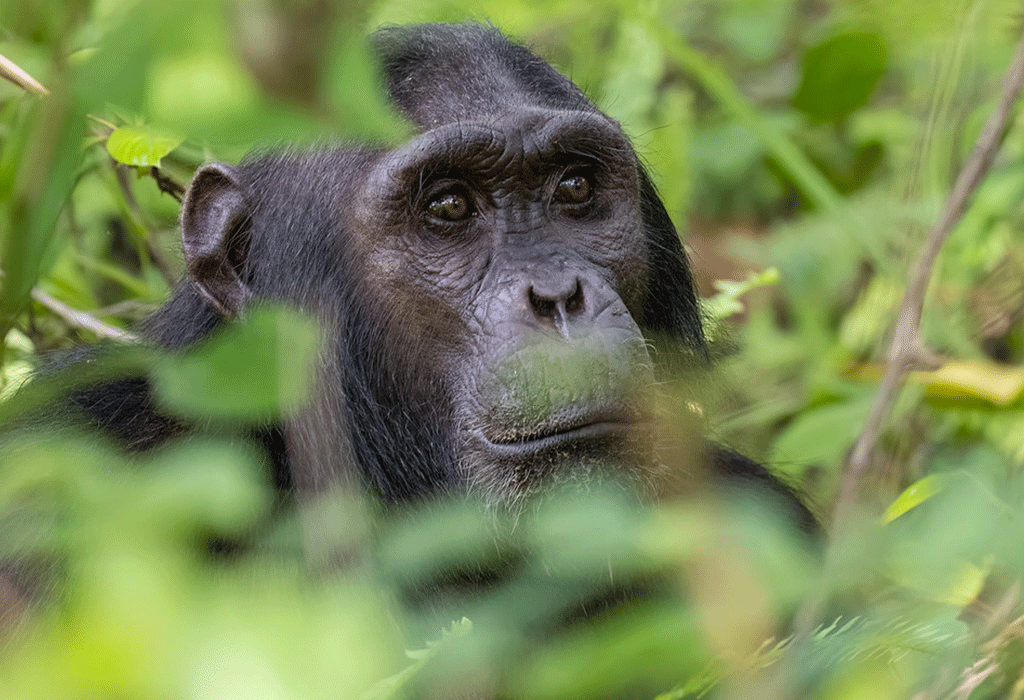
Why Most Visitors Prefer Kibale Over Nyungwe
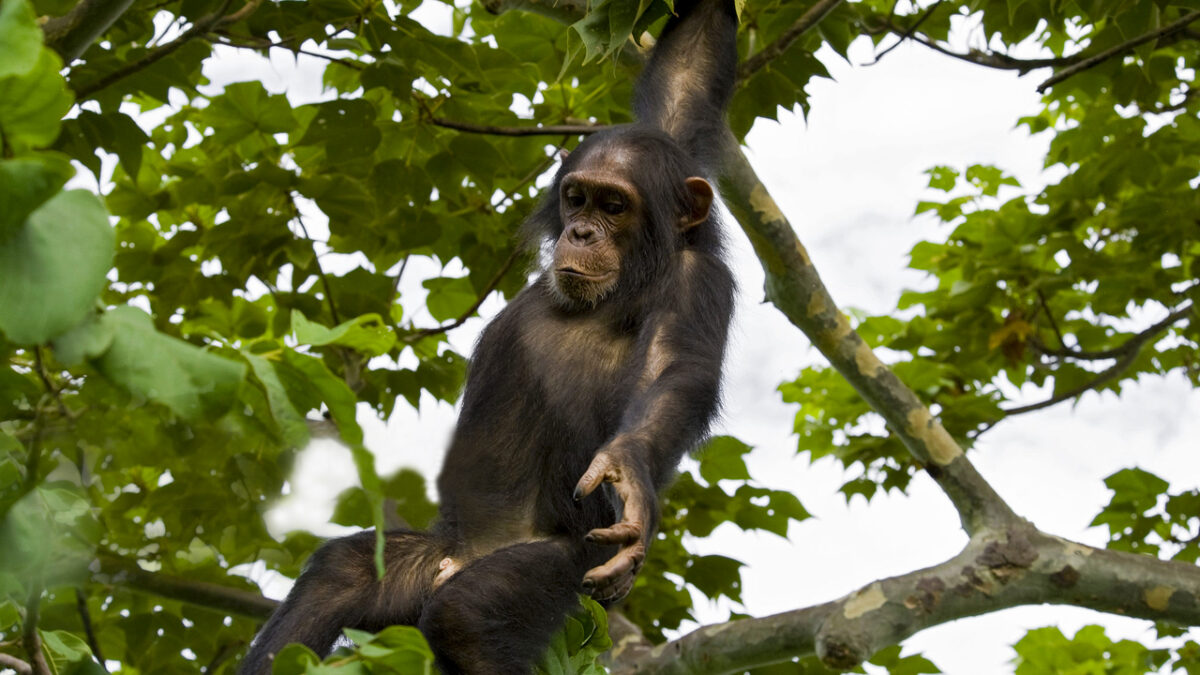
Discover Uganda’s Primate Capital
Kibale or Nyungwe: Which Forest Offers the Better Chimpanzee Experience?
East Africa is home to some of the most spectacular tropical rainforests on the African continent. Among the most famous destinations for chimpanzee trekking are Kibale National Park in Uganda and Nyungwe National Park in Rwanda. Both forests protect important chimpanzee populations and offer visitors opportunities to observe these intelligent great apes in their natural environment.
Nevertheless, many travellers interested primarily in chimpanzee encounters prefer Kibale. Its established chimpanzee tracking programme, habituation experience, concentration of primates and opportunities to combine different activities make it an attractive destination for dedicated primate holidays.
Nyungwe, on the other hand, offers a distinctive montane rainforest experience, spectacular scenery, extensive hiking opportunities and its famous canopy walkway.
The choice ultimately depends on your interests, physical fitness, available time, travel budget and preferred safari route. This guide explains why Kibale frequently becomes the preferred option for visitors seeking an intensive chimpanzee experience.
Start planning with our complete Uganda chimpanzee trekking guide.
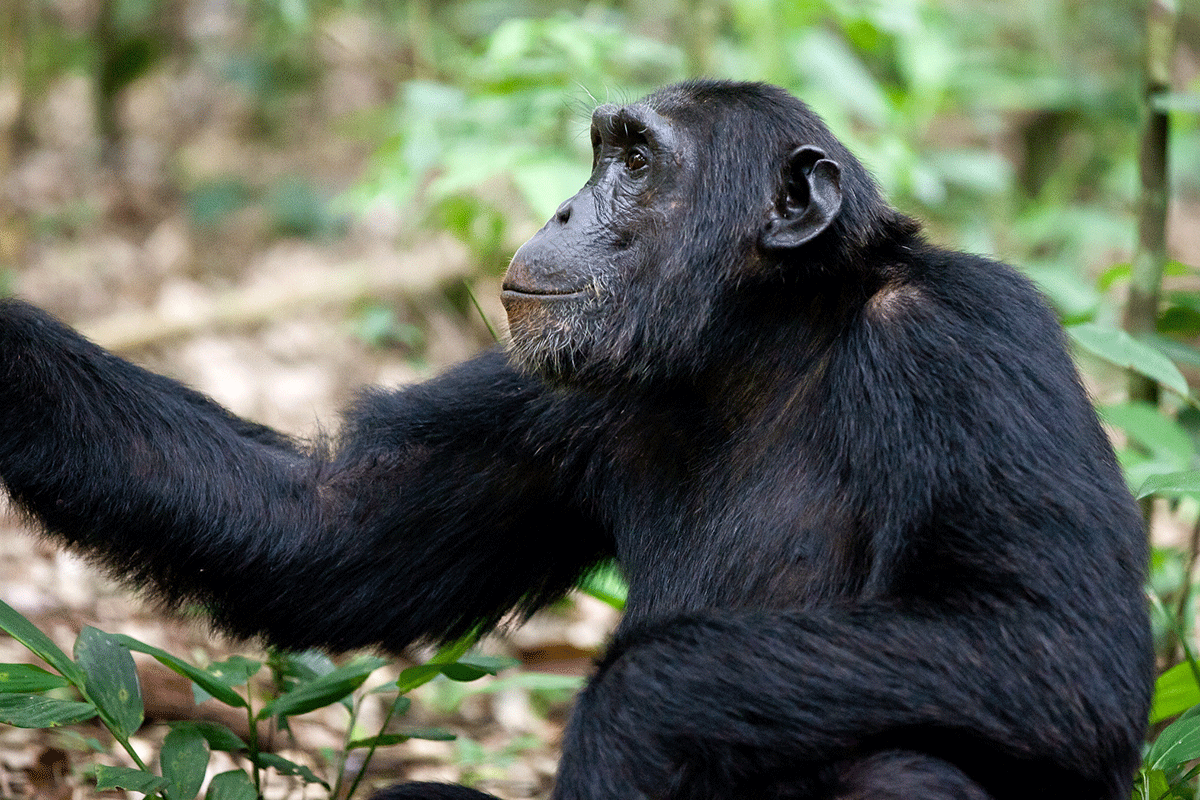
A wild chimpanzee in the tropical rainforest of Kibale National Park.
10 Reasons Most Visitors Prefer Kibale Over Nyungwe
Although both destinations provide excellent opportunities for rainforest exploration, Kibale has several advantages for visitors whose principal interest is chimpanzee trekking.
1. A Well-Established Chimpanzee Tracking Programme
Kibale has developed an international reputation for chimpanzee research, conservation and tourism. The park supports an estimated population of more than 1,500 chimpanzees, with selected communities habituated for visitor activities.
Visitors are accompanied by experienced guides and trackers who understand chimpanzee behaviour, feeding patterns, communication and movement through the forest.
The familiarity of the tracking teams with the chimpanzee communities helps make Kibale a particularly rewarding destination for visitors hoping to encounter these primates.
Nyungwe also protects important chimpanzee populations and offers guided tracking. However, the tracking experience can differ according to the forest sector, chimpanzee movements and daily conditions.
2. Opportunities for Chimpanzee Habituation
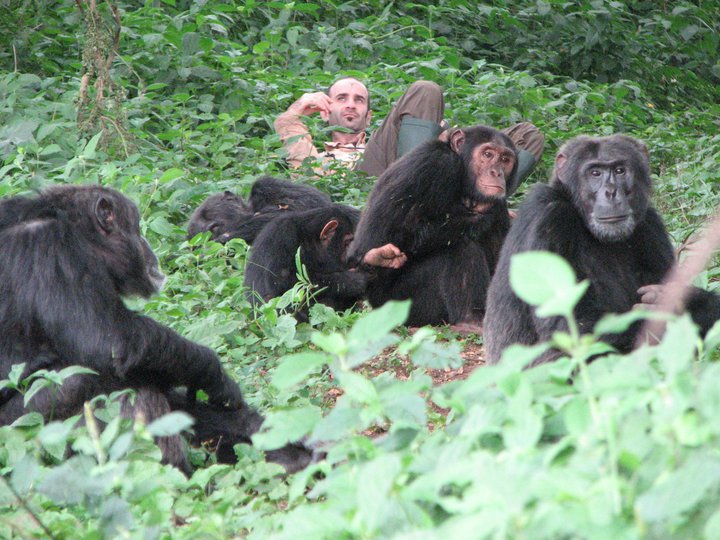 One of Kibale’s strongest attractions is its Chimpanzee Habituation Experience. This activity allows visitors to accompany researchers, trackers and habituation teams as they follow chimpanzees that are still becoming accustomed to controlled human presence.
Rather than participating in an ordinary tracking excursion, visitors experience a more extended period in the forest. They may observe chimpanzees leaving their nests, feeding, grooming, communicating, playing and moving between different forest locations.
The experience is particularly appealing to photographers, wildlife researchers, students and serious primate enthusiasts.
Standard chimpanzee trekking and habituation are separate activities with different permits and conditions. Habituation requires more patience and can involve longer walks.
Read our chimpanzee habituation experience permit guide and learn more about how long visitors spend with chimpanzees in Kibale.
3. A Rich Variety of Other Primate Species
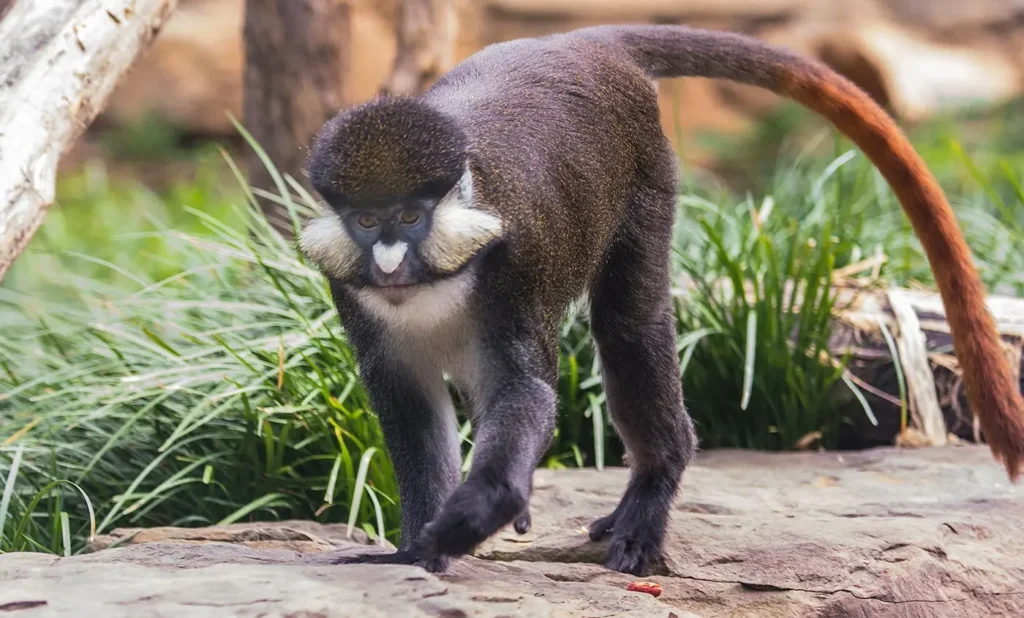
Red tailed monkeys in Kibale
Kibale is not famous for chimpanzees alone. Its tropical rainforest supports approximately 13 primate species, making it one of Africa’s most important destinations for primate enthusiasts.
During a guided forest walk, visitors may encounter:
- Red colobus monkeys.
- Black-and-white colobus monkeys.
- Red-tailed monkeys.
- Blue monkeys.
- Grey-cheeked mangabeys.
- L’Hoest’s monkeys.
- Olive baboons.
- Vervet monkeys.
- Pottos and other nocturnal primates during suitable activities.
Nyungwe also has impressive primate diversity, including Angola colobus monkeys, L’Hoest’s monkeys and other forest species. However, Kibale is especially attractive to travellers who want to focus on several primate encounters during one Uganda safari.
Explore our guide to the primates of Kibale National Park.
4. A More Accessible Forest Trek for Many Visitors
Physical accessibility is another consideration when comparing the two destinations.
Kibale is predominantly a lowland tropical forest, with sections of relatively gentle and established walking trails. Although the terrain varies and chimpanzees may move considerable distances, many visitors find the general walking conditions manageable.
Nyungwe is a mountainous montane rainforest with substantial changes in elevation. Some chimpanzee trekking routes involve steep slopes, uneven ground and muddy sections, particularly following rainfall.
This does not mean every Kibale trek is easy or every Nyungwe trek is difficult. The actual experience depends on where the chimpanzees are located, weather conditions and the route selected by the tracking team.
5. Convenient Opportunities to Combine Safari Activities
Kibale’s location in western Uganda makes it possible to combine chimpanzee trekking with other interesting destinations.
Visitors can include:
- Bigodi Wetland Sanctuary for birdwatching and community experiences.
- Queen Elizabeth National Park for game drives and boat cruises.
- Bwindi Impenetrable National Park for mountain gorilla trekking.
- Semuliki National Park for hot springs and forest exploration.
- Fort Portal for crater lakes and cultural experiences.
These combinations allow visitors to experience Uganda’s tropical forests, savannah landscapes and cultural attractions in one holiday.
Our Uganda primates safari experiences offer more ideas for combining these destinations.
6. More Options for Dedicated Primate Travellers
Kibale is particularly attractive to people who want to spend more than one day exploring primates.
Visitors can arrange standard chimpanzee tracking, the Chimpanzee Habituation Experience, guided forest walks and Bigodi Wetland excursions. These activities provide different perspectives on the rainforest ecosystem.
Nyungwe has its own range of activities, including chimpanzee trekking, canopy walks, waterfall trails, birdwatching and colobus monkey tracking.
However, Kibale’s dedicated habituation programme is a major attraction for travellers specifically interested in observing chimpanzee behaviour over an extended period.
7. Accommodation Choices Around the Forest
Accommodation is an important consideration when planning a chimpanzee trekking holiday. Visitors usually prefer lodges that offer convenient access to the relevant briefing and trekking location.
The Kibale region offers a variety of accommodation styles, from comfortable guesthouses and safari camps to luxury forest lodges.
Visitors can select accommodation based on their budgets, meal plans, preferred surroundings and transport arrangements.
Nyungwe also has attractive accommodation, including luxury forest properties and smaller guesthouses. The best choice depends on the trekking sector and the location of the lodge.
Read our Kibale accommodation guide before selecting your safari lodge.
8. Excellent Opportunities for Wildlife Photography
Kibale is an attractive destination for wildlife photographers because of its chimpanzees, other primates and forest birdlife.
Visitors can photograph chimpanzees feeding, grooming, climbing and interacting with other members of their communities. The forest also provides opportunities to photograph monkeys, butterflies, plants and interesting rainforest scenery.
The habituation experience can be particularly appealing to photographers who want more time to observe behaviour and wait for suitable photographic opportunities.
Nyungwe also provides excellent photography opportunities, particularly for montane forest scenery, birds, colobus monkeys and the canopy walkway.
9. A Strong Destination for First-Time Chimpanzee Trekkers
Visitors who have never tracked chimpanzees often want an experience that combines professional guidance, established tracking arrangements and a variety of wildlife encounters.
Kibale is a strong choice because its visitor programme is well established, and the park’s chimpanzees have been studied and monitored over many years.
Before entering the forest, visitors receive a briefing explaining the trekking rules, safety precautions and responsible wildlife viewing practices.
For those who want to understand the entire experience before travelling, explore our ultimate Kibale travel guide.
10. An Excellent Base for a Longer Uganda Holiday
Another reason visitors choose Kibale is its ability to fit naturally into a wider Uganda safari.
From Kibale, travellers can continue towards Queen Elizabeth National Park, Bwindi, Lake Bunyonyi and other western Uganda destinations.
It is therefore possible to enjoy chimpanzee trekking, mountain gorilla encounters, wildlife viewing, boat cruises and cultural experiences without organising an entirely separate international holiday.
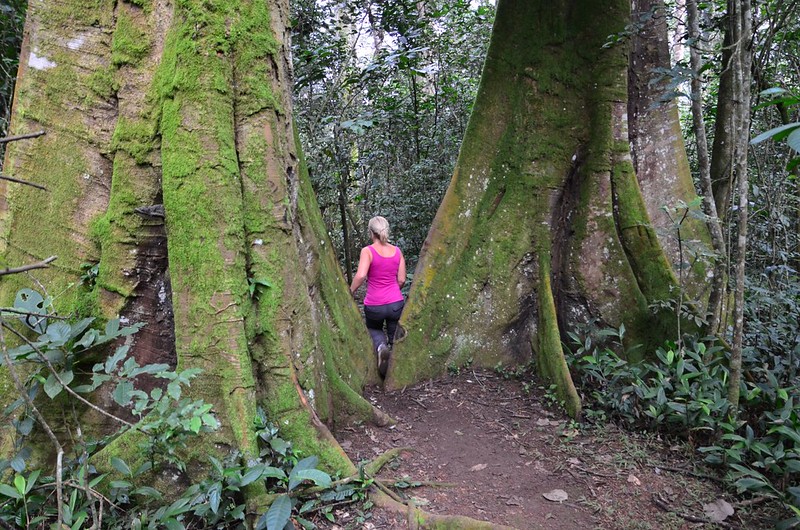 Discover the Famous Kibale Forest
Kibale National Park is located in western Uganda, near Fort Portal. It protects an extensive tropical forest ecosystem with a variety of habitats that support primates, birds, butterflies and other wildlife.
The Kanyanchu area is the principal starting point for the established chimpanzee tracking experience. Visitors gather for a briefing before entering the forest with park guides and trackers.
Chimpanzee trekking is an exciting experience because these primates are highly active and communicate through a variety of calls, gestures and social interactions.
Learn more in our Kibale National Park ultimate guide.
Why Nyungwe Forest Is Still Worth Visiting
Although Kibale is a popular choice for dedicated chimpanzee trekking, Nyungwe Forest National Park remains one of Rwanda’s most remarkable nature destinations.
Located in southwestern Rwanda, Nyungwe protects a vast montane rainforest with an impressive variety of plants, birds, mammals and primates.
Its most famous attractions include chimpanzee trekking, colobus monkey tracking, waterfall hikes, birdwatching and the spectacular canopy walkway.
Visitors interested in exploring Rwanda’s natural attractions can find Nyungwe particularly rewarding.
Read our guide to Rwanda’s national parks.

The famous Nyungwe Forest canopy walkway.
Nyungwe’s Major Attractions
Chimpanzee Trekking
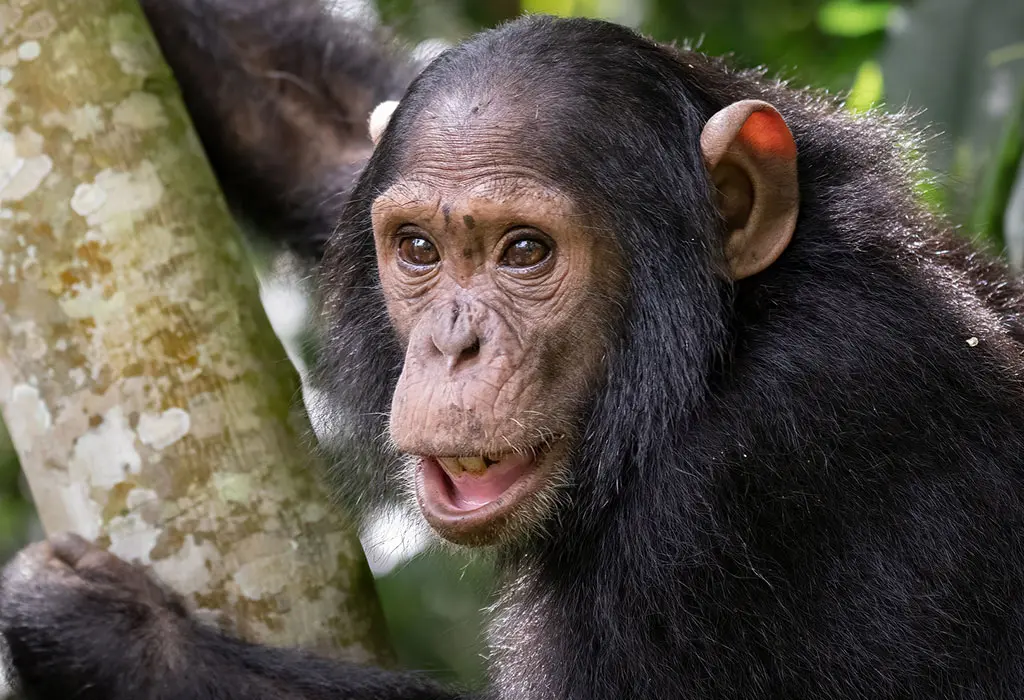
Follow experienced guides into the forest in search of habituated chimpanzee communities.
Canopy Walkway
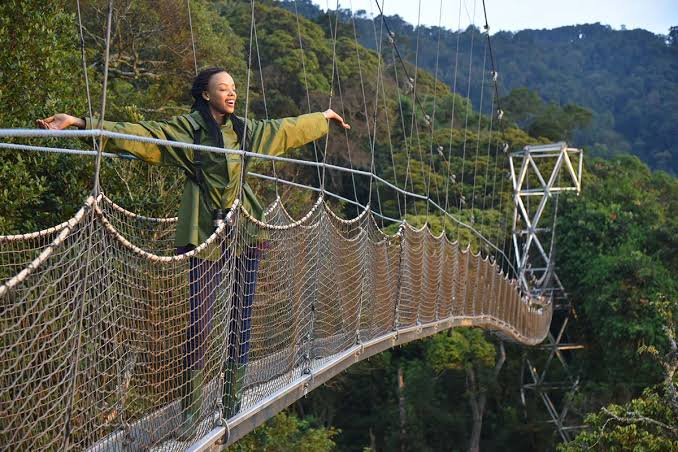
Enjoy an elevated rainforest experience on a suspended walkway overlooking the forest canopy.
Waterfall Hiking
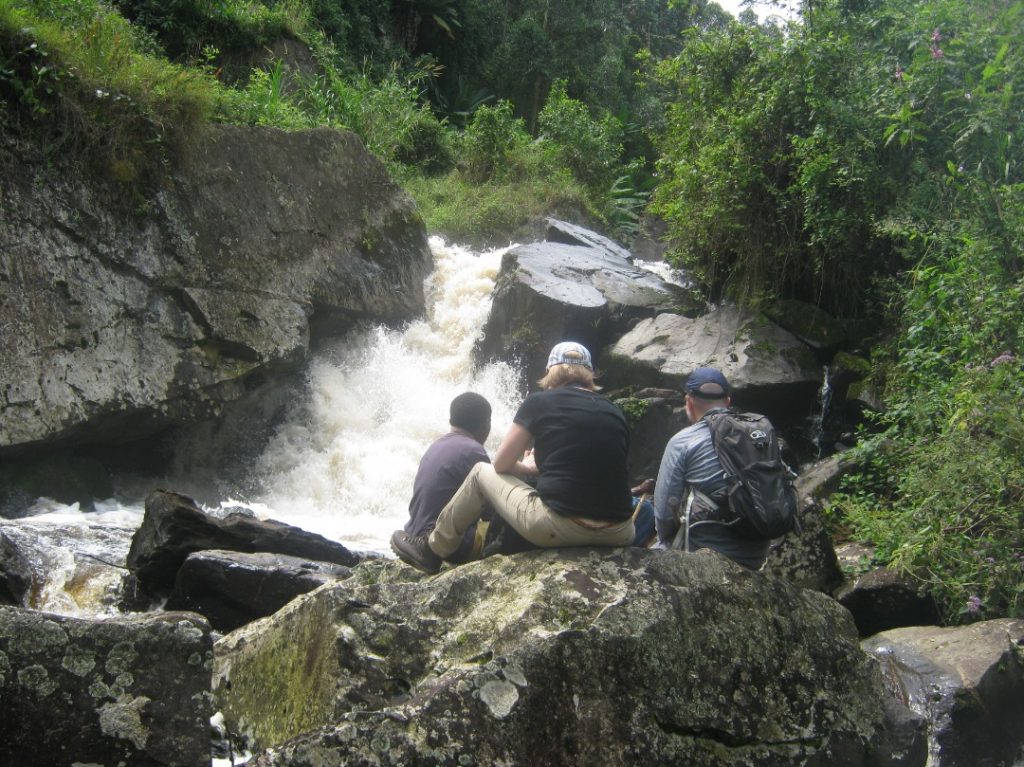 Explore scenic rainforest trails leading to beautiful waterfalls and forest viewpoints.
Birdwatching3
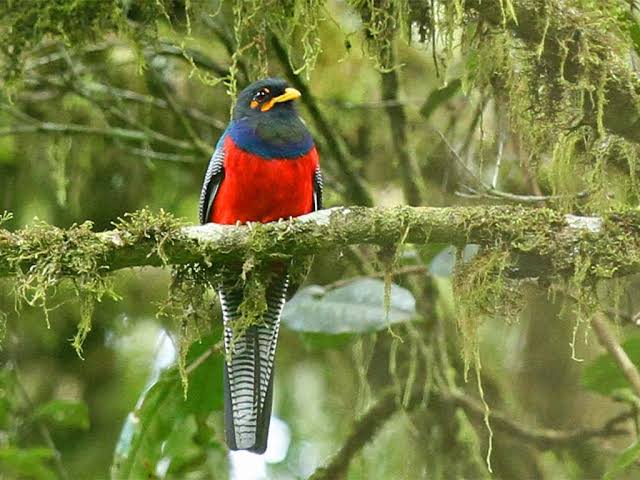 Discover Albertine Rift bird species and other forest birds with experienced local guides.
For additional planning advice, read what to know before chimpanzee trekking in Nyungwe and what to expect on the Nyungwe canopy walk.
Kibale National Park vs Nyungwe National Park: Detailed Comparison
The two parks provide different rainforest experiences. The following comparison highlights the major considerations when selecting a chimpanzee trekking destination.
| Comparison | Kibale, Uganda | Nyungwe, Rwanda |
|---|---|---|
| Main attraction | Chimpanzee trekking and habituation | Chimpanzee trekking and montane rainforest exploration |
| Forest type | Tropical lowland rainforest | Montane rainforest |
| Chimpanzee experience | Established tracking and habituation options | Guided chimpanzee tracking |
| Terrain | Generally gentler, with variable forest trails | More mountainous and undulating |
| Other primates | Approximately 13 species | Numerous montane forest primates |
| Special experience | Chimpanzee Habituation Experience | Canopy walkway |
| Additional activities | Bigodi, crater lakes, birdwatching and cultural visits | Waterfall hikes, birdwatching and forest walks |
| Safari combinations | Bwindi, Queen Elizabeth and Murchison Falls | Volcanoes, Lake Kivu and other Rwanda attractions |
| Best suited for | Dedicated chimpanzee and Uganda primate safaris | Rwanda rainforest and canopy experiences |
Swipe horizontally on mobile to see all columns. Trekking conditions, wildlife sightings and activities vary with season and daily forest conditions.
For a more detailed comparison, explore chimpanzee trekking in Uganda and Rwanda and Nyungwe versus Kibale chimpanzee tracking.
Getting to Kibale and Nyungwe
Getting to Kibale from Kampala or Entebbe
Kibale National Park is accessed through western Uganda. Visitors travelling by road from Kampala or Entebbe generally pass through Mityana, Mubende and Fort Portal before continuing towards the park.
The journey offers beautiful views of rural Uganda, tea plantations, crater lakes and the surrounding countryside.
Domestic charter flights to nearby airstrips can also be considered, subject to schedules and availability.
Getting to Nyungwe from Kigali
Nyungwe is situated in southwestern Rwanda. Visitors can travel by road from Kigali through Rwanda’s scenic countryside and reach the forest after a substantial road journey.
Domestic air arrangements to Kamembe can also be considered, followed by road transfers to the selected park accommodation and trekking location.
Travellers choosing Kibale should remember that reaching the park from Kigali involves an international border crossing and additional road travel. It is therefore generally more practical to include Kibale in a Uganda safari rather than treating it as a quick excursion from Rwanda.
Best Time to Visit Kibale and Nyungwe for Chimpanzee Trekking
Both forests can be visited throughout the year. However, seasonal conditions influence walking comfort, photography and the general trekking experience.
June to September
These months generally offer drier conditions and are popular for forest trekking. Trails are often easier to navigate, although rain remains possible.
December to February
Another generally favourable period for trekking, photography and combining primate experiences with wider Uganda or Rwanda holidays.
March to May
Wetter conditions can produce lush green forests. Visitors should prepare for muddy paths and possible heavy rainfall.
October to November
These months can also experience rainfall. They may suit flexible travellers who enjoy green landscapes and are comfortable with changing trail conditions.
Read our Kibale Forest National Park guide for more information about activities and seasonal travel planning.
Suggested 4-Day Kibale Chimpanzee Safari

Visitors who want to concentrate on chimpanzees and the surrounding rainforest can enjoy a four-day safari in western Uganda.
Day 1: Kampala or Entebbe to Kibale National Park
Meet your safari guide and begin the journey to western Uganda. Enjoy scenic countryside, lunch in Fort Portal and views of the crater lake region before arriving at your lodge.
Day 2: Chimpanzee Trekking in Kibale
After breakfast, transfer to the Kanyanchu visitor centre for the ranger briefing. Enter the rainforest in search of a habituated chimpanzee community. Once located, visitors are allowed up to one hour with the chimpanzees under the applicable rules.
Return to the lodge for lunch and relaxation. An afternoon activity can be arranged depending on your permit schedule.
Day 3: Bigodi Wetland and Crater Lake Exploration
Explore Bigodi Wetland Sanctuary with a local guide. Look out for birds, monkeys, butterflies and other wetland wildlife. Later, discover the beautiful crater lakes surrounding Fort Portal.
Day 4: Return to Kampala or Entebbe
Enjoy breakfast and begin the return journey. Stop for photography, refreshments and lunch before reaching your final destination.
Travellers interested in a longer trip can consider our four-day chimpanzee tracking safari, three-day Kibale chimpanzee and cultural safari or five-day Uganda primates safari.
Combine Kibale Chimpanzee Trekking with Gorilla Trekking in Bwindi
For visitors who want to experience two of Africa’s most remarkable great apes, combining Kibale and Bwindi is an excellent safari choice.
Kibale provides the opportunity to observe chimpanzees in their tropical rainforest habitat, while Bwindi offers mountain gorilla trekking in an ancient montane forest.
The two experiences are different. Chimpanzees are highly active, vocal and frequently move through the forest canopy, while mountain gorillas often spend more time feeding, resting and interacting within their family groups.
A combined itinerary can also include Queen Elizabeth National Park for savannah wildlife and the Kazinga Channel boat cruise.
Consider our seven-day chimpanzee and gorilla trekking safari or the eight-day Uganda gorilla, chimpanzee and wildlife itinerary.
Travellers with more time can explore the eight-day primates and wildlife safari or 21-day Uganda ultimate safari.
Responsible Chimpanzee Trekking and Conservation
Chimpanzees are endangered great apes that require long-term protection of their natural habitats. Responsible tourism contributes to conservation through regulated visitor activities, ranger operations and community participation.
Visitors to Kibale and Nyungwe should observe the following guidelines:
- Follow the instructions of park rangers and guides.
- Maintain the required distance from chimpanzees.
- Never feed wild primates.
- Avoid loud noises and sudden movements.
- Do not enter the forest when suffering from an infectious illness.
- Never leave rubbish along forest trails.
- Use cameras without flash.
- Respect the animals and avoid disturbing their natural behaviour.
By following these guidelines, visitors help protect the wildlife that makes both destinations so special.
Frequently Asked Questions: Kibale vs Nyungwe
1. Why do most chimpanzee enthusiasts prefer Kibale over Nyungwe?
Kibale is particularly popular because of its established chimpanzee tracking programme, habituation experience, high concentration of primates and opportunities to combine chimpanzee trekking with other Uganda safari activities.
2. Is Kibale better than Nyungwe for chimpanzee trekking?
Kibale is generally the stronger choice for travellers whose main priority is chimpanzee trekking and habituation. Nyungwe is equally attractive for visitors interested in montane rainforest experiences and canopy walks.
3. How many chimpanzees live in Kibale National Park?
Kibale supports an estimated population of more than 1,500 chimpanzees. Population estimates can change as conservation surveys and research continue.
4. Does Nyungwe have chimpanzees?
Yes. Nyungwe Forest National Park protects wild chimpanzees and offers guided chimpanzee trekking in designated forest areas.
5. What is the Chimpanzee Habituation Experience?
It is an extended forest experience in which visitors accompany researchers and trackers following chimpanzees that are still undergoing habituation to controlled human presence.
6. How long do visitors spend with chimpanzees in Kibale?
Standard trekking normally allows up to one hour with the habituated chimpanzees once they have been located. The habituation experience provides a longer observation opportunity, subject to the applicable permit and programme conditions.
7. Is chimpanzee trekking in Kibale difficult?
Difficulty varies depending on the chimpanzees’ location, weather and trail conditions. The park has relatively accessible forest sections, but visitors should still prepare for uneven and sometimes muddy trails.
8. What makes Nyungwe unique?
Nyungwe is famous for its montane rainforest, chimpanzee trekking, rich birdlife, hiking trails, waterfalls and spectacular canopy walkway.
9. Can I combine Kibale with Bwindi gorilla trekking?
Yes. Kibale and Bwindi are frequently combined in Uganda primate safari itineraries. You can also include Queen Elizabeth National Park for additional wildlife experiences.
10. Which park is better for birdwatching?
Both parks are excellent birdwatching destinations. Kibale offers tropical forest and wetland birding opportunities, particularly around Bigodi, while Nyungwe is especially important for Albertine Rift montane forest species.
11. Can I visit Kibale from Kigali?
Yes. It is possible to travel from Rwanda to Kibale by road, but this involves crossing an international border and a substantial journey. A multi-day Uganda itinerary is generally more practical.
12. How many days should I spend in Kibale?
Two to four days is a useful starting point for chimpanzee trekking, Bigodi Wetland and nearby attractions. Longer stays are ideal for habituation, birdwatching and additional nature experiences.
Experience the Best of Kibale National Park
Make Kibale the highlight of your next Uganda primate safari. Whether you are interested in standard chimpanzee trekking, an extended habituation experience or a combination of chimpanzees and mountain gorillas, our team can help you organise an unforgettable holiday.
Safari Vacations and Travel Services | Uganda and Rwanda